The Ultimate Winter Waterfall Road Trip Across North Carolina
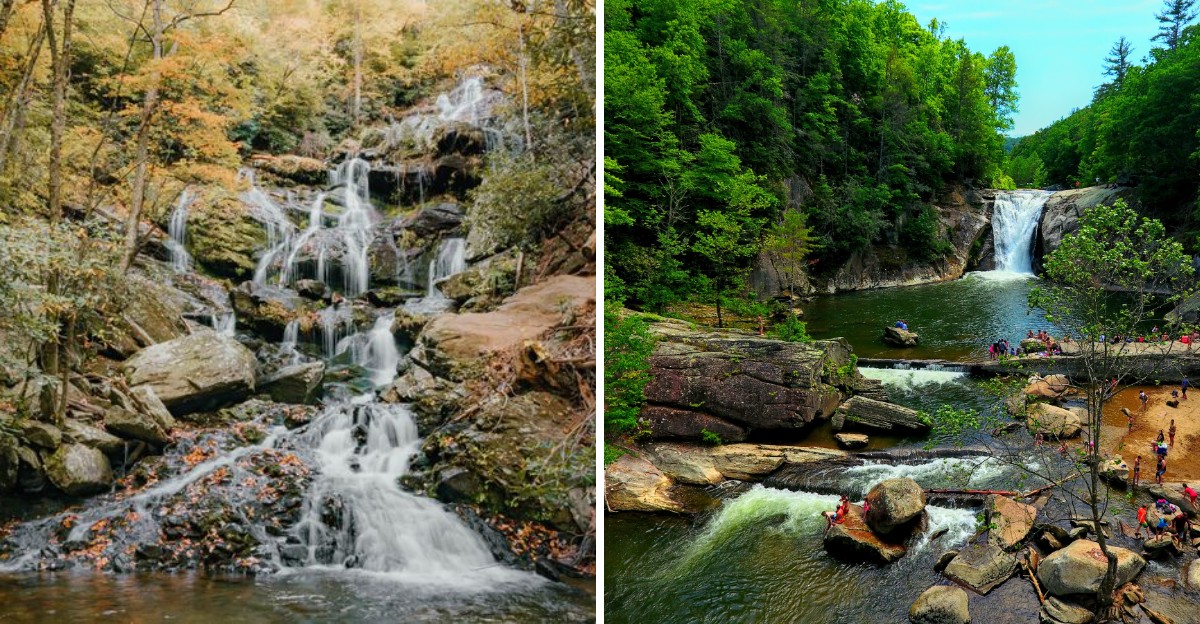
North Carolina’s mountains hide dozens of waterfalls that look completely different in winter than they do during the busier summer travel season.
Cold temperatures sometimes create partial ice formations along the rock faces, adding a striking visual element that summer visitors never get to see.
Many of these falls are also far less crowded in winter, giving visitors quiet access to views that can feel packed during peak fall foliage season.
Because elevation and exposure vary across different waterfalls, the exact conditions and accessibility can shift quite a bit from one stop to the next.
For anyone willing to bundle up, this winter route offers a completely different, often more peaceful way to experience some of the state’s most famous natural landmarks.
1. Why Winter Is A Great Time To Chase Waterfalls
Quiet trails and full rivers make winter a secret favorite for waterfall fans. Summer and fall bring packed parking lots, but a chilly January morning might leave you with a famous waterfall all to yourself.
That kind of peace is hard to find the rest of the year. Bare trees are another big bonus. Once the leaves fall, you can spot waterfalls from roads and trails that stay hidden behind green walls in July.
Winter rains also keep many creeks running strong, and during a hard cold snap, the spray can freeze into shiny ice sculptures along the rocks.
Planning ahead matters more in winter, though. The Blue Ridge Parkway often closes sections when snow and ice arrive, so check the National Park Service road status page before you go.
Some areas are still healing from Hurricane Helene, which hit the mountains in 2024, so look at closure updates from the U.S. Forest Service and the NC Forest Service too.
Good boots with strong grip can save you from a nasty slip on frozen mud or wet rock. Some hikers also pack slip-on traction cleats for icy spots.
Winter sunsets arrive early, sometimes before 5:30 p.m., so start hiking in the morning and aim to be back at your car well before dark.
Why go to all this trouble? Western North Carolina holds hundreds of waterfalls, and many sit just a short drive apart.
That means you can see several beauties in one day without spending hours behind the wheel. Few places in the country make a waterfall road trip this easy and this rewarding.
2. Bridal Veil Falls Starts The Trip Near Highlands
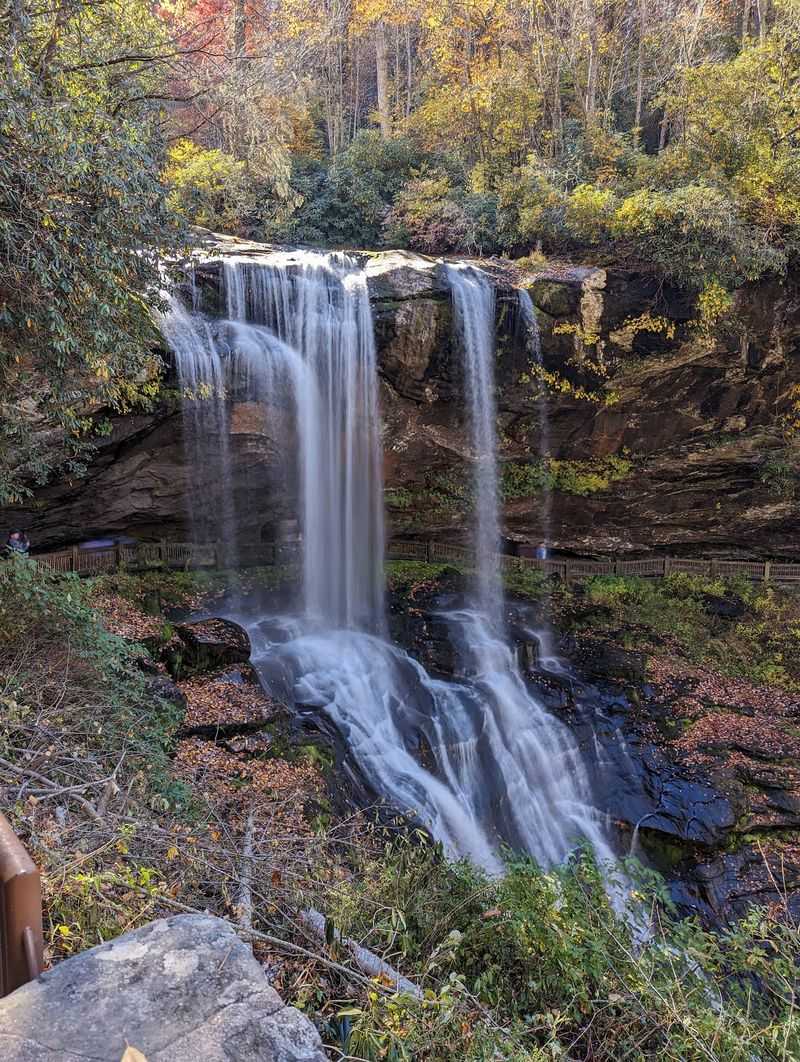
Not every waterfall makes you earn it with a long hike. Bridal Veil Falls sits right beside US 64 just outside Highlands, and you can admire it from your car or a short step away. For the first stop on a big road trip, that easy start feels just right.
The falls drop over a rocky ledge in a thin, lacy stream that really does look like a veil. The old road once passed right under the overhang, which gives the spot a fun bit of history. Today the main highway curves past it, so the view comes quickly.
Your North Carolina Garden Changes Every Week. Your Plan Should Too.
Gardening in North Carolina changes quickly throughout the season. Every Friday you’ll receive a simple weekly plan showing exactly what to plant, prune, fertilize, harvest, and protect so you never miss the right timing.
Getting there is half the fun. This stretch of US 64 is part of the Mountain Waters Scenic Byway, a route famous for waterfalls you can see from the road.
As you wind through the steep Cullasaja River Gorge, rock walls rise on one side while the river tumbles far below on the other.
Safety comes first on this road. It is narrow and full of sharp curves, so only stop at marked pull-offs and never pause in a travel lane.
Shaded parts of the pavement can hold ice long after the sun comes out, and the rocks near the falls can be just as slick.
Plan to drive the gorge in daylight. You will see more, and you will handle the tight turns with much more confidence.
Highlands and the Cullasaja Gorge rank among the most loved waterfall areas in North Carolina, so kicking off your adventure here sets a high bar for everything that follows.
3. Looking Glass Falls Is One Of The Most Photographed In The East
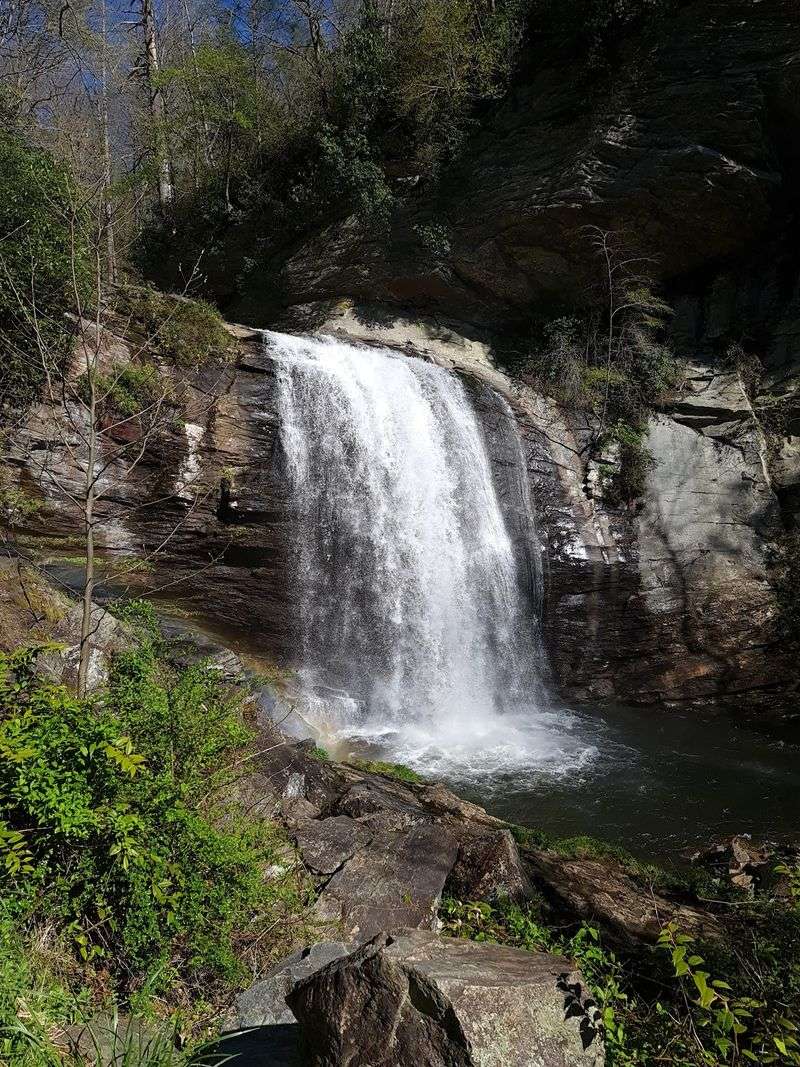
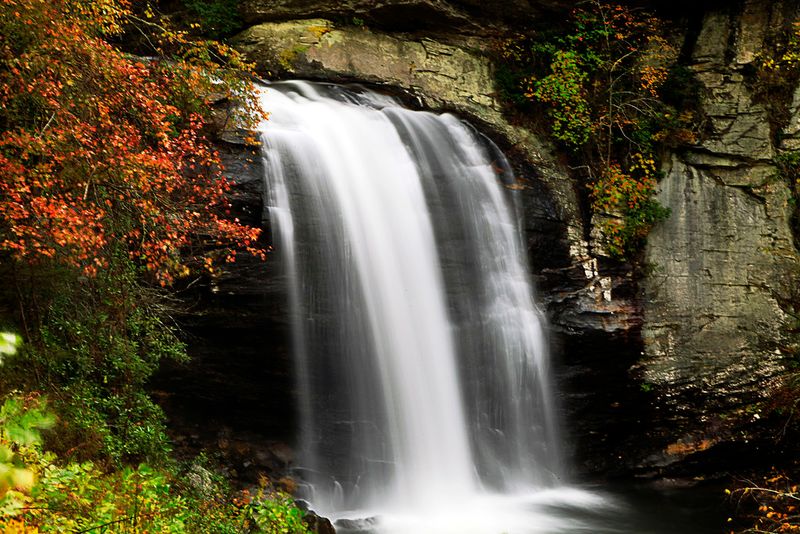
Cameras come out fast at Looking Glass Falls, and it is easy to see why. Looking Glass Creek pours about 60 feet over a broad rock ledge in one wide, smooth sheet before crashing into a deep pool.
The U.S. Forest Service calls it one of the most photographed waterfalls in the eastern United States.
Best of all, you barely need to walk. The falls sit right next to US 276 in Pisgah National Forest near Brevard, with only a short stroll to the viewing area.
You get a huge, powerful waterfall for very little effort, which feels like a gift on a cold day. Parking fills up quickly, even in winter, so try to arrive early in the morning. Never park along the edge of the highway, since that blocks traffic and puts you at risk.
If the lot is full, visit another nearby stop and swing back later. A set of stairs leads down to the base, where the mist rises and the roar gets loud. In winter, those steps can turn icy, so hold the railing and take your time.
The view from the bottom is worth every careful step. US 276 is packed with other treats, so make a day of it. Sliding Rock, the Cradle of Forestry, and more falls all sit along the same road.
Looking Glass Falls stands as a signature sight of Transylvania County, which proudly calls itself the Land of Waterfalls, a nickname earned by the roughly 250 waterfalls found there.
4. Moore Cove Falls Is An Easy Nearby Add-On
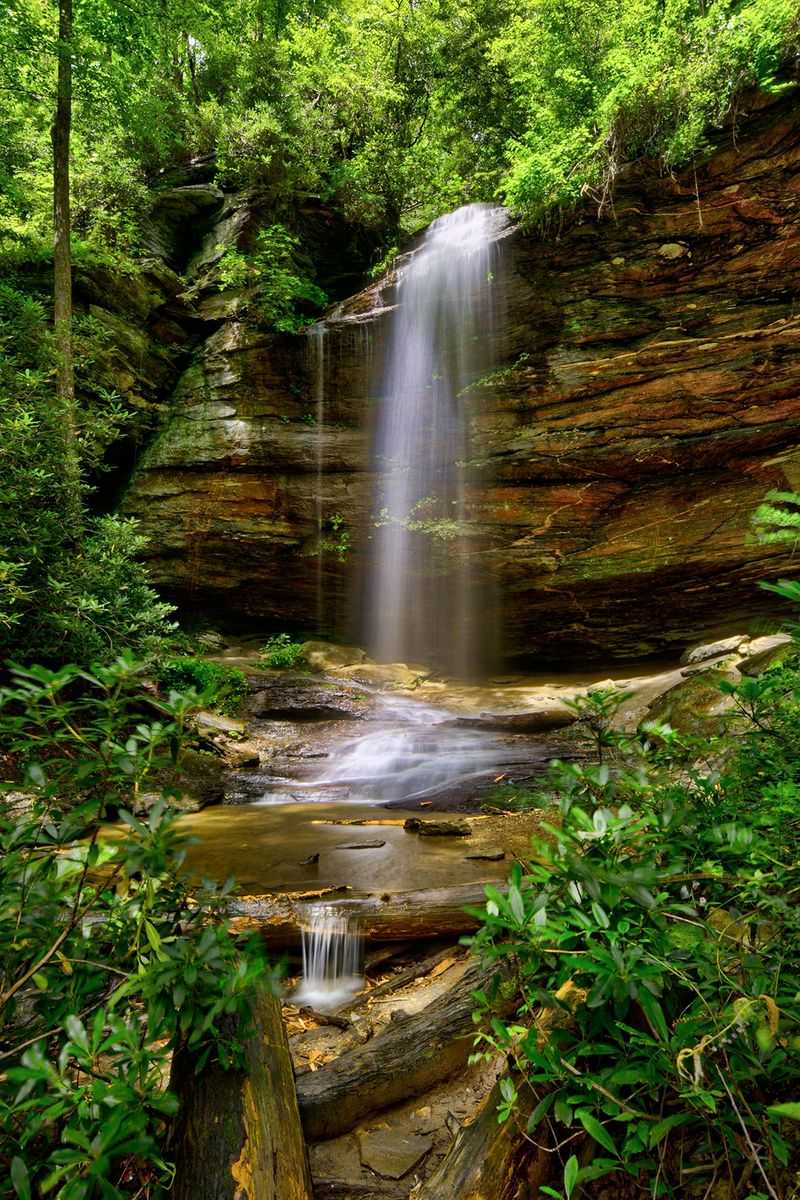
After a few hours in the car, your legs will thank you for Moore Cove Falls. Just up the road from Looking Glass Falls on US 276, a gentle trail winds through the woods to a pretty waterfall tucked in a quiet cove.
It makes a perfect little break between drives. The path is about three quarters of a mile each way, so the round trip is roughly a mile and a half.
Along the way, you will cross small footbridges and walk past thick rhododendron that stays green even in the middle of winter. Tall hardwood trees stand bare overhead, letting soft light reach the forest floor.
At the end, the water drops about 50 feet over a wide rock overhang. On a cold day, you might see icicles hanging from the ledge like glass decorations.
Some visitors walk behind the thin stream of water, but stay careful, since the ground there can be muddy or frozen.
Give yourself about an hour to walk, look around, and snap photos without rushing. The rocks near the creek and the falls get slick when temperatures drop, so wear shoes with good grip.
Kids usually enjoy this trail because it feels like a short adventure with a big reward. Pairing Moore Cove with Looking Glass Falls is easy, since they are only minutes apart.
The Brevard area packs an amazing number of waterfalls into a small corner of Pisgah National Forest. You can see two very different falls in one morning and still have plenty of time for lunch in town.
5. DuPont State Forest Offers Three Falls In One Hike
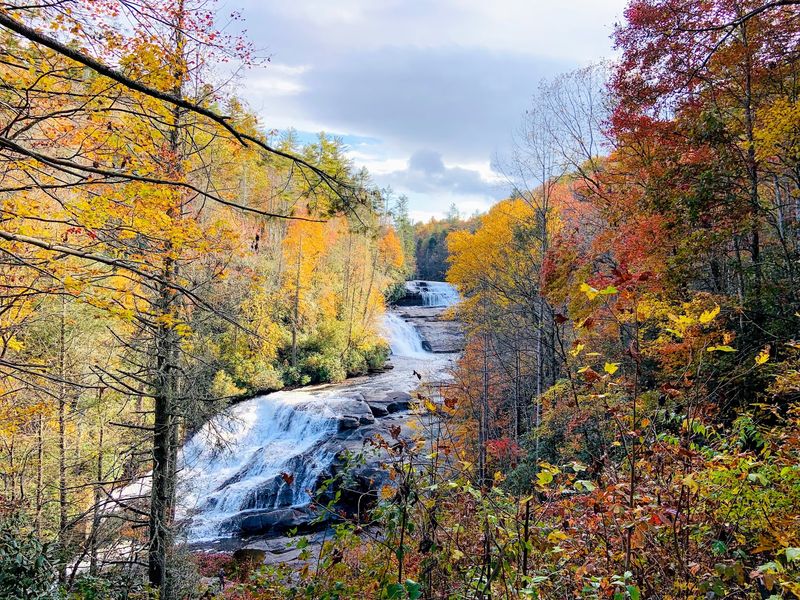
Three waterfalls, one hike, and a whole lot of wow. DuPont State Recreational Forest, located between Brevard and Hendersonville, offers a popular trail that links Hooker Falls, Triple Falls, and High Falls.
No other stop on this road trip gives you so many big waterfalls in a single outing. Hooker Falls comes first, a wide 12-foot drop into a calm pool. Farther along, Triple Falls tumbles down three tiers for about 120 feet over smooth granite.
High Falls caps the trip with a roaring 150-foot slide that looks especially grand from the overlook.
Movie fans might recognize the scenery, since parts of The Hunger Games and The Last of the Mohicans were filmed here. Summer weekends bring huge crowds, but winter feels calm by comparison.
You may only share the trail with a few other hikers and the sound of rushing water.
Before you go, check the NC Forest Service closure page for DuPont. Hurricane Helene damaged several areas, including the steps near Triple Falls, and some spots have stayed closed.
Rangers take these closures seriously, and people who ignored signs have been fined. Stay off the waterfalls themselves, too. Climbing on the rocks or sliding down the falls is against forest rules, and the wet granite is far slicker than it looks.
DuPont ranks as one of the most visited waterfall spots in North Carolina, so following the rules helps keep it open and beautiful for everyone.
6. Catawba Falls Cascades Through Mossy Forest
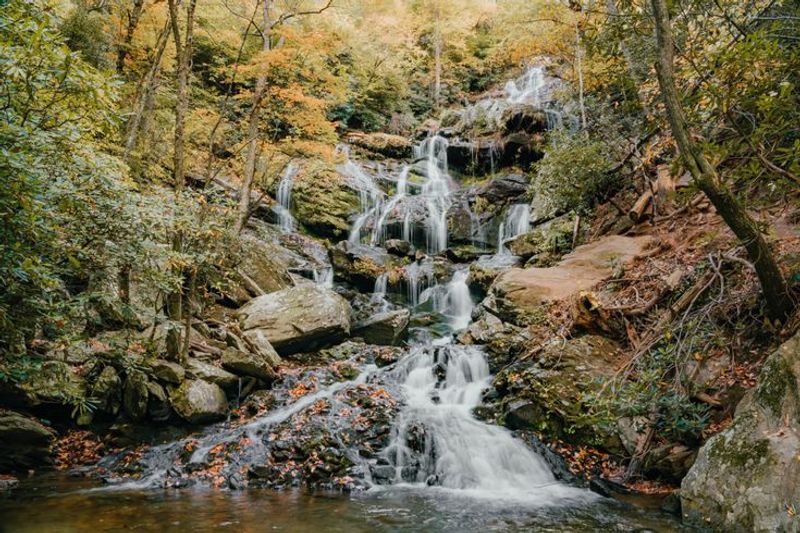
Green moss, rocky streams, and the steady rush of water set the mood long before you reach Catawba Falls. Tucked in Pisgah National Forest near the small town of Old Fort, this spot sits on the headwaters of the Catawba River.
The river starts here as a mountain stream before growing into a major waterway that flows all the way into South Carolina.
The trail follows the water through a forest filled with mossy boulders and old stone ruins from an early power dam. Every bend seems to reveal another small cascade.
Finally, the main falls appear, a tall waterfall that steps down the mountain in a long, lacy series of drops.
To make the climb safer, the Forest Service built a large staircase along the steep section. It replaced rough social trails that had caused many injuries over the years.
Even so, take your time on the steps when they are wet or frosty. Hurricane Helene hit this trail hard. The main trail reopened after repairs, but some sections, including the upper viewing platform, stayed closed for more work.
Check the Forest Service website for current conditions before you make the drive. Stay on the official trail at all times. The upper falls area is dangerous, with steep, slippery rock and a history of serious accidents, so admire it from a safe spot.
Catawba Falls remains one of the most popular waterfall hikes east of Asheville, and a careful visit lets you enjoy every mossy step of it.
7. Linville Falls Plunges Into A Rugged Gorge
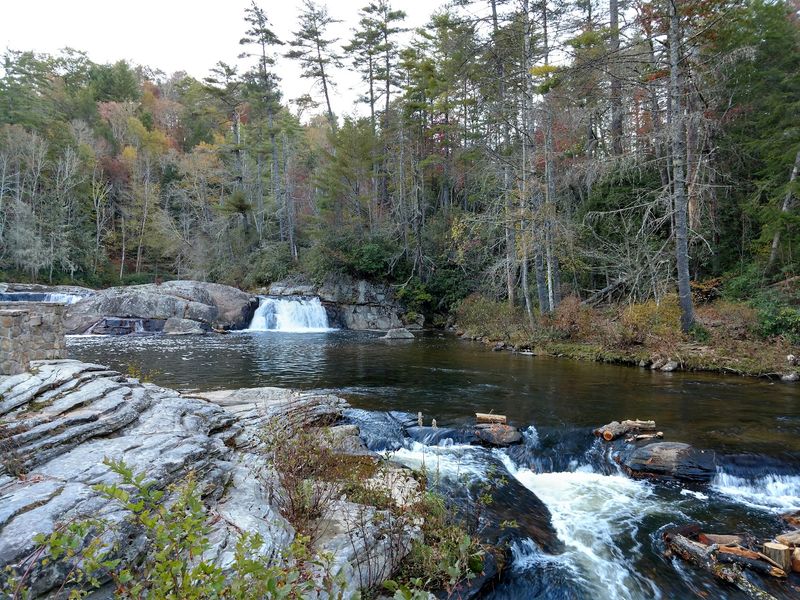
Some waterfalls whisper, but Linville Falls roars. The Linville River squeezes through a narrow rock channel and then plunges into the Linville Gorge, one of the most rugged canyons in the eastern United States.
Standing at an overlook, you can feel the power in your chest.
People sometimes call the gorge the Grand Canyon of the East. Its steep walls drop nearly 2,000 feet in places, and the wild land around it has been protected as a wilderness area since 1964.
Seeing the river vanish into that deep, rocky valley is a memory you will not forget. Winter visits take extra planning. The falls sit near Blue Ridge Parkway milepost 316, and the Parkway can close during snow or ice.
Some trails in the area also stayed closed after Hurricane Helene, so check the National Park Service website before you head out.
Looking for something shorter? Duggers Creek Trail is an accessible, easy loop of about a quarter mile that leads to a smaller, charming waterfall in a shady little ravine.
It works well for younger kids or anyone who wants a gentle walk. At every overlook, stay behind the railings, even if you spot a better photo angle. Wet and icy rock near the edge can send you sliding without warning.
Linville Falls is one of the best-known natural landmarks in North Carolina, and enjoying it safely lets you soak in the view without any worry.
8. Elk River Falls Finishes The Trip With Power
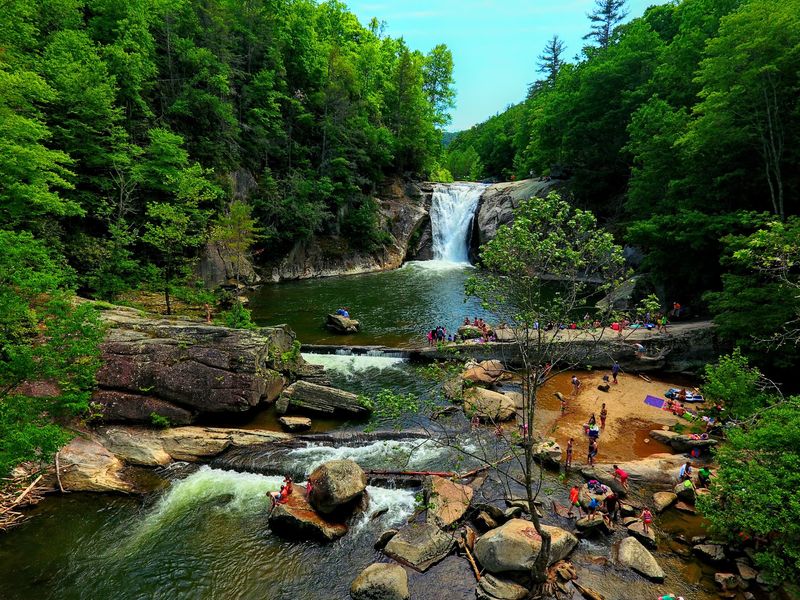
Save a big one for last, and Elk River Falls delivers. Locals call it Big Falls, and one look explains the nickname.
The Elk River pours over a wide rock ledge and drops about 65 feet into a huge, swirling pool framed by boulders.
You will find it in Pisgah National Forest near the small town of Elk Park, close to the Tennessee line. The walk from the parking area is short, just a few minutes along a rocky path.
That makes it an easy final stop when your legs feel tired from a week of hiking.
Good news came in May 2026, when the area fully reopened after Forest Service crews and contractors finished clearing debris left behind by Hurricane Helene. The storm had piled trees and rubble around the falls.
Now visitors can once again enjoy the thunder of the water and the misty air. Beauty here comes with a serious warning. The pool below the falls has a strong undercurrent that can pull even skilled swimmers under.
Swimming, climbing, or jumping from the rocks is extremely dangerous, so stay well back from the edge and enjoy the view from dry ground.
Winter adds ice to the rocks, so watch every step. High country roads can also get snowy, so check road conditions before driving up from Banner Elk or Boone.
As one of the most impressive waterfalls in the northern mountains, Elk River Falls gives your road trip a bold and happy finish.