Should California Gardeners Cover Citrus Trees During Early Cold Nights?
The sun has just dipped behind the fence, and a gardener in Riverside stands beside a young lemon tree with a folded frost cloth.
The forecast says 40 degrees, and the air already feels crisp.
Covering too early wastes effort, while waiting too long could cost a whole season of fruit. It’s a common October puzzle across much of California.
The answer depends on a handful of factors, from the tree’s age and variety to the spot where it grows.
Knowing when citrus truly needs help, and when it can handle a chill on its own, takes much of the guesswork out of those first cold nights.
Most Citrus Tolerates Brief Mild Chill
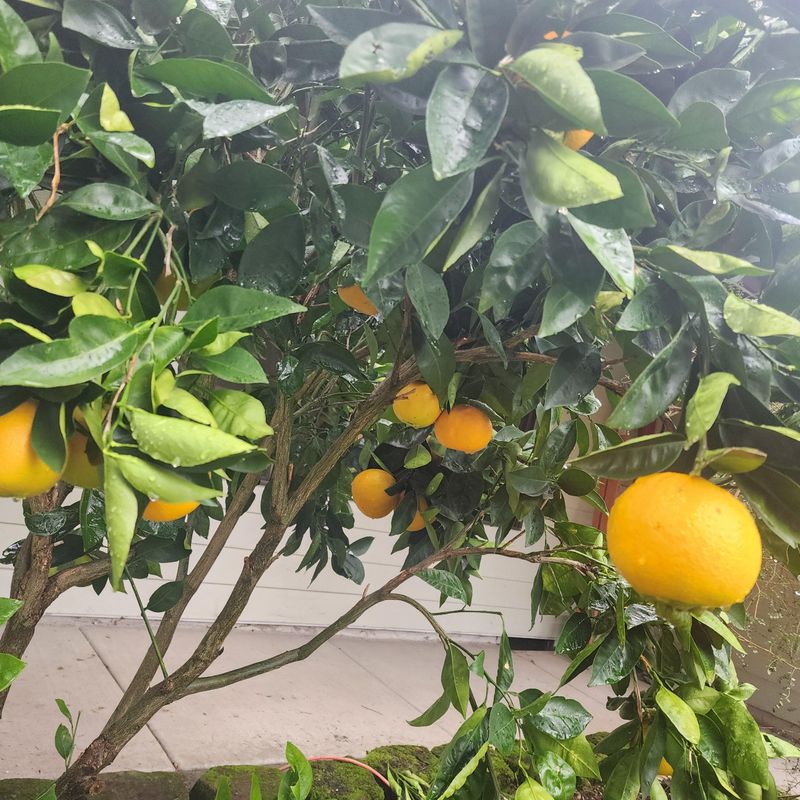
Good news first: a backyard orange tree is tougher than it looks. Citrus has grown across California for well over a century, handling plenty of cool autumn nights without anyone tucking it in.
According to UC ANR guidance, temperatures in the upper 30s and 40s generally don’t harm established citrus. A mild chill lasting a few hours usually passes without harm to foliage, branches, or fruit.
Cooler nights can even bring benefits. Many oranges and mandarins develop deeper color and sweeter flavor as fall turns to winter.
Gradual cooling also helps trees prepare for what’s ahead. As days shorten and nights cool, citrus slowly becomes a bit more cold hardy, a process sometimes called hardening off.
A tree that has felt a few chilly evenings is often better prepared for a true cold snap later on. That built-in adjustment is one reason early covering isn’t usually necessary.
A forecast low of 42 degrees in October or early November rarely calls for a rush outside with blankets. Frost cloth is best saved for nights that actually threaten damage.
Local conditions still deserve attention. Low spots in a yard, open areas far from buildings, and inland valleys often run several degrees colder than the official forecast.
An inexpensive outdoor thermometer placed near the tree shows what the citrus is really feeling. That reading is far more useful than a number from a weather station miles away.
Real Risk Starts Below Freezing
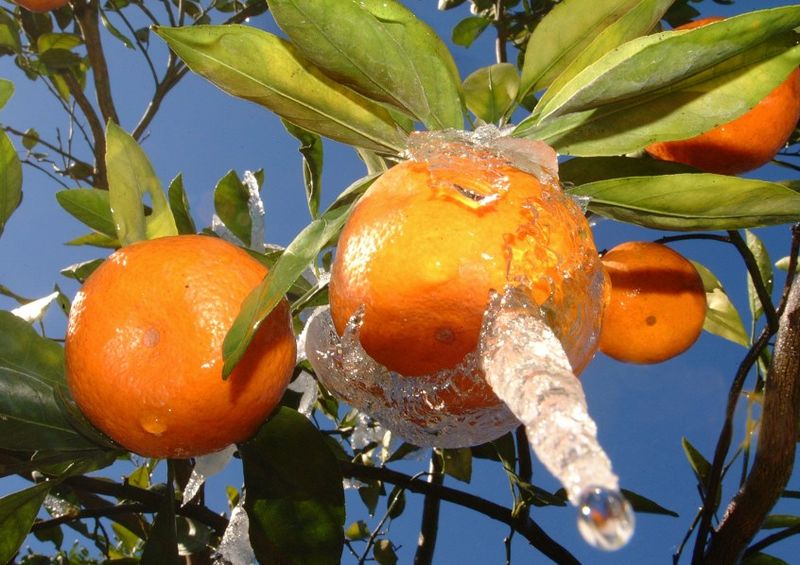
Thirty-two degrees is the number that changes everything. Once air temperatures approach or drop below freezing, ice can begin forming inside plant tissue, and citrus damage becomes a real concern.
UC ANR materials note that tender new growth, flowers, and fruit are often hurt first. Thicker leaves and wood can hold out somewhat longer.
Fruit rinds and juice sacs may suffer damage in the upper 20s, depending on how long the cold lasts. Many sources describe roughly 28 degrees for several hours as the point where serious fruit and leaf injury becomes likely.
Exact thresholds vary by variety and conditions, though. These numbers work best as general guides rather than hard rules.
Duration matters just as much as the low itself. A quick dip to 31 degrees for thirty minutes before sunrise is far less risky than four hours sitting at 29.
Clear, calm, dry nights carry the most risk. Without clouds to hold it in, heat escapes from the ground straight into the sky.
Your California Garden Changes Every Week. Your Plan Should Too.
Gardening in California changes quickly throughout the season. Every Friday you’ll receive a simple weekly plan showing exactly what to plant, prune, fertilize, harvest, and protect so you never miss the right timing.
A practical approach works well for many gardeners. Lows forecast near 32 degrees, especially on a still, cloudless night, signal time to set up protection before dark.
Waiting until midnight means the soil has already lost much of its stored warmth.
Frost warnings from the National Weather Service offer a helpful alert, and one for the local area is a clear cue to act.
Young Trees Need Protection Sooner
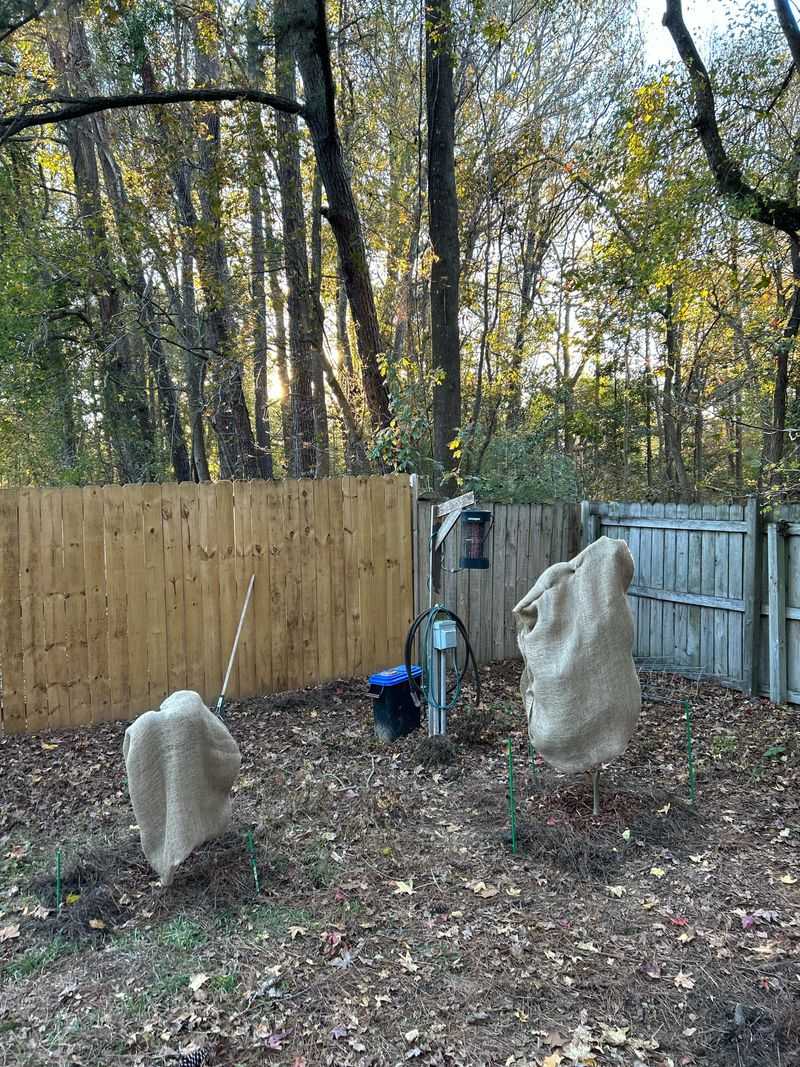
A three-foot Meyer lemon planted just last spring has a skinny trunk, a small root system, and only a handful of leaves for shelter. Compared with a big, mature tree, it simply has fewer defenses.
UC ANR emphasizes that young and recently planted citrus are more vulnerable to cold. Thin trunks, small canopies, and limited stored reserves all leave them exposed.
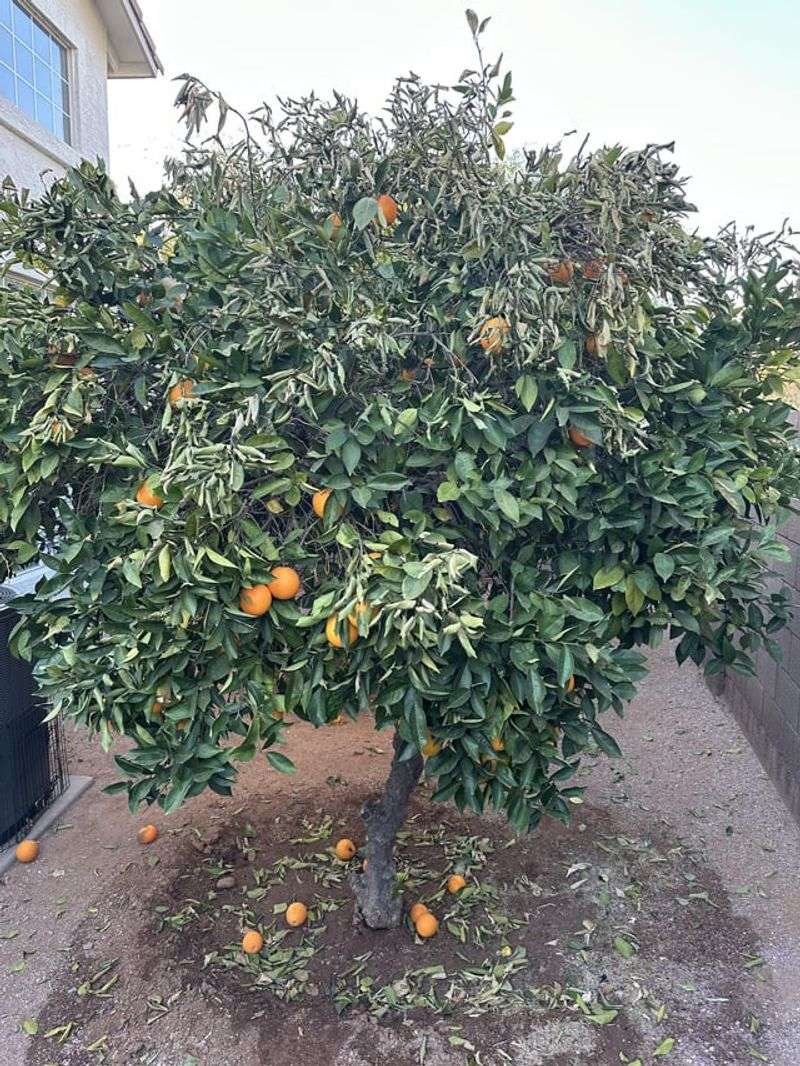
A frost that only nips the outer leaves on a mature orange can set a young tree back all the way to the graft. That’s a big loss after a season of careful watering.
For this reason, many gardeners start protecting young trees at a higher temperature. Lows forecast in the mid 30s often serve as the signal rather than waiting for freezing.
That extra margin offers a safety cushion in yards that run colder than predicted. It’s an easy habit that can save a lot of regrowth time.
Trunk protection helps little trees especially. Foam tree wrap, insulating material, or even corrugated cardboard can shield the bud union, where the fruiting variety joins the rootstock.
Damage to the top isn’t always the end of the story. A protected bud union often lets the tree regrow the variety that was originally planted.
Potted citrus deserves the same extra care, since roots in containers chill faster than roots in the ground. Moving pots near a south-facing wall or under a patio roof can make a noticeable difference.
Frost Cloth Works Better Than Plastic
That old plastic tarp in the garage looks like a smart shortcut on a cold evening. Unfortunately, it can cause more harm than help.
Plastic sheeting conducts cold easily, so leaves touching it can freeze right through. It also traps moisture, and morning sun on a plastic-wrapped tree can heat things up quickly enough to scorch tender growth.
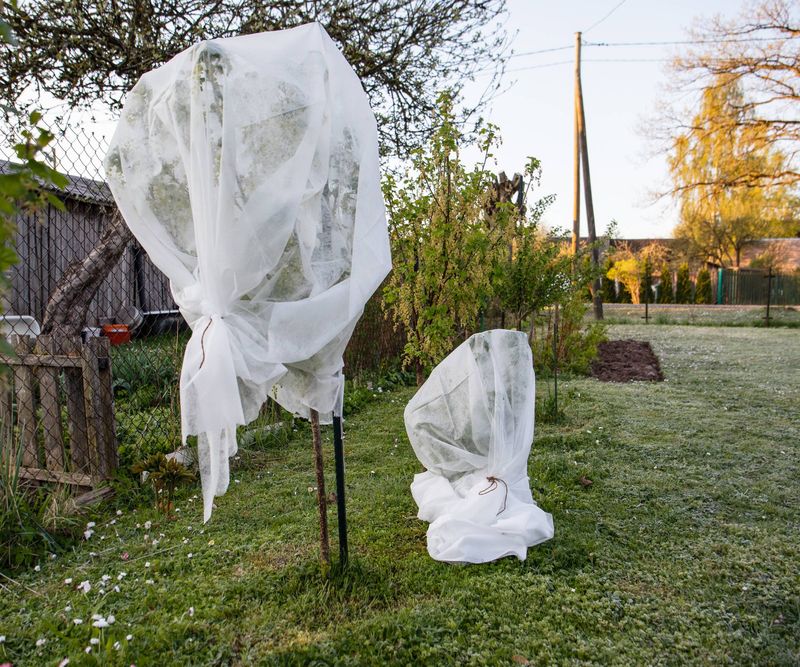
Breathable frost cloth, sometimes called row cover or frost blanket, is designed to avoid these problems. It works by holding in heat that rises from the ground overnight.
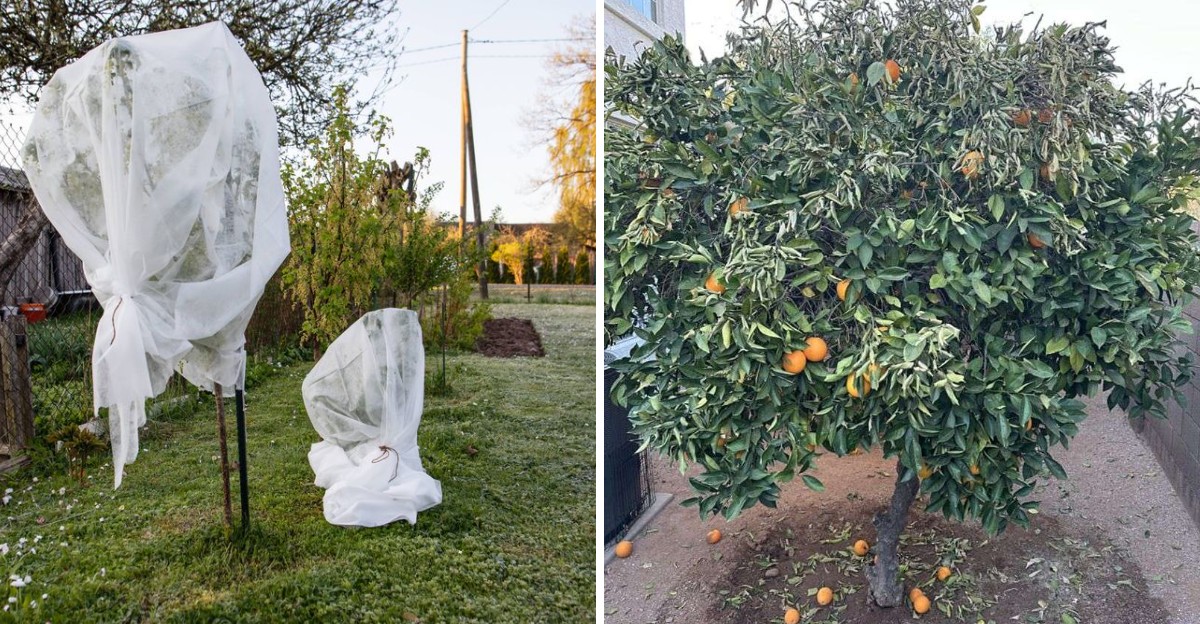
That’s why the best approach is to drape any cover all the way down to the soil. Rocks, bricks, or stakes along the edges keep it in place.
A cover that stops halfway down the canopy behaves like an umbrella with holes, letting warm air leak away. Full coverage to the ground makes a real difference.
Old cotton sheets and blankets can work in a pinch, since they also breathe. A simple frame of stakes or PVC pipe around the tree keeps heavy fabric from crushing branches.
On the coldest nights, some gardeners add old-style incandescent holiday lights or outdoor-rated heat sources under the cover. Modern LED lights give off very little heat, so they won’t help much.
Outdoor-rated cords and bulbs kept away from the fabric are important safety steps. Reusable frost cloth is inexpensive and folds up neatly, so one purchase can last several winters.
Water The Soil Before A Cold Night
Morning coffee in hand, a gardener steps outside to find the frost cloth sparkling with melting ice. The tree made it through the night, and now comes a step many people forget.
Covers should come off once temperatures rise safely above freezing, usually by mid-morning. Left on all day, they can trap heat and humidity, especially when California sun warms things up fast.
Overheated leaves can get stressed or scorched within a few hours. Damp, stuffy conditions under fabric may also encourage disease.
Citrus needs sunlight, too. Covered trees can’t make food through photosynthesis, and the ground beneath them can’t soak up warmth for the next night.
Removing the cloth lets the soil recharge with heat, which helps when another cold night is on the way. Several freezing nights in a row call for a simple routine.
Folding the cover loosely beside the tree makes it easy to replace each evening. Some gardeners simply clip one side open during the day so it closes quickly before sunset.
Frost-damaged branches are best left alone for a while. UC ANR advises waiting until spring, when new growth clearly shows which parts recovered and which didn’t.
Cutting too soon can remove healthy wood and expose the tree to more cold. Brown, crispy leaves may look sad for a few months, but patience usually pays off with fresh green growth.
Remove Covers Once Morning Warms Up
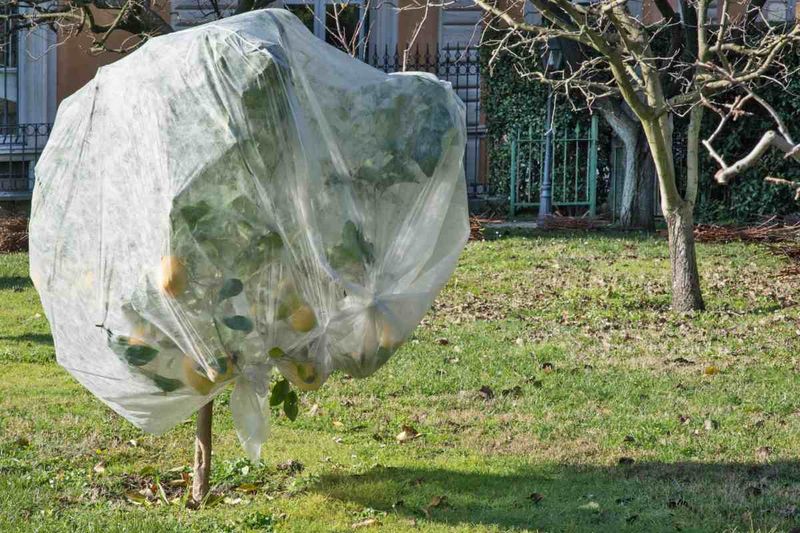
Morning coffee in hand, a gardener steps outside to find the frost cloth sparkling with melting ice. The tree made it through the night, and now comes a step many people forget.
Covers should come off once temperatures rise safely above freezing, usually by mid-morning. Left on all day, they can trap heat and humidity, especially when California sun warms things up fast.
Overheated leaves can get stressed or scorched within a few hours. Damp, stuffy conditions under fabric may also encourage disease.
Citrus needs sunlight, too. Covered trees can’t make food through photosynthesis, and the ground beneath them can’t soak up warmth for the next night.
Removing the cloth lets the soil recharge with heat, which helps when another cold night is on the way. Several freezing nights in a row call for a simple routine.
Folding the cover loosely beside the tree makes it easy to replace each evening. Some gardeners simply clip one side open during the day so it closes quickly before sunset.
Frost-damaged branches are best left alone for a while. UC ANR advises waiting until spring, when new growth clearly shows which parts recovered and which didn’t.
Cutting too soon can remove healthy wood and expose the tree to more cold. Brown, crispy leaves may look sad for a few months, but patience usually pays off with fresh green growth.
Know Your Variety Before You Decide
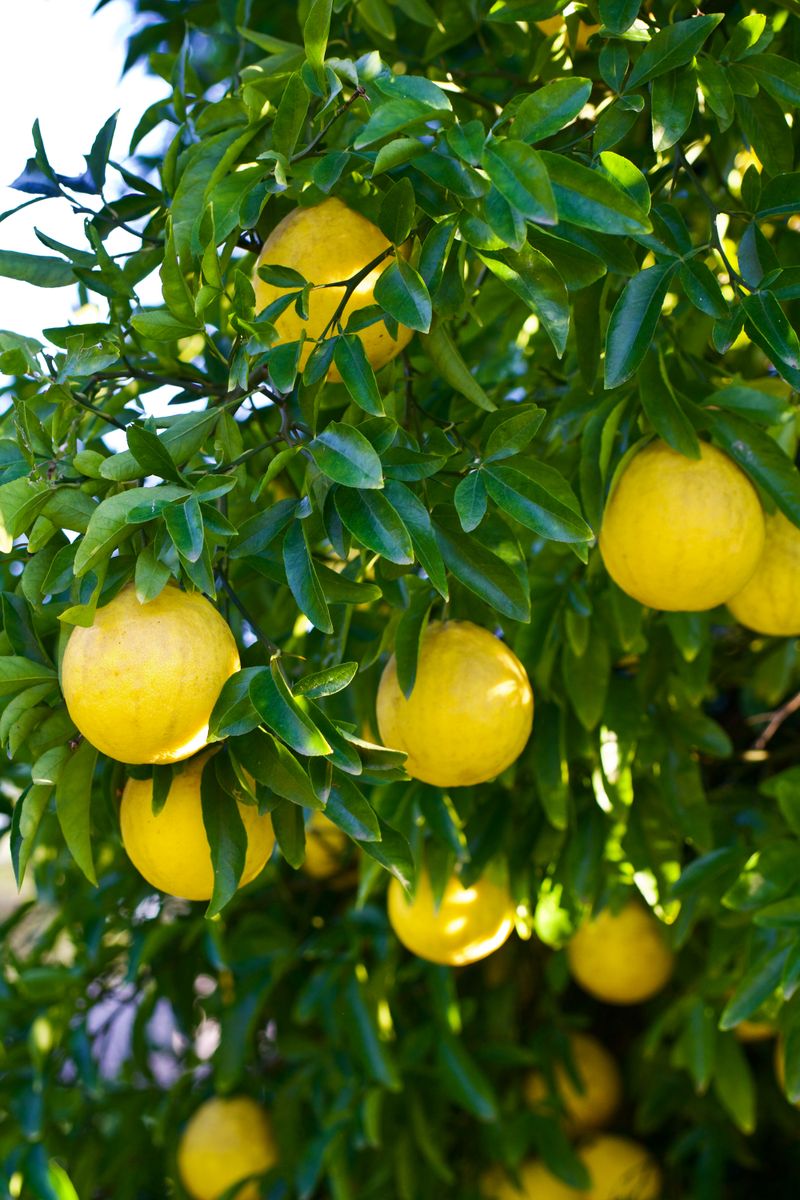
A kumquat and a lime might sit side by side in a nursery, yet their cold tolerance is worlds apart. Each type of citrus responds a little differently when the thermometer drops.
Kumquats and satsuma mandarins generally rank among the hardiest common types and can handle colder nights than most. Sweet oranges and grapefruit fall somewhere in the middle.
Lemons and limes, especially Mexican limes, tend to be the most tender. Many sources list them as damaged at higher temperatures than other citrus.
Exact numbers vary, and UC ANR fact sheets offer helpful detail for specific trees.
Fruit timing plays a role, too. Many navels and mandarins carry ripe fruit through winter, and a hard freeze can ruin the harvest even when the tree itself pulls through.
Picking ripe fruit ahead of a serious cold snap is a simple way to save it. A full bowl on the kitchen counter beats a crop of frozen fruit on the branch.
For a mature, hardy variety facing a mild 40-degree evening, a cover probably isn’t needed. A young lime tree facing lows near freezing is a different story and deserves protection.
The best decision comes from putting the pieces together. Variety, age, location, and the forecast all point toward when to reach for the frost cloth.
With those factors in mind, early cold nights become much less stressful. Many trees can simply enjoy the cool air while their gardeners enjoy a little extra sleep.