What It Means When A Curly-Tail Lizard Takes Over Your Florida Patio
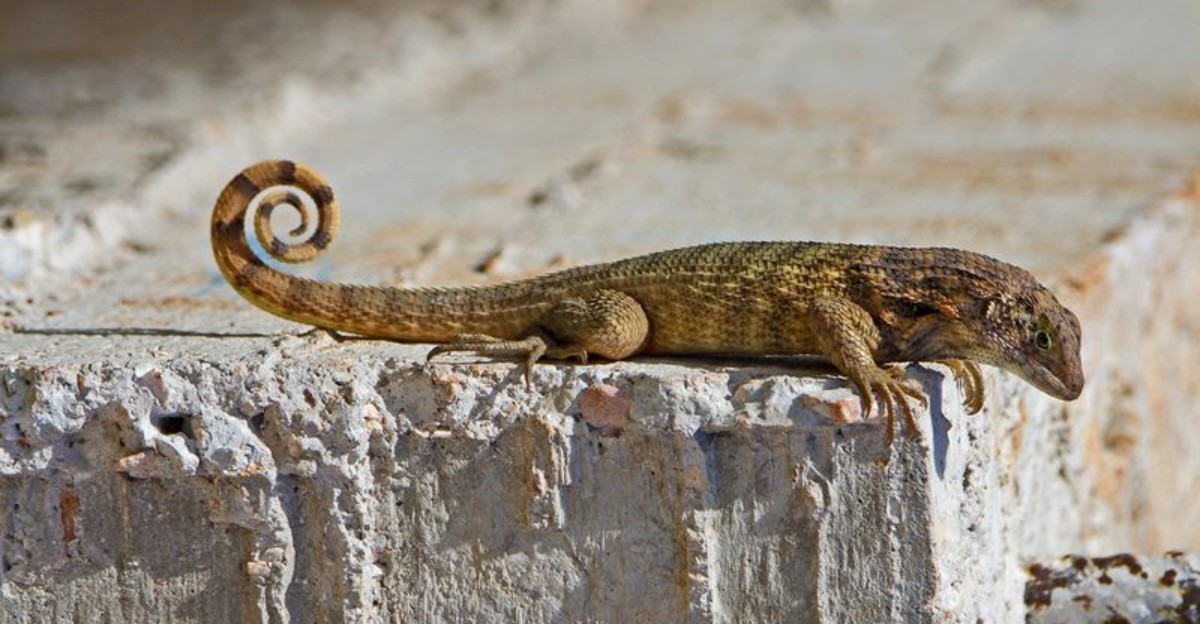
One lizard decides your porch railing is its throne, and from that day forward, nothing else gets a seat.
Curly-tails don’t belong in Florida originally, and that backstory explains the attitude.
Native lizards that used to sun themselves in the same spot start disappearing once one of these moves in, pushed out through sheer territorial aggression rather than anything subtle.
Here’s the part most homeowners miss: a confident lizard holding court on your patio isn’t just a quirky regular. It’s often the reason your yard went quiet on the native lizard front without you noticing the shift happening.
Next time you spot one posted up like it owns the place, look around for what used to share that space. Chances are, it doesn’t anymore.
1. Curly-Tails Came From The Bahamas
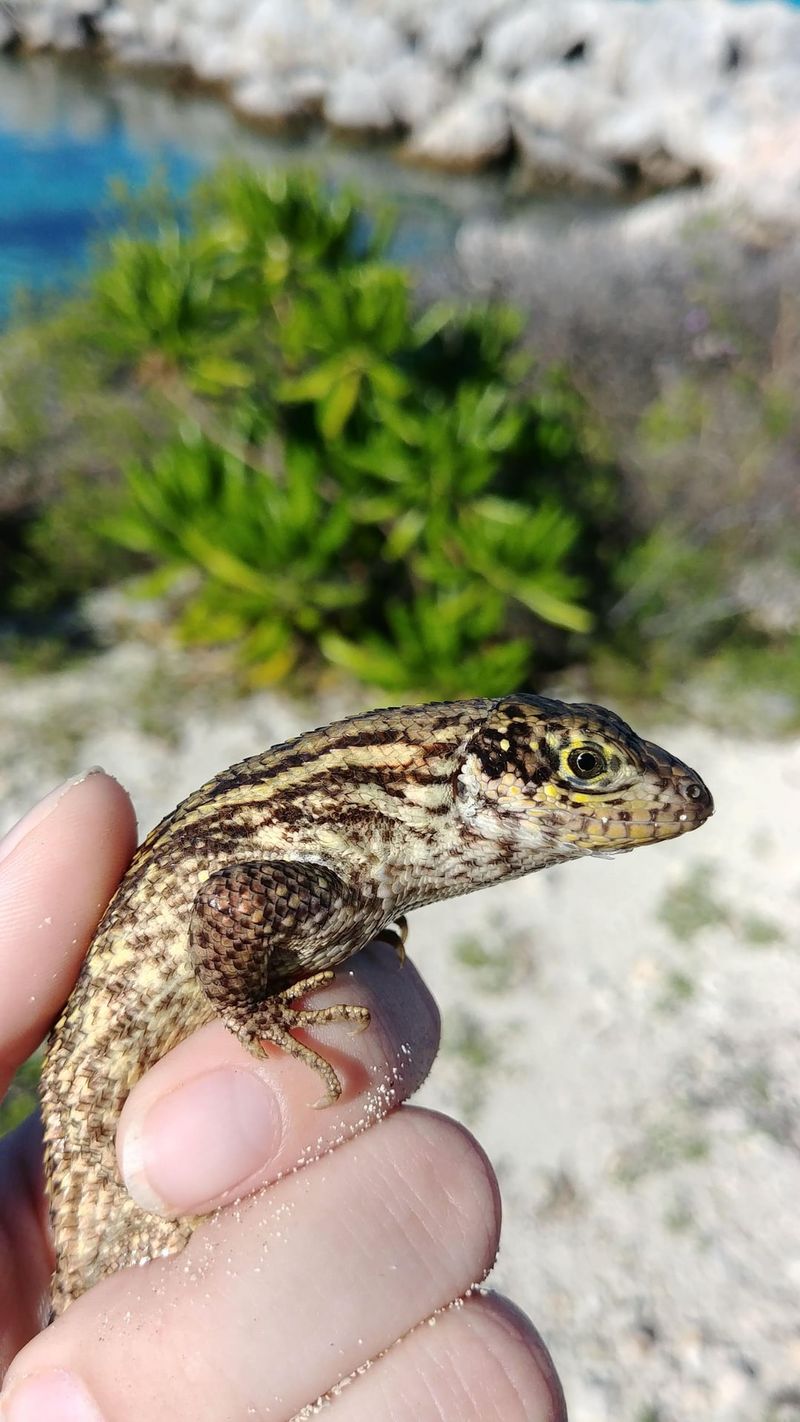
Picture a sunny island with turquoise water, white sand, and rough limestone rocks baking in the heat. That is the original home of the northern curly-tailed lizard, known to scientists as Leiocephalus carinatus.
Its natural range covers the Bahamas, Cuba, the Cayman Islands, and a handful of other nearby islands. The whole Leiocephalus group belongs only to the West Indies, which makes these lizards true island travelers.
Life on those islands shaped them in useful ways. Rocky ground, bright sun, and open space taught them to hunt on the ground instead of up in trees.
They grew sturdy bodies and strong legs for quick sprints across hot stone. Many reach about 8 to 10 inches long, which is chunky compared to the slim anoles Floridians know.
So when one shows up on your patio, you are looking at a little piece of Caribbean history. Its ancestors soaked up sunshine on beaches many tourists only dream about visiting.
Here is a fun way to spot one. Look for rough, keeled scales, a stocky shape, and that famous tail coiled up like a cinnamon roll.
Once you notice those features, it is hard to mistake them for anything else. You might even start calling your patio a tiny island getaway.
2. They’ve Lived In South Florida Since The 1930s
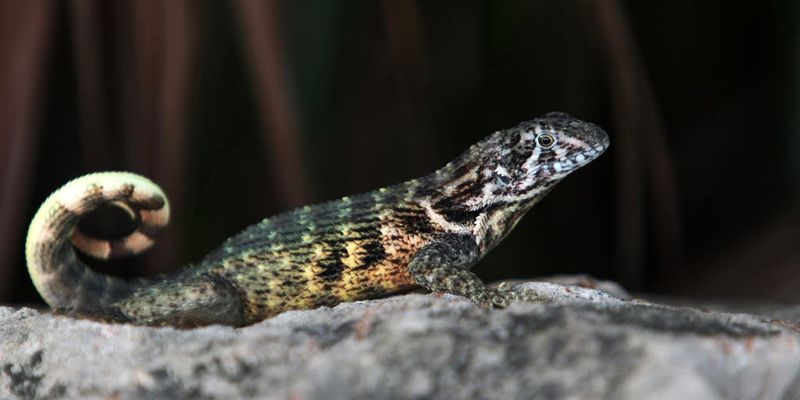
Grandpa might remember these lizards better than you think. Northern curly-tails have been settled in South Florida since the 1930s, so they are hardly brand-new arrivals.
Their story has a few twists. Some escaped from a zoo in 1935, which sounds like the start of a cartoon movie.
Then, in the 1940s, people released them on purpose in Palm Beach. The idea was to let them munch on bugs that were bothering sugarcane crops.
Other lizards likely came through the pet trade. A few may have hitched rides on boats crossing over from the Bahamas, tucked away in cargo or gear.
Back then, few people worried about what happens when a new animal moves in. Today, wildlife experts know these choices can ripple through nature for decades.
That history matters for your patio. Curly-tails have had nearly a century to get comfortable in Florida, learning to thrive around homes, docks, and shops.
Your Florida Garden Changes Every Week. Your Plan Should Too.
Gardening in Florida changes quickly throughout the season. Every Friday you’ll receive a simple weekly plan showing exactly what to plant, prune, fertilize, harvest, and protect so you never miss the right timing.
Think of them as longtime residents who finally decided to explore the rest of the state. Their roots run deep in places like Palm Beach and Miami-Dade County.
Next time a friend calls them a new pest, you can share the surprising backstory. A zoo escape and a farming experiment make for great dinner table talk.
3. Now They’re Spreading Across Central Florida
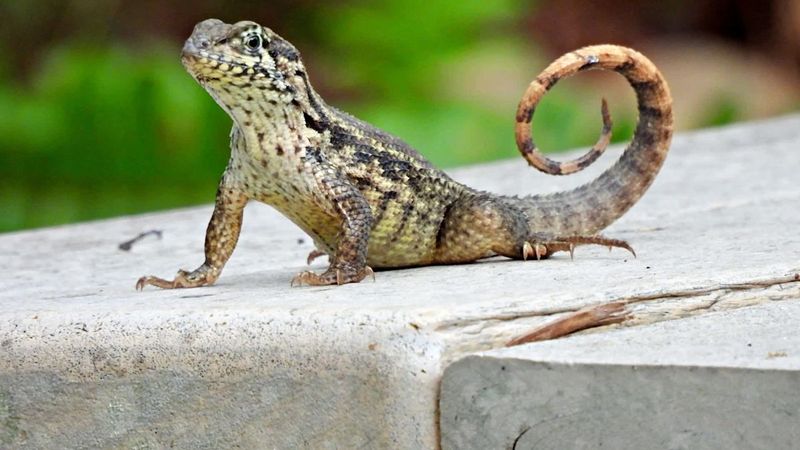
Folks in Orlando, Tampa, and nearby towns have started noticing a new face on their sidewalks. For years, curly-tails were mostly a South Florida thing, but that is changing fast.
Researchers report that these lizards are moving north up the peninsula. In many parts of Central region, they are becoming fairly common sights.
Why the road trip? Busy highways, shipping, landscaping supplies, and boat traffic can carry lizards or their eggs to new places without anyone noticing.
Warm weather helps too. Mild winters let them survive in spots that once felt a bit too chilly for island lizards.
If you live in Central Florida and just spotted your first one, you are part of a bigger trend. Your patio may be one of the newer stops on their northward journey.
It is a good idea to keep an eye on how many you see over time. One lizard is interesting, but a growing group suggests they have settled in for good.
Try snapping a few photos each season. Watching their numbers change can turn your backyard into a mini science project the whole family can enjoy.
4. Pavement, Seawalls And Buildings Suit Them Well
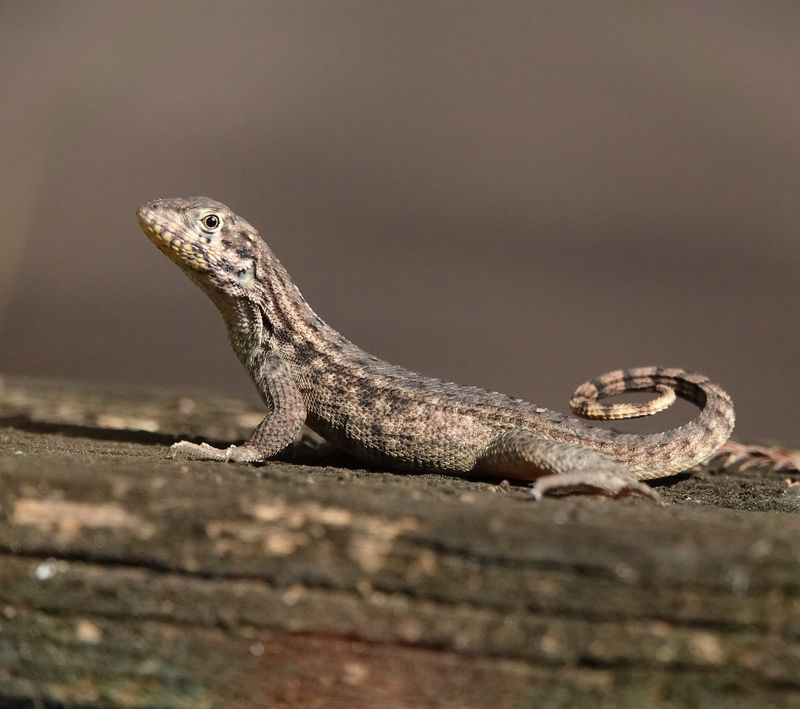
Most animals avoid parking lots, but curly-tails seem to love them. Sidewalks, road corners, and hot concrete feel a lot like the rocky islands their ancestors called home.
These lizards favor open, sunny spots with hard surfaces. Rock piles, limestone, and cracked pavement give them warm places to bask and quick spots to hide.
Seawalls are a favorite hangout along canals and beaches. Gaps between stones and under ledges make great little shelters when danger shows up.
Buildings work well too. Foundations, steps, and patio edges offer shade, warmth, and plenty of passing bugs to snack on.
So if your patio has pavers, stone walls, or a rock garden, you basically built a lizard resort. Bright sun and lots of crevices make it hard for them to resist.
Want fewer visitors? Clear out loose rock piles, seal gaps near foundations, and tidy clutter where they like to hide.
Prefer to enjoy the show? Leave a sunny flat stone and watch them claim it like a tiny throne each morning.
5. They Eat Invasive Brown Anoles
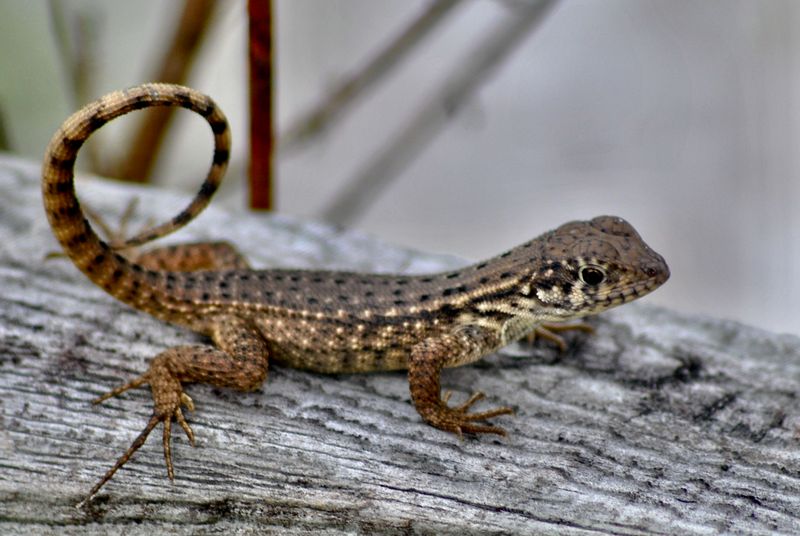
Some scientists have a funny name for it: invasive-on-invasive violence. Curly-tails, which are not native to the state, hunt brown anoles, which are not native either.
Brown anoles, or Anolis sagrei, are those small brownish lizards bobbing their heads on fences everywhere. They arrived from the Caribbean and spread across much of the state.
In the Bahamas, curly-tails are known as major predators of brown anoles. That habit came along with them to Florida.
Their menu does not stop there. Grasshoppers, ants, beetles, and other insects are fair game, and they will even grab human food scraps.
That makes them opportunistic eaters, meaning they take whatever meal is handy. A dropped chip near your grill might draw a curious visitor.
For homeowners, this has an upside. A curly-tail patrolling your patio can help cut down on pesky bugs crawling around.
Still, try not to feed them on purpose. Human snacks are not healthy for lizards, and handouts can draw more of them close to your door.
Instead, sit back and enjoy a front-row seat to a real-life nature show. It is like a wildlife documentary playing right outside your sliding glass door.
6. Native Green Anoles May Be At Risk Too
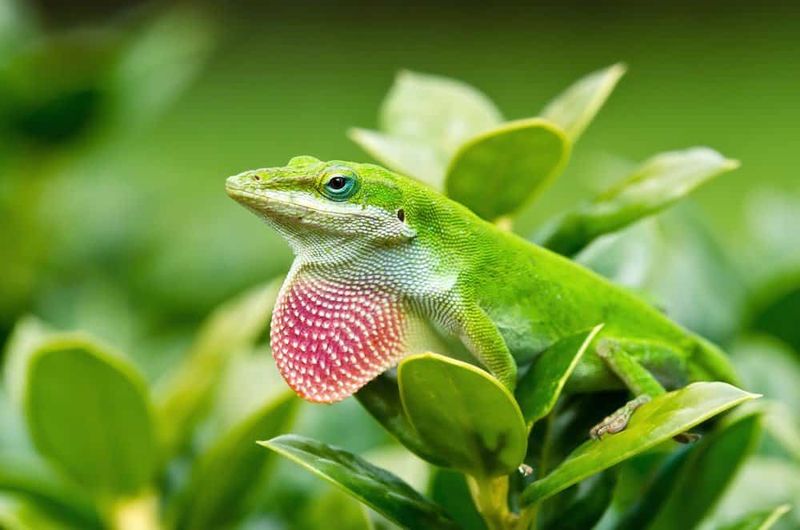
Here is where the story gets a little bittersweet. The bright green anole, Florida’s own native lizard, could feel the squeeze when curly-tails move in.
Studies in the Bahamas showed a chain reaction. Curly-tails pushed brown anoles to climb higher into trees to stay safe.
Once the brown anoles moved up, they crowded the green anoles living in the treetops. In some areas, green anole numbers dropped as a result.
Researchers also say curly-tails compete with native anoles for living space. Other native lizards, like the Eastern six-lined racerunner and the Florida scrub lizard, might be affected too.
Nature works like a big puzzle, and a new piece can shift the whole picture. One newcomer on your patio can connect to changes far up in the trees.
You can help native lizards by planting native shrubs and trees. Thick leafy cover gives green anoles safe places to rest and hunt.
Skipping heavy pesticide use also helps, since lizards need plenty of insects to eat. A healthy, varied yard gives native species a better chance to hold their ground.
7. That Curled Tail Sends A Signal
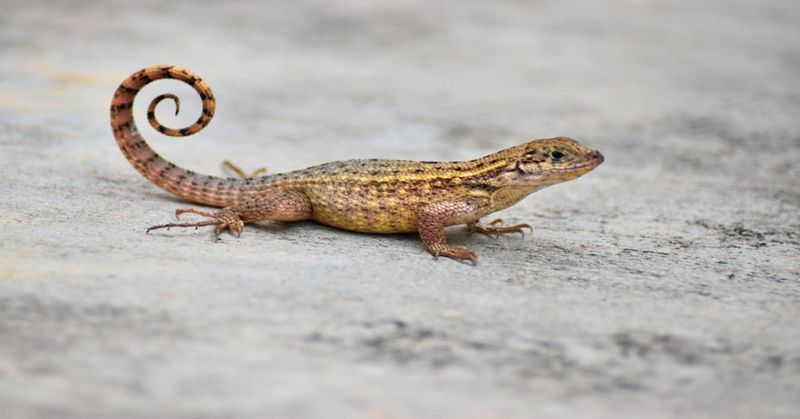
Imagine a tiny lizard waving a flag at a hawk and saying, try me. That curled-up tail is basically doing just that.
The coiled tail is the most famous feature of this species. It does more than look cute, and it plays a big role in staying safe.
When a predator watches from a distance, the lizard curls and waves its tail. The motion can distract or even scare off a would-be attacker.
Scientists think the tail may also signal health and fitness. A strong, lively display might tell a predator that chasing this lizard is a waste of energy.
If things get serious, the lizard has a backup plan. It can drop its tail, which wiggles on the ground while the lizard runs for cover.
The good news is that the tail grows back over time. The new one may look a little different, but it still does the job.
So when you see that curl on your patio, the lizard is noticing you. Give it some space, and it will likely relax and go back to sunbathing.
8. They Pose No Threat To People
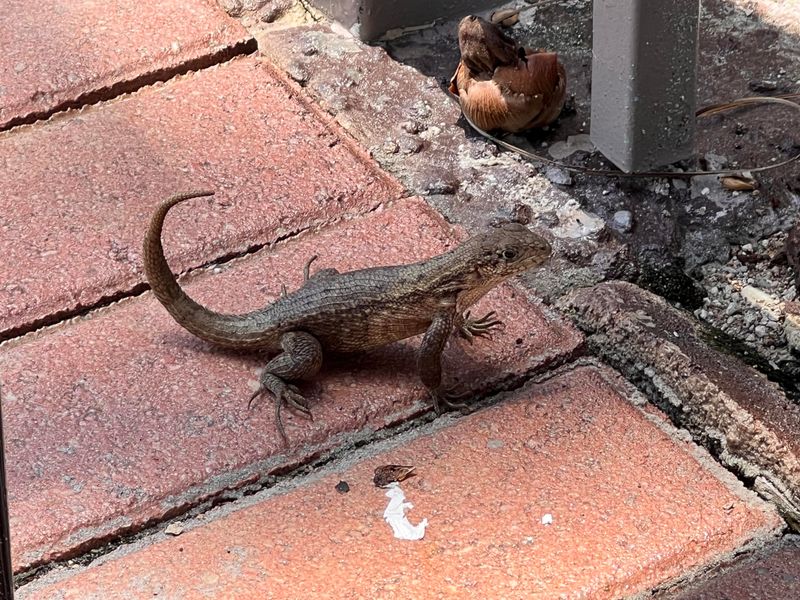
Relax, your patio is still yours. Wildlife officials say northern curly-tailed lizards are not considered dangerous to humans.
These lizards are not venomous, and they are not known for picking fights. Most of the time, they scurry off when a person gets too close.
That said, they do have strong jaws. If you grab one, it may give you a surprisingly firm bite to let you know it is not happy.
The easy fix is to leave them alone. Watching from a few steps away keeps both you and the lizard calm.
Kids can enjoy them too, as long as they look with their eyes instead of their hands. Turning lizard spotting into a game can teach respect for wildlife.
Pets are another story. Curious dogs and cats may chase them, so keep an eye on playful animals outdoors.
Washing your hands after touching patio surfaces or outdoor furniture is a smart habit anyway. Reptiles can carry germs, just like many backyard critters do.
All in all, a curly-tail is more of a quirky neighbor than a scary intruder. Treat it kindly, and you can share the sunshine without any drama.
9. Report Sightings To Help Track Their Spread
Want to be a backyard scientist? Your phone camera can help researchers track where curly-tails are showing up across Florida.
Wildlife officials ask residents to report sightings of nonnative lizards. Each report helps experts map how far these lizards have traveled and where new groups are forming.
Reporting is free and simple. You can use the IveGot1 app, visit IveGot1.org, or call the FWC Invasive Species Hotline at 888-483-4681.
Photos make a big difference. A clear picture lets experts confirm the species instead of guessing from a description.
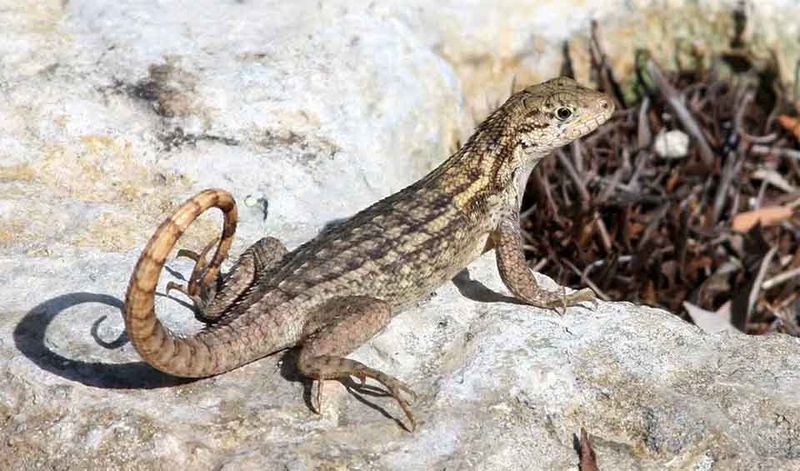
Try to capture the lizard from the side, showing its rough scales and curled tail. A shot of its surroundings, like a seawall or driveway, adds helpful details.
Note the date, time, and your general location too. Those small facts help researchers spot patterns over months and years.
Even if you think someone else already reported it, send yours anyway. More reports create a clearer picture of how the species is moving.
It is a fun way to turn a patio surprise into real help for wildlife. Who knew your morning coffee break could support science?