Where To Plant Florida Coontie For The Best Tropical Look Without The Upkeep
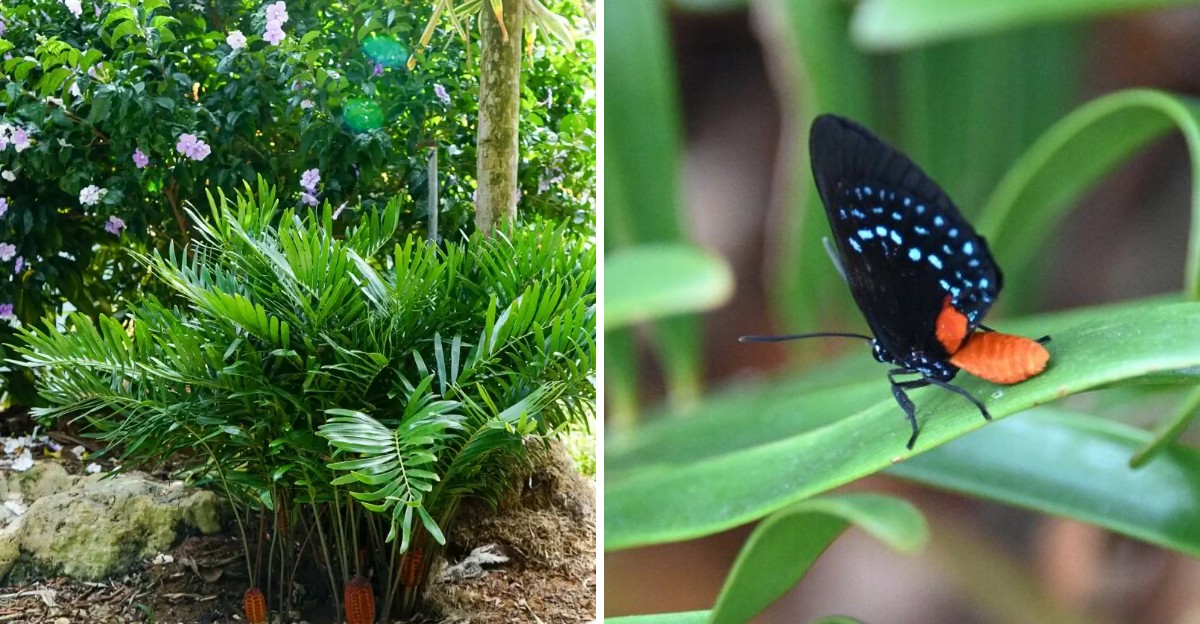
Coontie does the tropical look without asking much in return, which might explain why it’s quietly become everyone’s favorite low-effort plant.
Placement changes everything though. Full sun gives a different growth pattern than deep shade under an oak canopy, and plenty of Florida gardeners plant it wherever there’s a gap without thinking through the spot.
It’s slow to establish too. That trips up people expecting fast results from a tropical.
Patience pays off here, since the eventual payoff needs almost nothing from you once it’s settled in.
Pick your spot with some intention this time. The right location turns coontie from decent filler into the best-looking thing in your yard.
1. Partial Shade Is The Sweet Spot
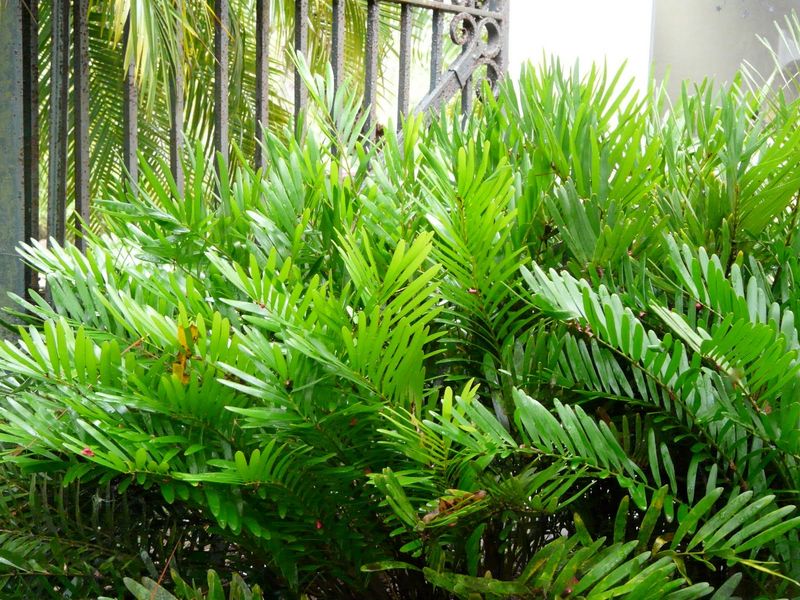
Think of coontie as the guest who loves the porch more than the beach. Soft, filtered light brings out its richest green color and fullest shape.
Gardeners often notice something surprising here. Plants grown in partial shade tend to get larger overall than those baking in bright sun all day.
So where do you find this sweet spot? Look under taller trees, like oaks or palms, where sunlight drifts through the leaves in patches.
The north and east sides of your house are also great choices.
East-facing beds get gentle morning sun and then cool off before the harsh afternoon heat arrives. North-facing spots stay bright but sheltered for most of the day.
Both settings help protect the fronds from turning pale or scorched.
A simple trick is to watch your yard for one full day. Notice which areas get light in the morning and shade after lunch, then mark them with a stick or a stone.
Shady spots also hold a bit more moisture without staying soggy, which keeps watering chores light. You get a lush, layered look that feels like a walk through a tropical forest.
Fun fact: in the wild, coontie often grows under pine and oak canopies. Planting it in partial shade simply copies the home it already knows best.
2. Full Sun Works Too
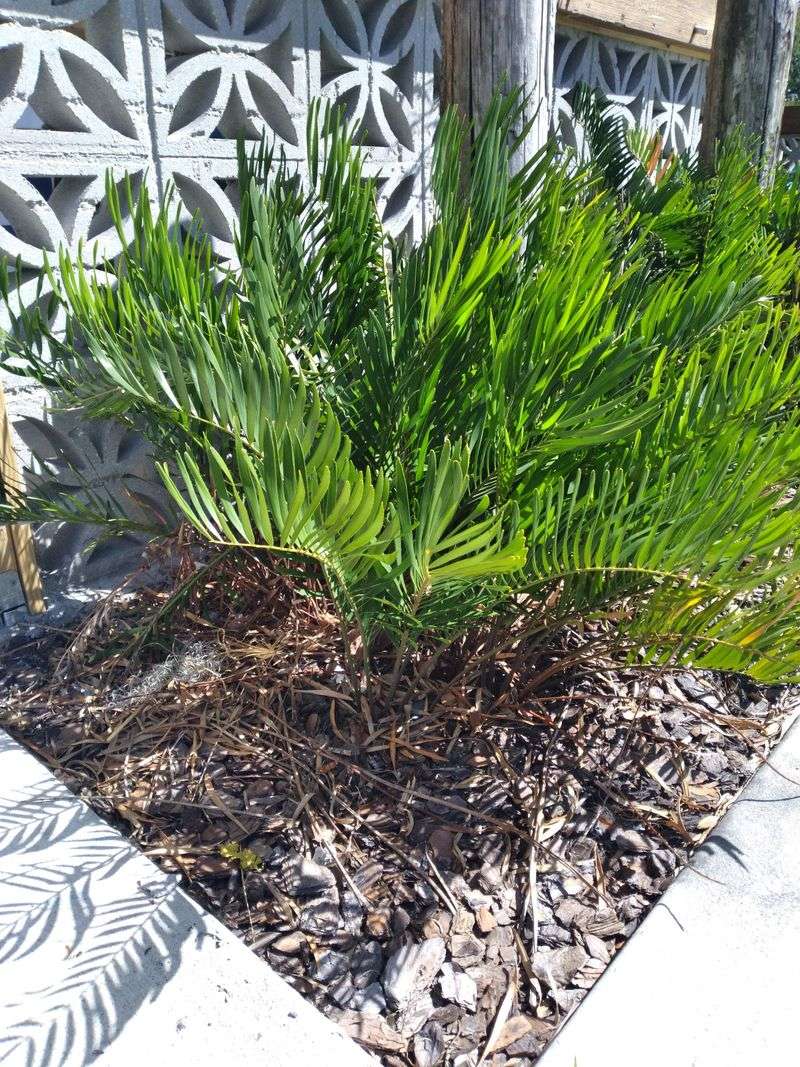
Got a yard with almost no trees? Relax, because coontie is far more flexible than its fern-like looks suggest.
This plant handles everything from full sun to deep shade. That range makes it one of the easiest natives to fit into a wide-open landscape.
In bright spots, coontie usually stays a bit smaller and more compact. Its fronds may look slightly lighter or more yellow-green, which is normal for a plant soaking up lots of rays.
That tighter shape can actually work in your favor. A sunny bed of tidy, low coontie looks neat and clean without any trimming at all.
New plants in full sun will need a little extra care at first. Water them regularly for the first few months while their roots settle in, then slowly cut back.
A layer of mulch about two to three inches deep helps a lot. It keeps the soil cooler, holds moisture, and blocks weeds that might compete for water.
Your Florida Garden Changes Every Week. Your Plan Should Too.
Gardening in Florida changes quickly throughout the season. Every Friday you’ll receive a simple weekly plan showing exactly what to plant, prune, fertilize, harvest, and protect so you never miss the right timing.
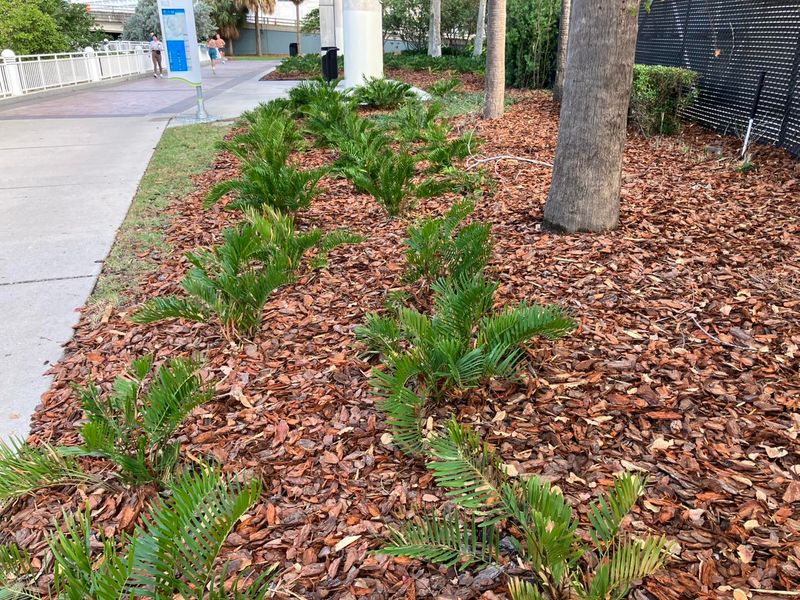
Sunny spots along walkways, open lawns, and street-side beds are all fair game. Pair coontie with other heat lovers like muhly grass or beach sunflower for a bold, carefree combo.
Once settled, it shrugs off Florida summers like a seasoned local. You just enjoy the view.
3. Pick A Spot With Good Drainage
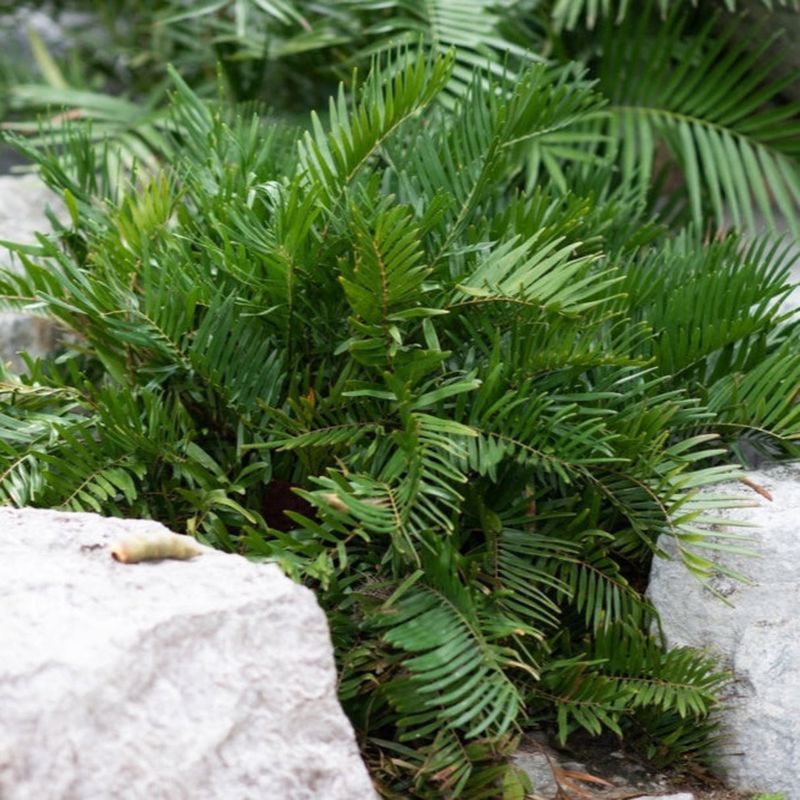
Soggy feet are the one thing coontie truly dislikes. Its thick, carrot-like roots can rot if water sits around them for too long.
The best soil is sandy and loose, the kind that drains quickly after a rainstorm. Luckily, much of Florida already has that type of ground.
Not sure about your soil? Try a quick test.
Dig a hole about a foot deep, fill it with water, and see how long it takes to drain.
If the water disappears within an hour or so, you are in great shape. If it lingers for hours, choose another spot or build a slightly raised bed.
Skip heavy, rich potting mixes that hold onto moisture. Coontie does not need fancy soil, and too much richness can cause more harm than help.
Low areas where puddles form after storms are poor choices. So are spots right under gutters or downspouts that dump water in one place.
Here is the happy part. Once the plant settles in, it becomes very drought tolerant and needs little extra water.
Most established coonties get by on rainfall alone.
Good drainage means fewer root problems, less watering, and more time to sit back and admire your mini jungle.
4. Coastal Yards Are A Natural Fit
Salty breezes, sandy soil, and blazing sun can be rough on many plants. Coontie, however, treats beach life like a long vacation.
It has moderate to high salt tolerance, so salt spray drifting in from the ocean rarely bothers it. That makes it a smart pick for homes near the coast.
Many seaside gardeners struggle to find plants that stay green and tidy. Coontie fills that gap with sturdy, leathery fronds that hold up well against wind and salt.
For the best results, place it a little behind the very first line of dunes or right along your patio. A spot with some shelter from the strongest gusts will keep fronds looking fresh.
Coastal sand drains fast, which coontie loves. You may only need to water during long dry spells while it gets established.
Try mixing it with other tough natives like sea grape, saw palmetto, or dune sunflower. Together they create a layered, natural look that feels right at home by the water.
Did you know? Coontie grows wild in parts of coastal Florida, including hammocks near the shore.
Planting it by the beach is like welcoming it back to its old neighborhood.
Fewer replacements and less fuss make it a coastal keeper.
5. Show It Off As A Specimen Or Container Plant
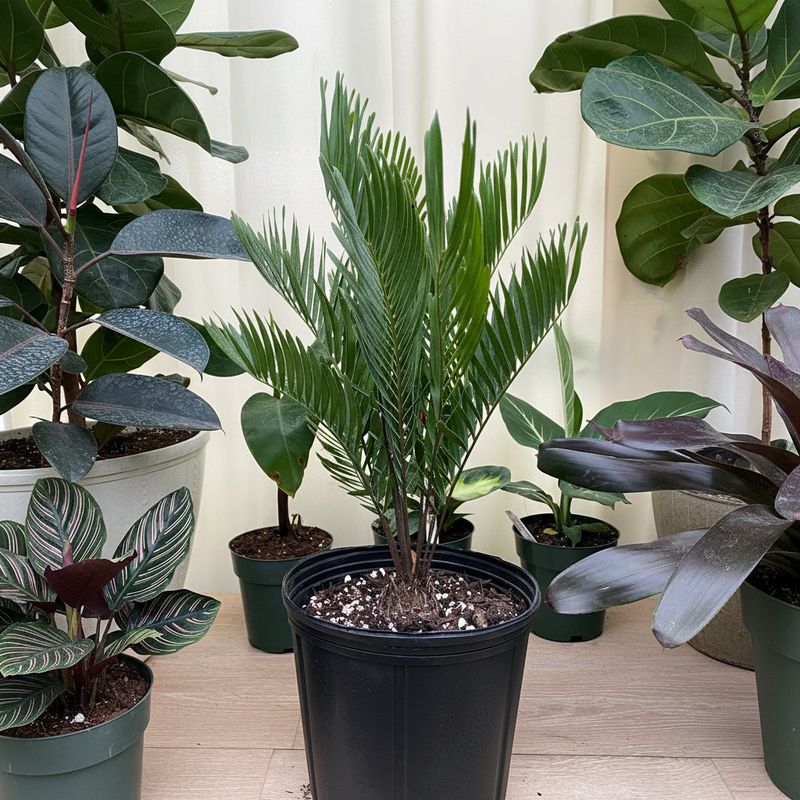
Some plants blend in, while others deserve a spotlight. A single coontie, with its glossy fronds fanning out like a fountain, easily earns center stage.
Used as a specimen plant, it draws the eye to an entry, a garden bend, or a quiet corner. Its prehistoric look sparks conversation with almost every visitor.
Containers are another fun option. Because coontie grows slowly and stays fairly compact, it fits nicely in pots on patios, balconies, or porches.
Choose a pot with a working drainage hole, since standing water causes trouble. Fill it with a cactus and palm mix, or blend sand with a bit of peat moss.
Water when the top inch or two of soil feels dry. In cooler months, the plant needs even less, so check before you pour.
Pots also let you move coontie around to find the best light. Some people even grow it indoors near a bright window, though homes with pets should skip that idea.
A handsome glazed pot or a rustic clay one can make the plant pop even more. Add a few river stones on top for a clean, polished finish.
It is living sculpture that asks for almost nothing in return.
6. Mass It As A Low-Care Groundcover
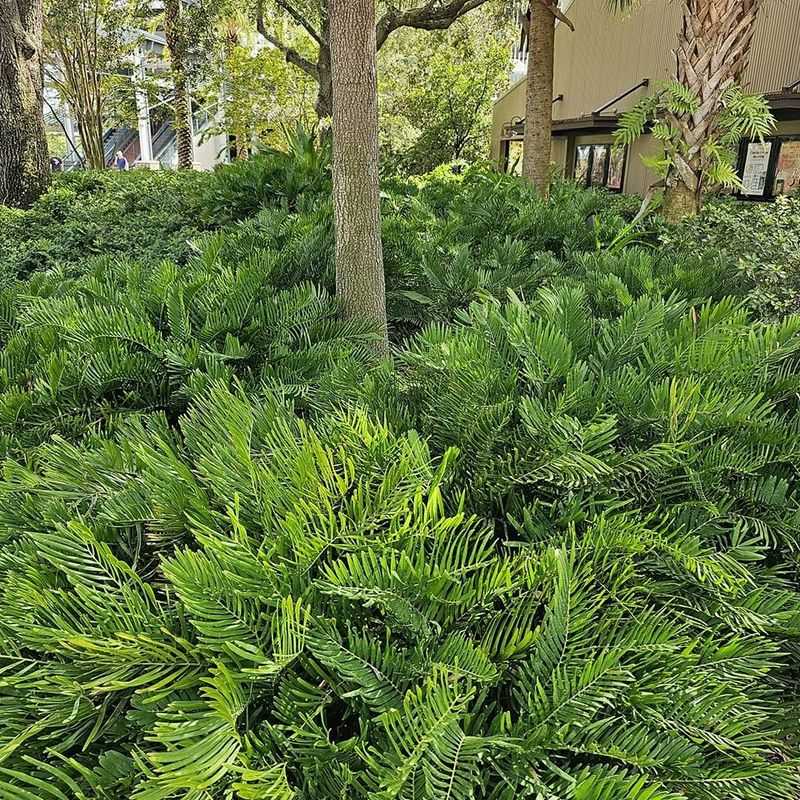
Tired of mowing that awkward slope or patchy strip of lawn? A sweep of coontie can turn a problem area into a soft, green carpet.
When planted in groups, it forms a dense, medium-green layer that usually reaches about three feet tall. The effect looks lush and full without being messy.
Spacing matters for a good result. Set plants roughly 20 inches apart so they can slowly fill in and touch as they mature.
Patience pays off here. Coontie grows slowly, so a mass planting may take a few seasons to knit together into a solid cover.
That slow pace is also the secret to its easy care. You will rarely need to prune, and there is no weekly trimming like you might have with fast-growing shrubs.
Until the plants fill in, use mulch between them to block weeds and keep soil moist. Pine straw or shredded bark both work well.
Mass plantings look wonderful under tree canopies, along curving paths, or on gentle slopes. They also help reduce lawn area, which can mean less water and fewer chores.
Picture a sea of feathery fronds rippling in a light breeze. It feels like a tropical getaway, minus the noisy lawn mower.
7. Tuck It Into Foundation Plantings
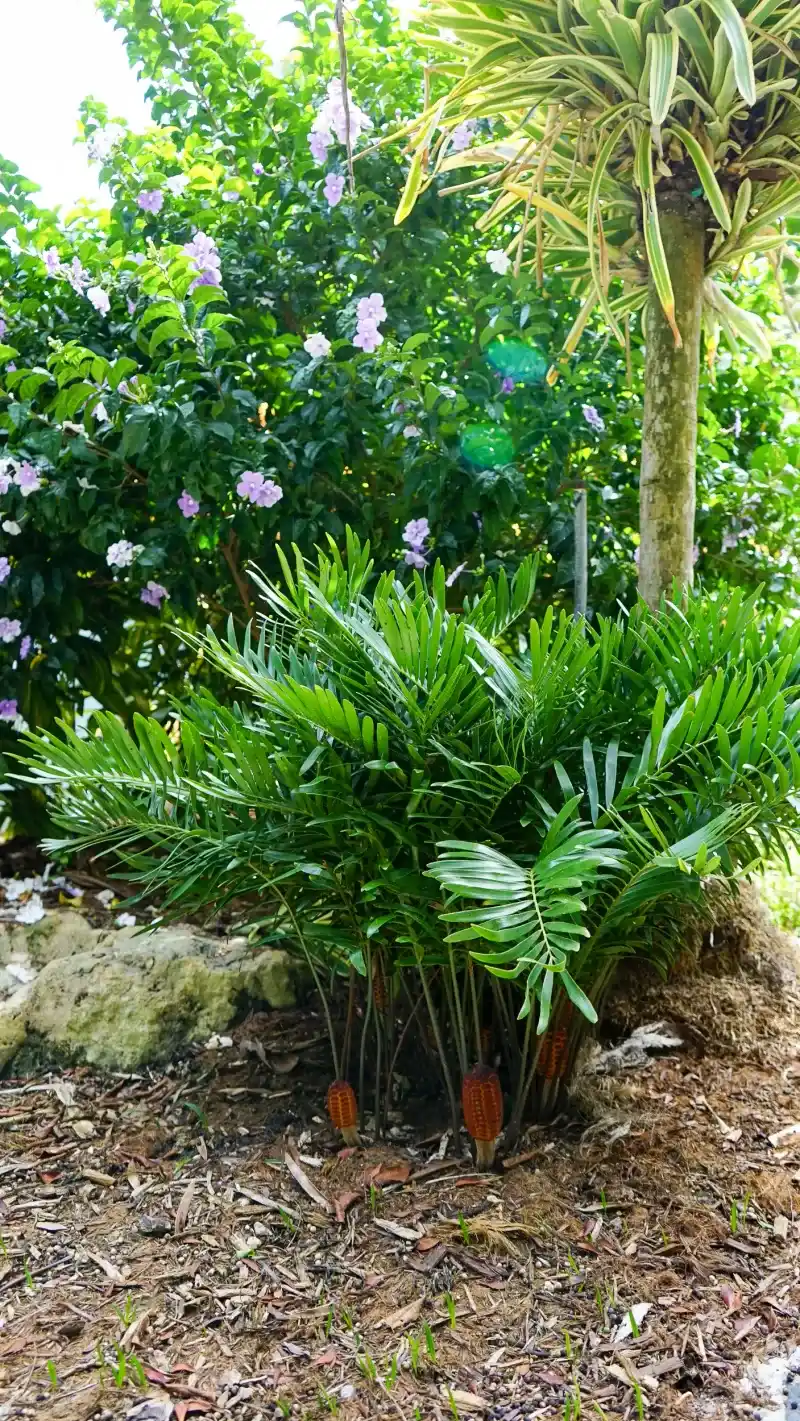
The front of a house can feel bare without the right greenery. Coontie steps in like a neat, low-key welcome mat made of leaves.
It works beautifully in foundation beds, where it softens hard walls and corners. Since it stays fairly low, it will not block windows or crowd your view.
Give it room to breathe, though. Plant it about two feet away from the house so roots and fronds can spread without bumping into walls.
That gap also helps air move around the plant and keeps the area easier to reach for cleanup. Your siding will thank you, too.
Coontie is tough enough for spots that face extra stress. Lining a driveway or circling a mailbox is a great job for it, since it handles heat bouncing off concrete.
Try placing several coonties in a row along a front walk for a tidy, repeating pattern. Or mix them with flowering natives for splashes of color.
Here is a handy tip. Plant near downspouts only if the water drains away fast, since soggy soil can upset the roots.
With a few well-placed plants, your curb appeal gets a tropical boost. Best of all, the upkeep stays pleasantly small.
8. Plant Where You Can Watch For Atala Butterflies
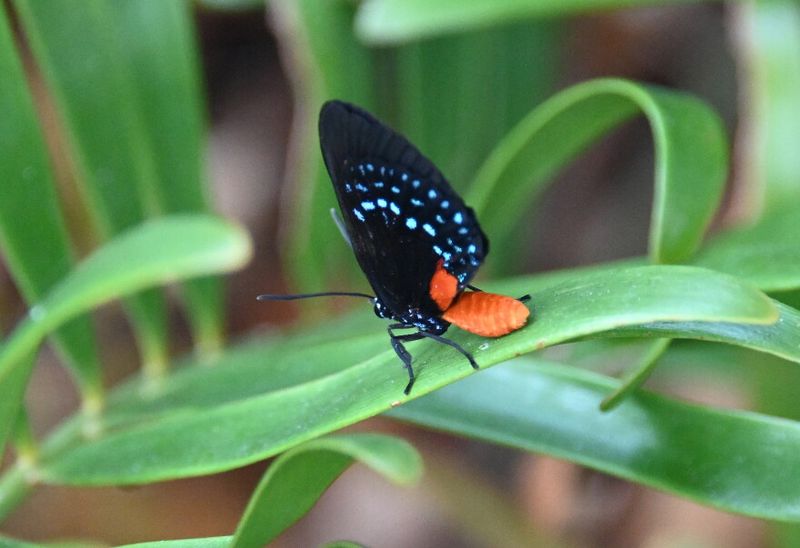
Imagine stepping outside to find a butterfly with velvet black wings, shimmering blue spots, and a bright orange belly. That jewel is the Atala, and coontie is its only native host plant.
In the wild, Atala caterpillars feed on coontie leaves and little else. They take in a natural toxin called cycasin, which makes them taste awful to birds and other predators.
The bright red caterpillars may chew the fronds bare for a while. Do not panic, because healthy coontie usually pushes out fresh new leaves soon after.
Even better, the caterpillar droppings help fertilize the plant. It is a tiny partnership that has worked for ages.
The Atala was once thought to have vanished from Florida. Thanks in part to people planting coontie, this butterfly is making a hopeful comeback.
So place a few plants near a window, patio, or garden bench. That way you can watch the whole life cycle, from eggs to chrysalis to fluttering adult.
Kids especially love spotting the clusters of red caterpillars. It turns your yard into a living science lesson.
Skip pesticides near your coontie so the butterflies stay safe. A little chewed foliage is a small price for such a dazzling visitor.
9. Keep It Away From Curious Pets And Kids
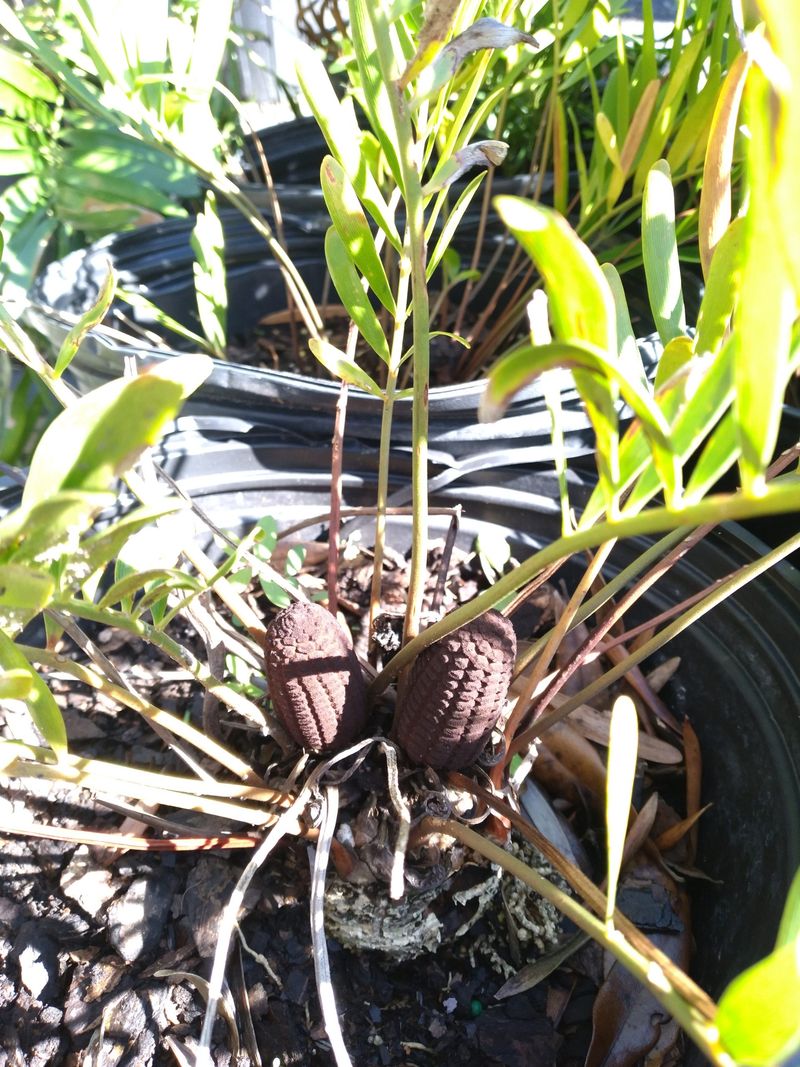
Beautiful does not mean harmless. Every part of coontie contains cycasin, a toxin that is dangerous to people, dogs, cats, and other animals.
The seeds carry the biggest risk. Their bright orange-red color can look like candy to a curious toddler or a playful puppy.
Even small amounts can cause serious harm, including liver damage. That is why placement really matters if you share your yard with pets or little ones.
Choose spots away from play areas, dog runs, and favorite chew zones. Back corners of the yard or beds behind a low fence are smarter picks.
Keep an eye out for seed cones on female plants. Removing and safely disposing of them is a simple way to lower the risk.
If you have pets, skip growing coontie indoors. A potted plant on the living room floor is just too tempting for a bored dog.
Here is a bit of history. Native Americans and early settlers once made flour from coontie roots, but only after a long process to remove the toxins.
Please do not try this at home.
If someone does eat part of the plant, call a doctor, vet, or poison control right away.