Young Snakes With Yellow Tail Tips Appear Around Alabama Homes In Fall
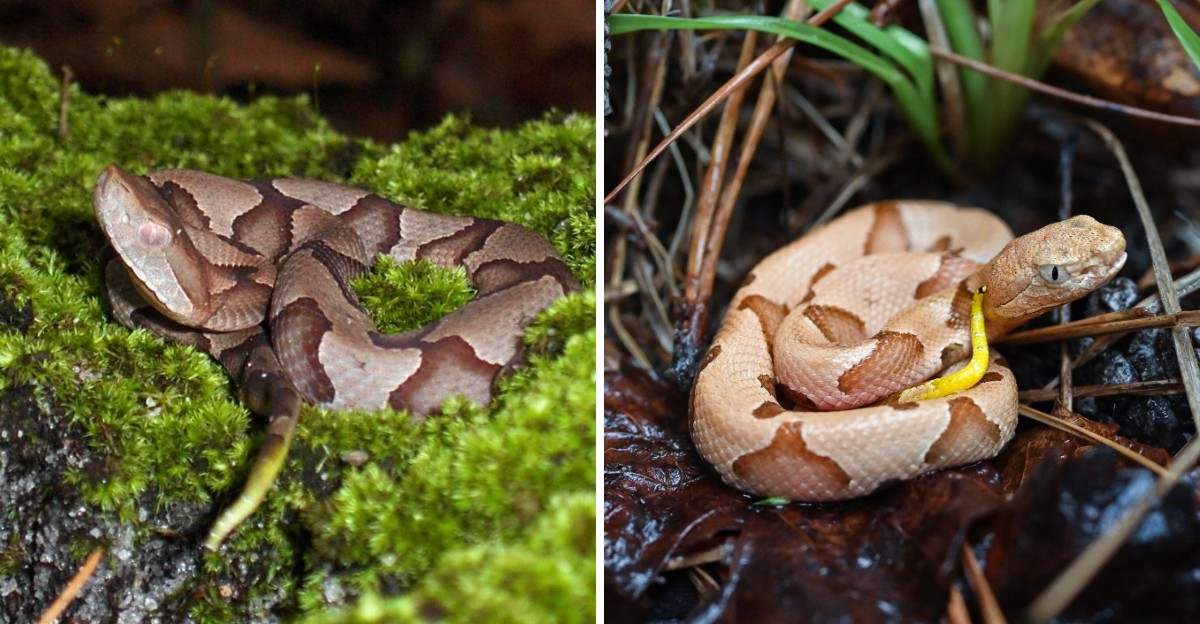
You spot a bright yellow tail tip on warm Alabama pavement. Watch it twitch and you understand the trick: frogs mistake that tip for a caterpillar.
Newborn copperheads arrive in late summer and early autumn, so you meet them now. Each stretches about a pencil’s length, and leaf litter hides it from you.
Its venom is real, though you face low risk if you give it space. Grab your camera and zoom in from a long stride away.
Resist the urge to swat, flick, or scoop it with bare hands. Many encounters turn painful when you try to handle or relocate the snake.
Let the kids name it from the porch while grandma watches through glass. Alabama wildlife professionals can help you if it settles near your door.
Juvenile Copperheads Are The Most Common Yellow-Tailed Snakes
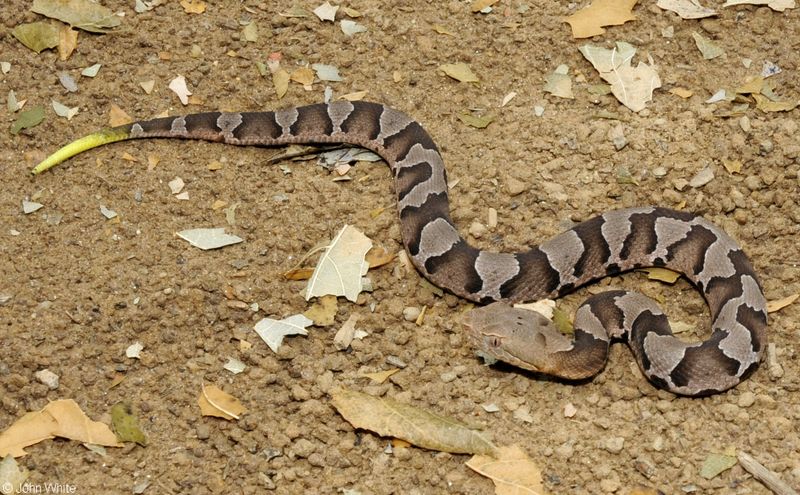
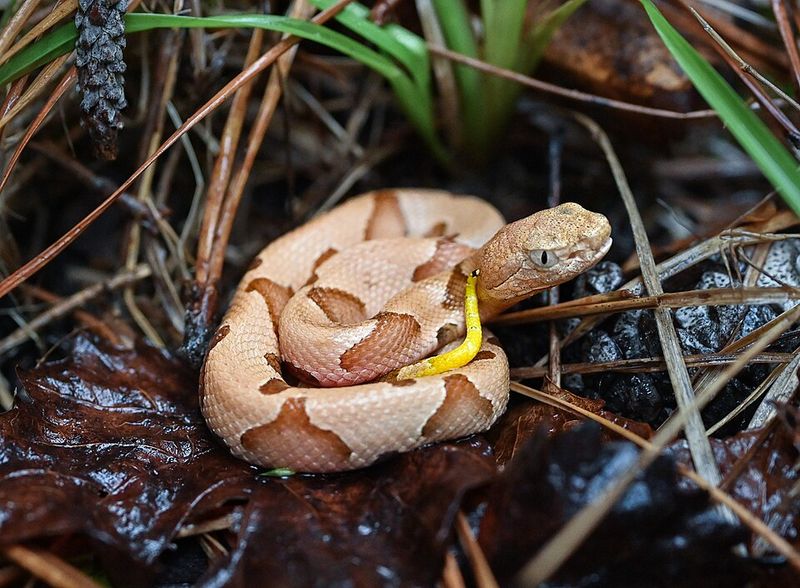
Picture a pencil-length snake wearing tan and copper hourglass bands, plus a tail tip as bright as a highlighter. Around Alabama homes in autumn, that combination usually points to a baby copperhead.
Copperheads are venomous pit vipers, and the young ones carry working venom from birth. Their bite is painful and needs a doctor, even though life-threatening cases are uncommon.
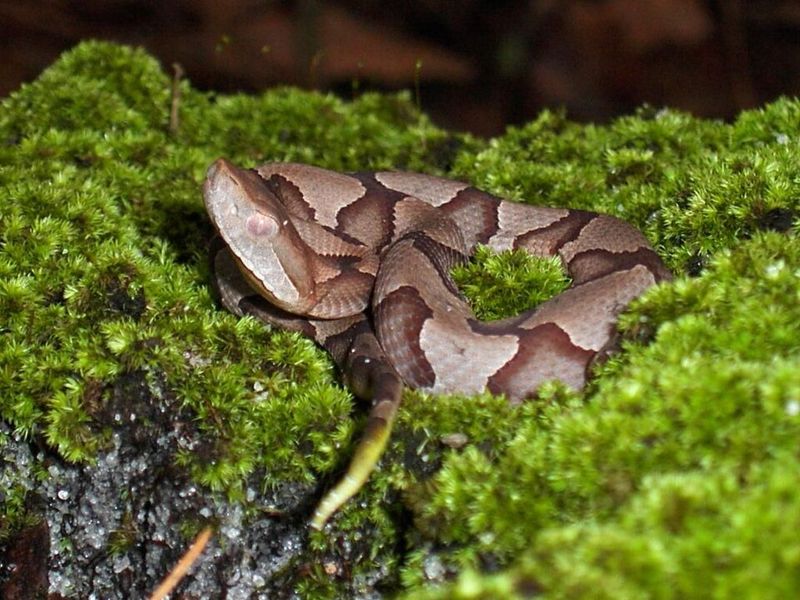
The bands look wide on the sides and pinched narrow across the back. Many folks say they resemble chocolate kisses lined up along the snake’s body.
Babies are usually seven to ten inches long at birth, about the size of a large earthworm. Their heads look slightly triangular, and their eyes have narrow, cat-like pupils.
That yellow or greenish tail tip fades as the snake grows older, usually within a few years. Adults end up with plain tails that match the rest of their coppery coloring.
Juvenile cottonmouths and pigmy rattlesnakes also sport yellow or orange tails, so not every bright tail belongs to a copperhead. All three deserve respect and plenty of space whenever you spot one.
Snapping a photo from at least six feet away is a smart first move. Local wildlife officers and online snake groups can help confirm what you found.
Treat any small banded snake with a glowing tail as venomous until someone qualified says otherwise. A little caution is low-cost, while a careless grab can lead to a hospital visit.
Calm observation is more reliable than guesswork. Your eyes and phone camera are far better tools here than your hands.
Fall Birth Season Brings More Young Snakes
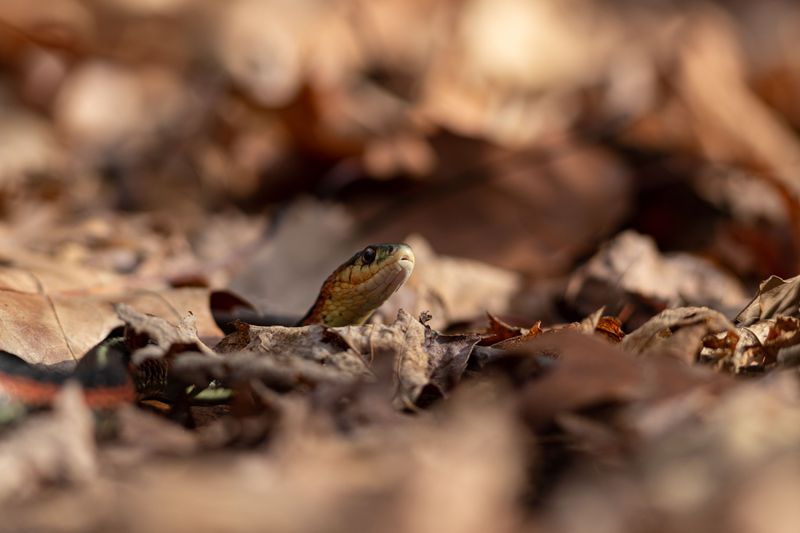
Late August through October is baby season for Alabama copperheads, and the timing surprises plenty of people. Many people expect new life in spring, not alongside football games and pumpkin spice.
Copperhead mothers carry eggs inside their bodies and give birth to live young. A typical litter holds three to ten babies, though larger, older mothers can produce even more.
Each newborn arrives fully equipped and ready to hunt within about a week. The mother offers no babysitting, so the little snakes scatter quickly to find food.
That scattering is why young snakes grow more noticeable in yards. Young copperheads wander across patios, sidewalks, and garages while searching for meals and shelter.
Your Alabama Garden Changes Every Week. Your Plan Should Too.
Gardening in Alabama changes quickly throughout the season. Every Friday you’ll receive a simple weekly plan showing exactly what to plant, prune, fertilize, harvest, and protect so you never miss the right timing.
Cooler nights add another layer to this seasonal story. Snakes of all ages begin hunting for snug winter dens, and foundations, woodpiles, and crawlspaces look appealing.
Rainy fall days can also push snakes into the open. Warm afternoons following a chilly morning often bring them out to soak up sunshine on driveway concrete.
Expect sightings at midday in cool weather and after dark during warm autumn stretches. Activity follows the temperature, so evening walks and morning errands both call for extra attention.
Carrying a flashlight when you take out the trash or walk the dog makes a big difference. Wearing closed shoes instead of flip-flops is another easy habit worth adopting.
By mid-November, most activity slows as snakes settle in for the cold months. Until then, consider fall the busiest season for unexpected backyard meetings.
The Twitching Tail Trick Used To Lure Prey
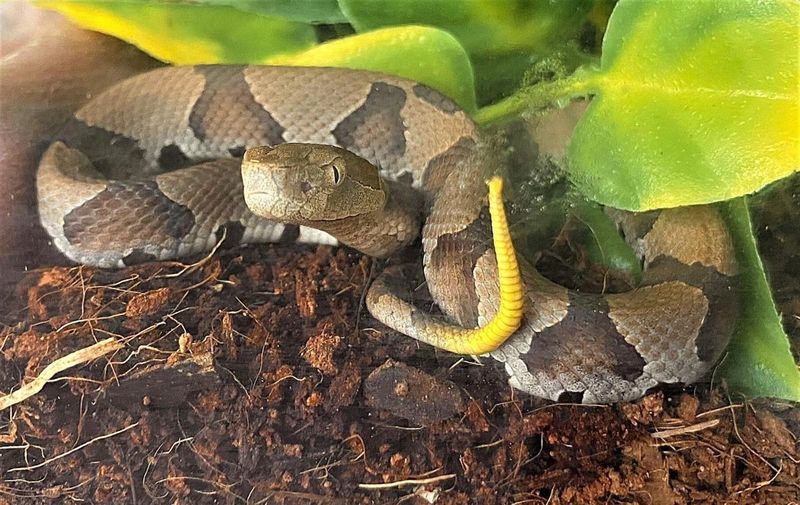
Imagine fishing with your own body as the bait. Baby copperheads do exactly that, and their bright tail tip works like a wiggling lure.
Scientists call the behavior caudal luring, and several young pit vipers use it. The snake stays perfectly still while twitching only the yellow tip of its tail.
To a hungry frog or lizard, that motion looks like a juicy caterpillar or worm. The prey creeps closer, hoping for an easy snack, and the snake strikes.
Small frogs, skinks, and anoles make up much of a baby copperhead’s menu. Insects like cicadas and caterpillars also get eaten when the chance appears.
Researchers have watched young copperheads hold the pose for long stretches, patient as a cat. Some curl their bodies so the tail tip wiggles right in front of their faces.
Here’s the practical part for homeowners. Seeing a small snake twitching its yellow tail does not mean it is friendly or playing around.
It means the snake is hunting and feels confident in its hiding spot. Kids especially may think the movement looks cute and reach down for a closer look.
Teach children that a twitching tail is a signal to back away and call an adult. Pets need the same protection, so keep curious dogs leashed near leaf piles.
As copperheads grow larger, they switch to bigger prey like mice. Researchers think that change explains why the yellow lure fades, since adults rely on it less.
This adaptation works like a built-in lure. Once they outgrow it, ambush and patience do the job instead.
Non-Venomous Lookalikes That Share Alabama Yards
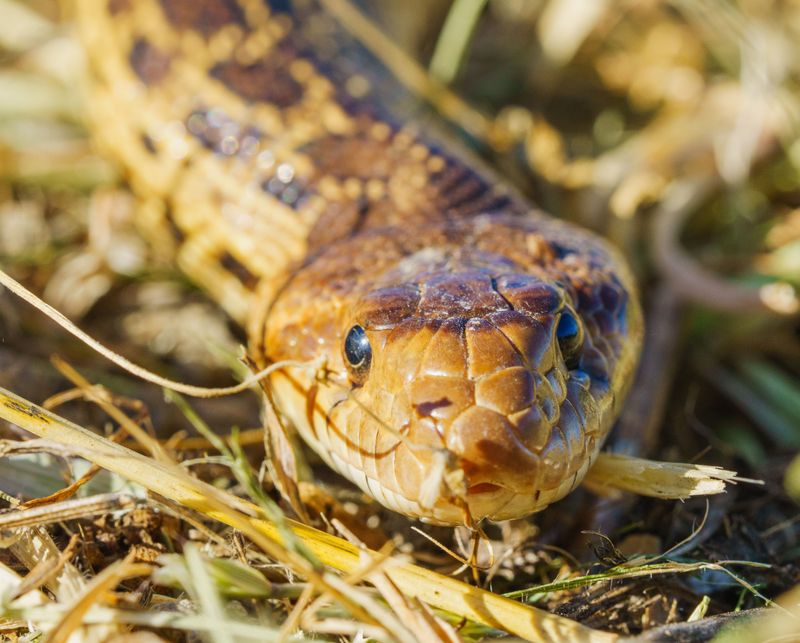
Plenty of Alabama snakes get mistaken for copperheads, and most of them pose no threat to people. Learning a few lookalikes can save a harmless neighbor from a shovel.
Baby rat snakes top the confusion list because they hatch with blotchy gray patterns. Their blotches look like squares or saddles, not the pinched hourglass bands copperheads wear.
Corn snakes bring warm orange and red tones with a black and white checkered belly. They hunt rodents around barns and sheds, which makes them helpful pest control.
Banded water snakes near creeks and ponds also trick many eyes. Their crossbands are wide on the back and narrow on the sides, the opposite of copperheads.
Eastern hognose snakes are famous actors with upturned snouts. When threatened, they flatten their necks, hiss loudly, and sometimes flop belly-up like stage performers.
Tiny brown snakes and ringneck snakes also show up in fall leaf litter. Ringnecks flash a yellow or orange collar and belly, which can confuse worried homeowners.
None of these lookalikes carries a yellow tail tip like a juvenile copperhead, though ringnecks flash a bright underside. Round pupils and slim, narrow heads are common among the harmless species.
Still, pupil shape is hard to judge from a safe distance, so patterns are a better guide. Free identification apps and Alabama wildlife websites offer helpful photo comparisons.
Harmless snakes eat rodents, slugs, and even venomous snakes in some cases. Kingsnakes, for example, happily snack on copperheads and are worth welcoming in your yard.
Common Mistakes Homeowners Make Near A Snake
Many snakebites in the United States happen when someone tries to handle or harm the snake. That is one of the most common mistakes homeowners make.
Grabbing a shovel, rake, or hoe puts you within striking range of a nervous animal. Baby copperheads strike fast, and their small size makes them harder to track.
Another common error is picking up a small snake, believing babies cannot bite hard. Young copperheads can deliver a real dose of venom, so size offers no protection.
Even a snake injured by a mower can still strike by reflex. Keep hands and feet away from any snake, no matter how still it seems.
If a copperhead does bite, stay calm and call 911 or head to the nearest emergency room. Remove rings and tight clothing before swelling begins in the affected limb.
Skip old remedies like ice, tourniquets, cutting the wound, or trying to suck out venom. These methods cause extra harm and delay care.
Keep the bitten limb still at heart level, and call Poison Control at 1-800-222-1222. Snapping a quick photo of the snake helps doctors, but nobody should chase it.
The smarter move is simple distance. Give it six feet, keep kids and pets back, and let it leave alone.
If it settles somewhere tricky, like a garage corner, call a wildlife removal professional. Ask about their experience with venomous snakes, and check current rules with the Alabama Department of Conservation and Natural Resources.
Patience feels boring in the moment, but it works. Most snakes would much rather slip away than face a person.
Yard Habits That Make Your Home Less Appealing To Copperheads
A tidy yard makes your property less appealing to snakes. Copperheads want cover, food, and hiding spots, so removing those three things helps a lot.
Start with leaf piles, brush heaps, and stacks of old boards. Rake leaves away from the house and bag them instead of leaving them along fences.
Firewood should sit on a rack at least a foot off the ground. Placing it twenty feet or more from your walls keeps hiding spots far from doors.
Keep grass mowed short, especially along sidewalks, foundations, and play areas. Tall grass gives snakes cover while they hunt and travel around your property.
Rodents attract copperheads, so cutting the food supply matters too. Store birdseed and pet food in sealed bins and pick up fallen fruit quickly.
Check the outside of your home for gaps around pipes, vents, and garage doors. Sealing openings larger than a quarter inch blocks curious snakes and mice alike.
Thick shrubs pressed against the house create shady snake hideouts. Trimming them up a few inches from the ground lets sunlight in and removes cover.
Skip mothballs and most store-bought snake repellents, since studies show they do little. Some even harm pets, soil, and helpful wildlife living nearby.
Gloves and boots are smart gear whenever you clean out sheds or move flowerpots. Tip objects away from you with a rake or long stick so anything underneath has room to leave.
None of these steps guarantees a snake-free yard in Alabama. Together, they make your home far less appealing than the woods next door.