What St. Augustine Grass Is Telling You With Those October Yellow Patches In Texas
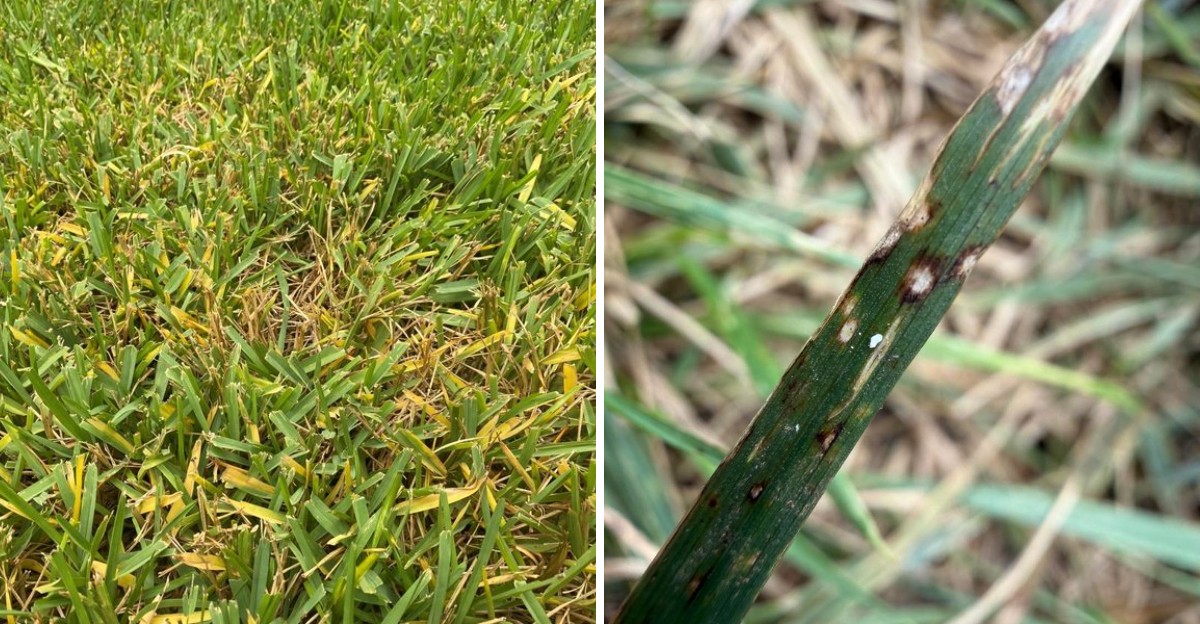
October should be a comeback month for St. Augustine grass. The brutal summer heat is gone, nights are cooler, and lawns across Texas usually start looking greener and thicker.
So when yellow patches suddenly show up, it can feel like a slap in the face. Those discolored spots are more than an eyesore.
They’re often your lawn’s way of signaling that something is off. Sometimes the cause is simple, like too much water or a missing nutrient.
Other times, it’s a fungal disease that thrives in mild, damp fall weather and spreads in circles across the yard. Pests and poor drainage can play a role, too.
The tricky part is that many of these problems look alike at first glance. Treat the wrong one, and you could waste time, money, and a lot of good grass. Reading the clues correctly is the first step toward a healthy lawn.
1. Large Patch Disease Has Taken Hold
Ask any Texas lawn expert about fall troubles, and large patch will be the first name you hear.
Also called brown patch, it is the most common autumn disease of St. Augustine grass across the state. It loves the same cool, damp weather that makes October feel so nice to us.
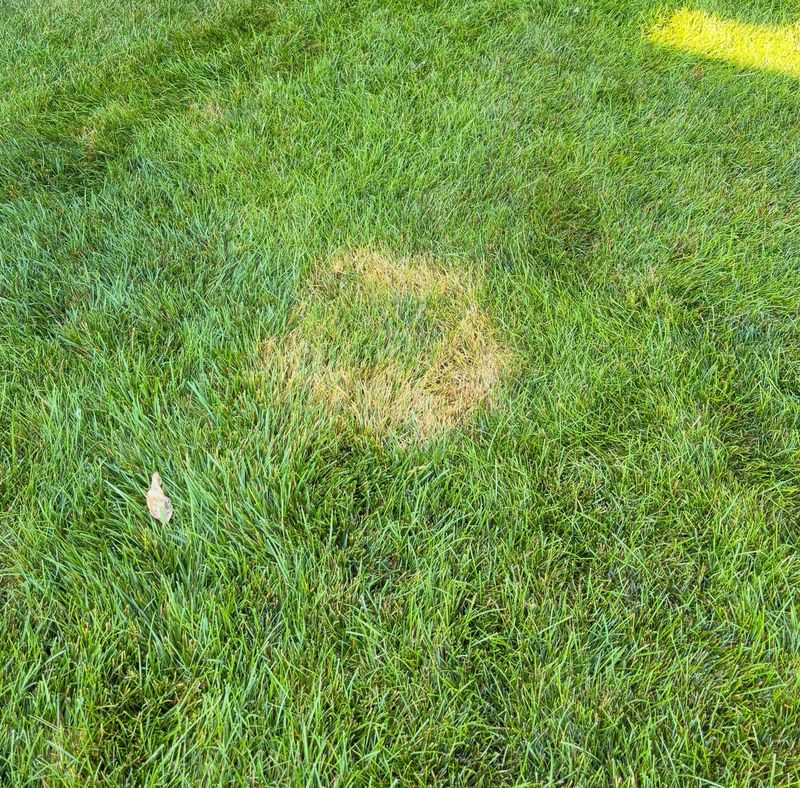
The signs are easy to spot once you know them. Circular patches show up, often a few feet wide, and they turn yellow first and then brown. Look closely at the outer edge of the circle.
You will often see an orange or bronze ring where the fungus is still active and spreading.
Here is a quick test you can try. Grab a few yellow blades near the edge and give them a gentle tug. If they slide right off the runners with a rotted, dark base, large patch is almost surely the cause.
Weather plays a huge role. Night temperatures in the 60s, combined with rain or long periods of wet grass, give the fungus a perfect home.
Fall nitrogen fertilizer makes things worse because it pushes soft, tender growth that the disease attacks easily.
So what can you do? Start by watering only in the early morning so the grass dries during the day.
Skip any late-season feeding, even if the bag says it is a fall product. Avoid walking on or mowing wet patches, since that can spread the fungus to healthy areas.
For lawns with a history of large patch, a fungicide labeled for the disease can help. Apply it in early fall before symptoms appear for the best results.
Patches usually stay brown until spring, but the runners often fill back in once warm weather returns.
2. Take-All Root Rot Is Attacking The Roots
Some lawn problems shout, but take-all root rot whispers. It works quietly underground for weeks before you notice anything wrong above the soil. By the time yellow patches appear, the roots have often been struggling for a while.
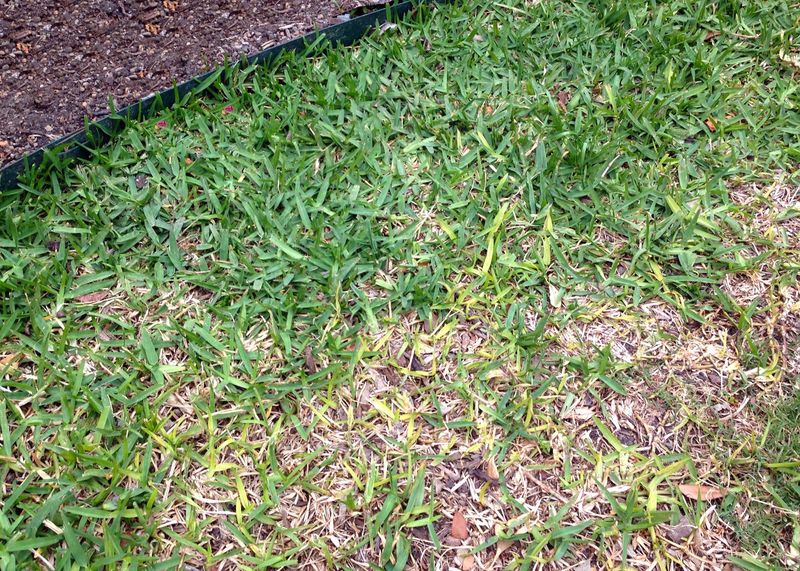
Unlike the neat circles of large patch, take-all root rot makes irregular yellow areas. They do not have a clear shape or a bronze edge. Over time, these spots thin out until you can see bare soil peeking through the grass.
Your Texas Garden Changes Every Week. Your Plan Should Too.
Gardening in Texas changes quickly throughout the season. Every Friday you’ll receive a simple weekly plan showing exactly what to plant, prune, fertilize, harvest, and protect so you never miss the right timing.
Want to confirm it? Dig up a small chunk of grass from the edge of a patch. Healthy St. Augustine roots are white and firm.
Roots hit by take-all root rot look dark brown or black, short, and rotted, and the runners may show dark spots too.
Wet weather in fall and spring gives this fungus its biggest boost. Lawns that stay soggy, have thin soil, or get stressed by heavy shade or scalping are also easier targets. That means good care is your strongest defense.
Texas A&M AgriLife has a helpful tip that surprises many homeowners. They recommend topdressing the affected areas with sphagnum peat moss.
Spread about a quarter to half inch over the patches and work it gently into the grass. Many people see improvement after a couple of applications.
Pair the peat moss with smart habits. Mow at the proper height, around three to four inches, so the grass stays strong.
Water deeply but less often, and avoid heavy nitrogen in the fall. Fixing drainage problems can also make a big difference.
Patience matters here. Recovery from take-all root rot is slow, but steady care gives the roots a real chance to bounce back.
3. Chinch Bugs Have Been Feeding
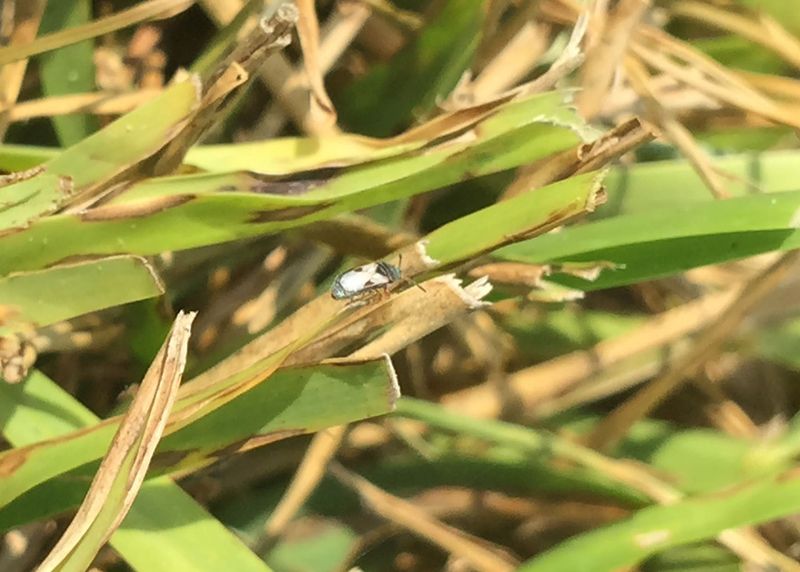
Tiny but mighty, chinch bugs are smaller than a grain of rice. Yet a big group of them can turn a healthy section of lawn into a dry, straw-colored mess. Many Texans blame the heat when these bugs are the real troublemakers.
Chinch bugs feed by sucking sap right out of St. Augustine blades. As they drink, they also release a substance that blocks water flow in the plant. The grass turns yellow first, then fades to a straw color that looks like drought damage.
Location is a big clue. These pests love hot, sunny spots, especially near sidewalks, driveways, and curbs where concrete soaks up heat.
Damage often starts in summer but can keep going into early fall during warm Texas Octobers.
Checking for chinch bugs is simple and kind of fun. Go to the edge of a yellow patch where green grass meets the damaged area.
Part the grass with your fingers and look down at the soil line. You are hunting for tiny black bugs with white wing markings, plus reddish young ones.
Another trick works great too. Cut both ends off a coffee can, push it into the soil, and fill it with water. After a few minutes, any chinch bugs will float to the top.
If you find more than a handful, treat the area with an insecticide labeled for chinch bugs. Focus on the edges of the patch and the healthy grass around it.
Keeping your lawn watered properly and avoiding too much fertilizer also helps, since lush, stressed grass attracts more of them. Damaged spots may need time or new sod to recover.
4. Gray Leaf Spot Is Spreading
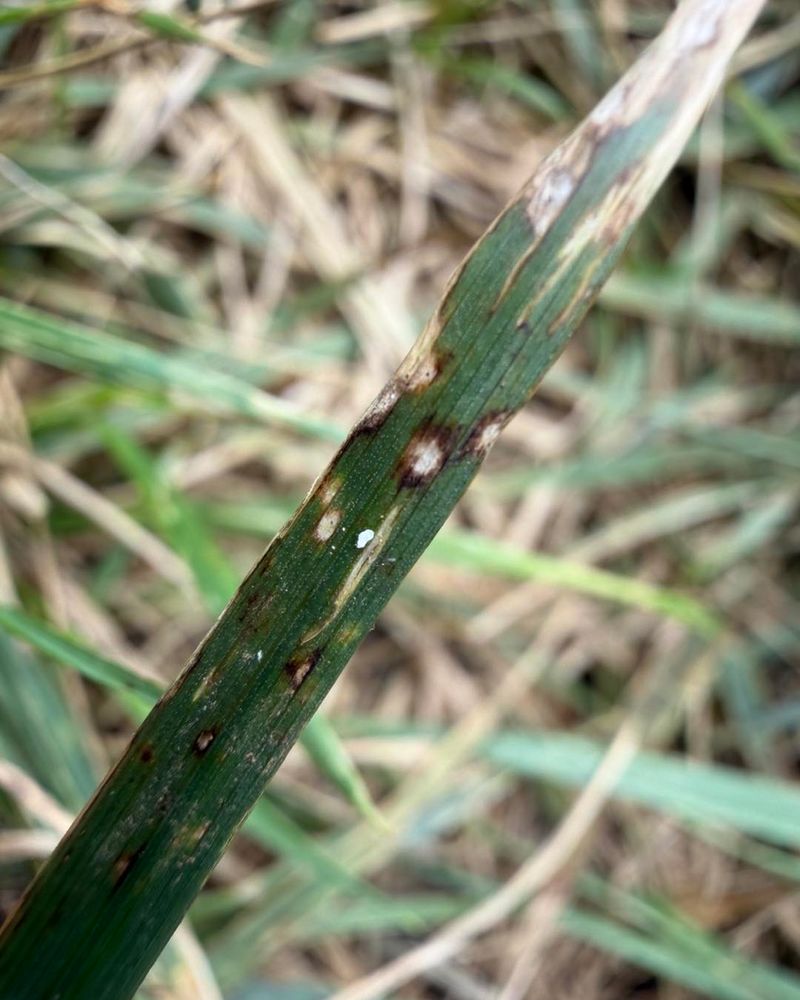
Grab a magnifying glass for this one, because the clues are small. Gray leaf spot shows its hand right on the grass blades. From a distance, the lawn just looks yellowed and scorched, almost like it got burned.
Up close, though, the story is clear. You will see small diamond-shaped or oval spots on the blades.
They are gray or tan in the center with purple or brown borders around them. In humid weather, the centers may even look a little fuzzy.
As more spots form, they join together. Whole blades wither, and the patch takes on a dull yellow, sickly color. A lawn with a bad case can look thin and tired across large areas.
Fun fact: gray leaf spot is a cousin of a disease that troubles rice crops around the world. It enjoys warm, sticky, humid air, which Texas has plenty of in early fall. Rainy spells followed by warm days are its favorite combo.
A few lawns are more at risk than others. Grass that got heavy nitrogen fertilizer is a top target. Newly laid sod and shady yards also struggle more because the blades stay wet longer and the grass is already stressed.
The fix starts with easing up on nitrogen, especially quick-release types. Water early in the morning, never in the evening, so the blades dry fast. Trim back tree branches if you can to let in more sun and air.
Bag your clippings while the disease is active so you do not spread it around. For stubborn cases, a fungicide labeled for gray leaf spot can stop the spread while the weather cools down.
5. Your Soil Is Short On Available Iron
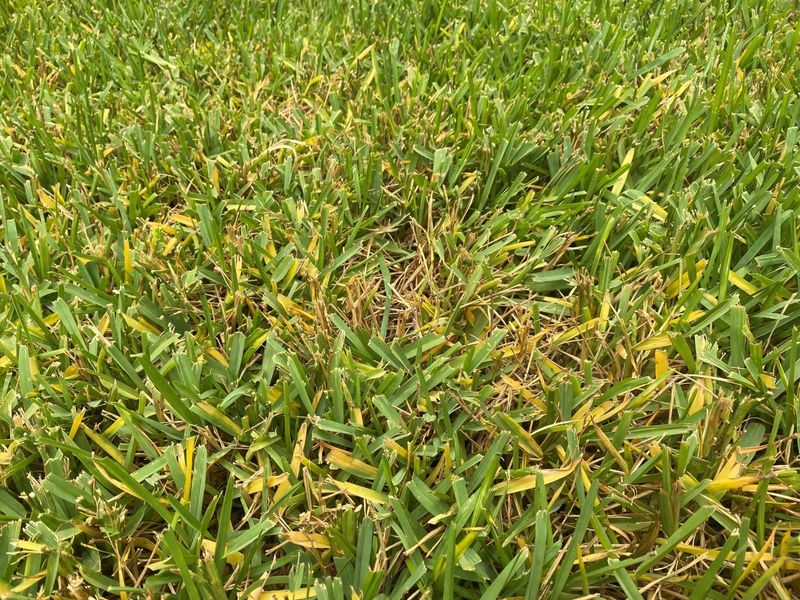
Believe it or not, your soil might have plenty of iron and your grass still cannot use it. That puzzle confuses a lot of Texas homeowners. The answer comes down to something called soil pH.
Much of Texas has alkaline soil, which means it has a high pH. Think of the limestone-rich ground around San Antonio, Austin, and Dallas. In these soils, iron gets locked up in a form that grass roots struggle to absorb.
The result is a condition called iron chlorosis. Your St. Augustine blades turn yellow, but the veins often stay green.
It creates a striped look you can see when you hold a blade up to the light. The yellowing usually spreads in large, uneven areas instead of neat circles.
Here is the happy part. Iron shortage is one of the easiest problems to fix on this whole list. An iron supplement can bring back that rich green color, often within a week or two.
Chelated iron is the best choice for alkaline soils. The word chelated means the iron is wrapped in a special coating that keeps it available to the roots. Regular iron sulfate also works, but it can wear off faster in high pH ground.
Follow the label closely and water it in lightly. Be careful near sidewalks, patios, and driveways, since iron products can leave rusty orange stains on concrete. Sweep up any granules that land on hard surfaces right away.
For long-term help, get a soil test through Texas A&M AgriLife. It costs little and tells you exactly what your yard needs, so you stop guessing.
6. The Lawn Is Getting Too Much Water
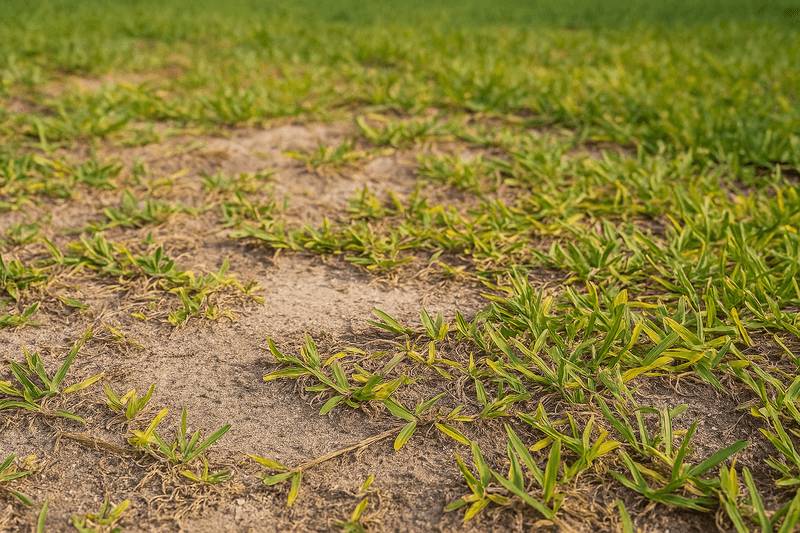
Love can sometimes look like a sprinkler running every single day. After a long, hot Texas summer, many of us keep the same watering schedule well into fall. Unfortunately, your lawn does not need nearly as much water in October.
When the soil stays soggy, roots cannot breathe. They need air pockets in the ground just like they need moisture. Waterlogged soil pushes that air out, and the roots get weak and shallow.
Weak roots lead to yellow grass. Even worse, wet ground is a welcome mat for fungal diseases like large patch and take-all root rot. In many yards, overwatering is the hidden reason other problems keep coming back.
Look for these warning signs. Your feet squish when you walk across the grass. Mushrooms pop up often.
Low spots hold puddles long after it rains, and the yellow patches seem worst in those areas.
The fix is simpler than you might think. As temperatures cool, cut back your irrigation, often by half or more.
Check your sprinkler controller and adjust it for the season. Many smart controllers do this automatically, but older ones need a hand.
Try the footprint test to know when to water. Walk across the lawn and look behind you. If your footprints stay pressed down, or the blades fold and look bluish gray, the grass is thirsty. If they spring right back, wait.
When you do water, water deeply, about an inch at a time, and only in the morning. For spots with poor drainage, core aeration can open up the soil. A little less water now means a much healthier lawn next spring.