Why California Gardeners Should Watch For Scale Insects As Fall Arrives
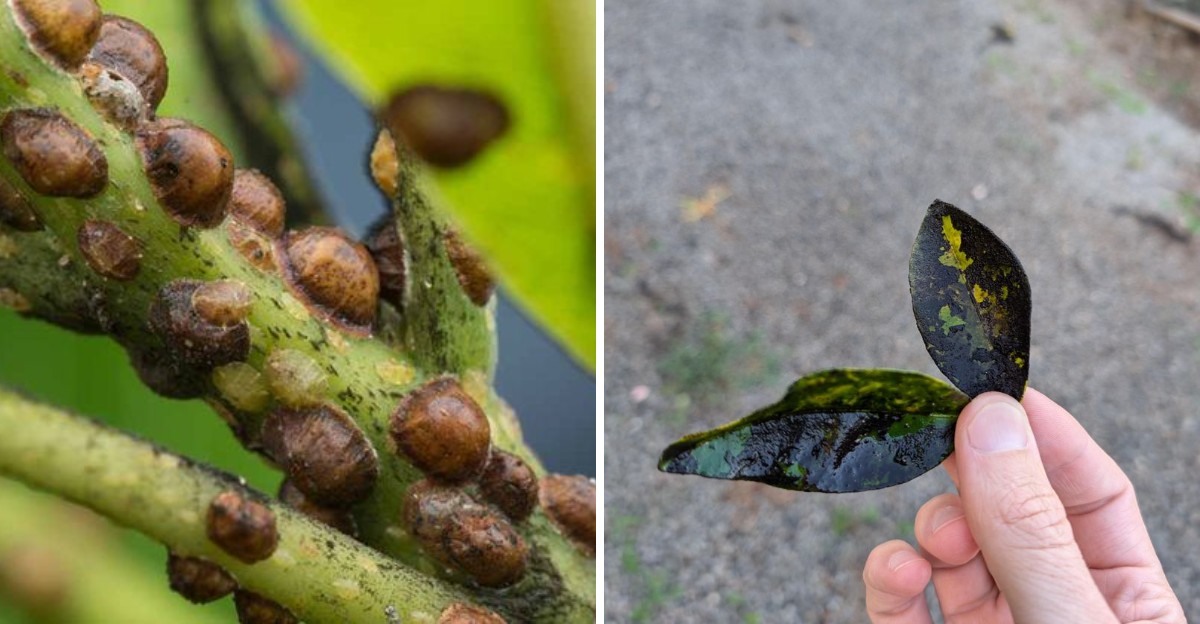
Scale insects rank among the sneakiest pests in California gardens. They look more like tiny bumps, crusty bark, or flecks of dried sap than living insects.
Yet those bumps quietly sip sap from citrus, roses, and many ornamental plants.
Fall makes an ideal time to catch them. Warm weather keeps some species busy well past summer, and thinning leaves make the telltale clues easier to see.
Sticky leaves, black smudges, and busy ant trails often reveal problems long before the insects themselves are spotted.
A few minutes of careful looking now can prevent much bigger trouble later, especially with help from the natural enemies already working in most yards.
1. Some Species Stay Active In Warm Fall Weather
October in Sacramento or Riverside can still feel like summer. Afternoons climb into the 80s, and plenty of garden pests keep right on working into fall, including some scale insects.
Every scale species follows its own calendar, though. The young stage, called a crawler, is the only time most scales move around freely.
Crawlers are tiny, soft, and much easier to manage than the armored adults they become. Black scale, for example, usually releases most of its crawlers in late spring and early summer.
Other kinds, like soft brown scale, can have several overlapping generations each year where weather stays mild. That variety makes broad claims about fall activity a little misleading for many gardens.
A fairer summary goes like this. In warm parts of California, some species keep feeding and reproducing well past summer.
Colonies that started small in June may look obvious by September.
Knowing which scale is present matters a great deal. A strip of double-sided sticky tape wrapped around an infested twig makes crawler activity easy to monitor.
A check every few days with a magnifying glass reveals the results. Tiny yellow, orange, or pinkish specks stuck to the tape mean crawlers are on the move.
UC IPM Pest Notes include photos that help identify common California scale species. A correct ID turns guesswork into a clear, targeted plan of action.
2. Sticky Honeydew Is The Early Warning Sign

A tacky patio table or tiny shiny spots on a car parked under a tree often point to a problem overhead. Before blaming the neighbors, the branches above deserve a closer look.
Soft scales, such as black scale and brown soft scale, suck large amounts of plant sap. They can’t use all the sugar in it, so they push the excess out as a sweet, sticky liquid called honeydew.
It drips onto leaves, fruit, sidewalks, and anything else underneath. On sunny days, leaves may even look glazed, as though someone brushed them with clear syrup.
Honeydew is often the first clue gardeners notice. The insects themselves are small and blend in, but sticky leaves are hard to ignore.
A finger run across the top of a leaf and rubbed against the thumb makes a quick test. A gummy feel strongly hints that sap-sucking insects are feeding somewhere above.
Your California Garden Changes Every Week. Your Plan Should Too.
Gardening in California changes quickly throughout the season. Every Friday you’ll receive a simple weekly plan showing exactly what to plant, prune, fertilize, harvest, and protect so you never miss the right timing.
Scale isn’t the only honeydew maker. Aphids, whiteflies, mealybugs, and some psyllids produce it too, so stickiness works best as a signal to investigate rather than a final answer.
Following the drips upward helps locate the source. Honeydew lands on leaves below the feeding insects, so the culprits usually sit on twigs and leaf undersides just above the stickiest area.
Armored scales, like California red scale, don’t produce honeydew at all. A clean leaf, therefore, doesn’t always mean a clean plant.
3. Ants Protect Scale Colonies
A busy ant trail climbing an orange tree may signal a tiny protection racket in full progress. The ants aren’t after the leaves, since they’re heading straight for the scale.
Ants love honeydew. Argentine ants, common across California yards, stroke soft scales and collect the sugary drops much like dairy farmers tending a herd.
In return, the ants act as bodyguards. They chase away or disturb lady beetles, lacewings, and tiny parasitic wasps that would normally feed on or lay eggs in the soft scale.
The result can be a dramatic population boom. With their enemies pushed aside, scale colonies grow faster than they would on their own.
UC IPM experts point out that controlling ants ranks among the most helpful steps against honeydew-producing scale. A few simple measures make a surprisingly big difference.
Trimming branches that touch fences, walls, or the ground removes handy ant bridges. A band of tape around the trunk coated with a sticky barrier product stops ants from climbing up.
On young or thin-barked trees, the tape goes down first so the sticky material never touches bark directly.
Slow-acting ant baits placed near trails can also help, since workers carry bait back to the nest and share it.
Broad insecticide sprays on the trunk are best avoided. They can harm the very helpers that gardeners want to welcome back into the tree.
4. Sooty Mold Grows On Sticky Leaves
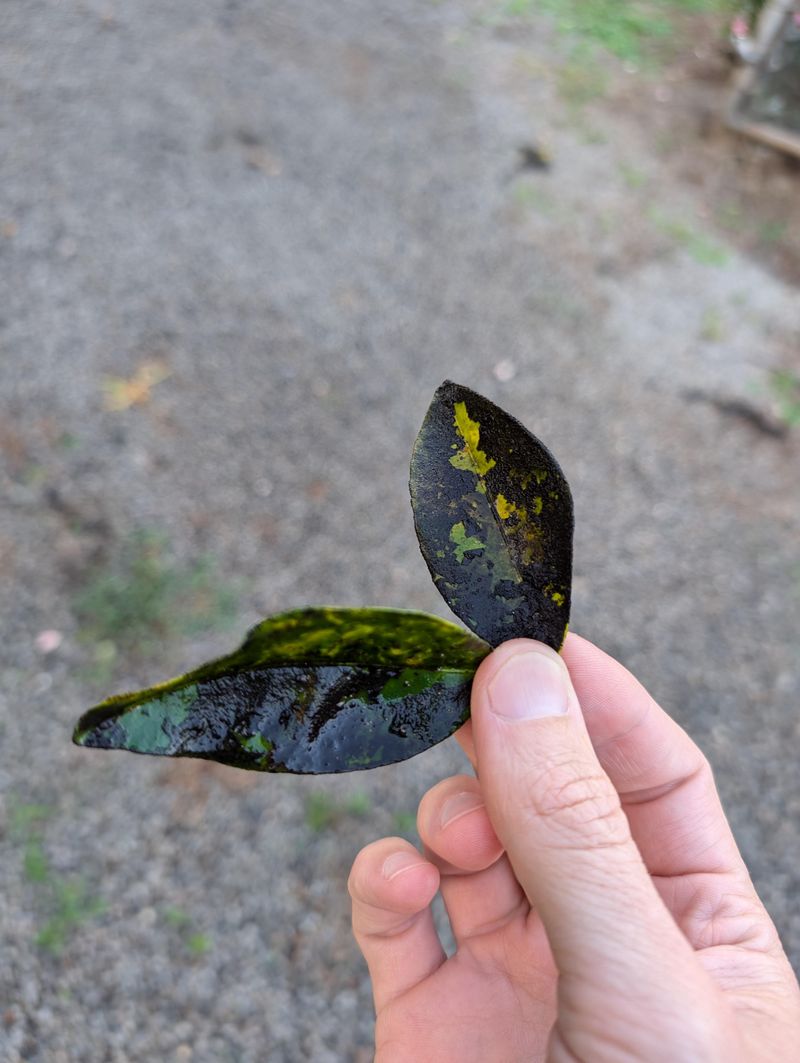
Black smudges on gardenia or citrus leaves can look as though someone dusted the plant with chimney soot. Many gardeners assume a plant disease, but the cause usually lies elsewhere.
Sooty mold is a group of dark fungi that grow on honeydew. Rather than attacking the leaf directly, they feed on the sugary coating left behind by scale, aphids, whiteflies, and similar insects.
Where honeydew piles up, sooty mold soon moves in and spreads like a dark film. A heavy layer can block sunlight from reaching the leaf, so the plant makes less food.
Fruit may look dirty and become harder to enjoy or share. Mostly, though, sooty mold works as a helpful messenger.
It signals that sap feeders have been active long enough to build up plenty of honeydew. Washing the mold off won’t solve the real problem on its own, however satisfying it feels.
Once the insects and their ant guards are under control, the honeydew supply dries up. The mold then slowly weathers away with rain, sprinkler water, and time.
Fall makes a great season for spotting this clue. The black coating stands out against green leaves, and summer heat has given colonies months to grow.
A gentle spray of water can rinse off some mold to reveal what’s underneath. A peek at the twigs right above the sootiest leaves usually turns up the culprits.
5. Hidden Shells Look Like Bumps On Stems
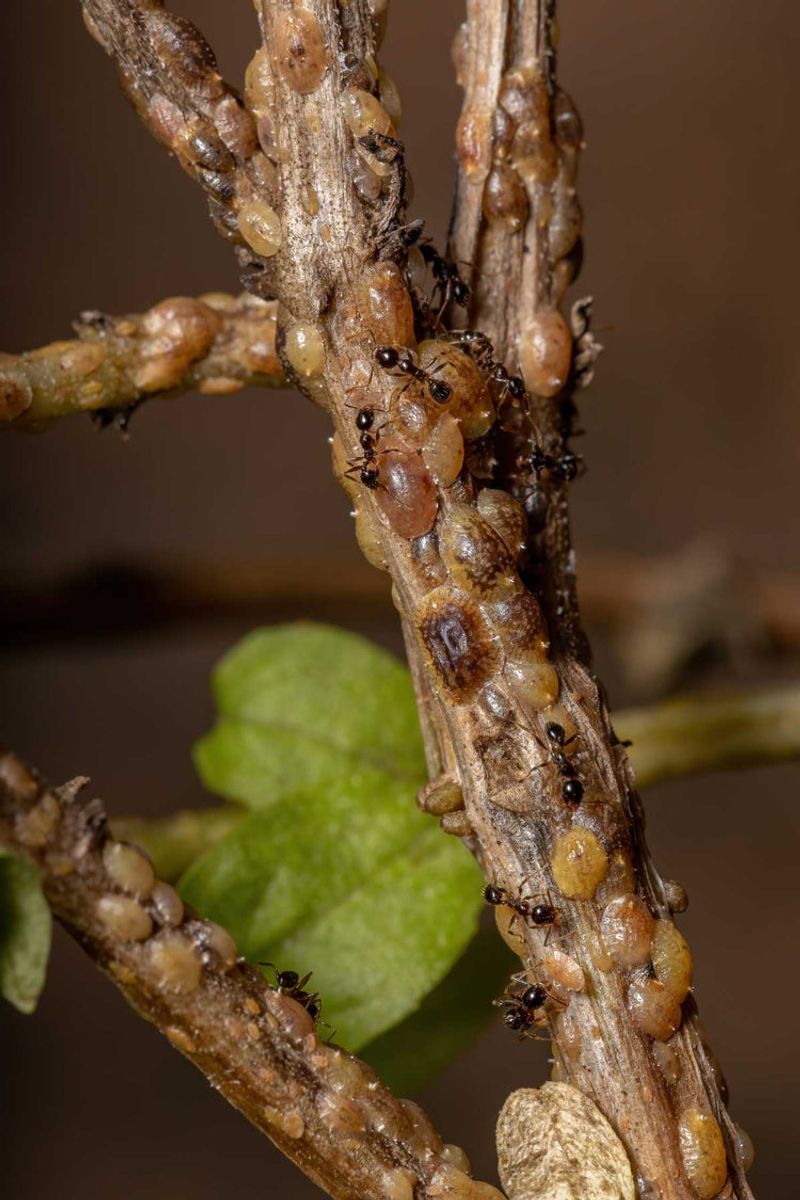
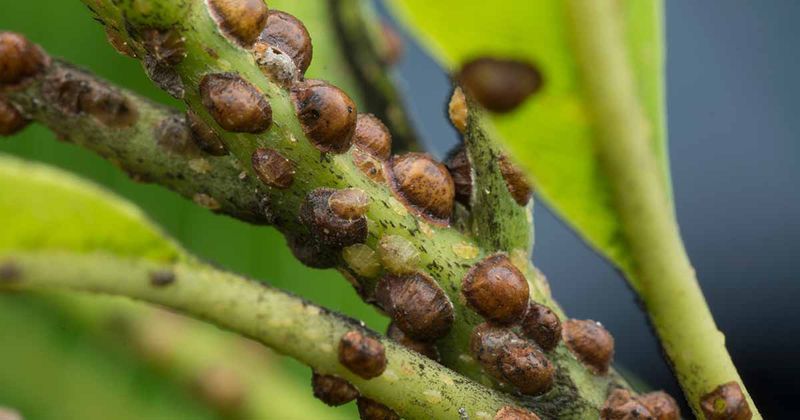
Plenty of gardeners stare right at scale insects without realizing it. The pests look more like crusty bark, tiny warts, or flecks of dried sap than living creatures.
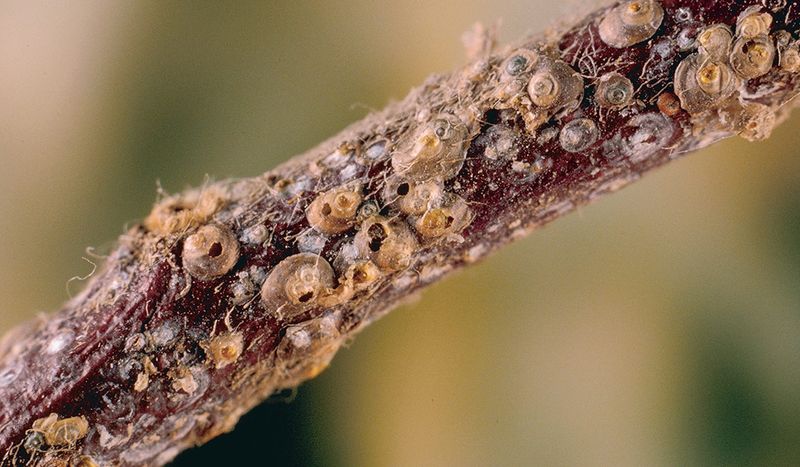
Adult female scales spend most of their lives fixed in one spot, with no visible legs. Armored scales hide under a hard, flat cover that can be round, oval, or shaped like an oyster shell.
California red scale, for instance, looks like a tiny reddish-brown disk. Soft scales are often larger and more rounded, sometimes shaped like a little helmet.
Black scale can even show a raised H pattern on its back. That marking makes it one of the easier species to recognize.
Young green twigs, leaf undersides along the main vein, and spots where stems meet branches all deserve a close look. Fruit can carry armored scale as well.
A hand lens or the zoom on a phone camera makes a big difference. Gently flipping a suspicious bump with a fingernail or toothpick reveals more.
A living scale usually leaves a soft body or moist smear underneath. Dry, empty shells may be leftovers from a colony that’s already gone.
Small round holes tell an encouraging story. A neat pinhole in a shell often means a parasitic wasp developed inside and chewed its way out.
Plenty of holey shells suggest nature is already handling the problem, often with little help needed.
6. Natural Enemies Often Keep Them In Check
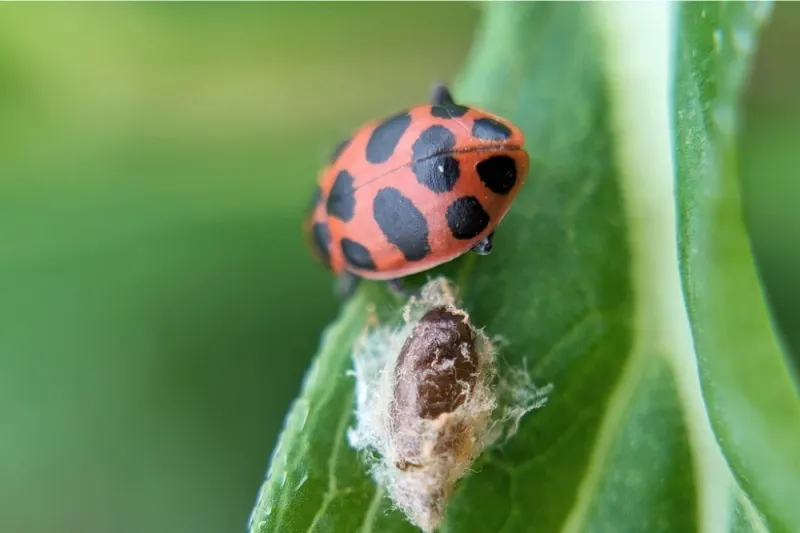
The backyard cleanup crew works quietly, and most of its members are so small a magnifying glass helps to admire them. Tiny parasitic wasps are the true stars.
Species such as Aphytis attack California red scale, while Metaphycus wasps target black scale and other soft scales. These wasps don’t sting people.
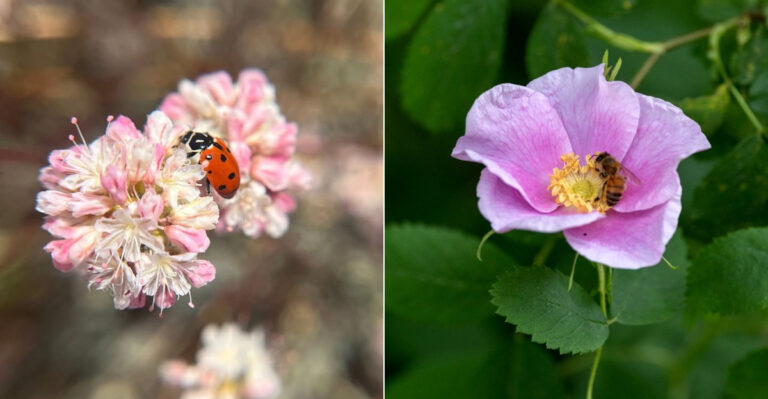
A female lays an egg in or under a scale, and the young wasp feeds on it from the inside. Lady beetles, lacewing larvae, and predatory mites also snack on scale, especially the soft young crawlers.
According to UC IPM, these natural enemies often keep scale populations low enough that spraying isn’t necessary. Many gardens already host them without anyone noticing.
Problems tend to flare up when something throws the balance off. Ants guarding colonies or dust coating leaves along a dirt road are common triggers.
Broad-spectrum insecticides cause major trouble here. Sprays containing pyrethroids, carbaryl, or some systemics can sharply reduce helpful insects for weeks or longer. Scale often bounces back faster than its enemies do.
That leaves the garden worse off than before. A friendlier approach welcomes the helpers instead.
Controlling ants and hosing off dusty foliage now and then support natural enemies. Flowering plants like sweet alyssum, yarrow, or buckwheat nearby offer nectar for adult wasps.
With food and shelter close by, these bug-sized allies stick around and keep working for free.
7. Oils Work Best When Timed Right
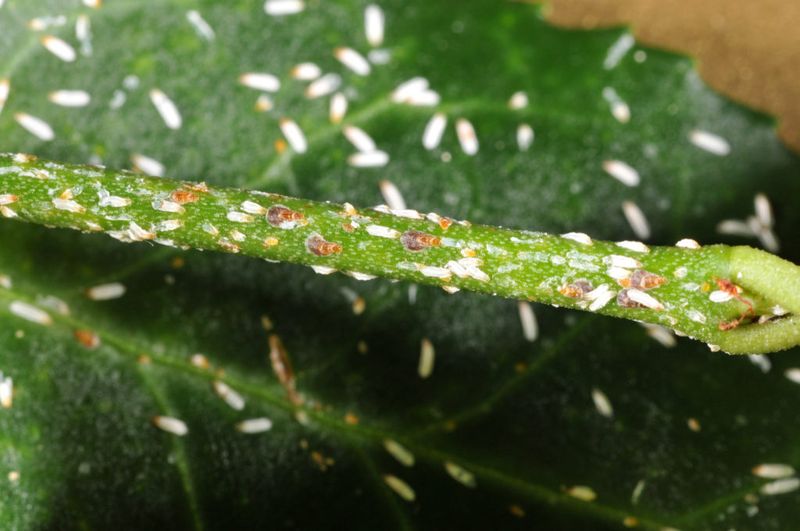
A bottle of horticultural oil can be a fine tool or a wasted Saturday. Timing makes all the difference.
Narrow-range horticultural oils work by coating and smothering insects. UC IPM considers them one of the safer choices for scale, since they break down quickly and leave little lasting residue.
The oil only affects insects it actually touches, though. Crawlers and young settled scales make far easier targets than mature, armored adults.
That’s why species matters so much. UC IPM suggests timing sprays to coincide with crawler activity, which the sticky tape trick helps reveal.
Many deciduous fruit trees and ornamentals also respond well to a dormant-season oil spray in winter, after leaves fall and before buds open.
Evergreen plants like citrus follow different timing, so the label for each specific plant and pest offers the best guidance.
Weather counts, too. Spraying above about 90 degrees, or on thirsty, stressed plants, can burn leaves, so watering a day or two ahead helps.
Some plants are naturally sensitive to oil. A small test area makes sense whenever there’s any doubt.
Good coverage is the whole game. Bark, twigs, and both sides of the leaves where scale hides all need a thorough coating.
Because oil doesn’t linger, it stays gentler on natural enemies than broad-spectrum sprays. That makes it a slick partner for the helpful insects already at work.5
8. Check Twigs Before Leaves Drop
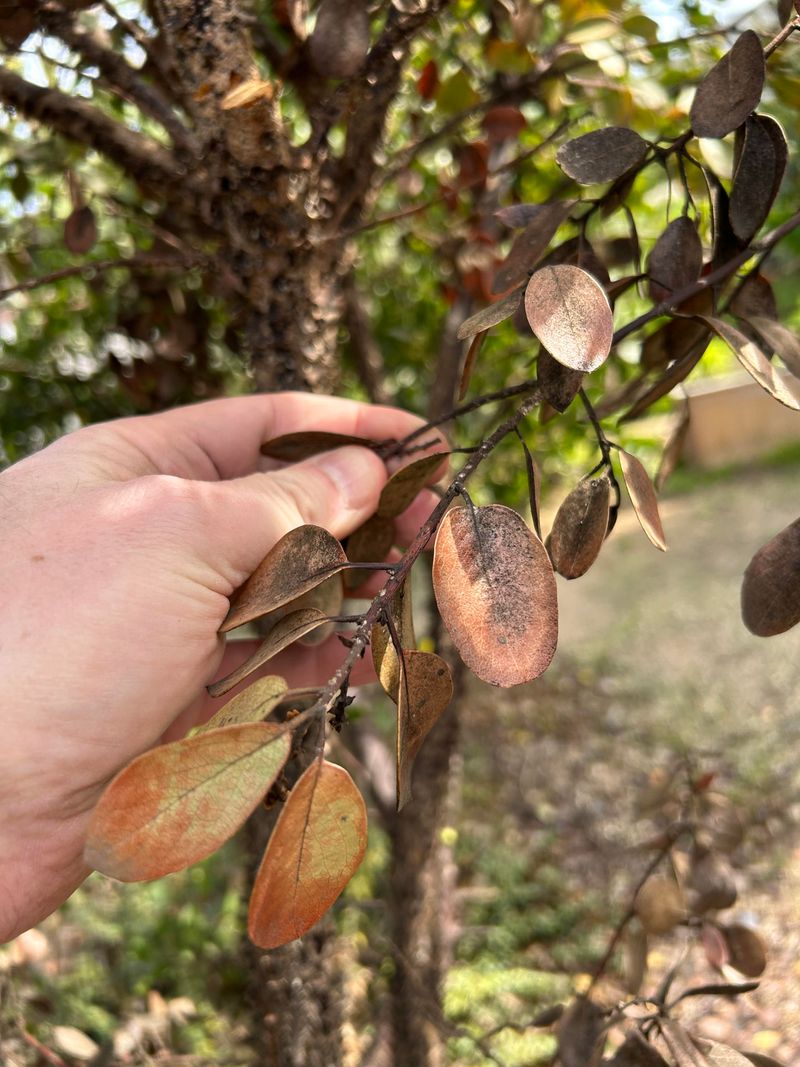
A cup of coffee and a hand lens are all it takes. A slow ten-minute walk through the yard ranks among the smartest fall habits a California gardener can build.
The best time to start is before deciduous trees and shrubs lose their leaves. Sticky spots and black sooty mold are easiest to see while foliage still hangs on.
Noting which plants carry the heaviest coating helps focus attention. A bit of bright ribbon tied on branches that need a closer look makes them easy to find later.
As leaves fall, the view opens up. Bare twigs on plums, maples, or roses make crusty bumps much easier to spot, especially along young shoots, branch forks, and old pruning cuts.
A few photos allow comparison of the same branch in spring. Simple notes add even more value.
Plants with honeydew or sooty mold, ant trails on trunks, live scales versus empty or pinholed shells, and any lady beetles or other helpers all belong in those notes. Patterns become clear over time.
A few bumps rarely call for alarm. Light scale often causes little harm, especially with natural enemies present, while heavily infested twigs can be pruned out and bagged.
Bigger steps, like oil sprays, are best saved for plants with real buildup and the right timing. Problems caught in fall stay smaller and simpler than surprises discovered next summer.
The reward is cleaner leaves and healthier growth when spring rolls around.