These Venomous Creatures Live In New York, Know What To Watch For
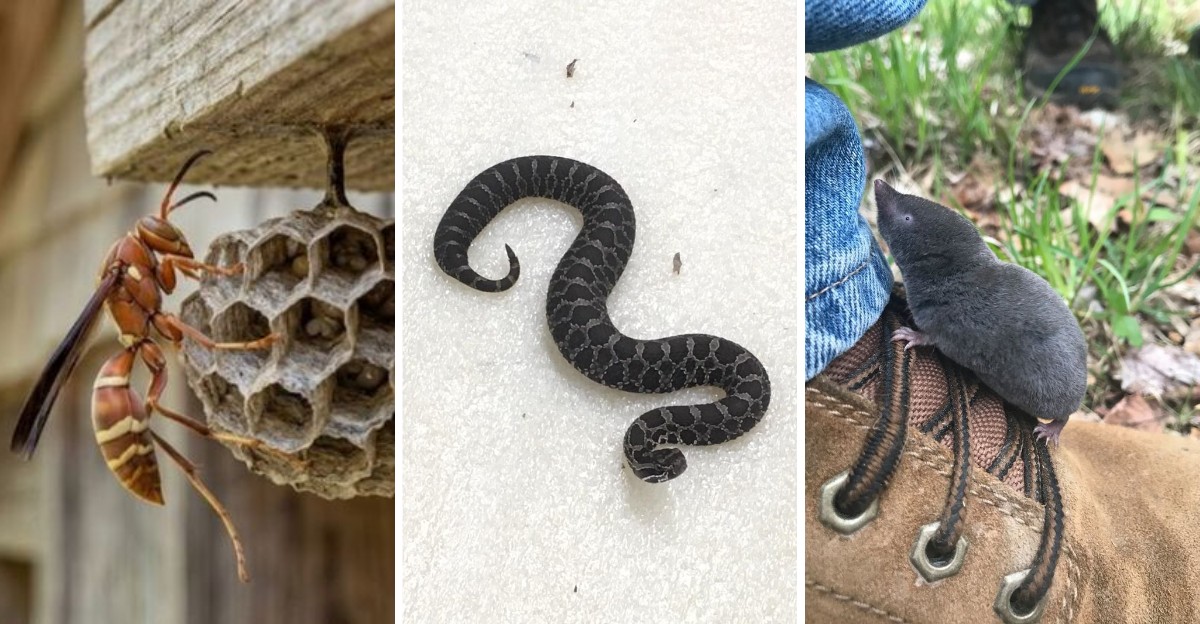
Most people think of skyscrapers and pizza when they think of New York, not venom. Yet the state hides a surprising cast of fanged, stinging, and biting residents.
Some lurk on sunny rock ledges, while others tuck into sheds, lawns, and porch ceilings. A few even drift through the coastal waters where families splash all summer.
The good news is that most of these creatures want nothing to do with you. Knowing their looks, habits, and favorite hiding spots can turn a scary moment into a calm step back.
The guide below introduces the venomous locals worth recognizing. Read it before your next backyard project or mountain trail.
1. Timber Rattlesnake, The State’s Largest Venomous Snake
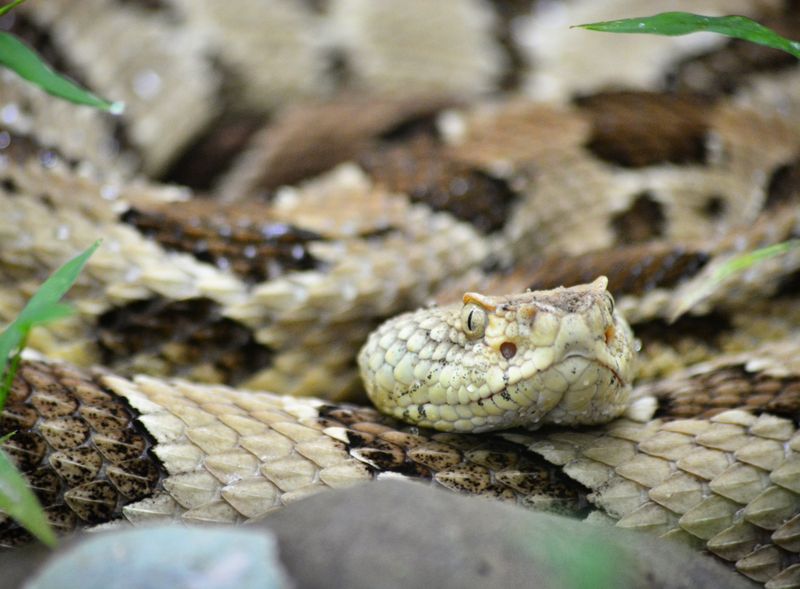
Imagine a five-foot snake sunning itself on a warm rock in the Catskills. The timber rattlesnake holds the title of the biggest venomous snake in New York.
Most adults stretch three to four feet long, though one record snake reached a full five feet. Their coloring changes a lot, with yellow, brown, or nearly black bodies crossed by dark chevrons.
Look at the tail for the clearest clue of all. A rattle made of keratin, the same stuff as your fingernails, buzzes loudly when the snake feels bothered.
Like other pit vipers, timbers have heat-sensing pits between their eyes and nostrils. Those little holes help them find warm prey, even in total darkness.
Rugged, hilly hardwood forests are their favorite homes. Small groups live in southeastern New York, the Southern Tier, and edges of the eastern Catskills and Adirondacks.
Pregnant females often bask on open, rocky ledges to keep their growing babies warm. Hikers should watch those sunny spots closely from late April through mid-October.
Their venom damages tissue and can cause severe pain, swelling, and bruising. Some people also feel nauseous or have trouble breathing after a bite.
Serious outcomes are rare with fast medical care, so call 911 and stay calm. Skip tourniquets, ice, and cutting the wound, since those old tricks can make things worse.
Timber rattlers are listed as threatened in the state. Bothering or harming one is illegal, so give it plenty of room and let it slide away.
2. Northern Copperhead, The Most Common Of The Three
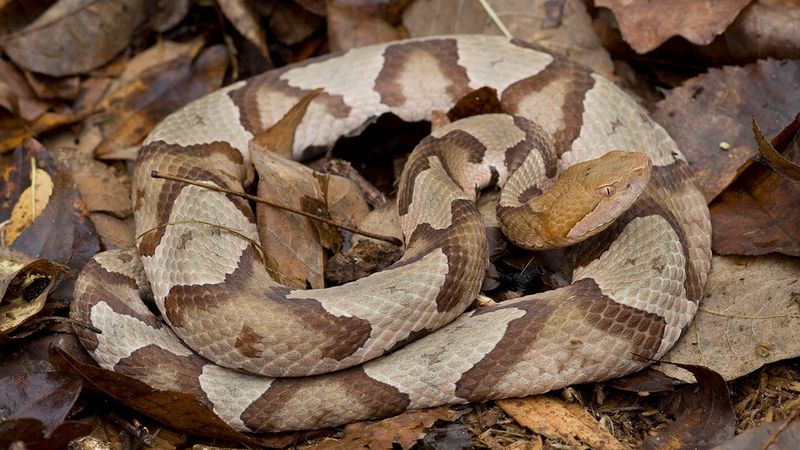
Honestly, a copperhead can vanish in a pile of fall leaves like a magic trick. Its patterned body blends right into the forest floor, which keeps it hidden from hungry hawks.
Spot one by its copper-red head shaped a bit like a wide arrow. Dark hourglass bands cross its pale body, looking wider on the sides and skinny across the back.
Adults usually grow two to three feet long. Babies wear a bright yellow tail tip, which they wiggle like a worm to lure frogs close.
Many folks confuse copperheads with harmless eastern milk snakes. Checking for those hourglass bands is a quick way to tell them apart.
Out of the state’s three venomous snakes, copperheads show up most often. You will mostly find them in the lower Hudson Valley, with fewer sightings farther north.
Your New York Garden Changes Every Week. Your Plan Should Too.
Gardening in New York changes quickly throughout the season. Every Friday you’ll receive a simple weekly plan showing exactly what to plant, prune, fertilize, harvest, and protect so you never miss the right timing.
Rocky woods, woodpiles, and even sawdust piles make cozy hiding places. Luckily, they tend to steer clear of busy towns and cities.
Here is the tricky part about these reptiles. Without a rattle, they give no loud warning, though a nervous tail can still rustle in dry leaves.
Most bites happen when someone steps on one or reaches into a hidden nook. Their venom brings intense pain and swelling, so get medical help right away.
Wear sturdy boots and gloves when stacking firewood. Use a flashlight on summer evenings, since copperheads often hunt after dark.
3. Eastern Massasauga, A Rare And Endangered Rattler
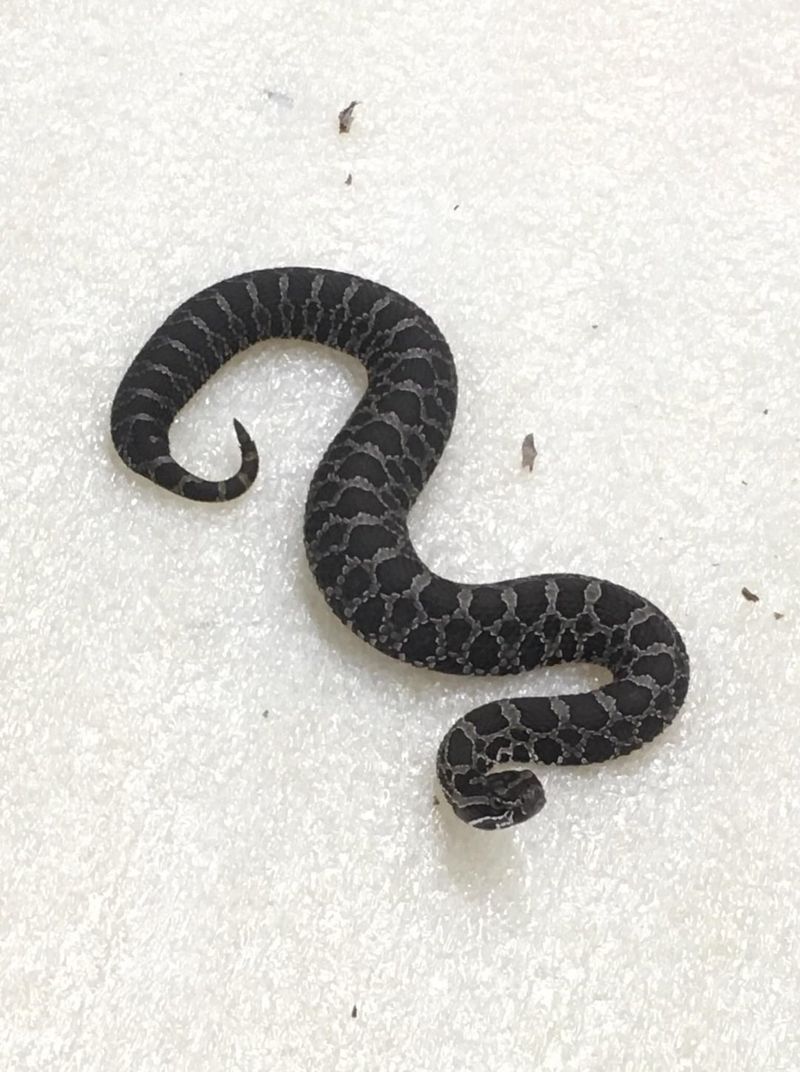
Few New Yorkers will ever see this shy little rattler, and that is part of its charm. The eastern massasauga ranks as the smallest venomous snake in the state.
Most measure between 18 and 40 inches long. They have chunky bodies, heart-shaped heads, and cat-like vertical pupils.
Adults look gray or light brown with big chocolate blotches trimmed in pale edges. A dark, marbled belly and a small grayish-yellow rattle finish the outfit.
People nicknamed it the swamp rattler for good reason. Bogs, marshes, swamps, and floodplains are its favorite hangouts, plus nearby grassy fields and shrubby spots.
Only two small populations remain in New York today. One lives in Bergen Swamp near Rochester, and the other in Cicero Swamp near Syracuse.
Fun fact: massasaugas sleep through winter alone. They often borrow crayfish holes or old mammal burrows instead of sharing big dens like timber rattlers.
Their venom is strong and can harm tissue and stop blood from clotting. Still, bites on people are very rare because these snakes are calm and secretive.
The massasauga is listed as endangered in New York and threatened across the country. Lost wetlands, illegal collecting, and accidental harm have shrunk their numbers a lot.
Visiting a protected swamp? Stay on marked boardwalks, watch where you step, and enjoy any sighting from a respectful distance.
4. Northern Black Widow, Hiding In Woodpiles And Sheds
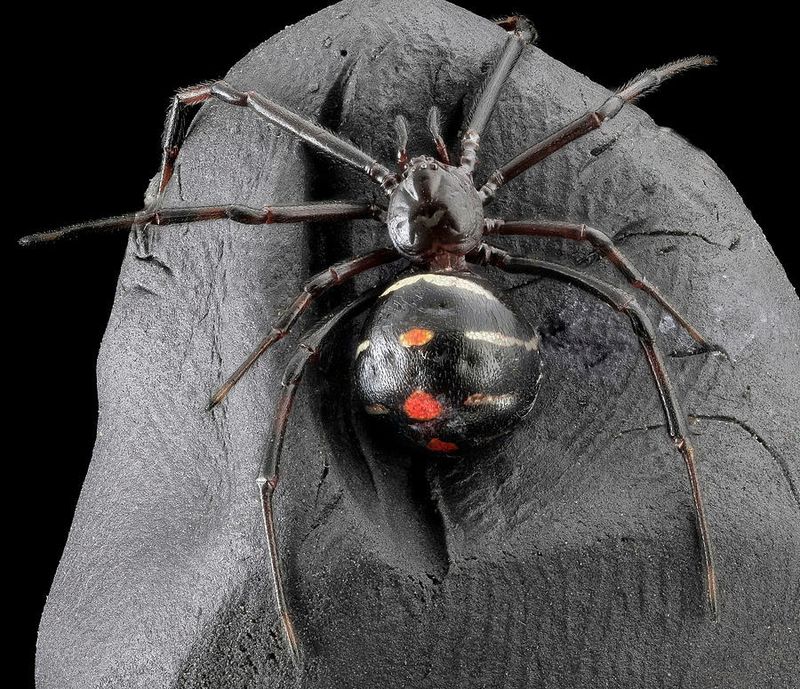
Reaching into a dusty woodpile without gloves? You might be shaking hands with a northern black widow.
These spiders wear glossy, jet-black bodies that almost shine. Flip one over, and you will notice a red hourglass on the belly that often looks split in two.
Some also carry red dots along their backs and white stripes on their sides. Their webs look messy and tangled rather than neat and round.
Northern black widows are fairly common across the state. Outdoors, they love woodpiles, hollow logs, old stumps, and brush piles.
Inside, they settle into sheds, garages, barns, basements, and greenhouses. When the weather cools, some try sneaking into homes through cracks.
Their venom is surprisingly strong, reportedly 15 times more powerful than rattlesnake venom. Thankfully, they inject just a tiny amount.
A bite can cause spreading redness, painful muscle aches, fever, nausea, and vomiting. Symptoms may last up to a week, so see a doctor if they grow worse.
Young kids and older adults face the biggest risk from these bites. Healthy adults usually recover with proper care.
Here is some comfort for nervous gardeners. These spiders are timid and would rather run away, biting only when pressed against skin.
Wear gloves when moving firewood or boxes. Shake out boots and gardening gear before slipping them on, especially after storing them in a shed.
5. Yellow Jackets Behind Most Late-Summer Stings
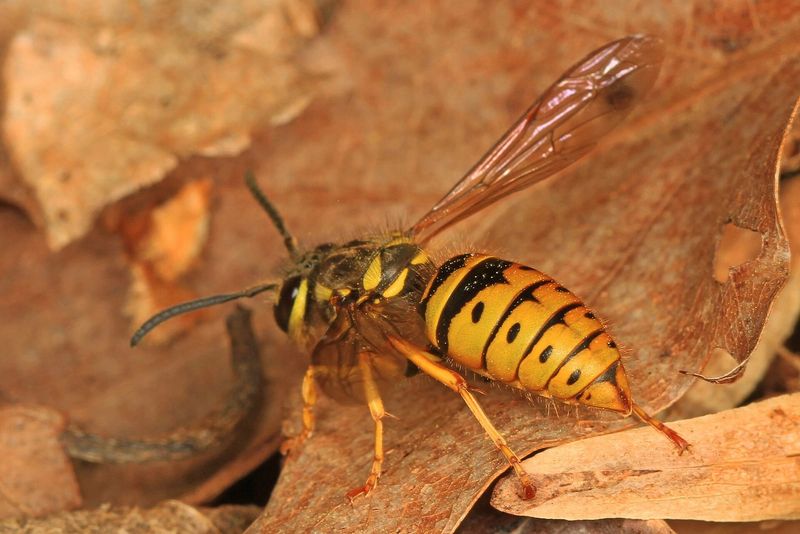
Every August, a backyard barbecue turns into a sticky battlefield. The uninvited guests are usually yellow jackets hunting for your sweet lemonade.
These wasps measure about half an inch long with smooth, shiny bodies. Their bold yellow and black stripes look sharper than a bee’s fuzzy coat.
Colonies can hold thousands of workers, sometimes around 4,000. Late summer is when those crowds peak and tempers run short.
Early in the season, workers gather protein for their babies. Later, they crave sugar for themselves, which pulls them toward soda, fruit, and trash cans.
Unlike honey bees, yellow jackets can sting again and again. Their smooth stingers slide right back out, ready for round two.
Squashing one can backfire badly. A crushed yellow jacket releases an alarm scent that calls its nest mates to attack.
Many nests hide underground in old chipmunk holes or rodent burrows. Mowing the lawn over one is a classic way to get stung.
Others build papery nests in shrubs, attics, wall gaps, and under eaves. Colonies may stay active into September, or even December inside warm buildings.
Try pouring drinks into cups with lids and keeping food covered outdoors. Walk away calmly instead of swatting, and seek help fast if someone shows allergy signs.
6. Bald-Faced Hornets Guarding Football-Shaped Nests
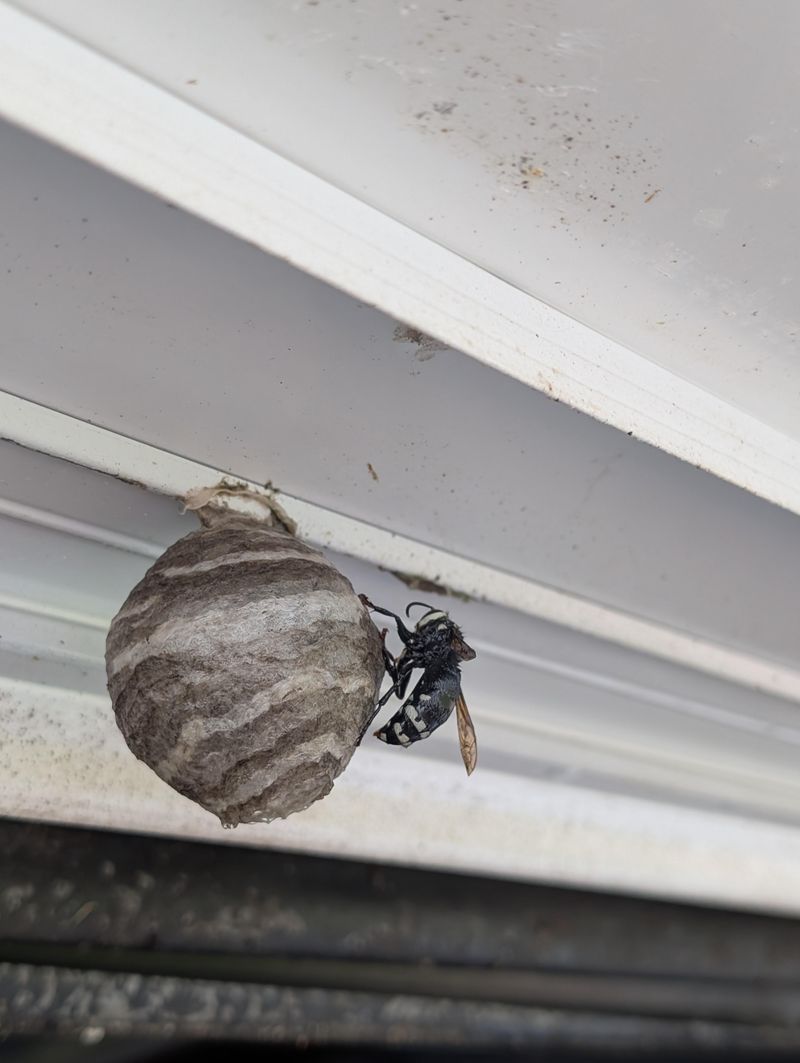
Spotting a gray, football-sized lump in a tree can feel like finding a strange lantern. Look closer, and you may see black and white hornets zipping in and out.
Surprisingly, bald-faced hornets are really a type of yellow jacket. Their nearly all-white faces earned them that funny bald nickname.
Their bodies are mostly black with ivory marks on the face, middle, and tail tip. Workers reach about half an inch, while queens grow even bigger.
Nests are built from chewed wood that dries into gray paper. They can grow two feet tall and hang from trees, shrubs, or high on buildings.
One colony may hold 100 to 400 hornets, sometimes up to 1,000. They get especially defensive within about ten feet of home.
Here is a smart rule. If you bump a nest by accident, walk away quickly instead of swatting.
Stings cause pain and swelling that usually fades in about a day. People allergic to bee stings may react to these too.
Believe it or not, they help gardeners by hunting flies and other yellow jackets. They also sip nectar, tree sap, and juice from rotting fruit.
Found a nest near your door? Keep kids and pets away and call a pest pro instead of hitting it with a stick.
7. Paper Wasps Tucked Under Eaves
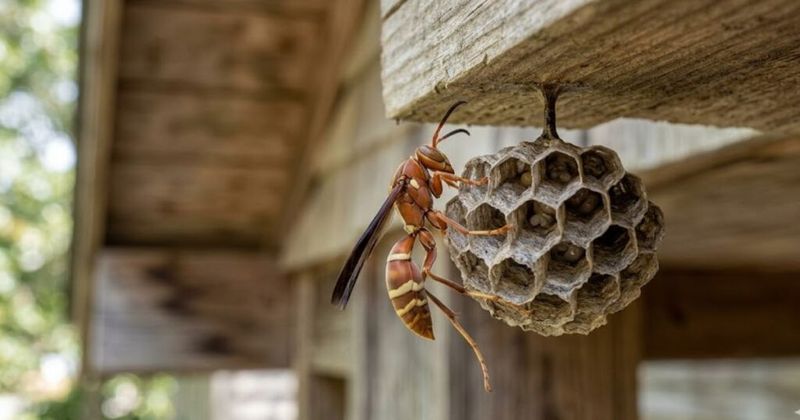
Grab a lawn chair, glance up at your porch ceiling, and you might spot a tiny paper umbrella. Paper wasps love these sheltered corners almost as much as we love shade.
Their bodies are slim with skinny waists and long legs. When they fly, those legs dangle below like a little landing gear.
Most are brown with yellow markings. Their nests look like an upside-down umbrella with open, six-sided cells you can see from below.
Compared to yellow jackets or bald-faced hornets, paper wasps are fairly mellow. Leave them alone, and they usually return the favor.
Bump the nest or swat at one, though, and the mood changes fast. They will sting to protect their young.
Around the state, look under eaves, porch roofs, and window frames. City wasps also tuck small nests beneath balcony railings and behind air conditioners.
Fire escape corners are another favorite in New York City. Check these spots before climbing out or cleaning in spring.
Small nests are easiest to deal with early in the season. A spring check of your eaves can stop a tiny nest from becoming a crowded colony.
Gardeners may appreciate these wasps a bit. They hunt caterpillars that chew tomato and cabbage leaves, so nests far from doors can sometimes stay put.
8. Honey Bees And Bumble Bees Defending Their Hives
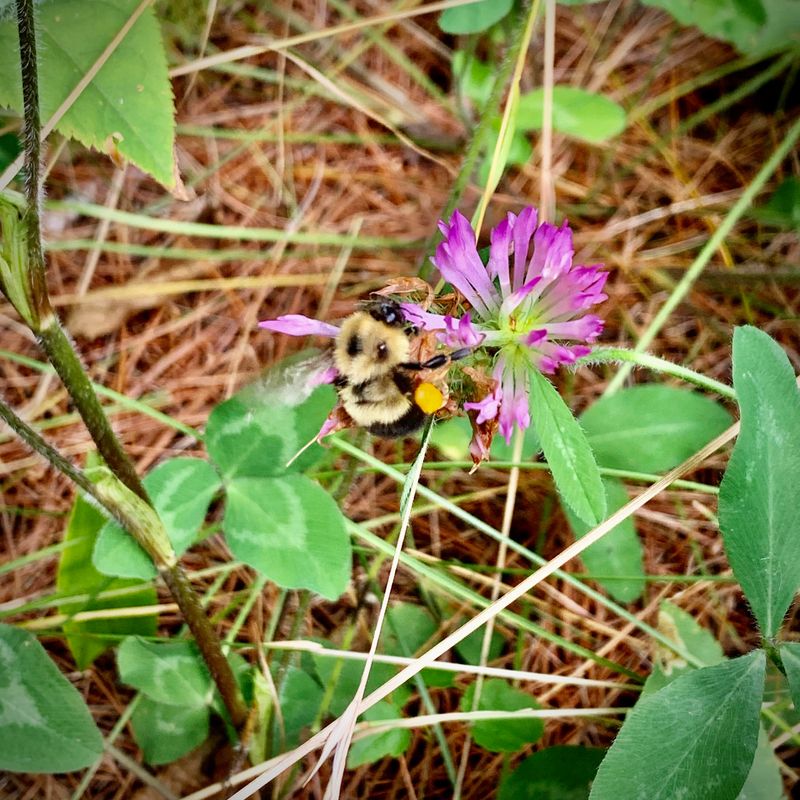
Bees are the friendly faces of the stinging world, buzzing from flower to flower. Still, both honey bees and bumble bees will defend their homes when pushed.
Honey bees live in huge, organized colonies. Their barbed stingers stay stuck in skin, and the bee perishes soon after stinging.
Each sting also releases an alarm scent. Nearby bees may join in, so walk away calmly if one stings you.
A swarm hanging from a branch looks scary but is usually peaceful. Those bees are just searching for a new home, and a local beekeeper can relocate them.
Fun fact: beekeeping is legal in New York City. Rooftop hives send bees out to forage in parks like Central Park.
Bumble bees are larger and fluffier. Their smooth stingers let them sting more than once, though they are usually quite laid-back.
They often nest underground in old rodent burrows or holes. Sometimes they choose spaces in wood or buildings instead.
Going barefoot through clover-filled lawns is a common way to get stung. Slip on shoes before running across the grass in spring and summer.
Most stings cause only pain, redness, and swelling. Watch for trouble breathing or a swollen face, since serious allergic reactions need emergency care right away.
9. Northern Short-Tailed Shrew, A Venomous Mammal
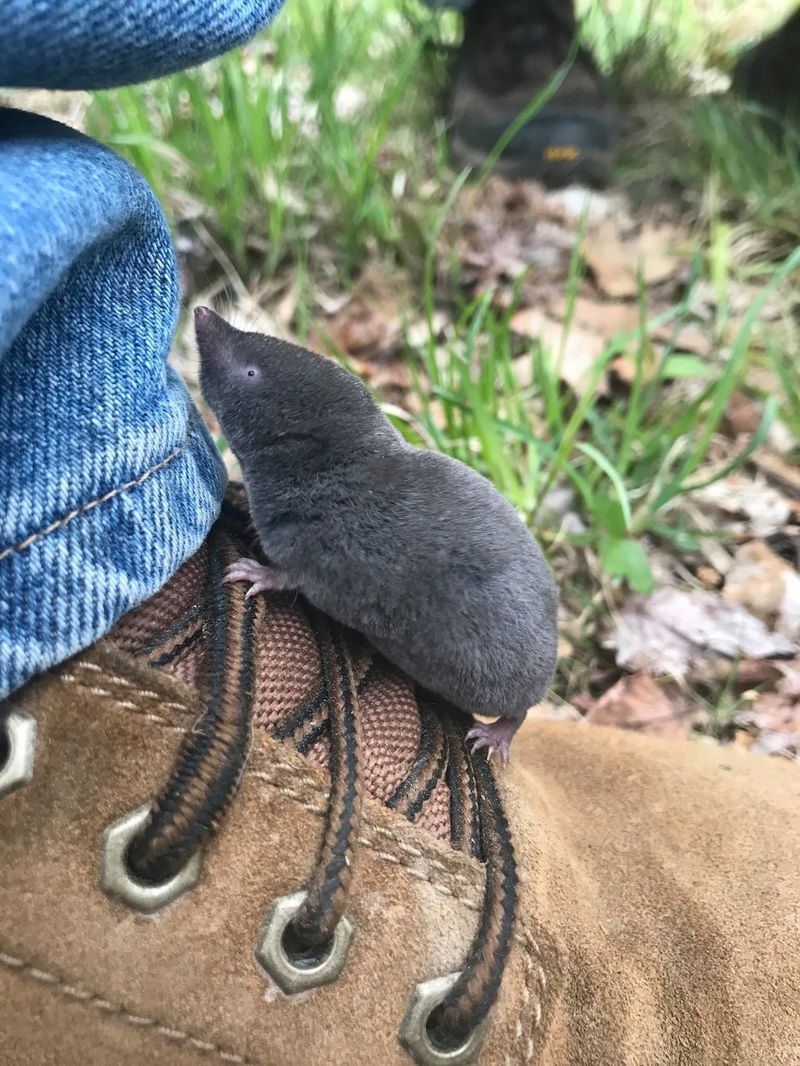
Venom in a furry mammal sounds like something out of a cartoon. Yet the northern short-tailed shrew packs real venom in its tiny mouth.
This critter measures only four to five and a half inches long, tail included. It has velvety slate-gray fur, a pointed snout, and eyes smaller than pinheads.
Its venom comes from glands in its saliva. Grooves in the lower front teeth guide the venom into prey as it chews.
Insects, worms, slugs, and even small mice can be paralyzed by that bite. The shrew sometimes stores frozen-in-place but living prey for a later snack.
Talk about a big appetite! These shrews burn energy so fast they may eat up to three times their body weight daily.
Poor eyesight does not slow them down. They use a form of echolocation, like bats, to find their way through tunnels.
They live in forests, fields, marshes, and even backyard gardens. Damp spots with thick leaf litter suit them best.
Their venom is not life-threatening to people. A bite can still burn and swell for several days, a lot like a bee sting.
Nearly every bite happens when someone tries to pick one up. If your cat brings one inside, use gloves or a container to move it outdoors.
10. Lion’s Mane Jellyfish Along The Coast

A day at the beach should mean sandcastles and salty breezes, not surprise stings. Along the New York coast, though, the lion’s mane jellyfish sometimes drifts near swimmers.
It ranks among the largest jellyfish on the planet. Its bell can top six feet wide, and its tentacles may stretch over 100 feet.
Those flowing tentacles look like a shaggy lion’s mane, which explains the name. Colors range from clear to yellow, orange, or deep red.
Lion’s manes prefer cold northern waters in the Atlantic and Pacific oceans. Swimmers may meet them in harbors, bays, and coastal waters around Long Island.
Brushing against a tentacle brings quick pain, redness, itching, and swelling. Sensitive people may react more strongly and should get medical help.
Watch out for jellies washed up on the sand too. Detached tentacles can still sting, even after the jellyfish is gone.
Kids love poking strange things on the beach, so set a simple rule. Look with eyes only, and never touch jellyfish pieces with bare hands.
If stung, rinse the area with seawater rather than fresh water. Carefully lift away any stuck tentacles using a card or gloved fingers.
Lifeguards often post jellyfish warnings at busy beaches. Check those signs before splashing in, and your summer trip should stay fun and sting-free.