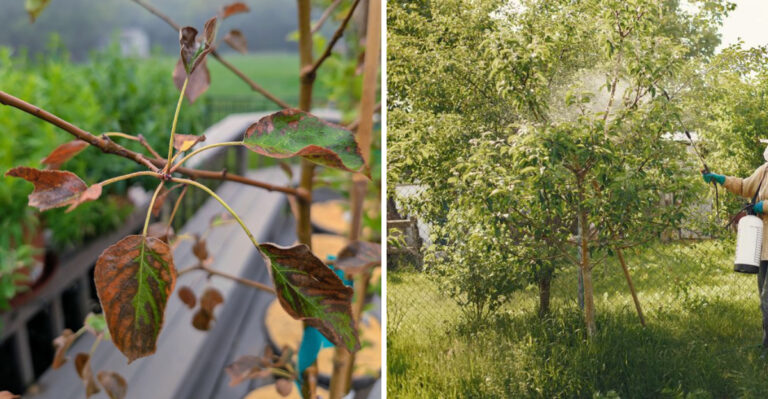
Red Five-Leaf Vines On Missouri Trees Are Often Mistaken For Poison Ivy
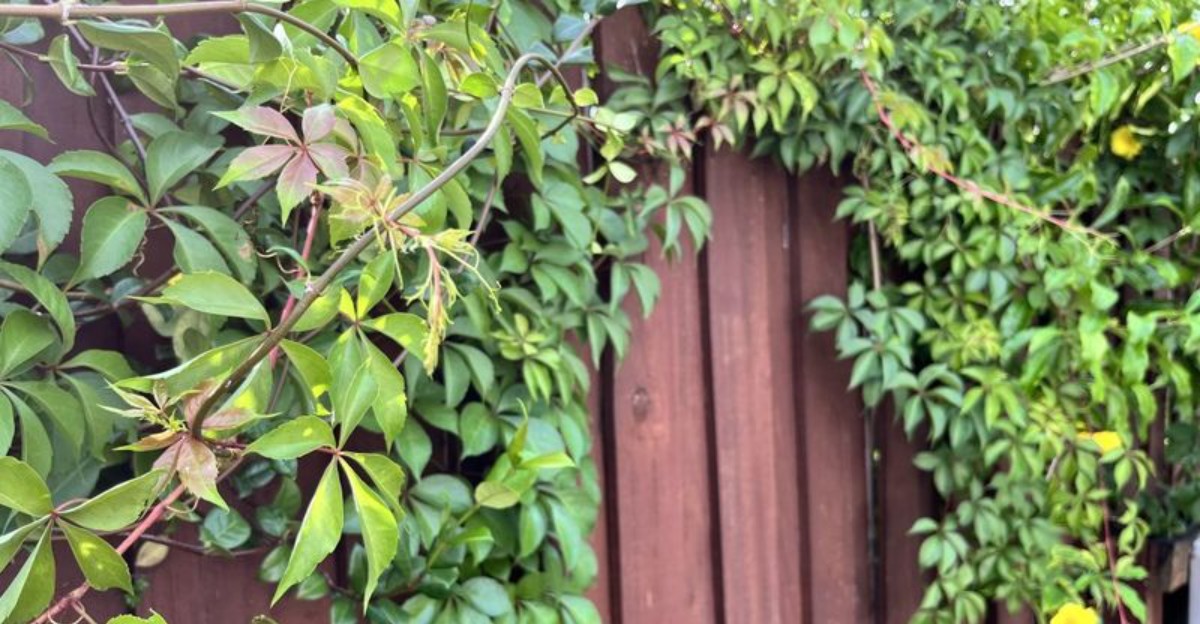
By early October, Missouri woodlots are full of tree trunks wrapped in bright red leaves. Those glowing vines look lovely from the trail, yet plenty of hikers step back.
Nobody wants itchy blisters, so the first instinct is to treat every red vine as trouble. That caution makes sense, but it can send you away from a plant that is mostly harmless.
Crisp air, crunchy acorns underfoot, and a vine glowing scarlet against gray oak bark set the scene. Then comes the squinting, and a half-remembered camp rhyme about counting leaves.
Across Missouri, two native vines share the same trees, the same fall colors, and mistaken identities. One deserves your respect, while the other mostly deserves a careful second look and some admiration.
The oak, meanwhile, seems perfectly happy with its new scarlet sleeves. It has no opinion on the debate at all.
Virginia Creeper Is The Usual Look-Alike

Say hello to the usual case of mistaken identity in Missouri forests, Virginia creeper, a native vine with five leaflets. Its scientific name is Parthenocissus quinquefolia, and the word quinquefolia simply means five leaves in Latin.
Every leaf on this vine is made of five smaller leaflets that spread out like fingers on an open hand. Poison ivy, by contrast, carries just three leaflets, which is where the famous warning rhyme comes from.
In early October, Virginia creeper turns shades of crimson, burgundy, and bright scarlet up and down tree trunks. Poison ivy also changes color in fall, so both vines can glow red at the same time.
That shared color is the main reason so many people worry when they spot a red vine on an oak. Both plants also climb trees, fences, and walls, which only adds to the confusion for weekend hikers.
Virginia creeper lacks urushiol, the oily compound in poison ivy that causes an itchy, blistering rash. Most people can brush against it without trouble, though a small number get mild skin irritation.
Its sap holds tiny needle-shaped crystals called raphides, and those can bother sensitive skin after heavy contact. Wearing gloves while pruning is a smart habit, even when you feel sure about which vine you have.
Once you learn to count leaflets, the red vines on Missouri trees start to feel far less worrying. Most of the time, that cheerful splash of color is simply Virginia creeper putting on its autumn display.
Counting Leaflets Settles The Debate
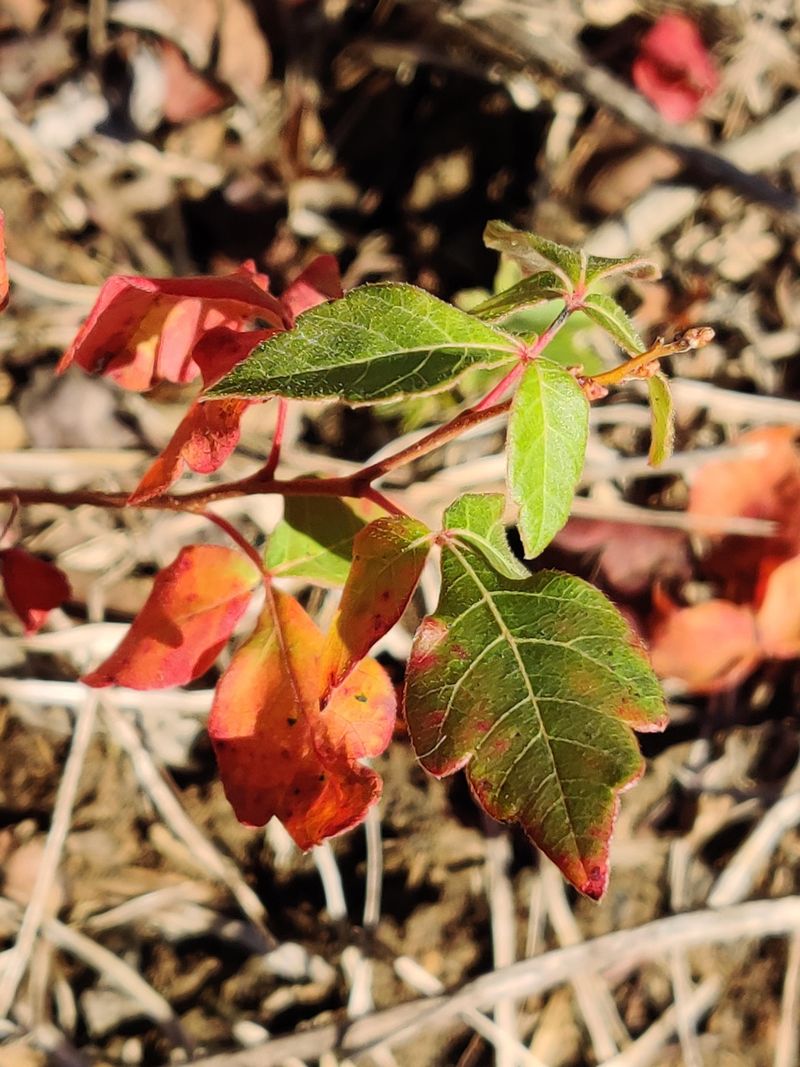
Ask any old scout leader, and you will probably hear the rhyme, leaves of three, let it be. That short saying remains one of the best tools for sorting out red vines on Missouri trees.
Start by finding a single leaf stem, then follow it to the point where the leaflets attach. Virginia creeper shows five leaflets meeting at one central spot, arranged in a neat circle like a star.
Poison ivy shows three leaflets, and the middle one sits on a noticeably longer stalk than the side pair. Its leaf edges can be smooth, wavy, or slightly toothed, which makes shape alone a shaky clue.
Your Missouri Garden Changes Every Week. Your Plan Should Too.
Gardening in Missouri changes quickly throughout the season. Every Friday you’ll receive a simple weekly plan showing exactly what to plant, prune, fertilize, harvest, and protect so you never miss the right timing.
Young Virginia creeper leaves sometimes come in groups of three, so checking several leaves helps avoid mistakes. Look along the vine for mature leaves, which usually settle into that classic five-part pattern.
The stems tell a story too, especially on older vines that have climbed high into the canopy. Poison ivy grows thick, fuzzy, reddish-brown rootlets that make the vine look like a hairy rope.
Virginia creeper uses small tendrils tipped with sticky pads, so its stems look smoother and cleaner on bark. Even a leafless poison ivy vine can still cause a rash, so avoid grabbing any hairy rope.
A quick photo on your phone lets you count leaflets later without touching anything on the trail. Plant identification apps can help too, though your own careful eyes remain the most dependable check.
Early Fall Color Sparks The Confusion
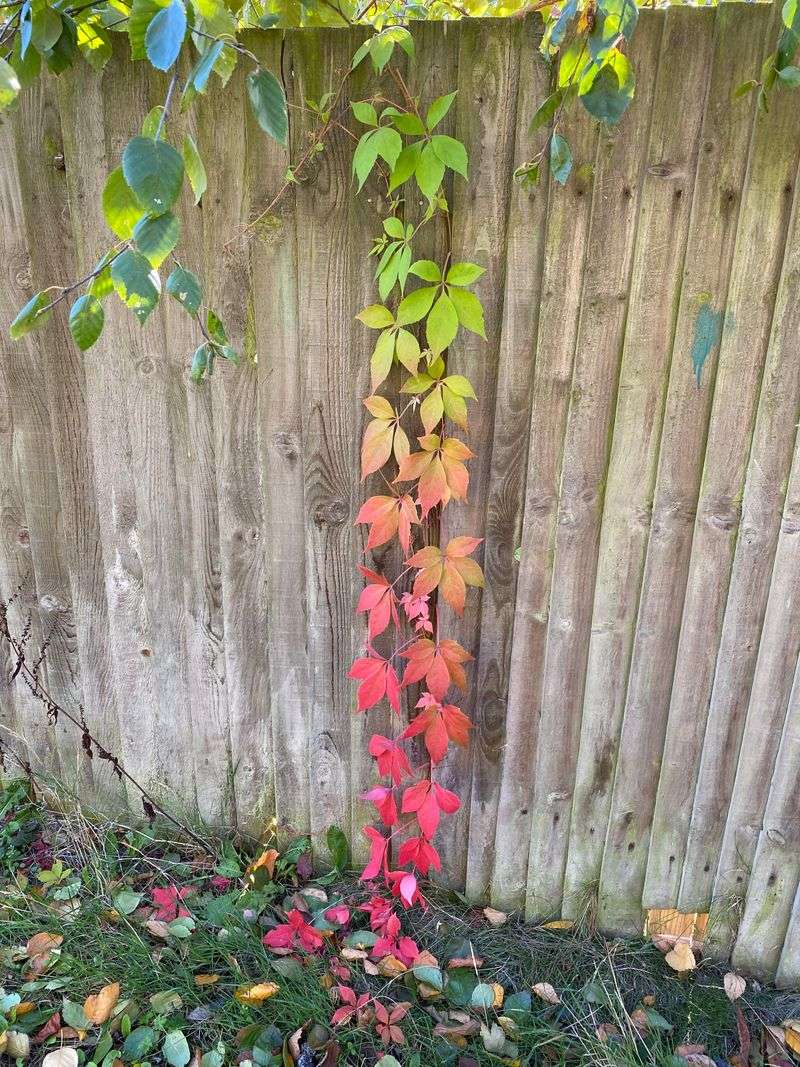
Something noticeable happens along Missouri roadsides in early October, when green vines start turning red. Virginia creeper is often one of the first plants to change, usually earlier than many of the nearby trees.
Shorter days and cooler nights slow down chlorophyll production, and leaves begin making red pigments called anthocyanins. Those pigments give Virginia creeper its deep ruby glow against the rough brown bark of oaks.
Poison ivy reacts to the same seasonal cues, turning orange, yellow, or red during the same stretch. Since both vines change color together, color alone gives you very little help when deciding which one you face.
Fall also brings more people outdoors for apple picking, hayrides, leaf peeping, and raking chores in the yard. More time spent near trees means more chances to brush against a vine you cannot quite identify.
Leaves also start dropping in October, and fallen leaflets can scatter, making counting much trickier on the ground. Focus on leaves still attached to the vine, where the full pattern stays intact and easy to read.
Raking piles of mixed leaves deserves a bit of caution, especially in shady yards with lots of vines. Urushiol stays active on fallen poison ivy leaves, so gloves and long sleeves make yard work much safer.
Burning leaf piles that might hold poison ivy is a poor idea, since the smoke can carry urushiol and seriously irritate the lungs. Bag those leaves or bury them in a far corner, and enjoy the bright show from a distance.
Dark Blue Berries Offer Another Clue
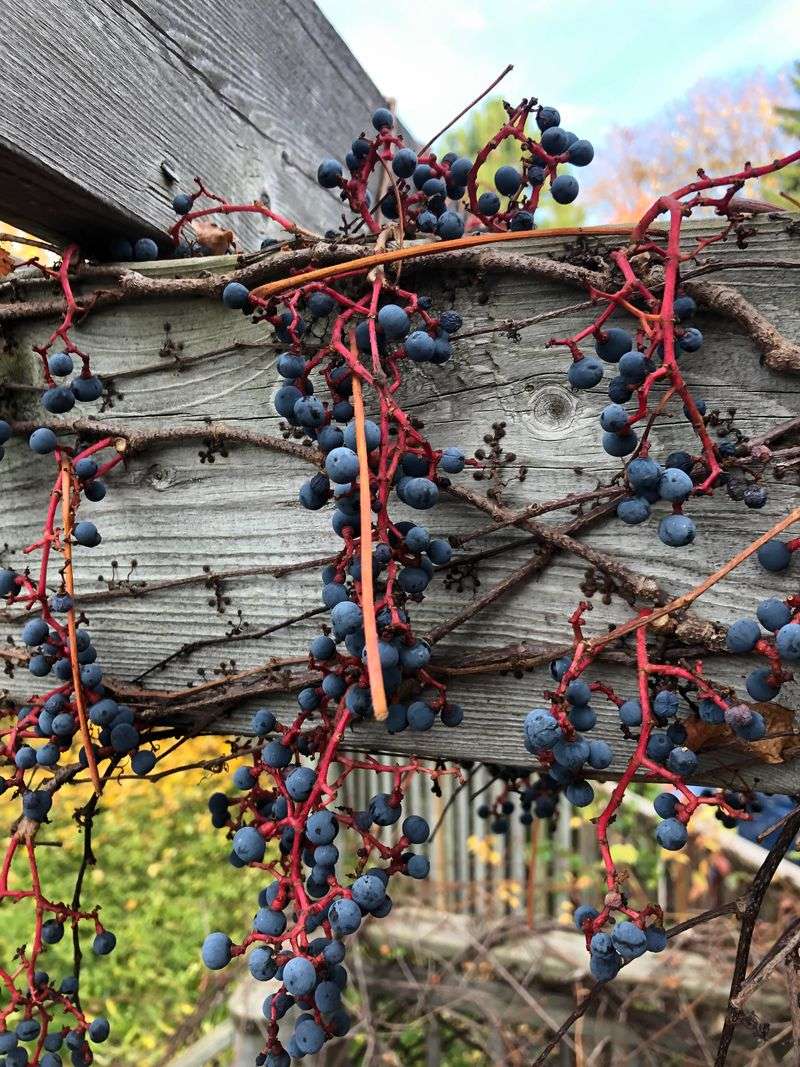
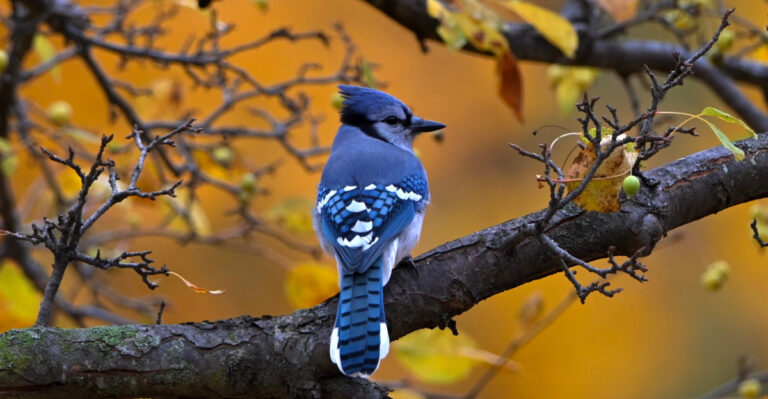
Bird watchers in Missouri know that a vine full of red leaves often means a busy bird buffet. Virginia creeper produces small, dark blue berries that ripen in late summer and hang on into fall.
Those berries sit on bright red stalks, a contrast that researchers sometimes call a fruit flag. The bold red color may help migrating birds spot the fruit from high above in autumn.
Poison ivy berries look quite different, appearing as clusters of small, waxy, whitish or pale gray balls. If you see creamy white fruit hanging near three-part leaves, step back and admire from a safe distance.
Woodpeckers, bluebirds, thrushes, and vireos happily eat Virginia creeper berries during their busy fall journeys south. Each berry gives them quick energy, which matters a lot for birds flying hundreds of miles before winter.
Those same berries are not safe for people, so keep curious kids from tasting them on the trail. They contain oxalic acid, which can cause stomach upset and mouth irritation if someone swallows several of them.
Pet owners should watch dogs around fallen berries as well, especially playful puppies that chew on everything. A quick call to your veterinarian makes sense if your pet eats a mouthful and seems unwell afterward.
Spotting dark blue berries on red stems gives you one more reliable clue beyond counting the leaflets. Combine both clues, and you can identify Virginia creeper with much more confidence while birds enjoy their autumn feast nearby.
Real Impact On Host Trees
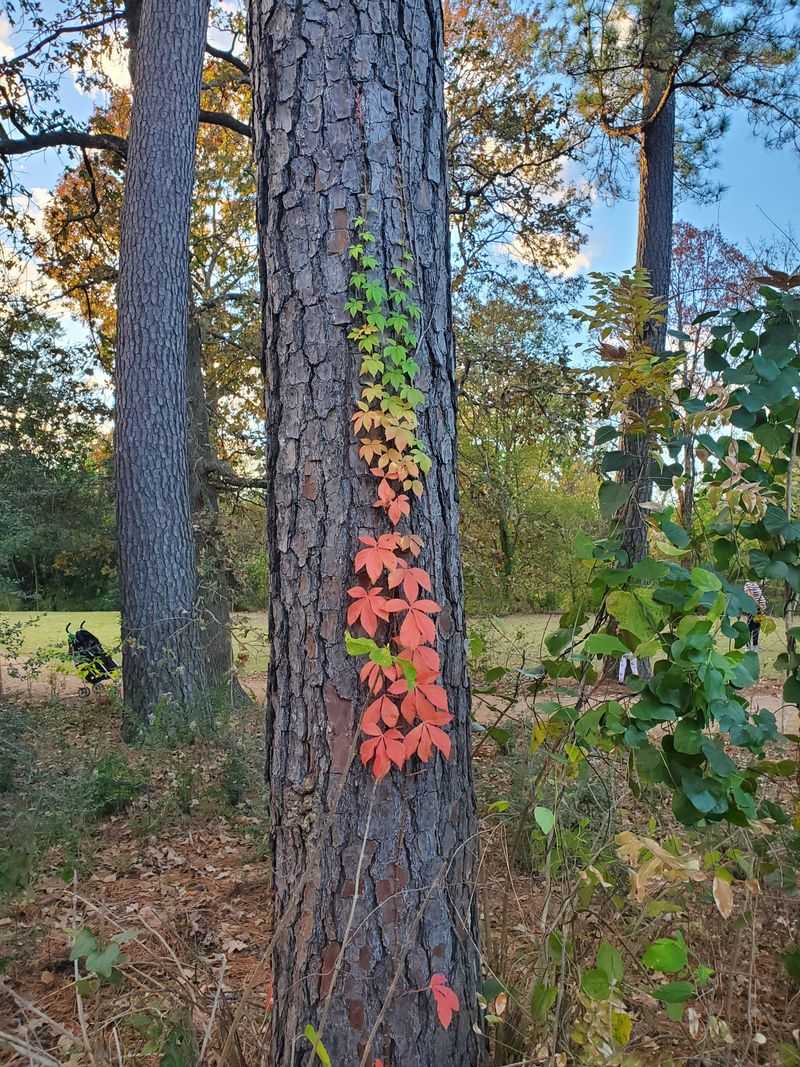
Plenty of Missouri homeowners reach for pruners in October, worried that a red vine is harming their oak. The truth is calmer, because Virginia creeper rarely harms a healthy, mature tree in any serious way.
Unlike vines that wrap tightly around trunks, it climbs with small sticky pads that simply hold on to the bark. The tree keeps growing wider without the vine tightening around it.
Trouble can show up when the vine grows so thick that it shades the tree’s own leaves. Small saplings, young fruit trees, and weakened trees struggle the most when heavy vines block their sunlight.
Extra weight can also be an issue, especially during ice storms that coat both branches and vines. A tree already carrying rot or cracks may lose limbs faster when a dense vine adds bulk.
In return, the vine offers shelter for insects, spiders, and small birds tucked among its thick leaves. Several moth species, including the beautiful Virginia creeper sphinx, use its foliage as food for their caterpillars.
Its roots and dense growth also help hold soil on slopes, which reduces erosion during heavy Missouri rains. Many gardeners actually plant it on purpose to cover fences, walls, and rocky banks with fall color.
Take a slow walk around your trees and look at how much canopy the vine actually covers. If the tree’s own leaves still dominate, the vine is mostly a colorful guest rather than a threat.
Smart Control For Crowded Trunks
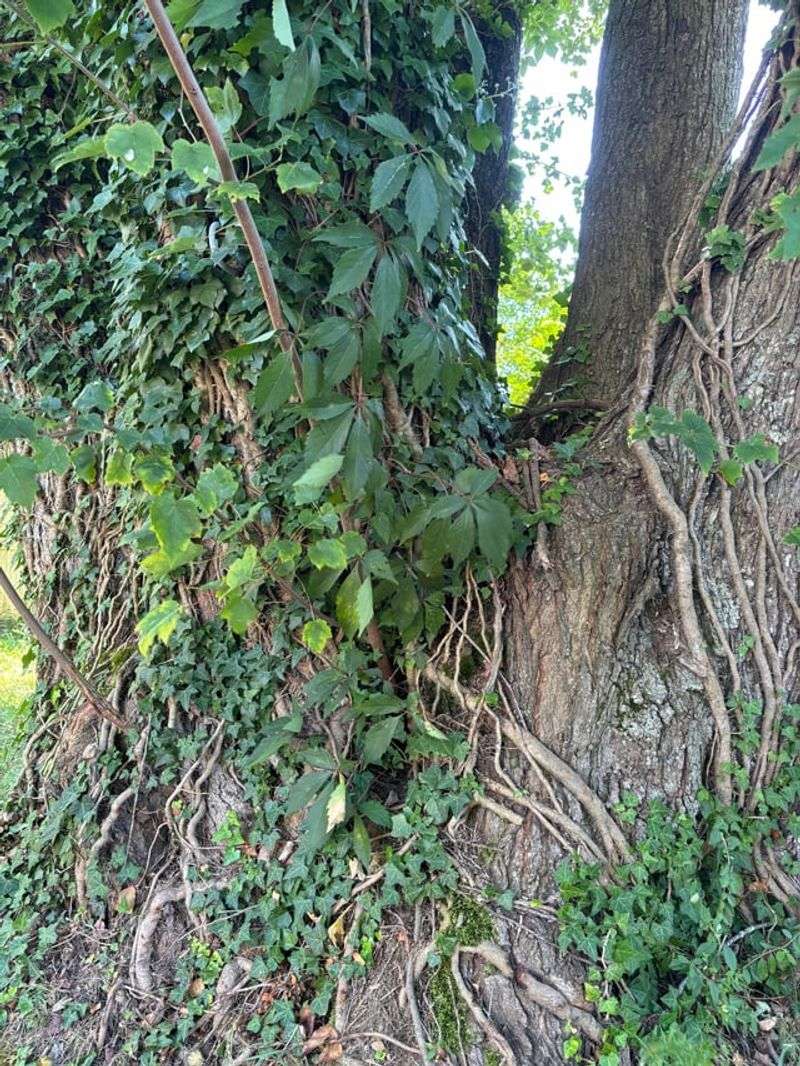
Sometimes a vine simply outgrows its welcome, creeping over windows, gutters, or a young maple you planted. Early October in Missouri is a handy time to manage it, since cooler weather makes outdoor work pleasant.
Before you cut anything, double check the leaflet count so you know which vine you are handling. Wear gloves, long sleeves, and eye protection, because a surprise poison ivy stem can hide in the tangle.
For a tree trunk, the simplest method is to cut the vine at waist height with sharp loppers. Leave the upper portion in place, since yanking it down can tear bark and injure the tree.
Without its connection to the roots, the upper vine gradually dries out and loosens its grip over several months. Pull the lower section gently from the ground, and dig out as much root as you reasonably can.
Fresh sprouts often return next year, so plan to check the base of the tree a few times. Clipping new shoots while they are small takes only seconds and keeps the vine from climbing again.
Herbicides are rarely needed for Virginia creeper, and they can harm nearby plants if sprayed carelessly. If you choose one, follow the label closely and paint it onto freshly cut stems instead of spraying.
Many Missouri gardeners keep a patch of the vine on a fence, where birds can still enjoy the berries. Trim it back each fall, and you get the brilliant red show without the worry over your trees.