The Spidery Yellow Flowers In New Jersey Woods Belong To A Seed-Flinging Shrub
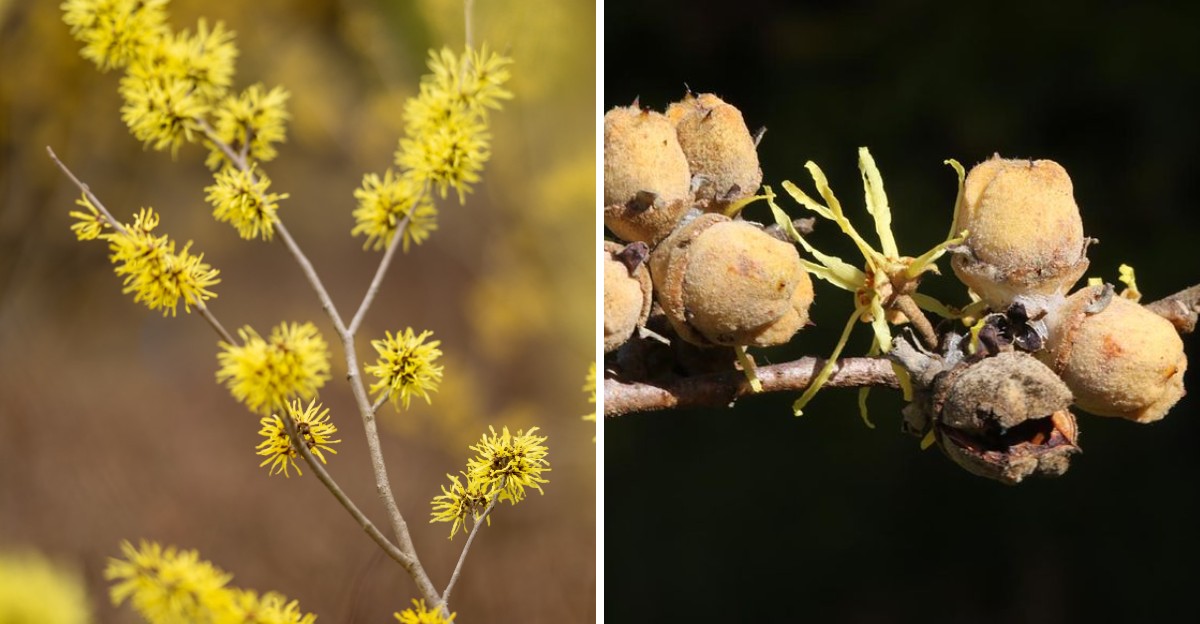
Why would you find blossoms on a leafless twig in late October? Witch hazel answers that question while you stand there in your jacket.
Its crinkled yellow petals unfurl just as you pull on a heavier coat. Hamamelis virginiana blooms across New Jersey when you expect empty branches.
Lean close and you catch a faint spice, like warm clove. Bees still visit, and you watch them work through the cold.
Owlet moths take the night shift, so you miss the busiest pollinators. Last season’s capsules open and launch glossy black seeds past you.
Distilled twigs give you a soothing toner for skin. Blossoms linger into early winter, so you get weeks to find them.
Tilt your head and the petals curl up whenever temperatures dip. Walk New Jersey’s ridges this month and you see the confident shrub outpace the calendar.
Witch Hazel Is The October Bloomer Behind The Golden Threads
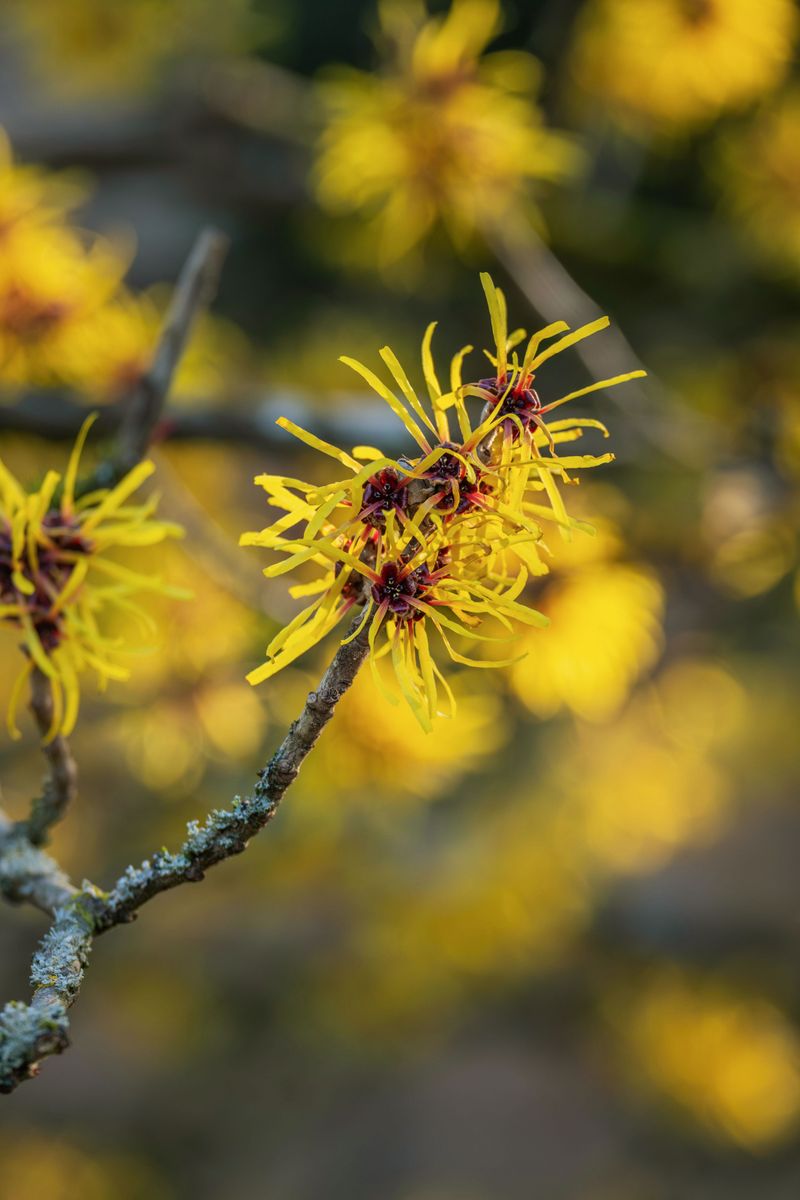
Those spidery yellow blooms belong to American witch hazel, a native shrub called Hamamelis virginiana. It grows wild from Nova Scotia down to Florida, and it thrives in New Jersey woods.
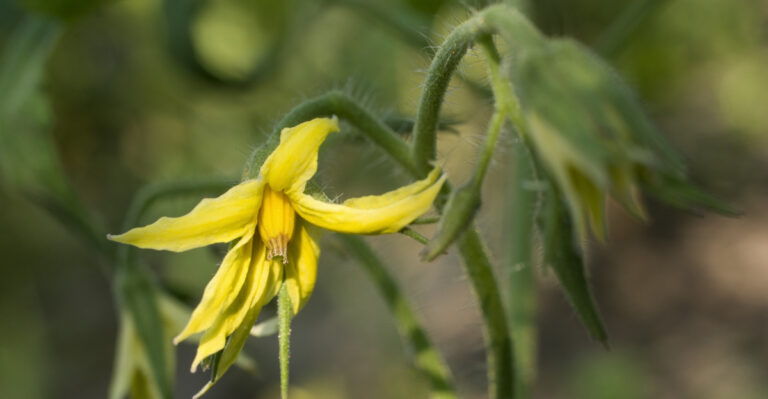
Each flower has four petals that look like crumpled ribbons about half an inch long. On a cold morning, the petals curl up tight, then relax again as the sun warms them.
Most plants stand between ten and twenty feet tall, with several crooked trunks. Smooth gray bark and zigzag twigs give it a rumpled, friendly look.
You will usually find it along stream banks, rocky slopes, and the shady edges of forests. Look for it in places like the Delaware Water Gap or the Watchung Reservation.
The leaves are a helpful clue, even in fall. They are wavy along the edges and lopsided at the base, like someone cut them slightly crooked.
Folklore adds to the name’s story too. Settlers used forked branches to find water, a practice called witching, yet the name likely means bendy.
The word hazel came from its leaves, which look a bit like those of hazelnut trees. The two plants are not close relatives, though, so do not expect any nuts to snack on.
Next time you spot those golden threads, take a close look and a sniff. You have just met one of the latest-blooming shrubs in the eastern woods.
Snap a photo of the bark and leaves too, so you can compare plants later. A small notebook works just as well if your phone battery runs low.
A Bloom Schedule That Runs Backward
Imagine a friend who shows up to a summer pool party wearing a winter coat. Witch hazel acts a lot like that friend, only in reverse.
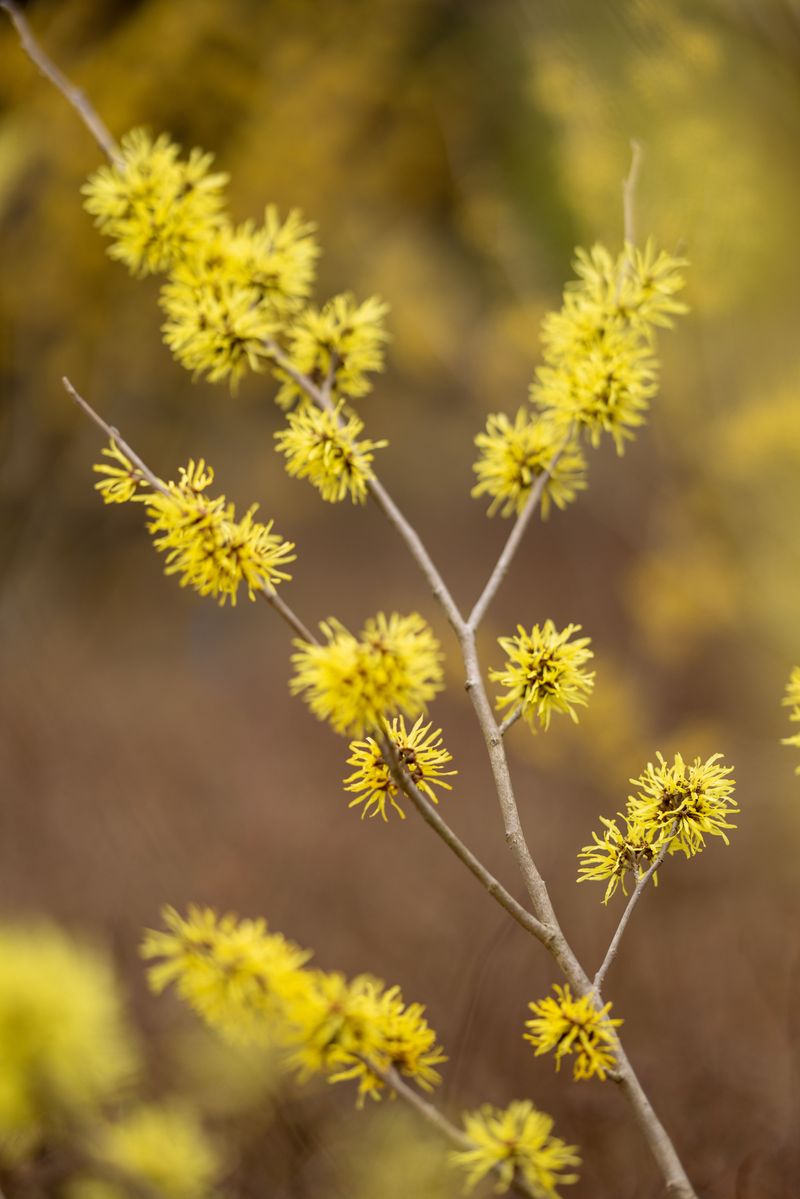
Flowers usually open from late September through November in New Jersey, sometimes lingering into December. October is often the peak, right as maples and oaks turn red and orange.
Sometimes the blooms appear while yellow leaves still cling to the branches. That makes them tricky to see, since the petals blend right into the fall color.
Your New Jersey Garden Changes Every Week. Your Plan Should Too.
Gardening in New Jersey changes quickly throughout the season. Every Friday you’ll receive a simple weekly plan showing exactly what to plant, prune, fertilize, harvest, and protect so you never miss the right timing.
Once the leaves drop, though, the flowers suddenly stand out on bare gray twigs. A sunny afternoon after the first frost is a great time to go looking.
Blooming this late has real perks for the shrub. Very few other plants are flowering, so it faces almost no competition for visiting insects.
Cold nights do not seem to bother it much. The petals roll up like tiny window shades when temperatures dip, protecting the pollen inside.
Things get even stranger from there. After pollination, the seeds take nearly a full year to ripen, finishing up the following autumn.
So when you look in October, you may see new flowers and old seed pods side by side. It is like a family photo with the grandparents and the newborn baby.
Keep a simple calendar of when you first notice blooms each year. Over time, you will spot patterns tied to weather and frost dates.
Your notes might even help local scientists who track how plants respond to changing seasons. Many nature centers welcome reports like these through community science projects.
Seed-Launching Pods Hidden In The Woods
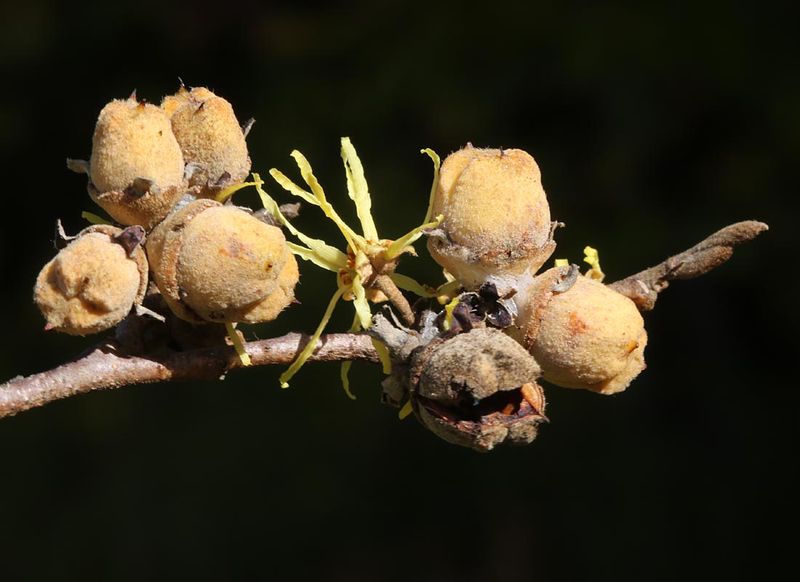
Snap goes something in the quiet fall woods, like a pebble flicked at a tree trunk. Chances are, a witch hazel seed pod just released its seeds.
The pods are small, woody capsules about half an inch long, shaped a bit like acorns. Each one holds two shiny black seeds packed snugly inside.
As the pod dries out, its walls slowly squeeze tighter around the seeds. Pressure builds up until the capsule suddenly splits open at the top.
That squeeze launches the seeds outward with surprising force. Scientists have measured flights of up to thirty feet, impressive for a seed no bigger than a pea.
Some people call witch hazel a snapping hazel because of this trick. Bring a few ripe pods indoors, and you may hear them popping on a windowsill.
Try a simple experiment with an adult’s permission. Place closed pods in an open box, then check for scattered seeds over a week.
Flinging seeds far away helps young plants avoid growing in their parent’s shade. Spreading out also means less competition for water and light.
Once they land, the seeds are in no hurry. Many sit in the soil for up to two winters before they finally sprout.
Birds like grouse and turkeys eat some of them along the way. The rest wait patiently, ready to grow into the next generation of golden fall blooms.
Pods are easiest to find in October, sitting right beside the new flowers. Gently squeeze a brown one, and you can feel how tightly it holds its seeds.
A Common Mix-Up With Forsythia And Spicebush
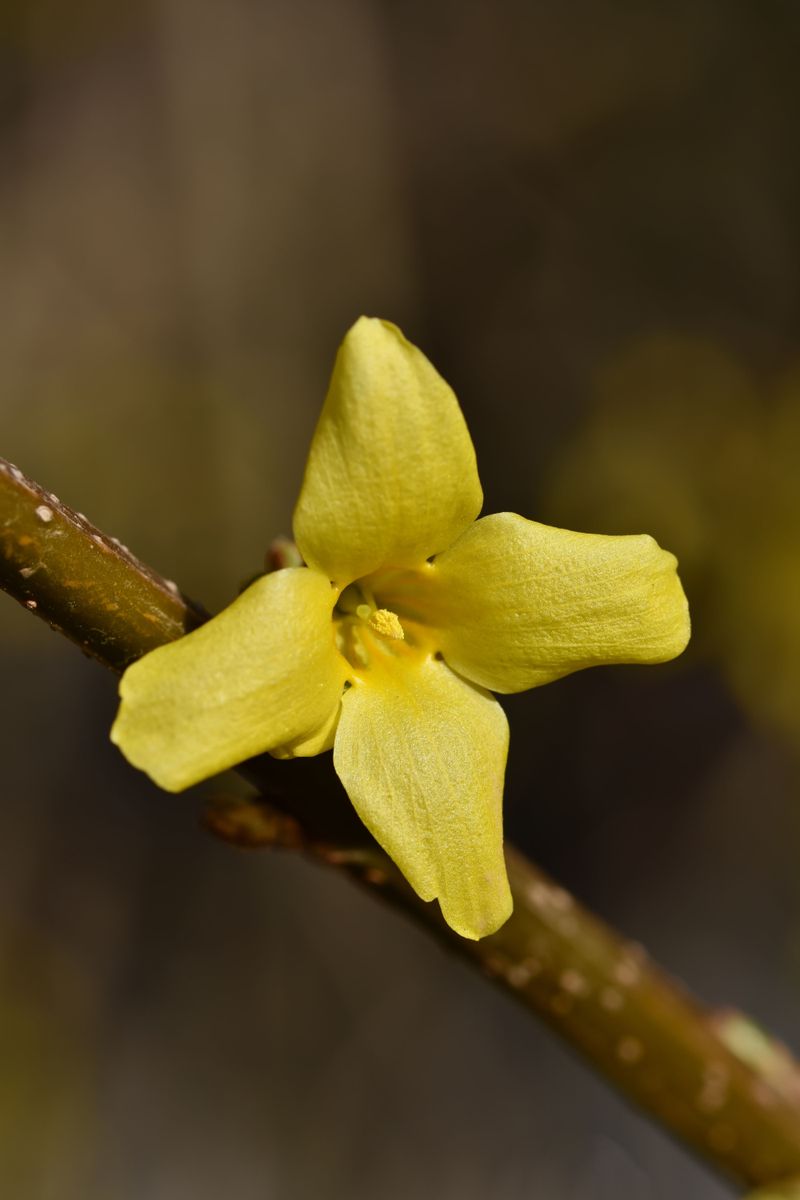
Plenty of hikers spot yellow flowers in the woods and shout forsythia without a second thought. In October, that guess is unlikely to be right.
Forsythia blooms in early spring, covering its arching stems with bright, four-lobed flowers. Its flowers are open and bell-like, not thin and wiggly like witch hazel’s.
Spicebush is another common mix-up in New Jersey forests. It also has small yellow flowers, but they appear in March as fuzzy little clusters.
By fall, spicebush is busy with shiny red berries instead of blossoms. Crush one of its leaves, and you get a lemony, peppery scent.
Witch hazel stands apart because of its timing and its petal shape. Spidery strands in autumn are a reliable identifying clue.
Another lookalike sometimes shows up in yards and parks. Chinese and Japanese witch hazels, plus hybrids, bloom in late winter instead of fall.
Those garden types often have red, orange, or copper flowers, along with bigger petals. They are pretty, but they are not the wild shrub of New Jersey woods.
Vernal witch hazel, a native from the Ozarks, also blooms in winter. So if you see spidery flowers in February, check whether someone planted it nearby.
A quick mental checklist can save some embarrassment on the trail. Think yellow, thin petals, autumn timing, and wavy leaves, and you have your answer.
Phone apps like iNaturalist can help confirm your guess with a clear photo. Snap the flowers, a leaf, and the bark for the best results.
Chilly Night Moths And Other Late Visitors
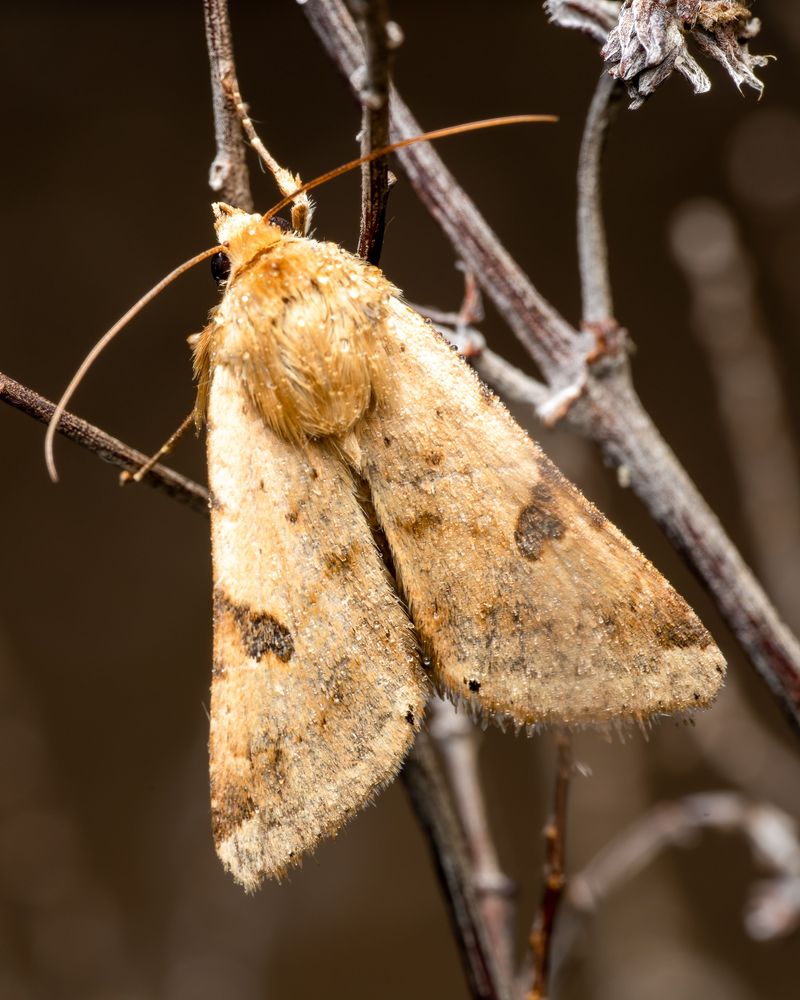
Who on earth pollinates a flower in late October, when most bugs have retreated? Moths are among its key pollinators.
Owlet moths, a large moth family, fly on cold nights when few predators are around. They warm up by shivering their wing muscles, almost like a runner stretching before a race.
Some of these moths can fly when the air is just above freezing. That cold-weather toughness makes them a perfect match for a fall-blooming shrub.
On warm, sunny afternoons, other visitors drop by too. Small flies, a few gnats, and the occasional bee will sip nectar if the temperature allows.
Even with those helpers, only a small share of flowers turn into seed pods. That sounds inefficient, but the shrub plays a long game.
It lives for many decades and blooms every year, so small wins add up.
The flowers also matter to the animals that depend on them. For a cold, hungry moth, a sip of witch hazel nectar can mean energy for another night.
Want to see these night visitors yourself? Grab a flashlight and an adult, then visit a blooming shrub after dark on a mild October evening.
Shine the light and watch for fuzzy brown moths clinging to the petals. Try not to touch them, since they need every bit of stored warmth.
A red flashlight lens works best because it bothers night insects less. Bring a notebook to jot down what you see and when.
Room For Witch Hazel In A New Jersey Yard
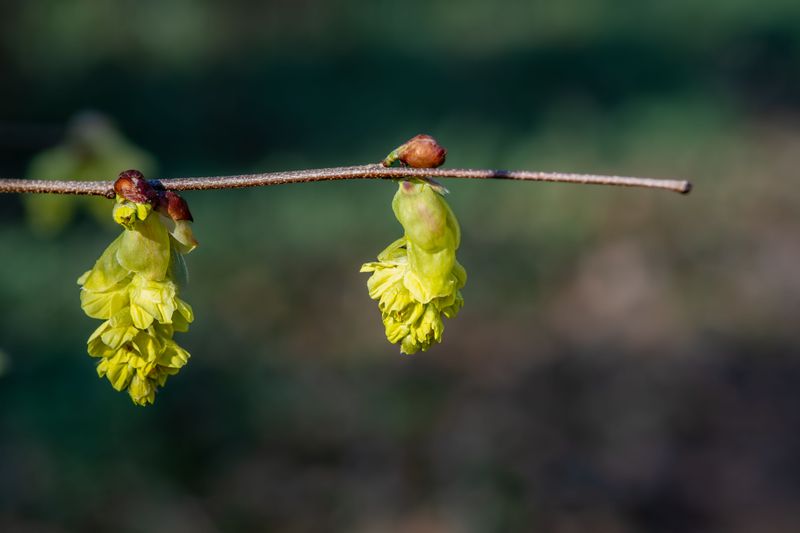
Planting a witch hazel at home is like getting a bonus season of flowers. Your yard keeps glowing long after the summer garden has faded.
Native nurseries across New Jersey often sell young shrubs in spring and fall. October is actually a fine time to plant, since cool weather is easy on new roots.
Pick a spot with part shade to full sun and soil that stays slightly moist. Witch hazel handles clay and rocky ground better than many fussy garden plants.
Give it plenty of elbow room, about fifteen feet in every direction. It grows slowly, so patience pays off more than fertilizer ever will.
Water deeply once a week during the first summer, especially in dry spells. After that, the shrub mostly takes care of itself.
Little pruning is needed beyond removing broken branches in late winter. Suckers that pop up from the base can be snipped if you want a tidier look.
Deer sometimes nibble the twigs, but witch hazel usually bounces back. A simple wire cage around young plants helps during their first few winters.
You may know the name from the bottle in the medicine cabinet. That skin toner is made from the bark and twigs, but homemade versions are not a smart idea.
Enjoy your shrub for its beauty and its wildlife value instead. Moths, birds, and curious kids will all appreciate the show every October.
Plant it near a window or path to enjoy blooms on gray days. A sunny fall morning with frost on the petals is worth the wait.