What Earthworms Do Underground in Your Arizona Garden Bed, and What We Still Don’t Know
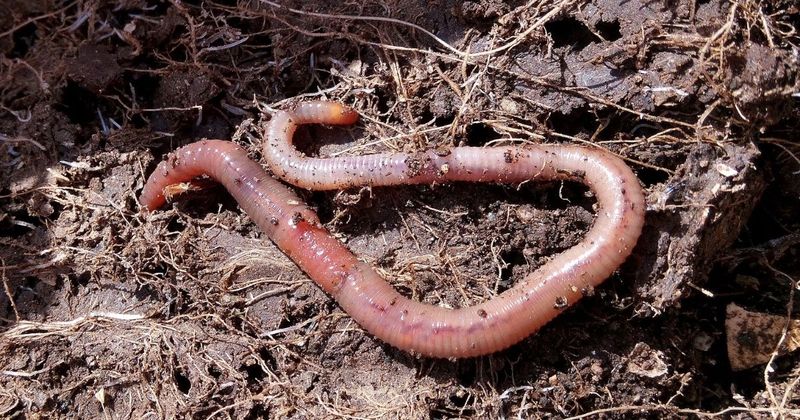
Dig into a healthy garden bed and you may find a pink, wiggling worm that has been busy where no one can see. Earthworms eat, tunnel, and leave tiny deposits behind, and all that motion changes the soil around them.
In the low desert, where water is precious and soil can be tough, it helps to know what worms really do and what they cannot do. Here is a careful look at the underground work, plus what to do when your shovel turns one up.
How much soil do Arizona garden worms move? We don’t know
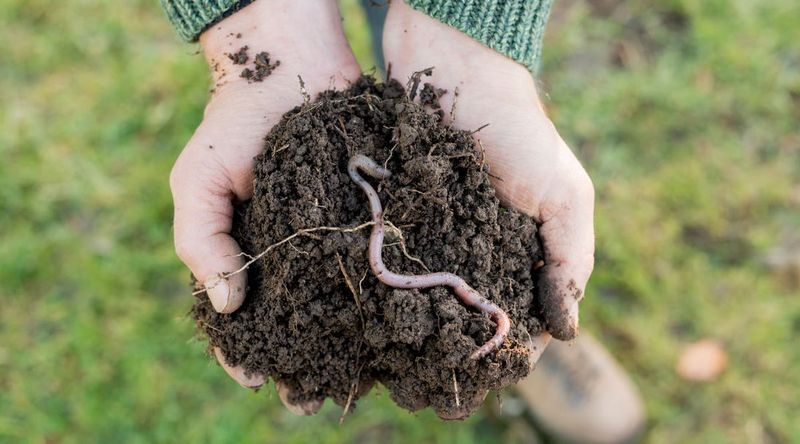
Here is a number that gets passed around: earthworms move tons of soil every year. The real source is one pasture study that estimated worms processed 20 to 40 tons of soil per acre per year.
Notice the details. That figure describes an acre of pasture, not a backyard bed, not a single worm, and not the Arizona desert.
Nobody has measured how much soil worms move in an ordinary Phoenix or Tucson garden bed, so any total for your yard would be a guess.
Please do not shrink that acreage number down to fit your garden. Soil type, moisture, food supply, and worm species all change the picture, and a pasture is a very different place from a dry-climate vegetable bed.
The missing number does not make worms boring. It just points us to the more useful story: what worms actually do as they burrow and feed, and what those jobs might mean for the soil under your tomatoes and herbs.
Worms mix soil as they burrow and feed
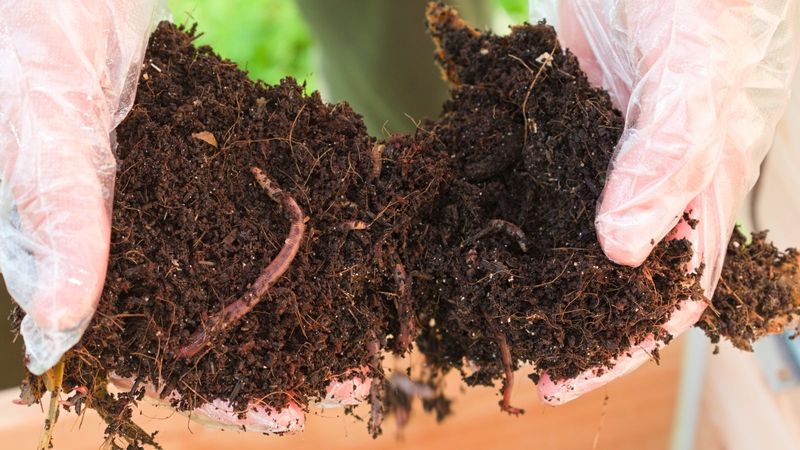
Picture a worm as a tiny underground mixer. It tunnels through the ground, swallows soil along with bits of decaying plant matter, and leaves behind castings, which are small deposits that contain nutrients.
Arizona gardeners can find these functions described in a desert gardening publication. Worm activity and castings can also contribute to soil aggregation, which means particles clumping into crumbs, as well as decomposition and nutrient cycling, according to federal soil quality guidance.
Notice the careful wording. Worms process and mix soil that already exists.
They do not make soil from nothing, and they cannot rescue every compacted or tired bed by themselves.
So the honest answer is modest but still pretty neat. Where conditions suit them, worms are one working part of a soil system that also depends on organic matter, sensible watering, and the way you manage the bed.
Can their tunnels help water move?
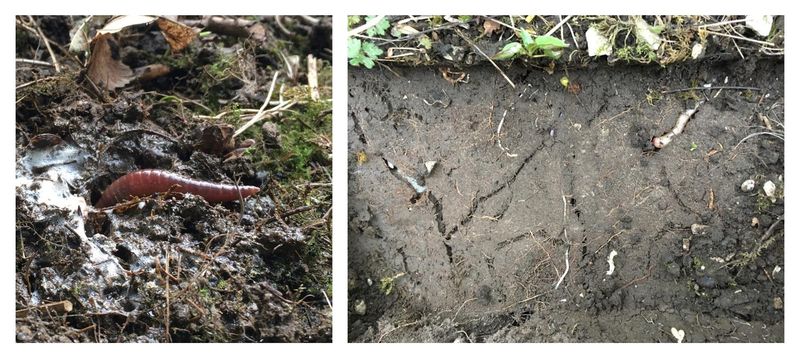
A worm tunnel is basically a tiny hallway through the soil. Those channels can offer routes for water, air, and plant roots, and that is the kind of thing that makes gardeners curious about worms and drainage, as soil quality guidance describes.
The word to hold onto is potential. Results change with the species of worm and the site, so tunnels are not a guaranteed drainage fix.
In a review of invasive earthworm studies, soil water content actually dropped, and the authors suggested faster infiltration or more evaporation and plant water use as possible reasons.
Your Arizona Garden Changes Every Week. Your Plan Should Too.
Gardening in Arizona changes quickly throughout the season. Every Friday you’ll receive a simple weekly plan showing exactly what to plant, prune, fertilize, harvest, and protect so you never miss the right timing.
Faster water movement is not automatically better. Water that sinks quickly is not necessarily held for plants, and it does not mean you can water less.
In practice, treat any worm tunnels you find as a small bonus. If a bed stays soggy or sheds water, look at the soil itself and how you irrigate rather than waiting on worms to solve it.
In Arizona, moisture sets the terms
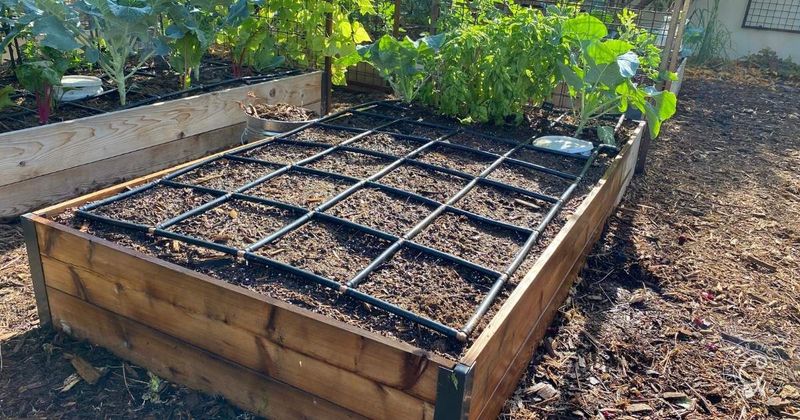
Out here, worms live by the water budget. Arizona does have earthworms, and they turn up most where the habitat suits them: moist spots with plenty of organic residues, such as streamside areas, cultivated land, and well-managed landscapes.
A worm breathes through its skin, so when soil dries out it can be in real trouble.
That makes the low desert a tough place for them. Hot, dry surface soil is hard to survive, while shaded soil with decaying plant material gives them food and a bit of moisture.
The same garden soil guidance lists appropriate irrigation, organic matter, and mulch among the practices that support garden soil and earthworms. Mulch also shields soil from overheating.
Do not add water just to lure worms, and do not keep a bed constantly wet. Overwatering can deprive roots of air, as a heat and drought care guide warns.
Water for your plants first, and any worms that thrive are a bonus.
A large worm is not a species identification
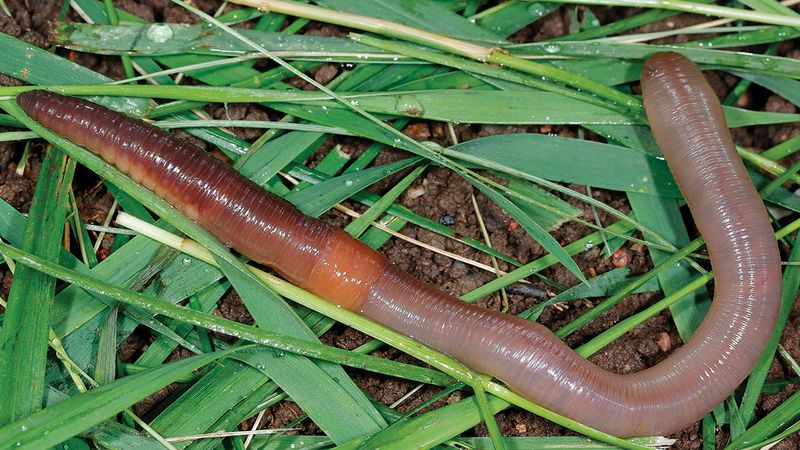
A big, plump worm makes you want to protect it. Size, though, tells you nothing about what kind of worm it is, where it came from, or whether it is a good fit for your bed.
A fat worm could belong to any of several species.
Worms are also not helpful everywhere. In some northern forests, nonnative earthworms have changed the soil and harmed native plants, as forest research and a federal climate hub overview describe for the Midwest and East.
Those findings belong to those forests. They do not mean the worm in your Arizona bed is invasive or harmful.
Still, a mystery worm is a good reason to hold back. Never carry unidentified worms to other spots, and do not add or spread them on purpose.
If one jumps or thrashes wildly when touched, that is the kind of behavior described in
guidance on jumping earthworms, so get a reliable local identification before moving it anywhere.Return an ordinary uncovered worm to nearby soil
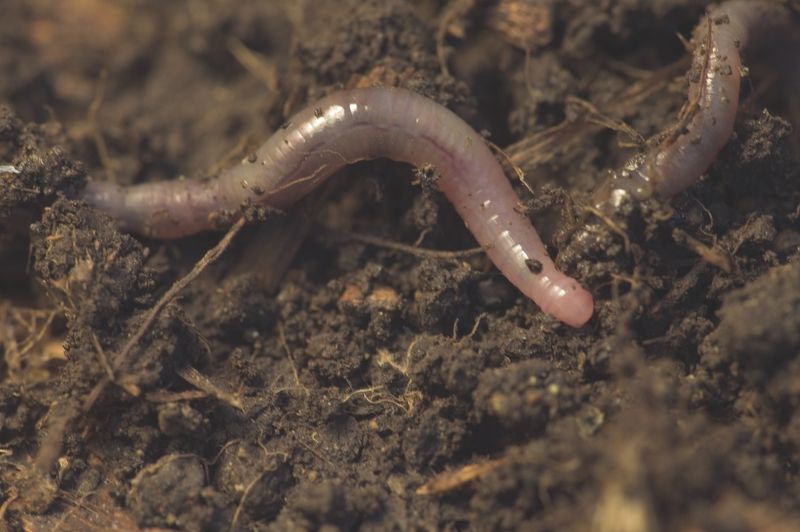
Say your trowel turns up a worm in the middle of a routine bed cleanup. If nothing about it seems unusual, the simple move is to set it in nearby soil and cover it up.
Left in the open, it can dry out fast, and as desert gardening guidance explains, worms lose the ability to breathe through their skin when they dry.
Think of this as a low-impact kindness, not an official rule. No source gives a species-specific instruction to put worms back, and doing so does not prove that every worm is beneficial.
Use the moist, shaded spot closest to where you found it, and skip any relocating across the yard.
The bigger payoff comes from the habits that make a bed a decent home. Organic matter, protective mulch, and sensible irrigation are broader practices that support garden soil, and worms are not a substitute for them.
Under the mulch, the quiet crew works on whatever you give it.