The Texas Shrub Known For Hiding Rattlesnakes In Plain Sight
Hikers in the Texas Hill Country learn one rule fast. Never reach blindly into a thick, prickly shrub.
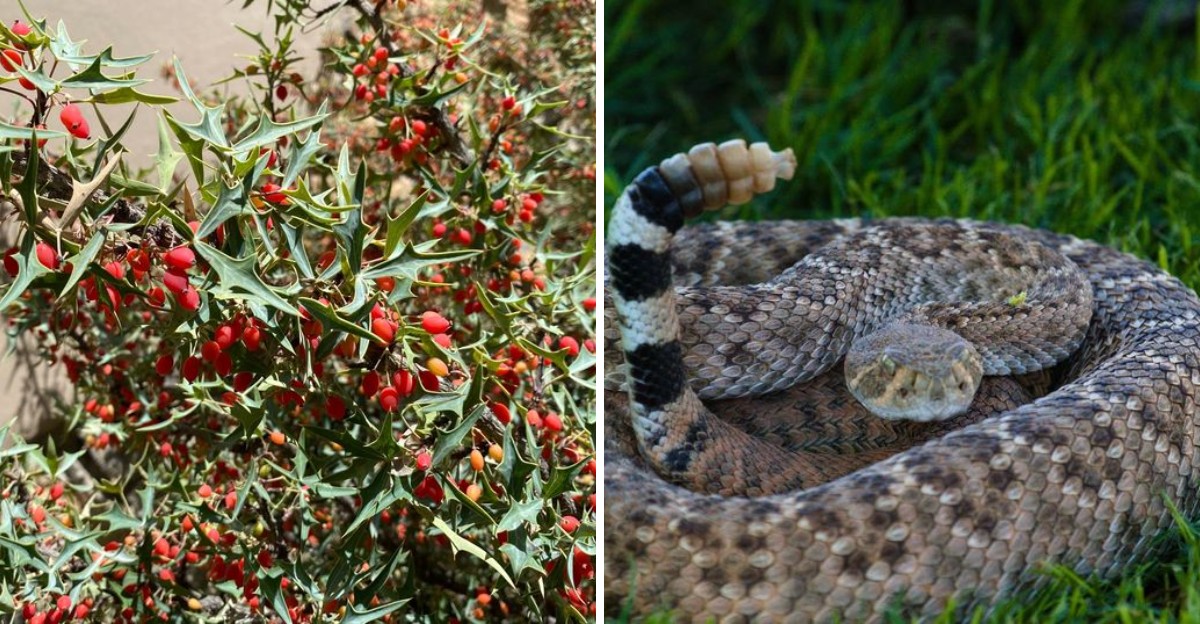
This tough native grows across rocky hillsides and brushy pastures, forming dense, rounded clumps of spiky, blue-green leaves.
Every leaf ends in sharp points, almost like a miniature holly. Those spiny leaves create a cool, shady hideout close to the ground, and many animals take advantage of it.
Quail, rabbits, lizards, and rodents all seek shelter there. So do the rattlesnakes that hunt them.
That doesn’t make the plant a villain. In fact, it’s one of the most useful shrubs in Texas. Its fragrant yellow flowers feed bees in late winter, and its bright red berries have been turned into jellies for generations.
Knowing how to recognize it, and how to approach it safely, can make your next walk outdoors a lot safer.
A Tough, Spiny Texas Native
Few plants can handle Texas weather like agarita. Scorching summers, long dry spells, and rocky soil barely slow it down. Ranchers have known this hardy shrub for generations.
Agarita grows wild in Central, South, and West Texas. You will often spot it on rocky hillsides, along fence lines, and in open brushland. It is also common in the Hill Country, where limestone soil is thin and tough.
Most agarita plants grow about 3 to 6 feet tall. They spread out into thick, rounded clumps that can be just as wide as they are tall. Because the shrub is evergreen, it keeps its leaves all year long.
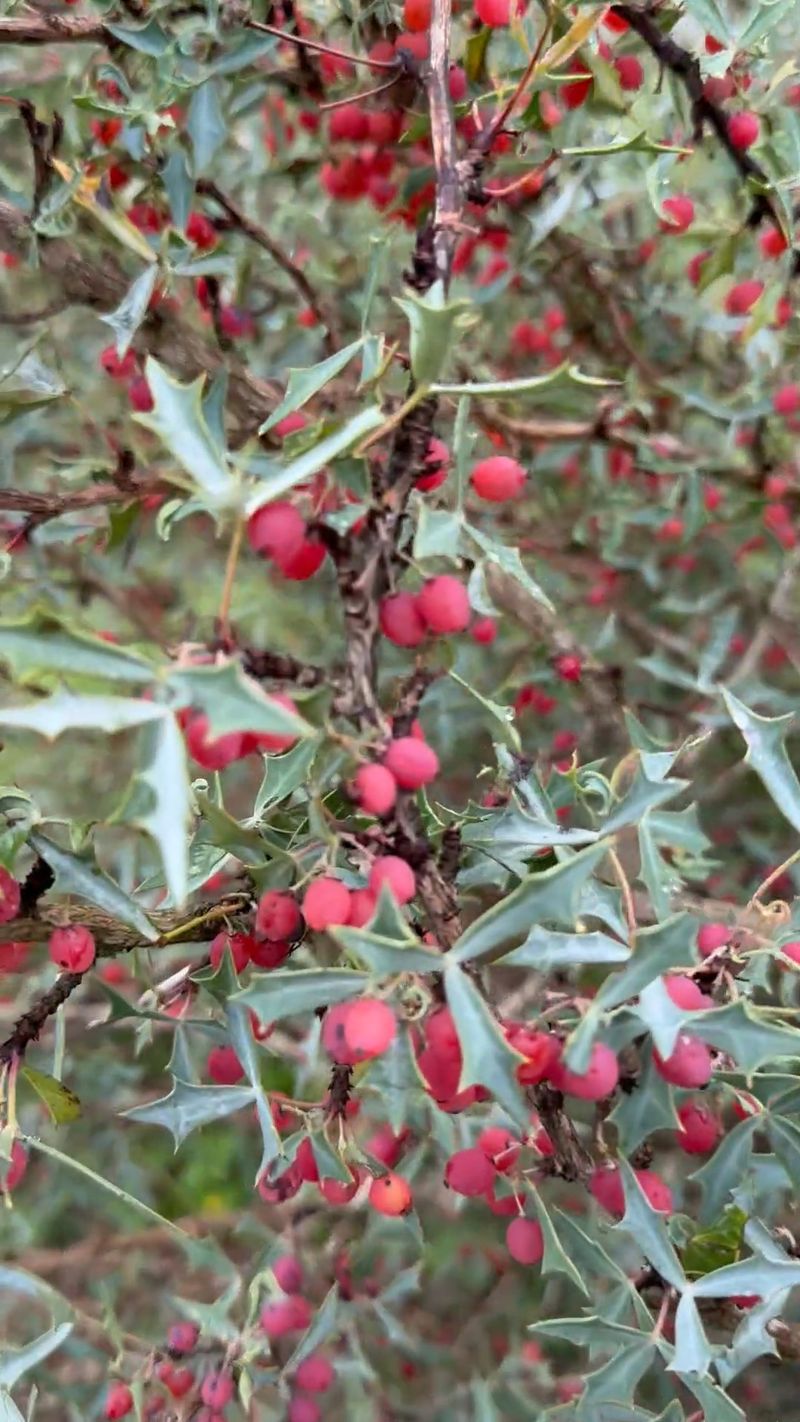
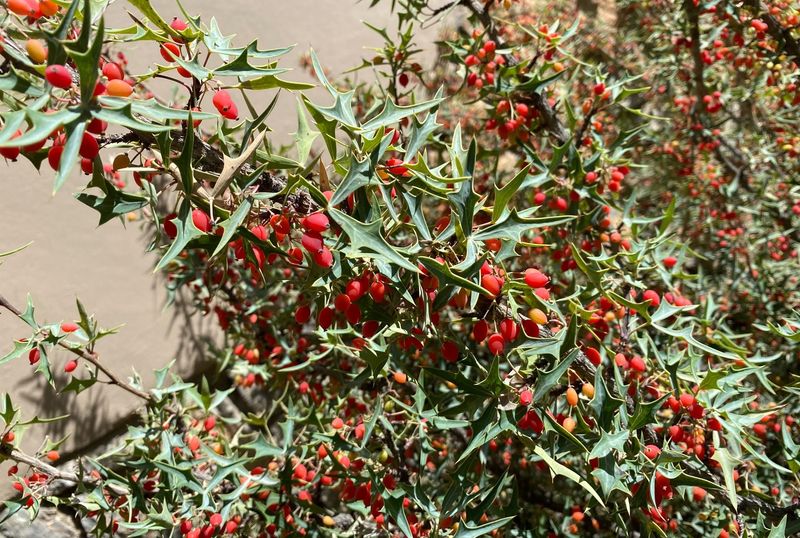
The leaves are the easiest way to identify it. Each one is stiff and blue-gray, with sharp spines along the edges.
Many people say they look a lot like holly leaves. Each leaf usually has three leaflets, and every point ends in a needle-like tip.
Touching those leaves is no fun. The spines can poke through thin gloves and scratch bare skin quickly. Deer and cattle usually leave the plant alone for the same reason.
Fun fact: agarita roots and stems have bright yellow wood inside. Native peoples and early settlers once used it to make yellow dye for cloth and baskets.
Some people also call agarita by other names, like agrito, wild currant, or algerita. No matter the name, it is the same prickly plant.
Learning to recognize agarita is your first step toward staying safe. Once you can spot its spiky, gray-blue leaves, you will start noticing it everywhere. That awareness helps you remember to slow down and look closely before stepping nearby.
Why Rattlesnakes Shelter Beneath It
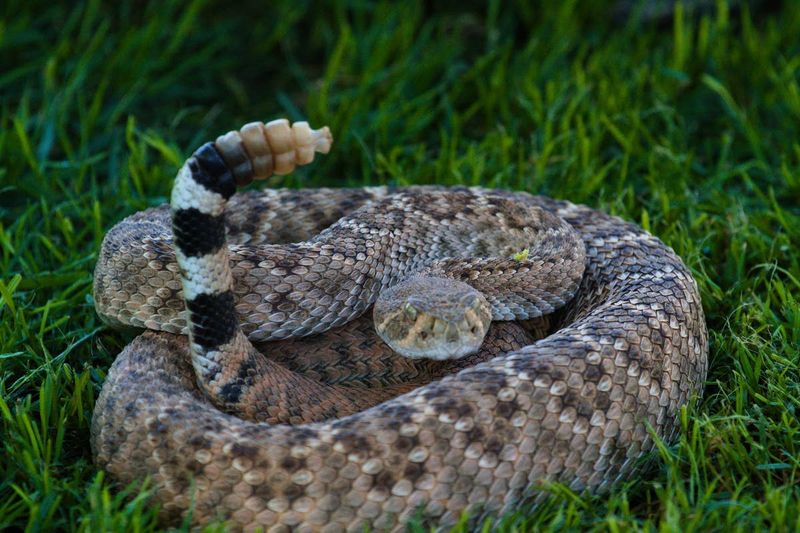
Think about how a rattlesnake spends its day. It cannot sweat, and it cannot turn on a fan. To stay comfortable, it has to find the right spot.
Agarita offers a nearly perfect hideout. The branches grow thick and low, often right down to the dirt. Underneath, there is a small pocket of shade that stays cooler than the open ground around it.
Snakes are cold-blooded animals. That means their body temperature changes with their surroundings.
Your Texas Garden Changes Every Week. Your Plan Should Too.
Gardening in Texas changes quickly throughout the season. Every Friday you’ll receive a simple weekly plan showing exactly what to plant, prune, fertilize, harvest, and protect so you never miss the right timing.
On a hot Texas afternoon, open rock and bare soil can get dangerously hot for them. A shady spot under a shrub works like a little air-conditioned room.
Safety is another big reason. Hawks, roadrunners, coyotes, and even other snakes hunt rattlesnakes. The spiny leaves make it hard for those predators to reach in. So a resting snake can relax without much worry.
Then there is the camouflage. Western diamondbacks and other Texas rattlers have brown, tan, and gray patterns on their scales.
Under agarita, dry leaves and patchy shadows cover the ground. A coiled snake can blend in so well that you might look right at it and never see it.
That is the real danger. Most bites happen when someone gets too close by accident. The snake is not trying to attack. It simply feels trapped and defends itself.
Here is a helpful habit. Whenever you see a thick, low shrub like agarita, treat the ground beneath it as possibly occupied. Pause, look carefully, and give it a wide path. A few extra seconds can save you a scary trip to the hospital.
It Offers Shelter To Their Prey Too
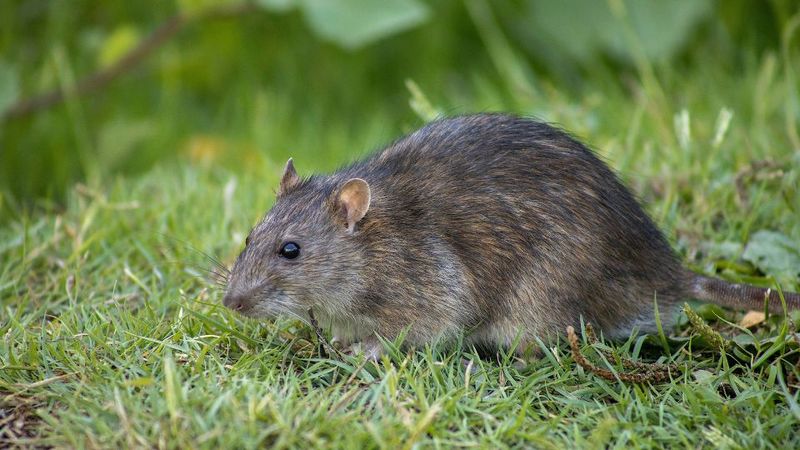
Nature loves a good chain reaction. When one animal finds a great hiding spot, others often follow. Agarita is a busy little neighborhood for that reason.
Cottontail rabbits slip under the branches to escape hawks and coyotes. Mice, rats, and ground squirrels build nests and tunnels near the roots. Lizards dart in and out of the shade all day long.
Birds use agarita too. Bobwhite and scaled quail often nest on the ground beneath thick, prickly shrubs. The spines help protect their eggs and chicks from hungry raccoons and foxes. Sparrows and other small birds also duck inside to rest.
So what does all this have to do with rattlesnakes? Quite a lot, actually. Rabbits, rodents, and birds are exactly what rattlesnakes like to eat.
A rattlesnake is an ambush hunter. It does not chase its food very far. Instead, it waits quietly in a good spot and lets dinner come to it. An agarita thicket full of small animals is like a snack bar with the door left open.
The snake can rest in the shade and strike when a mouse wanders by. It uses heat-sensing pits on its face to find warm-blooded prey, even in the dark.
Here is a smart tip for homeowners. If you notice lots of rodent activity near your agarita, expect that snakes may visit too.
Keep bird feeders, pet food, and trash away from shrubs so you do not attract extra mice. Fewer rodents usually means fewer snakes hanging around.
Watching for small animal tracks or burrows near the plant can also give you an early warning sign.
Timing Matters: When Snakes Are Most Likely Around
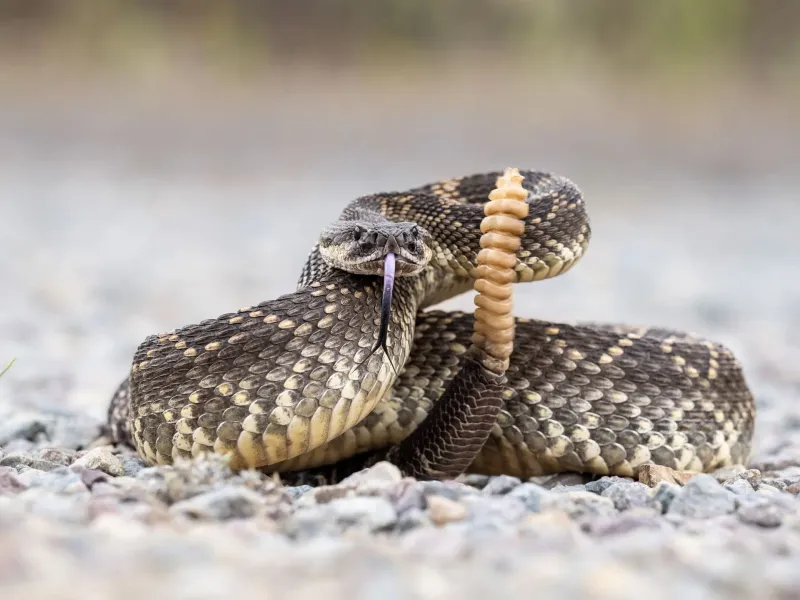
Ask any old Texas rancher and you will hear the same advice. Snakes keep their own schedule, so you should learn it. Knowing their routine makes outdoor time much safer.
During summer, rattlesnakes avoid the hottest hours. From late morning through afternoon, they usually hide in shady spots.
Agarita is one of their top choices. So even if you see no snakes out in the open, one could be resting under a nearby bush.
Cooler mornings and evenings are when they get moving. That is when they hunt, travel, and look for mates. On very hot summer days, many rattlers become active at night instead.
Spring is another busy season. After a long winter, snakes come out hungry and ready to eat. They often bask in morning sun near rocky areas, then slide under shrubs as the day heats up.
Fall brings its own risks. Rattlesnakes stay active on warm days as they feed before heading to their winter dens. They want to build up energy for the cold months ahead. A sunny October afternoon can bring out plenty of them.
Winter is usually quieter. Most snakes gather in dens and rest. Still, a warm winter day in Texas can tempt a few to come out and soak up sunshine.
Here is a simple plan. Do yard work near agarita early in the morning during fall or spring, but stay alert.
In summer, be extra careful around shady spots at midday. Carry a flashlight when walking outside after sunset, especially along brushy paths.
Smart Ways To Stay Safe Around Agarita
Good safety habits are a lot like buckling a seatbelt. They feel small, but they make a huge difference. Around agarita, a few simple rules can keep you out of trouble.
Rule number one is easy to remember. Never reach into or under the shrub with your bare hands.
That goes for grabbing a lost ball, pulling weeds, or picking up trash. If you cannot see the ground clearly, do not put your hand there.
Watch your feet too. Do not step blindly around the base of the plant. Step onto a log or rock first instead of over it, so you can see the other side.
Dress for the job. Wear sturdy boots that cover your ankles. Long pants help protect your legs from both spines and bites. Thick leather gloves will save your hands from those sharp leaf points.
Tools are your best friend. Use a long-handled rake, hoe, or snake hook to clear leaves and debris from under the shrub.
That way, your body stays a safe distance away. Make noise as you work, since snakes often move off when they sense vibrations.
Placement matters as well. Keep agarita trimmed back from walkways, doors, patios, and play areas. Kids and pets should not have to brush past it every day. Clearing low branches also removes hiding spots.
If you do see a rattlesnake, stay calm. Back away slowly and give it plenty of room. Most snakes will leave on their own. If a bite happens, keep still, remove tight jewelry, and call 911 right away.
Why It Still Deserves A Place On Your Property
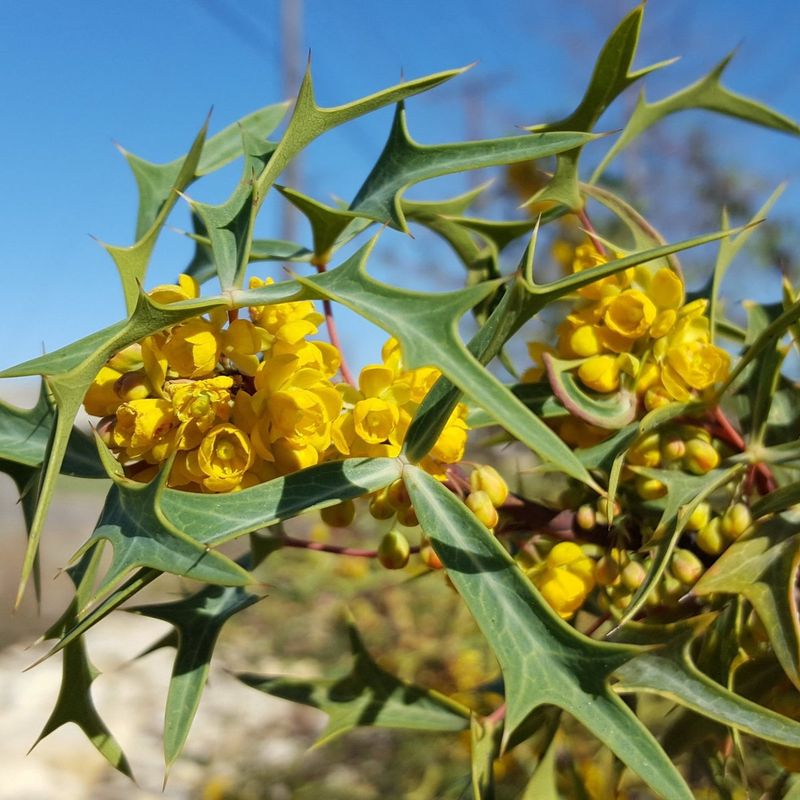
Here is the surprising twist. Even with its prickly reputation, agarita is one of the most useful native plants in Texas. It just needs the right spot.
Late winter is when it starts to shine. Clusters of tiny yellow flowers cover the branches, and they smell sweet like honey.
Few other plants bloom that early, so bees depend on agarita for food when flowers are scarce. Helping bees means helping gardens, farms, and wildflowers too.
By late spring, the flowers turn into small, round red berries. Mockingbirds, cardinals, and quail gobble them up. Foxes, raccoons, and other critters enjoy them as well.
People love these berries too. Texans have made agarita jelly for many years. The flavor is tart and tangy, a little like currants. Picking them is tricky because of the spines, so many folks spread an old sheet under the bush and gently tap the branches.
Agarita also handles drought like a champ. Once it is established, it needs almost no water. It helps hold soil in place on rocky slopes and gives wildlife year-round shelter.
So where should it go? Think about the wilder edges of your land. A back fence line, a far pasture, or a natural brushy area works great. Keep it away from front doors, play spaces, and busy paths.
That way, you get all the benefits without inviting snakes close to your family. Bees get nectar, birds get berries, and you might even get a jar of homemade jelly. Respect the shrub, give it room, and it will reward you.