White Throated Sparrows Return To Georgia With A Habit That Looks Like A Mess
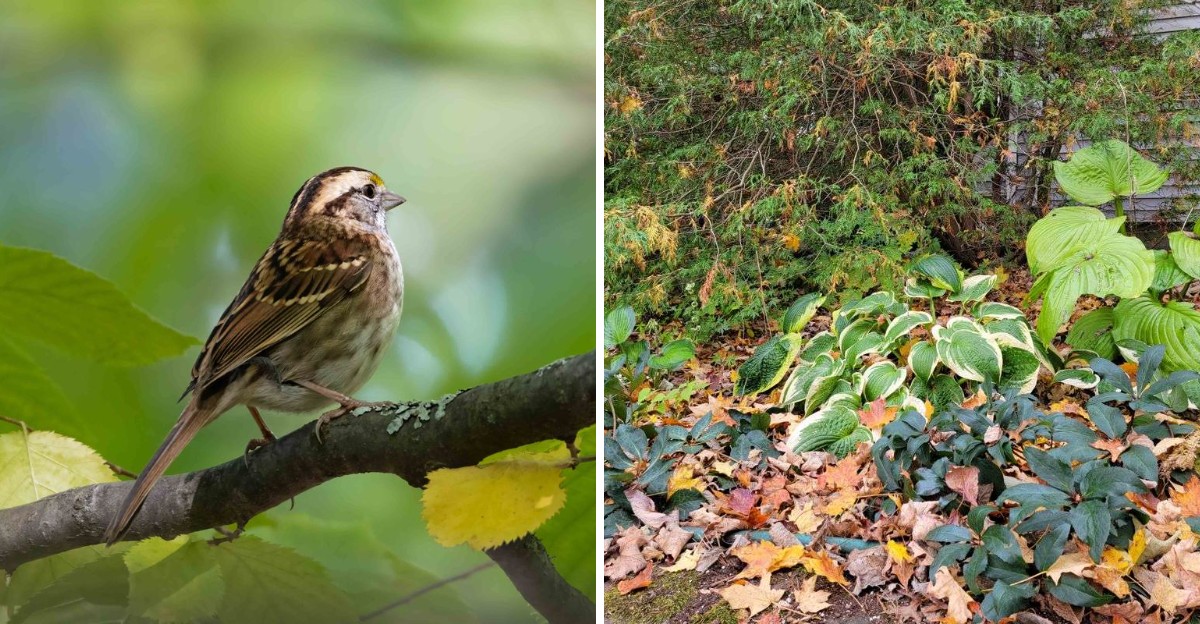
Whistled notes drifting out of the shrubs on an October morning can signal the return of a familiar winter guest.
White-throated sparrows spend summers far to the north and arrive in southern yards as the weather turns.
Once they settle into Georgia for the season, they tend to stick close to brushy edges and leaf-covered beds.
Plenty of homeowners notice the evidence before they notice the birds. Mulch kicked onto the path and leaves tossed out of a bed can look like a dog has been digging.
Scattered mulch like that usually means the birds are finding food, not causing real harm.
Tidying every bed you have this fall can leave them with fewer places to forage. Leaving some leaf litter in place helps keep these sparrows around until spring.
1. Those Scattered Leaves May Be The Work Of Hungry Winter Visitors
Messy flower beds in late fall are not always caused by squirrels or wind. Sometimes a small bird is doing the digging, and it has a clear purpose.
White-throated sparrows scratch through fallen leaves to uncover seeds and small insects hidden underneath.
You might hear them before you see them. A steady rustle under a hedge often means a sparrow is working through the leaf litter close to cover.
Across Georgia, these birds tend to show up in yards with shrubs, wooded edges, and a decent layer of leaves on the ground.
Their scratching leaves behind small bare patches and leaves pushed to the side. To a tidy gardener, it can look like something tore up the bed overnight.
Squirrels usually leave a different kind of sign, such as small holes where they buried or dug up nuts.
If you want to check for yourself, sit quietly near a window early in the morning. Watch the ground near bushes rather than your feeders, since these sparrows often stay low.
Once you spot them, that scattered look starts to make sense, and it may change how you feel about raking.
Seeing them in action is a simple reminder that a slightly messy yard can still be a useful feeding spot for wildlife in winter.
2. Both Feet Work Together To Kick Leaves Out Of The Way
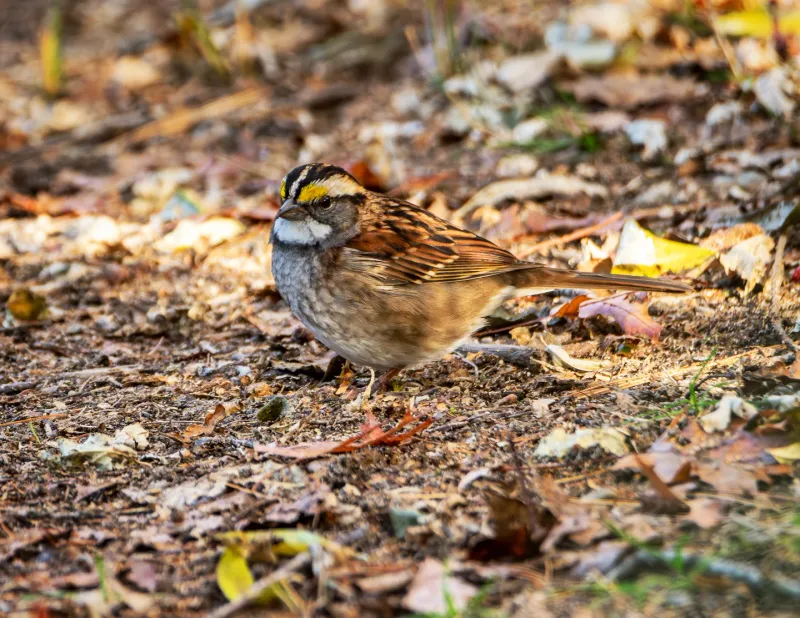
Watch closely and you will see a quick little dance. The sparrow hops forward, then jumps back with both feet at once, flinging leaves behind it.
Birders often call this move a double-scratch, and it is common among several ground-feeding sparrows and towhees.
Unlike a chicken, which scratches with one foot at a time, this sparrow pushes back with both legs together. That motion clears a small space in a split second.
After each kick, the bird pauses and looks down to see what turned up.
It may repeat the move again and again in the same spot. In Georgia yards, you can sometimes hear several sparrows doing this together under one shrub.
Eastern towhees use a very similar technique, so do not be surprised if you see both birds feeding side by side.
Your Georgia Garden Changes Every Week. Your Plan Should Too.
Gardening in Georgia changes quickly throughout the season. Every Friday you’ll receive a simple weekly plan showing exactly what to plant, prune, fertilize, harvest, and protect so you never miss the right timing.
Towhees are bigger and have rusty sides, which makes them fairly easy to tell apart.
To get a good look, stay still and keep your movements slow. These birds tend to flush into cover quickly if they notice someone close by, but they often return once things settle.
A pair of binoculars helps a lot. Even cheap ones will let you see how much effort goes into each hop and kick.
3. Seeds And Small Insects Hide Beneath Fallen Leaves
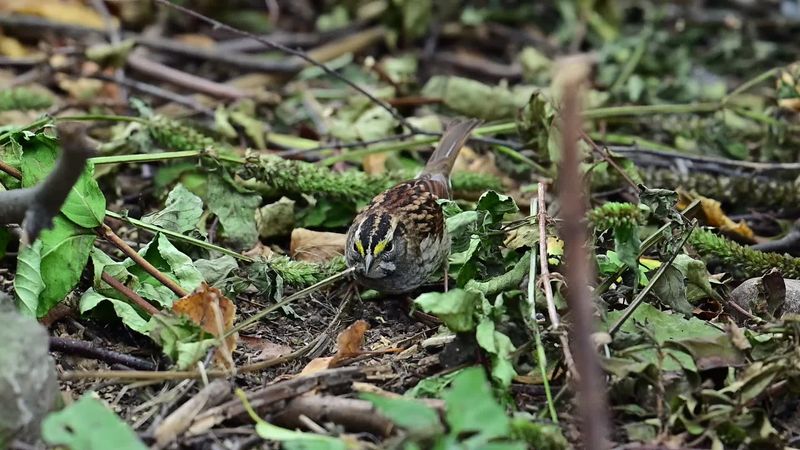
Lift a handful of old leaves and you will find a small world underneath. Seeds, beetles, spiders, and other tiny creatures often shelter in that damp layer.
White-throated sparrows rely heavily on seeds during the colder months, especially from grasses and weeds.
They also eat fruit and insects when they can find them. Their diet tends to shift with the season and with what is available in a given area.
Leaf litter keeps the soil below a bit moister and more protected from cold. That cover can help insects and other small invertebrates stay active or hidden through winter.
For a hungry bird, that makes a leaf pile something like a pantry with a lid on it.
Gardens in Georgia with native plants may offer extra seeds and berries close to the ground. Plants like beautyberry and native grasses can add to the food supply, though results vary with your soil and plant choices.
Seeds spilled from feeders also land on the ground, where these sparrows happily pick them up.
If you feed birds, scattering a small amount of millet near shrubs can attract them. Keep it near cover so the birds feel safe while eating.
4. Fall Migration Brings These Sparrows Into Southern Backyards
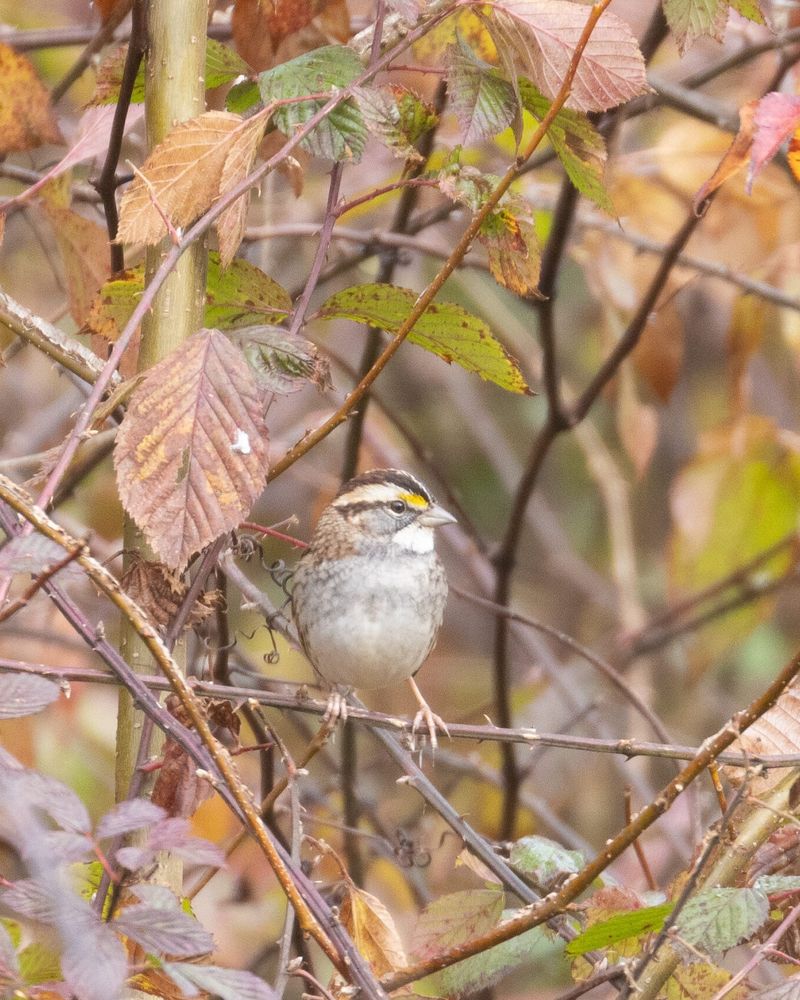
Summer in Georgia comes and goes without these birds. White-throated sparrows mostly nest farther north, in Canada and parts of the northeastern United States.
Once fall arrives, many of them head south to spend the winter in milder places.
Arrival times depend on weather and location. Some reach the Southeast in October, and numbers often build through late fall.
They usually stay through winter and start leaving again in spring. By around May, most have moved back north to breed, though timing can shift from year to year.
Not every yard gets the same number of visitors.
Homes near woods, thickets, or overgrown edges tend to see them more often than open lawns. Mountain areas and coastal areas may also differ a little in timing and numbers.
Many birders mark their return by sound. Their whistled song, often described as Old Sam Peabody or Oh Sweet Canada, sometimes rings out even in winter.
Keeping a simple notebook can be a fun way to track them. Write down the first date you see or hear one each fall.
After a few years, you may notice a pattern for your own yard.
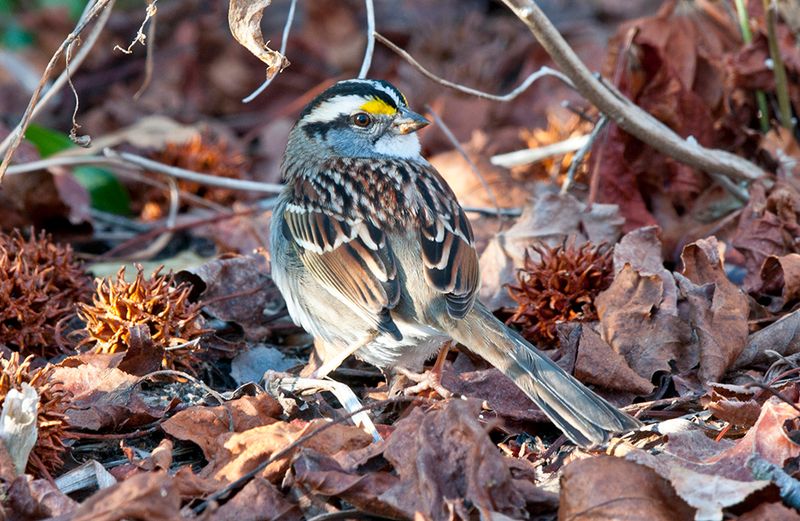
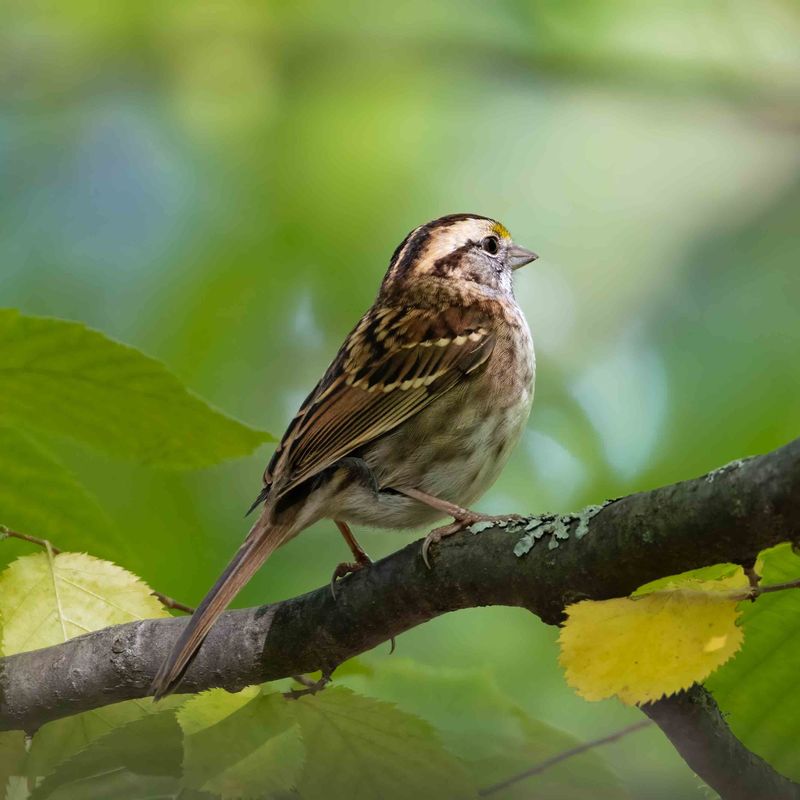
5. White Throats And Yellow Spots Near The Eyes Help Identify Them
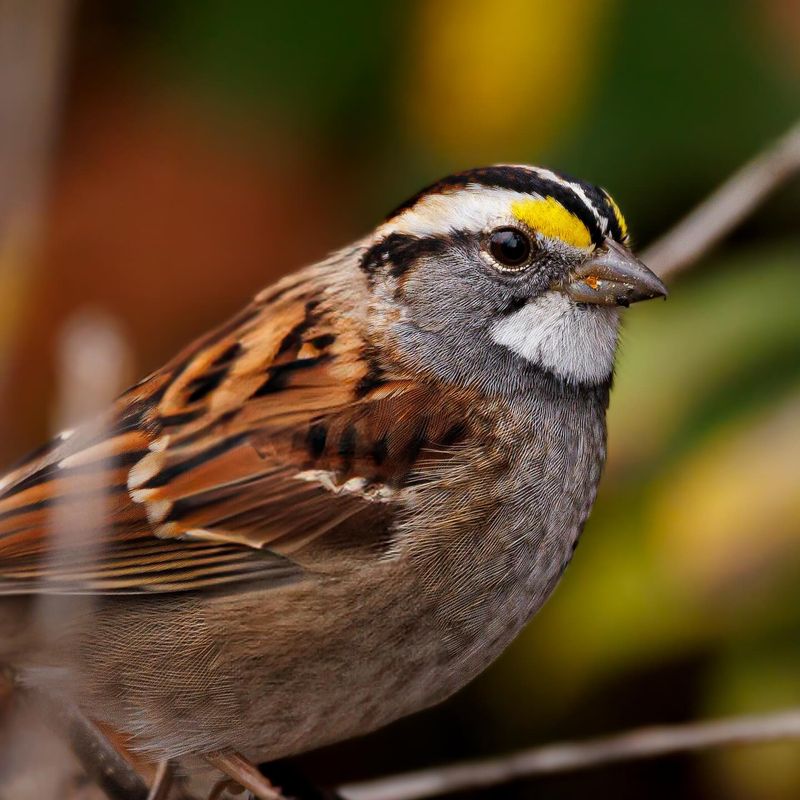
Small brown birds can be hard to tell apart. Luckily, this one carries two clear clues right on its face.
Look for a bright white patch under the beak, outlined by gray on the chest.
Next, check the area between the eye and the bill. A small yellow spot, called the lore, usually stands out there, especially on adults.
Head stripes add another helpful detail. Some birds have crisp white stripes, while others show tan stripes that look softer.
Both forms are normal adult types, not separate species, and young birds can look duller.
In Georgia, people sometimes confuse them with white-crowned sparrows. That species lacks the yellow spot and the sharply outlined white throat, and it tends to be less common in most backyards here.
The body is a warm brown with darker streaks on the back. Underneath, the bird is mostly plain gray.
Photos can help if you are unsure.
Free apps like Merlin from the Cornell Lab of Ornithology can suggest a match based on a picture or a recorded song. Checking the throat and eye spot first will usually point you in the right direction.
6. Brush Piles And Low Shrubs Give Them Places To Hide
Open ground can feel risky for a small bird. Hawks, cats, and other predators make cover a big deal for sparrows feeding on the ground.
White-throated sparrows usually stay close to thick shrubs, hedges, and tangles.
When something startles them, they dart into the nearest dense spot. That habit is why you rarely see them far out on a bare lawn.
A simple brush pile can help a lot. Stack larger branches on the bottom and smaller twigs on top, leaving gaps that birds can slip into.
Place it near the edge of your yard, where it will not bother neighbors or block paths.
Low shrubs work well too. In Georgia, native options like wax myrtle, yaupon holly, and inkberry can offer year-round cover, though they need the right spot and soil to grow well.
Check with your county Extension office if you are unsure which plants suit your area.
Keep brush piles away from your house and any structures. Piles can attract snakes or rodents in some situations, so choose a location that makes sense for your family.
Indoor cats are the safest choice for visiting birds.
7. Leaving Some Fallen Leaves Gives Them More Places To Find Food
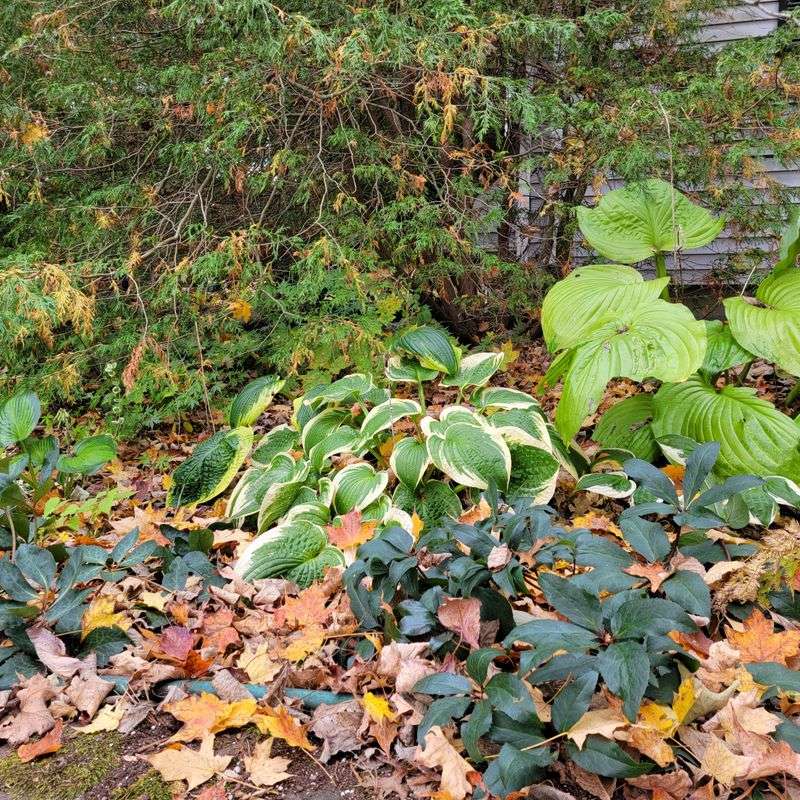
Raking every last leaf might feel productive, but it also removes a feeding ground. A middle path works well for most homeowners.
Try leaving leaves in flower beds and under shrubs while clearing them from the lawn.
Thick mats on grass can block light and cause problems. Shredding them with a mower or moving them into beds keeps your lawn healthier and still holds onto that useful layer.
Leaves in beds act like a natural mulch over time.
They slowly break down and add organic matter to the soil. How fast that happens depends on the type of leaves, moisture, and temperature.
Across Georgia, many gardeners now leave a portion of their leaves for wildlife. It can mean less hauling, fewer bags at the curb, and more birds to watch from the kitchen window.
Keep leaves away from house foundations and out of gutters and storm drains.
Clearing walkways and driveways also matters, since wet leaves can get slippery. Homeowner rules in some neighborhoods may limit how much you can leave, so check before changing your routine.
Even a small corner of leafy ground can draw sparrows in.