The Texas Native Perennials To Plant Before Halloween That Multiply Every Year After
Most things you buy start losing value the moment you bring them home. Certain native perennials do the opposite.
Plant a few this fall, and they’ll spend the winter quietly building strong roots. By spring, they’re ready to grow. Over the next few years, they spread, self-seed, or form bigger and bigger clumps.
Before long, that small cluster of nursery pots can fill an entire bed, with plenty left over to divide and share with friends.
Because they’re native, these plants already know how to handle Texas life. Brutal summers, dry spells, and surprise freezes don’t scare them off.
They also feed butterflies, bees, and birds, so your yard gets livelier with every passing season.
Getting them in the ground before Halloween gives them the best possible head start. A small investment now could turn into a garden that keeps growing for years.
1. Pink Evening Primrose Paints Whole Fields Pink
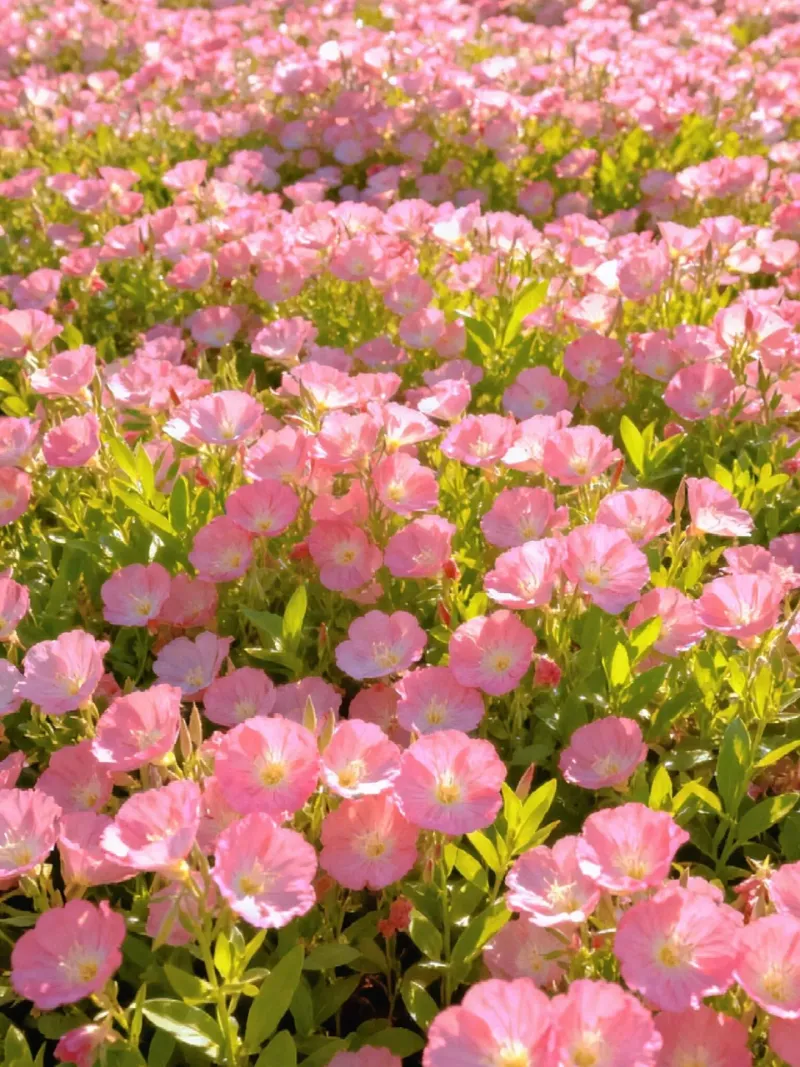
Drive down almost any Texas highway in April, and you will see pink carpets rolling past your window.
Those cheerful flowers are pink evening primrose, and they are tougher than they look. Each bloom is shaped like a little cup with a pale yellow center.
Despite the name, many of these flowers open during the day. Kids sometimes call them buttercups, and they love smelling the yellow pollen. The petals are thin and silky, almost like tissue paper.
Here is the big thing to know. Pink evening primrose spreads fast, both by underground roots and by seed. One small plant can turn into a wide patch in just a couple of seasons.
Because of that, give it room to roam. A sunny slope, a ditch, a wildflower meadow, or a strip by the mailbox works great. Avoid planting it right next to delicate flowers that might get crowded out.
Planting is simple. Set young plants or scatter seeds in fall, about now. Press seeds lightly into loose soil and water them in.
Once it settles in, this plant barely needs you. It handles poor, rocky soil and long dry spells with ease. Too much water or rich soil can actually make it floppy.
After the spring show ends, the plant may look tired in the summer heat. That is normal, so do not panic. It simply rests and comes back strong when the weather cools.
Bees and other small pollinators visit the flowers often. If you want a low-cost way to fill a big empty space with color, this is one of the easiest native plants to try.
2. Fall Aster Throws A Purple Party For Monarchs
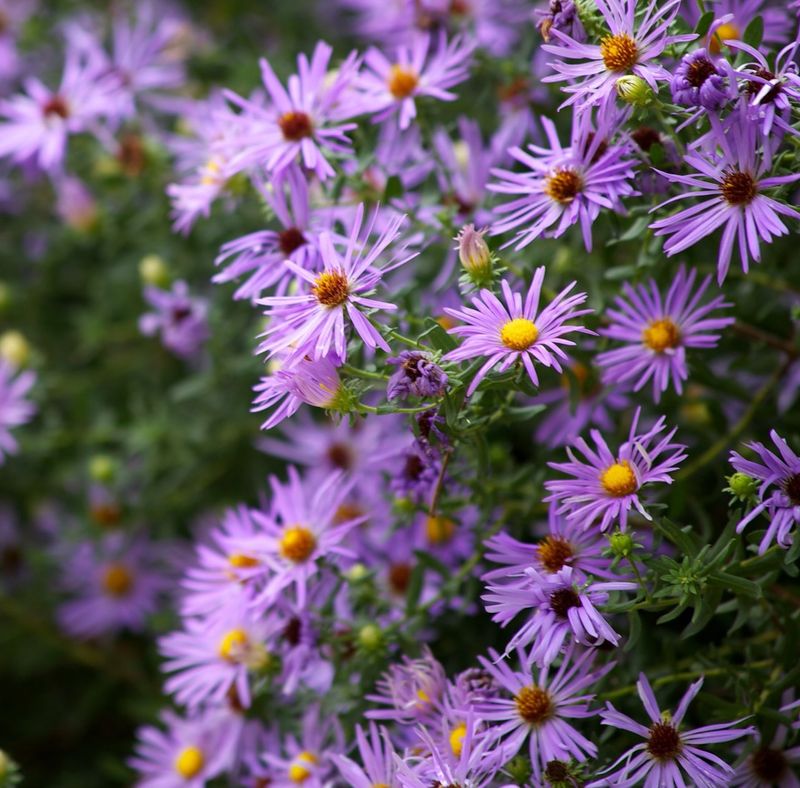
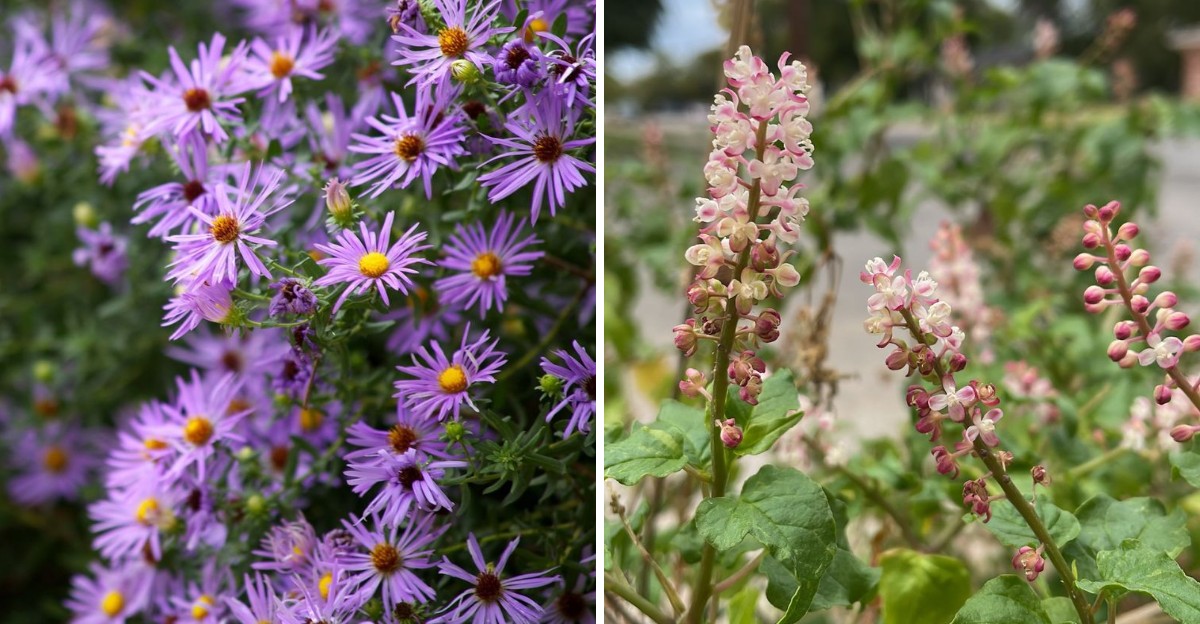
Just when most gardens start to fade, fall aster bursts onto the scene. In October and November, it turns into a solid dome of tiny purple flowers. Neighbors will stop and ask what that bright plant is.
Monarch butterflies care about it even more than people do. Every fall, millions of monarchs fly through Texas on their way to Mexico. They need sugary nectar to keep going, and fall aster is one of their favorite fuel stops.
Your Texas Garden Changes Every Week. Your Plan Should Too.
Gardening in Texas changes quickly throughout the season. Every Friday you’ll receive a simple weekly plan showing exactly what to plant, prune, fertilize, harvest, and protect so you never miss the right timing.
So planting it does more than look pretty. You are helping a famous butterfly finish an amazing journey of thousands of miles. That is pretty cool for one shrubby little plant.
Fall aster spreads by underground stems. Each year, the clump grows wider and fuller. After a few seasons, you can dig up pieces and share them with friends.
Sun is its best friend. Pick a spot with at least six hours of light each day. It does fine in many soil types, as long as water drains away.
Once established, fall aster handles drought like a champ. Water it well the first year, then mostly let rain do the job.
A handy trick keeps it neat. Trim the plant back by about one third in early summer. It will grow bushier and less floppy, with even more flowers in fall.
Tuck it into the ground before Halloween so the roots can settle. By next autumn, you will have your own purple party, and the monarchs will be on the guest list.
3. Lyreleaf Sage Makes A Lovely Lawn Swap
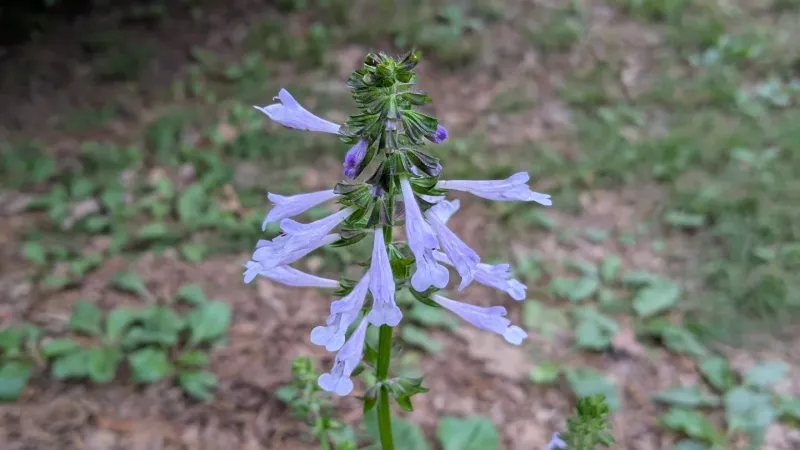
Tired of grass that refuses to grow under your trees? Lyreleaf sage might be the answer you never knew about. It stays low, looks tidy, and actually enjoys some shade.
The leaves grow in flat rosettes close to the ground. They often have a purple tint, especially in cool weather.
Some people say the leaf shape looks like a lyre, an old stringed instrument, which is how the plant got its name.
In spring, slim flower spikes shoot up about a foot tall. The blooms are pale blue to soft lavender. Bees and tiny butterflies drift from spike to spike all day.
Lyreleaf sage self-seeds very easily. Drop a few plants in fall, and new baby rosettes will pop up around them. Over time, they knit together into a living carpet.
That makes it a fun choice for a lawn alternative in small areas. You can mow it after the flowers fade and drop their seeds. The rosettes stay put and keep things green.
It grows best in partial shade or light sun. Moist soil helps, but it can handle short dry periods once settled. Heavy, soggy spots are not its favorite.
One fun fact is that it belongs to the mint family. If you rub a leaf, you may notice a mild smell.
Try it along shady paths, under oaks, or where grass keeps thinning out. With a little patience, a bare patch can turn into a soft, blooming groundcover that mostly takes care of itself.
4. Obedient Plant Is Not As Polite As It Sounds
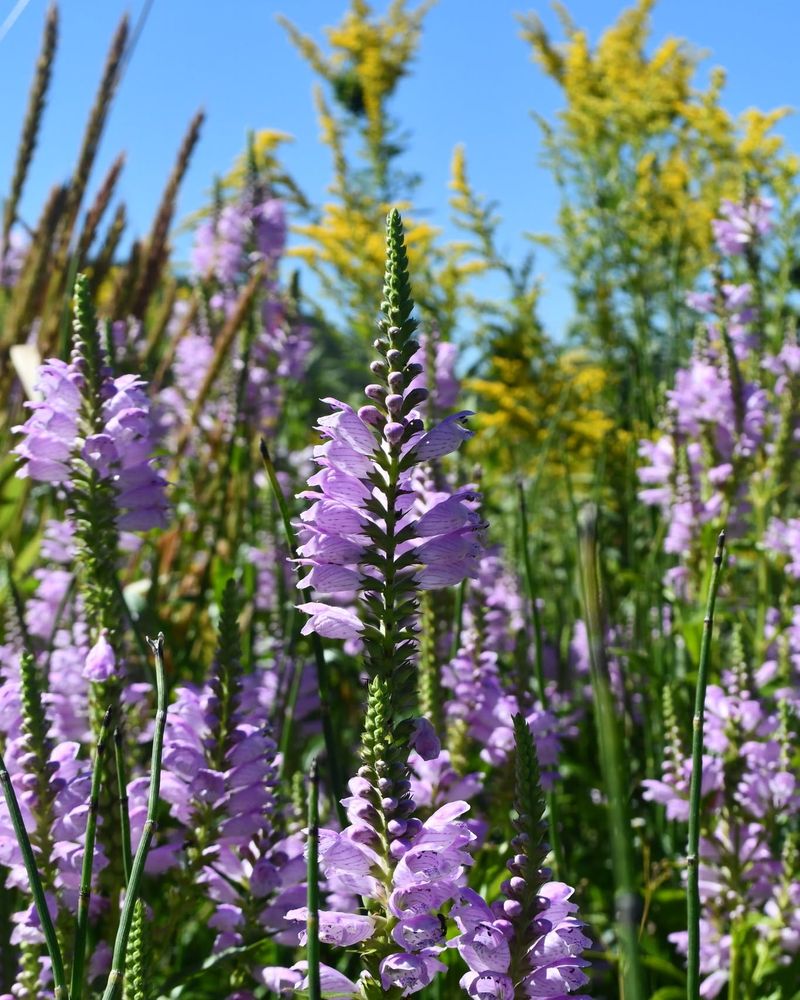
Funny name, right? Obedient plant got its title because you can push each little flower sideways, and it stays put. Kids love testing this trick in the garden.
But here is the joke. In the ground, this plant is anything but obedient. It spreads by underground runners and can take over a bed quickly, especially in moist soil.
Do not let that scare you off. With a bit of planning, it becomes a stunning part of your garden. Just plant it where spreading is welcome, or keep it in check.
The flowers appear in late summer and fall. Tall spikes hold rows of pink to lavender blooms that look like tiny snapdragons. Bumblebees crawl right inside them looking for nectar.
Moist spots are where it shines. Try it near a rain garden, a pond edge, or a low area that stays damp. It handles full sun to part shade well.
Want to control it? Plant it inside a buried edging strip, or set it in a big pot. You can also dig out extra runners each spring and give them away.
Tall stems may lean in rich soil. A quick trim in early summer keeps them shorter and sturdier.
Planting in fall gives the roots months to grow before the heat returns. By late next summer, you should see a nice clump of blooms.
Think of it like a lively puppy. It needs some boundaries, but it rewards you with tons of color and happy pollinators.
5. Prairie Verbena Loves The Hot, Dry Spots
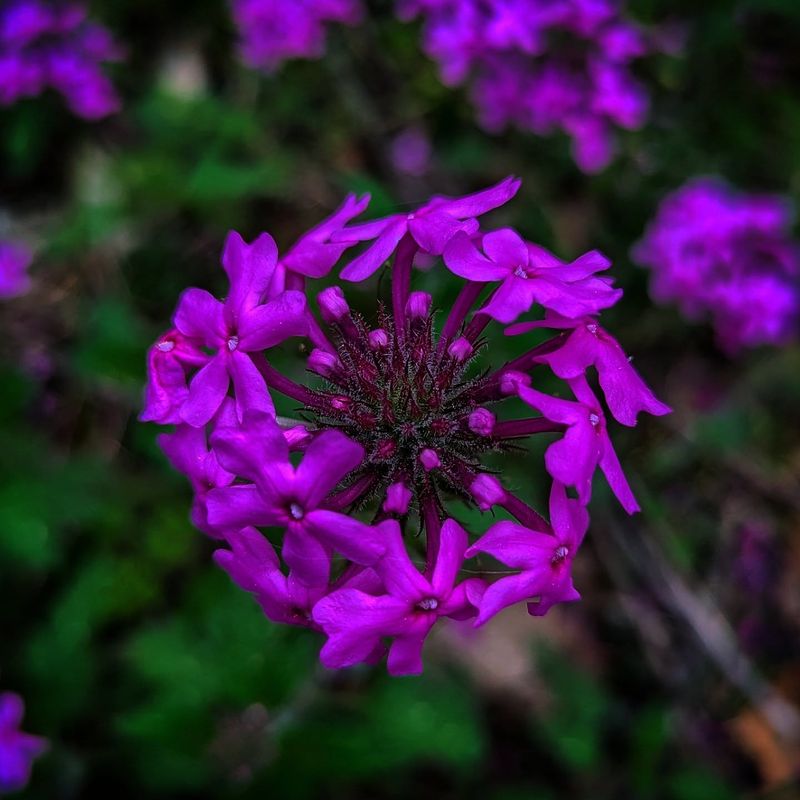
Some corners of a yard just bake. The soil is rocky, the sun is fierce, and almost nothing wants to grow. Prairie verbena looks at that spot and says, no problem.
This native forms low mats of lacy, finely cut leaves. On top sit round clusters of purple flowers, almost like little bouquets. The show starts in spring and often keeps going into summer.
Butterflies are big fans. Swallowtails, skippers, and many others land on the flower clusters to sip nectar. Sit nearby on a warm morning, and you will likely spot a few.
Spreading happens two ways. Its stems creep along the ground and grow new roots where they touch soil. It also drops seeds that sprout new plants nearby.
So one plant slowly grows into a wide patch. It is perfect for rock gardens, slopes, borders by the driveway, or the edge of a sidewalk.
Good drainage matters most. Wet, heavy clay can cause the roots to rot. If your soil holds water, mix in some gravel or plant on a small mound.
Watering needs are low once it settles. Give new plants a drink every few days in fall, then cut back. Too much care can actually make it weaker.
If it gets scraggly in midsummer, trim it lightly. Fresh growth and new flowers usually follow.
For a fun bonus, prairie verbena often blooms early, sometimes in late winter. It is one of the first splashes of color after the cold months.
6. Pigeonberry Brings Flowers And Berries Together
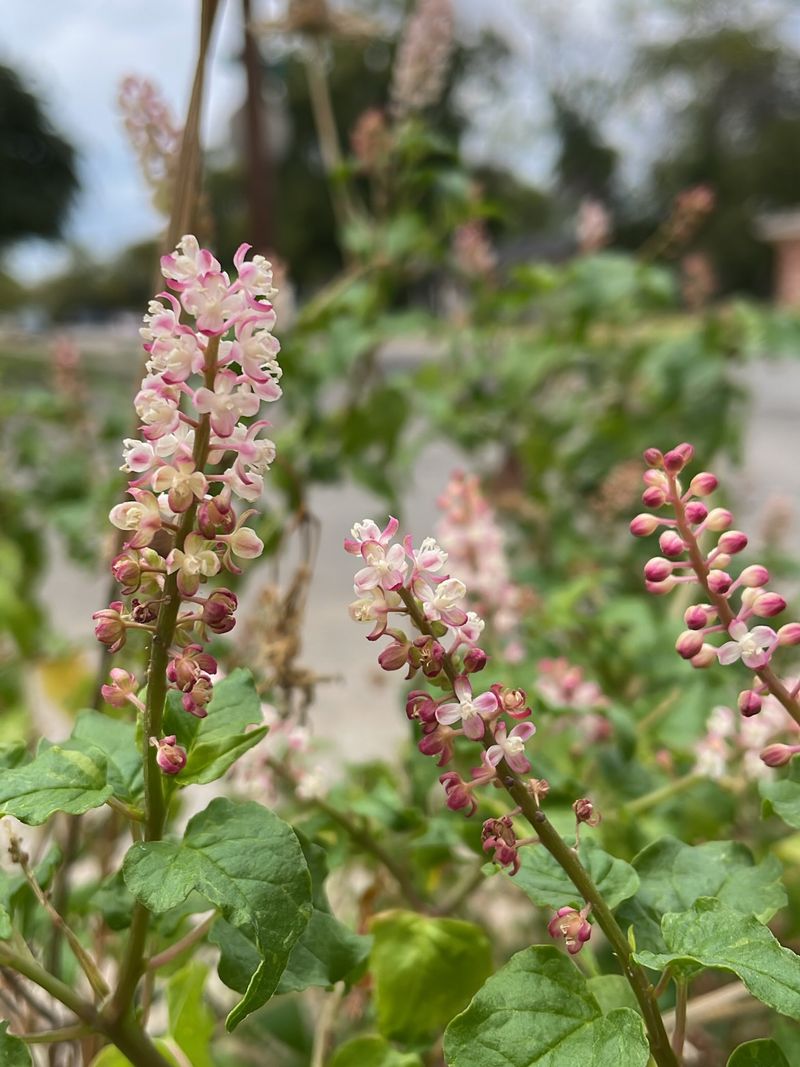
Most plants make you wait. First come flowers, then much later, the fruit. Pigeonberry skips the waiting game and shows off both at the same time.
On one small stem, you might see tiny pink flowers on top and shiny red berries below. It looks like a little holiday decoration growing in your yard. People often stop and lean in for a closer look.
Birds notice too. Mockingbirds, cardinals, and other songbirds snack on the berries. The plant was named after doves and pigeons that once fed on it.
Shade is where pigeonberry feels at home. It grows happily under trees where grass and many flowers struggle. Dappled light under oaks or elms is just right.
Spreading happens at a steady, gentle pace. It reseeds and creeps outward, slowly filling bare ground. You will not have to fight it like some faster plants.
Plants usually stay under a foot tall. That makes them a neat choice for edging shady beds or filling gaps between stepping stones.
Water young plants regularly through their first fall and winter. After that, they handle dry spells fairly well, though a drink in long droughts helps.
In a hard freeze, the tops may brown and drop back. Leave them alone. Fresh green shoots normally return in spring from the roots.
A quick safety note matters here. The berries are for birds, not people, so teach young kids to look and not taste. For a shady spot that needs life, color, and wildlife, pigeonberry is a sweet little answer.
7. Golden Groundsel Lights Up Gloomy Winter Shade
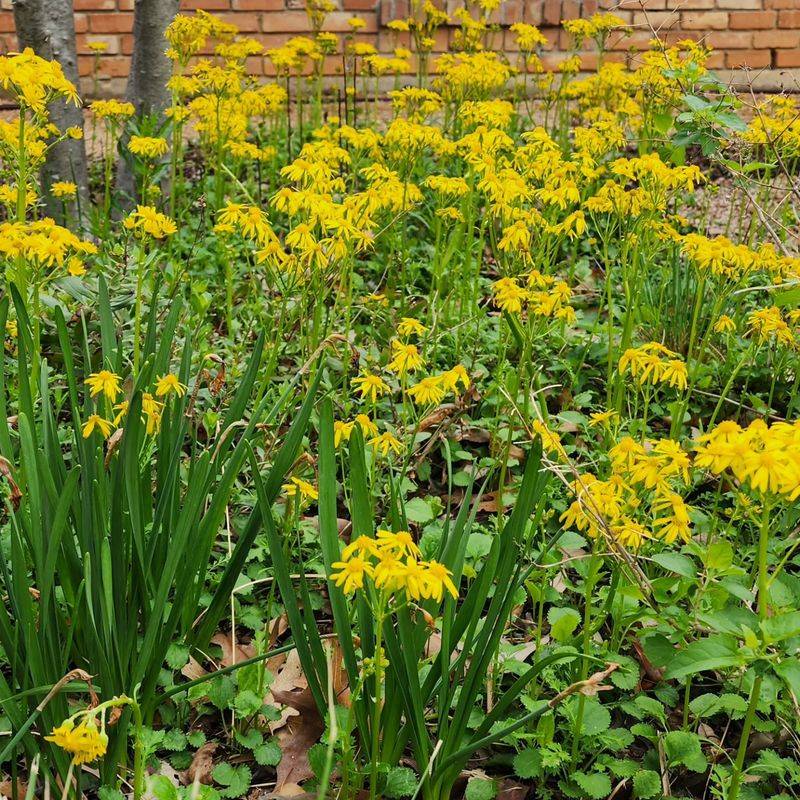
February in Texas can feel gray and dull. The trees are bare, and the garden looks sleepy. Then golden groundsel switches on like a row of tiny yellow lamps.
Its bright, daisy-like flowers appear from late winter into early spring. Few other plants bloom that early, especially in shade. Early bees are thankful for the snack.
Even when not in flower, it earns its keep. The leaves stay green all year, forming a low, tidy mat. That means no bare dirt in winter, which is a big win for shady yards.
Golden groundsel spreads steadily by runners. They creep out along the surface and root as they go. Over a few seasons, a handful of plants can cover a wide area.
It loves part shade to full shade. Spots under trees, along the north side of a house, or beside a shady fence all work well. Too much harsh afternoon sun can scorch the leaves.
Average soil is fine, and it handles some dryness once rooted. Still, regular water during its first year helps it fill in faster.
Care is easy. After flowering, you can snip off old flower stems to keep things neat. Otherwise, just let it do its thing.
Gardeners also like that deer tend to leave it alone. That is a big plus in many Texas neighborhoods.
Plant it before Halloween, and you may see your first sunny blooms in just a few months. It is a cheerful way to brighten the darkest part of the year.