Those Knobby Knees Around Florida Cypress Trees Still Puzzle Scientists
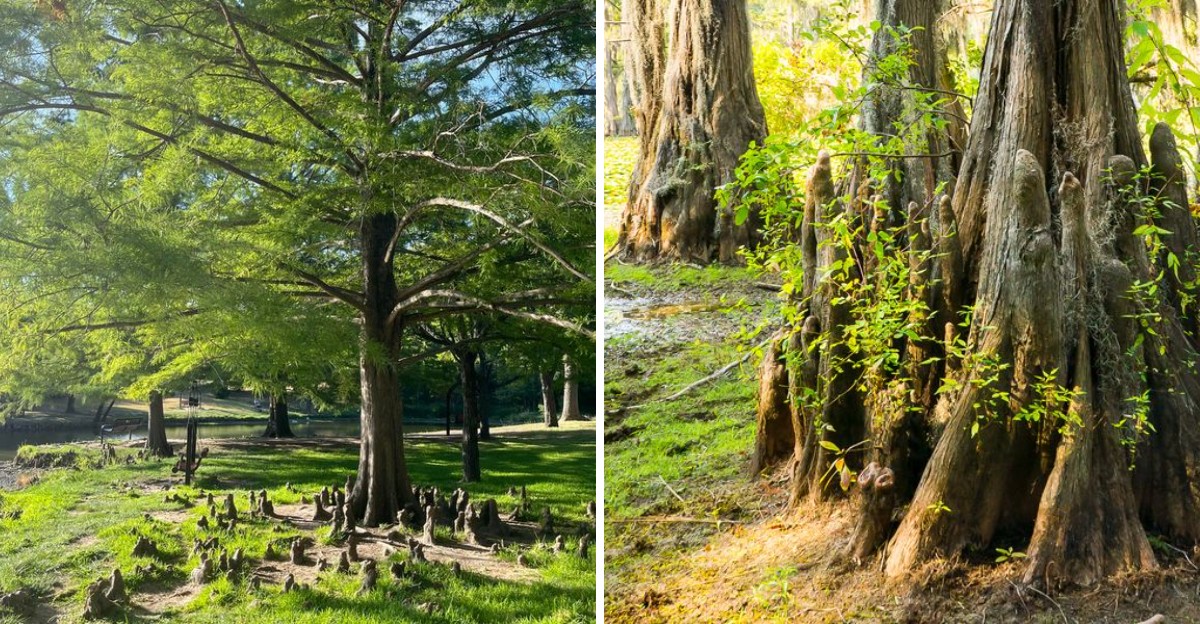
Ever spotted those odd wooden knobs poking out of the water around Florida’s cypress trees? They look like something from a fairytale, yet they’re a perfectly real part of the state’s swampy landscapes.
Locals call them cypress knees, and despite their strange appearance, they’ve kept scientists debating their purpose for decades.
The mystery gets even more interesting when you learn that these knobby growths rise from roots in soggy ground, sometimes forming clusters around the base of towering trees.
They’re easy to spot on a paddle through a Florida swamp, but explaining exactly why they grow there is another matter.
For years, people have linked cypress knees to everything from breathing to stability. Researchers have tested ideas, challenged old assumptions, and still haven’t settled every question.
So what do these curious wooden spikes actually do, and why do cypress trees produce them in the first place?
1. Cypress Knees Grow Up From The Tree’s Roots
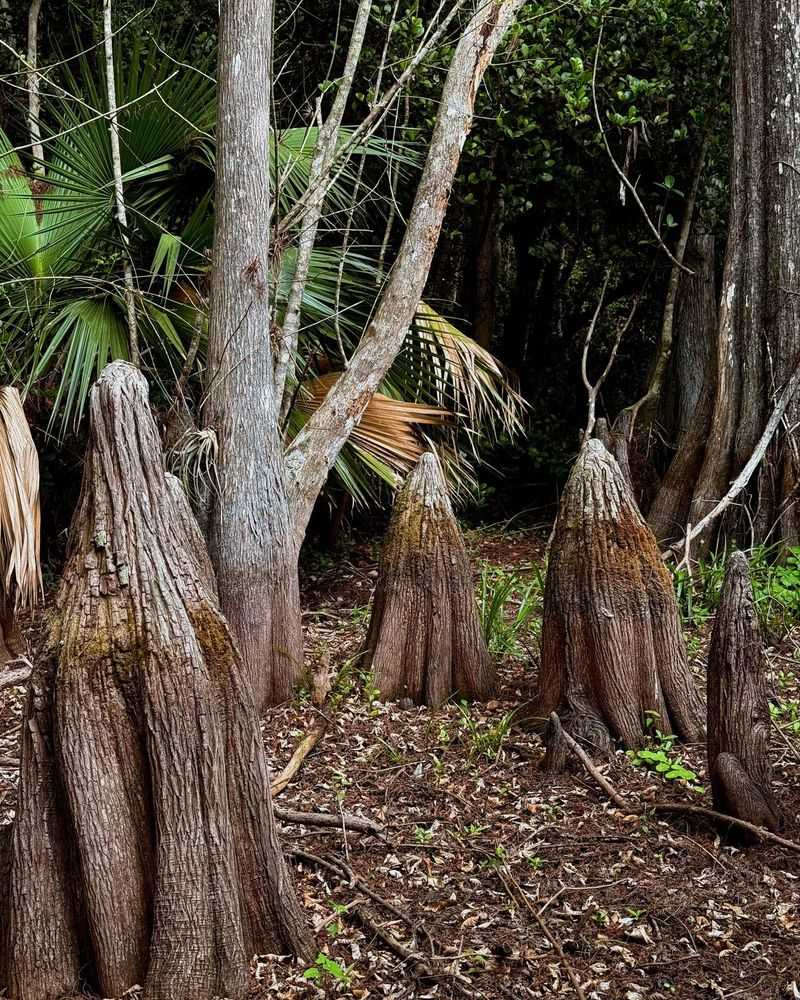
Imagine a tree that sends little wooden fingers up through the mud. That is pretty much what a cypress does with its knees.
Cypress trees spread their roots out wide and shallow instead of digging deep. Here and there, bumps start growing upward from those flat roots.
Cypress knees are woody outgrowths that form from the roots as they grow. The vascular cambium, a layer of actively dividing tissue, produces new wood that builds up into these distinctive knobs.
Some knees stay small, about the size of a fist. Others reach several feet tall and look like little wooden towers.
Here is a fun fact for your next nature walk. Since every knee is tied to a root, you can guess where roots run by following the bumps.
Look closely and you may notice knees lined up in rough rows. That pattern hints at the hidden root paths under the water.
So when you spot a knee, remember it is not a separate plant. It is part of the big tree, reaching up to say hello from below.
Please admire them gently, though. Stepping on or cutting knees can hurt the roots they grow from.
2. You’ll Mostly See Them On Trees Growing In Water
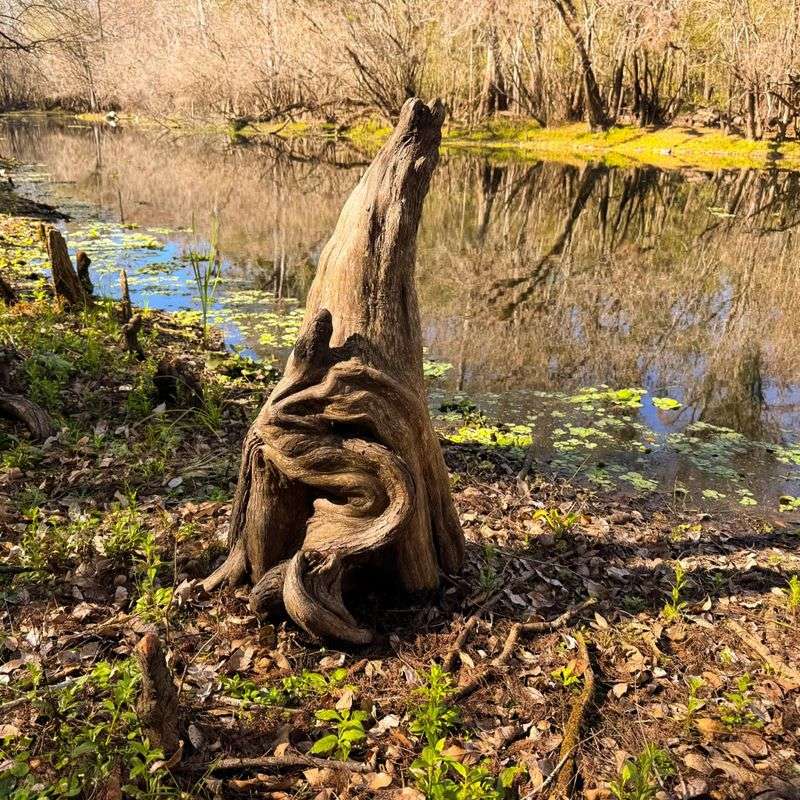
Paddle a canoe through a Florida swamp and you will likely bump into a few knees. They seem to love wet places.
Knees show up most often on trees growing in soggy soil or fairly shallow water. Lakeshores, river edges, and swampy flats are top spots.
Trees planted in a dry backyard often grow fewer knees, or sometimes none. Wet ground seems to switch on the knee-making habit.
Think of it like a clue in a detective story. If knees mainly appear near water, their job probably has something to do with water.
That one observation has shaped almost every theory scientists have offered. Whatever knees do, the soggy setting seems to matter.
Want to go knee hunting yourself? Florida state parks with cypress swamps are great places to start.
Boardwalks let you peek down at knees without getting your shoes muddy. Early morning visits often bring calm water and great reflections.
Your Florida Garden Changes Every Week. Your Plan Should Too.
Gardening in Florida changes quickly throughout the season. Every Friday you’ll receive a simple weekly plan showing exactly what to plant, prune, fertilize, harvest, and protect so you never miss the right timing.
Bring binoculars, bug spray, and a friend who likes puzzles. Counting knees around a single tree can turn into a fun contest.
Just remember that swamps are home to gators and snakes too. Stay on trails and keep a respectful distance from the wildlife.
3. Both Bald Cypress And Pond Cypress Grow Them
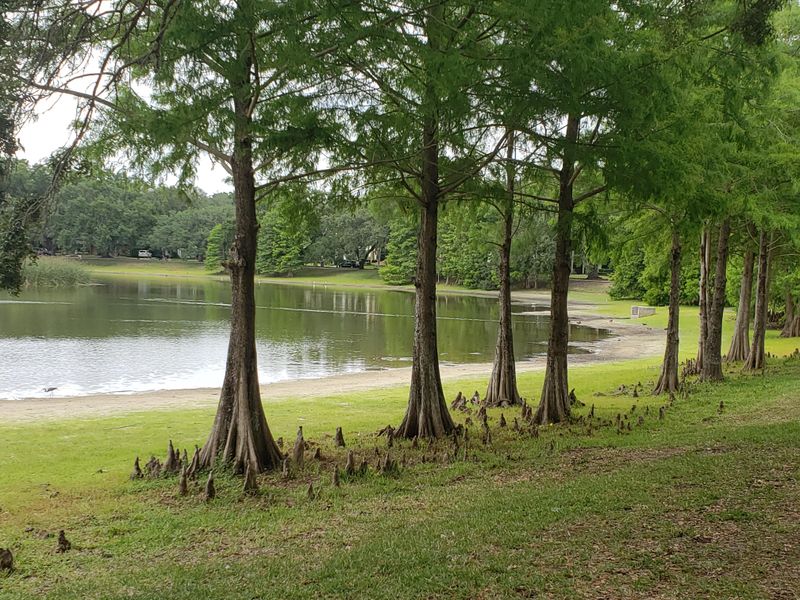
Florida has two cypress cousins, and both enjoy showing off their knees. Meet the bald cypress and the pond cypress.
Bald cypress goes by the science name Taxodium distichum var. distichum. Pond cypress is commonly identified as Taxodium ascendens, though some references classify it as Taxodium distichum var. imbricarium.
Both are conifers, which means they make cones like pine trees do. Yet they drop their needles every fall, which is unusual for a conifer.
That leaf drop is how the bald cypress earned its name. In winter, its branches look bare and a little silly.
So how do you tell the knees apart? Pond cypress knees tend to be shorter and more rounded, like little loaves of bread.
Bald cypress knees often grow taller and pointier. Some look like witch hats sticking out of the water.
The trees differ in other ways too. Pond cypress leaves hug the twig closely, while bald cypress leaves spread out flat like feathers.
Pond cypress usually lives in still ponds and wet flatwoods. Bald cypress likes rivers and lake edges.
Next time you visit a swamp, try playing tree detective. Check the knee shape, then look up at the leaves to confirm your guess.
4. Scientists Have Proposed At Least Seven Explanations
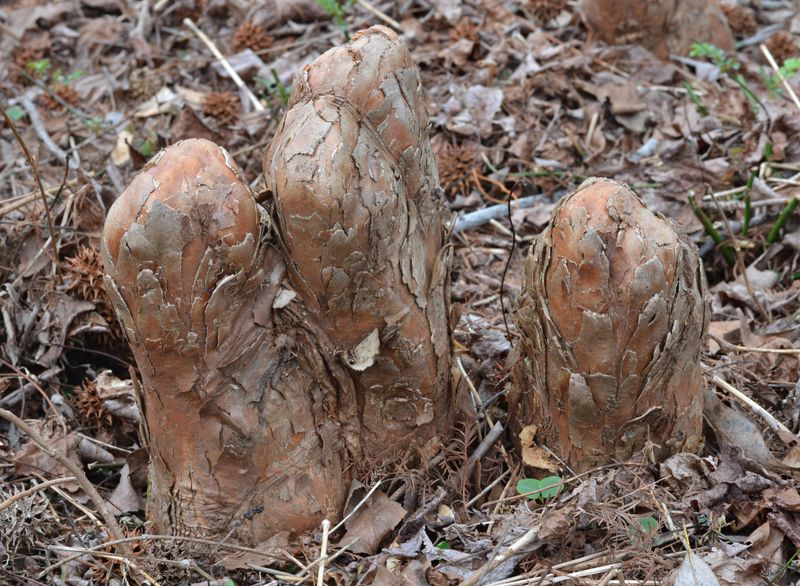
Seven ideas, and still no clear winner. Few plant puzzles have collected as many guesses as cypress knees.
Botanists have tossed around lots of possible jobs over the years. The list reads like a menu of mystery.
One idea says knees help roots get air. Another says they hold the tree steady in soft mud.
Some experts guessed knees store extra food, like a pantry for sugars. Others thought they trap nutrients drifting by in the water.
A few ideas did not hold up well. Scientists once wondered if knees could sprout new trees, but that turned out to be false.
Another guess said knees release methane gas from the swamp. Research mostly ruled that one out too.
Why so many ideas? Knees grow slowly, sit in tricky places, and do not hand out instruction manuals.
Testing them means wading through muck, dodging mosquitoes, and waiting years for results. That makes clear answers hard to get.
Here is a takeaway worth keeping. Science is not about having every answer, but about asking good questions and testing them fairly.
Cypress knees remind us that even common things in our own backyard can stay mysterious.
5. The Breathing Theory Has Been Debated For More Than A Century
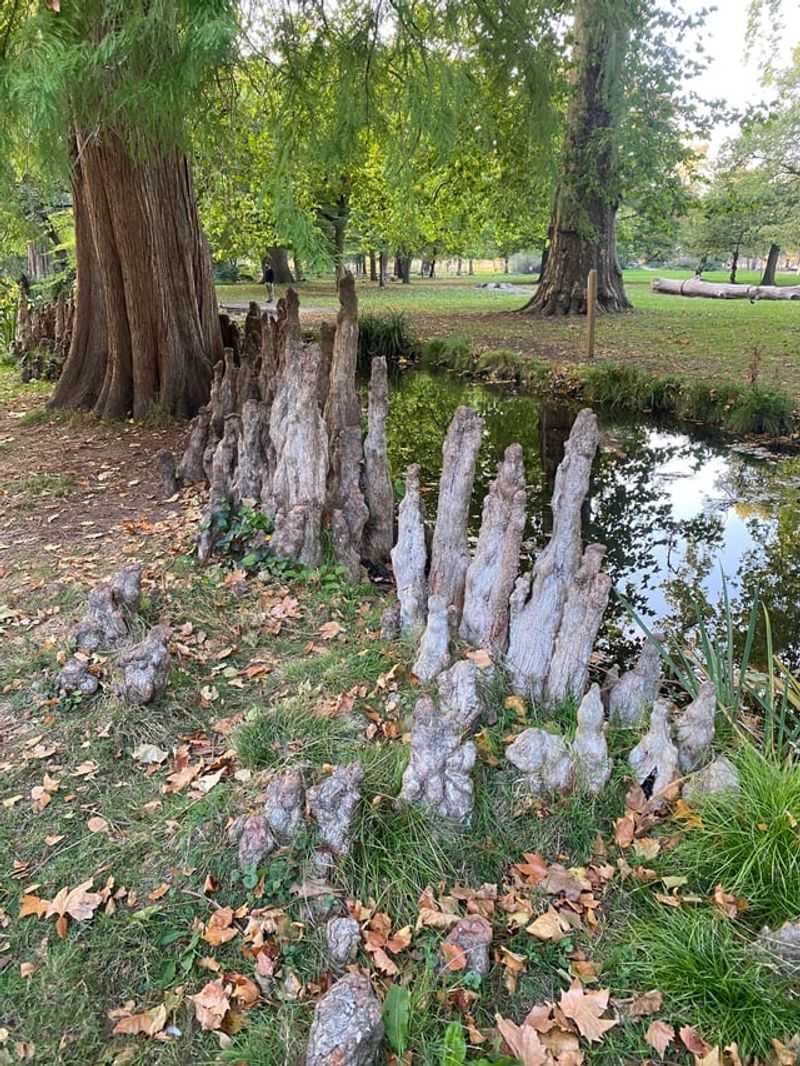
Back in 1848, someone looked at cypress knees and thought they might be snorkels. That idea stuck around for a very long time.
The thinking went like this. Swamp mud has little oxygen, so roots might need a way to grab air from above.
Plants in mangrove swamps have special breathing roots called pneumatophores. Knees looked similar, so the comparison seemed natural.
For decades, botany books repeated the breathing idea as if it were settled. Many students learned it as fact.
Researchers questioned the breathing theory because cypress knees do not have all the same anatomical features as the specialized breathing roots of some wetland plants.
However, lacking those features does not automatically rule out gas exchange. Later research tested whether oxygen could pass from exposed knees into submerged roots, giving the theory stronger experimental support.
The argument has bounced back and forth for more than a hundred years. Each new study adds another twist.
Here is a cool lesson from all this. A popular idea is not automatically a correct one.
Good scientists keep checking, even when everyone already seems to agree. Sometimes the old idea wins, and sometimes it gets rewritten.
6. A 2015 Study Found Knees Can Supply Oxygen To Submerged Roots
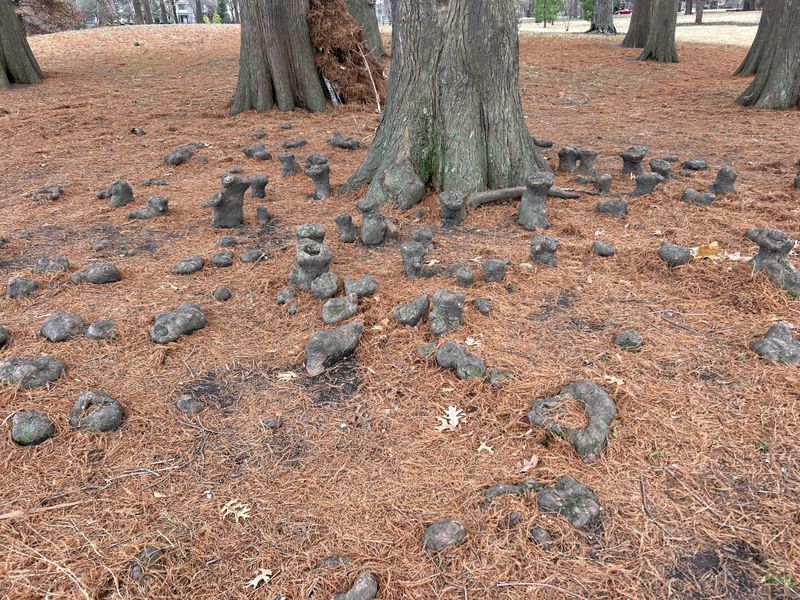
Plot twist! Just when the breathing idea seemed shaky, new research gave it a fresh boost.
A study published in 2015 tested what happens when knees are covered by water. The results caught people by surprise.
When knees sat underwater, the trees held noticeably less oxygen. When knees poked above the surface, oxygen levels were higher.
That suggests knees help oxygen slowly drift down into roots stuck in soggy mud. The process is called diffusion, like perfume spreading across a room.
The 2015 study compared oxygen levels in submerged roots when their connected knees were above water versus underwater. Oxygen levels were higher when the knees remained exposed, supporting the idea that they help supply oxygen to submerged roots.
So the snorkel idea may not be so silly after all. Knees might not pump air hard, but they could still let some trickle in.
This shows how science grows over time. One study rarely ends a debate, but it can tilt the scales.
Maybe knees do a little breathing and other jobs too. Nature loves multitaskers.
Curious kids can test diffusion at home. Drop food coloring into a glass of still water and watch it spread on its own.
That slow, quiet movement is similar to how oxygen may travel through a knee.
7. Knees Rarely Appear Where Water Stays Deep Year-Round
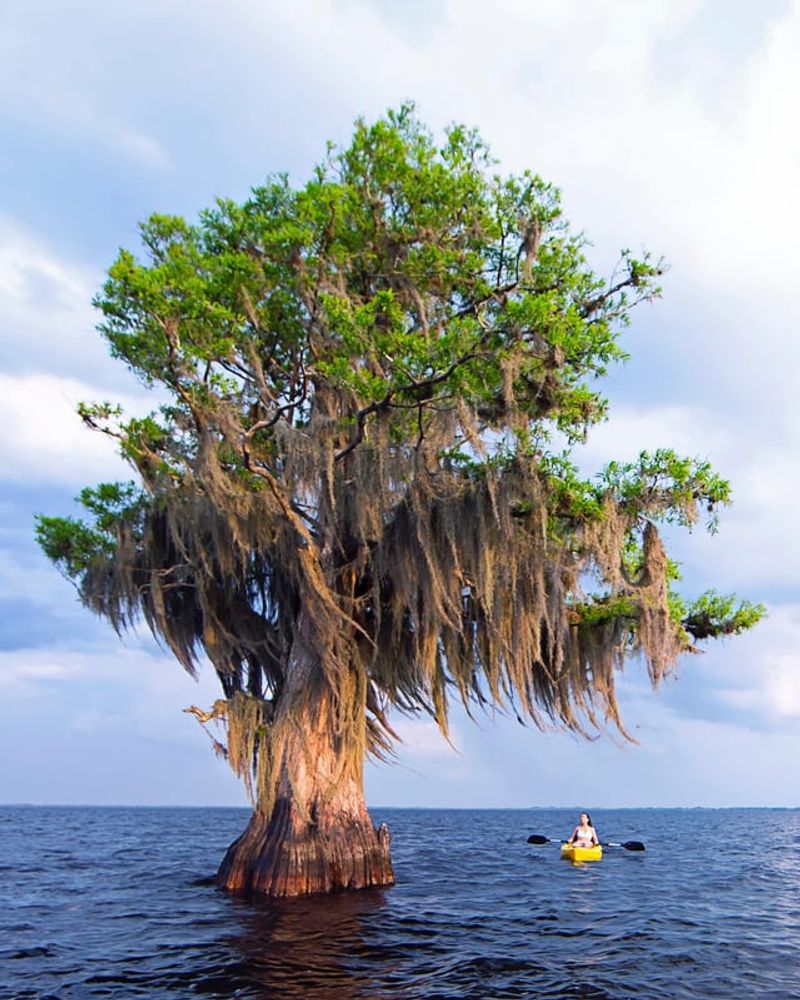
Here is a head-scratcher. If knees love water so much, why do they skip the deepest spots?
Cypress trees growing in water that stays deep all year usually have few or no knees. The bumps prefer wet soil and shallow, changing water.
Many Florida swamps rise in the rainy summer and drop in the dry spring. Those up-and-down levels seem to suit knee growth.
One possible reason is simple. A knee buried under deep water could not reach the air, so growing one might waste energy.
Another thought is that deep water keeps mud from piling up. If knees help trap soil, they would have less to do there.
This clue fits several theories at once, which keeps the mystery alive. Every answer seems to raise another question.
Try this on your next lake trip. Compare trees along the muddy shore with trees standing far out in the water.
Odds are good the shoreline trees will wear more knees. It is a neat way to see science in action.
Snap a few photos and jot down water depth if you can. Kids can turn it into a mini field journal.
8. Some Scientists Think They Help Brace The Tree
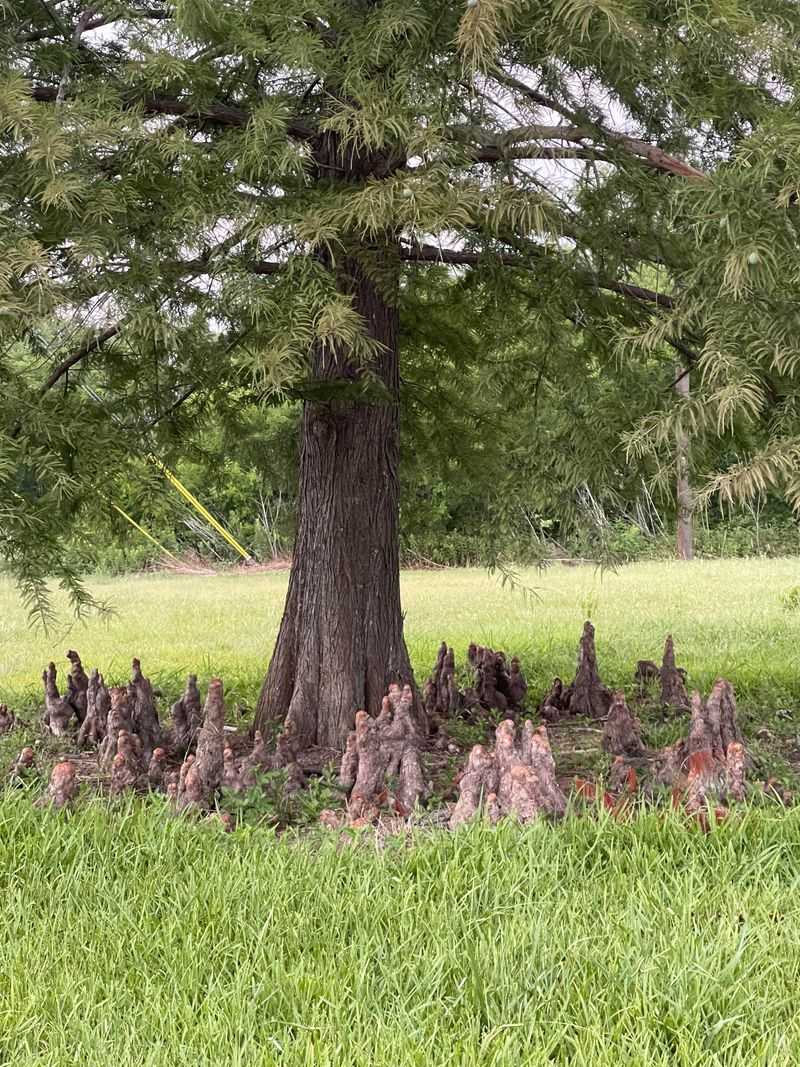
Ever tried standing up straight in squishy mud? Now picture doing that while being a hundred-foot tree in a hurricane.
Cypress trees face that challenge all the time. Their shallow roots sit in soft, wet ground that does not grip well.
Many experts think knees act like braces. They may stiffen the root system so it works more like a sturdy frame.
Think of how tent stakes hold a tent in place. Knees could help anchor the roots in a similar way.
Cypress trees are famous for surviving strong storms. After hurricanes, they often stay standing while other trees topple.
Their wide, flared trunks help too. Together with knees, the whole base becomes a solid foundation.
Structural support is one of the main explanations scientists have proposed for cypress knees. Oxygen exchange is another, and research has provided evidence for that role as well.
The knees’ full biological function remains a subject of study.
Here is a handy tip for Florida homeowners. Cypress can be a smart choice for wet, storm-prone yards because of its toughness.
Just give it plenty of room. Knees may pop up in your lawn, so plan your mowing paths around them.
Some folks even enjoy the quirky look and leave them as natural sculptures.
9. A Newer Theory Says They Help Collect Soil
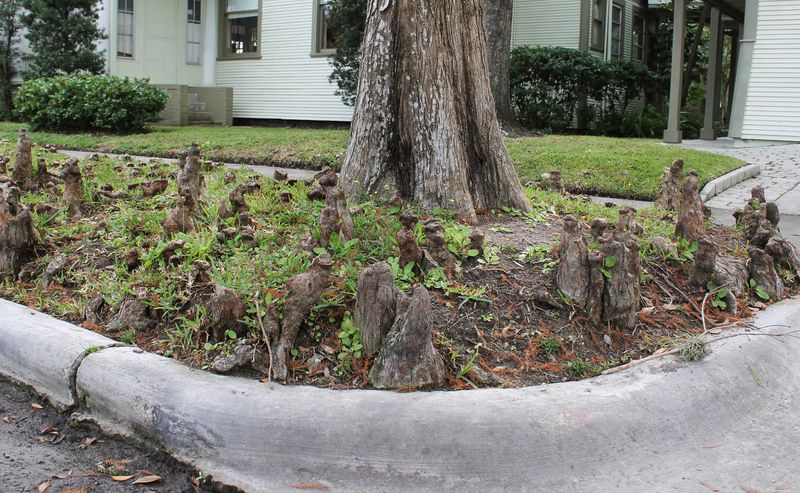
What if knees are really tiny swamp janitors? A newer idea says they might sweep useful stuff right to the tree.
Water in swamps carries leaves, twigs, and bits of soil. As it flows past knees, some of that material gets caught.
Over time, the trapped leaf litter breaks down into rich muck. That muck holds nutrients the tree can use.
So knees may work like little fences, building a buffet around the roots. Pretty clever for a lumpy piece of wood.
Collecting soil could help in another way too. Piled sediment may slow erosion, keeping the ground around the tree from washing off.
This theory fits well with the clue about shallow, changing water. Floods bring in fresh material, and knees grab it as levels drop.
Like the other ideas, it still needs more testing. Maybe knees do several jobs at once.
You can see this in action on a walk. Look around a group of knees and notice the leaves and mud bunched against them.
It is a small reminder that every part of a swamp connects. Mysteries like this keep scientists, and curious kids, coming back for more.