Want Your Poinsettia To Bloom Again? Ohio Gardeners Should Do This In October
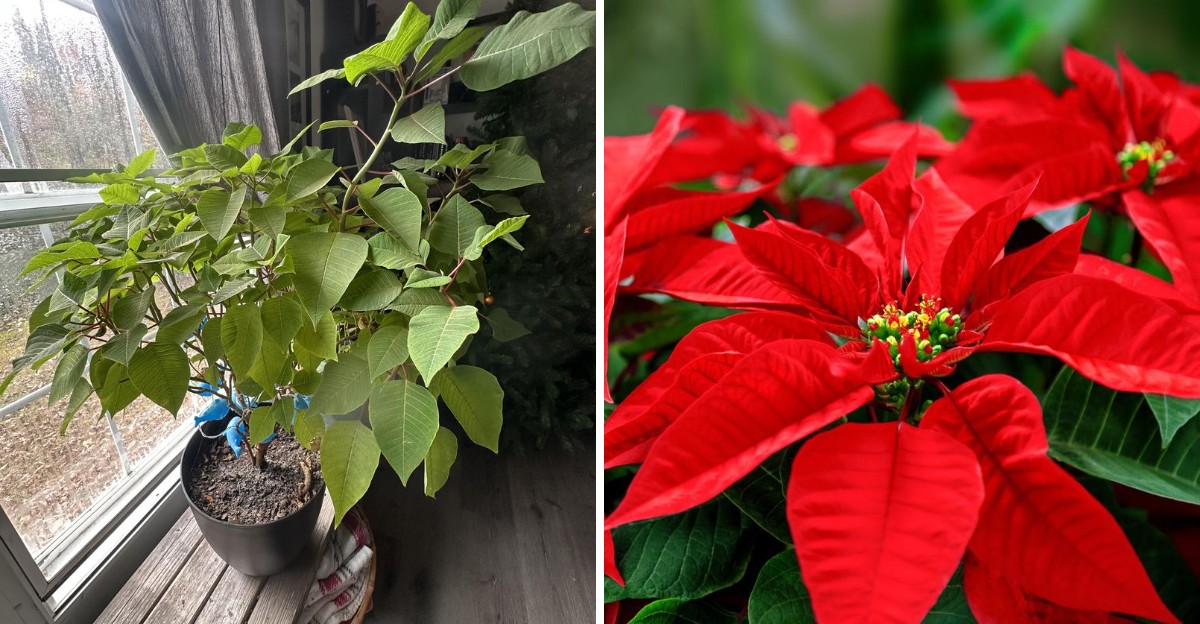
That poinsettia you refused to throw away last January is about to have its second act, and October is the month that makes it happen.
Right now it probably looks like a perfectly ordinary green plant sitting in a corner somewhere, doing absolutely nothing festive.
That is about to change. Poinsettias are short-day plants, which means they respond to longer nights by producing those gorgeous red, pink, or cream bracts that make them the star of every holiday table.
The trick is that in a typical Ohio home, indoor lighting convinces the plant it is still summer. So you have to step in and take control of the darkness yourself.
No greenhouse, no special equipment, just a closet, a calendar, and a little consistency. Honestly, it is one of the more satisfying things you can do in a garden this fall.
1. Start The Dark Treatment Early
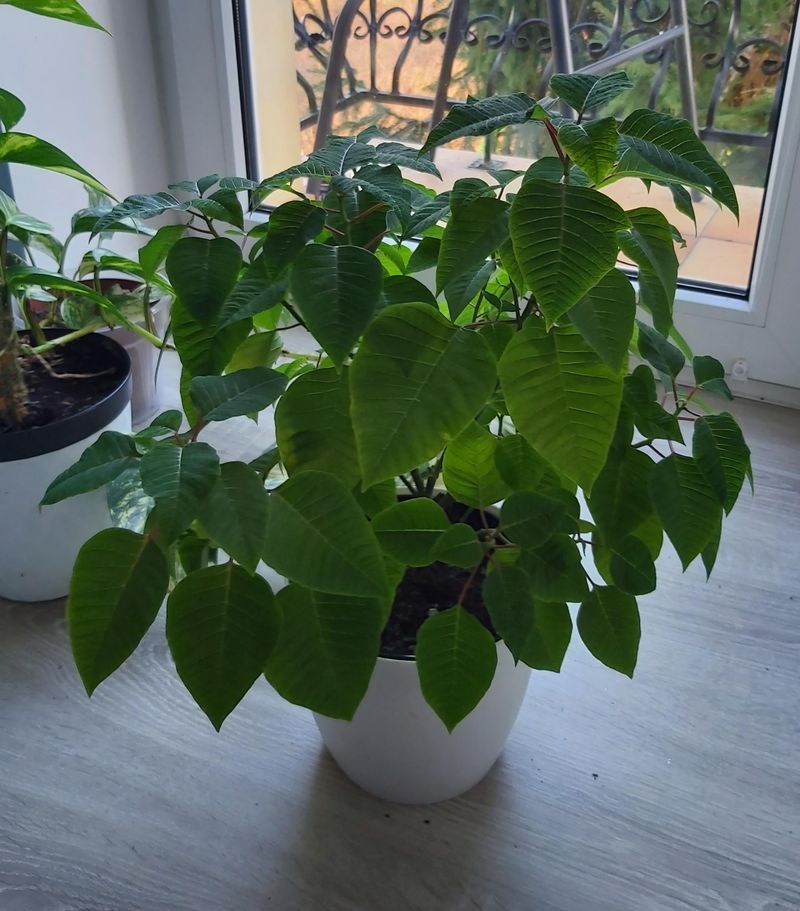
Mark your calendar, because October 1 is the magic date. Poinsettias are short-day plants, which means they decide to color up when nights get long.
Gardeners in Ohio have a head start here, since fall nights grow longer each week. Still, indoor lamps, TV glow, and porch lights can trick the plant into thinking it is summer.
That is why you need to step in and control the dark yourself.
The goal is about 14 hours of total darkness every night. Plan to keep this up for roughly eight to ten weeks.
If you start on the first of October, you should see color forming by late November or early December.
Here is a simple schedule many folks like. Move the plant into darkness around 5 p.m. and bring it back out around 8 a.m.
The timing fits nicely with dinner and breakfast, so it is easy to remember.
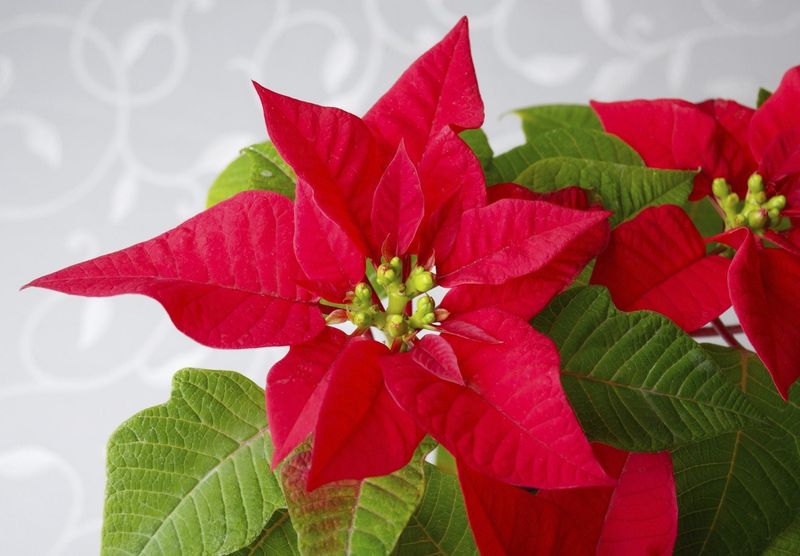
The colorful parts are not flowers at all. They are special leaves called bracts, and the real flowers are the tiny yellow buttons in the middle.
The bracts change color only when the plant gets enough long, dark nights in a row.
Set a phone alarm for both times. A few missed nights can slow things down, so steady habits matter most.
2. Find A Truly Dark Spot In Your Home
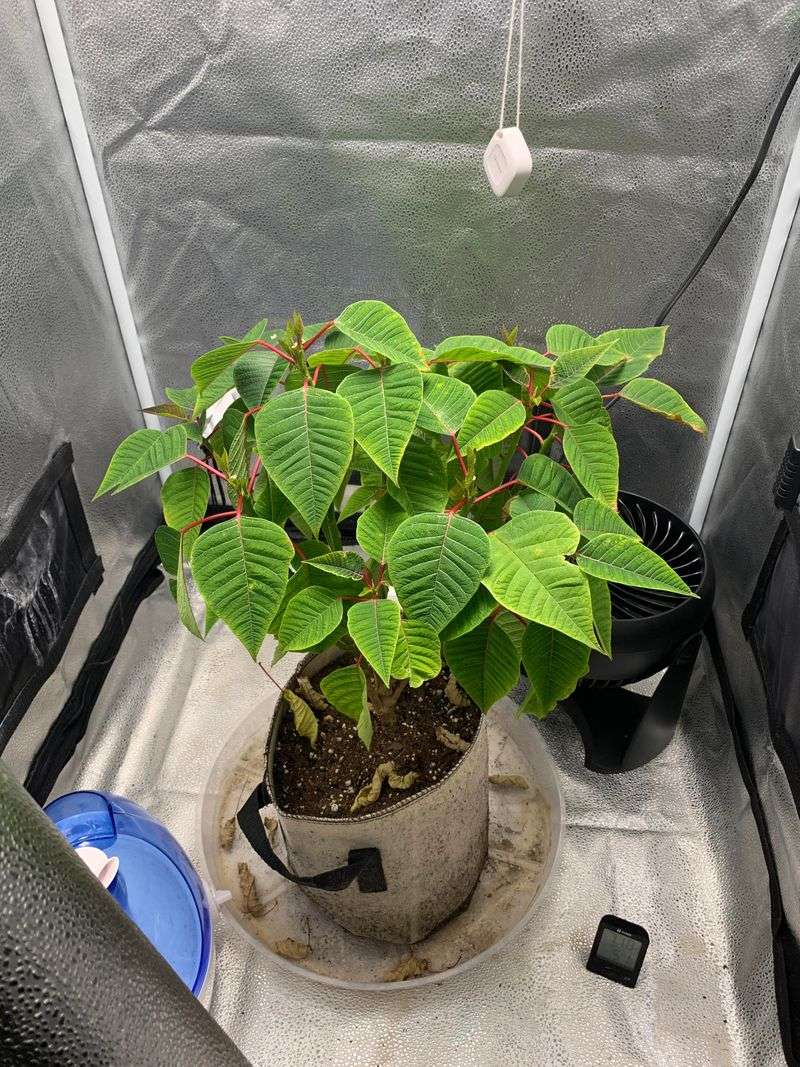
Even a tiny crack of light under a door can throw your plant off schedule. That surprises a lot of people, but poinsettias are very sensitive to light at night.
So where should it go? A spare closet works well for many Ohio families.
A basement storage room can also be good, as long as it is not too cold. Some people simply place a large cardboard box over the plant each evening.
If you use a box, make sure it is tall enough so the leaves do not get squished. Skip plastic bags as a cover option.
Beyond trapping moisture, plastic restricts the airflow the plant needs, and that combination of poor circulation and trapped humidity can create conditions that encourage disease and mold. A breathable cover like a cardboard box or a fabric bag is a much better choice.
Your Ohio Garden Changes Every Week. Your Plan Should Too.
Gardening in Ohio changes quickly throughout the season. Every Friday you’ll receive a simple weekly plan showing exactly what to plant, prune, fertilize, harvest, and protect so you never miss the right timing.
Test your spot before you begin. Sit inside the closet with the door shut for a minute and let your eyes adjust.
If you can see light peeking in, tape the gap or pick another space.
Watch out for timers and smart lights too. A hallway nightlight that clicks on at 2 a.m. could be enough to confuse the plant.
Think of the dark spot as a bedroom for your poinsettia. It needs blackout curtains, quiet, and no surprise visitors flipping on the light.
Once you find the right place, the rest of the process gets much easier.
3. Give Your Plant Bright Daylight Every Morning
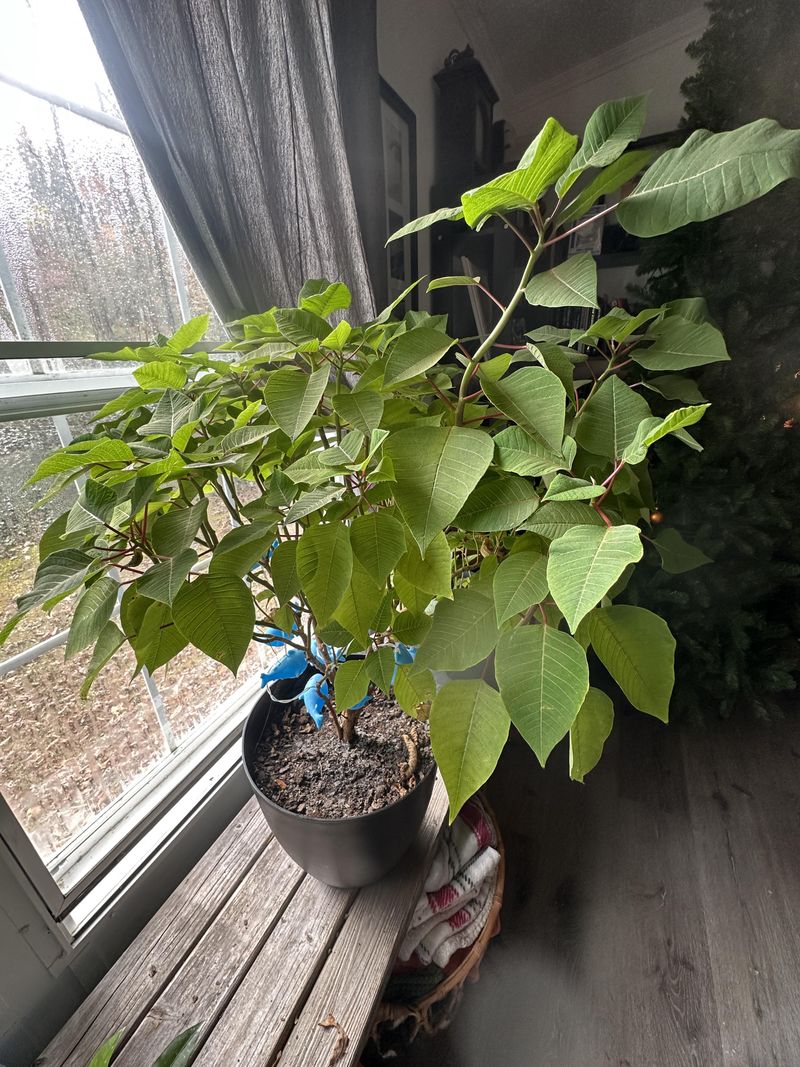
Darkness gets all the attention, but daylight is half the story. Your poinsettia still needs plenty of sun to make energy for those bright bracts.
Each morning, bring the plant back to a sunny window. A south or west window is ideal.
In Ohio, October skies can turn gray for days, so the brightest window you have is the best choice.
Aim for six to eight hours of good light. The plant uses that time to build food, which it stores for the color show ahead.
Without enough sun, the bracts may come in pale or small.
Gray stretch got you down? A simple LED grow light can fill in on cloudy days.
Just be sure it turns off well before the plant goes back into the dark.
Here is a helpful trick. Give the pot a quarter turn every few days.
That keeps the stems from leaning toward the glass and helps the plant grow even and full.
Keep the leaves from touching cold window panes. As temperatures drop in late October, glass can get chilly overnight and morning.
A small gap of a few inches protects the foliage.
Balanced days and nights are the secret recipe. Sun by day and true darkness by night will move your plant toward holiday color.
4. Bring It Indoors Before Chilly Nights Arrive
Did your poinsettia spend summer on the patio? Lots of people do that, and it is a smart way to keep the plant strong.
October is when that outdoor vacation needs to end.
Poinsettias come from Mexico, where it stays warm most of the year. They start to struggle when temperatures dip below about 50 degrees.
Ohio can hit those numbers early in fall, especially at night.
Watch the weather report closely in late September and early October. Once nighttime lows trend toward the 50s, carry the plant inside.
Waiting too long can lead to yellow leaves and dropped foliage.
Before it comes in, give it a quick checkup. Look under the leaves for tiny bugs like whiteflies or mealybugs.
A gentle rinse with the hose or a wipe with soapy water can clear them off.
Let the plant adjust slowly if you can. Some gardeners bring it in for a few nights first, then leave it inside full time.
That eases the shock of moving from fresh air to a heated house.
Fun fact: the plant was named after Joel Poinsett, the first United States Minister to Mexico. He brought cuttings back to the United States in the late 1820s, with some sources pointing specifically to around 1828 or 1829, and the holiday tradition we know today gradually grew from there.
Your patio plant carries a pretty interesting story.
5. Keep Indoor Temperatures Steady And Mild

Comfort matters to a poinsettia almost as much as light. A plant that feels too hot or too cold may hold off on coloring up.
Daytime temperatures between 65 and 70 degrees work well. At night, a little cooler is fine, around 60 to 65.
Most Ohio homes sit right in that range once the furnace kicks on.
The trouble usually comes from hot and cold spots. Heating vents blow dry, warm air that can crisp the leaves.
Drafty doors and windows send in sudden blasts of cold. Both can stress the plant.
Walk around your house and feel for drafts. A good spot is bright, calm, and away from radiators, fireplaces, and doors that open often.
Moving the plant even a few feet can make a big difference.
Your dark spot needs to be mild too. An unheated garage might seem handy, but it can get far too chilly by late fall.
A closet inside the main living space is a safer bet.
Think of yourself as the plant’s thermostat manager. If you feel cozy in a light sweater, your poinsettia probably feels good too.
Steady warmth helps it focus on growing those famous red, pink, or white bracts instead of just trying to cope.
6. Water Wisely Through The Fall Season
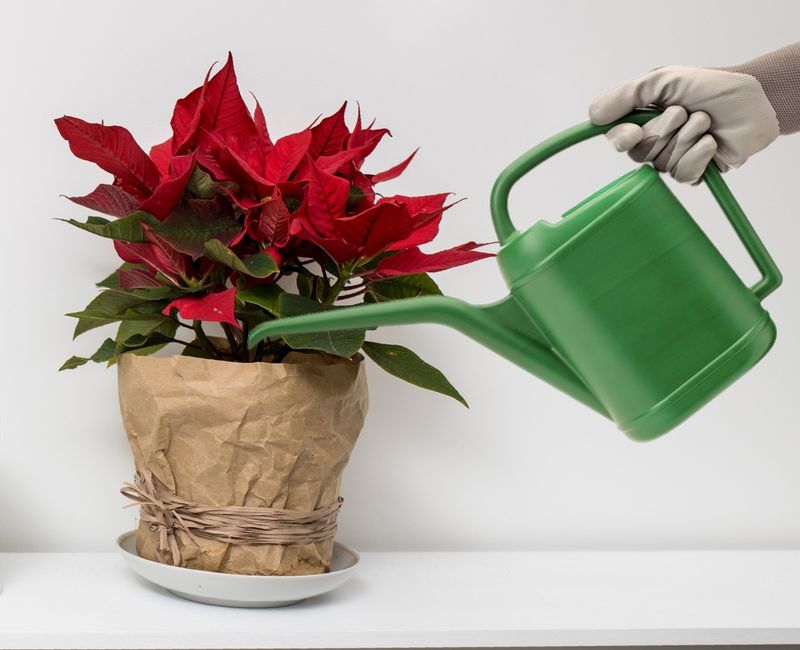
More plants get into trouble from too much water than too little. Poinsettias are no different, and soggy roots are a common problem in fall.
Start with the finger test. Push a finger about an inch into the soil.
If it feels dry, it is time to water. If it still feels damp, wait another day or two and check again.
When you do water, water deeply. Take the plant to the sink and let water run through until it drains out the bottom.
Then let it sit a few minutes so the extra water can escape.
Never leave the pot sitting in a saucer full of water. Okay, that sounds strict, but standing water can lead to root rot fast.
Empty the saucer after watering every time.
Ohio furnaces dry out indoor air quickly once heating season starts. You may notice the soil drying faster in late October than it did in September.
Adjust as you go rather than sticking to a fixed calendar.
Many holiday poinsettias come wrapped in shiny foil. That foil looks festive, but it traps water.
Poke holes in the bottom or remove it entirely so the roots can breathe.
Healthy roots mean a healthy plant. Smart watering keeps your poinsettia strong enough to show off when December arrives.
7. Feed Lightly For Strong Holiday Color
Food fuels the show. Your poinsettia has been growing all summer, and it still needs nutrients to build strong stems and rich color going into the dark treatment period.
Use a balanced houseplant fertilizer, something like a 20-20-20 mix. Dilute it to half strength and feed about every two to three weeks leading up to and during the early part of the dark treatment.
A light hand works better than a heavy one.
Here is an important timing note that many Ohio growers find helpful. As the dark treatment progresses and bract color begins to develop, it is generally a good idea to ease off on fertilizing.
At that stage the plant’s energy is better directed toward coloring up rather than pushing new vegetative growth. Many horticultural sources suggest stopping fertilization once color is clearly forming and resuming again in spring.
Too much fertilizer can burn the roots and leave white crust on the soil. If you spot that crust, flush the pot with plain water at the sink to wash out extra salts.
Always water before you feed. Fertilizer on dry roots can cause damage, and moist soil spreads nutrients more evenly and gently.
Pale green or yellowing lower leaves can be a sign the plant needs a little extra nutrition earlier in the season. Dark, glossy leaves usually mean it is getting what it needs.
Think of fertilizer like vitamins. A small, steady amount in the right window keeps things running smoothly, and your plant will reward you with deeper color when the holidays arrive.
8. Skip The Late Pruning This Month
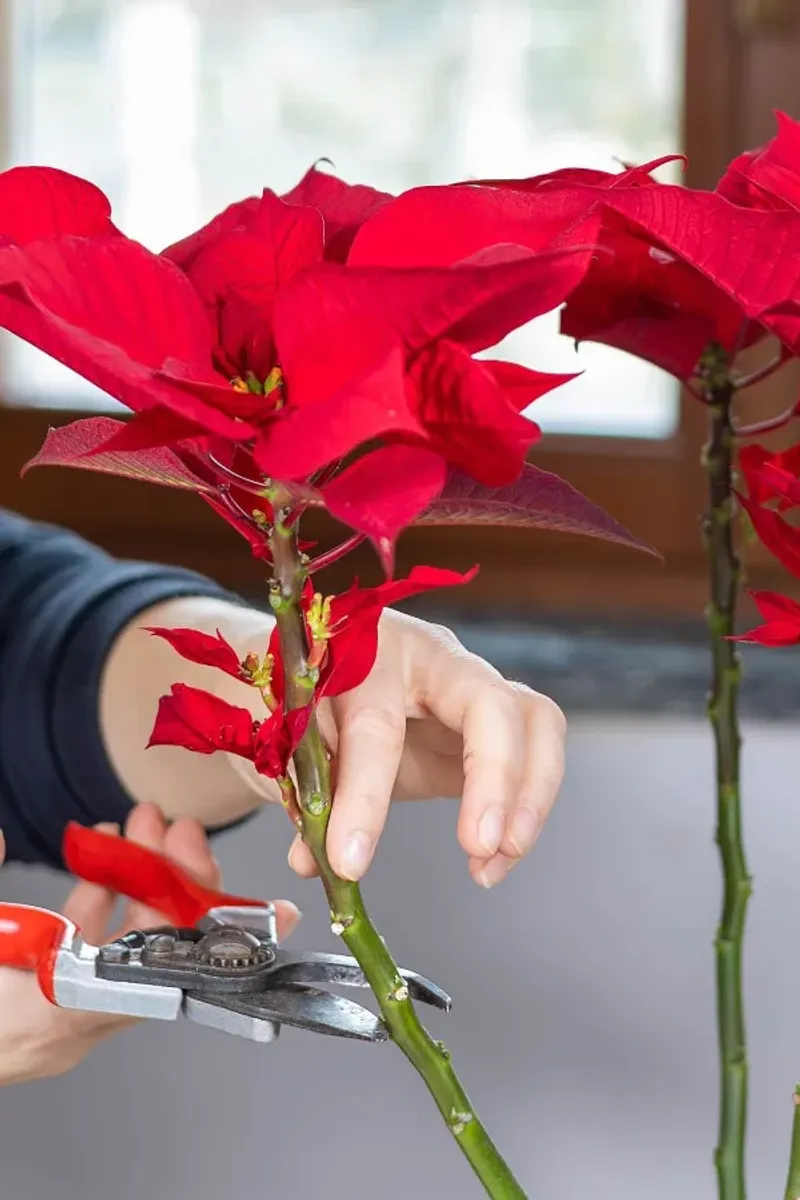
Scissors in hand? Put them down for now.
Pruning has a time and place, and October is not it.
Most poinsettia trimming happens in late spring and summer. Many gardeners pinch back new growth around June and again by mid-August.
That creates a bushy plant with lots of branches for color.
By the time October rolls in across Ohio, the plant is getting ready to form its bracts at the tips of each stem. If you cut those tips off now, you remove the very spots where color would appear.
So what can you do instead? Gently remove any yellow or brown leaves that fall or hang loose.
That keeps the plant tidy and helps prevent mold.
If a stem looks floppy, try a small plant stake and a soft tie. That gives support without cutting anything away.
Bamboo sticks from a craft store work great.
Missed the summer pinching? Do not worry too much.
Your plant may be a little taller and less full, but it can still color up nicely. Next year, set a reminder for June.
Patience pays off with this step. Leaving those stem tips alone gives your poinsettia the best chance to look full and festive come December.
9. Watch For Holiday Color In Late November
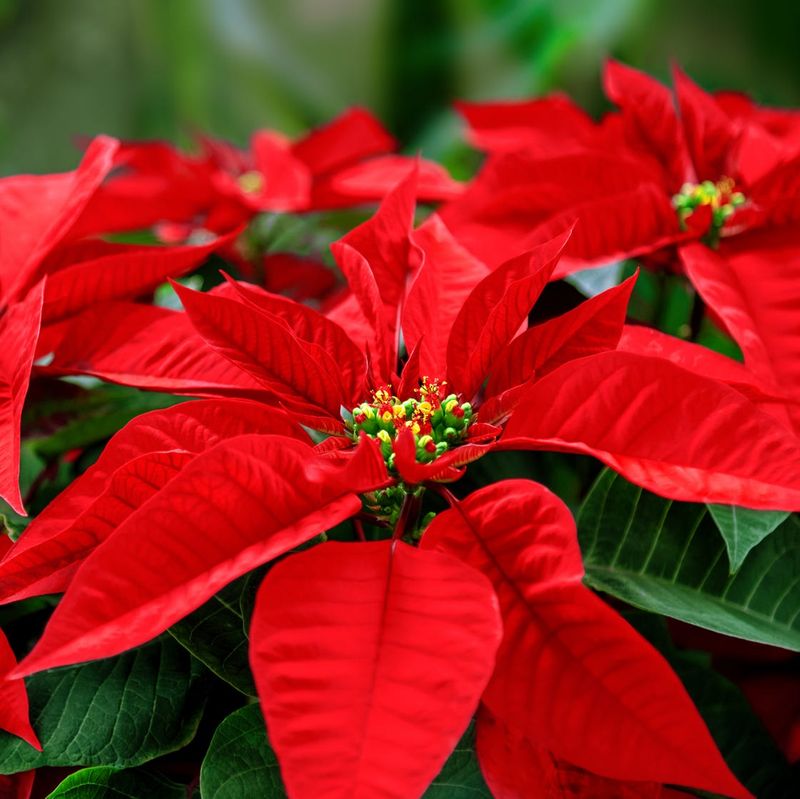
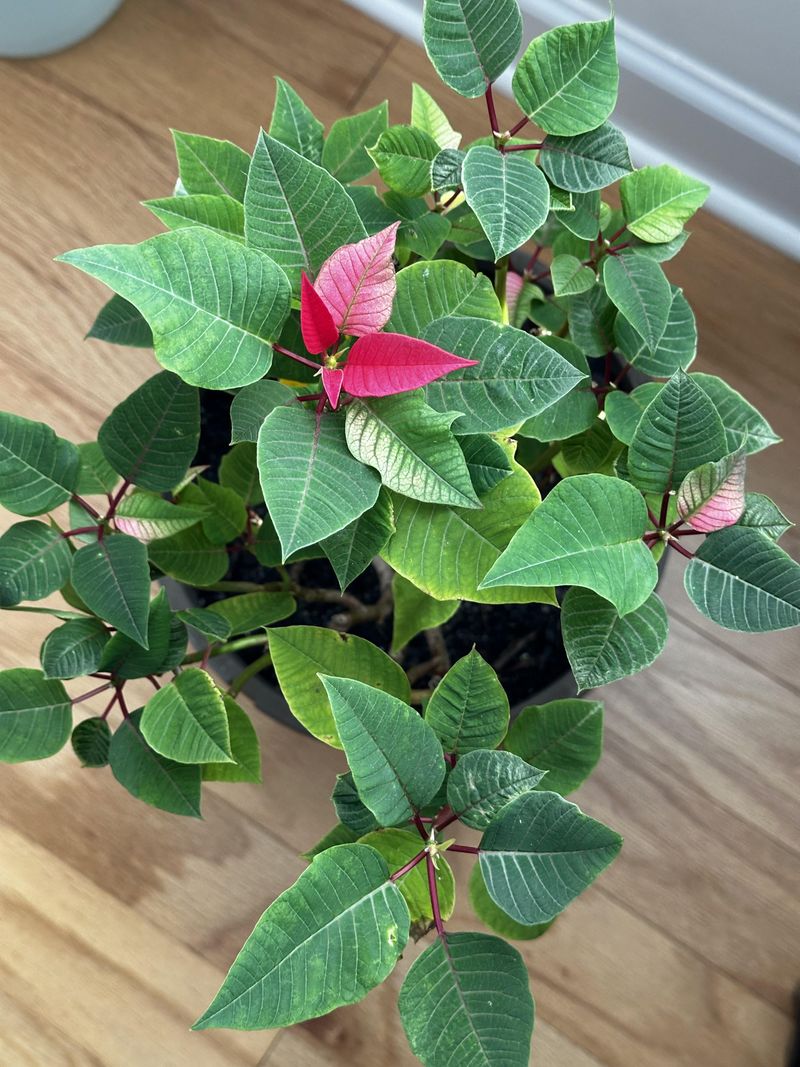
Patience gets a big reward around Thanksgiving. If you have kept up the routine, you should start to spot hints of red, pink, or cream near the tops of the stems.
At first, the color may look like a blush on the green leaves. Over the next few weeks, it deepens and spreads.
Many Ohio growers see full color by early to mid December.
Once the bracts are fully colored, you can stop the dark treatment. The plant has gotten the message.
Now it can enjoy normal light and take its place as a holiday centerpiece.
Not seeing much yet? Check for light leaks in your dark spot.
Even small mistakes add up. Some plants just need an extra week or two, so keep going.
Show it off in a bright room, away from heat vents. A pretty pot cover or basket makes it look store-bought, but you will know it took real effort.
Fun bonus: take a photo now and compare it to last year. Sharing your success with friends and neighbors is half the fun.
You might even inspire someone else to try it next fall.
With a little care, that once-plain plant becomes a glowing reminder that good habits really do bloom.