Why Every Ohio Garden Needs Joe-Pye Weed This Summer
Joe-Pye Weed has a naming problem. Nothing about those three words suggests a plant worth seeking out, and that reputation has kept it out of Ohio gardens where it genuinely belongs.
Most gardeners walk past it without a second glance, which is exactly the kind of mistake that costs a garden its best late summer moment.
Ohio summers have a hungry stretch between the early season flush and fall color where things can start to feel uninspired.
The plants that perform during that window are worth their weight in garden space. Joe-Pye Weed is one of the most capable natives for that job and one of the most underestimated.
A closer look at what it actually brings to an Ohio garden makes the neglect hard to understand.
1. Joe-Pye Weed Brings Big Native Beauty To Summer Beds
Picture a back border in late July, where most perennials have already peaked and the garden feels a little tired. That is exactly when Joe-Pye weed steps up.
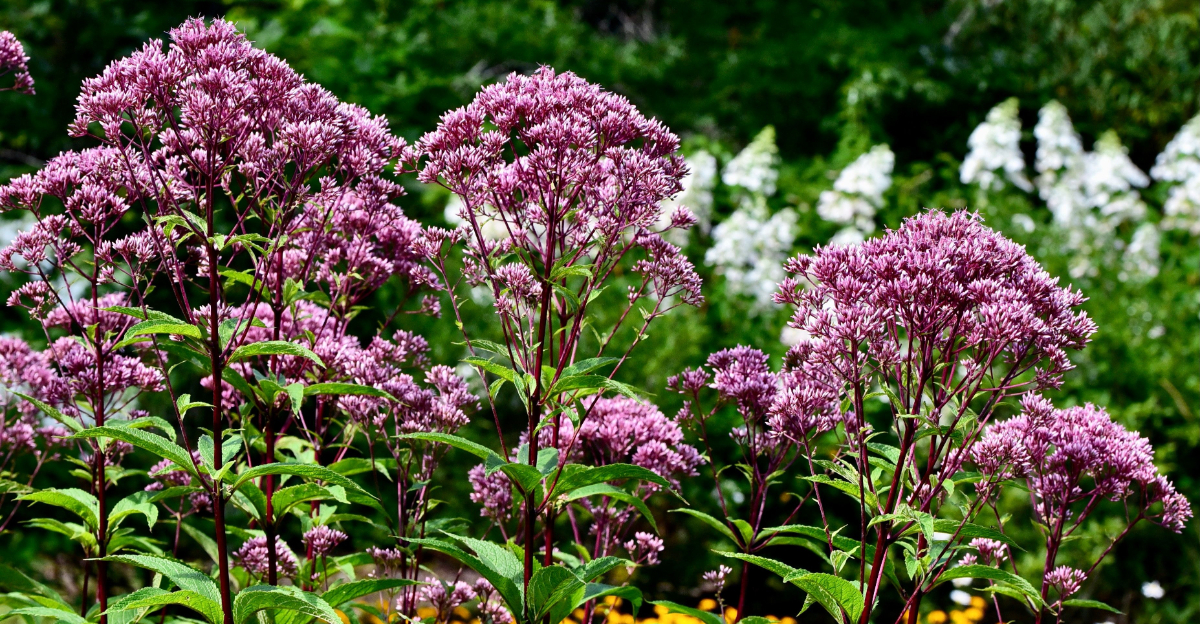
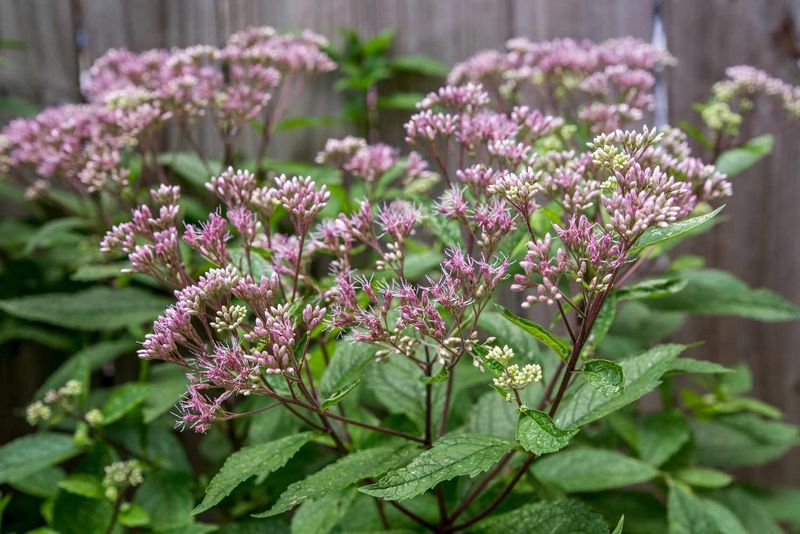
Its tall stems can reach six feet or more depending on the species. They are topped with large, domed clusters of dusty rose-pink flowers that catch the eye from across the yard.
As a native perennial, Joe-Pye weed grows naturally in moist meadows, woodland edges, and stream banks across much of eastern North America.
That background gives it an honest, wild beauty that feels right at home in native plantings and pollinator gardens. It is not a delicate, refined border flower.
It is bold, architectural, and seasonal in the best possible way.
Gardeners who love a naturalistic look will find a lot to appreciate here. The foliage is coarse and substantial, the stems are sturdy, and the flower heads are large enough to create real visual impact in a summer bed.
Paired with native grasses, black-eyed Susans, or ironweed, it builds the kind of layered planting that feels intentional rather than accidental.
That said, this is not a plant for tight foundation beds or small front-yard strips. Anyone expecting a compact, tidy edging plant will be surprised by how much room Joe-Pye weed actually needs.
Gardeners who want a bold statement in a larger border, native meadow planting, or rain garden should consider it.
With some height, this plant earns its space every single summer.
2. Pollinators Flock To Its Tall Mauve Blooms
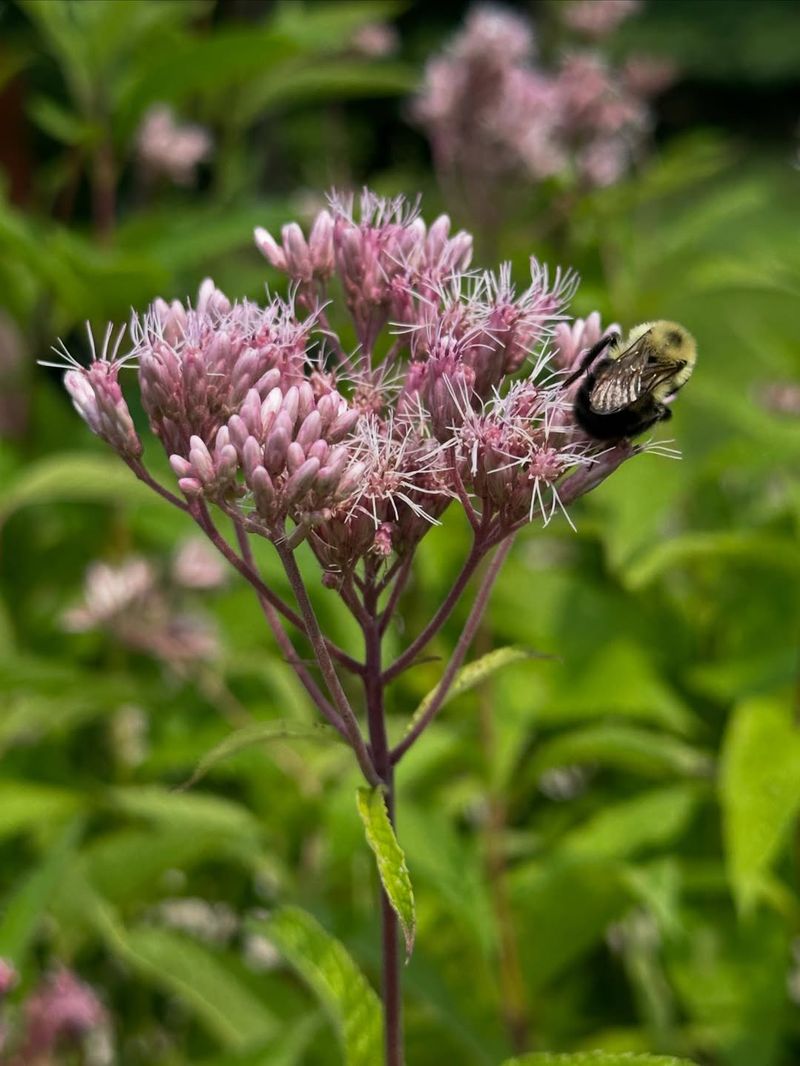
Walk past a Joe-Pye weed in full bloom on a warm August afternoon and you will likely hear it before you see it. The hum of bees working those large, domed flower heads is one of the more satisfying sounds a pollinator garden can offer.
The flowers are small individually, but they cluster together in broad, flat-topped heads that make landing easy for a wide range of insects.
Butterflies, including swallowtails, fritillaries, and skippers, are frequently spotted nectaring on Joe-Pye weed during the summer bloom period. Native bees, bumblebees, and various wasps also visit regularly.
It is a reliable late-summer nectar source when some other garden plants have already finished blooming.
Your Ohio Garden Changes Every Week. Your Plan Should Too.
Gardening in Ohio changes quickly throughout the season. Every Friday you’ll receive a simple weekly plan showing exactly what to plant, prune, fertilize, harvest, and protect so you never miss the right timing.
That makes it especially useful in a thoughtfully planted pollinator bed.
Pairing Joe-Pye weed with native bloomers like mountain mint, purple coneflower, and wild bergamot can extend the season for pollinators.
It also creates a more complete habitat planting. No single plant guarantees a yard full of butterflies, but Joe-Pye weed consistently pulls its weight in supporting local insect populations.
It is worth noting that the value here goes beyond just looking pretty. Supporting native pollinators has real ecological benefits for home gardens and surrounding landscapes.
When you plant Joe-Pye weed alongside other natives, you are building a more connected, functioning piece of habitat.
That is a meaningful contribution for any backyard garden, whether you have a half-acre lot or just a generous corner bed with good moisture and sun.
3. It Handles Moist Soil Better Than Many Perennials
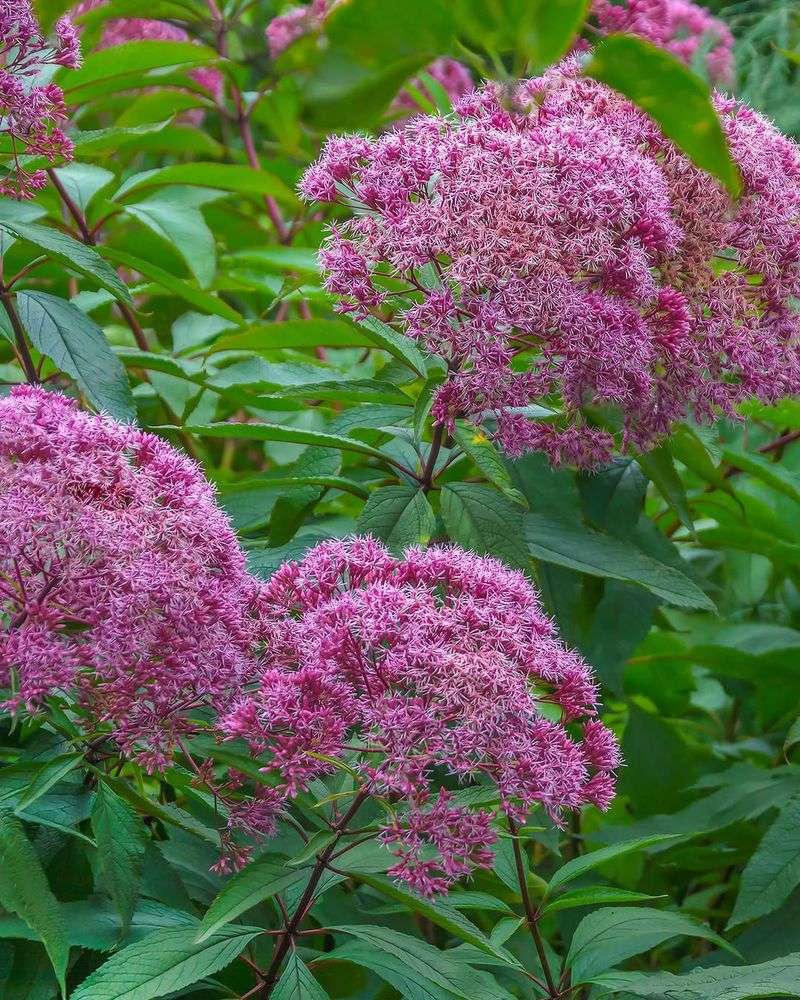
Clay soil and summer storms are a reality for many gardeners across this state. Low spots that stay soggy after heavy rain, areas near downspouts, and naturally damp borders along fences or property edges can be genuinely difficult to plant.
Joe-Pye weed handles these conditions better than most common perennials, which makes it a practical choice where other plants struggle to establish.
In its natural habitat, Joe-Pye weed grows along stream banks, in wet meadows, and at the edges of moist woodland areas.
That background means it is well-suited to rain gardens, pond borders, and low areas that drain slowly but do not stay flooded.
It can also perform well in consistently moist borders where the soil stays damp but not waterlogged throughout the growing season.
One important note: Joe-Pye weed tolerates moisture well, but it does not thrive in sites where water sits stagnant for long periods. Standing water that does not drain after several days can cause problems.
Match the species to the site carefully, especially if you are working with particularly heavy clay or a spot with poor drainage.
For gardeners dealing with summer storms that drop heavy rain on already saturated ground, Joe-Pye weed can be a smart and beautiful solution. It stabilizes those tricky wet zones while adding real seasonal color and pollinator value.
Pair it with swamp milkweed, blue vervain, or cardinal flower for a moist border planting that looks purposeful.
That combination also supports local wildlife from midsummer well into early fall.
4. Tall Stems Add Drama Behind Shorter Flowers
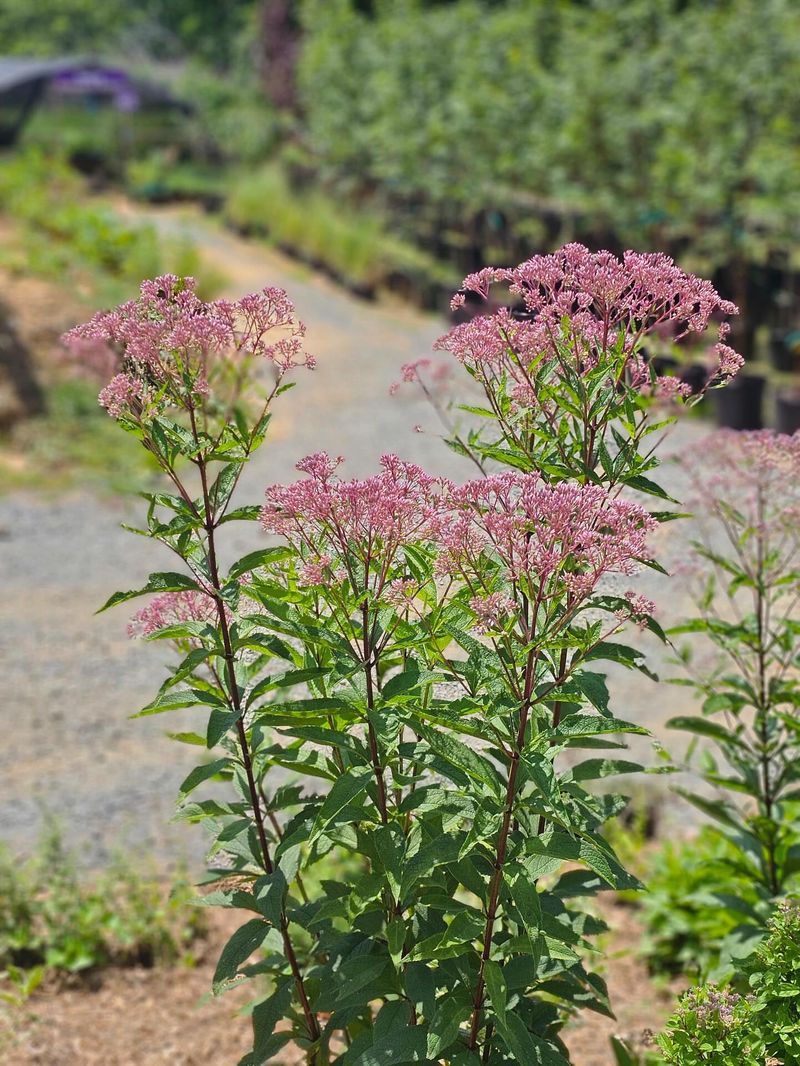
Height is one of the most underused tools in garden design, and Joe-Pye weed has it in abundance. Planted at the back of a border, it creates a strong vertical backdrop that makes shorter perennials in front look more intentional and polished.
Think of it as the anchor that keeps a mixed planting from looking flat.
Its tall, sturdy stems work especially well behind mid-height plants like purple coneflower, black-eyed Susan, garden phlox, and native grasses.
The contrast between Joe-Pye weed’s loose, airy flower clusters and the defined shapes of shorter companions creates a layered look.
It feels natural without being messy. Along a fence line or at the edge of a meadow-style planting, the height becomes an asset rather than a problem.
Placement matters a great deal with this plant. Putting a six-foot species in a narrow three-foot-wide bed along a front walkway will look out of scale quickly.
The same plant positioned at the rear of a wide border or against a garage wall, however, can look exactly right. Always think about the mature height before choosing a spot.
For gardeners with larger yards, Joe-Pye weed can anchor the back of a mixed native border while drawing the eye upward.
It also creates the sense of depth that makes a planting feel designed rather than thrown together.
Combine it with ironweed, tall goldenrod, or swamp rose mallow for a late-summer display that delivers real visual drama without any artificial structure required.
5. Choose The Right Type For Your Garden Size
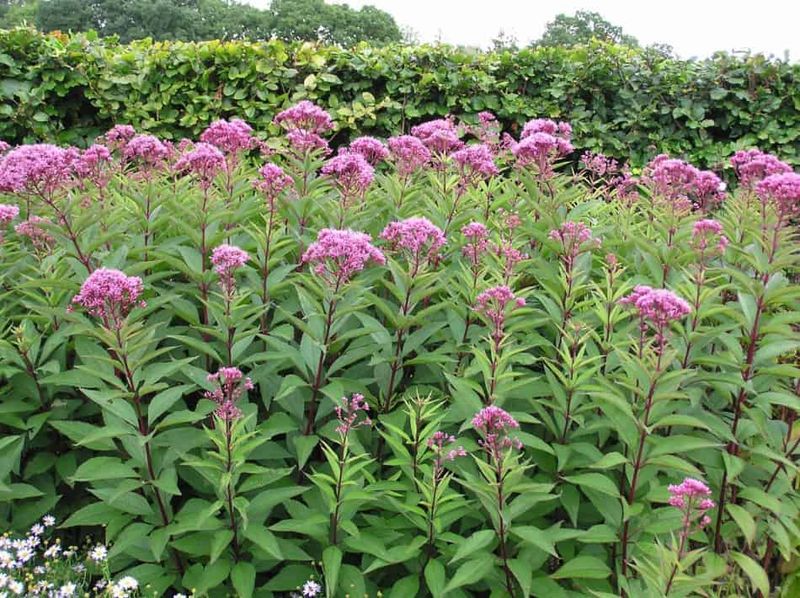
Not all Joe-Pye weeds are created equal when it comes to size, and that distinction matters more than most plant tags let on. Some species can reach four to seven feet tall in Ohio gardens, and even taller in especially rich, moist sites.
That is a lot of plant for a standard suburban backyard border.
Compact cultivars were developed specifically to address this issue. Selections like ‘Little Joe,’ a cultivar of Eutrochium dubium, typically stay in the three-to-four-foot range.
That makes them much more manageable in smaller gardens or mixed beds where a seven-foot giant would overwhelm everything nearby.
Checking the mature height and spread listed on the plant tag or in a reliable catalog description is a step that pays off later.
Eutrochium dubium, sometimes called coastal plain Joe-Pye weed, tends to be naturally shorter than some other species.
It may suit smaller yards better even in its straight species form. Eutrochium maculatum, with its spotted stems and flat-topped flower heads, is a beautiful native option but can get quite tall in rich, moist soil.
Visiting a reputable native plant nursery and asking about species and cultivar options is one of the best things you can do before buying.
Staff at native plant sales, local extension offices, and botanical gardens often have solid advice about which types perform well in local gardens.
Matching the plant size to your actual available space from the start saves a lot of effort and keeps the garden looking balanced all season long.
6. Give It Sun, Space, And Steady Moisture
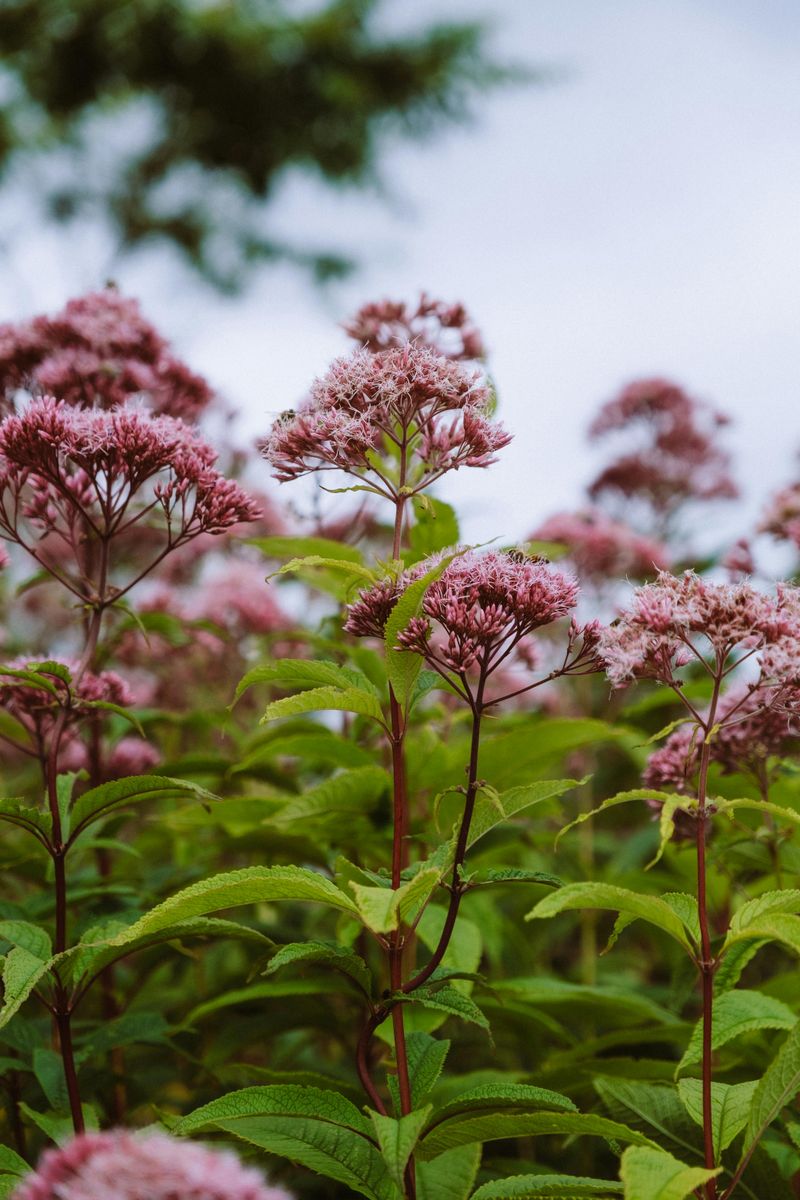
Getting the growing conditions right from the start makes a real difference with Joe-Pye weed. Full sun to part sun is the sweet spot for most species.
Plants grown in too much shade tend to get leggy, produce fewer flowers, and may flop without support. A spot that receives at least four to six hours of direct sun daily will generally produce the strongest, most upright plants.
Soil quality matters too. Joe-Pye weed prefers rich, moisture-retentive soil that still drains reasonably well between rain events.
Heavy clay that drains poorly after storms can be amended with compost to improve both drainage and fertility. Sandy, dry soil at the other extreme tends to stress the plant, especially during hot stretches in July and August.
Spacing is something many gardeners underestimate. Crowding Joe-Pye weed into a tight spot alongside aggressive spreaders limits airflow and can lead to weaker growth over time.
Give each plant room to develop its natural form, which can spread two to four feet wide depending on the species or cultivar chosen.
Watering during dry spells is important, especially in the first growing season when roots are still establishing. Even after a plant is well-rooted, extended dry periods without rainfall can cause stress.
A layer of mulch around the base helps retain soil moisture and moderate temperature during summer heat. Once established in a good site with reasonable moisture, Joe-Pye weed is a relatively low-maintenance perennial.
It rewards consistent attention with strong seasonal growth year after year.
7. Leave Seed Heads For Late-Season Wildlife Interest
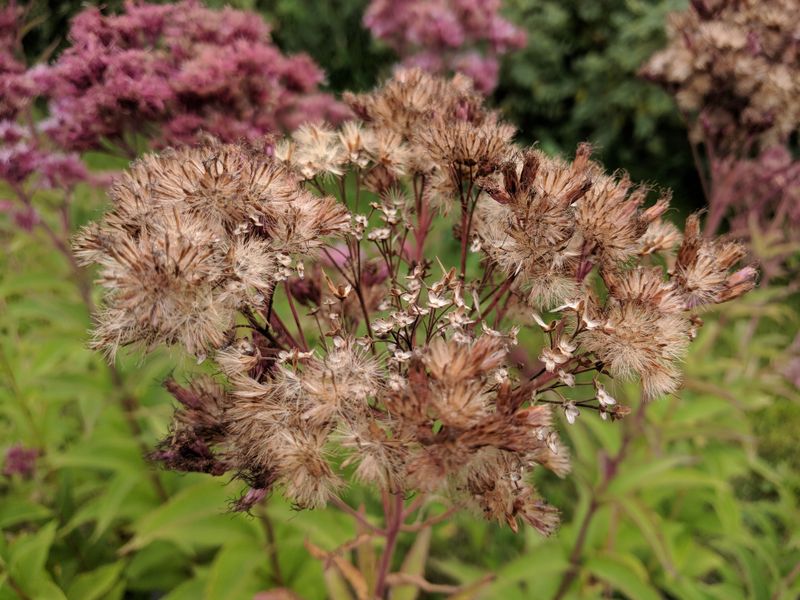
After the blooms fade in late summer, Joe-Pye weed still has something to offer. The spent flower heads gradually dry into fluffy, textured seed clusters that catch the light on cool fall mornings.
They add a soft, feathery look to the garden when most other plants are winding down. Leaving them standing through fall and into winter is a simple choice that pays back in multiple ways.
Small birds, including goldfinches and sparrows, may visit the seed heads to forage during the fall months. Standing stems also provide structure and visual interest in the winter garden at a time when bare ground and cut-back beds can look stark.
For gardeners who appreciate a naturalistic, four-season look, keeping those stems up costs nothing and adds real texture.
There is also a habitat angle worth considering. Hollow or pithy stems from native perennials can provide overwintering sites for certain native bees and beneficial insects.
Leaving some stems standing through winter supports those small creatures that are part of a healthy garden ecosystem.
That said, balance is reasonable here. If a clump of Joe-Pye weed starts self-seeding more than you want, removing some seed heads before they fully mature is a sensible option.
Gardeners who prefer a tidier look can cut back a portion of the plant in late fall while leaving some stems for wildlife. Self-seeding is usually manageable with occasional attention, and seedlings are easy to pull or relocate when small.
The key is staying observant so the plant works for your garden rather than spreading beyond the space you intended for it.