What It Means When A Bald Eagle Starts Building A Nest Near Your Florida Home
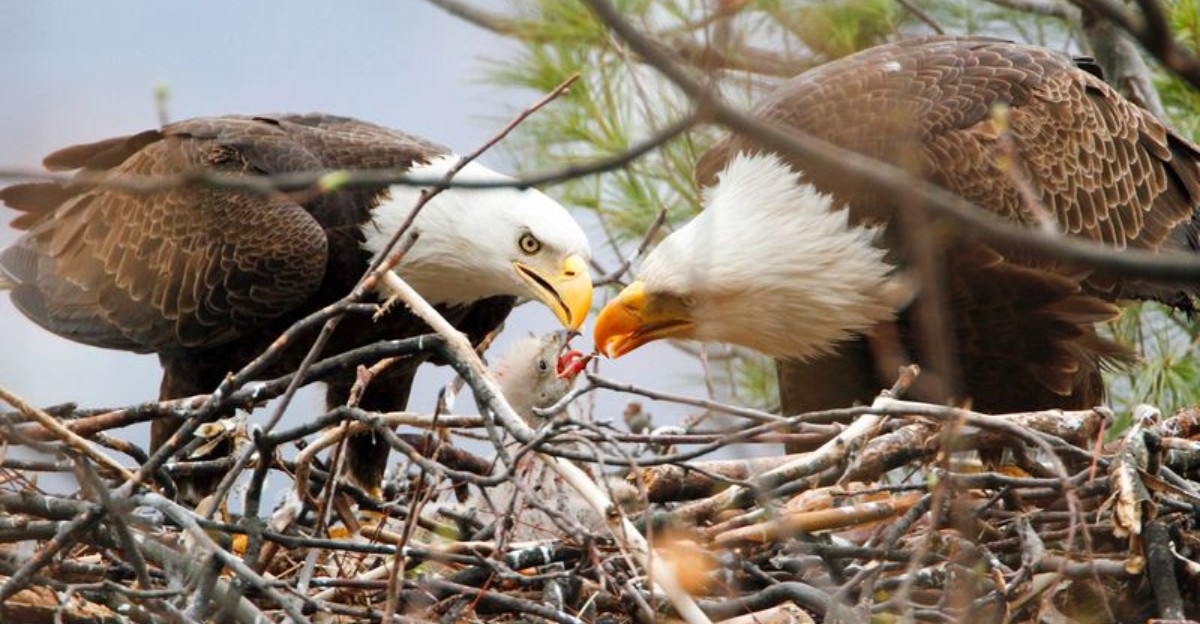
Large sticks piling up in a tall pine near your house can be the first sign a bald eagle pair has picked your neighborhood.
Many eagles start building or repairing nests in fall, with eggs often laid in winter. The same pair may return year after year, adding material each season.
Florida has one of the largest bald eagle populations in the lower 48, so nests near homes are more common than many residents realize.
Having one nearby is a rare chance to watch these birds up close. Bald eagles and their nests are also protected under federal law.
Activities like tree trimming or construction close to an active nest can be restricted during the nesting season.
Keep a respectful distance and enjoy the view as the pair settles in.
1. Fall Is When Pairs Begin Fixing Up Or Building Nests
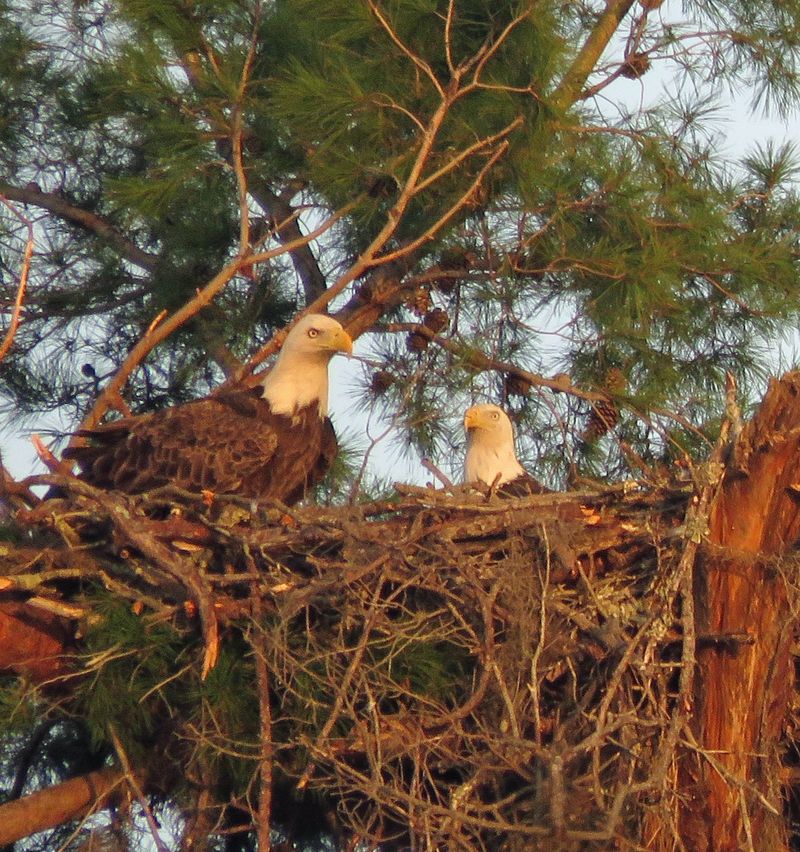
Autumn brings a surprise most newcomers do not expect. Up north, eagles often nest in spring, but Florida pairs get started much earlier in the year.
Nesting season here generally runs from about October 1 through May 15, based on state wildlife guidance.
Some pairs show up a little before October and start tidying an old nest. Others wait until later in fall, so the exact timing can vary from one pair to the next.
Courtship often happens alongside the building work.
You might notice two eagles perched close together, calling back and forth, or flying in loops above the trees. Those behaviors usually mean the pair is settling into its territory for the season.
Eggs are commonly laid in late fall or winter, though dates shift by location and by pair.
Once eggs hatch, the adults spend weeks feeding and guarding the young. Eaglets typically leave the nest in spring, and the family may hang around the area for a while after that.
Keep a simple notebook or phone log of what you see and when. Notes on dates, behaviors, and how often the birds visit can help you understand the season, and they come in handy if you report the nest later.
2. Big Sticks Hauled Into A Tall Pine Often Mark The Start
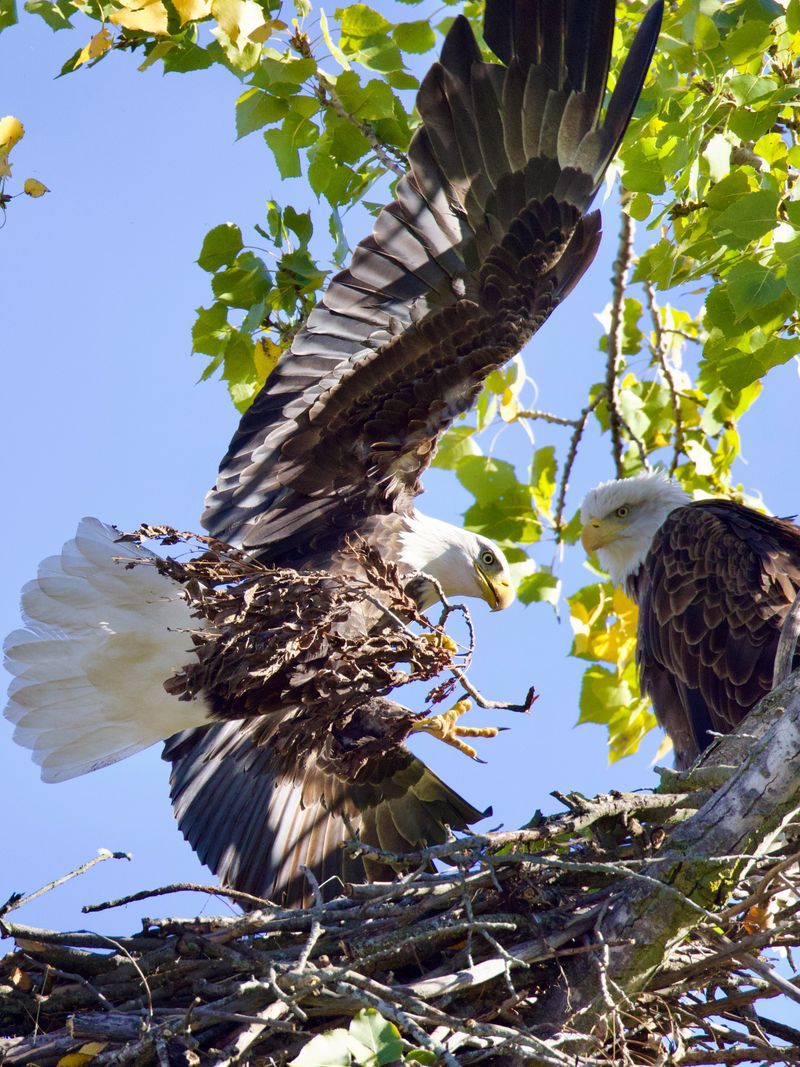
Watch the talons. An eagle flying low with a thick branch is one of the clearest early clues that a nest is in progress.
Both adults usually help gather sticks, and they may snap fresh branches right off nearby trees. Softer materials like grass, moss, or Spanish moss often get tucked into the center to line the bowl.
In Florida, eagles frequently choose live pine trees for nesting, especially tall ones with sturdy limbs near the top.
Height seems to matter to them. A tall tree gives the birds a wide view and easy flight paths in and out, and nests are often built near the crown rather than lower down.
Other structures get used too, including cypress trees and sometimes man-made towers.
A brand-new nest may look loose and messy at first. Over weeks, the pile grows thicker, and an older nest that has been reused for several seasons can become very large and heavy.
Your Florida Garden Changes Every Week. Your Plan Should Too.
Gardening in Florida changes quickly throughout the season. Every Friday you’ll receive a simple weekly plan showing exactly what to plant, prune, fertilize, harvest, and protect so you never miss the right timing.
Spotting sticks does not guarantee eggs will follow, since pairs sometimes build and then move on.
Binoculars let you check progress from a respectful distance without walking under the tree. Give the birds space during this stage, because early disturbance can lead some pairs to leave the site.
3. Many Pairs Return To The Same Nest Year After Year
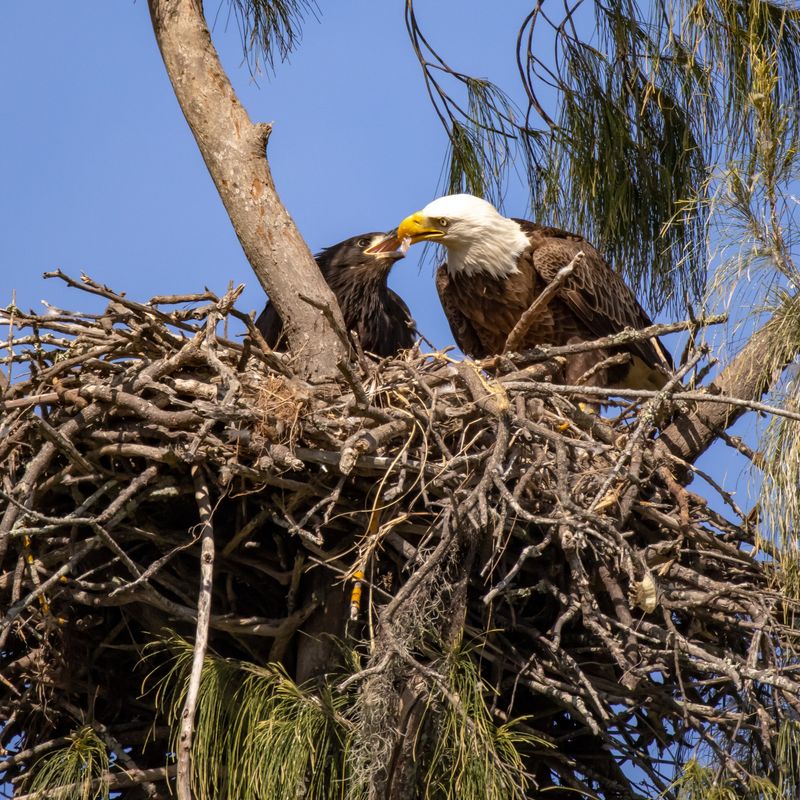
Here is the long-term part of the story. Once a pair claims a nest, there is a decent chance you will see them again next fall.
Bald eagles tend to show strong loyalty to a nesting territory, and pairs often reuse and repair the same nest across several seasons.
Every year they add new sticks on top. That steady layering is why some older nests grow wider and taller than a person.
Not every pair follows the same script, though.
Some pairs keep more than one nest within their territory and switch between them. Storms can also knock nests down, and Florida hurricanes have damaged plenty of nest trees over the years.
When a nest falls, the pair may rebuild in the same tree or pick a new one close by.
Bald eagles are generally thought to pair for the long haul, although a mate may be replaced if one bird disappears. So the eagles you see in five years may or may not be the original couple.
Planning helps if a nest is near your property. Think ahead about yard projects in the coming seasons, because an empty nest during summer can still be considered part of an active territory that the birds may return to.
4. Federal Law Protects Both The Birds And Their Nests
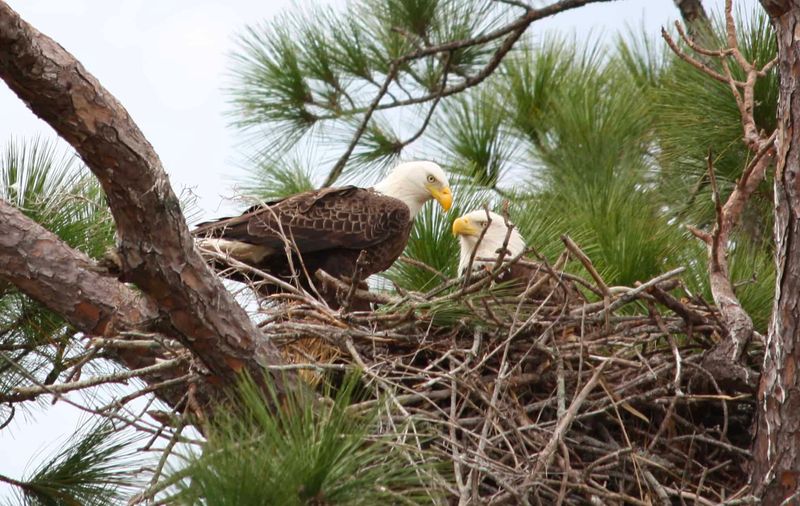
Losing endangered status did not mean losing protection. Bald eagles came off the federal endangered species list in 2007, yet strong laws still cover them.
Two federal laws apply, the Bald and Golden Eagle Protection Act and the Migratory Bird Treaty Act.
Together, these laws make it illegal to harm, capture, or disturb eagles without a permit. Protection also extends to their nests, eggs, and even feathers.
Disturbance has a specific meaning under federal rules.
It covers actions that injure an eagle or interfere with normal breeding, feeding, or sheltering enough to cause nest abandonment or lower nesting success. Loud, close, or repeated activity near a nest could fall into that category depending on the situation.
Florida also has its own rules, and the Florida Fish and Wildlife Conservation Commission works with federal agencies on eagle management.
Penalties for violations can include fines and other legal consequences. Exact outcomes depend on the case, so treat any uncertainty as a reason to ask questions first.
Simple respect goes a long way here. Avoid climbing the tree, flying drones near the nest, or picking up feathers, and contact the U.S.
Fish and Wildlife Service if you are unsure whether an activity is allowed.
5. Guidelines Recommend A Buffer Around Active Nests During Nesting Season
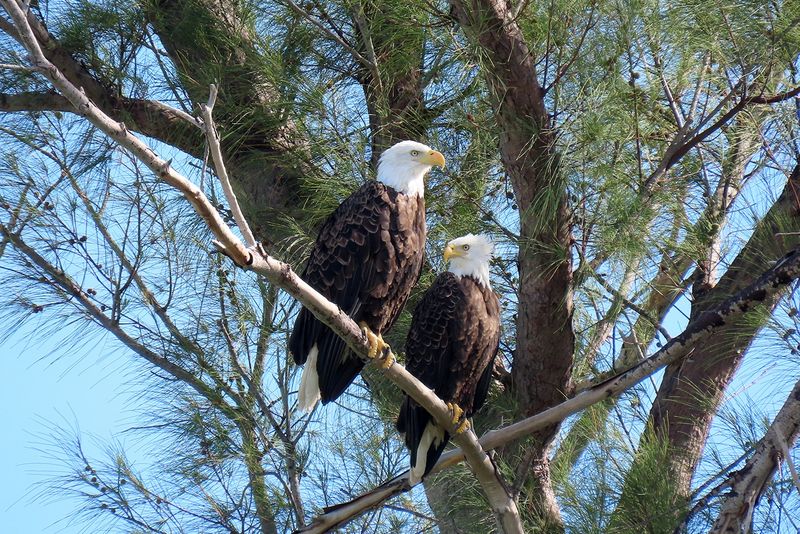
Distance is your best friend. Federal guidelines generally suggest keeping a buffer of about 660 feet between many activities and an active nest during nesting season.
That number comes from the National Bald Eagle Management Guidelines used by the U.S. Fish and Wildlife Service.
Distances can change based on the activity and the setting. If a similar activity already happens closer to the nest, such as an existing road or home, the recommended buffer may be smaller in some cases.
Everyday life near your house usually continues as normal.
Mowing, gardening, and regular use of your yard are often fine, especially if the birds chose the site knowing those activities already happen. New construction, clearing land, or bringing in heavy equipment is where questions tend to come up.
Timing matters as much as distance. In Florida, guidelines focus most on the nesting period from fall through spring, when eggs and young are most sensitive to disruption.
Watch the birds for clues while you work outside.
Repeated alarm calls, flushing off the nest, or circling overhead may mean you are too close. Back off and give them room, then reach out to the U.S.
Fish and Wildlife Service for advice before planning bigger projects.
6. Trimming Or Removing A Nest Tree May Require Federal Permission
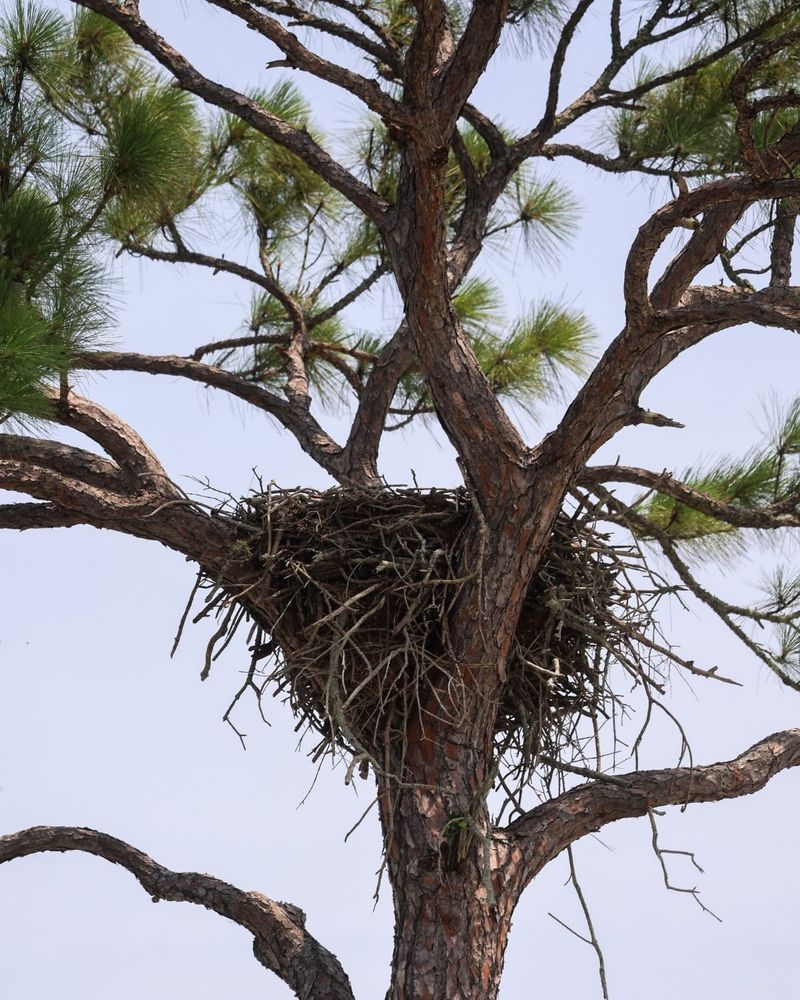
Grab the phone before you grab the saw. A nest tree is not like other trees on your property, even when it sits squarely in your yard.
Removing a bald eagle nest, or the tree holding it, generally requires a federal permit from the U.S. Fish and Wildlife Service.
That rule can apply even when the nest looks empty in summer. Since pairs often return, an unused-looking nest may still be protected as part of an active territory.
Trimming raises similar concerns.
Cutting limbs close to the nest, or doing loud work under the tree during nesting season, could count as disturbance. Light yard care far from the trunk is usually less of an issue, but specifics depend on your situation.
Safety problems do come up sometimes, like a leaning or storm-damaged tree near a house. In those cases, contact the agency to talk through options rather than acting on your own.
Permits are reviewed case by case, and approval is not automatic.
Hiring a certified arborist who has worked around eagle nests in Florida can help you plan. Ask them to coordinate with wildlife officials, keep written records of all guidance you receive, and schedule any approved work outside the nesting season when possible.
7. Local EagleWatch Volunteers Welcome Reports Of New Nests
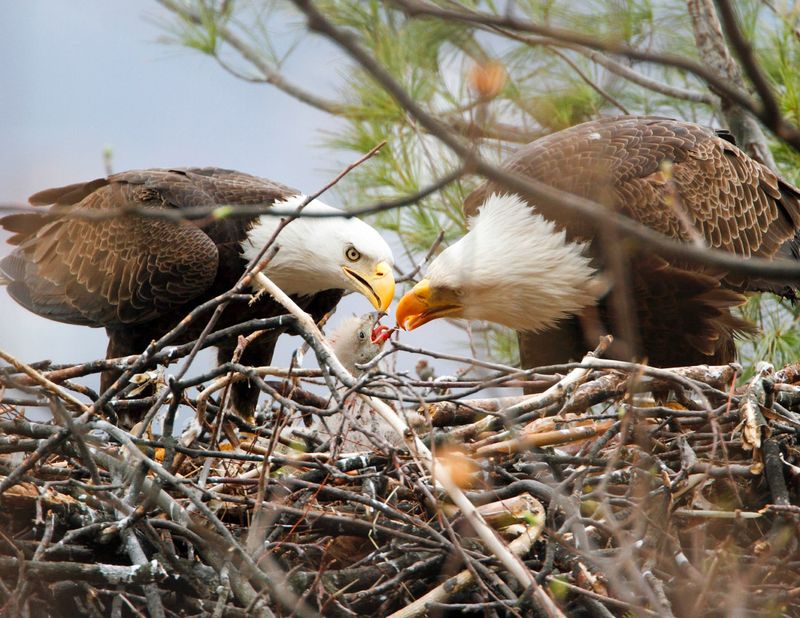
You do not have to keep this discovery to yourself. Audubon Florida runs a program called Audubon EagleWatch, and its volunteers track eagle nests across much of the state.
Reporting a new nest helps fill gaps in what wildlife groups know about where eagles are breeding.
Volunteers usually watch assigned nests from public spots during the season. They record things like adult behavior, the number of chicks, and possible threats such as nearby construction.
Getting started is fairly simple.
Visit the Audubon Florida website to find the EagleWatch reporting page or contact information. Share the nest location, the tree type, and any notes or photos you took from a safe distance.
Program details and coverage areas can change, so check current information online before you report.
Some homeowners end up joining as volunteers themselves after spotting a nest. Training is typically provided, and the work mostly involves patient watching and careful note-taking.
Neighbors may get curious once word spreads, which is natural. Encourage them to view from a distance, keep the exact spot quiet on social media if possible, and treat the nest as something the whole street can enjoy watching season after season.