Want Fewer Mosquitoes In A Florida Garden? Attract More Purple Martins
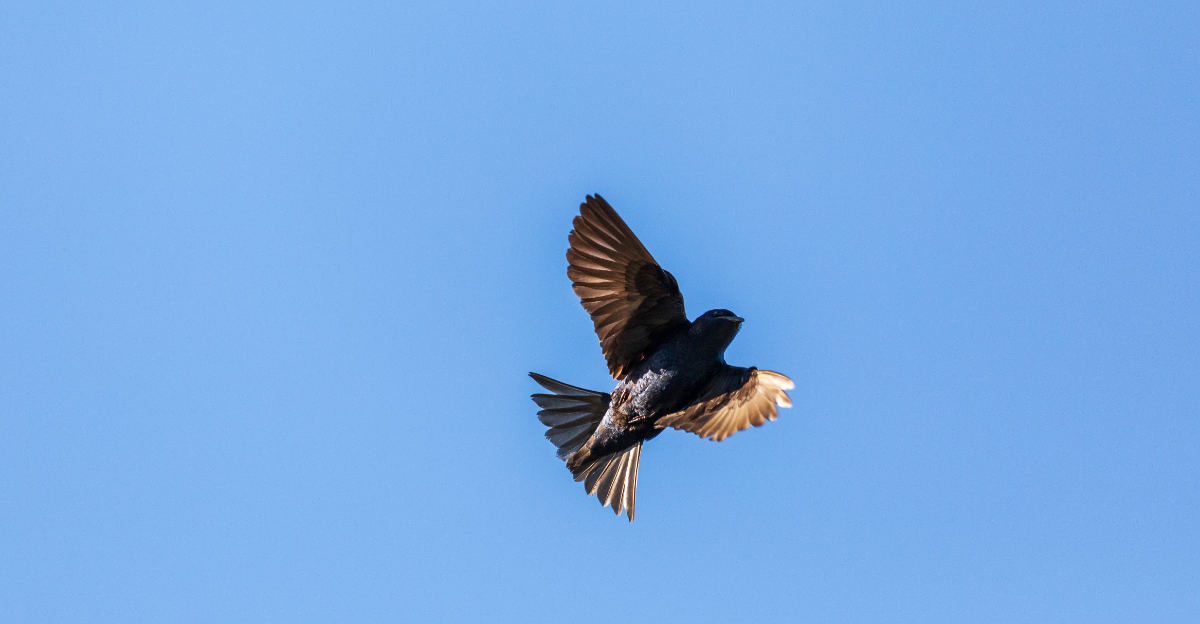
You keep spraying, swatting, and lighting candles, and Florida’s mosquitoes still show up the next evening anyway. Here’s a quieter fix that doesn’t involve chemicals: put up housing for purple martins and let nature take over some of the work.
These birds spend their days hunting flying insects across your yard’s airspace, and mosquitoes are part of what they pick off. They won’t wipe out your mosquito problem alone.
No single bird does that. But a resident colony adds one more layer of defense working for free, all day, without a single spray can.
The catch is getting them to stay. Martins need real housing, not just any birdhouse, and specific conditions before they’ll settle in Florida yards.
Get that part right, and your yard gains a long-term tenant that actually earns its keep.
1. Put More Mosquito Eaters In The Sky
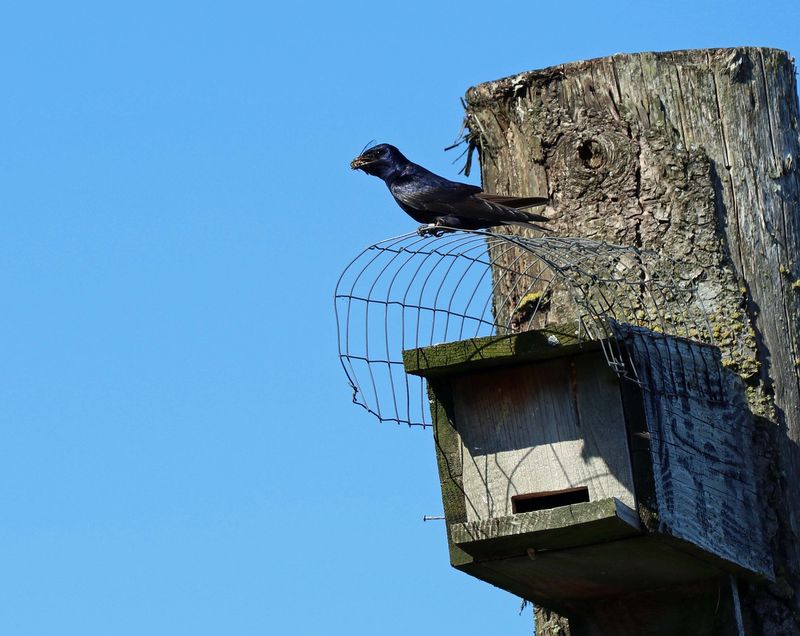
Watching a large swallow snap an insect out of thin air is one of the more satisfying sights a backyard can offer. Purple Martins, Progne subis, are aerial insectivores, meaning they catch all of their food while airborne.
They do not hop along the ground pecking at seeds. Every meal is caught in flight.
Mosquitoes are among the flying insects martins may catch during a foraging run. Researchers and ornithologists have documented mosquitoes in martin stomach samples, so the connection is real.
However, martins also pursue beetles, flies, moths, wasps, winged ants, and dragonflies. Mosquitoes are one item on a long list, not the headline act.
Adding a martin colony to a Florida yard introduces an aerial predator that works the airspace above your lawn. It consumes a wide variety of flying insects throughout the day.
The mosquito-eating benefit is genuine, even if it is modest and hard to measure precisely.
No single bird species can police a mosquito population on its own. But an active colony sweeping overhead still puts real pressure on the local insect supply.
For anyone building a wildlife-friendly garden, that is a worthwhile contribution. Martins earn their place through consistent, enthusiastic aerial hunting, not just through the occasional mosquito they happen to intercept.
2. Turn Flying Insects Into A Backyard Food Supply
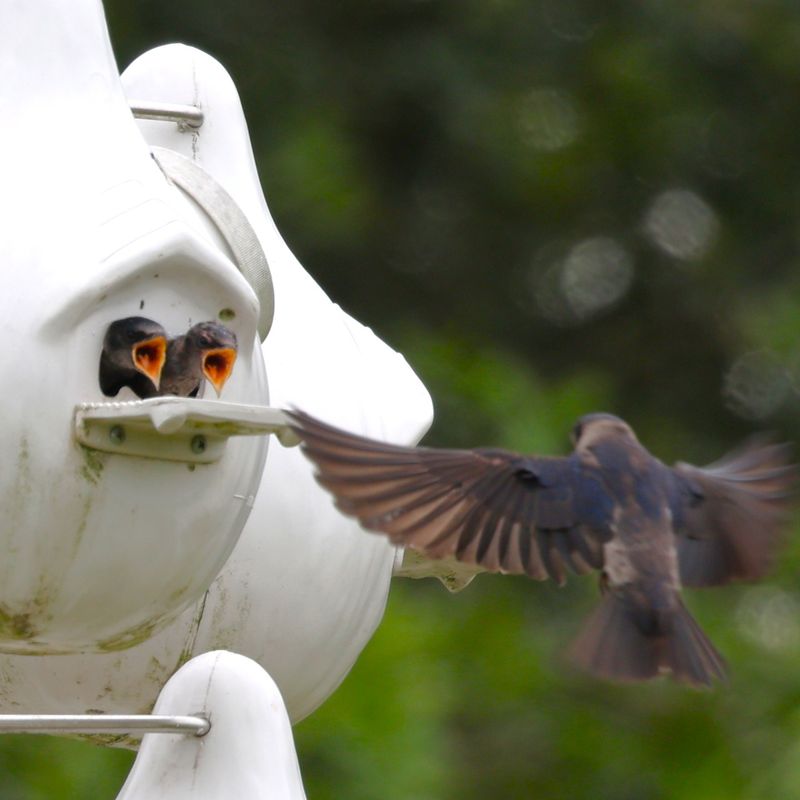
A surprising detail about Purple Martins is just how varied their diet really is. Studies of martin stomach contents have found dragonflies, damselflies, beetles, flies, moths, grasshoppers, and wasps, among other insects.
Cornell Lab of Ornithology notes that martins feed almost entirely on large flying insects. Dragonflies are a particular favorite.
That broad appetite makes a yard with active insect life a genuine resource for a foraging colony. Martins do not work just one patch of sky.
They range widely, sometimes covering several miles in a single feeding session. Your yard becomes part of a much larger aerial feeding territory.
Not every flying insect in a garden is unwanted. Pollinators, decomposers, and predatory insects all play useful roles.
Martins are not selective in ways that protect your favorite beneficial bugs, so a healthy, insect-rich landscape supports them best overall.
Your Florida Garden Changes Every Week. Your Plan Should Too.
Gardening in Florida changes quickly throughout the season. Every Friday you’ll receive a simple weekly plan showing exactly what to plant, prune, fertilize, harvest, and protect so you never miss the right timing.
A yard with active insect life is the kind of place martins may prefer to hunt. Native flowers, fewer hard surfaces, and some leaf litter can help support a richer insect community.
That insect community, in turn, keeps foraging martins returning to the area. A diverse garden can support a healthy martin colony.
More insects in the air provide more reasons for these birds to remain nearby.
3. Give Purple Martins The Open Space They Love
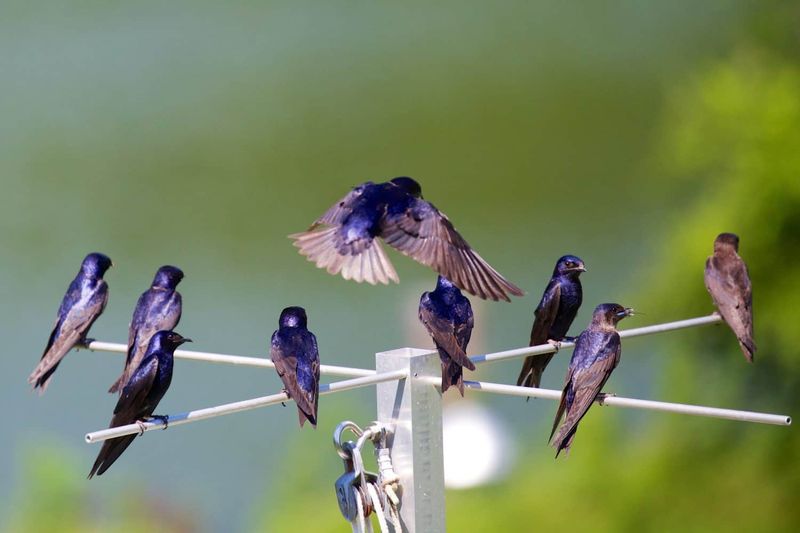
An empty stretch of sky matters more to Purple Martins than almost anything else. These birds are built for speed and maneuverability in open airspace.
They feel exposed and vulnerable when tall trees or dense vegetation crowd their flight paths and nesting areas.
The Purple Martin Conservation Association recommends placing martin housing in the most open spot available. Ideally, the site should have open sky in all directions.
Nearby trees should be at a meaningful distance from the housing pole, not pressing right up against it.
Florida properties with large open lawns, cleared fields, or wide water frontage tend to be well-suited for martin colonies. A small, heavily wooded backyard surrounded by tall oaks on every side is a tougher sell for these birds.
That does not mean the property is useless for wildlife, just that martins may prefer a neighbor with more open ground.
Assessing your own yard honestly before investing in housing saves time and frustration. Walk the property and look up.
Is there a good stretch of unobstructed sky? Is there a spot where the pole would stand clear of the tree canopy?
If the answer is yes, you have something to work with. If every angle is blocked, consider whether a community park, a farm nearby, or another open location might be a better site to support.
4. Raise The Right Housing In The Right Spot
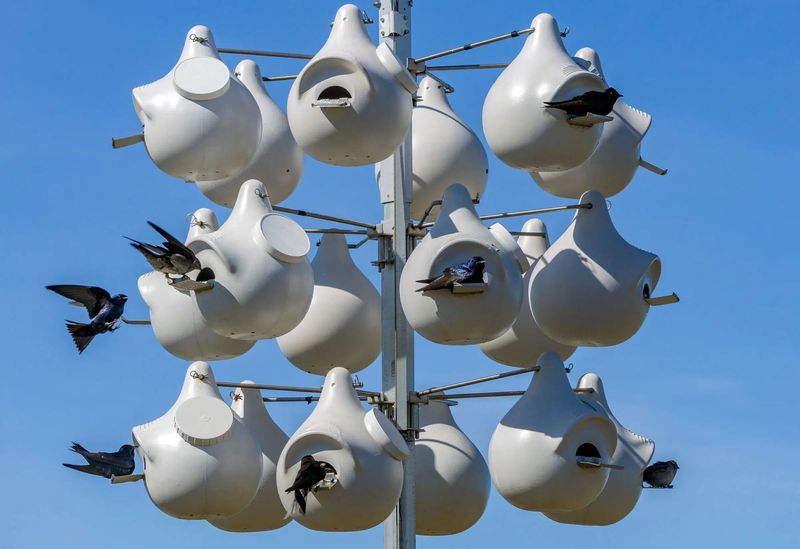
A poorly placed decorative birdhouse sitting under a shade tree will not attract Purple Martins. Eastern populations of Progne subis have become almost entirely dependent on human-provided nesting structures.
That means the housing you choose and where you put it really does matter.
The Purple Martin Conservation Association recommends housing that can be safely lowered for monitoring and cleaning. A fixed, inaccessible box mounted permanently at the top of a pole makes proper management nearly impossible.
Telescoping or rope-pulley systems are widely recommended for that reason.
Martin houses should offer multiple compartments, since martins are colonial nesters that prefer company. Single-unit decorative boxes rarely attract them.
Gourd systems, either natural or plastic, are also popular and well-accepted by martins across much of their range.
Pole height matters too. The Purple Martin Conservation Association generally recommends housing be mounted roughly 10 to 20 feet above the ground, though exact placement depends on the site.
Housing should be placed in the open, away from trees and structures that could interfere with approach and departure. In Florida, breeding can begin early.
Clean and inspect housing before late-winter scouts arrive to improve the chance of attracting prospecting birds. Getting the setup right from the start is far more productive than trying to fix problems after the season begins.
5. Keep Their Flight Paths Clear And Easy
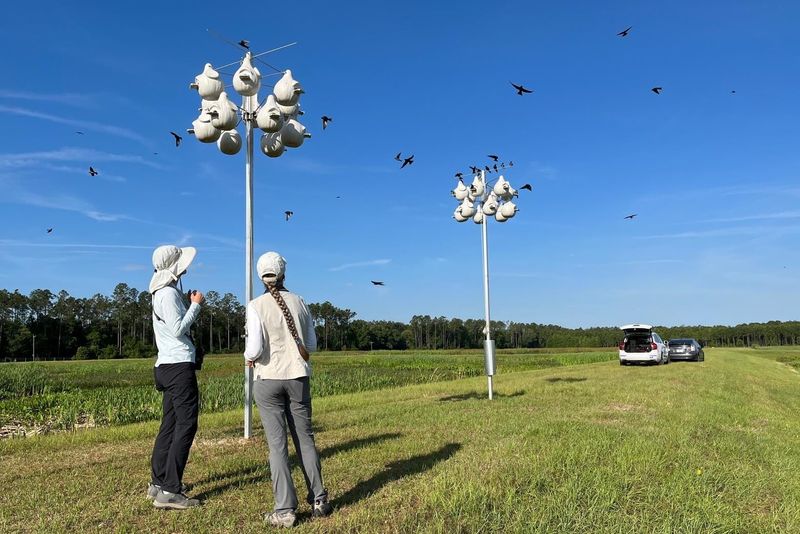
Even a well-chosen open yard can have a problem spot. A single tall tree positioned directly in line with the martin house entrance can make the site harder for birds to approach confidently.
The airspace immediately surrounding the housing is just as important as the general openness of the yard.
The Purple Martin Conservation Association advises keeping housing a recommended distance from the nearest tall trees or large structures. Their guidance generally suggests at least 30 to 40 feet from trees or buildings, though more distance is typically better.
Always verify current PMCA recommendations directly, since site conditions vary.
Utility lines, fences, and dense shrubs near the pole can also create obstacles. Martins fly fast and prefer a clean, predictable approach.
Obstructions near the housing can make a site feel less safe and may cause prospecting birds to move on.
Choosing an existing open site is smarter than trying to force a cluttered location to work. If your yard has one corner that is genuinely clear while the rest is shaded by a mature canopy, that open corner deserves a serious look.
Clearing a few low shrubs near the pole is reasonable. Removing large, established trees just to attract these birds is not a trade worth making.
Work with the landscape you have, and position the housing where the air is already clear and accessible.
6. Skip Broad Sprays That Shrink Their Food Supply

A colony of aerial insectivores needs a sky full of flying insects to survive. Routine broad-spectrum pesticide spraying across an entire yard can reduce that insect supply significantly.
For a bird that eats nothing but airborne insects, a depleted food supply is a serious problem.
Mosquito fogging services and wide-area insecticide applications can suppress many kinds of insects at once, not just the ones causing problems. Beetles, moths, and flies that martins actively pursue may all be affected.
A yard that has been heavily sprayed offers less reason for a martin colony to stay close.
That does not mean every pest problem should go unaddressed. Targeted treatments, applied carefully to specific problem areas, are far less disruptive to the broader insect community than blanket sprays.
Integrated pest management approaches focus on treating where problems actually exist rather than treating everywhere as a precaution.
A wildlife-friendly garden is not supposed to be insect-free. Some level of insect activity is exactly what keeps insect-eating birds returning.
Reducing unnecessary pesticide use protects pollinators, supports natural pest predators, and keeps the food supply intact for species like Purple Martins.
Florida gardeners who want to host martins long-term should think carefully before scheduling routine spray treatments over the entire property.
Targeted, thoughtful pest management and a thriving martin colony are not opposites. They can coexist with a little planning.
7. Build A Yard That Keeps A Martin Colony Coming Back
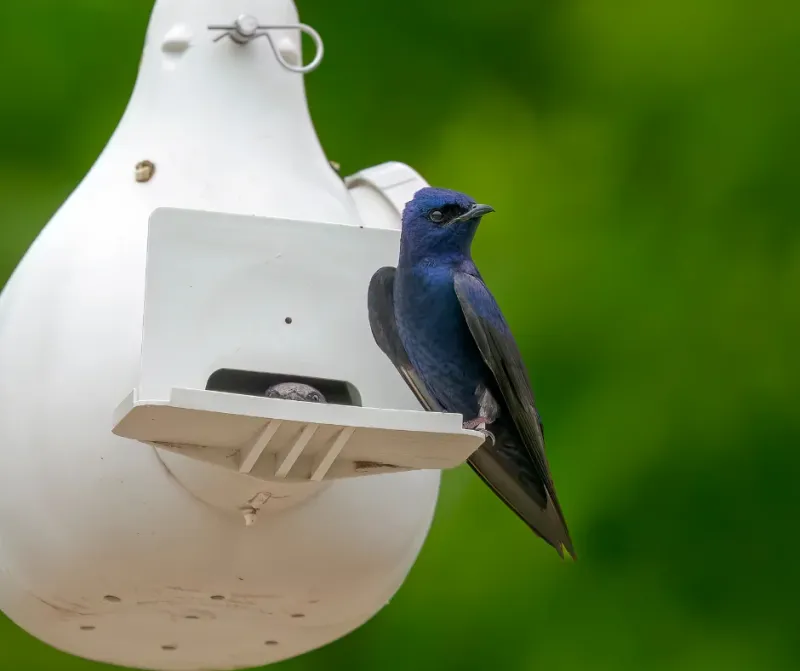
An active martin colony does not run itself. Putting up a house and walking away is not a management plan.
Successful martin landlords, as enthusiasts call themselves, stay engaged throughout the season and prepare carefully between seasons.
Monitoring matters because other cavity-nesting birds, particularly European Starlings and House Sparrows, may try to take over martin compartments. Both species are non-native and are not protected under the Migratory Bird Treaty Act.
Removing their nests from martin housing is legal and strongly encouraged by the Purple Martin Conservation Association.
Cleaning compartments after the breeding season removes parasites and debris that could affect next year’s nesting success. Well-maintained housing at a reliable site builds a track record that returning birds recognize.
Purple Martins show strong site fidelity, meaning birds that nested successfully at a location are likely to return the following year.
New colonies take patience to establish. First-year housing may attract scouts without immediately producing a nesting colony.
Attraction tools such as decoys and recorded martin dawn songs can help draw prospecting birds when used appropriately. The Purple Martin Conservation Association provides detailed guidance on these methods.
Stick with a well-managed site for multiple seasons, and the chances of establishing a stable, returning colony improve considerably. The birds reward consistent, attentive hosting.
8. Pair Purple Martins With Smarter Mosquito Control
Bringing Purple Martins to a yard is a genuinely satisfying way to add an aerial insect hunter to the landscape. Their mosquito-eating contribution is real, even if it is one piece of a larger picture rather than a standalone solution.
Giving them proper credit means neither overstating nor dismissing what they do.
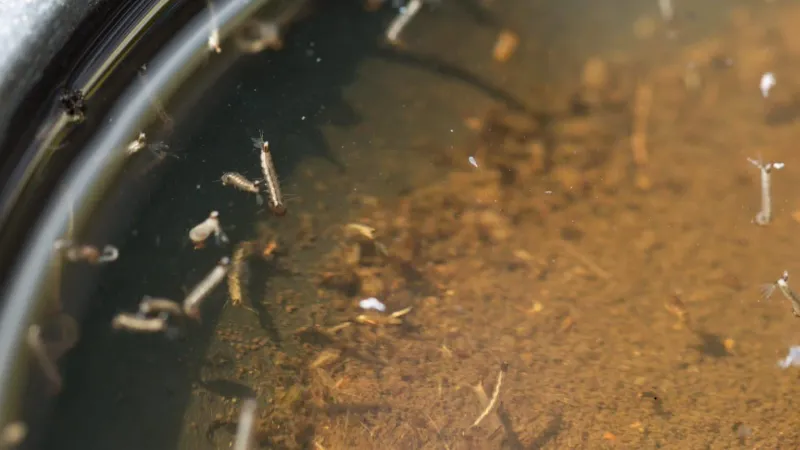
Proven mosquito management starts with source reduction. Mosquitoes need standing water to breed, and eliminating that water is the most direct way to reduce local populations.
UF/IFAS Extension consistently emphasizes that removing standing water from containers, clogged gutters, buckets, saucers, and toys can make a measurable difference.
Even small amounts of water left sitting for several days can produce mosquitoes. Birdbaths should be emptied and refilled regularly.
Ornamental ponds can be stocked with mosquitofish or treated with Bacillus thuringiensis israelensis, a biological larvicide that targets mosquito larvae without harming other wildlife.
A yard that manages standing water carefully and also hosts an active martin colony is doing two smart things at once. The birds work the air above while source reduction addresses where mosquitoes actually begin.
Neither approach cancels the other out. Florida summers will always bring mosquitoes, but a yard with fewer breeding sites and an active martin colony overhead is a more comfortable place to spend an evening.
That combination, practical and wildlife-friendly, is worth building toward.