Strange Smelly Growths In Georgia Mulch Can Appear During Damp Fall Weather
A foul smell drifting up from a flower bed after a rainy stretch can send you searching the yard for something rotting.
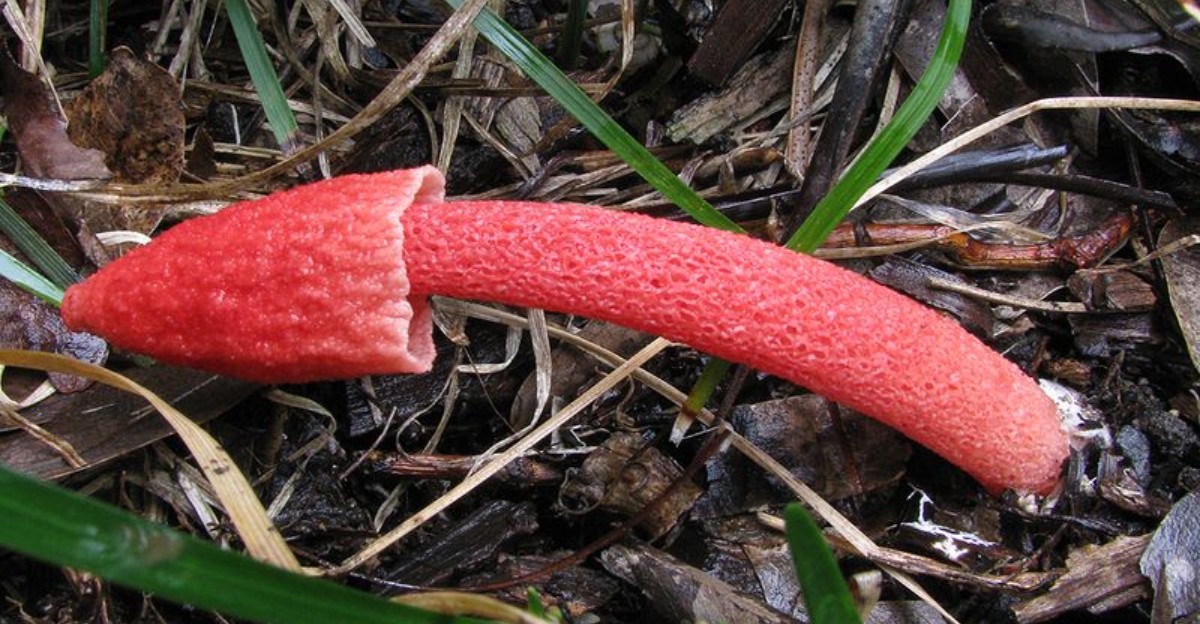
Sometimes the source turns out to be a strange growth poking up through the mulch, often shaped like a finger or a small lattice ball.
Growths like this are fungi that feed on decaying wood chips and organic matter. Their smell attracts flies, which help spread spores to new spots.
Damp fall weather and fresh layers of mulch create the conditions they like best.
They can look alarming, but they generally do not harm plants. Most disappear on their own within a few days, leaving no trace.
Many Georgia gardeners simply scoop them out with a shovel and toss them once the smell becomes too much to ignore.
1. That Rotten Odor In The Flower Bed May Not Be Garbage
Check the trash cans first, and you may find they are perfectly clean. A smell like spoiled meat drifting from a mulched bed often points to something growing, not something tossed out.
In many cases, that odor comes from stinkhorn mushrooms, a group of fungi that commonly grow in decaying organic material such as wood mulch.
Homeowners in Georgia tend to notice them most after a stretch of rainy, mild weather. Fall can bring just the right mix of moisture and warmth, though they can also pop up in spring and summer.
Look closely at the mulch surface near the smell.
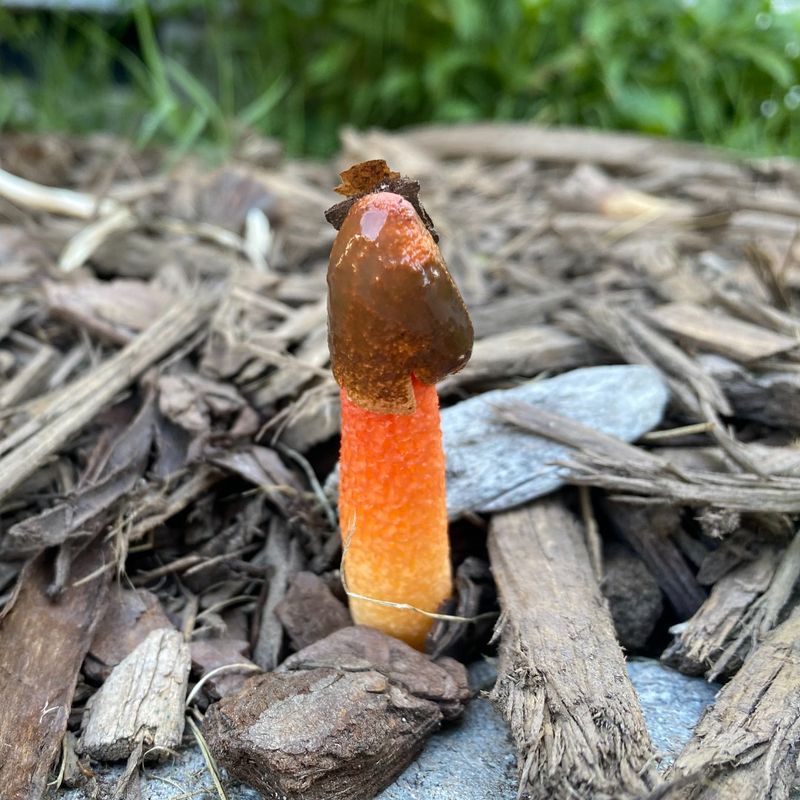
You might see a spongy stalk, a reddish finger, or an orange net-like ball. Many types have a dark, slimy coating near the top, and that coating is the main source of the stink.
Each mushroom usually lasts only a day or two before collapsing. Even so, new ones can appear in the same bed for weeks if conditions stay damp.
So before blaming a neighbor or a buried critter, take a walk through your beds with your nose leading the way. Spotting the fungus early helps you decide what to do next, and it often turns a smelly mystery into a simple garden fact.
2. Egg Like Lumps In The Mulch Come Before The Odd Shapes
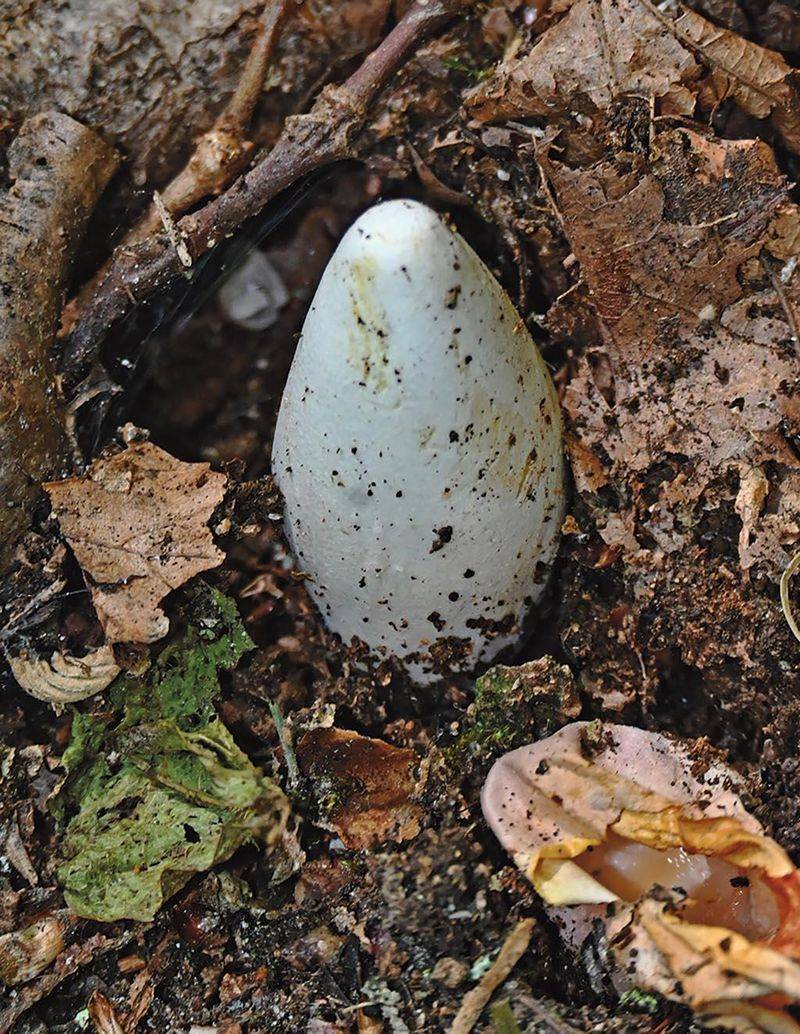
Picture a small white egg half buried in bark chips. Before any spike or cage shows up, stinkhorns start out looking exactly like that.
Gardeners often call this stage the egg, and it can be soft and rubbery to the touch.
Inside, the young mushroom sits folded up and wrapped in a jelly-like layer. A thin white cord called mycelium often connects the bottom of the egg to the mulch below.
Size can vary, but many eggs are roughly the size of a large marble or golf ball. Some look gray or pinkish depending on the type.
Once conditions are right, the stalk can push out of the egg surprisingly fast, sometimes within a few hours.
Finding eggs gives you a real advantage. Removing them before they open can cut down on the smell, since the odor starts once the slimy cap is exposed.
Your Georgia Garden Changes Every Week. Your Plan Should Too.
Gardening in Georgia changes quickly throughout the season. Every Friday you’ll receive a simple weekly plan showing exactly what to plant, prune, fertilize, harvest, and protect so you never miss the right timing.
Wear gloves and lift the egg along with a bit of the surrounding mulch.
Out here in Georgia, eggs may show up in clusters after several rainy fall days. Keep in mind that more can form later, because the fungus itself stays alive in the mulch even after you pull the visible parts.
3. Spikes Columns And Lattice Shapes Can All Turn Up
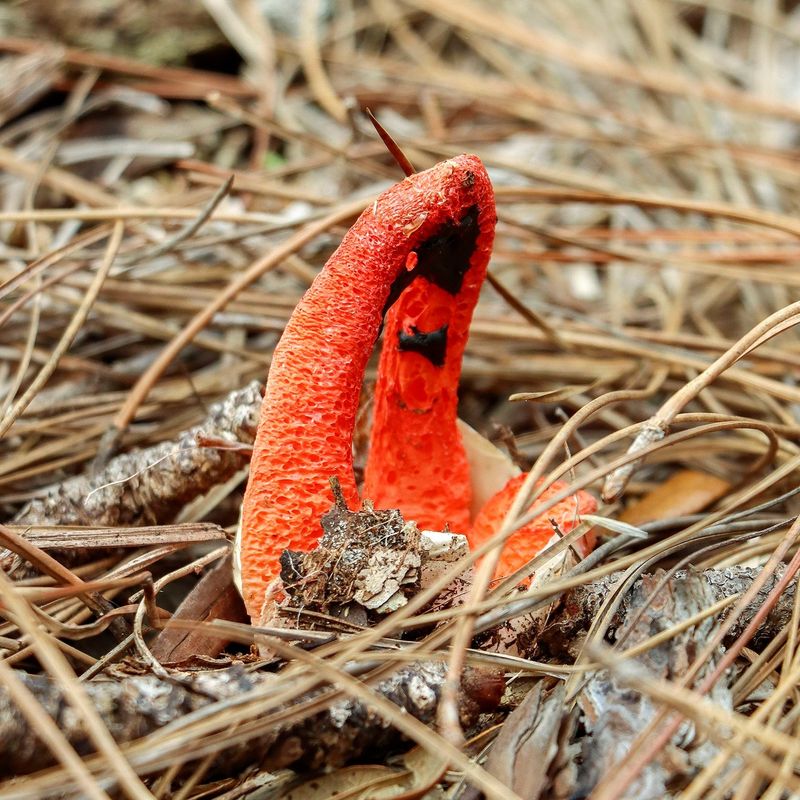
Strange barely covers it. Stinkhorns come in shapes that look more like sea creatures or sculptures than mushrooms.
One common form is a single upright spike, often pinkish or orange with a dark, slimy tip. Elegant stinkhorns and dog stinkhorns fit this description and show up in many Southern yards.
Columned stinkhorns look quite different, with a few spongy orange arms joined together at the top.
Then there are the lattice types. These form a round, hollow cage of red or orange webbing, and they tend to get the most double takes from neighbors.
Gardeners in Georgia may also run into the lizard’s claw stinkhorn, which has several short, reddish fingers. Colors can range from pale white to bright scarlet.
Exact identification can be tricky, even with photos.
If you want a sure name, your local county Extension office can help. Snap clear pictures from the side and from above, and note what kind of mulch they grew in.
Whatever the shape, nearly all of them share the same smelly slime. That gooey part sits on the tip, inside the cage, or along the arms.
Seeing the slime is a strong clue you are dealing with a stinkhorn rather than another mushroom.
4. The Smell Lures Flies That Carry Spores Away
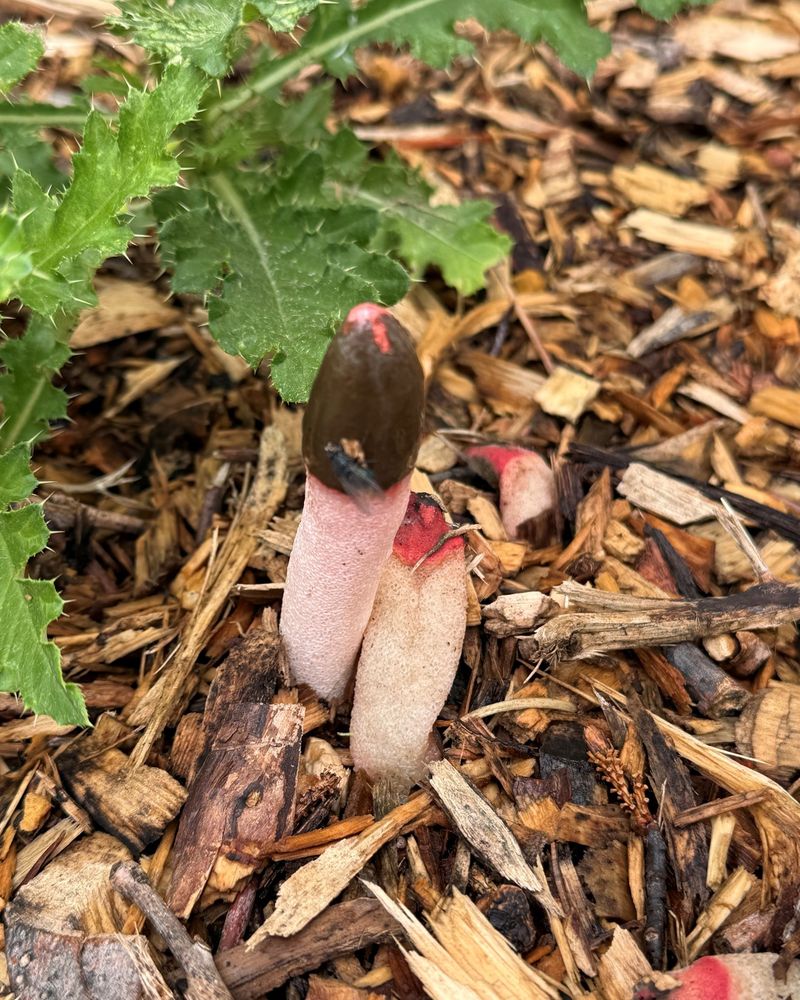
Why would any living thing want to smell like rotting meat? For a stinkhorn, that awful scent is the whole plan.
Most mushrooms release spores into the air and let the wind do the work.
Stinkhorns take another route. Their spores sit inside that dark, sticky slime, called gleba, and the strong odor draws in flies looking for a meal.
As the flies feed, spores cling to their legs and bodies. Some spores also pass through the insects and land wherever the flies go next.
Watch one for a few minutes on a warm afternoon, and you may see a small crowd of buzzing visitors.
Once the slime is cleaned off, the smell usually fades quickly. What remains is a pale, spongy stalk that soon wilts and falls over.
Fall in Georgia often stays mild enough for flies to stay active, which helps explain why stinkhorns can keep spreading during damp autumn weeks.
Flies near your beds do not mean anything else is wrong. Still, if the buzzing bothers you near a patio or door, removing the mushrooms early is the simplest fix, since fewer slimy tips mean fewer reasons for flies to hang around.
5. Wood Mulch Breaking Down Feeds The Fungus Below
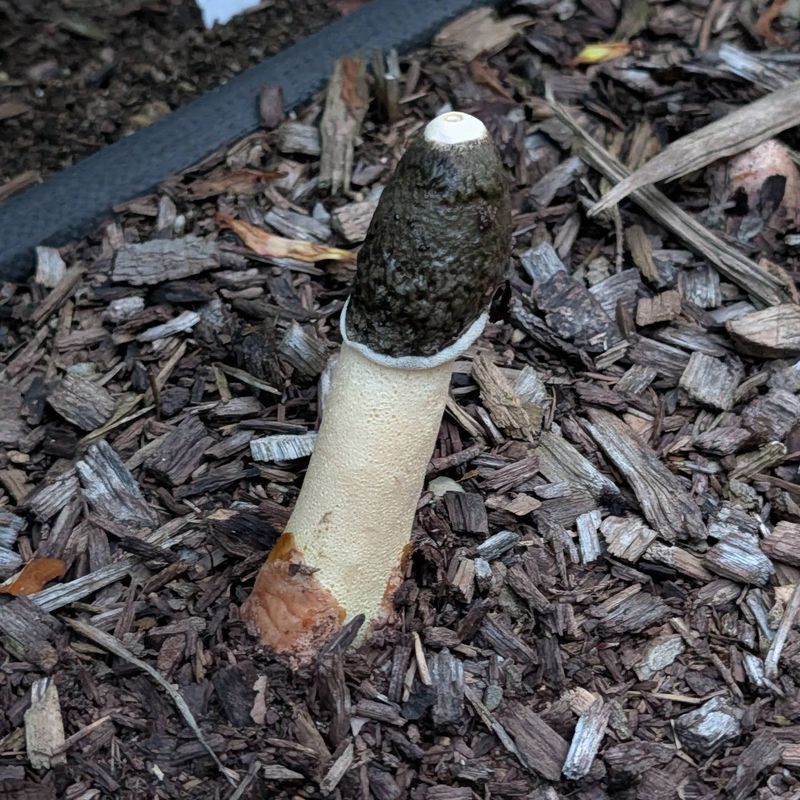
Pull back a handful of old mulch and you might spot fine white threads. Those strands are the main body of the fungus, quietly feeding where you cannot see.
Stinkhorns are decomposers, which means they live by breaking down wood and other plant debris.
Shredded hardwood, wood chips, and pine bark all give them plenty to eat. Mulch that stays moist for long periods tends to support more fungal activity.
Damp fall weather in Georgia can keep beds wet long enough for the hidden fungus to send up its eggs. A dry spell, on the other hand, often slows things down.
Some gardeners switch mulch types hoping to stop them, but results vary.
No mulch made of wood is fully free of fungi. Pine straw or inorganic options like gravel may host fewer stinkhorns, though they come with their own tradeoffs for soil health and plant needs.
Raking or turning mulch can help it dry out faster after heavy rain.
Also check that sprinklers are not soaking beds more than plants need. Cutting back extra water may reduce the conditions fungi enjoy.
Keep in mind the fungus is doing useful work, turning old mulch into organic matter that can eventually help improve your soil.
6. Garden Plants Growing Nearby Aren’t Harmed By These Fungi
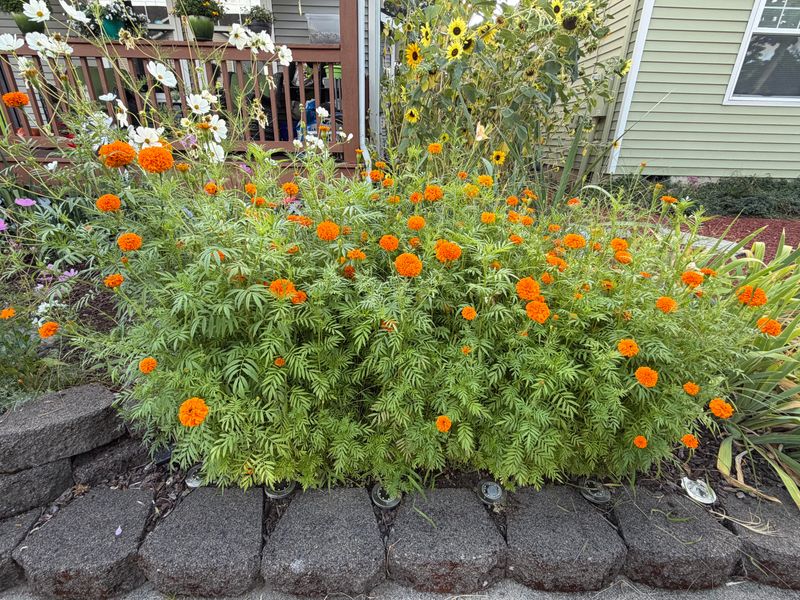
Relax, your azaleas are fine. Stinkhorns feed on decaying wood, not on living roots, stems, or leaves.
Extension specialists generally describe them as harmless to landscape plants. They do not cause plant disease, and they are not a sign that your shrubs or flowers are sick.
If a plant near a stinkhorn looks unhealthy, something else is likely going on.
Drainage problems, insects, root issues, or weather stress could all play a role. Treat that plant as a separate question rather than blaming the mushroom sitting next to it.
Fungicide sprays are not usually recommended for stinkhorns.
Since the fungus lives deep in the mulch, sprays tend to do little to stop new mushrooms. They can also affect helpful organisms in the soil, so most Georgia gardeners simply wait them out or pick them off.
Pets and kids are a different matter worth watching. Stinkhorns are not considered a major poisoning risk, but eating any wild mushroom is unwise, and some dogs are drawn to the smell.
Keep curious pets away and remove mushrooms in areas where children play. Beyond that, the fungus can be left alone, and your plants will carry on growing just as they were before.
7. Bagging Them With Gloved Hands Cuts Down On The Smell
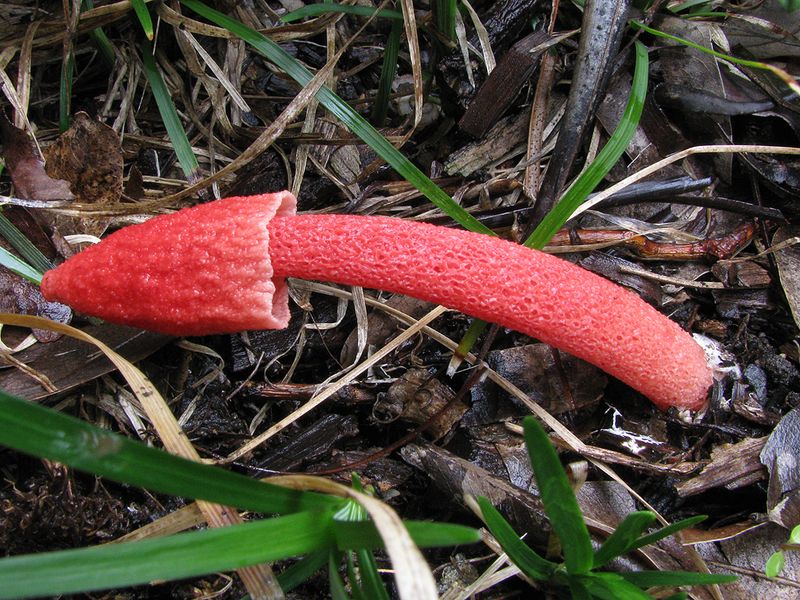
Grab gloves, a plastic bag, and a small trowel. That simple kit handles most stinkhorn cleanups in just a few minutes.
Start by slipping the bag over the mushroom like a glove, then pull it up gently.
Try to include the egg base and a little mulch underneath. Leaving the slimy tip behind can keep the odor lingering in the bed.
Tie the bag shut tightly and place it in your outdoor trash can.
Avoid tossing stinkhorns into a compost pile, since that could spread spores to other parts of your yard. Mowing over them or kicking them around may also smear the slime and spread the smell.
Wash your gloves or hands afterward, because the goo can cling and smell for a while.
Checking beds every day or two during rainy fall weeks helps you catch eggs before they open. Early removal often means less odor and fewer flies near the house.
Patience matters here too. Across Georgia, stinkhorns usually fade as cooler, drier weather settles in, though they may return after future wet spells.
Removing them will not end the problem for every season, but it keeps your yard smelling much better while the fungus finishes its work underground.