A Destructive Invader Is Spreading Across Virginia, Check Your Boxwoods Now
Your boxwoods might be feeding uninvited dinner guests right now. Look closely, because the damage often starts out of sight.
A small moth with a big appetite has reached Virginia, and it craves one plant above all others. Those tidy hedges lining walkways and framing old farmhouses are its favorite meal.
The box tree moth’s caterpillars can strip a healthy shrub faster than most people expect. Officials confirmed it in the northern part of the state in 2025 and have been working to slow its spread ever since.
Sharp-eyed gardeners are a big part of that effort. Spotting early signs can protect your yard and your neighbors’ prized hedges too.
Knowing what to look for, who to call, and what not to do makes all the difference. A quick walk around your shrubs this week could catch trouble before it spreads.
It First Turned Up In Clarke And Loudoun Counties
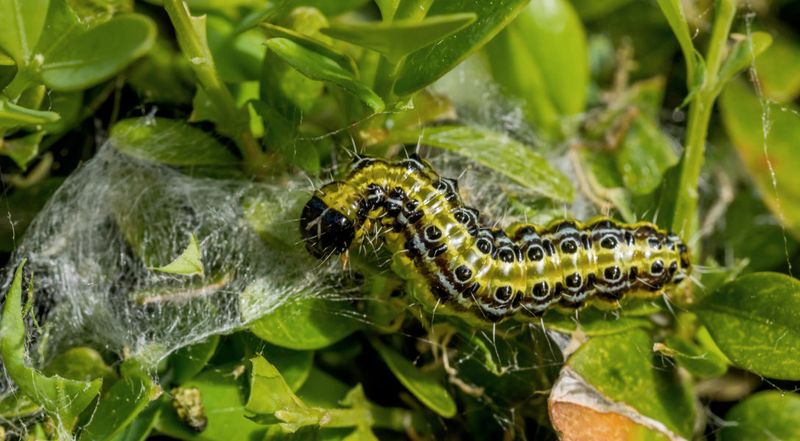
Summer 2025 brought an unwelcome surprise to northern Virginia gardens. State inspectors confirmed box tree moths in Clarke County on July 15 of that year.
Loudoun County reported its own finds around the same time. Crews from the Virginia Department of Agriculture and Consumer Services treated several sites in July and August.
Both counties sit in a region famous for historic estates and formal gardens. Many of those properties feature boxwoods that have grown for decades, sometimes even centuries.
Losing those old shrubs would be a heartbreaking blow. Some heritage boxwoods are older than the homes they surround.
The moth itself is not native to North America. It originally comes from East Asia and reached Europe in the mid-2000s.
Since then, it has spread through Canada and several northern U.S. states. Nursery shipments are often blamed for carrying it to new places.
So why should someone in Richmond or Roanoke care about a few counties up north? Insects rarely respect county lines, and a single infested plant can travel far.
Early detection in a small area gives experts a fighting chance. Quick treatment can help keep a local problem from turning statewide.
Here is a helpful habit worth starting today. Walk past your boxwoods once a week and give them a slow, careful look.
Take photos of anything odd so you can compare changes over time. A phone camera works well for tracking leaf damage week by week.
A Quarantine Now Covers Clarke, Frederick, And Winchester
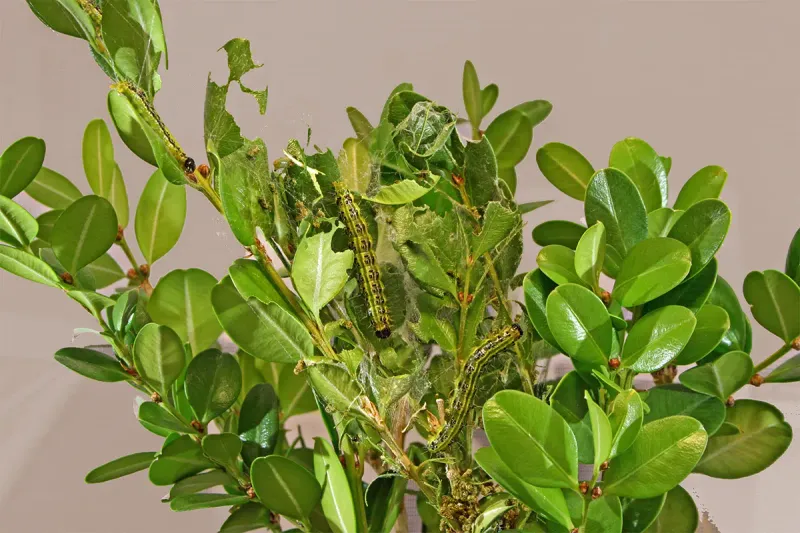
Rules can feel annoying until you see what they protect. On December 3, 2025, Virginia set up an official box tree moth quarantine.
The zone covers Clarke County, Frederick County, and the City of Winchester. Each spot sits in the scenic northern Shenandoah Valley.
A federal quarantine followed on March 31, 2026, matching the state rules. That step means the restrictions carry national weight, not just local ones.
So what does a quarantine actually do? It limits how boxwood plants and their parts leave the area.
Clippings, cuttings, and whole potted shrubs all fall under these rules. Holiday wreaths and garlands may be treated differently, so check with VDACS before sending boxwood greenery out of the area.
Your Virginia Garden Changes Every Week. Your Plan Should Too.
Gardening in Virginia changes quickly throughout the season. Every Friday you’ll receive a simple weekly plan showing exactly what to plant, prune, fertilize, harvest, and protect so you never miss the right timing.
Think of it like a fence around a small fire. Officials want to stop sparks from drifting into fresh territory.
Nurseries and landscapers inside the zone feel the biggest impact. They must follow special steps before shipping plants anywhere else.
Homeowners are affected too, especially during spring cleanups. Tossing trimmings into a truck and hauling them across the county line could spread caterpillars.
Here is a smart move for anyone living in these areas. Bag your boxwood clippings and dispose of them locally instead of moving them away.
Check with your town about yard waste pickup options. Many communities offer guidance on handling plant debris during pest outbreaks.
Quarantine maps can change as new finds appear. Bookmark the VDACS website so you can stay current on any boundary updates.
It Can Pack Up To Five Generations Into A Single Year
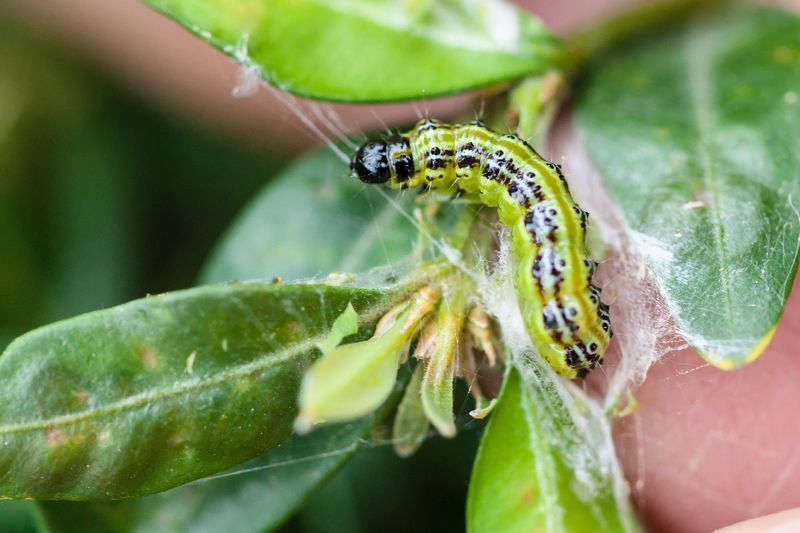
Imagine a family reunion where five generations show up within twelve months. For box tree moths, that is just a normal year.
In cooler places, the moth may manage only one or two generations. Warm, long summers let it squeeze in as many as five.
Speed is the secret behind its success. At about 77 degrees Fahrenheit, a full cycle can take just 33 to 44 days.
That timeline runs from egg hatch to a grown moth laying fresh eggs. Each female can lay hundreds of eggs during her short adult life.
Do the math, and the numbers grow wild very quickly. A small group in May could become a huge crowd by September.
Adult moths are actually rather pretty. Most have silky white wings edged with a shimmering brown border.
Some moths are entirely brown, which can confuse beginners. Both color forms belong to the same species.
Fun fact: adults fly mostly at night and are drawn to porch lights. You might spot one resting near a window before you ever notice caterpillars.
Repeated generations also help the insect spread over larger distances each season. Every new batch of moths can fly to fresh shrubs nearby.
Here is a practical takeaway for busy gardeners. Inspect boxwoods several times from spring through fall, not just once.
Damage might show up in June, vanish briefly, and return in August. Steady checks catch each new wave early.
Hungry Caterpillars Can Strip A Boxwood Bare
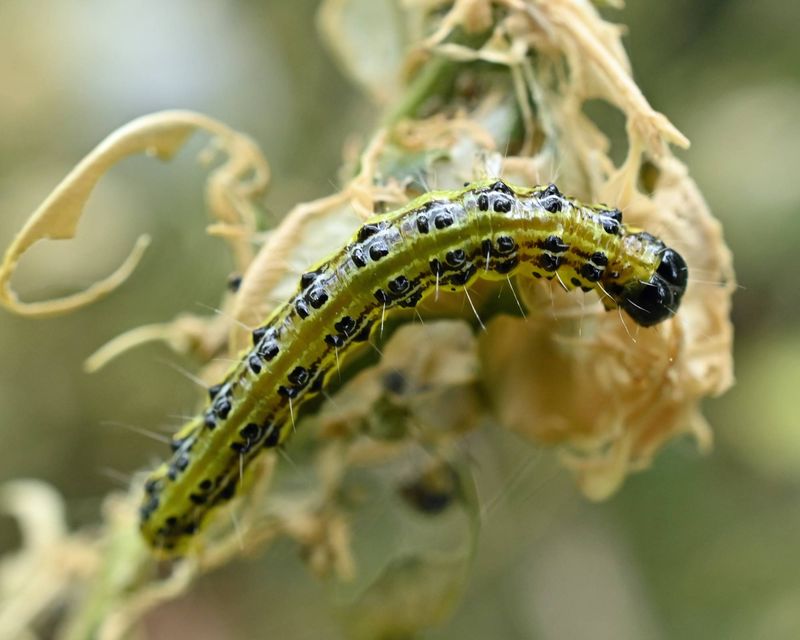
Picky eaters usually frustrate parents, but this one frustrates gardeners. Box tree moth caterpillars feed only on boxwoods and nothing else.
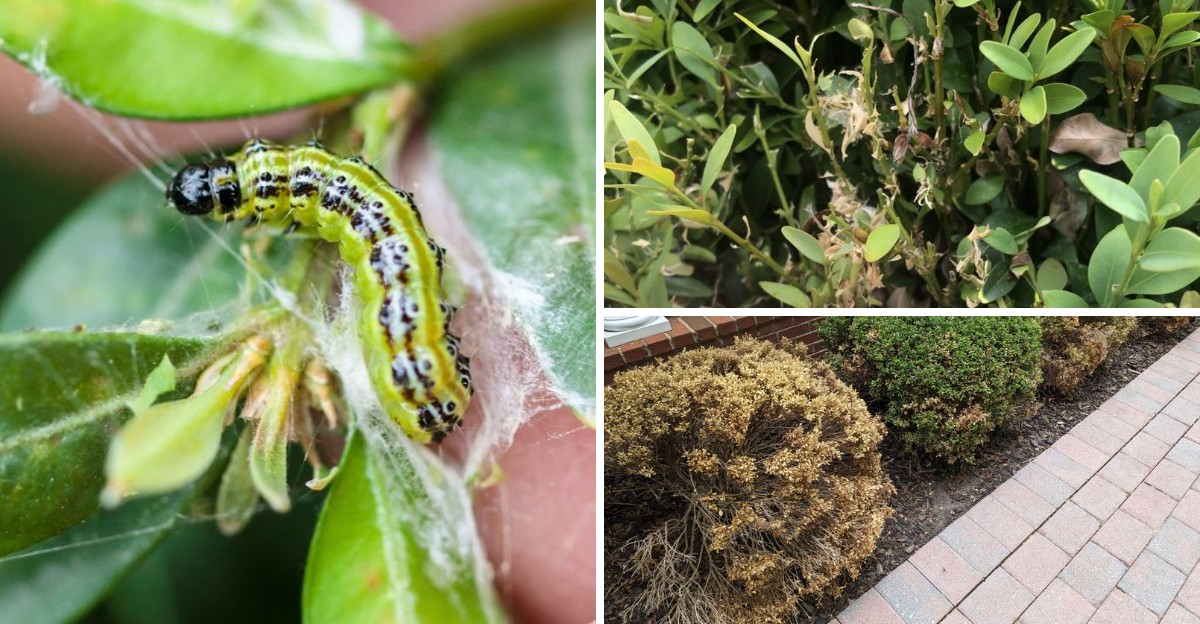
Their appetite is legendary among plant experts. A heavy infestation can leave a full shrub looking like a skeleton of bare twigs.
You can recognize the caterpillars by their bold colors. They are bright green with black stripes, white lines, and shiny black heads.
Fully grown, they reach about one and a half inches long. Younger ones are tiny and easy to miss.
The trouble does not stop when the leaves run out. Hungry caterpillars then move on to the outer bark of the stems.
Bark feeding can girdle a branch, cutting off its water and nutrients. Over time, even large, mature shrubs can decline beyond saving.
Boxwoods grow slowly, which makes this damage especially painful. A hedge that took twenty years to fill in cannot be replaced overnight.
Many homeowners already battle boxwood blight and leafminers. Adding this caterpillar to the list raises the stakes considerably.
Here is a tip worth trying on your next garden walk. Gently part the outer leaves and peek deep inside the shrub.
Caterpillars often feed in the interior first, where damage hides from view. By the time the outside looks rough, the problem may be well advanced.
A flashlight helps on cloudy days. Shine it into the center to spot movement or chewed stems.
Webbing And Chewed Leaves Are Your First Warning Signs
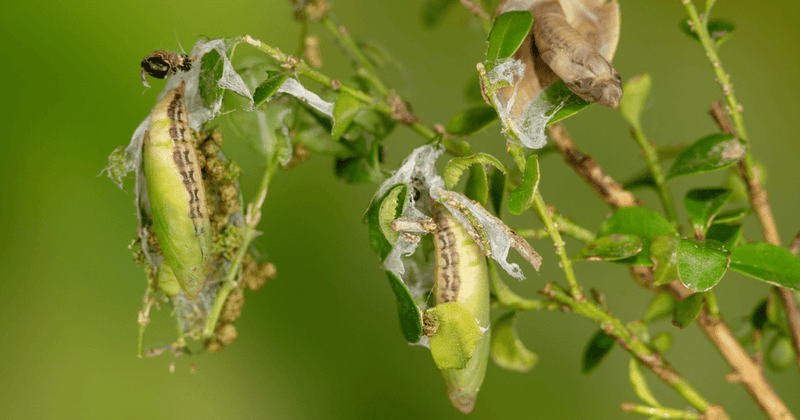
Spiderwebs in a boxwood might seem harmless at first glance. Look closer, though, because box tree moth caterpillars spin silk too.
They use webbing to tie leaves together into cozy feeding shelters. You will often find loose silk strands where they are actively eating.
Leaf damage changes as the caterpillars grow. Young ones scrape the undersides, leaving leaves looking scratched or peeled.
Bigger caterpillars munch whole leaves at once. Sometimes only the thin central vein remains behind.
Brown patches and missing chunks are other red flags. Skeletonized foliage, where leaves look lacy and see-through, is another common clue.
Now for the slightly gross part. Caterpillars leave behind tiny green or greenish-brown droppings called frass.
Frass collects among the leaves or piles up beneath the shrub. Finding little pellets on the mulch is a strong hint something is feeding above.
Here is a handy trick many gardeners use. Hold a white sheet of paper under a branch and give it a gentle shake.
Caterpillars and frass will drop onto the paper and stand out clearly. It takes only a minute per shrub.
Not every web means trouble, of course. Spiders and other insects sometimes build in boxwoods as well.
Still, webbing plus chewed leaves plus frass makes a worrying combination. Snap a clear photo and get an expert opinion before the damage spreads.
Caterpillars Hide In Tiny Silk Cocoons Over Winter
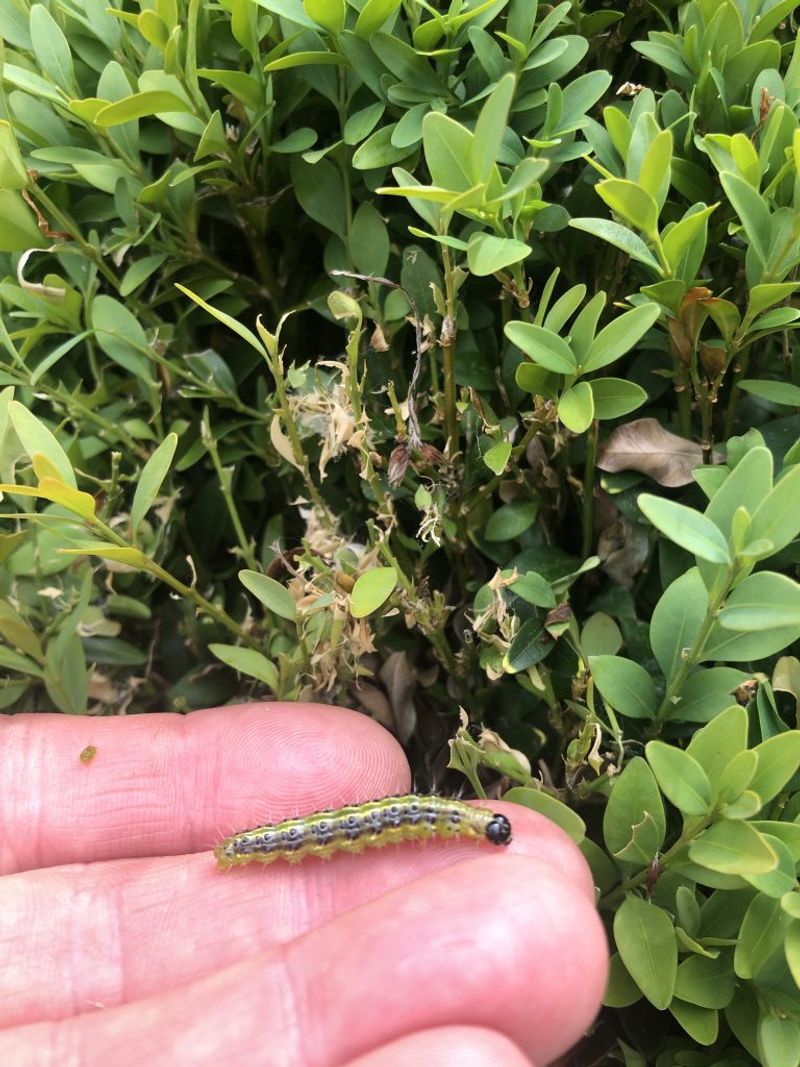
Winter quiet can fool even experienced gardeners. While your yard looks peaceful, young box tree moth caterpillars may be tucked away inside your shrubs.
These little caterpillars spend the cold months in small silk shelters. Scientists call these cozy pouches hibernacula.
Each shelter sits snugly between two boxwood leaves. The caterpillars inside are usually in an early growth stage.
Their toughness is truly impressive. They can survive temperatures as low as 22 degrees below zero Fahrenheit.
That means a harsh cold snap will not wipe them out. Even mountain winters pose little challenge for these hardy sleepers.
When spring warms up, they wake and start eating again. Feeding usually resumes in early to mid-spring.
So what can you do during the off-season? Winter is actually a great time to hunt for these hidden shelters.
With fewer distractions in the garden, you can inspect leaves slowly. Look for small patches of white silk joining leaves together.
Gently pull suspicious leaf pairs apart and check inside. A tiny curled caterpillar is a clear sign of trouble.
Remove and bag any infested sprigs you find. Seal the bag and place it in the trash rather than the compost pile.
Holiday decorators should take note too. Boxwood garlands and wreaths can carry these cocoons indoors or across town, so source greenery carefully.
Never Move Boxwoods Without Certification
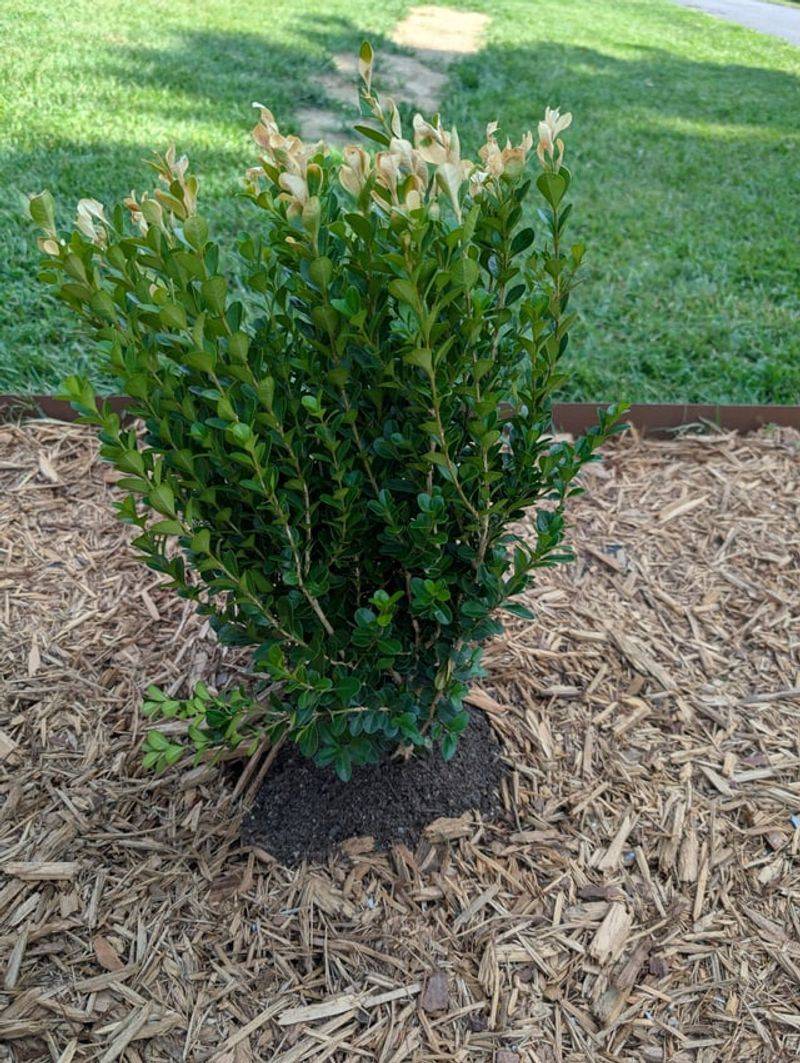
Sharing plants with a friend feels generous and kind. Inside the quarantine zone, though, sending a boxwood outside the area without paperwork breaks the rules.
Moving boxwoods or any parts of them out of quarantined areas requires certification. The goal is simple: stop caterpillars from hitching a ride.
Businesses and individuals have two main paths. They can get a permit or sign a compliance agreement with VDACS.
A compliance agreement lets a business certify its own boxwoods. That privilege comes with serious responsibilities attached.
Companies must allow regular inspections and set up monitoring traps. They also need steady treatments and must notify anyone receiving their shipments.
Here is the best part for budget-conscious folks. VDACS offers these permits and agreements at no cost.
Free paperwork is a small price for protecting the whole state. Skipping it, on the other hand, could carry penalties and spread the pest.
History shows how quickly moving plants can fuel an invasion. Many invasive insects in North America first arrived on nursery stock.
Homeowners moving to a new house should pause before digging up favorite shrubs. Taking boxwoods along could carry eggs or hidden cocoons.
A smarter option is buying fresh plants from a certified seller near your new home. Ask nurseries whether their boxwoods have been inspected.
Reputable growers will gladly explain their pest control steps. If a seller seems unsure, consider shopping somewhere else.
Outside The Quarantine? Report It To VDACS
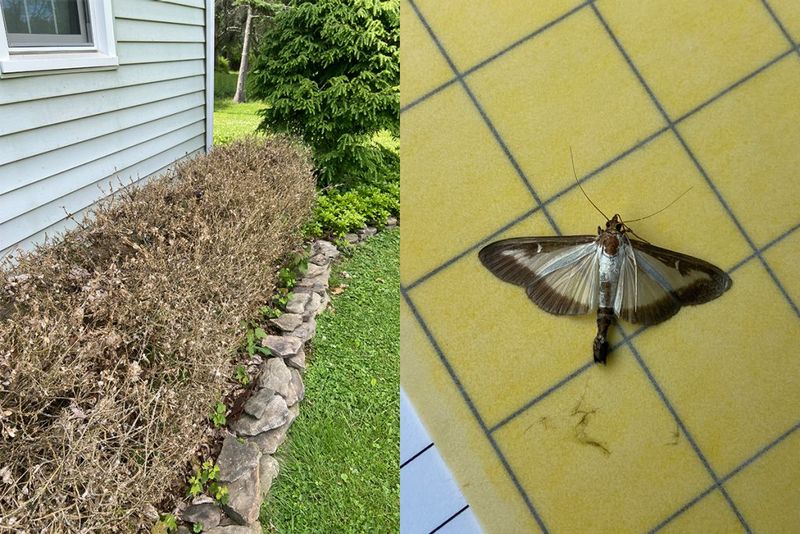
Spotting a suspicious caterpillar can make anyone feel like a detective. If you live outside the quarantine zone, your discovery could be very important.
A new sighting might reveal that the moth has reached fresh ground. Officials need that information to respond quickly.
VDACS asks residents to use its Invasive Species Reporting Tool. The online form lets you share details and photos about suspected damage.
Prefer email instead? You can write to [email protected] with your observations.
Good photos make reports far more useful. Capture the caterpillar, the damaged leaves, any webbing, and the whole shrub.
Place a coin or ruler beside the caterpillar for scale. Note your address and the date you noticed the problem.
Virginia Tech also lends a hand through its Insect Identification Lab. Experts there help residents figure out whether a bug is truly a box tree moth.
Look-alikes do exist, so a professional opinion matters. Other caterpillars and leaf problems can mimic some of the damage.
Some people hesitate, worried they might be wasting someone’s time. Experts would much rather check a false alarm than miss a real outbreak.
If you can, collect a caterpillar in a sealed jar or plastic bag. Pop it in the freezer to preserve it until someone can examine it.
Your quick report could help protect boxwoods across an entire region.
Inside The Quarantine? Call Your Local Extension Office
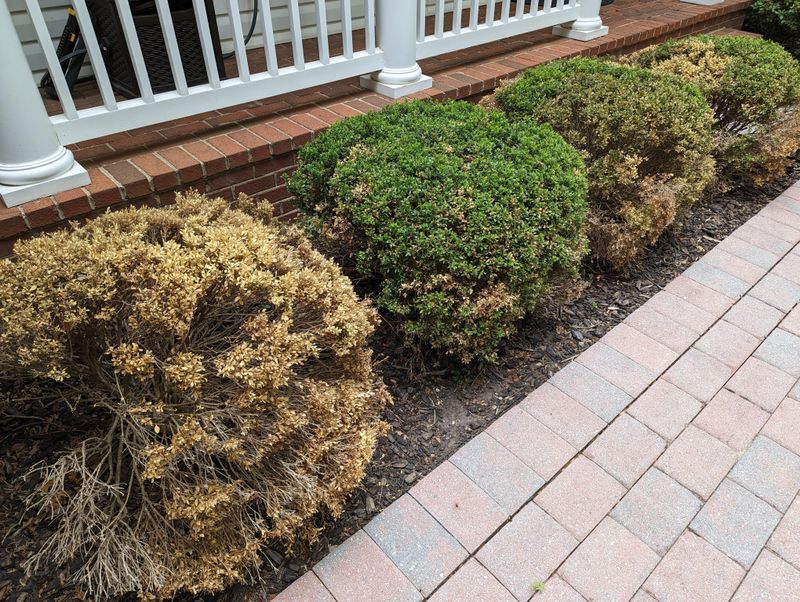
Living inside the quarantine zone comes with a different game plan. Officials already know the moth is around, so reporting each sighting is less urgent.
Your best move is reaching out to your local Cooperative Extension office. These offices exist to give residents free, practical gardening advice.
Virginia Cooperative Extension connects homeowners with research from Virginia Tech and Virginia State University. Their agents and Master Gardener volunteers know local conditions well.
They can confirm whether damage comes from box tree moths. They can also recommend treatments suited to your yard and situation.
Researchers are watching the outbreak closely. They are testing management strategies to help gardeners respond wisely.
Extension offices in Clarke County, Frederick County, and Winchester are especially tuned in. Staff there have likely handled many questions already.
Bring a sample when you visit, sealed tightly in a plastic bag. A clear photo works too if a trip is not practical.
Ask about timing as well as products. Treating at the right moment often matters more than which spray you pick.
Many offices also host workshops and plant clinics during the growing season. These events let neighbors swap stories and learn together.
Here is a friendly reminder for busy schedules. Save your extension office phone number in your contacts today.
When caterpillars appear, you will not waste time searching for help.
Early Treatment Can Save Your Shrubs
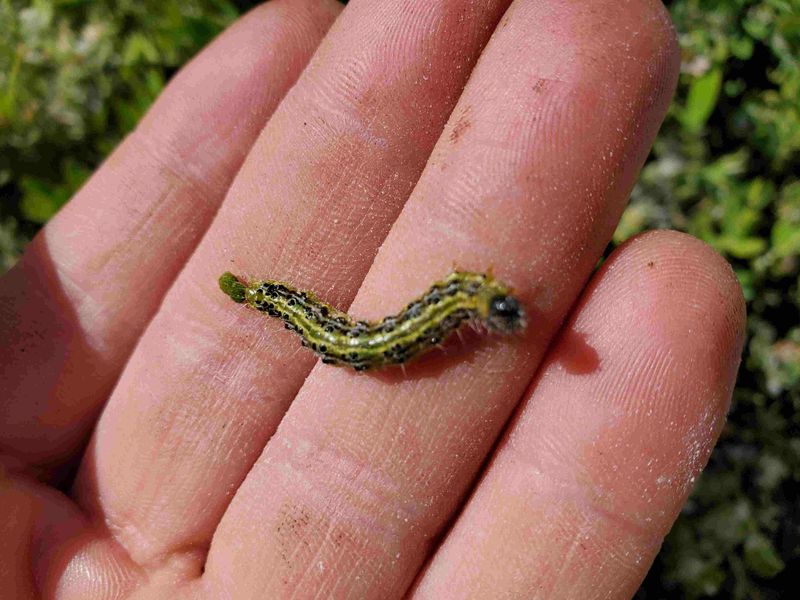
Catching trouble early turns a crisis into a manageable chore. Box tree moth damage is far easier to handle when you spot it fast.
Small infestations often respond well to simple hands-on work. Pick caterpillars off by hand and drop them into soapy water.
Prune branches with heavy webbing or damage. Bag the cuttings and send them out with the trash.
Biological options offer a gentler approach for larger problems. Products containing Bacillus thuringiensis kurstaki, often called Btk, target caterpillars specifically.
Btk works best on young caterpillars that are actively feeding. Reapply after heavy rain, since water can wash it away.
Stronger insecticides are also available for tough cases. Active ingredients include spinosad, bifenthrin, carbaryl, and acephate.
Read every label carefully before spraying anything. Follow directions closely to protect pollinators, pets, and your family.
Experts do not recommend spraying shrubs just in case. Treat only when you confirm an active infestation.
Preventive spraying can harm helpful insects and waste money. It may also encourage pests to resist certain chemicals over time.
Regular monitoring remains your strongest tool. Pheromone traps can alert you when adult moths start flying nearby.
Boxwoods have graced gardens since colonial days. With watchful eyes and quick action, those beloved hedges can stay green for generations to come.