Why Your California Poinsettia Needs Long Dark Nights Starting Now To Turn Red By Christmas

Plenty of holiday plants spend October looking healthy, leafy, and stubbornly green. Nothing seems wrong, and in a sense nothing is.
The missing piece has less to do with water or fertilizer than with something most homes provide in abundance every evening.
This particular plant keeps its own kind of calendar, quietly counting a signal that rarely reaches it indoors.
When that signal arrives often enough, the transformation follows on a fairly predictable schedule.
When it doesn’t, December can arrive with nothing but foliage to show for months of careful care.
The fix requires no special equipment, only a bit of routine and a few household items.
Mid-October still leaves time, though the clock has already started ticking.
1. Poinsettias Are Short-Day Plants
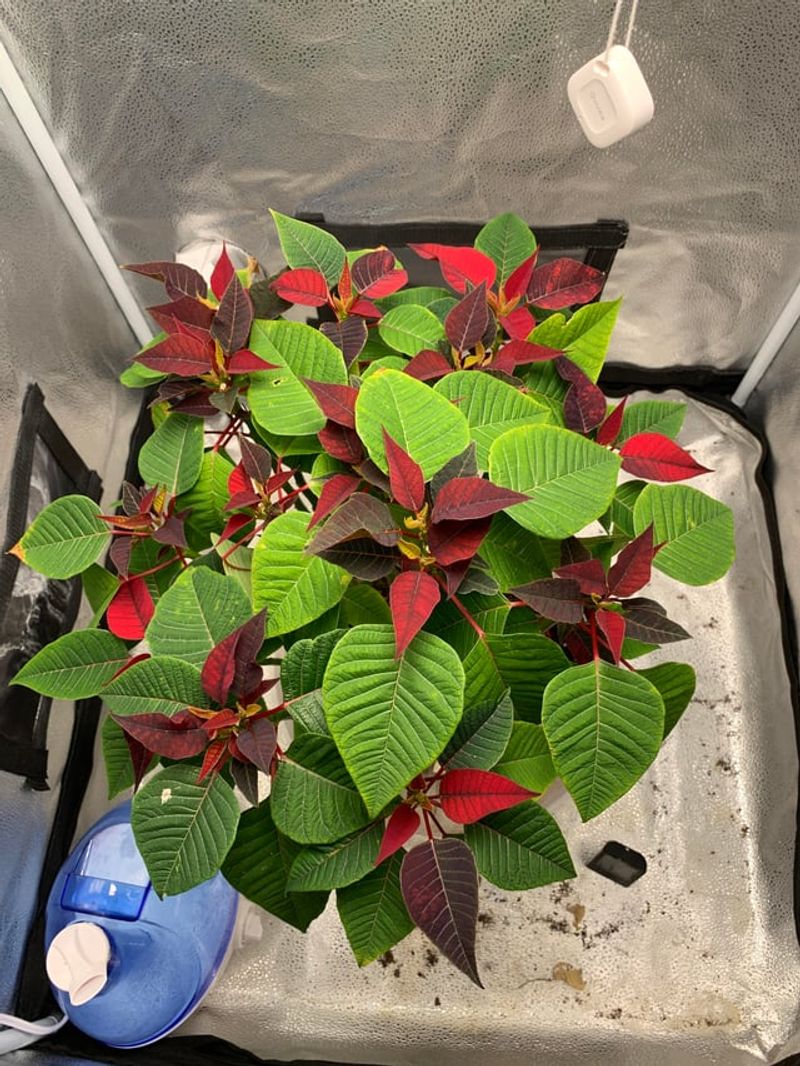
Green leaves in October are perfectly normal. The plant isn’t being stubborn, just following an ancient rule written into its genes.
Poinsettias come from the hills of southern Mexico, where days shorten as winter approaches, and over time they evolved to bloom when nights grow long.
Scientists call them short-day plants, though the name misleads a bit, since the plant actually measures the length of the night rather than the day. Gardeners sometimes call them long-night plants for that reason.
Inside the leaves, a light-sensing pigment tracks darkness. When nights pass a certain length, the plant registers the change of season and switches from growing leaves to forming flowers and colored bracts.
The tiny yellow buds in the center are the true flowers, while the red parts are modified leaves that act like a bright billboard for pollinators.
California’s natural fall nights do grow longer. Indoors, though, homes rarely stay dark, as kitchen lights, televisions, and hallway lamps add hours of evening light that the plant reads as daytime.
So the plant waits, producing green leaves because, as far as it can tell, summer never ended.
That one fact changes fall care entirely. Watering and feeding still matter, yet the real task involves setting the plant’s internal clock, with darkness serving as the hand that moves it toward color.
Understanding that rhythm makes the rest of the routine simple.
2. Long Nights Trigger Color Change
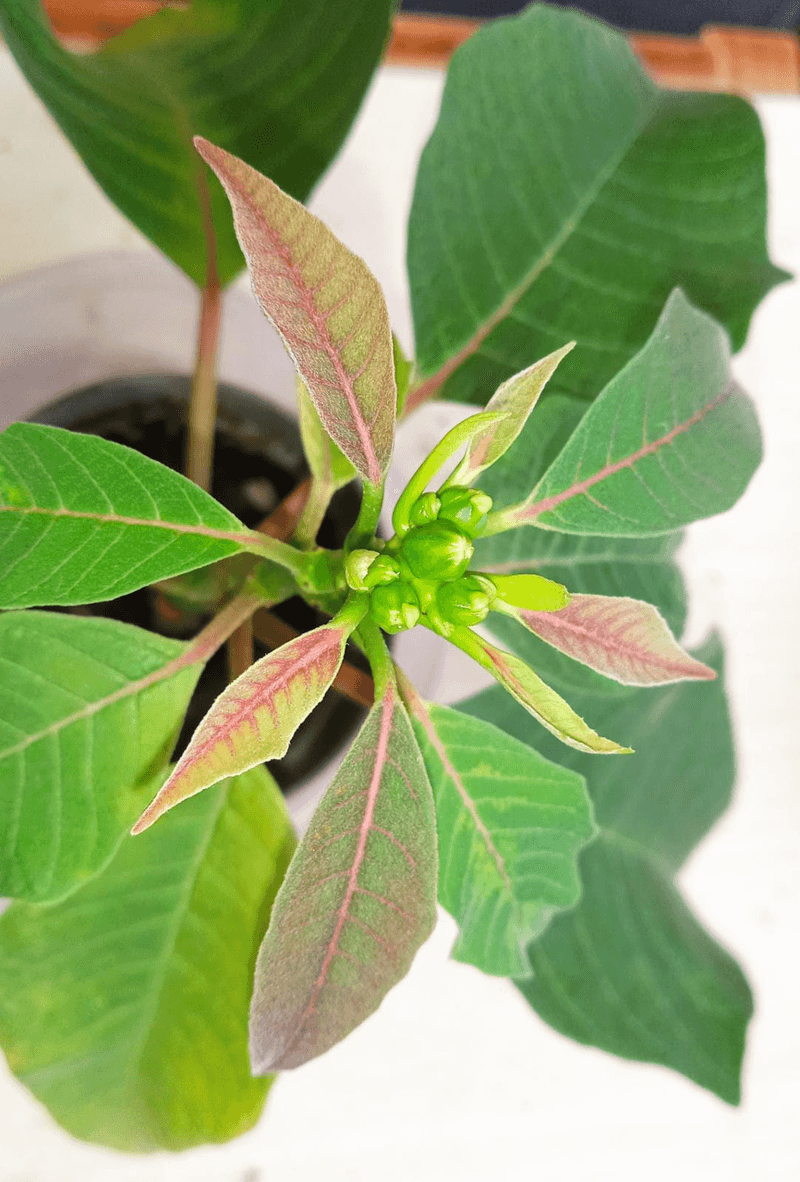
A faint blush along the edges of the top leaves in early November signals that the plan is working. Those tinted leaves prove that long nights have flipped a switch.
The process works a bit like a relay race. Each long night sends a small chemical message through the plant, and after enough nights in a row, flower buds begin forming at the stem tips.
The bracts around those buds then trade green for red, pink, white, or cream. The first hints of color usually appear several weeks into the routine.
Uninterrupted is the key word. A single night of steady darkness counts as one step forward, while a night broken by light partly resets the count, much like a book that keeps getting closed before the final chapter.
Many growers are surprised by how sensitive the plant is. Opening a closet to retrieve a jacket at 9 p.m. can be enough to disrupt things.
Your California Garden Changes Every Week. Your Plan Should Too.
Gardening in California changes quickly throughout the season. Every Friday you’ll receive a simple weekly plan showing exactly what to plant, prune, fertilize, harvest, and protect so you never miss the right timing.
A brief flash may not ruin everything, yet repeated interruptions slow progress noticeably.
Protecting the signal starts with set times for darkness to begin and end each day. A sticky note near the plant helps everyone in the household remember the schedule.
Consistent, calm, and free of surprise visitors, the routine works best when it becomes automatic. Steady nights now pay off as rich, even color later, often more uniform than on plants given an irregular schedule.
3. Fourteen Hours Of Darkness Do The Job
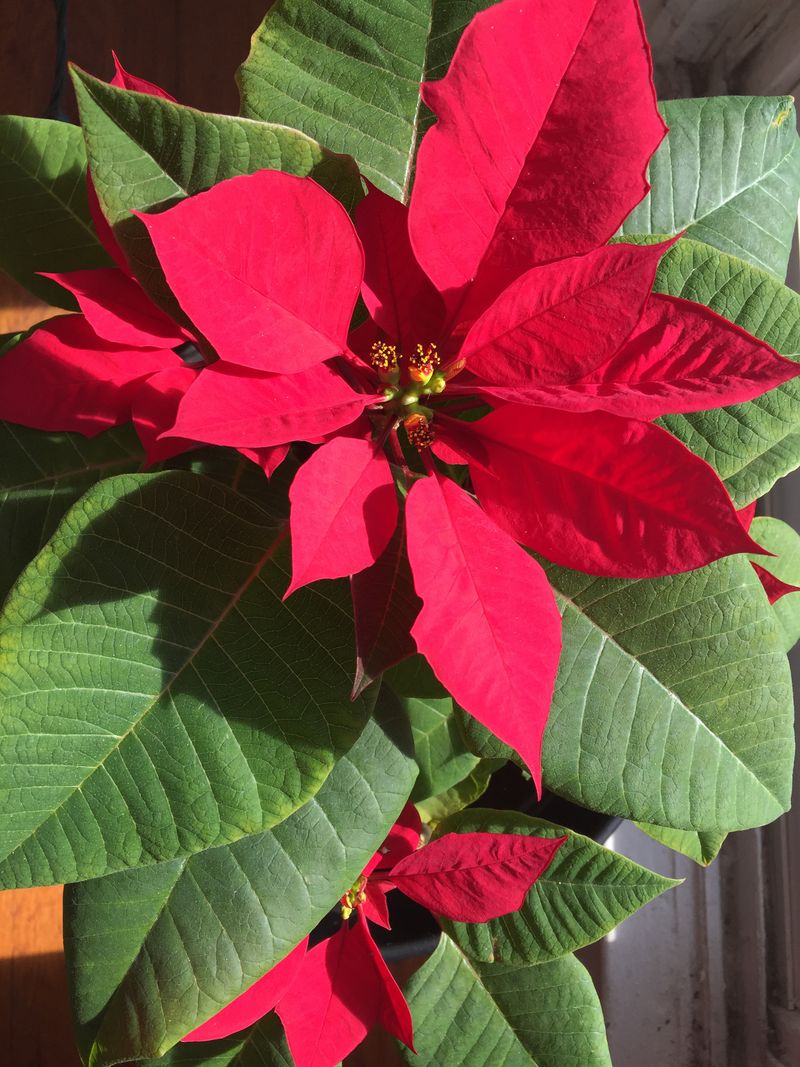
Counting backward from breakfast makes the math easy. A plant brought out at 8 a.m. should have gone into darkness around 5 or 6 p.m. the night before, giving roughly 14 to 15 hours of true dark.
University sources consistently recommend about 14 hours of total darkness each night, with some suggesting a range of 13 to 15 hours. Aiming for 14 lands safely in the zone that tells the plant to bloom.
Total darkness means real darkness. A room that feels dim to people may still seem bright to a poinsettia.
A simple test helps: a hand held in front of the face should be hard to see.
Two easy setups work well. A closet with the door closed works when no light leaks from underneath, and a towel tucked along the door gap seals it.
A large cardboard box set over the plant, free of holes or cracks, offers another reliable option. A box also lets the plant stay put in a cool room rather than traveling to a closet each night.
Black garbage bags can also work, though they may trap heat and moisture, so a box usually breathes better.
Routine makes the difference. Phone alarms for both the evening tuck-in and the morning reveal keep things on schedule.
A missed morning costs the plant precious daylight, while a missed evening costs a night of progress, so both ends of the schedule deserve equal care.
4. Eight To Ten Weeks Reach Christmas Color

A calendar and pencil make useful tools here. Poinsettias need roughly 8 to 10 weeks of long nights before the bracts fully color, with the exact timing depending on variety and home conditions.
University sources suggest starting around October 1 for color by mid to late December. Commercial growers follow similar timing, which explains why stores fill with red plants right after Thanksgiving.
Mid-October starts still work. The color date simply shifts later, likely into late December or early January, and a poinsettia turning red for New Year’s still makes a festive win. Some varieties also respond faster than others.
A rough timeline helps with planning. An October 1 start points toward good color around mid-December, while an October 15 start lands closer to Christmas week or slightly after.
A November 1 start usually means color arrives in January.
The routine continues until the bracts show solid color. Most guides note that dark treatments can stop once the color is well developed, often in early December, after which the plant can enjoy normal room light while it shows off.
Plants started mid-October may need treatments into mid-December.
A checkmark on the calendar for each completed night creates a satisfying record. Watching the boxes fill also makes missed nights easy to spot before they pile up.
Patience matters most in the early weeks, when little seems to change on the surface even though buds are forming deep inside the growing tips.
5. Lamps And Streetlights Break The Signal

A porch light across the street seems harmless, yet that soft glow can keep a poinsettia green for weeks. Light at night ranks as the leading reason home plants fail to color.
Poinsettias are extremely sensitive to light during their dark period. Even dim light from a lamp, a television screen, or a nightlight can interrupt the night, and the plant reads it as a short day, delaying buds and bracts.
Indoors, sneaky culprits abound. Floor and table lamps in the same room, light spilling under a door or through blinds, glowing chargers and clocks, and car headlights sweeping through a front window all count.
Even a bathroom light switched on briefly near the plant can interrupt the night.
Outdoors, the picture shifts in mild Southern California, where poinsettias grow as large shrubs in many coastal yards.
Shrubs near streetlights, security lights, or bright windows may bloom late, unevenly, or barely at all. Often the side facing the street stays green while the shaded side turns red.
Fixing an outdoor plant takes more effort, since boxing a six-foot shrub isn’t practical. Shielding the light source, switching off motion lights, or planting future poinsettias in darker corners helps considerably.
Frost-free coastal areas suit outdoor shrubs best, since inland cold snaps can damage them.
Indoors, the fix comes easier. A closet or a box each evening solves most problems, and a little light discipline now keeps the holiday display on track.
6. Cool Nights Help The Bracts Color
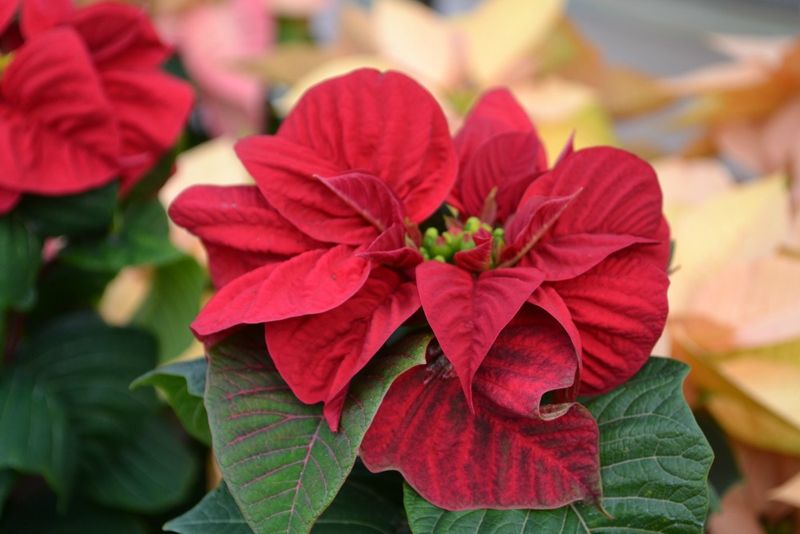
A thermostat holding near 75 degrees all night can slow color development. Cooler nights give the bracts a helpful nudge.
University sources suggest night temperatures of roughly 60 to 65 degrees Fahrenheit during the color change, with daytime temperatures in the upper 60s to low 70s keeping the plant comfortable.
That gentle swing between warm days and cool nights mimics the plant’s native hills. October nights in many California regions already fall close to that range.
Nights that run too warm can delay or unevenly color the bracts, while nights too cold risk damage.
Poinsettias are tropical, so temperatures below about 50 degrees can harm leaves and bracts, and frost injures them quickly, a real concern in inland and desert gardens.
Finding a cool, dark spot indoors can take some detective work. A closet on an exterior wall often runs cooler, and a spare bedroom with the vent partly closed can work well.
A garage becomes an option only when it stays above 55 degrees and has no light leaks.
Heater vents, fireplaces, and drafty doors are best avoided, since sudden blasts of hot or cold air can cause leaves to drop. An inexpensive digital thermometer near the plant reveals actual conditions within seconds.
Many coastal California homes cool off naturally in the evening, and that marine air works as a quiet ally. Inland homes may need a little more searching to find the right spot.
7. Bright Days Fuel The Change
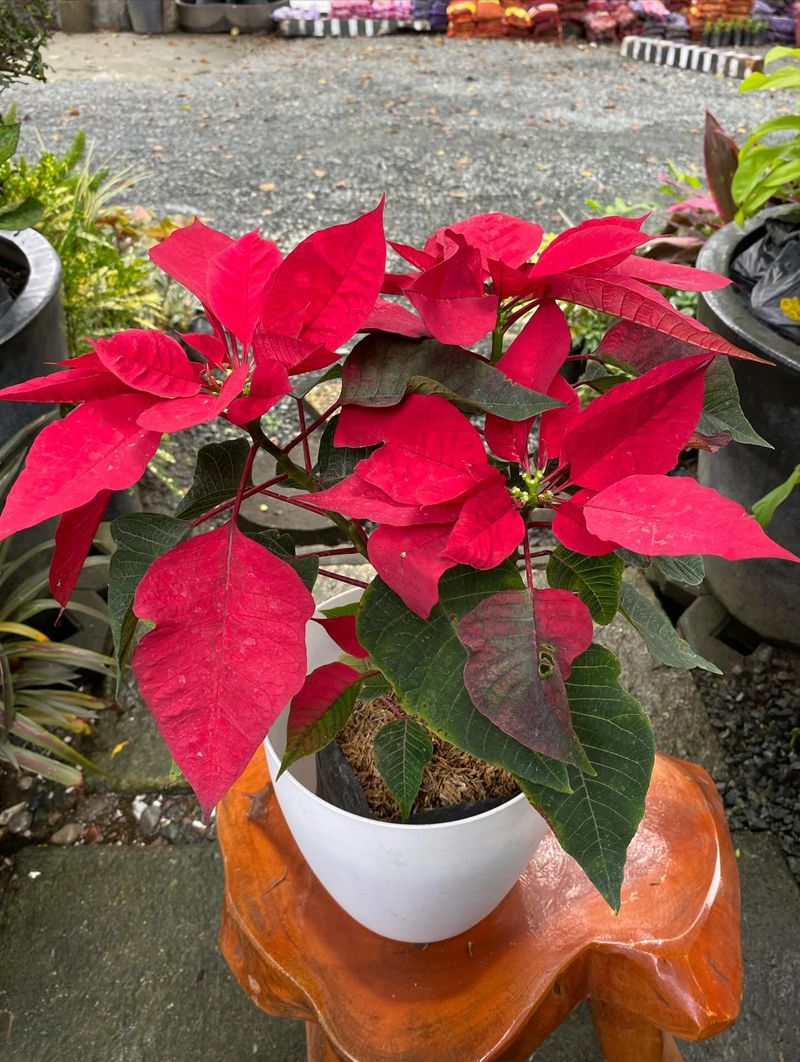
Darkness gets most of the attention, yet daylight does half the work. A poinsettia stuck in a dim corner all day has little energy for producing bright bracts, so sunlight supplies the fuel while darkness provides the trigger.
During the day, the plant needs about 6 to 8 hours of bright light. A sunny window with bright, indirect light or gentle direct sun works well, and south, east, or west windows often suit California homes.
Each morning, the plant comes out of its closet or box and moves to the brightest available spot, then returns to darkness on schedule each evening.
The daily shuffle takes about a minute, a small price for a holiday centerpiece. A small tray or plant caddy on wheels makes the move even easier.
Several clues signal weak light. Stems stretching tall and thin, lower leaves yellowing and dropping, and bracts coloring pale or patchy all point to a dim location.
Watering and feeding matter during this stretch too. Water goes in when the top of the soil feels dry, with any excess emptied from the saucer so roots don’t sit wet.
Many guides recommend a balanced houseplant fertilizer until bracts color. Feeding usually stops once the bracts reach full color.
Scorching afternoon sun through hot glass in inland valleys can stress leaves, so bright and steady beats harsh. Good daytime light gives the plant the energy to turn every long night into real color.
8. Starting Now Meets The Christmas Date
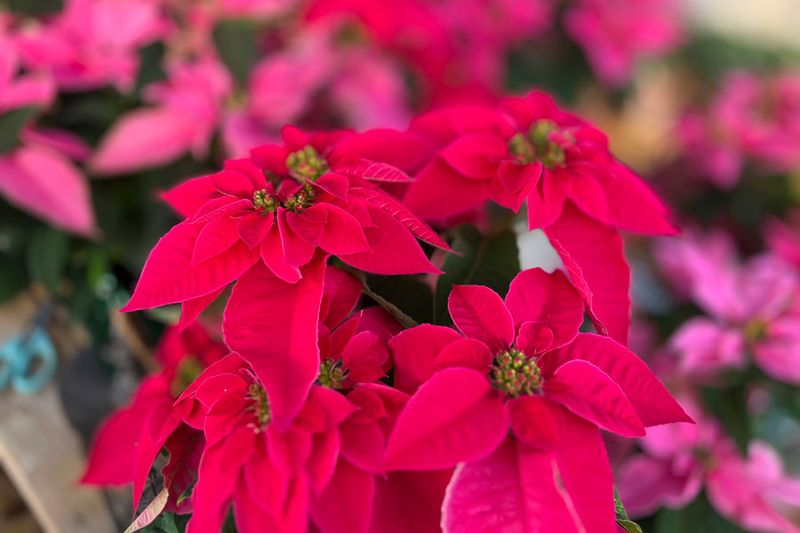
Each night of delay is a night the plant can’t get back. Starting the blackout routine this evening gives a poinsettia its best chance at color near the holidays.
The routine is simple once set up. A closet or sturdy cardboard box without light leaks serves as the dark spot, and set times of about 5 p.m. to 8 a.m. provide roughly 14 to 15 hours of darkness.
Each morning, the plant moves to a bright window, then returns to darkness each evening, ideally in a spot where nights hover around 60 to 65 degrees.
The routine runs 8 to 10 weeks, or until the bracts show solid color. Skipping a night here and there slows progress, so consistency matters most.
Outdoor shrubs in Southern California need a different approach. A quick look for nearby light sources helps, since switching off a porch light or shading a security lamp may be enough for natural coloring.
Once the bracts turn fully red, dark treatments can stop, and the plant can enjoy normal room light while watering continues whenever the soil feels dry.
Pet owners can relax somewhat. The ASPCA notes poinsettias are only mildly toxic, typically causing mouth irritation or stomach upset, and its Animal Poison Control line can help with concerns.
A little patience this fall turns a plain green plant into a glowing holiday centerpiece, its color earned one dark night at a time.