How California Gardeners Stake And Cage Plants Before The Next Storm Rolls Through
Storm prep in the garden rarely gets attention until wind starts bending everything sideways. By then, stems may already be cracking and cages tipping into the mud.
California weather can swing from weeks of calm to heavy rain and strong gusts within a single day.
Soaked soil loosens its grip just as wind picks up, and wet leaves and flowers grow heavier by the hour.
That combination can undo months of careful growing in one rough night.
A little preparation changes the outcome, in less time than a weekend errand.
Most of it relies on inexpensive materials and a few simple techniques that become second nature after one season.
The gardens that bounce back fastest are usually the ones that got ready early.
1. Stake Tall Plants Before They Topple
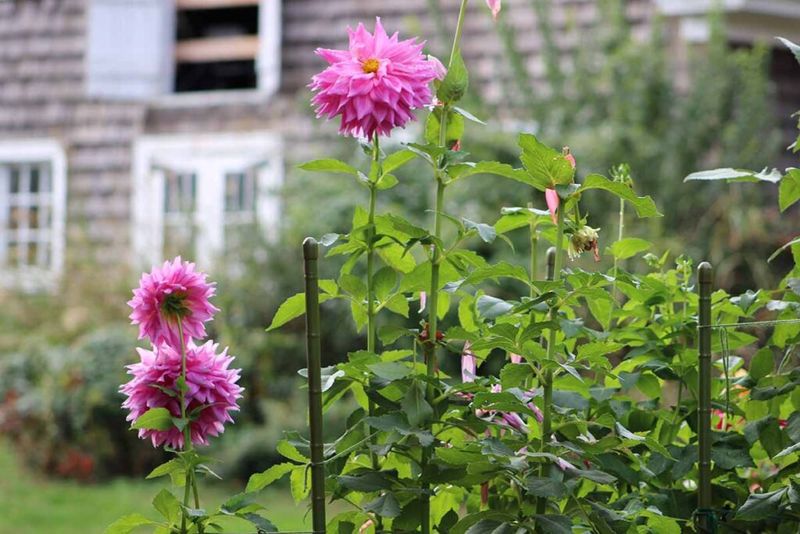
A dahlia loaded with blooms can look fine at noon and lie flat by midnight. Wind and rain team up fast, and wet petals hold water until the extra weight bends stems far enough to crack.
Stakes work best placed before the storm rather than after. Pushing one in later can pierce roots and tubers hidden below the surface.
Each stake belongs two to three inches from the main stem, on the side facing the prevailing storm winds, which often blow from the south or southwest during California winter systems.
A stake standing slightly shorter than the plant’s full height works well, and bamboo, wood, and metal rods all do the job. Sinking them at least a foot deep keeps them firm even when soil turns to mud.
Tall perennials such as delphiniums, hollyhocks, and lilies need the same care, as do peppers, eggplants, and tall fava beans. Peppers often snap at branch joints when loaded with fruit, so a single stake helps considerably.
Clumps of floppy plants respond well to a simple corral. Three or four stakes around the clump, with twine looped between them, let plants lean on the string instead of on each other.
Stems tied loosely in two or three spots as they grow, starting low and adding ties higher up, stand tall through the season. Early support works far better than a late rescue after stems have already cracked.
2. Use Soft Wide Ties
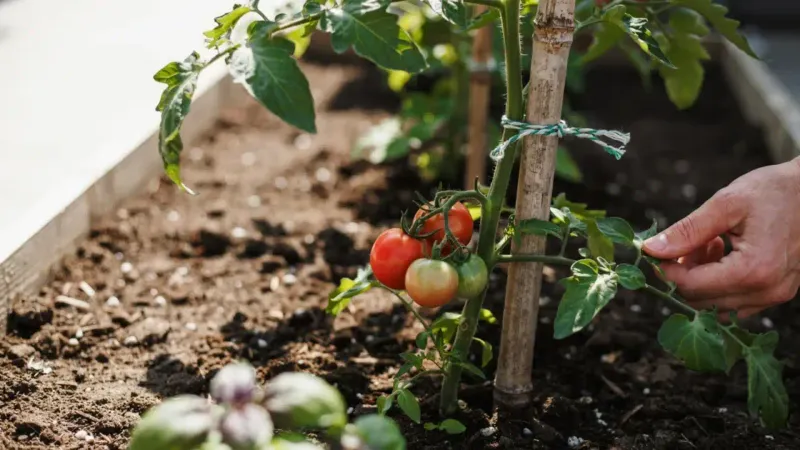
Thin wire seems strong and handy until a gust jerks the stem and the wire slices into it like a cheese cutter. A tidy garden can end up full of scarred, broken stems.
Soft, wide ties spread pressure over a larger area. Strips of old cotton T-shirts, nylon stockings, stretchy plant tape, and garden hook-and-loop strips all work, ideally at least half an inch wide, since wider ties grip more gently.
Bare wire, fishing line, and thin string around stems are best avoided. UC ANR guidance warns that narrow, tight ties can girdle a plant, squeezing the stem so hard that water and nutrients can’t flow past.
The figure-eight method adds protection. The tie loops around the stake, crosses in the middle, then loops around the stem, and that cross acts like a small cushion so the stem rarely rubs the hard stake.
Your California Garden Changes Every Week. Your Plan Should Too.
Gardening in California changes quickly throughout the season. Every Friday you’ll receive a simple weekly plan showing exactly what to plant, prune, fertilize, harvest, and protect so you never miss the right timing.
Some slack matters too. A finger should slide easily between tie and stem, since plants keep growing through the rainy season and a snug tie today may pinch next month.
Old clothes make a thrifty source. One worn-out shirt can become dozens of ties, cut into strips about an inch wide and a foot long.
A bundle kept in a coffee can by the garden gate means ties are ready within seconds when the forecast turns. Stretchy materials also give a little in strong gusts, absorbing shock that might otherwise snap a stem.
3. Anchor Cages Deep In The Soil
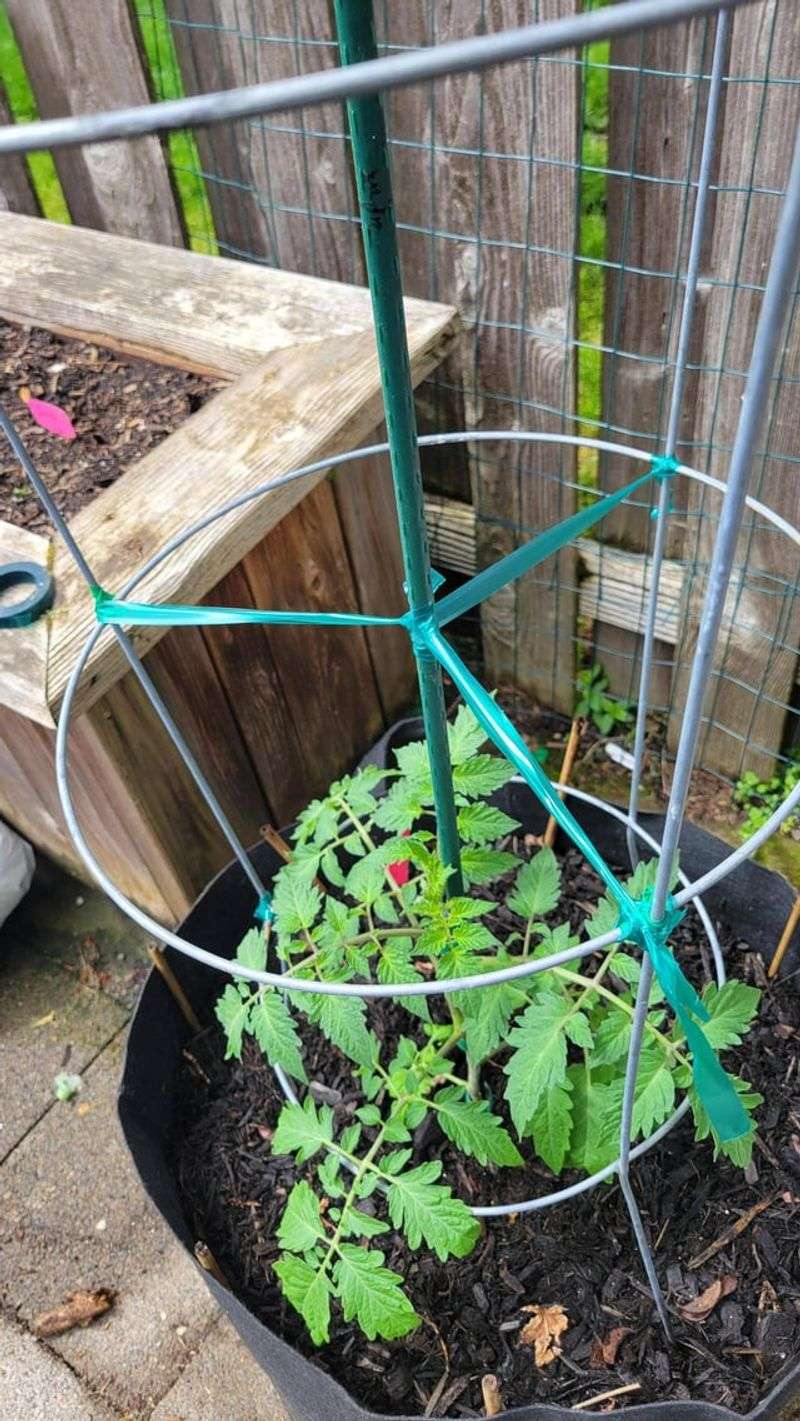
A cone-shaped tomato cage cartwheeling across the yard at dawn happens more often than many gardeners expect. A cage full of leafy vines acts like a sail, and soggy soil lets go with little resistance.
Thin wire cages from the garden center often have short legs. Pushing them as deep as they’ll go, at least six to eight inches, helps, and deeper works better in soft winter soil.
A backup anchor adds real security. A sturdy wooden stake or piece of rebar driven right beside the cage, tied to it in two places, keeps things steady.
Tougher ties such as wire or zip ties work fine here, since they touch metal rather than stems.
Square, foldable cages and homemade cages built from concrete reinforcing wire are heavier and steadier, and many experienced growers prefer them for large tomato vines. Pinning homemade wire cages with two stakes on opposite sides keeps them from rocking.
The soil around the base deserves a look too. Water pooling there keeps the ground mushy for days, and a little extra soil or mulch mounded around the legs firms them up.
Fall and winter crops such as tall peas and sugar snaps rely on trellises and cages as well, and the same anchoring approach applies.
Late tomato vines still standing in October carry plenty of weight, so harvesting ripe fruit before a storm lightens the load. A cage that stays planted keeps plants in place and saves a chase after tangled wire down the driveway.
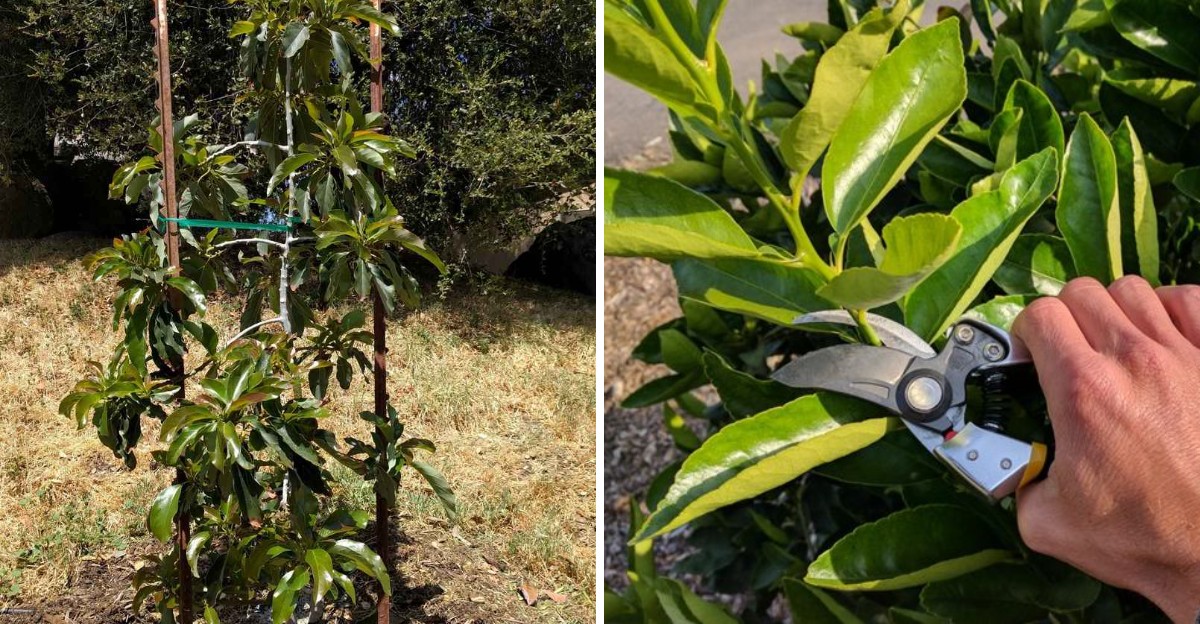
4. Stake Young Trees Low And Loose
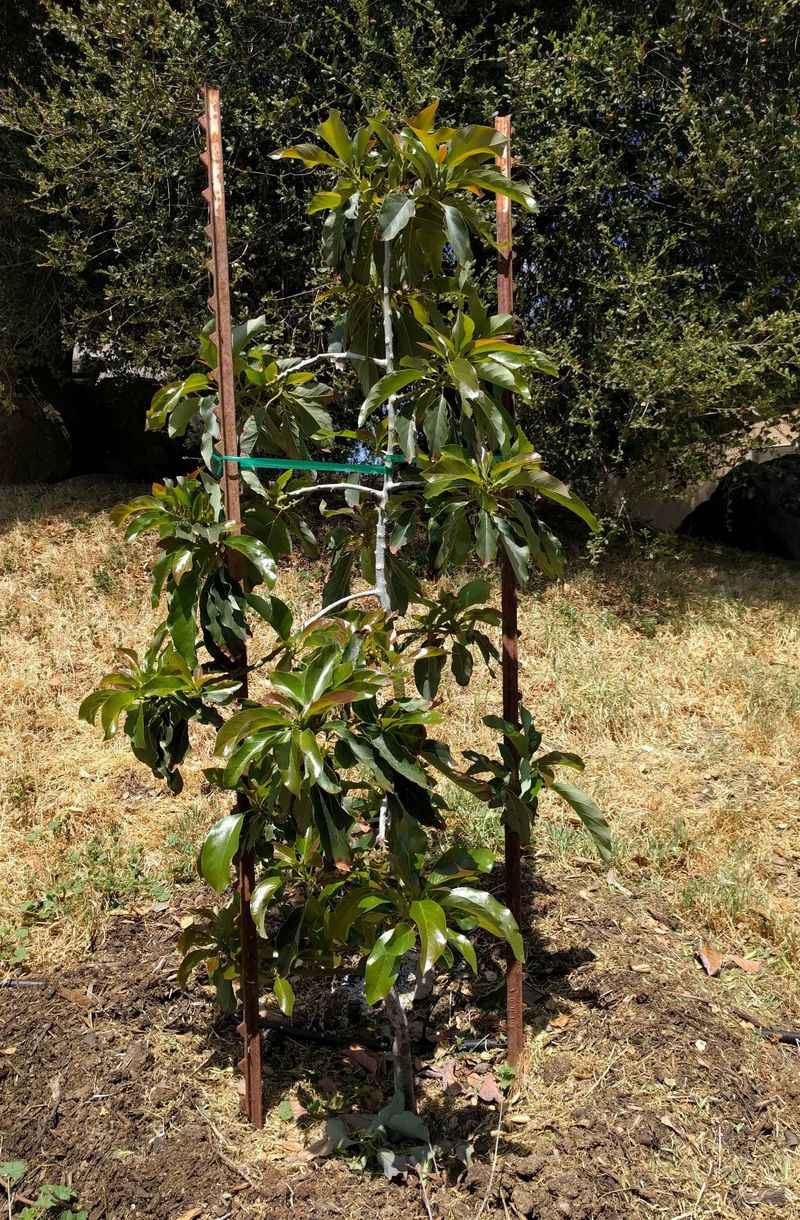
Many new tree owners make the same mistake, tying the trunk tightly to one tall stake on the theory that more support builds a stronger tree. The opposite holds true.
Trunks grow stronger through movement. Gentle swaying signals the tree to build thicker wood near the base, and UC ANR guidance explains that trees tied too tightly often develop thin, weak trunks that struggle to stand alone later.
Two stakes, one on each side of the tree, work best. Set outside the root ball to avoid damaging roots, they line up so strong winds push the tree between them rather than toward either stake.
Ties belong as low as possible while still holding the tree upright. A simple test finds the lowest point where the top stays straight when released, with ties placed just above it.
Wide, flexible ties work well here too, and rubber tree ties or loops of old bicycle inner tube are popular choices. Each tie forms a loose loop around the trunk before attaching to the stake, so the trunk can sway a few inches.
Stakes trimmed just above the ties keep branches from rubbing against them in the wind.
Stakes serve as a temporary helper, much like training wheels on a bike. Most trees can lose them within a year or two, once roots spread and the trunk thickens enough to face storms independently.
Fall-planted trees benefit especially from this setup, since winter storms arrive before roots have settled.
5. Cover Seedlings With Cloches Or Cages
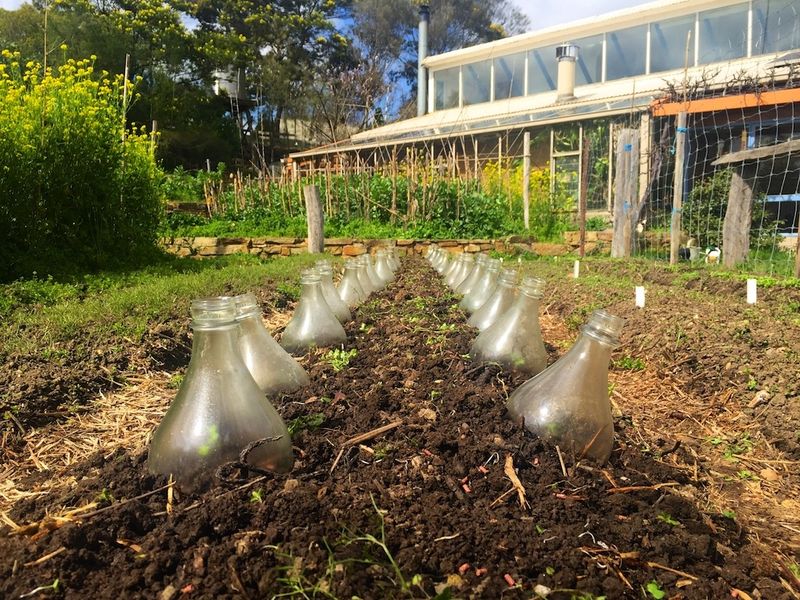
Tiny lettuce sprouts planted just last week can end up buried in mud or snapped at the soil line by a pounding rain. Young seedlings simply lack the strength to stand up to it.
A cloche is a small cover that sits over a single plant. The word comes from the French for bell, since early glass cloches were bell-shaped, and today a clear plastic milk jug with the bottom cut off makes a handy version.
Pushing the jug an inch or two into the soil keeps it from blowing away, and removing the cap lets air move so heat doesn’t build up.
On sunny days after the storm, lifting the cloche off keeps plants from overheating.
Wire hoops covered with row cover fabric protect whole rows. A few pieces of wire or PVC pipe bent into arches over the bed, draped with lightweight cloth and pinned at the edges with rocks, bricks, or soil, create a sheltered tunnel.
Floating row cover lets in light, air, and some rain while breaking the force of wind and heavy drops. UC IPM also notes its value for blocking birds and insects, so it does double duty in winter gardens.
Small hardware cloth cages add extra strength against wind and hungry critters.
Once the storm passes and seedlings toughen up, covers can come off gradually, since young plants strengthen faster with fresh air and gentle breezes.
6. Group Or Lower Heavy Containers
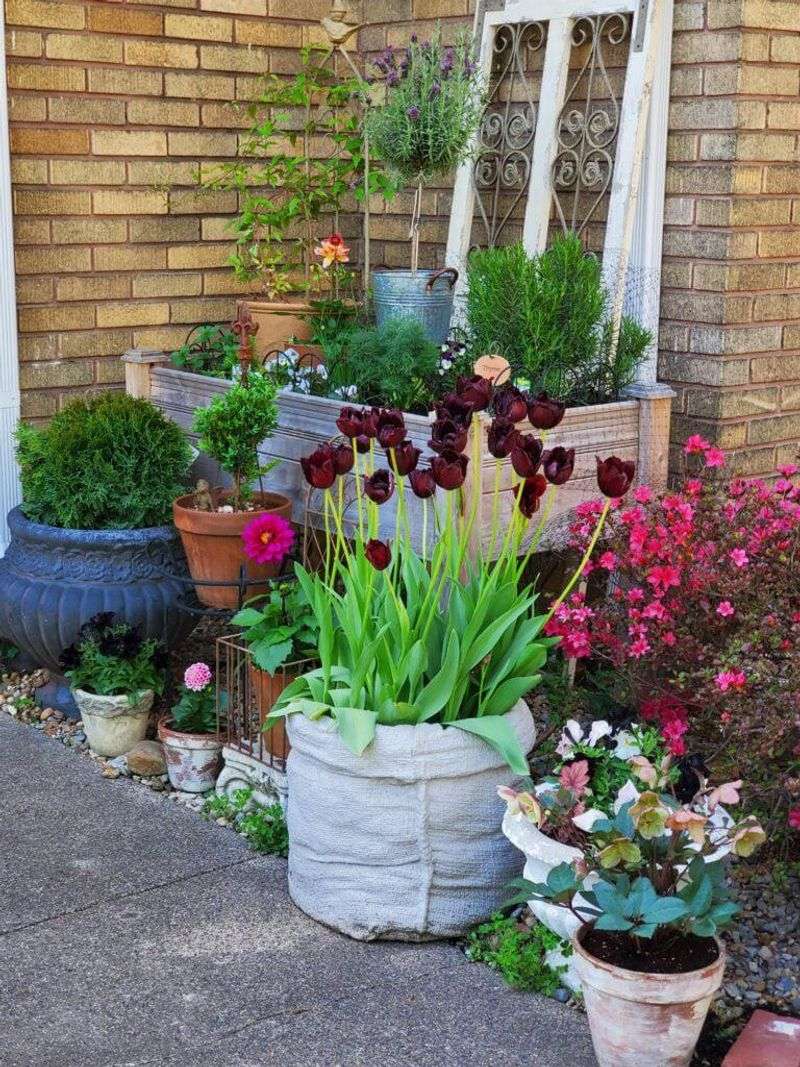
A crash in the night often turns out to be a tall potted plant hitting the patio. Containers holding tall plants are top-heavy, and wind loves pushing them over.
Moving pots together into a tight group makes a strong first step. Clustered containers shield one another from gusts, much like penguins huddling against a cold breeze, with the tallest pots in the middle and shorter ones around the outside.
A sheltered spot helps even more. A corner near the house, a fence, or a solid wall blocks plenty of wind, while the open middle of a deck or rooftop lets gusts swirl freely.
Very tall or skinny pots can be laid gently on their sides before the storm, with the top pointed away from the wind and a brick wedged in place to prevent rolling. They stand back up once calm weather returns.
Heavy containers on stands or railings belong on the ground during storms. A planter falling from a balcony can break, damage plants, and injure people below.
Drainage deserves attention too. Heavy rain can leave pots waterlogged, and soggy roots can rot, so pot feet or a few bricks underneath let water drain freely. Saucers left under pots can fill with rain, so emptying them afterward helps.
Lightweight plastic pots tip most easily. Slipping them inside heavier ceramic pots, or adding a layer of gravel to the tray beneath, provides extra ballast.
Hanging baskets come down too, set on the ground in a sheltered corner until the winds pass.
7. Thin Top Heavy Growth To Cut Wind Load
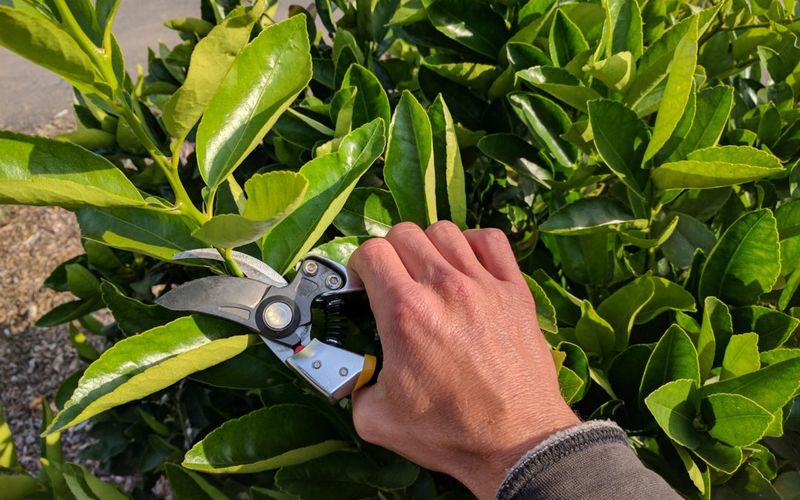
A dense shrub catches wind much like a kite. The more leaves and branches packed together, the more force it absorbs, and a plant too bushy on top can snap or pull loose from soggy soil.
Thinning means removing a few select branches so wind can pass through. It differs from shearing, which simply chops off the outer layer, and UC ANR pruning guidance favors thinning cuts that take a branch back to its point of origin.
Crowded, crossing, or weak branches come first. Brittle or broken branches deserve removal too, since they often fall during storms.
Clean cuts with sharp pruners, made just outside the branch collar, the slightly swollen ring at the base, help wounds seal. Wiping blades with household disinfectant between plants limits disease spread.
A light hand works best. Removing a small amount, often well under a quarter of the growth, is plenty, since heavy pruning right before a storm stresses plants and leaves fresh wounds open to wet weather.
Tomato and pepper plants benefit from a light trim as well. Removing extra suckers and leaves touching the ground helps, and picking ripe or nearly ripe fruit lightens the load.
Overgrown cosmos or zinnias can be trimmed slightly, with the blooms brought indoors for a vase.
Large trees belong with a certified arborist, since big limbs near houses and power lines call for training and proper equipment rather than a ladder and hand saw.
8. Check Ties After Each Storm
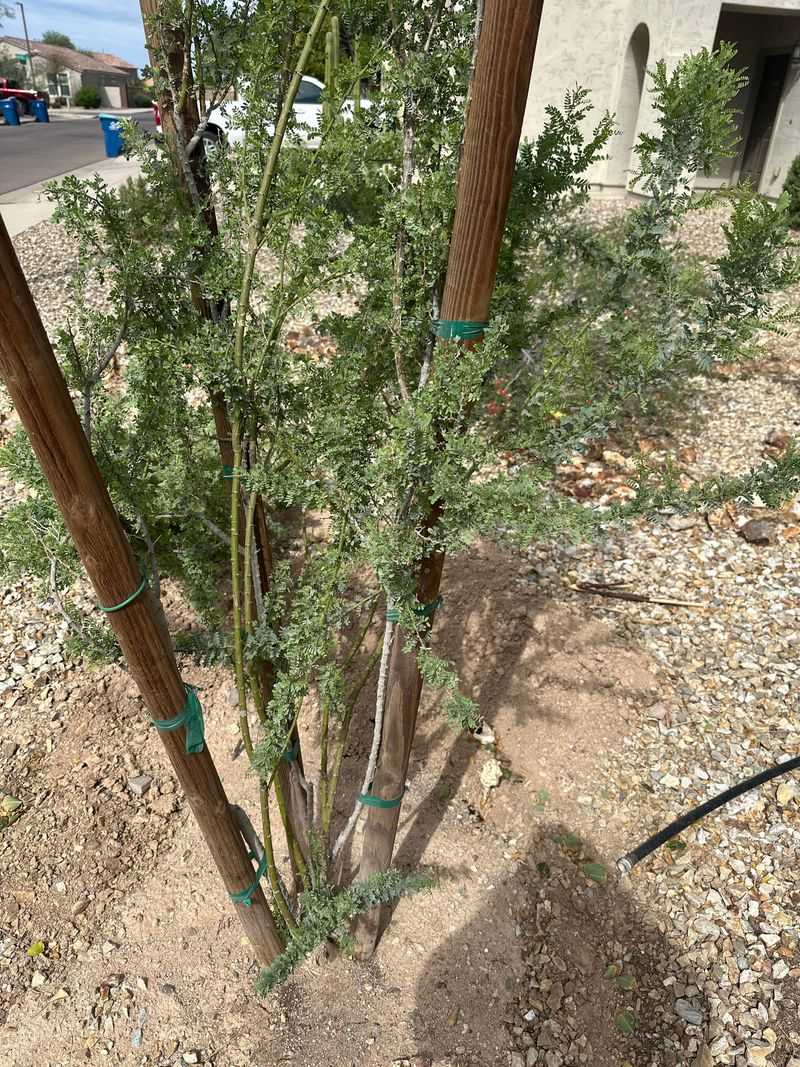
Sunshine breaks through, and the garden drips quietly. Before settling in, a slow walk around the yard with a pair of scissors in hand pays off.
Storms shift everything. Stakes lean, cages tilt, and ties slip up or down stems, while some ties tighten as wet fabric shrinks or plants pull against them.
The finger test applies to every tie. A finger should still slide between tie and stem, and any that feel snug deserve loosening, while torn or frayed ones need replacing.
Rub marks where a stem touched a stake deserve attention too. Bark scrapes on young trees can let in disease, so moving the tie or adding padding stops the rubbing.
Leaning stakes are easiest to straighten while soil remains soft, though stomping on soggy beds is best avoided. Walking on wet soil compacts it and squeezes out the air roots need, so a board helps spread body weight whenever stepping in becomes necessary.
Broken stems call for a clean cut below the damage, since ragged tears heal slowly and invite rot.
Tree stakes need extra attention. A check every few months shows whether the tree still needs support, and once the trunk stands upright on its own, usually within a year or two of planting, stakes and ties can come off completely.
A tie left on too long can girdle a trunk as it grows. A ten-minute check after each storm keeps the support system working and the garden ready for the next one.