Indiana Gardeners Can Turn Sprouted Sweet Potatoes Into Next Year’s Garden
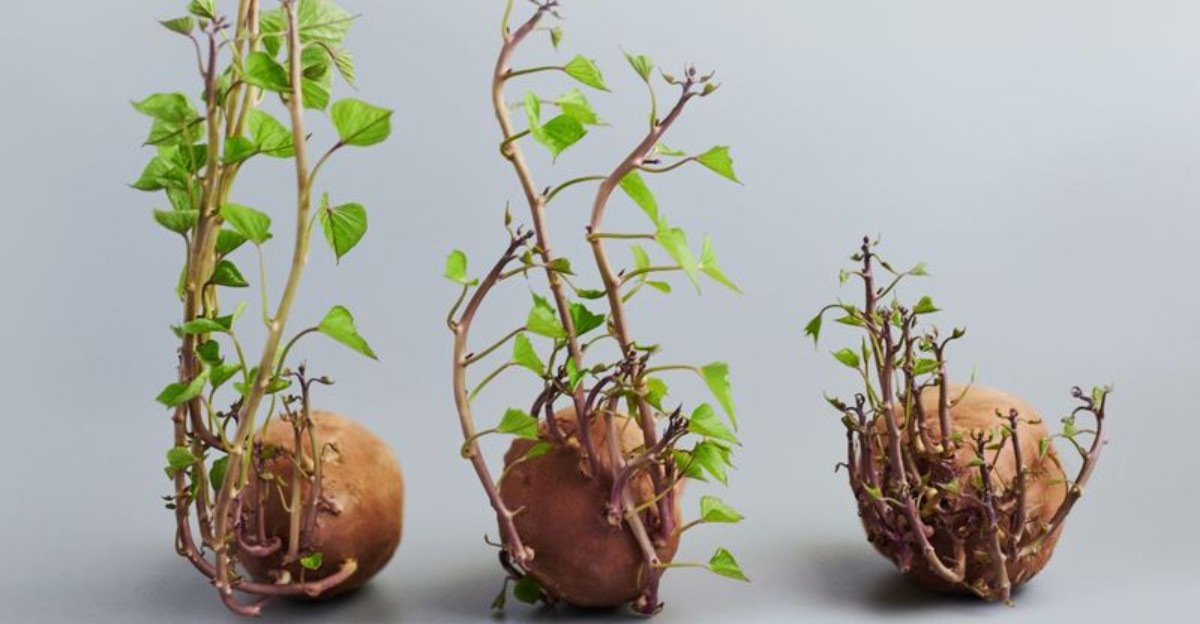
That wrinkly orange tuber sprouting purple shoots in your pantry could feed your garden for a summer next year. I laughed the first time I saw one, because it looked like a tiny alien reaching for the light.
Those leafy shoots are not necessarily a sign of spoilage, and they often mean the root is still full of life. Plenty of home gardeners use this kitchen trick to save money on spring transplants.
You need very little gear beyond a clear jar of water and a bright window facing south. I like how the whole project turns a cold October kitchen counter into a small green nursery.
Timing matters more than most people expect, since the soil outside stays chilly well into the next spring. Indiana winters are long, so a little planning now pays off with sturdy plants ready for warm ground.
You’re in for a fun surprise when one forgotten root becomes a dozen free plants by late spring. So what will you do with that sprouting spud sitting quietly in your kitchen basket right now?
Those Kitchen Sprouts Can Become Spring Starter Plants
A sweet potato is not a true potato at all, and it belongs to the morning glory family instead. That family connection explains the long, trailing vines that burst from those little sprouts on your counter.
Gardeners call the leafy shoots slips, and each one can grow into a full plant with its own roots. Garden centers sell bundles of these starters every spring, often for several dollars per small bunch.
One healthy root from your pantry can produce a surprising number of slips over a few months indoors. University extension guides note that a single tuber may yield a dozen or more starters with good care.
Some store-bought roots are stored in ways that slow sprouting, so yours may have beaten the odds already. Roots from a local farmers market or organic growers often sprout more readily.
Starting in October is a little early, because slips usually need only six to eight weeks to mature. You can still keep the sprouting root growing as a leafy houseplant until late winter arrives outside.
Long vines that grow over the winter can be cut into fresh pieces that root quickly in water. Keeping a tuber healthy for many months can be tricky, so expect some trial and error along the way.
Indiana gardeners who try this trick often enjoy the quiet thrill of watching green leaves on gloomy days. That cheerful splash of color is a nice reward while the outdoor beds rest under frost and snow.
Firm Sprouted Tubers Are Usually Safe To Eat
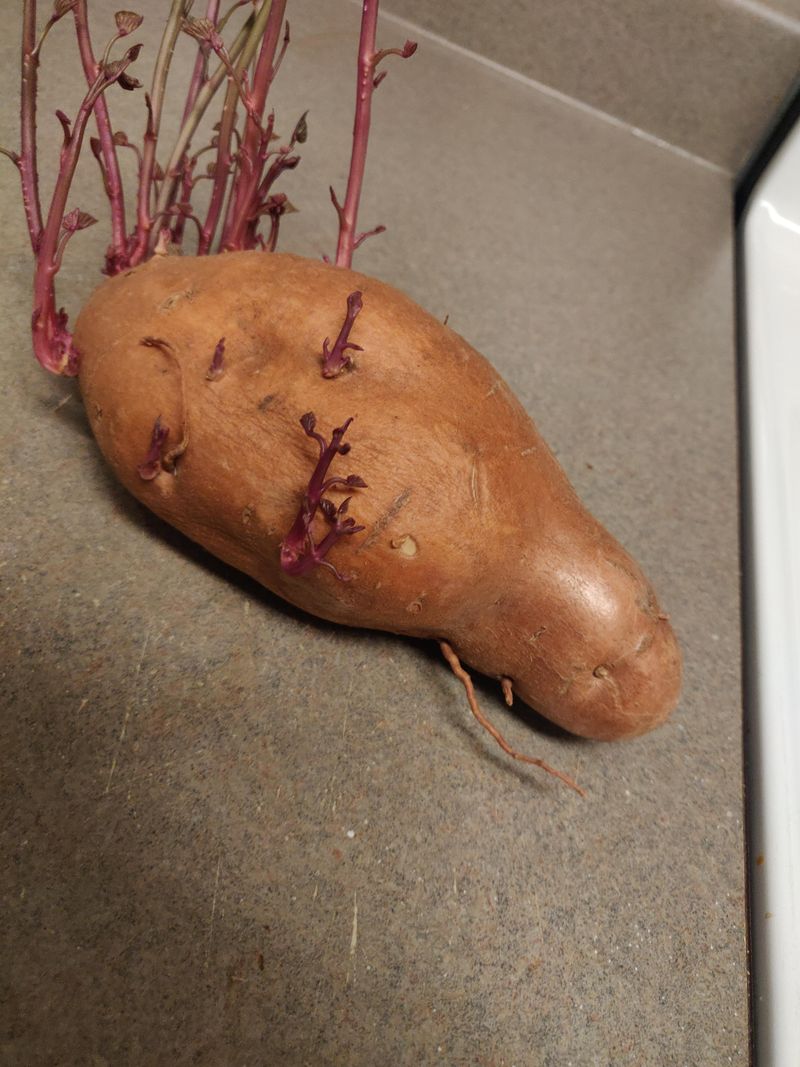
Plenty of cooks toss sprouted roots in the trash, but a firm sweet potato is usually fine for dinner. Food safety experts say the sprouts mainly signal that the root is using its stored sugars to grow.
Regular white potatoes are a different story, since their green spots and sprouts can contain a natural toxin. Sweet potatoes come from a separate plant family, so that particular concern does not apply the same way.
Your Indiana Garden Changes Every Week. Your Plan Should Too.
Gardening in Indiana changes quickly throughout the season. Every Friday you’ll receive a simple weekly plan showing exactly what to plant, prune, fertilize, harvest, and protect so you never miss the right timing.
Simply snap or cut off the shoots, then peel and cook the root as you normally would. The texture may be a bit drier, because sprouting draws moisture and energy away from the flesh.
Softness, mold, oozing spots, or a sour smell are clear signs that the root belongs in the compost. Wrinkled skin alone is often harmless, though very shriveled roots may taste stringy and a little bland.
You can also split the difference by cooking one half and saving the sprouted end for growing slips. A chunk with several eyes or shoots can still produce healthy starters when placed in water or soil.
Fall is a smart time to sort your storage bin and pull out any roots showing early shoots. Extension specialists suggest storing cured roots near 55 to 60 degrees to slow sprouting and spoilage.
Avoid the refrigerator, because temperatures below 50 degrees can cause chilling injury and a hard center. A cool pantry or basement closet works far better for keeping your harvest tasty through the winter.
You Can Grow Slips In Water Jars Or Soil Pots
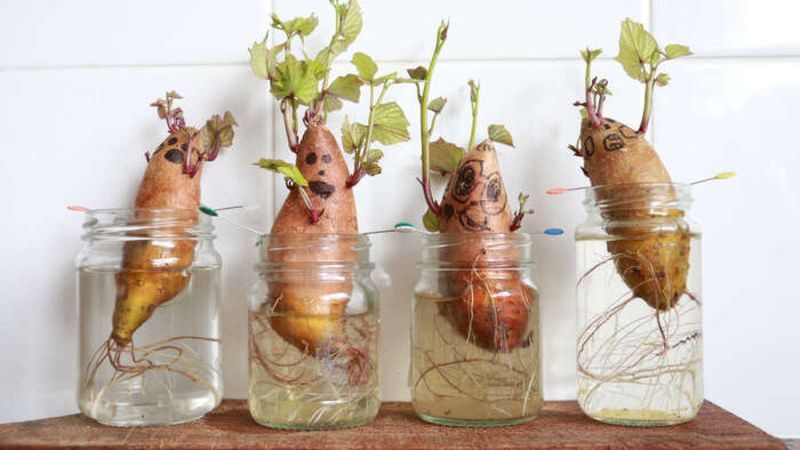
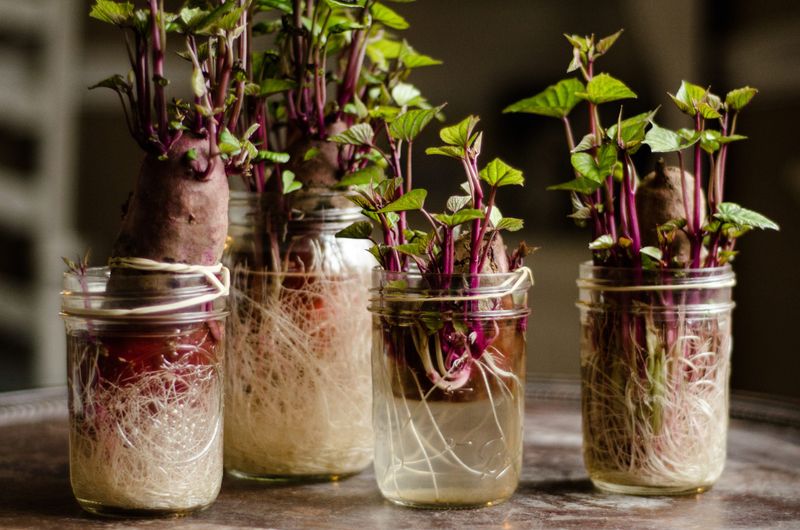
The jar method feels like a science fair project, because you can watch every new root form. Push three or four toothpicks around the middle of the root to hold it above the jar opening.
Set the root end down so the bottom half sits in water while the top half stays dry. Roots usually appear within a couple of weeks, and leafy shoots follow from the upper end later on.
Change the water every few days so it stays clear and free from any swampy sour smell. Cloudy water invites bacteria, and that can turn a promising root mushy before the first shoots appear.
The soil method is less showy, but many growers find it produces more slips with fewer rotting problems. Lay the whole root sideways in a shallow tray of moist potting mix, burying about half of it.
Keep the mix damp like a wrung-out sponge rather than soggy, since wet soil can lead to rot. A clear plastic cover or loose bag helps hold humidity while shoots push up through the surface.
Both methods work well, so pick the one that fits your space and your patience level this fall. Some gardeners even run a little experiment, trying one root in water and another in a pot.
Kids especially love the jar version, since they can check on the white roots every single morning. It makes a fun homeschool lesson about plant parts, and the payoff is real food next fall.
Your Slips Want Bright Windows Above 50°F
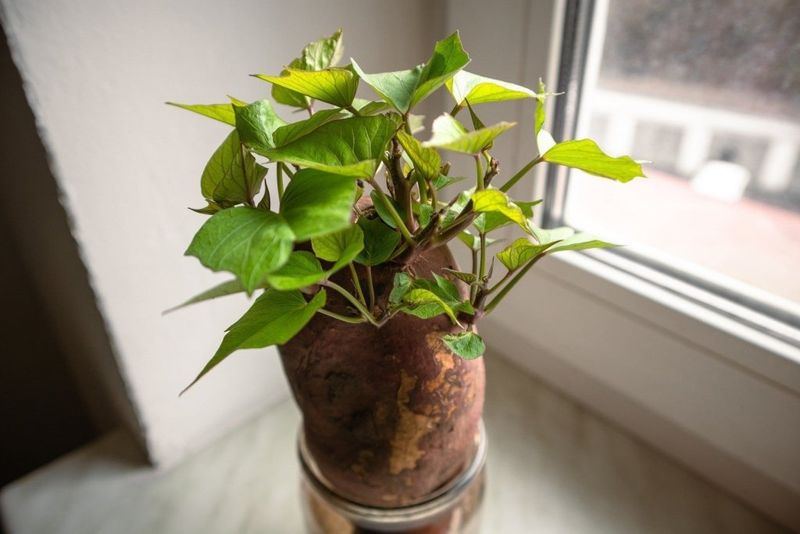
Sweet potatoes are tropical at heart, and they sulk quickly when the air around them turns chilly. Temperatures below 50 degrees can cause chilling injury, which leaves roots prone to rot and poor sprouting.
A south-facing window often offers the strongest light during short fall and winter days in the Midwest. East or west windows can work too, though the vines may stretch and look a little leggy.
Watch out for cold glass, because window panes in Indiana can feel icy on a January night. Slide your jar or tray a few inches back from the pane when frost forms on the outside.
Warmth speeds things up, and many growers aim for a range between 75 and 80 degrees for sprouting. The top of a refrigerator or a spot near a heat vent can provide that gentle bottom warmth.
Once shoots appear, though, light becomes the bigger need, so move the root back into a sunny spot. Pale, floppy stems are a sign that your little vines are begging for more daylight each day.
An inexpensive LED shop light hung a few inches above the leaves can fill gaps on cloudy weeks. Many gardeners run grow lights for about 14 to 16 hours daily with a simple plug-in timer.
Dry indoor heat can also crisp the leaf edges, so a pebble tray nearby adds welcome moisture. Your vines will reward that extra attention with glossy heart-shaped leaves that brighten a winter windowsill.
Snap Off Rooted Slips Once Early Spring Arrives
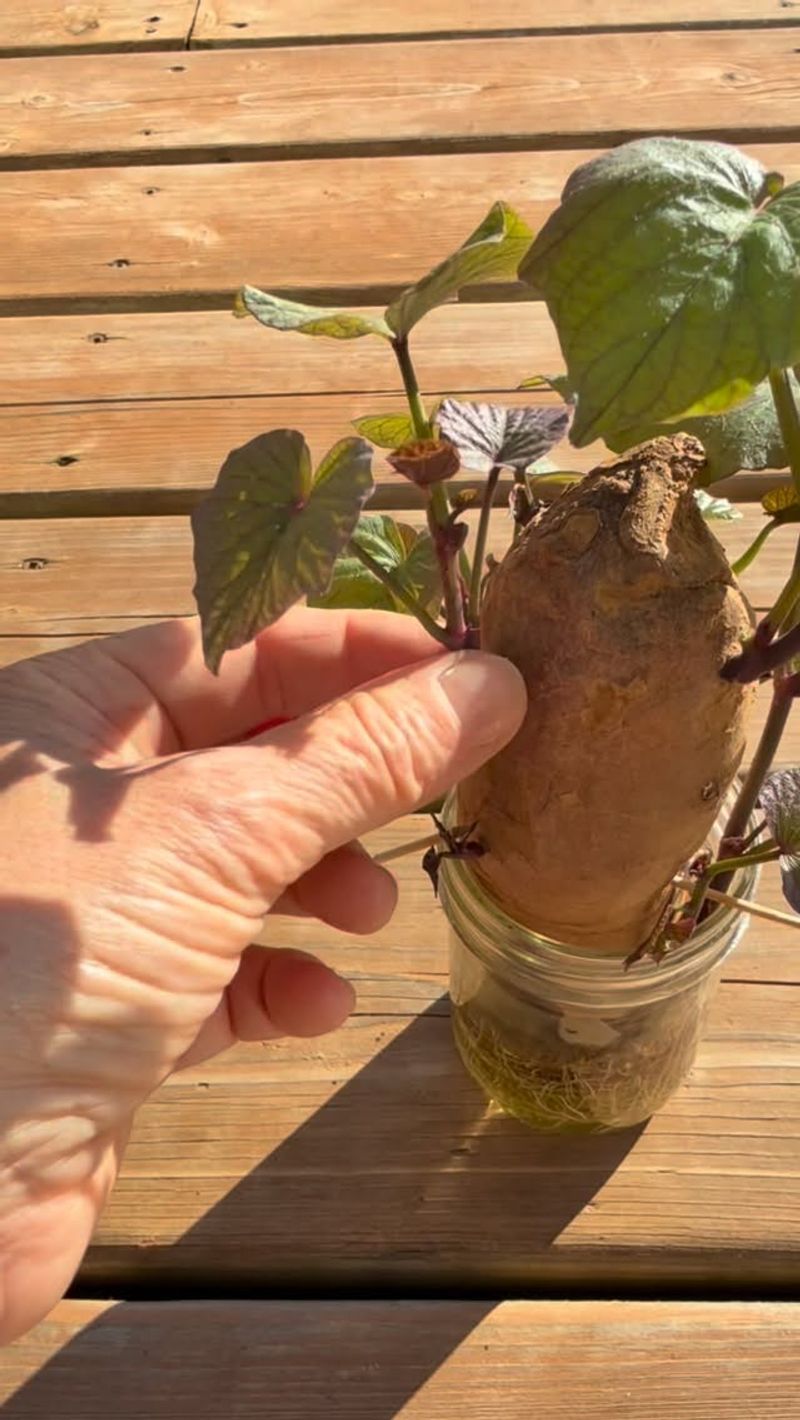
Harvest day for slips feels a lot like picking green beans, only the crop grows on your kitchen counter. Plan to start collecting them in March or April, about six to eight weeks before planting outside.
Look for shoots that are roughly six to eight inches tall with several healthy leaves along the stem. Grab each one near its base and give a gentle twist, or snip it with sharp sanitized scissors.
Freshly snapped slips often have few roots, so they need a short stay in water before planting. Strip the lower leaves and stand the stems in a glass with an inch or two of water.
White roots usually show up within a week, and they grow fast enough to fill the glass quickly. Some growers tuck slips straight into damp potting mix instead, which can make tougher roots for transplanting.
Leave the mother root in place after the first harvest, since it often keeps pushing out new shoots. A second or third wave of slips is common, giving you extras to share with friends.
Long vines grown over the winter can be cut into pieces with a few leaves and nodes each. Those cuttings root just like slips, which turns one winter houseplant into a whole tray of starters.
Label your containers if you grow more than one variety, because the slips look nearly identical. A strip of masking tape and a marker saves plenty of guesswork when planting time finally arrives.
Wait For Indiana Soil To Warm In Late May
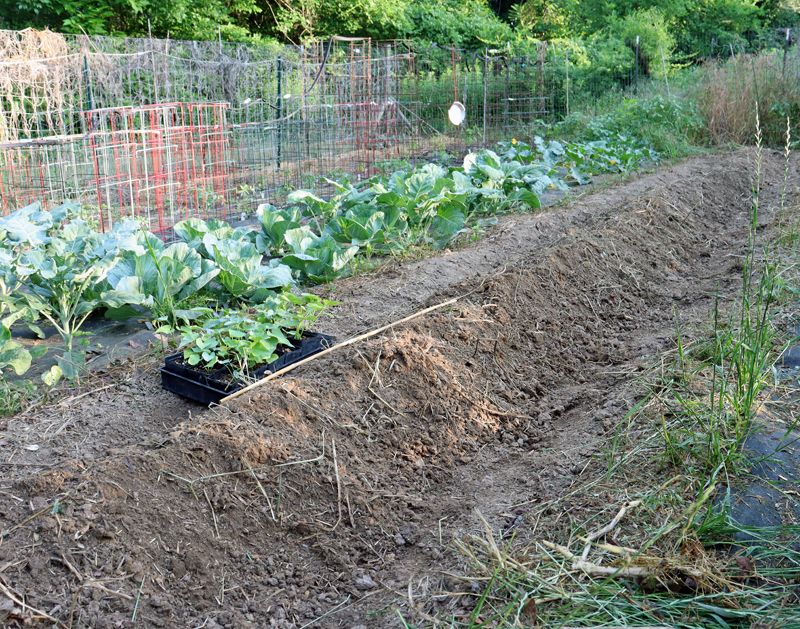
Patience is the secret ingredient here, because cold ground stunts sweet potatoes faster than almost anything else. Purdue Extension guidance points to late May or early June for planting slips outdoors in Indiana.
Soil temperatures should reach at least 65 degrees at planting depth before your slips go into the ground. A cheap soil thermometer takes the guesswork out, and checking in the morning gives the most honest reading.
Northern Indiana soil often warms a week or two later than southern counties near the Ohio River. Local frost dates vary, so your county extension office can help you fine-tune the best window.
Before planting, harden off your slips by setting them outside for a few hours each mild day. Stretch that time over about a week so the tender leaves adjust to wind and bright sun.
Raised rows or mounded beds warm faster and drain better, which sweet potatoes really appreciate in heavy clay. Space slips about 12 to 18 inches apart, burying the stem up to the top few leaves.
Black plastic mulch laid a week or two early can heat the soil and give roots a boost. Water the new transplants well for the first couple of weeks while their roots settle into place.
Most varieties need around 90 to 120 frost-free days, so a late May start fits Indiana summers nicely. By next October, that sprouted kitchen root could fill your basket with a heavy, sweet homegrown harvest.