Low-Desert Garlic: Plant in October for a Possible May Harvest and Braids
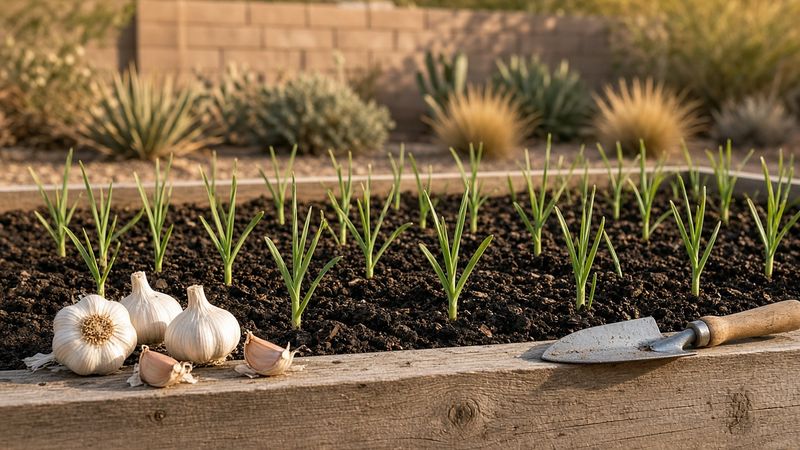
Garlic is one of the few crops you can tuck into the ground in fall and then mostly forget about while the winter garden hums along. For Phoenix-area gardeners, October is the month to get cloves planted.
With the right type, you could be pulling bulbs and braiding them by late spring. Results vary from yard to yard, so here is how to stack the odds in your favor.
October planting can put low-desert garlic on a May timeline
Garlic runs on a long clock. The Maricopa County planting calendar lists October for planting garlic cloves and estimates five to seven months until harvest.
Count forward from October and you land in late spring, which is why May is a real possibility in the low desert.
A local Master Gardener account describes harvesting in early to mid-May. Treat that as one gardener’s experience, not a promise.
Your soil, planting date, variety, and spring weather can all nudge the date earlier or later.
Keep the scope in mind, too. Garlic advice written for cooler, higher-elevation parts of the state follows a different script, with planting in September or October, a long cold spell, and harvest in June or early July.
That schedule does not transfer to Phoenix-area yards, so use the Maricopa County timing if you garden in the low desert.
Choose softneck garlic if you want to braid it
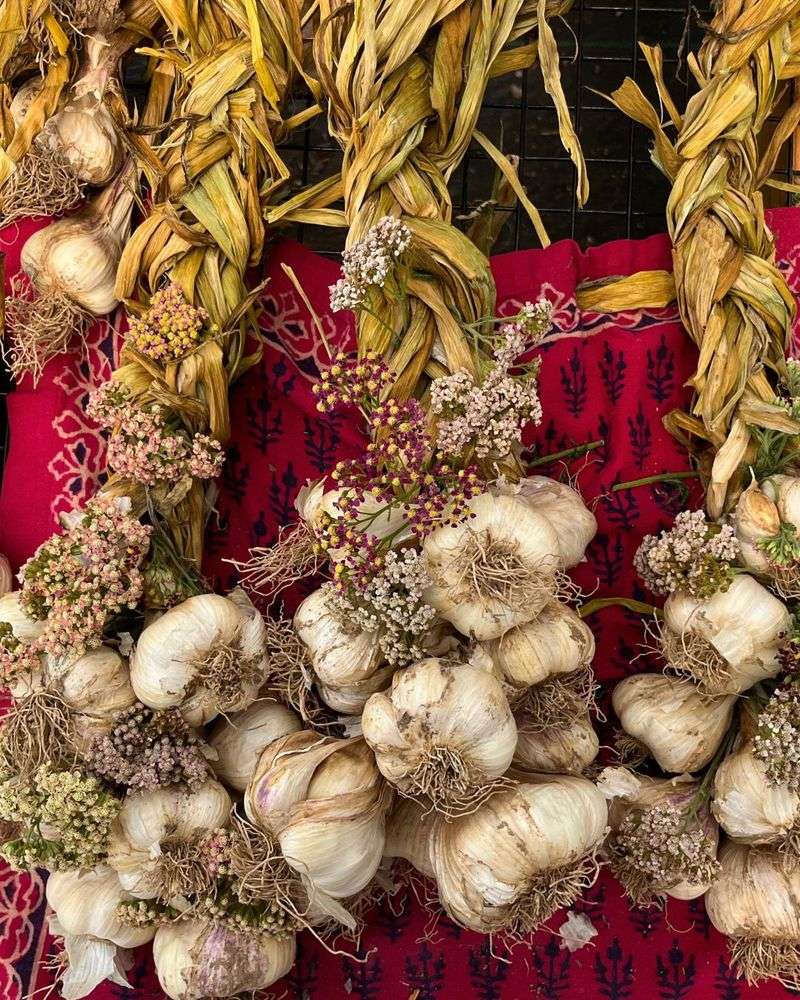
Braiding comes down to stems. Softneck garlic has pliable stems that bend and weave easily, which makes it the clear pick if a braid is your goal.
Hardneck types grow a stiff central stalk that turns rigid as it dries, so they fight you every step of the way.
Two softneck options named in University of Arizona vegetable guidance are California Early and California Late. Look for them at local nurseries or seed sources that sell garlic meant for fall planting.
A garlic handout adds more softneck candidates: Inchelium Red, Artichoke, Chet’s Italian, Mild French, and Silverskin. Think of these as varieties worth trying rather than guaranteed winners.
Not every one will perform equally well in every low-desert garden, so planting a small test row of two or three types is a smart way to learn what your yard likes.
Plant individual cloves with room to grow
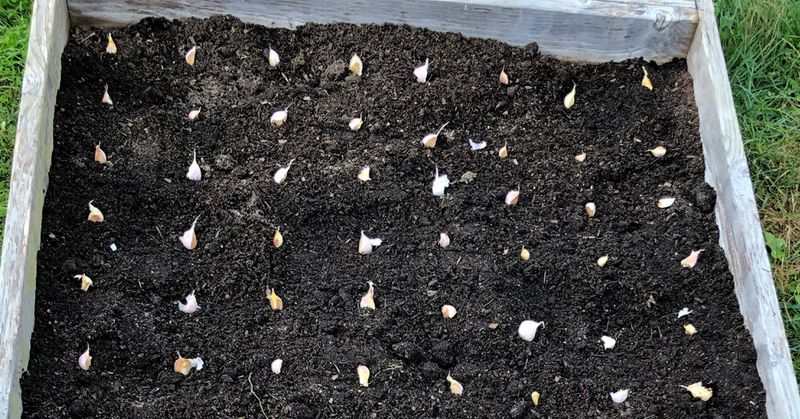
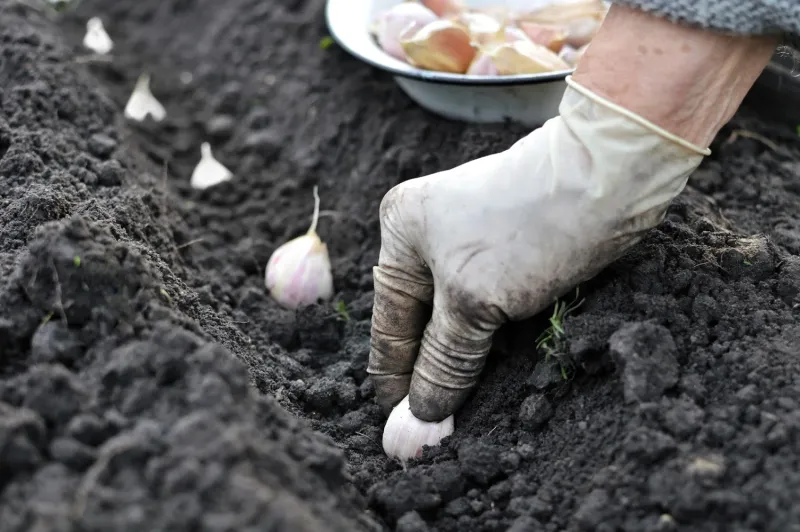
Start with a clean, healthy bulb and break it apart into single cloves. Each clove becomes its own plant, so you get several new bulbs from one.
Set every clove into the soil with the pointed end facing up and the flat root end down.
Spacing matters more than most beginners expect. The University of Arizona guidance suggests about four inches between plants and eight inches between rows.
Packing cloves in tighter can leave the bulbs smaller because the plants compete for water and nutrients.
Following that spacing gives your garlic a fair shot, but it does not lock in a particular bulb size or yield. A tape measure or a ruler laid along the row helps keep the pattern even.
Your Arizona Garden Changes Every Week. Your Plan Should Too.
Gardening in Arizona changes quickly throughout the season. Every Friday you’ll receive a simple weekly plan showing exactly what to plant, prune, fertilize, harvest, and protect so you never miss the right timing.
Mark the rows with a stake so you remember which variety went where when harvest time comes around.
Keep the soil moist without following a rigid schedule
Garlic grows best in rich soil that drains well. Mixing compost into a bed before planting helps hold some moisture and feeds the plants, while still letting extra water move through.
Heavy, soggy ground is a poor match for bulbs.
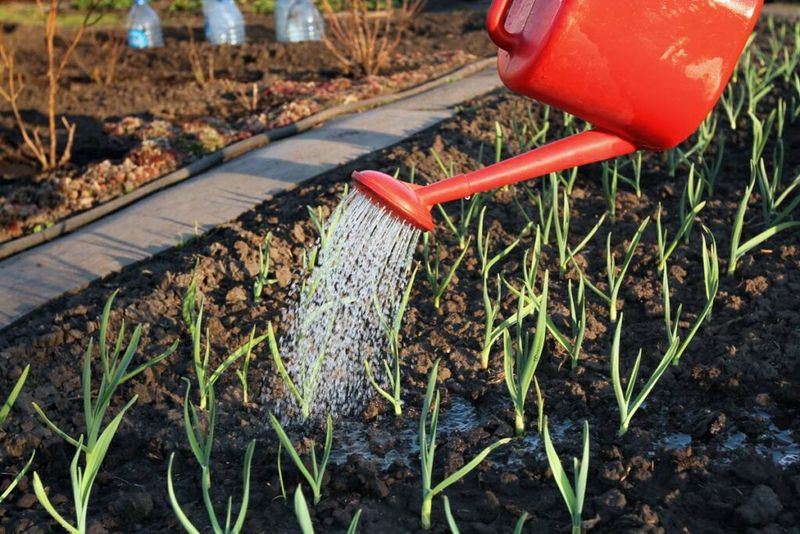
While the plants are growing, they like steady moisture. The University of Arizona guidance says to water deeply enough to wet the soil about 12 inches down, then to stop watering once the leaves begin to yellow.
Notice that depth is the target, not a calendar. How often you water depends on your soil, the temperature, and whether it rained.
Sandy soil dries faster than clay, and a warm, windy week asks for more than a cool, cloudy one. Push a finger or a trowel into the bed and check before you turn on the water.
Use the tops to decide when to harvest
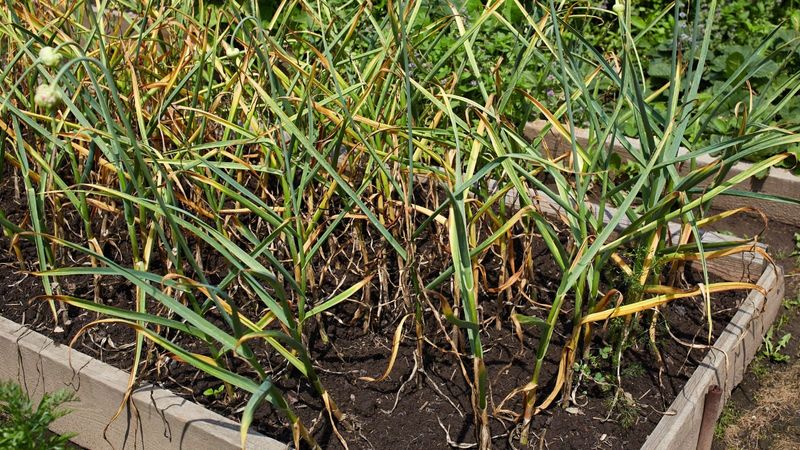
By spring, stop watching the calendar and start watching the leaves. When the tops begin to yellow or fall over, the bulbs are close to ready.
University of Arizona guidance says to lift them before the tops are completely dry.
Waiting too long can leave you with a brittle top, which is trouble for braiding. Loosen the soil with a trowel or fork and lift the bulbs gently instead of pulling by the stem.
This is where the earlier timing connects. The Maricopa County calendar’s five to seven months from an October planting points toward late spring, so May is a reasonable time to begin checking.
It is not a deadline. Some years the tops may turn sooner, other years later, and the plants will tell you more than any date on the wall.
Cure the bulbs, then braid while the stems still bend
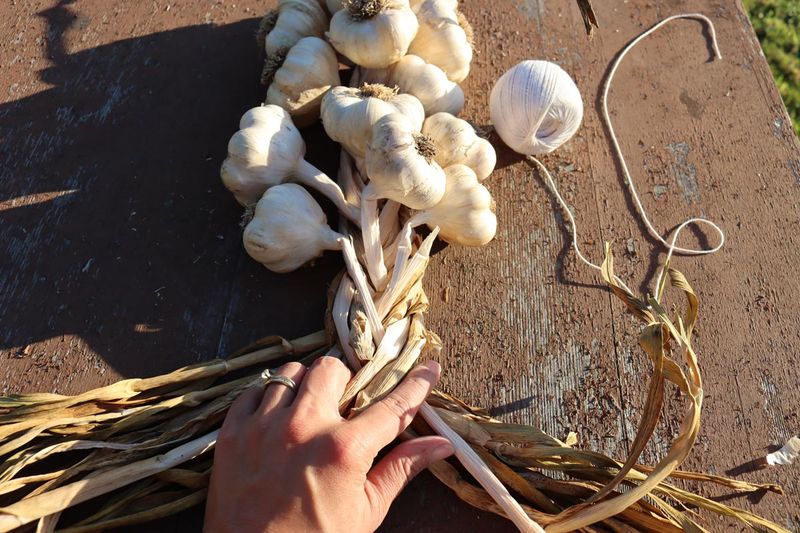
Harvest is not the finish line. Freshly dug garlic needs to cure for one to two weeks in a warm, shaded, ventilated spot such as a covered patio or a garage with good airflow.
University of Arizona guidance recommends keeping the bulbs out of direct sun while they dry.
Curing and braiding are two different steps. Braid-ready tops are
wilted and flexible, not brittle.Test a stem by bending it. If it folds without cracking, start weaving.
Because no one can say exactly when your crop will reach that point, skip fixed dates and check the stems every day or two. Once they stiffen, the window closes.
A finished braid is a handy way to hang garlic in the kitchen and a small reward for a winter of patience.