10 Snake Plant Problems In Arizona Homes And The Simple Fix For Each One
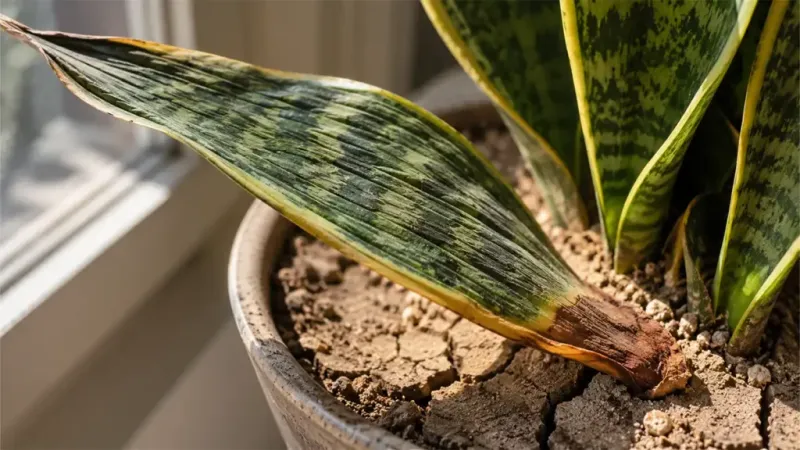
Snake plants have a reputation for being nearly impossible to mess up, but Arizona homes can still throw them a few curveballs. Blazing sun through west windows, bone-dry air, hard tap water, and air conditioning running nonstop all leave their mark on those tall, striped leaves.
The good news is that every warning sign your plant shows has a simple, low-effort fix. Here are the ten most common snake plant troubles in desert homes and exactly how to turn each one around.
1. Mushy, Soft, or Yellowing Leaves
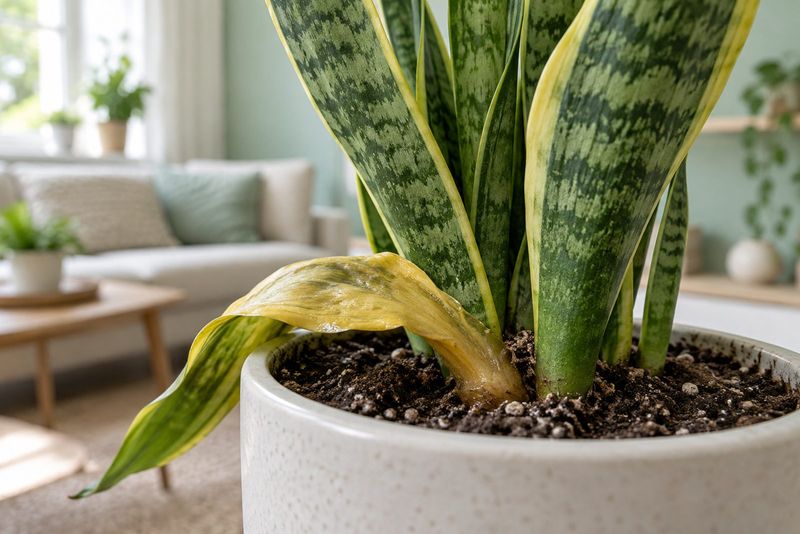
Squeeze a leaf and feel it give like an overripe banana? That squishy texture is the number one complaint from snake plant owners, and it almost always comes from too much water.
Snake plants store moisture in their thick leaves and underground rhizomes, so extra water has nowhere to go.
Many Arizona plant lovers overwater because the outdoor heat makes them think everything is thirsty. Indoors, though, air-conditioned rooms stay cool, and soil can stay wet for weeks.
Soggy soil leads to root rot, which then shows up as yellow, collapsing leaves.
The fix starts with patience. Let the soil dry out completely before you water again, and always check with a finger or wooden skewer pushed deep into the pot.
When you do water, soak it well and let the extra drain out the bottom.
If the base of the plant feels soft, slide it out of the pot and look at the roots. Healthy roots are firm and pale, while rotting ones are brown and mushy.
Trim away the damaged parts with clean scissors, then repot in fresh cactus or succulent mix. Most snake plants bounce back quickly once their feet stay dry.
2. Brown, Crispy Leaf Tips
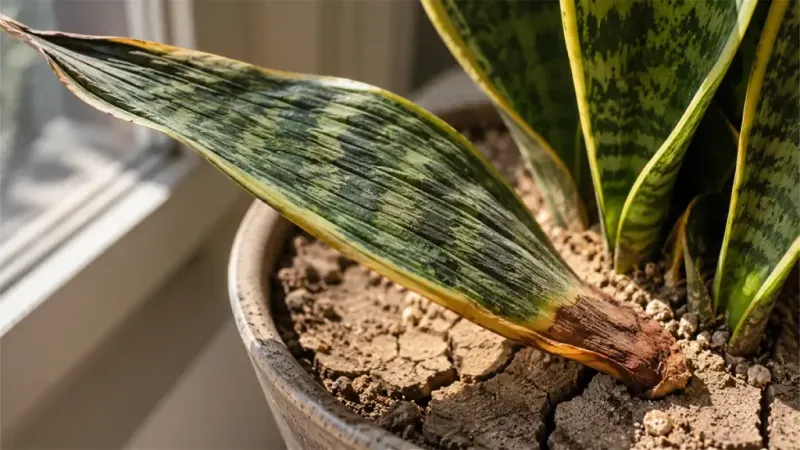
Arizona air is famous for sucking moisture out of everything, from your skin to your houseplants. Those brittle brown tips on snake plant leaves are often the first clue that your plant has been running dry for too long, or that indoor humidity has dropped way down.
Snake plants handle drought better than most houseplants, but they still have limits. When summer heat pushes your cooling system into overdrive, indoor humidity can fall into the single digits.
Leaf tips, being the farthest from the roots, take the hit first.
Start by checking the soil. Water thoroughly once the top two inches feel dry, and let all the extra water drain away.
A steady routine works far better than random splashes whenever you remember.
For a humidity boost, group a few houseplants together so they share a little moisture bubble. A pebble tray also helps.
Fill a shallow dish with pebbles and water, then set the pot on top so it sits above the waterline, not in it.
Already crispy tips will not turn green again. You can snip them off at an angle with clean scissors to keep the leaf looking natural and tidy.
3. Wrinkled Leaves
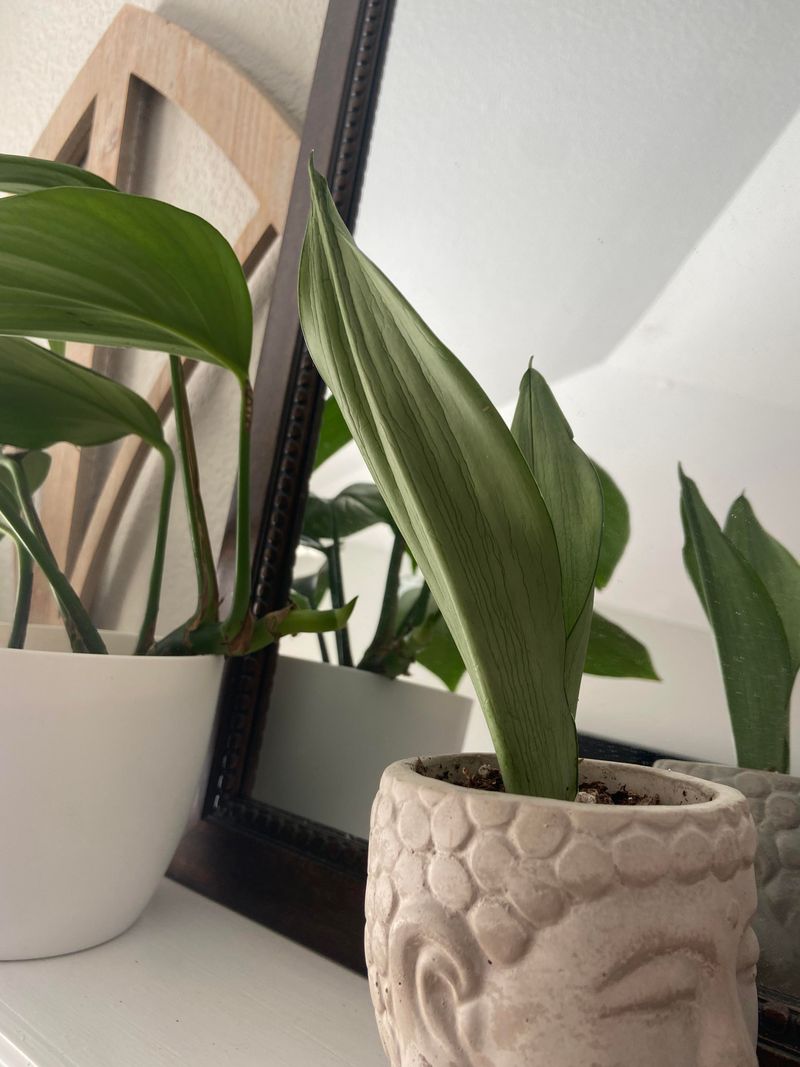
Picture a raisin next to a fresh grape. A wrinkled snake plant is basically shouting that it has used up its water savings account and needs a refill.
Your Arizona Garden Changes Every Week. Your Plan Should Too.
Gardening in Arizona changes quickly throughout the season. Every Friday you’ll receive a simple weekly plan showing exactly what to plant, prune, fertilize, harvest, and protect so you never miss the right timing.
Because these plants pack water inside their leaves, they stay plump and smooth when well stocked. Once that supply runs low, the leaves start to pucker and fold, especially along the edges.
In Arizona, this happens fast during June and July, when warm rooms and dry air speed up moisture loss.
Luckily, this is one of the easiest problems on the list. Give your plant a deep, slow drink until water flows out of the drainage holes.
If the soil has shrunk away from the pot sides, it may repel water at first. Try bottom watering by setting the pot in a tray of water for about 30 minutes so the soil can soak it up.
Leaves usually plump back up within a week or two. Afterward, set a reminder to check soil moisture every couple of weeks during the hot season and roughly once a month in winter.
Fun fact: snake plants can survive weeks of neglect, but they look happiest with a predictable schedule.
4. Pale, Scorched, or Brown Patches on Leaves
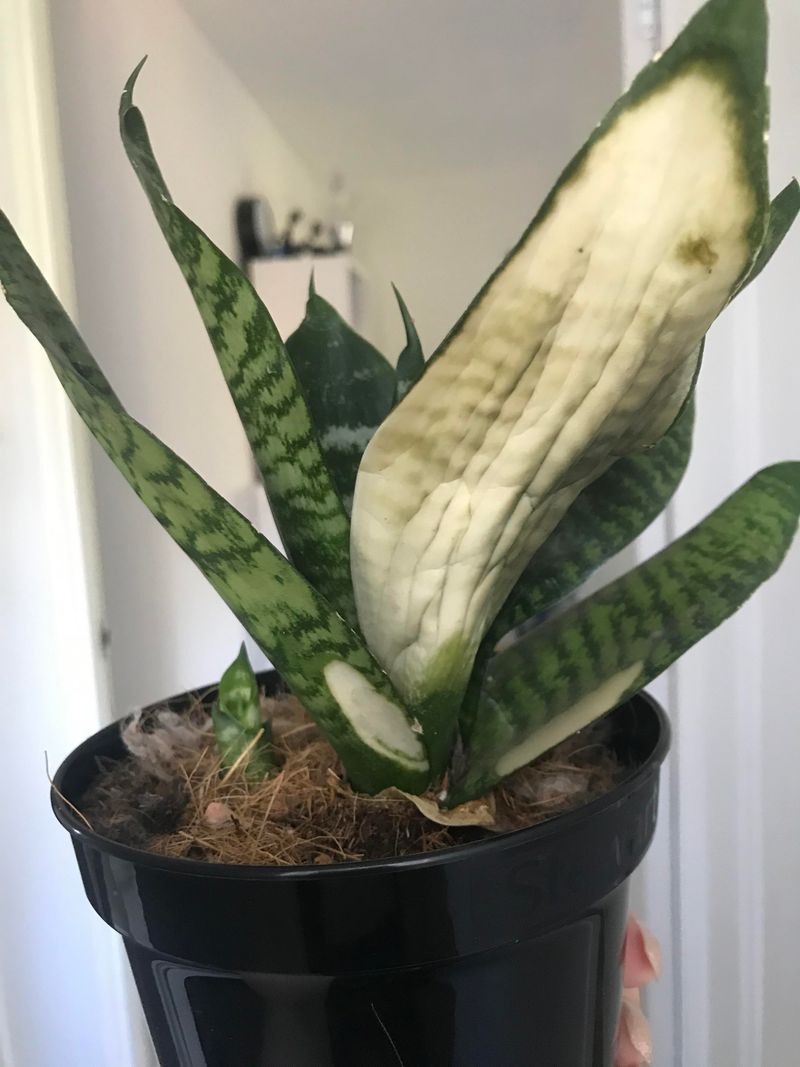
Ever left a water bottle in your car during a Phoenix afternoon? Now imagine being a plant parked right behind a west-facing window.
Sunburn on snake plants looks like bleached, papery, or tan patches, often on the side facing the glass.
Snake plants are tough, and they enjoy plenty of light. Yet the intense desert sun, magnified through window glass, can be too much.
Plants that were moved outdoors to a patio without shade often scorch within days, especially from May through September.
The answer is all about location. Shift your plant a few feet back from south or west windows, or hang a sheer curtain to soften the rays.
East-facing windows are a sweet spot because they give gentle morning light and skip the brutal afternoon blast.
If you like keeping your snake plant on a covered patio, choose a spot with full shade during the hottest part of the day. Bring it inside when temperatures climb past about 100 degrees for long stretches.
Scorched areas will not heal, but the plant will keep growing new, healthy leaves. Once the fresh growth fills in, trim any badly burned leaves at the soil line.
5. Thin, Leggy Leaves with Faded Color
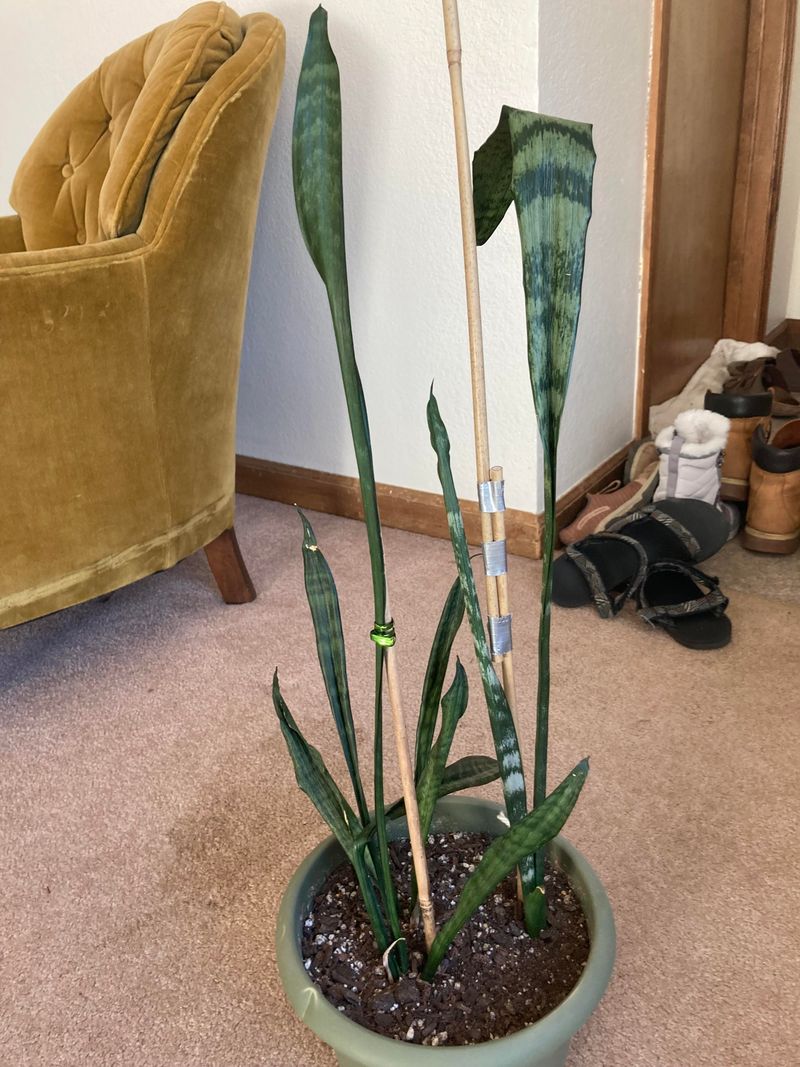
Strangely, the opposite of sunburn can also be a problem. Snake plants tucked into dark hallways, bathrooms without windows, or shady corners sometimes grow tall, skinny, floppy leaves that lean toward the nearest light source.
Plant experts call this stretching etiolation. The plant is basically reaching for the sun, putting energy into length instead of strength.
Its bold stripes and deep green color may also fade, leaving it looking washed out and tired.
Yes, snake plants are sold as low-light champions, and they can survive in dim spots. Surviving and thriving are two different things, though.
With brighter indirect light, they grow thicker, sturdier leaves with sharper patterns.
Move the plant closer to a window that gets filtered light for several hours a day. Arizona homes usually have plenty of brightness, so it rarely takes much of a shuffle.
Turn the pot a quarter turn every few weeks so all sides get equal attention.
Stretched leaves will not shrink back down. Still, the new leaves that sprout from the soil will come in fuller and more colorful.
If older leaves keep flopping over, you can trim them or use them to start new plants.
6. Drooping or Bending Leaves
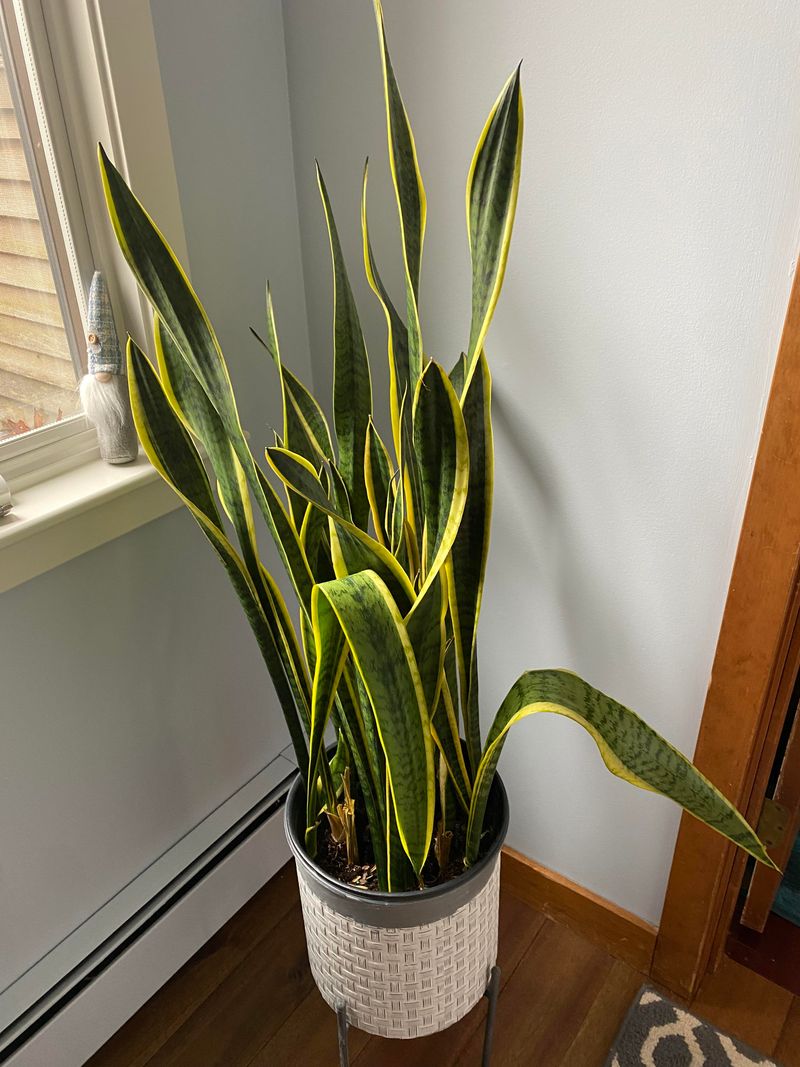
A snake plant should stand tall like a row of green swords. When the leaves start bending at the base or flopping outward, something is going on below the soil, and it can be either too much water or too little.
Here is the tricky part. Both problems look surprisingly similar from above.
Overwatering weakens the roots so they can no longer hold the leaves upright, while long dry spells drain the leaves until they lose their stiffness.
Your best detective tool is your finger. Push it a few inches into the soil and see what you find.
- Soggy or sour-smelling soil means you should follow the root rot steps from the first section.
- Bone-dry, crumbly soil means the plant needs a thorough soaking.
Drainage plays a huge role too. Decorative pots without holes trap water at the bottom, which is a common hidden cause.
If you love a pot without drainage, use it as a cover and keep the plant in a plastic nursery pot inside.
For leaves that keep leaning even after the fix, a simple stake or soft plant tie can support them while new upright growth comes in.
7. White Crust on Soil from Hard Water
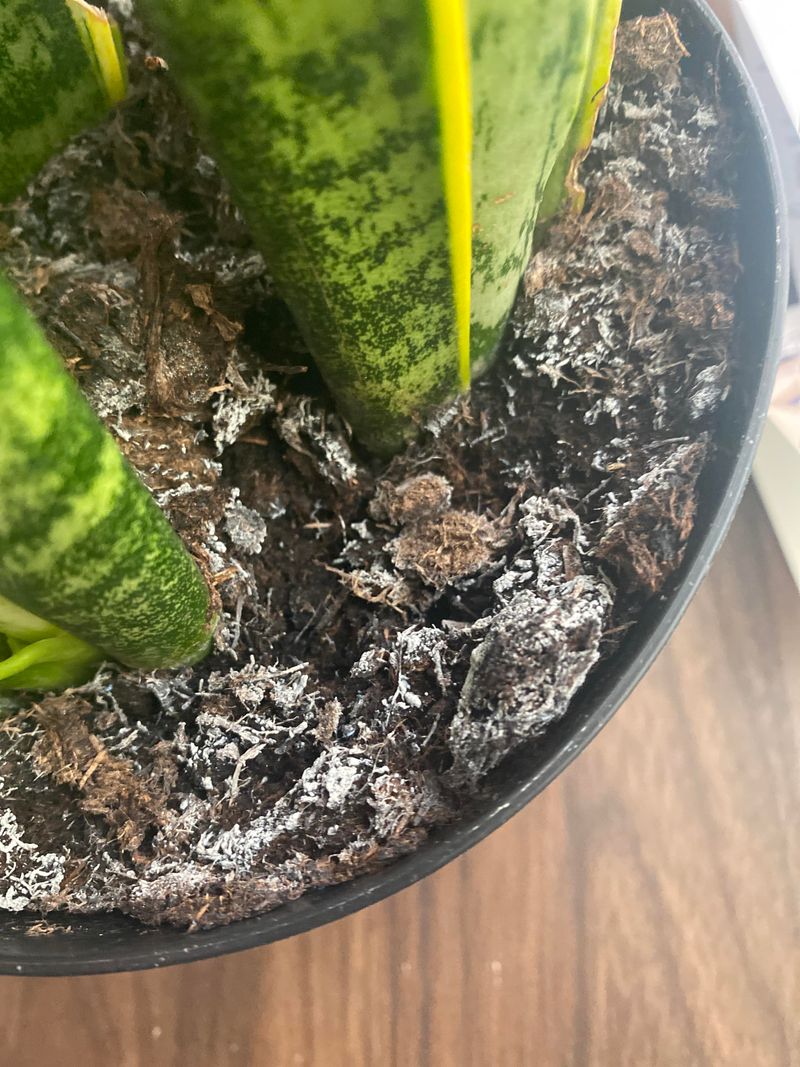
Anyone living in the Valley knows the white spots that form on faucets and shower doors. That same mineral buildup can collect on top of your plant soil and around the pot rim, showing up as a chalky white or yellowish crust.
Arizona tap water tends to be quite hard and loaded with minerals and salts. Over time, these build up in the soil, especially when you water lightly and the extra never flushes out.
Too much fertilizer adds even more salts to the mix. The result is often brown leaf tips and slower growth.
Flushing is the simple cure. Take the plant to a sink or bathtub and slowly run plain water through the soil for a few minutes, letting it drain freely.
Do this every few months to keep salts from piling up.
Switching to filtered water, collected monsoon rainwater, or distilled water can also make a big difference. Scrape off any heavy crust from the soil surface too.
As for feeding, go light. Use a diluted, balanced plant food about once a month from spring through early fall, and skip it entirely during the cooler winter months.
8. Sticky Residue, Bumps, or Fine Webbing
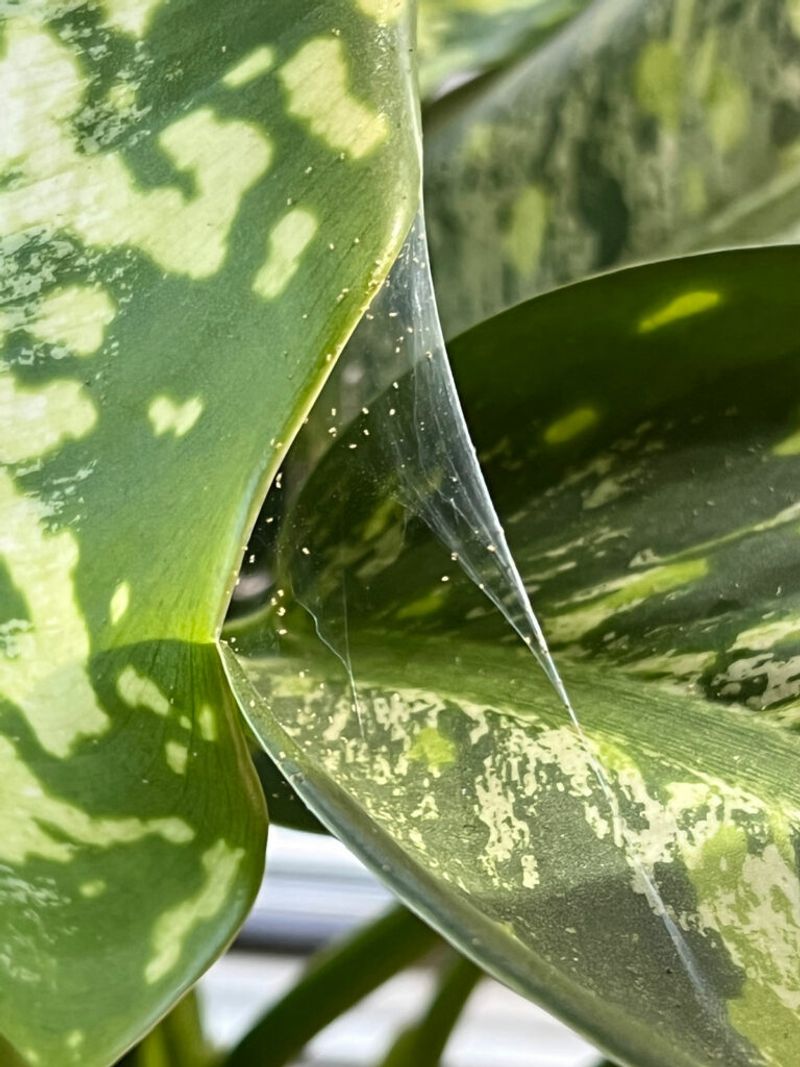
Snake plants are not exactly bug magnets, which is one reason people love them. Still, now and then a few uninvited guests sneak in, especially on a new plant brought home from the store.
Watch for three main pests. Spider mites love hot, dry Arizona homes and leave fine webbing and tiny speckles.
Mealybugs look like little bits of cotton tucked where leaves meet, and scale insects form small brown bumps that feel sticky around them.
Prevention is surprisingly simple. Wipe the leaves with a damp cloth every few weeks.
Dust removal lets your plant soak up more light, and it also disturbs pests before they settle in.
If you spot an infestation, move the plant away from your other houseplants right away. Then treat it with insecticidal soap or neem oil, following the label directions carefully.
Spray both sides of each leaf and the base of the plant, repeating every week or so until the critters are gone.
Little tip: a quick shower in the tub can blast off spider mites before you even reach for a spray. Just let the plant drain well afterward so the soil does not stay wet.
9. Foul-Smelling Soil or Tiny Flies
Your nose can be one of the best plant care tools you own. Lean in close to the pot, and if the soil smells sour, swampy, or rotten, the roots are likely sitting in too much moisture and starting to decay.
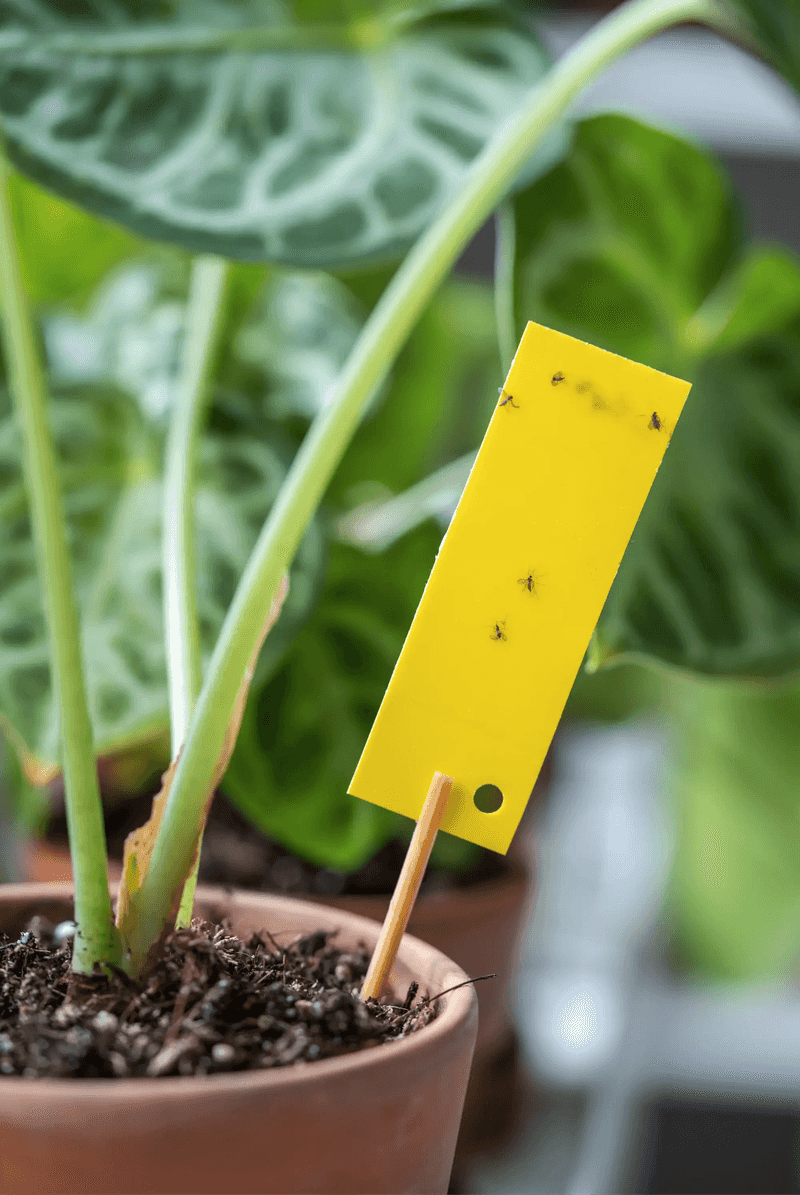
Often, that smell arrives with a cloud of tiny black flies. These are fungus gnats, and their larvae live in damp soil.
The adults are harmless to people but super annoying, buzzing around your face while you relax on the couch.
First, deal with the moisture. Follow the root rot steps from earlier, trimming any mushy roots and repotting in fresh, gritty soil if needed.
Going forward, let the top inch or two of soil dry out fully before you water again.
For a clever extra step, add a one to two inch layer of sand over the potting mix. Sand dries out quickly, so gnat larvae have a hard time surviving there.
Yellow sticky traps placed near the pot can catch the flying adults.
Once the soil stays drier, both the smell and the gnats usually disappear within a few weeks. Your snake plant will thank you with steady new growth.
10. Stunted Growth in a Crowded Pot
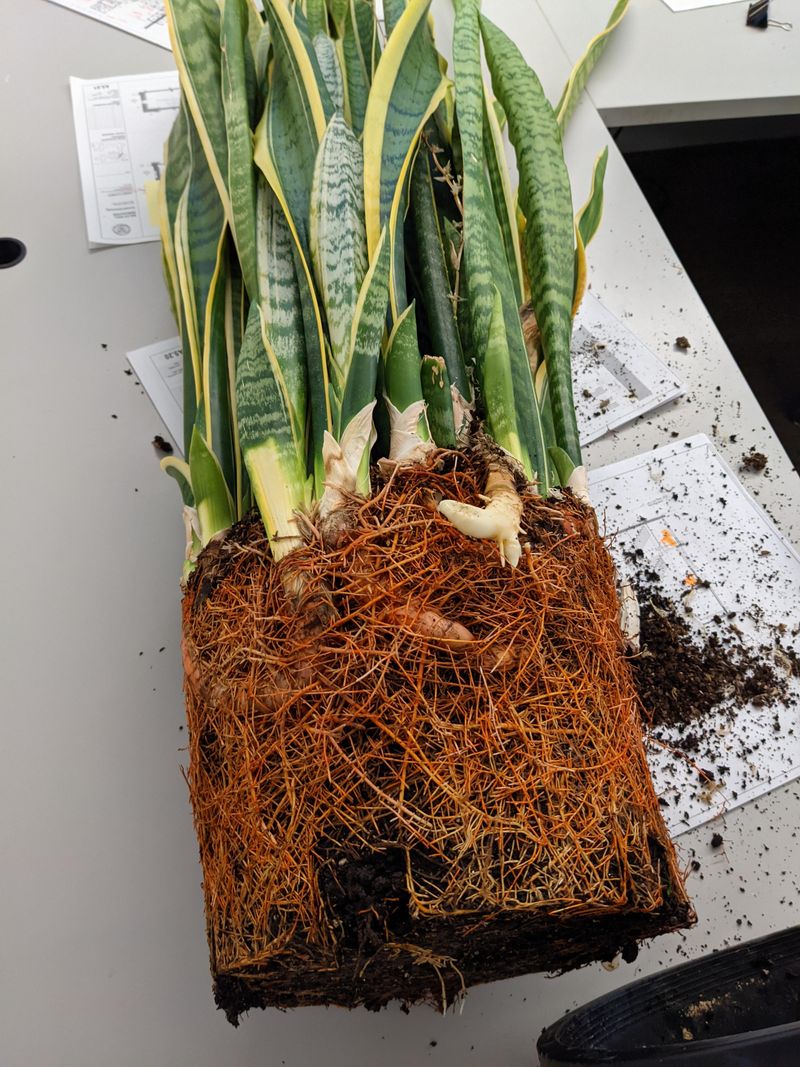
Some snake plants become escape artists. Roots poke out of drainage holes, plastic pots bulge or crack, and growth slows to a crawl.
These are classic signs of a rootbound plant that has completely filled its container.
Snake plants actually enjoy being a little snug, so a slightly crowded pot is fine. But once roots wrap tightly around and around, they struggle to take in water and nutrients.
The plant may also become top-heavy and tip over easily.
Repotting solves the problem. Choose a new container just one to two inches wider than the old one, since an oversized pot holds extra soil that stays wet too long.
Make sure it has a drainage hole, and fill it with a fast-draining cactus or succulent mix.
Gently loosen the circling roots before settling the plant into its new home. If the clump is huge, you can divide it into smaller sections and grow new plants to share with friends.
Timing matters in the desert. Fall, around October and November, or early spring are the best windows for repotting in Arizona.
Avoid summer, when heat stress makes recovery much harder for any plant.