The Arizona Trees That Shade a West-Facing Wall by Next Summer
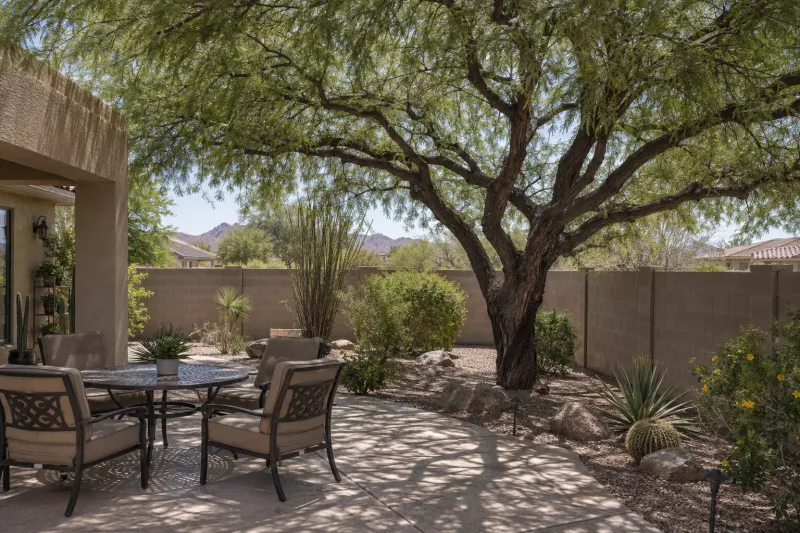
A west-facing wall in Phoenix or Tucson can soak up brutal afternoon sun and push heat straight into your home. The right tree can block that heat, lower your cooling bill, and give birds and bees a place to live.
Some desert trees grow fast enough to cast real shade by next summer if you plant them this fall or early spring. Here are seven tough picks that handle 110 degree days without asking for much water.
1. Desert Museum Palo Verde
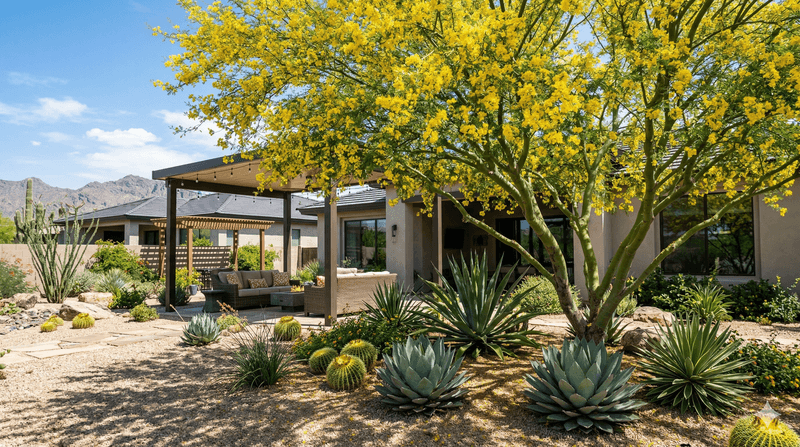
Ask any Phoenix landscaper for the fastest shade on a hot wall, and you will probably hear this name first. The Desert Museum hybrid blends three palo verde species into one tree that grows quickly, stays thornless, and fills out with a fuller canopy than its parents.
Growth of 2 to 3 feet per year is common with deep watering, so a 15-gallon tree planted in October can throw useful afternoon shade by the following July. Mature trees reach around 20 to 25 feet tall and wide, which suits most west-side yards.
Their green bark actually makes food from sunlight, so the tree keeps working even when it drops leaves in extreme drought.
Wildlife loves it too. Spring brings a wave of yellow flowers that pulls in native bees and butterflies, and the branches give desert birds a safe perch.
Plant it at least 10 to 12 feet from the wall so the canopy can spread without rubbing the roof. Water deeply every week or two during the first two summers, then taper off.
Young trees benefit from light structural pruning in late winter, plus staking before monsoon winds arrive. After that, expect very little fuss and a lot of cooler afternoons.
2. Blue Palo Verde
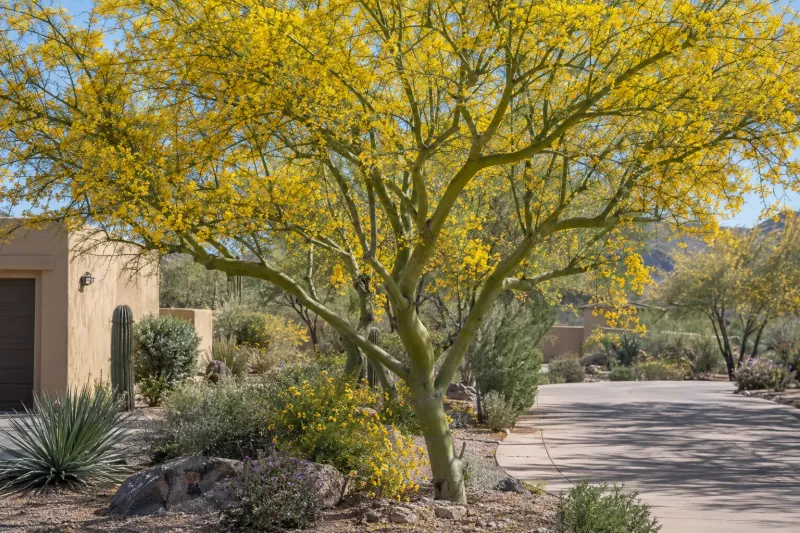
Picture a tree that turns completely gold every spring, then quietly shades your house through the hottest months. Blue palo verde is a true Sonoran native, and it shares state tree honors with its foothill cousin.
Speed is the big selling point here. In a good spot with deep, infrequent watering, blue palo verde can add 2 to 3 feet a year and reach 20 to 30 feet at maturity.
It handles reflected heat off block walls and pavement, and it shrugs off temperatures near 120 degrees.
The shade is filtered rather than dense. That lacy light works well on a west wall because it cools the surface while still letting low groundcovers and cactus grow underneath.
Habitat value is a quiet bonus. Roadrunners are known to nest in palo verdes, and a yard that welcomes roadrunners may be less inviting to scorpions and lizards they hunt.
Bees crowd the spring blossoms, and the pods feed small mammals and birds.
One honest tradeoff: this species has small thorns and drops plenty of flowers. Keep it away from pools, and give it a deep soak through its first two summers.
After establishment, it can often get by on rainfall alone.
3. Chilean Mesquite Hybrid
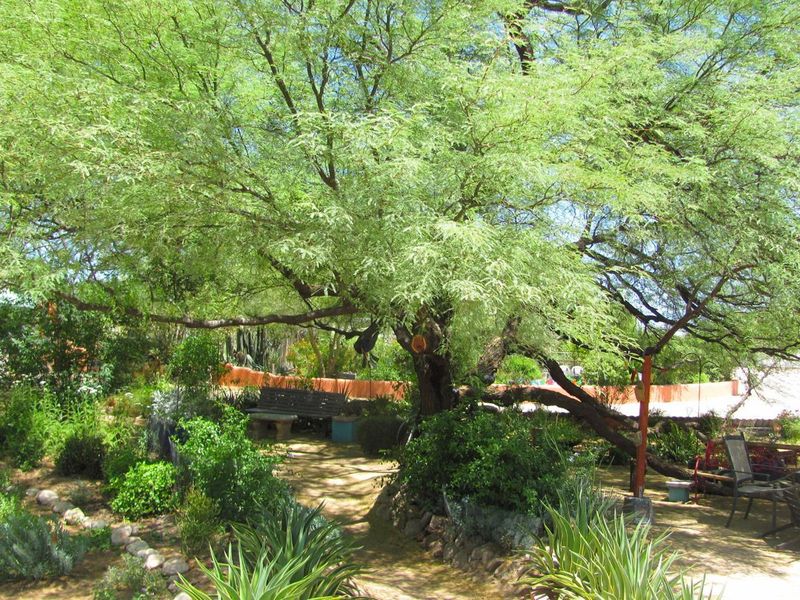
Some homeowners want shade yesterday. For them, a Chilean hybrid mesquite is the eager overachiever of the desert tree world.
Your Arizona Garden Changes Every Week. Your Plan Should Too.
Gardening in Arizona changes quickly throughout the season. Every Friday you’ll receive a simple weekly plan showing exactly what to plant, prune, fertilize, harvest, and protect so you never miss the right timing.
These hybrids often push 13 to 25 inches of growth a year, and many grow even faster with summer watering. They form a wide, umbrella-shaped canopy that can stretch over a patio and a big section of west wall within a couple of seasons.
Mature trees can reach 30 feet or more, so give them room, roughly 15 feet from the house.
Deep roots let mesquites chase moisture far below the surface, which is why they handle drought and heat so well. Water deeply and slowly during the first year to train those roots downward, not sideways.
A word of caution comes with that speed. Fast mesquites can grow top-heavy, and monsoon gusts may snap branches on trees that are overwatered or never thinned.
Prune lightly each spring or early fall to open the canopy so wind passes through. Staking a young tree for its first season also helps.
Native bees work the fuzzy spring flowers, and doves and quail pick at the pods. Choose a thornless variety if kids or pets play nearby.
4. Velvet Mesquite
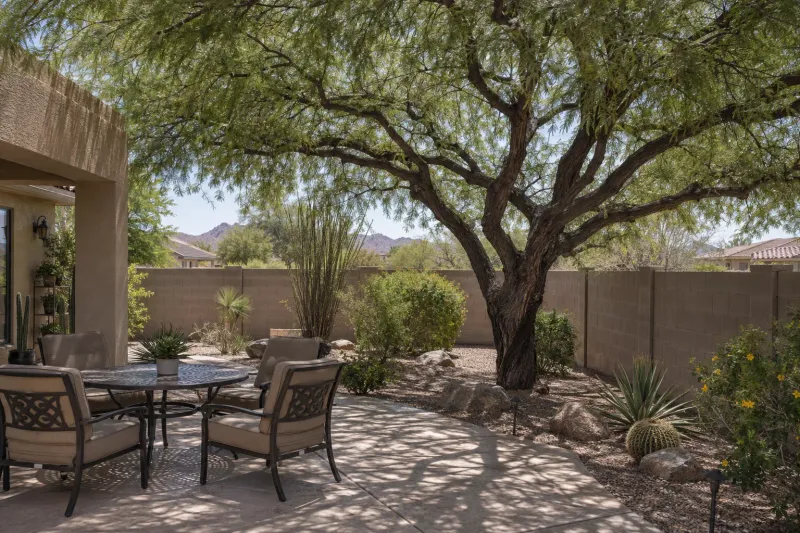
Long before air conditioning, desert families relied on mesquite trees for cool resting spots, food, and firewood. Velvet mesquite is the original Arizona native, and it still earns its spot today.
Compared with hybrids, velvet mesquite grows a bit slower and steadier, which actually means stronger wood and fewer monsoon breakage problems. With good watering in its first year, you can still expect a few feet of growth and noticeable dappled shade on a wall by its second summer.
Over time it develops a broad, sculptural crown that looks right at home in a desert yard.
Its wildlife value is hard to beat. The protein-rich pods feed quail, doves, and other critters, while native bees gather around the catkin flowers in spring.
Roadrunners often nest in mesquite branches, and a busy roadrunner can help keep scorpion numbers in check, though no tree offers a guarantee.
Care stays simple. Plant in fall, water deeply every week or two through the first warm season, then cut back to occasional summer soaks.
Prune young trees to pick one or a few main trunks. Once settled, velvet mesquite thrives in caliche, alkaline soil, and blazing afternoon sun with almost no help.
5. Shoestring Acacia
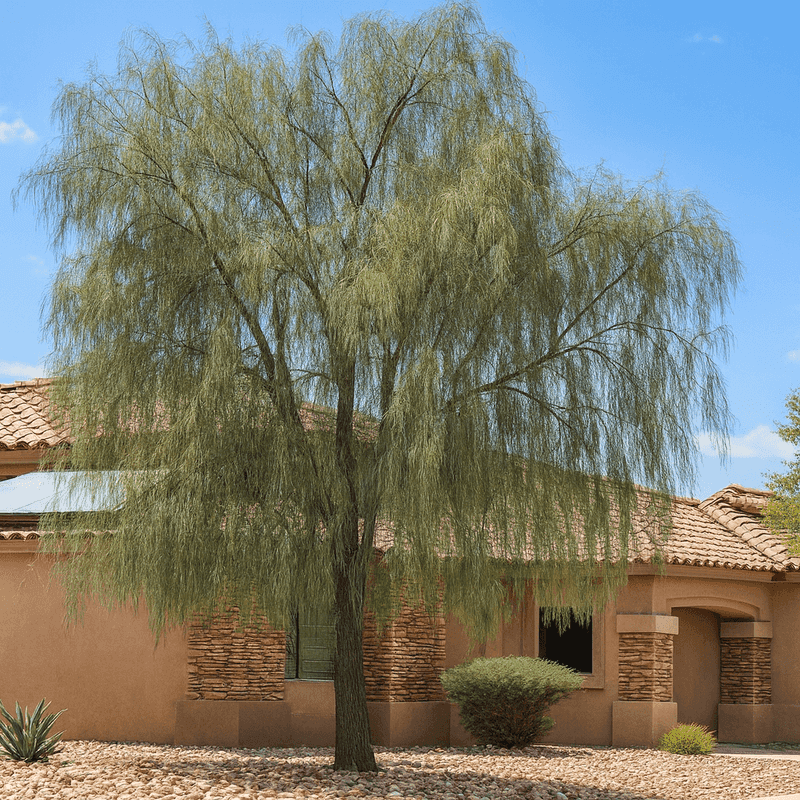
Got a skinny side yard with a wall that bakes every afternoon? Shoestring acacia was practically made for that tight space.
Its upright, narrow shape spreads only about 15 to 20 feet wide, while dangling, ribbon-like leaves give it a graceful weeping look. In Phoenix it often grows 2 to 3 feet a year, reaching 20 to 30 feet tall.
Better yet, it stays evergreen, so the wall gets filtered shade in every season, not just summer.
Though originally from Australia, this tree adapted beautifully to low-desert conditions. It thrives in reflected heat, poor caliche soil, and lean ground where many trees struggle.
It also handles cold snaps down to around 18 degrees, which covers almost any winter night in the valley.
Late winter into spring brings fragrant, pale yellow puffball flowers. Bees and butterflies show up early, giving pollinators a meal when little else blooms.
Water deeply during its first one to two years, then switch to occasional summer soaks. Light structural pruning when young keeps the trunk strong.
Because its leaves are thin and its roots are not aggressive, it plays nicely near walls, walkways, and gravel beds without much cleanup.
6. Desert Willow
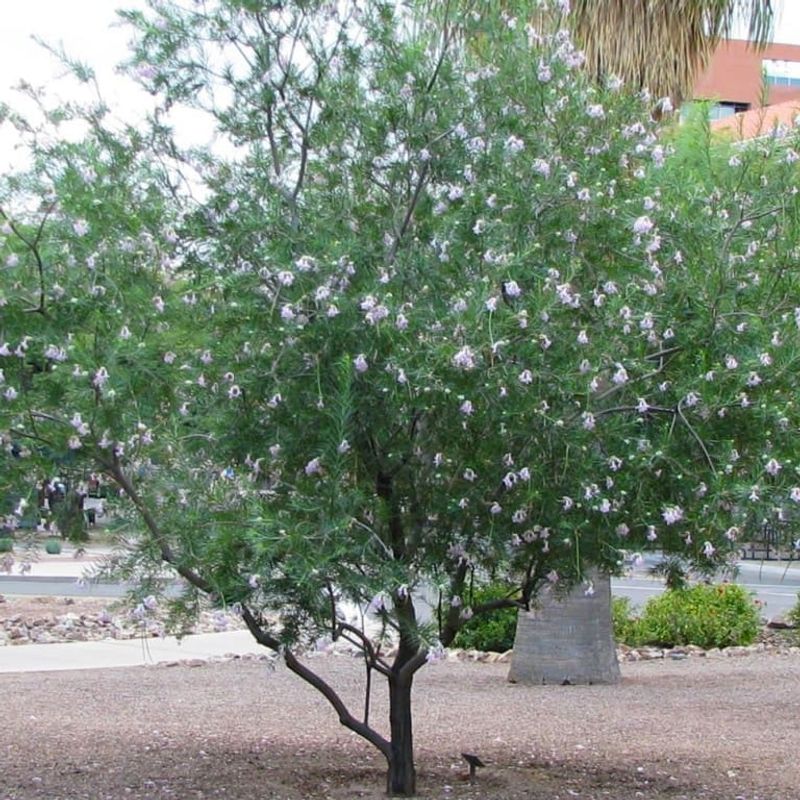
Hummingbirds seem to have a radar for this tree. Once the pink, lavender, or burgundy trumpet flowers open, tiny visitors arrive almost daily from late spring into fall.
Desert willow is not actually a willow at all. It is a Southwest native related to catalpa, named for its long, slender, willow-like leaves.
It grows about 1 to 2 feet per year, reaching 15 to 30 feet, and casts a light, airy shade that cools a wall without darkening windows.
Hot west exposures suit it perfectly. It blooms most heavily in full sun and handles 110 degree afternoons and alkaline soils with ease.
Choose a larger 24-inch box tree if you want meaningful shade by next summer, since its growth rate is more moderate than palo verde.
Native bees love the nectar too, and birds use the branches for nesting and cover. Seeds feed local wildlife through the cooler months.
Once established, a deep soak every 10 to 14 days in summer is usually plenty, with even less in spring and fall. The tree drops leaves in winter, which lets warm sun hit the wall when you want it.
Prune in late winter to shape the canopy.
7. Netleaf Hackberry
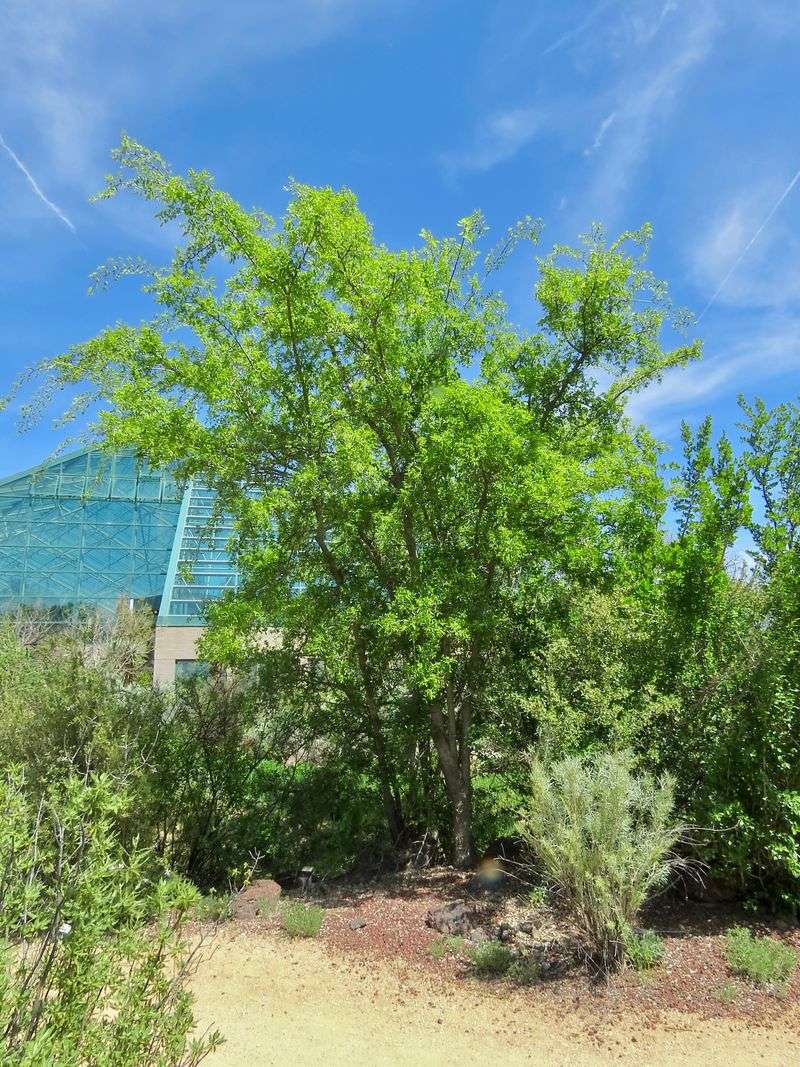
Bird watchers, take note. Netleaf hackberry may be the hardest-working wildlife tree on this list, even if it grows a little slower than the rest.
Every summer and fall, it produces small orange to red berries that feed mockingbirds, thrashers, quail, and small mammals. Those berries often hang on into winter, offering food when supplies run low.
Rough bark and twisty branches add perches and nesting spots, turning one tree into a busy little habitat.
So why include a moderate grower in a list about shade by next summer? Pair it with a faster tree.
Plant a hackberry beside a palo verde, and the palo verde covers the wall quickly while the hackberry builds a long-lasting, broad canopy of dappled shade for years to come.
Toughness is its strongest trait. It handles drought, wind, alkaline soil, and reflected heat, and its deep roots help hold soil in place during monsoon downpours.
Pests rarely cause serious trouble.
Plant in fall for the best start, water deeply through its first summer, then let it rely on occasional soaks. A bit of pruning keeps the shape tidy.
Over time it can reach 25 to 30 feet, a true backyard anchor.