The Fertilizing Mistake That Damages Arizona Citrus In Summer
Everything looks fine until the leaves start burning. One day a citrus tree is packed with healthy growth, and the next it looks stressed for no obvious reason.
Watering gets the blame most of the time, but fertilizer is often the real culprit.
Summer is not forgiving. What helps a tree in spring can create problems once intense heat takes over.
A feeding mistake made in June may not show up immediately, which makes it even harder to spot. By the time yellow leaves, weak growth, or damaged fruit appear, the tree has already been struggling.
That is exactly why so many citrus growers in Arizona get caught off guard every year. A simple fertilizer habit can cause far more trouble than expected.
Before feeding a citrus tree this month, it pays to know which mistake creates the biggest risk.
1. Fertilizing Heat-Stressed Citrus Makes Summer Problems Worse
Stressed trees cannot handle extra input. When a citrus tree is already struggling through triple-digit heat, adding fertilizer is like pouring fuel on a slow burn.
Heat stress shuts down normal root function. Roots absorb water and nutrients at a slower rate when soil temperatures spike.
Fertilizer sitting in hot, dry soil does not get absorbed properly. Instead, it builds up and creates a salt concentration that pulls moisture away from roots.
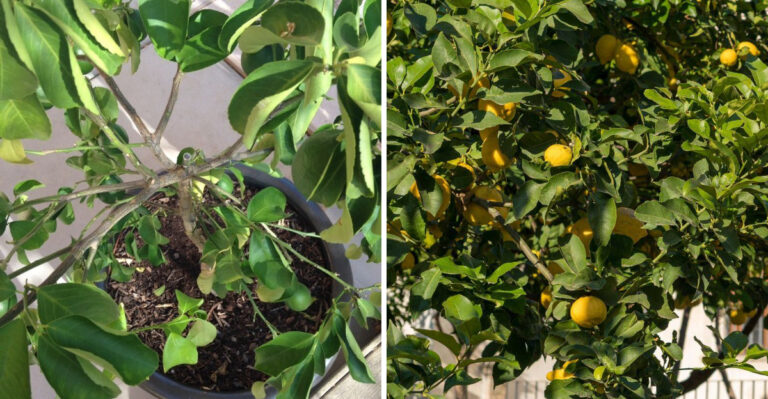
Salt buildup in soil is a real problem in desert regions. Phoenix-area gardeners often see leaf edges turn brown and crispy after summer applications.
That browning is not from sun alone. Salt injury from poorly timed fertilizing looks almost identical to sunburn, which makes it easy to misread.
Citrus trees go into a kind of survival mode during extreme heat. They slow their metabolism and focus on staying alive, not growing.
Pushing nutrients into a tree that is not actively growing creates waste at best and root injury at worst.
Experienced desert gardeners often skip fertilizing entirely from June through August. That pause is not neglect.
It is smart seasonal management based on how these trees actually behave in hot climates.
Wait until nighttime temperatures drop below 95 degrees before feeding again.
2. Check For Wilting Before Applying Anything
Wilting is a warning sign, not an invitation to fertilize. Before opening any bag or bottle, look at the tree carefully from top to bottom.
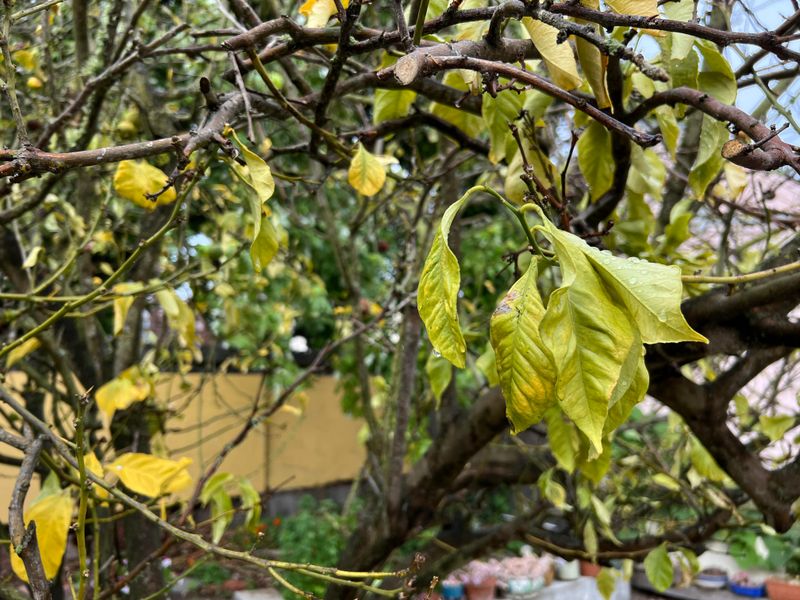
Drooping leaves in the morning usually mean the tree is already under serious water stress. Fertilizing a wilted tree makes that stress significantly worse.
Nutrients cannot move through a plant that has no water to carry them.
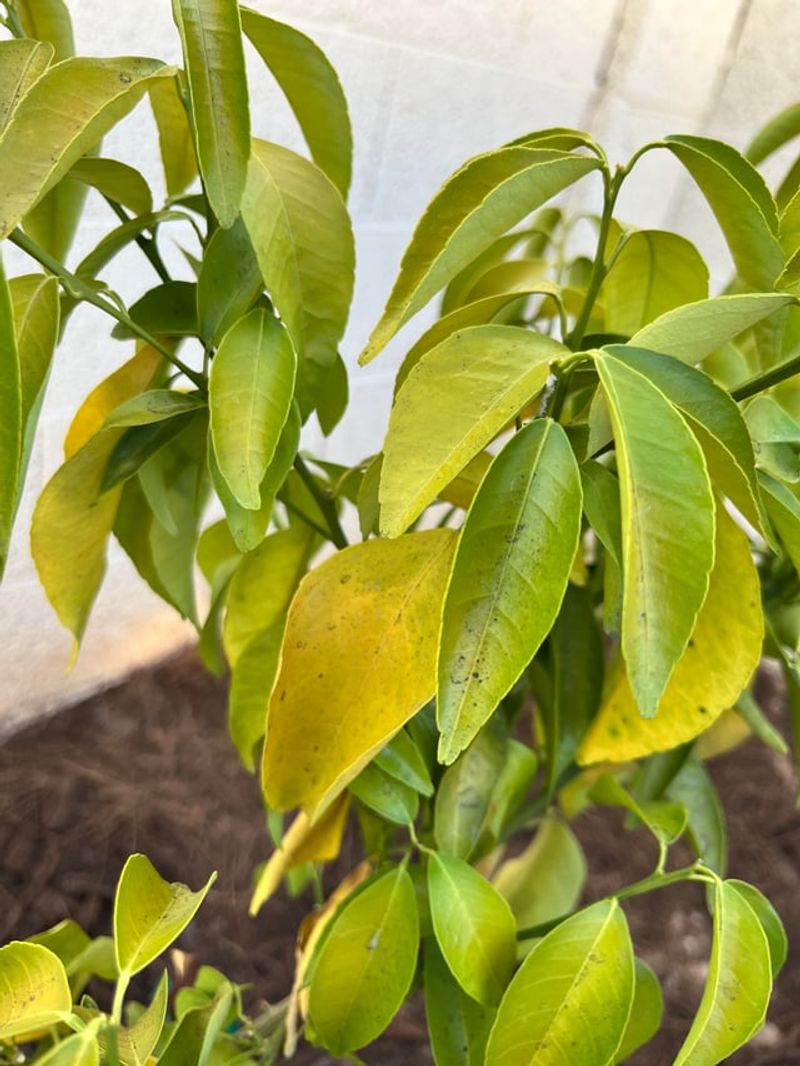
Check the leaves for color changes too. Pale yellow leaves can mean nitrogen deficiency, but in summer, they often just mean the tree is too hot and dry.
Applying nitrogen fertilizer to a heat-stressed tree in that condition often causes more leaf drop, not less.
Press your finger two inches into the soil near the drip line. If the soil feels bone dry, water is the only thing that tree needs right now.
Fertilizer on dry soil around citrus roots increases salt concentration and causes root tip damage.
Your Arizona Garden Changes Every Week. Your Plan Should Too.
Gardening in Arizona changes quickly throughout the season. Every Friday you’ll receive a simple weekly plan showing exactly what to plant, prune, fertilize, harvest, and protect so you never miss the right timing.
Some gardeners in the Southwest make the mistake of assuming wilting means hunger. Most of the time in summer, it means thirst.
Hydration comes first, always.
Give the tree a deep watering and then wait 24 to 48 hours before reassessing. If leaves perk up after watering, the tree was dry, not deficient.
3. Water Deeply Before Feeding Citrus
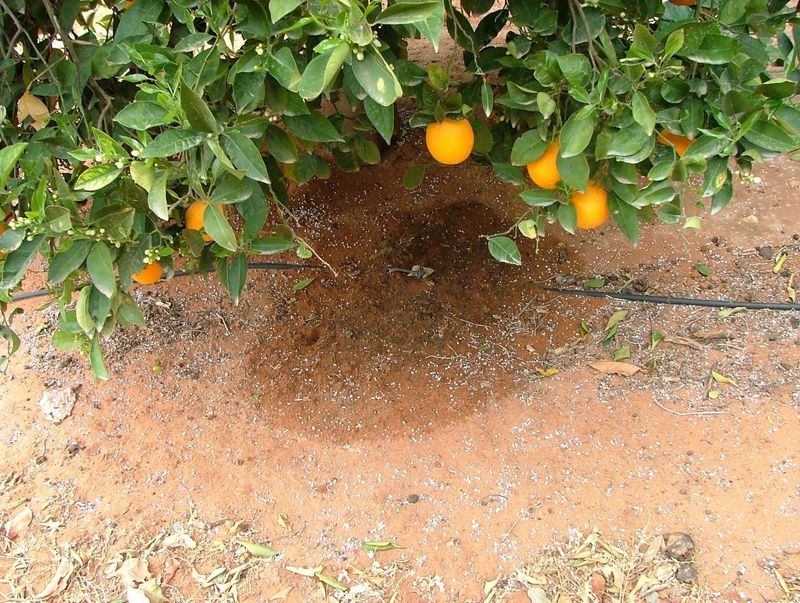
Dry soil and fertilizer are a bad combination. Granules or liquid concentrate applied to parched ground near citrus roots can cause real damage before a single nutrient gets absorbed.
Watering deeply before fertilizing does two important things. First, it softens the soil so nutrients can actually move downward toward the root zone.
Second, it dilutes the fertilizer concentration so roots are not overwhelmed all at once.
A shallow watering is not enough. Run your drip system or hose long enough to push moisture at least 12 to 18 inches into the ground.
Citrus roots spread wide and go fairly deep, especially in sandy desert soils.
Sandy soil in hot climates drains fast. That means fertilizer can move through the root zone quickly if there is not enough moisture to slow it down and allow absorption.
A thorough pre-watering helps hold nutrients in place longer.
Slow, deep watering also cools the soil slightly. Cooler soil temperatures improve root activity, which means the tree is actually ready to take in nutrients when you apply them.
That timing matters more than most gardeners realize.
Water the night before you plan to fertilize whenever possible. Morning application on moist soil gives the best results in warm-weather months.
4. Avoid Midday Applications During Hot Weather
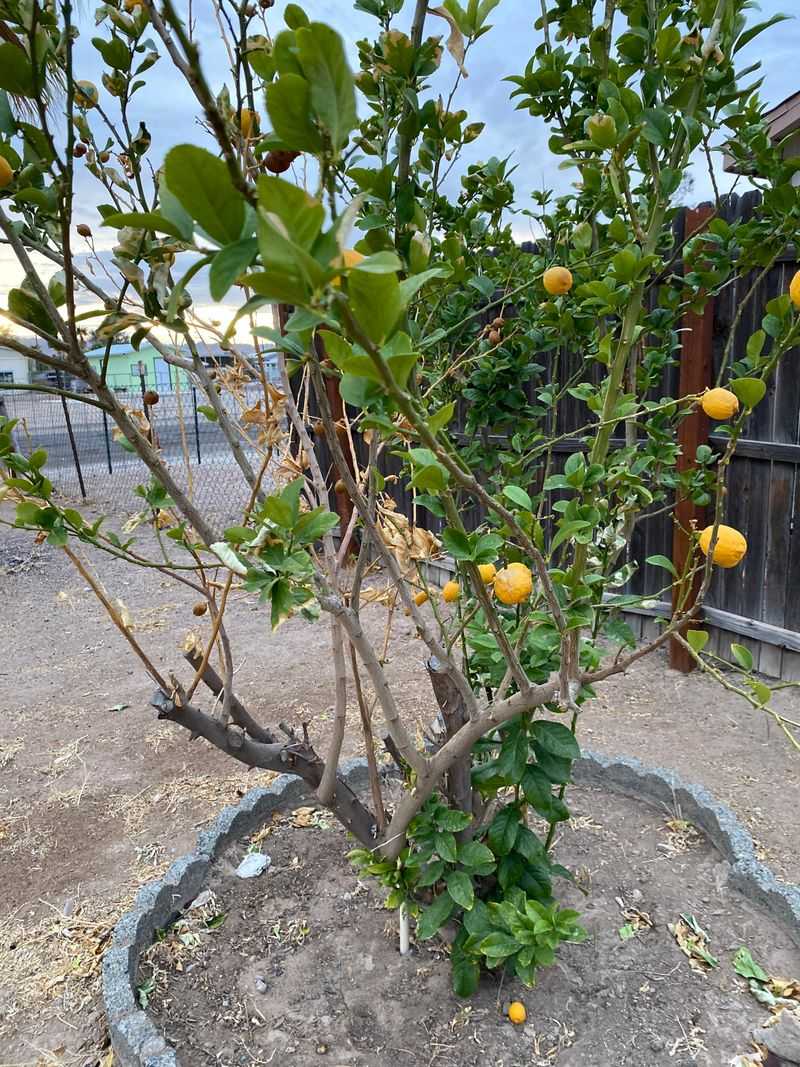
Midday in a desert summer is not the time to be near your citrus tree with fertilizer. Soil surface temperatures can exceed 150 degrees Fahrenheit in direct sun during peak hours.
Liquid fertilizers applied at midday evaporate rapidly before roots can absorb them. What stays behind is a concentrated residue that sits on hot soil and creates a chemical burn risk for shallow feeder roots just below the surface.
Granular fertilizers bake on top of hot, dry soil without breaking down properly. Without moisture and cooler temperatures, the release process stalls or becomes uneven.
Some granules release too fast in heat and flood the root zone with more salt than the tree can handle.
Early morning is the safest window for fertilizing during summer months. Soil holds some overnight coolness, moisture levels are slightly higher from dew or irrigation, and roots are more metabolically active.
Nutrients applied then have the best chance of being used properly.
Late evening is another reasonable option if morning is not possible. Temperatures drop after sunset, and fertilizer applied then has all night to begin breaking down before the next day’s heat arrives.
5. Spread Granules Well Beyond The Trunk
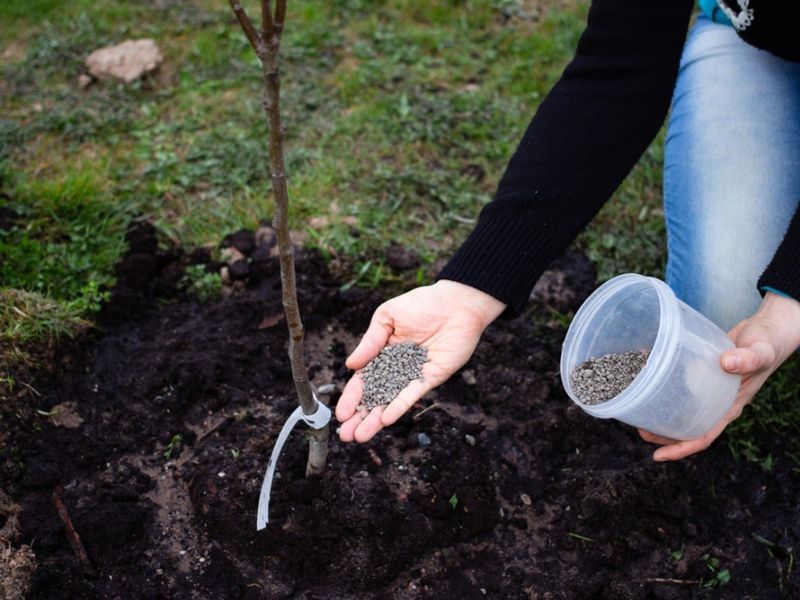
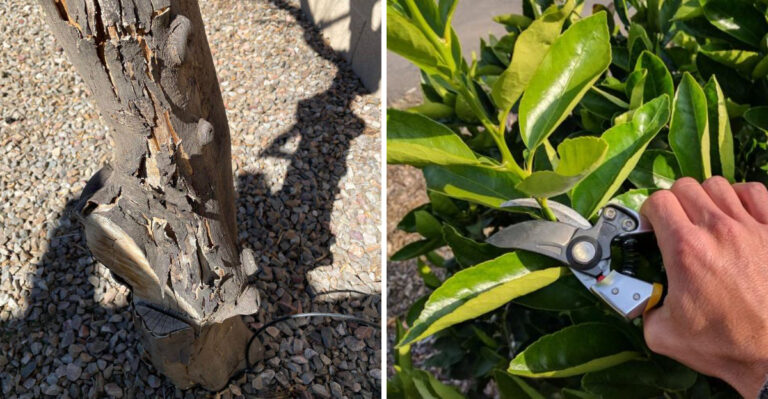
Piling fertilizer against the trunk is one of the most common and damaging mistakes citrus growers make. It looks like you are feeding the tree, but you are actually creating a concentrated burn zone right where the bark is most vulnerable.
Citrus bark near the soil line is thin and sensitive. Direct contact with fertilizer salts causes chemical damage that weakens the tree over time.
That damage becomes an entry point for fungal problems and bark decay.
Roots that need feeding are not near the trunk. Active feeder roots grow near and beyond the drip line, which is the outer edge of the tree canopy.
Fertilizer placed there actually reaches the roots that absorb nutrients.
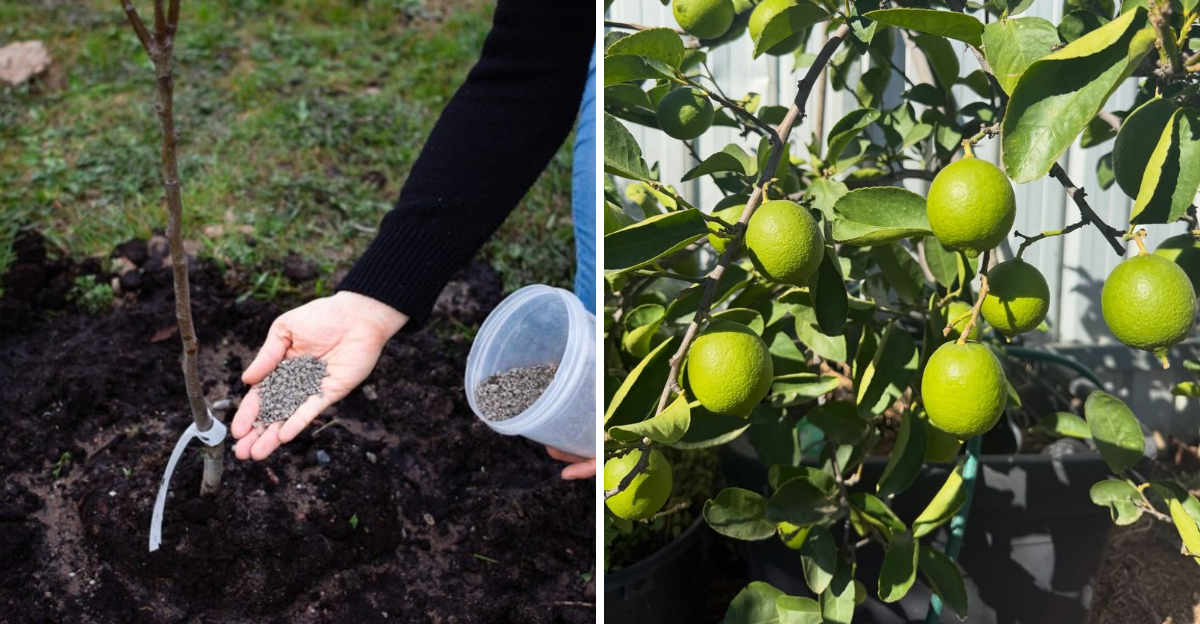
Spread granules in a wide ring starting at least 12 inches away from the trunk and extending a foot or two past the canopy edge. That ring placement puts nutrients exactly where root activity is highest.
Rake granules lightly into the top inch of soil rather than leaving them on the surface. Mixing them in slightly helps with absorption and reduces the chance of runoff during irrigation.
It also prevents birds from scattering the product before it has a chance to break down.
6. Cover Bare Soil With Mulch After Feeding
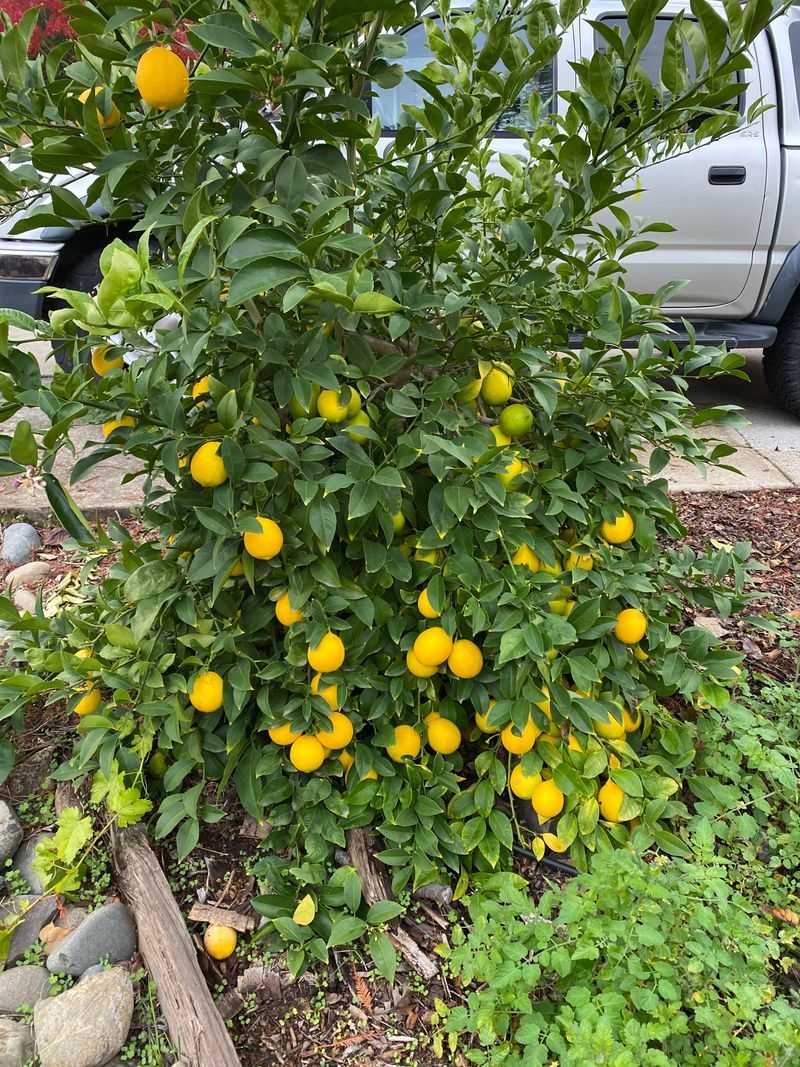
Bare soil under a citrus tree in summer is a problem waiting to happen. Without a protective layer on top, soil heats up fast, moisture evaporates quickly, and any fertilizer you just applied is exposed to conditions that reduce its effectiveness.
Mulch acts as a buffer between the hot desert air and the root zone below. A three to four inch layer of wood chips or shredded bark can reduce soil temperature by 10 to 20 degrees.
That difference matters enormously for root health and nutrient uptake.
After applying fertilizer, lay mulch over the entire treated area. Make sure to leave a gap of about four to six inches around the trunk itself.
Mulch pressed against the trunk traps moisture and creates conditions that soften and weaken the bark over time.
Mulch also slows water evaporation dramatically. That means the moisture you put down before fertilizing stays in the soil longer, giving nutrients more time to dissolve and move toward root zones.
Less frequent watering is needed when mulch is in place.
Organic mulch breaks down slowly over time and adds small amounts of organic matter to the soil. In sandy desert soils, that organic matter improves nutrient retention and soil structure gradually.
7. Wait For A Cooler Morning To Reapply
Reapplying fertilizer too soon is a mistake that compounds the original problem. Citrus trees in summer need recovery time between feedings, not back-to-back applications trying to make up for slow growth.
If the first application did not seem to produce results, the instinct is to add more. Resist that urge completely during hot months.
Slow growth in summer is normal. Adding extra fertilizer does not speed things up.
It just adds more salt load to already stressed roots.
Wait at least six to eight weeks between applications during warm months. Some growers in desert climates skip summer feeding entirely and resume in September when conditions improve.
That approach often produces better results than pushing through the heat with regular feeding schedules.
When the time does come to reapply, choose a morning when overnight temperatures have stayed below 90 degrees.
Soil holds that cooler temperature into the early hours, and roots are more receptive to nutrients when they are not fighting extreme heat at the same time.
Check the weather forecast before fertilizing. Avoid applying anything right before a heat spike.
A day that starts at 80 degrees but climbs to 112 by afternoon gives fertilizer no time to absorb properly before conditions turn harsh again.