How To Take Hardwood Cuttings In Ohio This Fall For Free Shrubs Next Spring
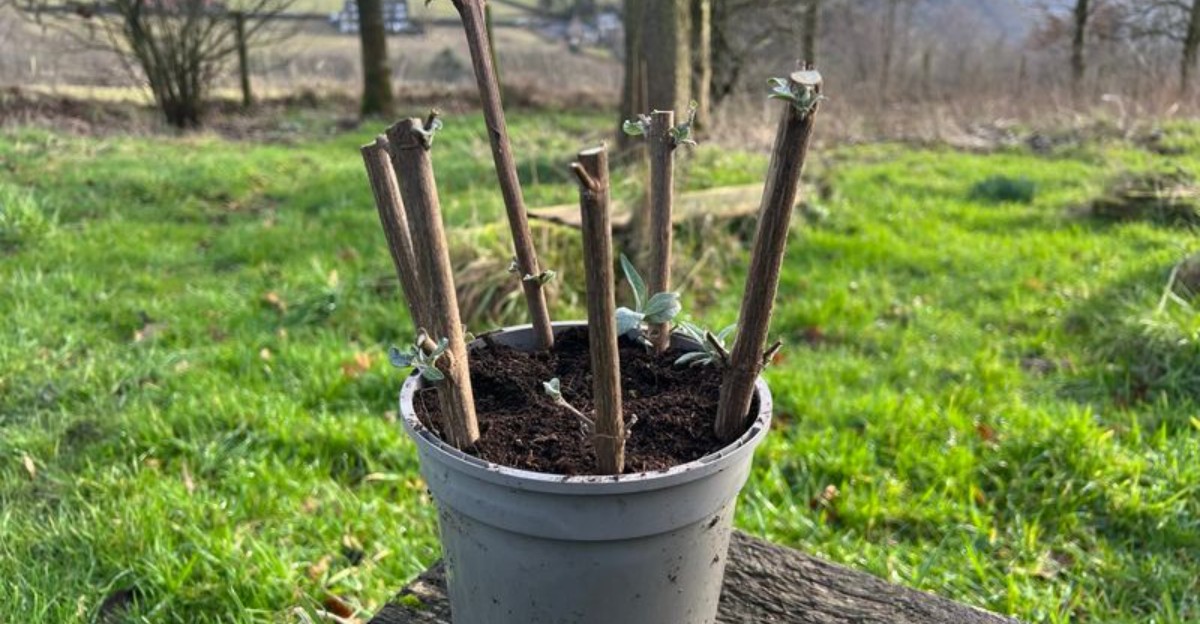
Nurseries charge good money for shrubs, and your own yard has been growing the raw material for free all along.
Ohio’s fall is the quiet window when plants stop pushing growth and start storing energy. Gardeners who know the trick snip a few bare twigs, tuck them away, and forget about them until spring.
Months later, a row of new plants appears like a magic trick nobody explained.
Not every shrub plays along. Some root with almost no effort, while others never warm to the idea.
Cut at the wrong spot or the wrong length and the whole batch ends up in the compost.
The method is cheap, the tools are basic, and the payoff is a hedge or border that cost you nothing.
Pick your donor plants now and sharpen the pruners before the leaves finish falling.
1. Take Cuttings Once The Shrub Is Dormant
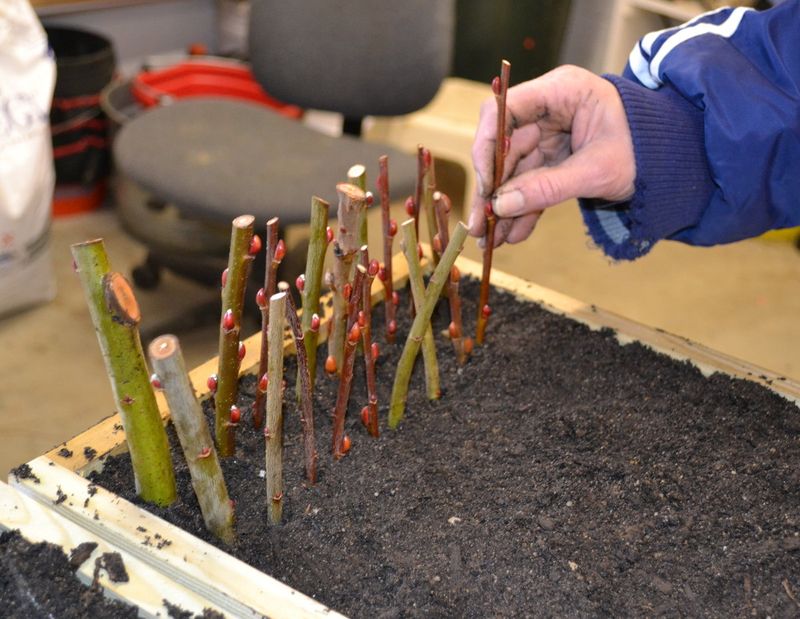
Picture a frosty November morning in Columbus, with crunchy grass under your boots. That chilly scene is your signal to start.
Once a hard frost knocks the last leaves off your shrubs, the plants slip into a deep winter rest.
Dormant stems are perfect for cuttings. They are not busy feeding leaves or pushing out flowers.
Instead, they have packed their wood full of stored food, like a lunchbox ready for a long trip.
Most gardeners take hardwood cuttings anytime from mid-fall until late winter. Right after leaf drop is a sweet spot, and so is the stretch just before buds swell in early spring.
In Ohio, that often means late October through December for a fall start.
Choose a mild day when the stems are not frozen. You do not need to wait for a hard frost; the key is to use mature, dormant wood from a healthy plant.
Pick a calm, mild afternoon instead.
Keep an eye on the weather app and your shrubs. When the branches look bare and the air feels crisp but friendly, grab your pruners.
Clean them first with rubbing alcohol so you do not spread germs from plant to plant.
Good timing does a lot of the heavy lifting here. Get this step right, and the rest feels much easier.
2. Choose Pencil-Thick Stems From This Year’s Growth
Grab a pencil from the kitchen drawer and take it outside. Seriously, it makes a handy measuring tool.
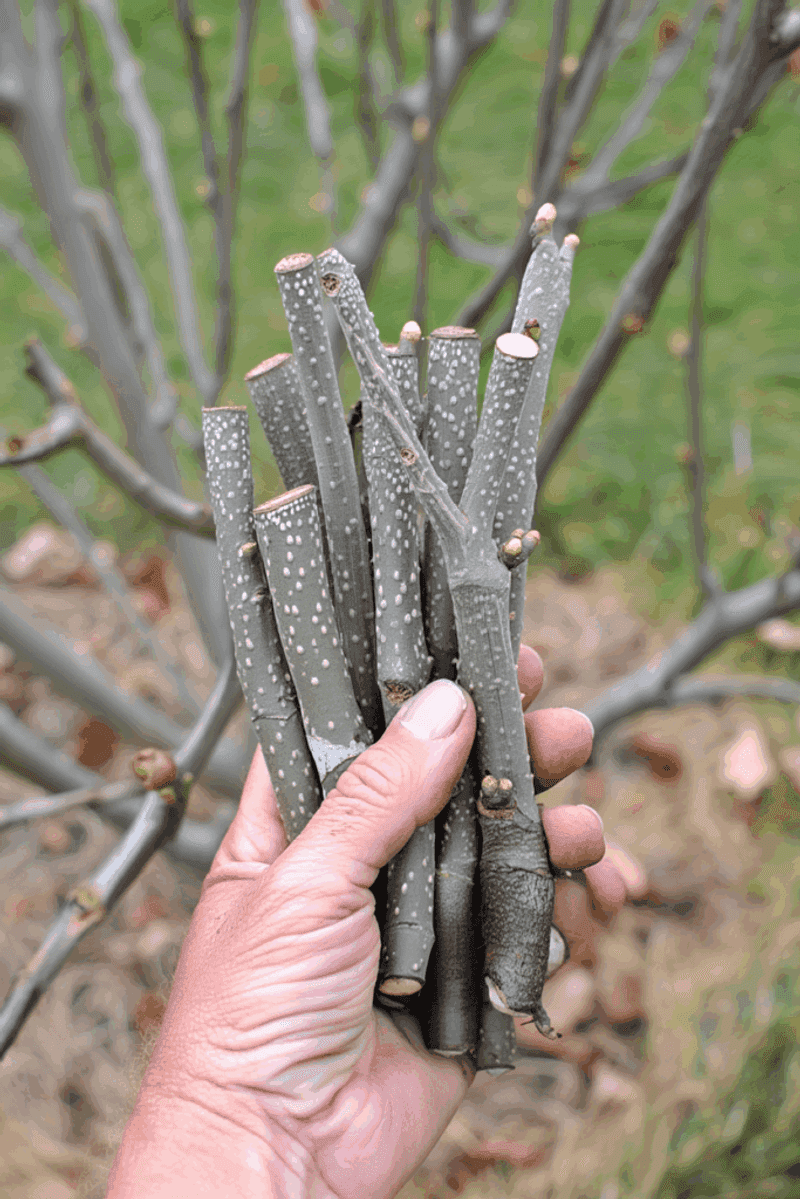
The best stems for cuttings are about that thick, roughly a quarter inch to a little more.
Look for wood that grew this past season. On most shrubs, new growth has smoother, brighter bark than the older, rougher branches below it.
You can often spot a ring or a small bump where last year’s growth stopped.
Choose shoots that look healthy and strong. Avoid anything skinny, bent, cracked, or spotted with odd marks.
A sickly stem rarely turns into a happy shrub.
Choose healthy, mature shoots from the previous growing season. Some shrubs root well from terminal shoots, while others can be propagated from sections cut farther down the stem.
Your Ohio Garden Changes Every Week. Your Plan Should Too.
Gardening in Ohio changes quickly throughout the season. Every Friday you’ll receive a simple weekly plan showing exactly what to plant, prune, fertilize, harvest, and protect so you never miss the right timing.
Follow the recommended method for the particular shrub you are growing.
The wood should feel firm and woody, not soft or green. If it bends like a noodle, it is too young.
If it is thick as a broom handle, it is too old.
Watch for fat, round flower buds too. Those want to bloom, not grow roots, so either skip those stems or rub the buds off.
That way your cutting saves its energy for the important underground work.
3. Cut Pieces About 6 To 10 Inches Long
Think of each cutting as a tiny battery. The longer it is, the more stored energy it carries through winter.
That is why length matters more than you might expect.
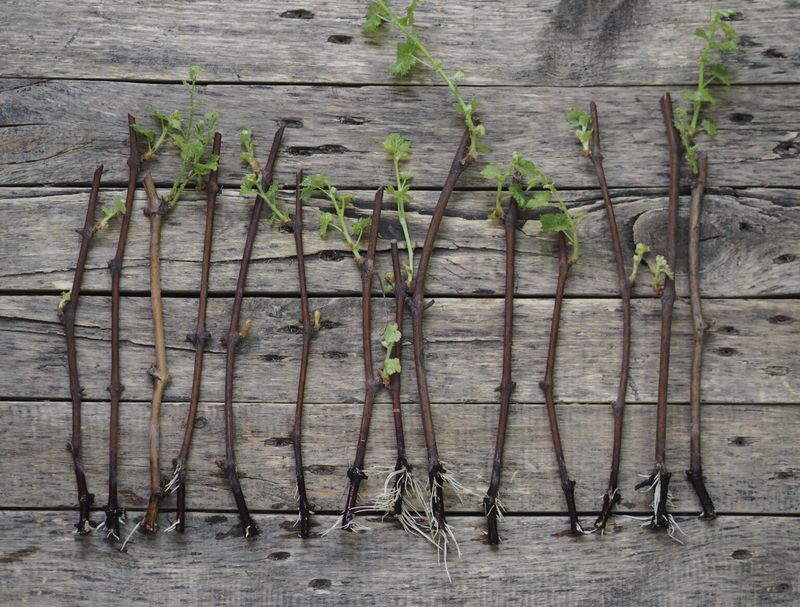
Most hardwood cuttings work well between 6 and 10 inches long. Some sources say anything from 4 to 12 inches can root.
Still, the middle range gives you a nice balance of strength and easy handling.
Longer pieces, around 8 to 10 inches, often hold more food reserves. That extra fuel helps them push out roots before spring weather wakes them up.
Shorter pieces can work, but they have less backup if things get tough.
You can usually get several cuttings from one long branch. Start at the bottom and work your way up, measuring as you go.
A ruler or a marked stick on your workbench speeds things up a lot.
Toss the soft, skinny tip at the top. It does not have enough stored energy to make it through an Ohio winter.
The sturdy middle and lower sections are the real winners.
Fun fact: a single willow branch can give you a dozen new plants. That is a lot of free shrubs from one snip.
Your neighbors may start asking for extras.
4. Cut Straight Below A Bud At The Bottom And Angle The Top
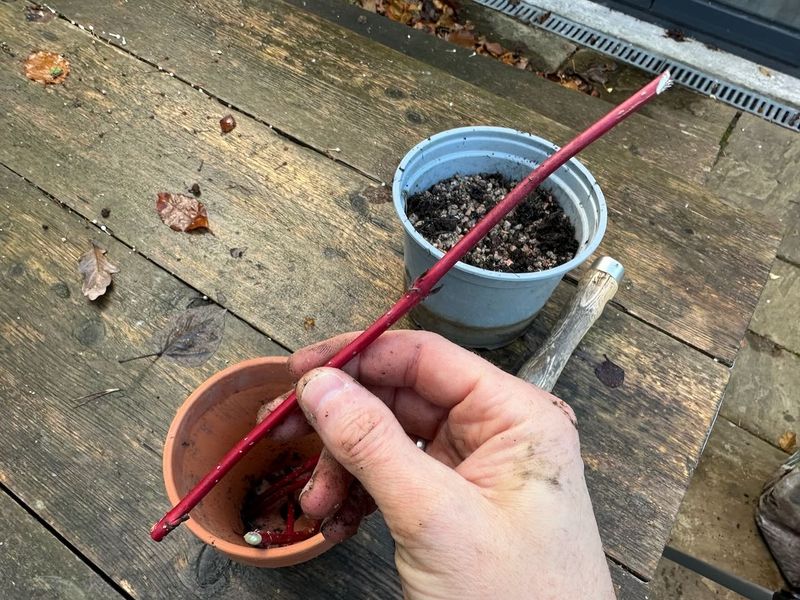
Plants have a funny kind of memory. A cutting knows which end was up, even after you snip it off.
Roots grow from the bottom, and shoots grow from the top.
So you need a simple way to tell the ends apart. Make a flat, straight cut at the base, just below a bud.
Then make a slanted cut at the top, just above a bud.
Nursery workers have used this trick for ages. Once you have a pile of bare sticks, they all look alike.
The angled top lets you see the right direction in a second, and the slant helps rain run off too.
Planting a cutting upside down is an easy mistake. Sadly, it will just sit there and sulk.
The slanted top saves you from that headache.
Remove any remaining leaves or soft growth from the portion that will go into the rooting medium. Some difficult-to-root shrubs benefit from lightly wounding the base by removing a narrow strip of bark.
However, wounding is not necessary for every species, so check the recommendations for your particular plant before trying it.
That scrape exposes the green layer underneath, called the cambium. This is where new roots love to form.
A sharp, clean blade gives you neat cuts, so take your time and enjoy the rhythm of it.
5. Dip The Base In Rooting Hormone For Better Results
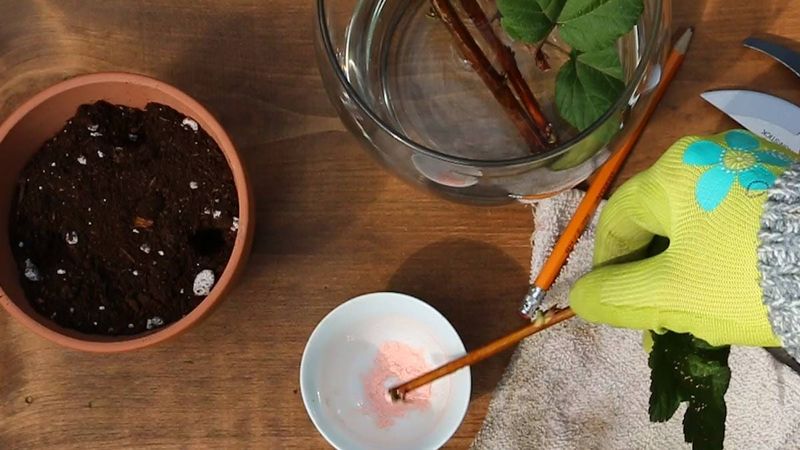
Want to give your cuttings a little head start? A pinch of rooting hormone works like a pep talk for plant stems.
It is cheap, easy, and it can make a real difference.
Most rooting powders and gels contain man-made auxins. Auxins are natural plant chemicals that tell stems to grow roots.
Using them can speed up rooting, give you more roots per cutting, and make results more even.
Here is how to use it. Pour a small amount into a separate dish so you do not dirty the whole container.
Dip the bottom inch of each cutting, then tap off the extra.
Read the label carefully. More is not better here, since too much hormone can actually harm the stem.
A light coat does the job.
Easy rooters like willow may do fine without help. Trickier shrubs benefit the most from a dip.
If you feel crafty, try willow water, made by soaking chopped willow twigs, since it carries some natural auxins.
What about honey or cinnamon? Those kitchen favorites get lots of buzz online.
They do not hold real rooting hormones, though they may help fight germs a little.
For the best odds, stick with a store-bought product. Your future shrubs will appreciate the boost.
6. Use A Moist, Well-Drained Rooting Mix
Garden dirt might seem like the obvious choice. Trouble is, it can pack down hard and carry hidden diseases.
Your cuttings deserve something lighter and cleaner.
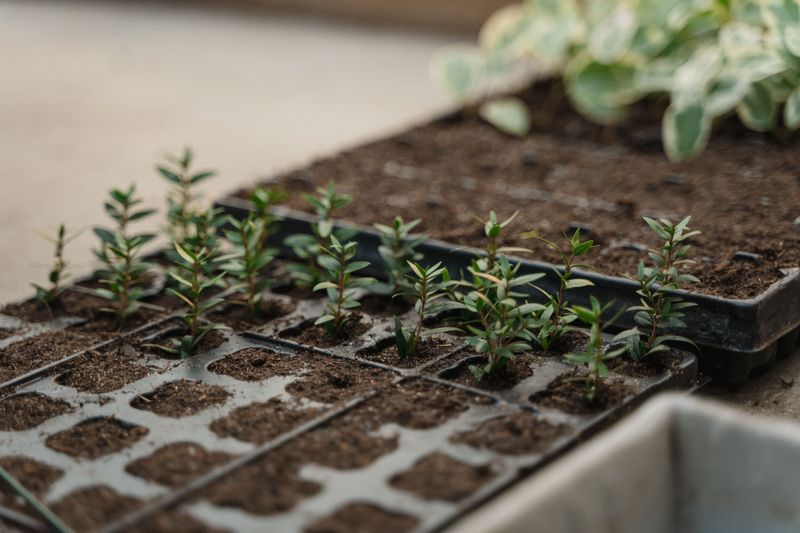
Choose a clean rooting medium that holds moisture without staying waterlogged. One option is a mix of peat moss or coir with coarse perlite.
Some growers also use coarse sand for particular plants. Whatever mix you choose, use a container with drainage holes and keep the medium moist, not saturated.
Skip compost and regular potting soil with added fertilizer. Rich mixes can invite rot and fungus.
Simple and plain wins this round.
Moisten the mix before you fill your pots, so it feels like a wrung-out sponge. Use deep containers, since long cuttings need room.
Poke a hole with a pencil, then slide each cutting in.
Bury about two-thirds of each stem, leaving one or two buds above the surface. Firm the mix gently around it.
Space them a couple of inches apart so air can move between them.
Add a label with the plant name and date. Trust me, by March you will not remember which sticks are which.
7. Keep Them Cold, But Not Frozen, Over Winter
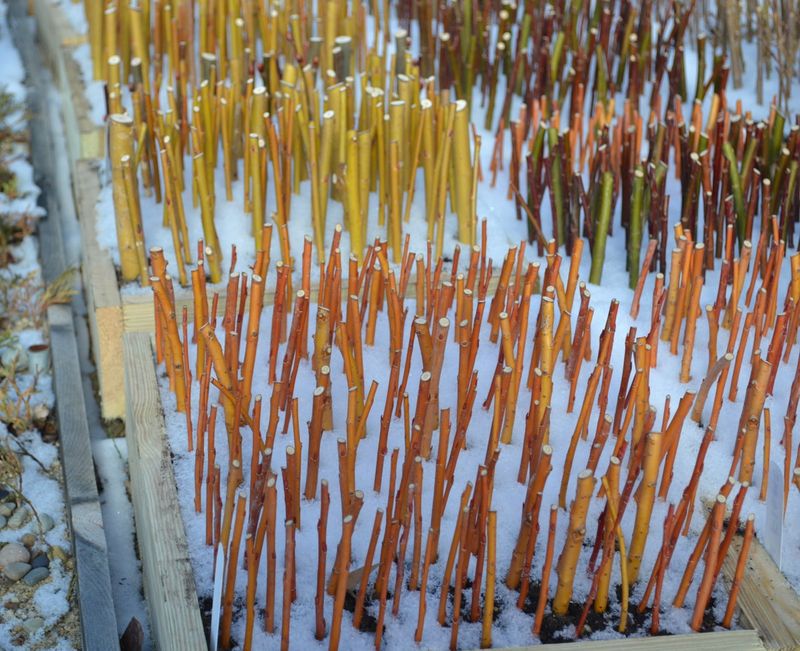
Ohio winters can swing wildly, from mild drizzle to a bone-rattling polar blast. Your cuttings need a steady chill, not a deep freeze.
Finding that middle ground is the key to this step.
Dormant hardwood cuttings need cool conditions and protection from drying out. If you store unplanted cuttings, keep them in lightly moist packing material in a cool place, generally around 32–40°F.
If you have already placed cuttings in pots, protect the containers from severe freezing and keep the rooting medium moist but not soggy. The best setup depends on the plant and propagation method.
An unheated garage or shed may work if you can keep the containers from drying out or freezing severely. Check conditions during cold snaps, because an unheated space can become much colder than expected.
No garage? Try burying the pots up to their rims in a sheltered garden bed.
Then pile on a thick blanket of leaves or straw. The ground acts like a cozy insulated cooler.
Some gardeners store bundles of unplanted cuttings instead. Wrap them in a damp paper towel, seal them in a plastic bag, and tuck them in a fridge just above freezing.
Plant them outside once spring arrives.
Keep the roots moist, but not waterlogged. Soggy mix leads to rot faster than you can say Buckeye.
A little care through January and February pays off big when the days warm up.
8. Forsythia, Red Twig Dogwood And Willow Root Easily
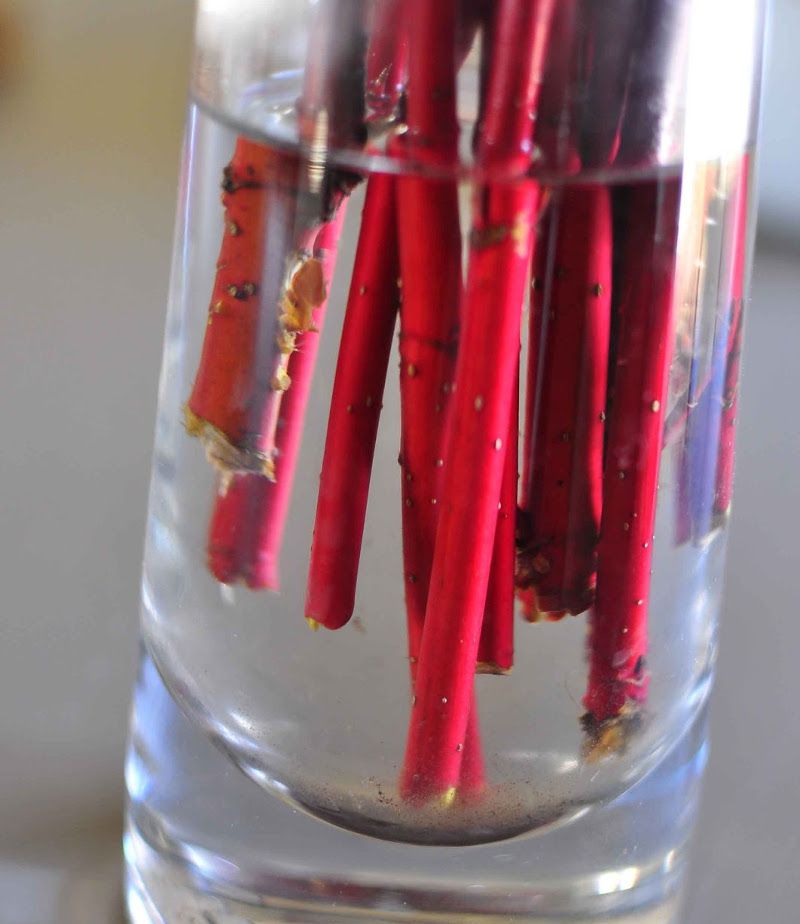
Every beginner needs a few easy wins. Lucky for Ohio gardeners, some of the best shrubs around are total overachievers.
Willow, red-twig dogwood, and forsythia are useful shrubs to consider when learning propagation, although rooting success and the best cutting method vary by species. Willow is especially easy to root from suitable stem cuttings.
Forsythia is the sunny yellow bush that shouts spring along Ohio roads in March. Its stems root so readily that branches touching the ground sometimes root on their own.
Cuttings take off with very little fuss.
Red twig dogwood adds a blast of color to snowy yards. Those ruby stems look amazing against white drifts.
Grab a few cuttings and you can line a whole fence with them.
Willow might be the champion of the group. Its stems are loaded with natural rooting chemicals.
Some folks just push fresh willow sticks into wet ground and watch them sprout.
Other plants that can be propagated by hardwood cuttings include grape, currant, gooseberry, and some other woody shrubs and vines. Before collecting cuttings from privet, spirea, fig, or evergreen shrubs, check species-specific guidance because the best cutting type and timing can differ.
Start with the easy three for your first season. Success builds confidence, and confidence makes you bolder.
Next fall, you might be experimenting with grapes or currants for a backyard fruit patch.
9. Expect About Half To Leaf Out In Spring
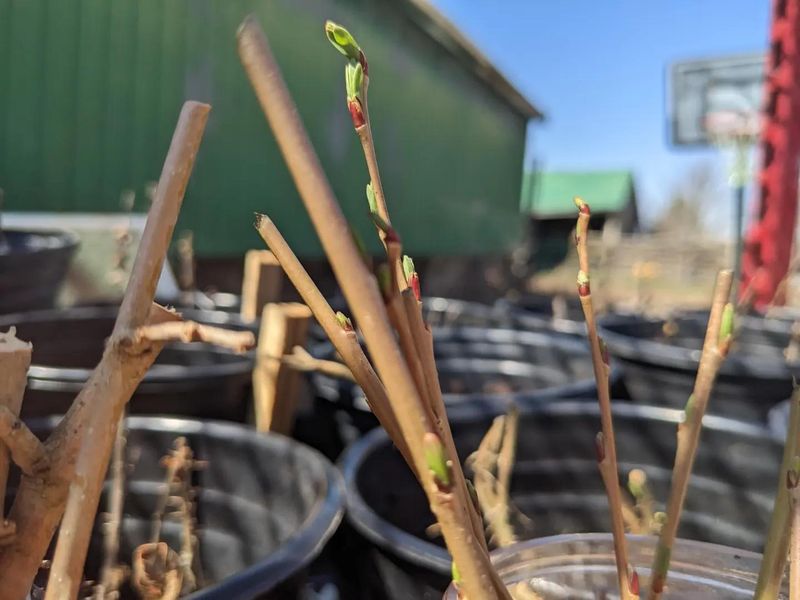
Here is the honest truth that seed catalogs skip. Not every cutting will make it, and that is perfectly normal.
Expect some cuttings to fail, but don’t assume there is one success rate for every shrub. Rooting results vary widely by species and growing conditions, so take a few extra cuttings as insurance.
Results swing a lot. Plant type, your technique, and the weather all play a part.
Some proud gardeners report close to 90 percent success with easy shrubs like willow.
That is why smart gardeners make extra cuttings. If you want five new forsythias, start ten or twelve.
The extras give you a safety cushion.
Spring is a test of patience. Leaves may appear before roots fully form, so resist the urge to tug on stems.
New growth usually shows up between April and early summer.
Once a cutting has steady leaves and resists a gentle pull, roots are forming. Let it grow in its pot through summer.
Then move it to its new home in the garden next fall.
Each green sprout feels like a small victory. And remember, every one cost you nothing but a few minutes and some curiosity.