Skip the Hard Cutback on Your Arizona Bougainvillea as Frost Season Nears

That big, sprawling bougainvillea can look messy by late fall, and the shears start calling your name. But a big chop right before cold weather arrives is a risky bet in Arizona yards.
A little planning now can spare you a lot of brown, crispy branches later. Here is how to tell a smart trim from a bad-timing cutback.
A major fall cutback is a poor-risk move
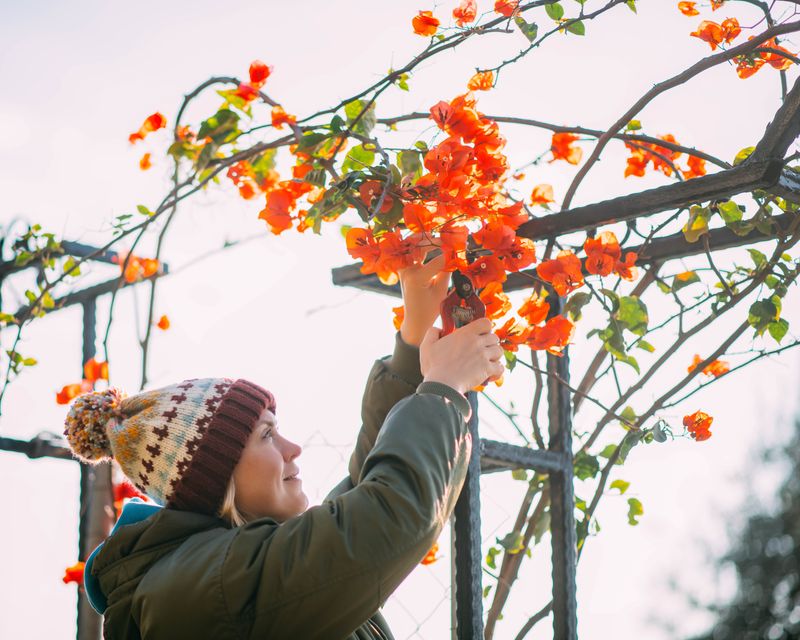
The one move to skip is cutting your bougainvillea back hard as frost season approaches. Heavy pruning can nudge a plant to push out fresh shoots, and Arizona pruning guidance favors cleaning up dead or frost-damaged wood in early spring instead.
The concern is the soft, new growth. Frost protection advice from Arizona Extension notes that actively growing leaves and tender shoots are especially vulnerable to cold, and that pruning can stimulate that kind of growth.
To be clear, a fall cutback does not automatically lead to frost injury, and the cuts themselves are not the problem. It is simply a poor-risk choice, because you may be inviting tender growth right when a cold night could arrive.
Many plants come through just fine, but why gamble when you can wait?
Light trimming is different from a hard cutback
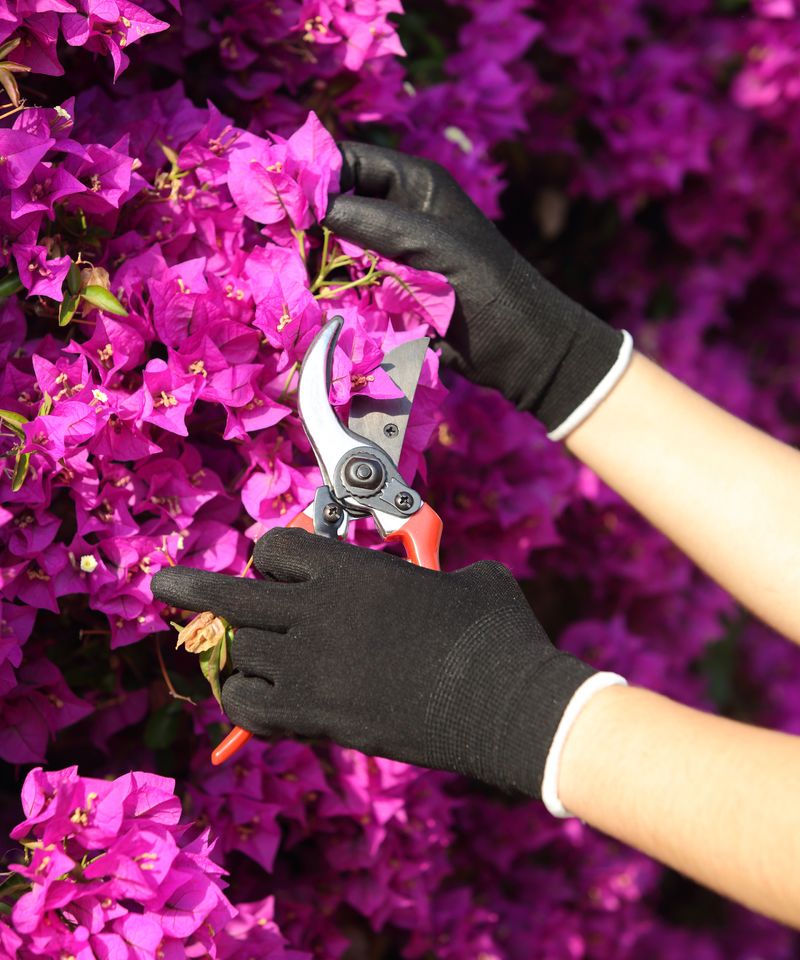
Skipping the big chop does not mean the shears stay in the garage all fall. Arizona guidance allows some selective pruning throughout the year, and vigorous bougainvillea shoots can be removed as needed.
Snipping a long runner that blocks a walkway or window is a very different job from taking the whole plant down by half.
Think of it as tidy-up versus overhaul. Remove a few errant stems, then step back and let the plant be.
Save the cleanup of dead or frost-damaged wood for the spring check, and do not treat that advice as a rule against all shaping. You can read the low and mid-elevation pruning guide for the details.
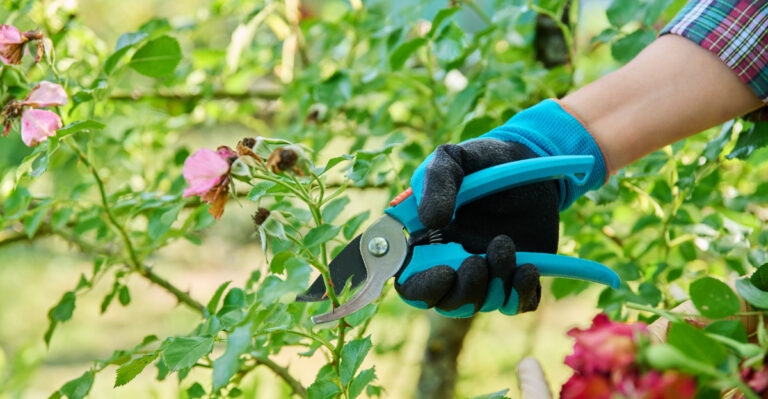
Those thorns are no joke, so gear up first. Long sleeves, gloves, sturdy shoes, and eye protection are the standard advice from UC ANR safety guidance.
Frost timing depends on your Arizona yard
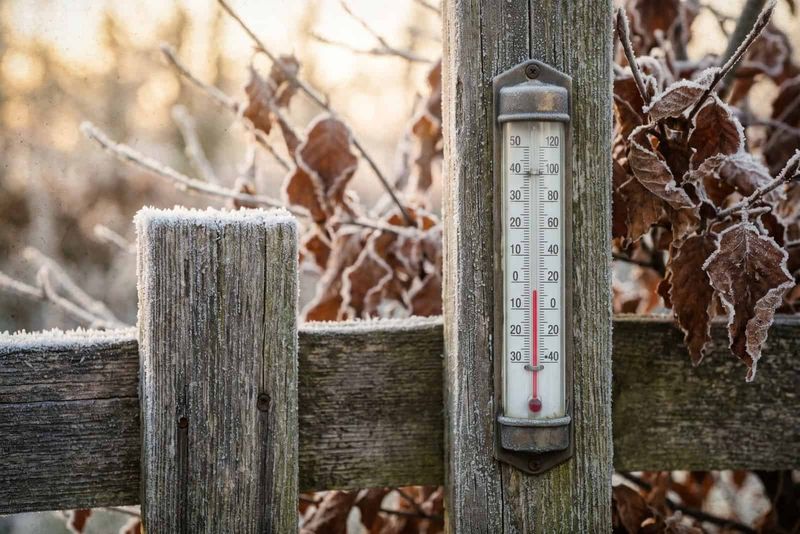
Nobody can hand you one safe date for the whole state. In Tucson, National Weather Service averages for 1991 to 2020 put the first seasonal freeze around December 3, while other southeastern Arizona towns average earlier.
Those numbers are averages, not promises. Your own yard may run colder or warmer.
A low corner where cold air settles at night can dip well below a spot beside a sunny block wall, and Arizona Extension frost guidance points out that exposure and cold-air pooling matter.
So watch the forecast, not the calendar. Notice where frost shows up first on your property, and let that guide how careful you are with pruning and protection.
A neighbor a few miles away may be on a completely different schedule.
A freeze forecast calls for protection, not a drastic cut
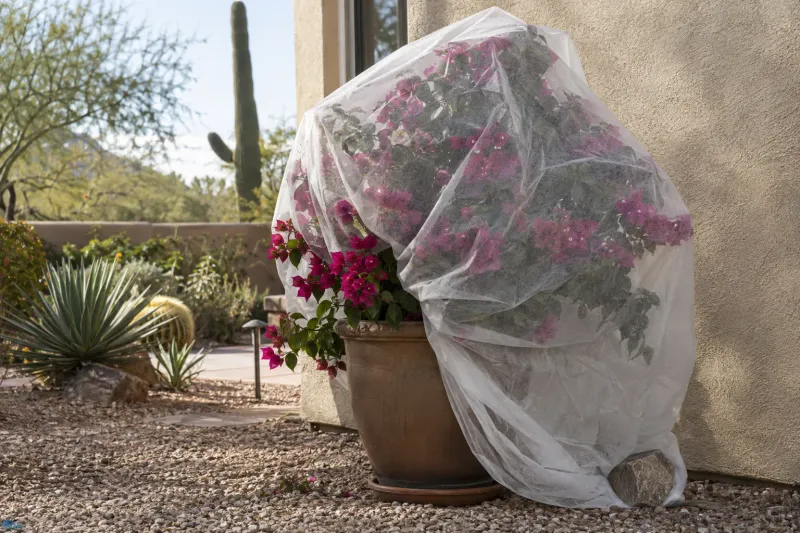
When the forecast shows a freeze, grab a cover instead of the shears. Cutting back in a panic does nothing to shield the plant, and it may push out tender shoots.
Your Arizona Garden Changes Every Week. Your Plan Should Too.
Gardening in Arizona changes quickly throughout the season. Every Friday you’ll receive a simple weekly plan showing exactly what to plant, prune, fertilize, harvest, and protect so you never miss the right timing.
Draping the plant is the better move.
Arizona Extension recommends covering plants with cloth or paper rather than plastic. Old bedsheets, frost cloth, and similar fabrics work, and you can read more in the frost protection publication.
Plastic is the one to skip.
Keep expectations realistic. How much a cover helps depends on its material and weave, so a thin sheet and a heavy frost cloth are not equals.
A cover lowers the odds of damage but cannot promise an untouched plant. Put it on before sunset and take it off once temperatures climb the next day.
Wait before pruning frost injury
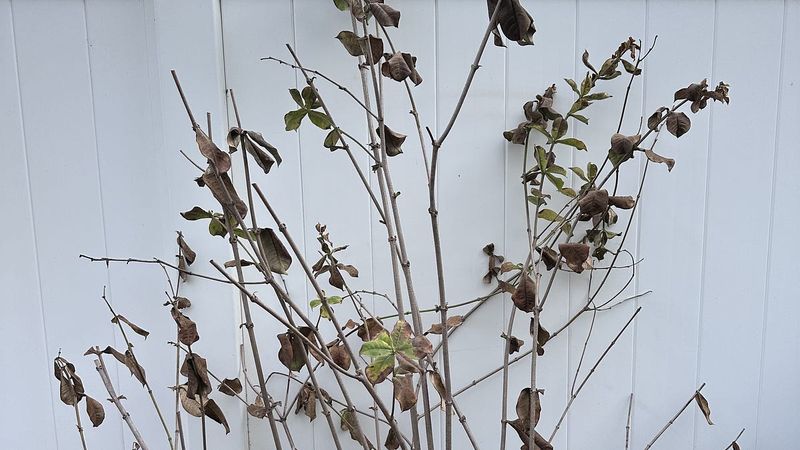
After a cold snap, a frosted bougainvillea can look rough. Brown leaves and limp stems tempt many of us to start cutting right away.
Hold off.
Arizona Extension says the damage may look worse than the actual injury, so the full picture is not clear yet. Pruning too soon can also stimulate new growth that is open to the next frost, a point covered in the university frost protection guide.
The better plan is patience. Leave the damaged branches in place through the cold months, then wait until spring growth starts or frost danger has passed.
By then, green buds and fresh leaves will show you which stems are still alive. Those browned leaves may even give the wood underneath a little shelter in the meantime.
Assess dead and frost-damaged wood in spring
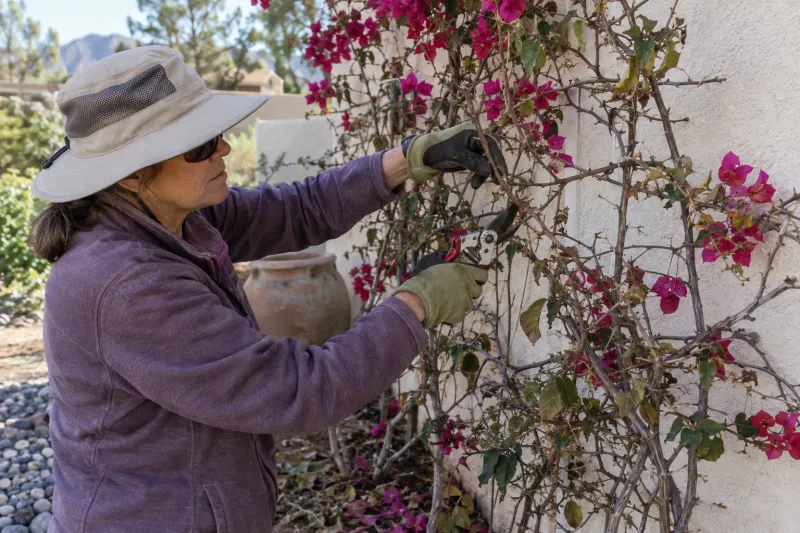
Spring is when the guesswork ends. Start by waiting for new growth or for the end of frost danger in your area.
Then look the plant over and sort out which wood is dead or frost-damaged and which is sprouting. Scratch a stem or look for buds if you are unsure.
Once you can tell the difference, remove that damaged wood. This matches the Arizona pruning recommendation for early spring, and it fits the advice to hold off until frost danger passes.
Spring is the time for this cleanup, not a rule that every bit of shaping must wait.
Gear up before you reach in. Long sleeves, gloves, sturdy shoes, and eye protection make thorny work far safer, as laid out by UC ANR.
Fall restraint does not ban a light trim either.
Patience in winter pays off in color by summer.