Driving Through The New Jersey Pine Barrens In October? Follow The Cranberry Trail
You pull over in New Jersey because a field just turned crimson. Your tires roll along sandy roads that wind through scrubby pines.
Cranberries float across flooded bogs that local families have tended for generations. Farmers flood each bog at harvest, and you watch berries rise fast.
Growers in chest waders gather berries with floating booms while you take photos. Sand grips shiny loafers, so you wear boots.
Step up to a roadside stand and taste a berry straight from the bog. Tart juice greets your tongue, then turns oddly sweet.
Ripe berries bounce like rubber balls, and you will see growers test them. Soft water and sandy ground give these vines exactly what they need.
Beyond the bogs, you will find old ironworks hidden in the pines. Look on, because New Jersey’s boldest harvest happens right on the water.
1. Start Your Trip At Whitesbog Historic Village
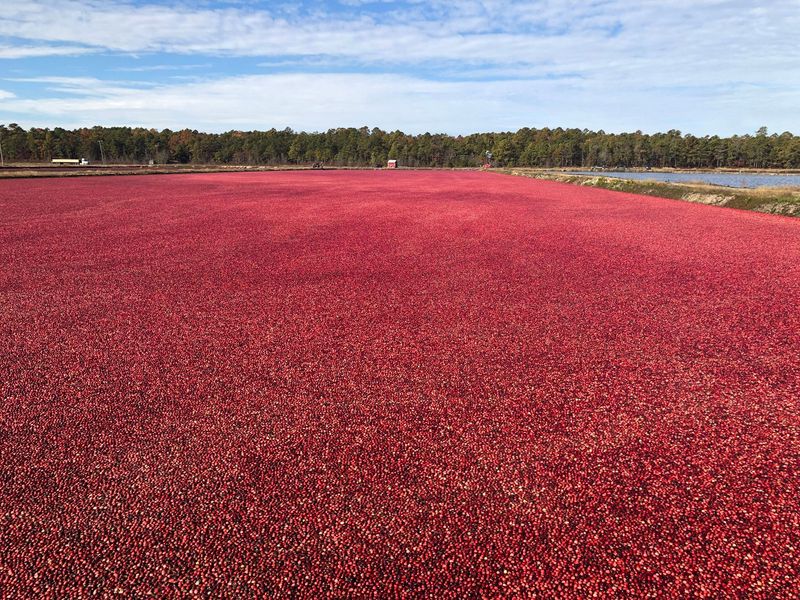
Picture a sleepy village where cranberry history and blueberry history share the same dirt road. Whitesbog Historic Village sits in Browns Mills, inside Brendan T. Byrne State Forest.
Back in the early 1900s, it was one of the biggest cranberry farms in all of New Jersey. Workers lived here in small cottages, and some of those homes still stand today.
Elizabeth White, the farmer’s daughter, helped grow the first cultivated blueberries here in 1916. So the blueberries in stores today trace part of their roots to this little spot.
In October, the bogs around the village turn deep red and burgundy. Sandy roads loop past the water, so you can drive slowly or park and stroll.
Bring binoculars, because hawks, herons, and ducks love hanging out near the reservoirs. Tundra swans sometimes stop by later in the fall on their long trip south.
The general store is open on some weekends and sells local goodies and gifts. Check the village website before you go, since hours change with the seasons.
Self-guided walking maps help you find the old packing house and worker homes. Kids enjoy spotting the numbered signs, like a treasure hunt in the woods.
Parking is free, and the grounds open from dawn to dusk most days. Just remember that the bogs are working farms, so stay off the vines and berms.
Start your Cranberry Trail drive here, and the rest of the trip will make much more sense. History has a funny way of turning plain red fields into stories.
2. Celebrate At The Chatsworth Cranberry Festival
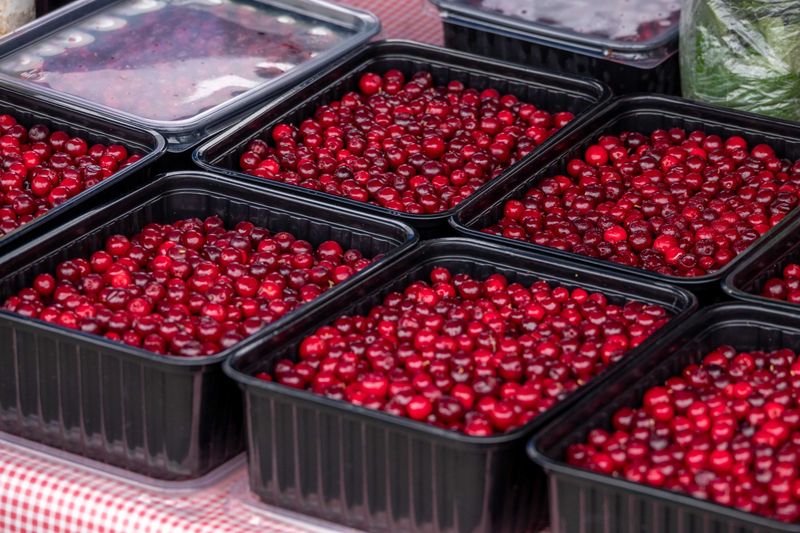
Imagine a village of about 300 people suddenly hosting tens of thousands of visitors. That happens in Chatsworth every October during the Chatsworth Cranberry Festival.
The party lands on the third weekend of the month, rain or shine. The 2026 festival ran October 17 and 18, so check the festival website for next year’s dates. It has been running since 1983, so locals treat it like a family reunion.
Food is the main event for many people, and the choices are varied. Look for cranberry salsa, cranberry ice cream, cranberry sausage, and even cranberry fudge.
Your New Jersey Garden Changes Every Week. Your Plan Should Too.
Gardening in New Jersey changes quickly throughout the season. Every Friday you’ll receive a simple weekly plan showing exactly what to plant, prune, fertilize, harvest, and protect so you never miss the right timing.
Crafters line the streets with handmade candles, wreaths, quilts, and wooden signs. Antique dealers set up too, so you might find an old bog tool or vintage postcard.
Live music drifts through the crowd while kids munch on kettle corn and funnel cake. Some years, guided tours to nearby bogs let you watch the actual harvest.
Arrive early in the morning, ideally before ten o’clock, to beat the heaviest traffic. Parking fills up fast, and most lots are grassy fields run by local groups.
Bring cash, since many small vendors cannot take cards out in the woods. Wear comfy sneakers, because you will walk on sand, grass, and bumpy roads all day.
Proceeds from the Sunday car show benefit Chatsworth School. So a visit gives back to a very small community, which feels pretty sweet.
Leave room in the trunk for goodies you did not plan to buy. Most visitors leave with a few treats, and your snack stash will likely prove it.
3. Watch A Wet Harvest Up Close
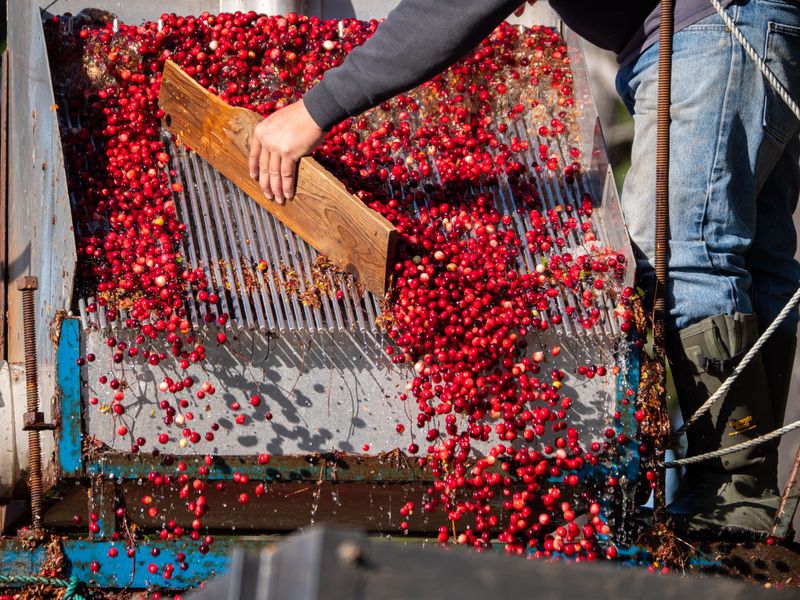
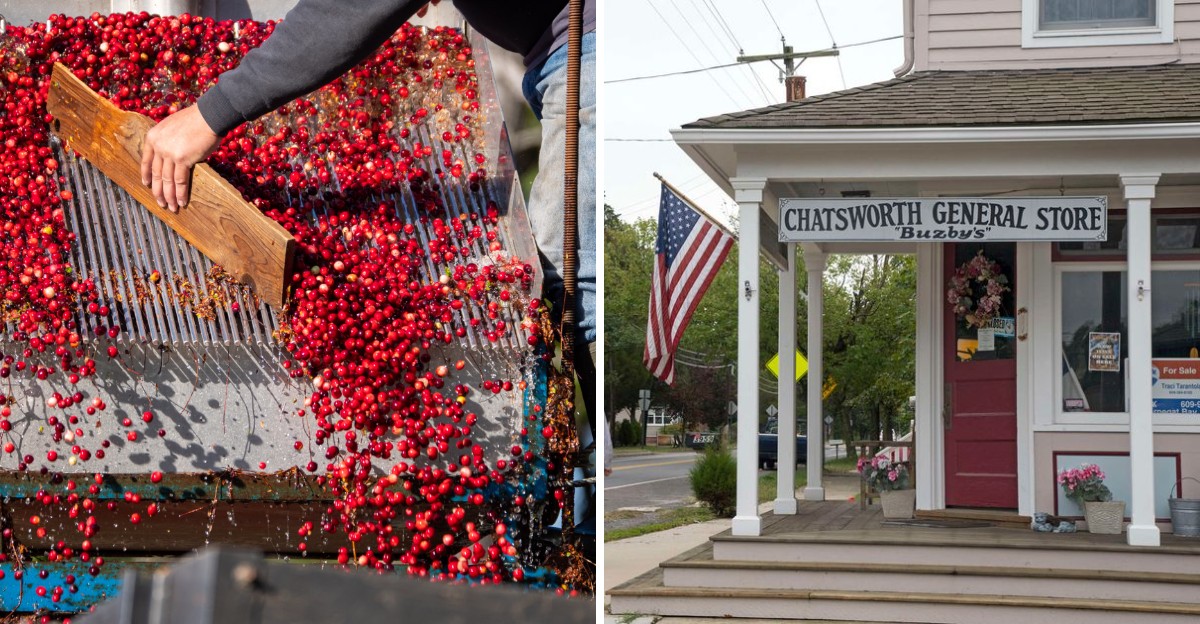
Every cranberry carries four tiny air pockets inside, and that secret makes the whole harvest work. Farmers flood the bogs with water, and the ripe berries float right up.
Machines called water reels, nicknamed egg beaters, churn through the flooded fields. They shake the berries loose from their low, trailing vines.
Soon the surface fills with a bright red layer of floating berries. Workers in tall waders then use long floating booms to push the berries together.
Pumps or conveyor belts lift the fruit into trucks waiting along the sandy edges. Most of these wet-harvested berries become juice, sauce, and dried snacks.
New Jersey is one of the top four cranberry-growing states in the country. A large share of that crop comes straight out of the Pine Barrens.
Harvest season runs from late September through early November, with October being the busiest stretch. Midweek mornings often bring the most action, since crews start early.
Many bogs sit right beside public roads like Route 563 and Route 72. Pull fully onto the shoulder, turn on your flashers, and watch from a safe distance.
Please do not walk onto private farmland, even if the view looks tempting. Growers work hard, and their equipment is big, loud, and busy.
Bring a camera with a zoom lens for the best close-up shots. Cloudy days make the red color pop even more than bright sunshine.
Kids usually find the floating berries magical, like nature’s version of a ball pit. Grownups tend to stare just as long, so plan for a lengthy stop.
4. Wander Through Double Trouble State Park
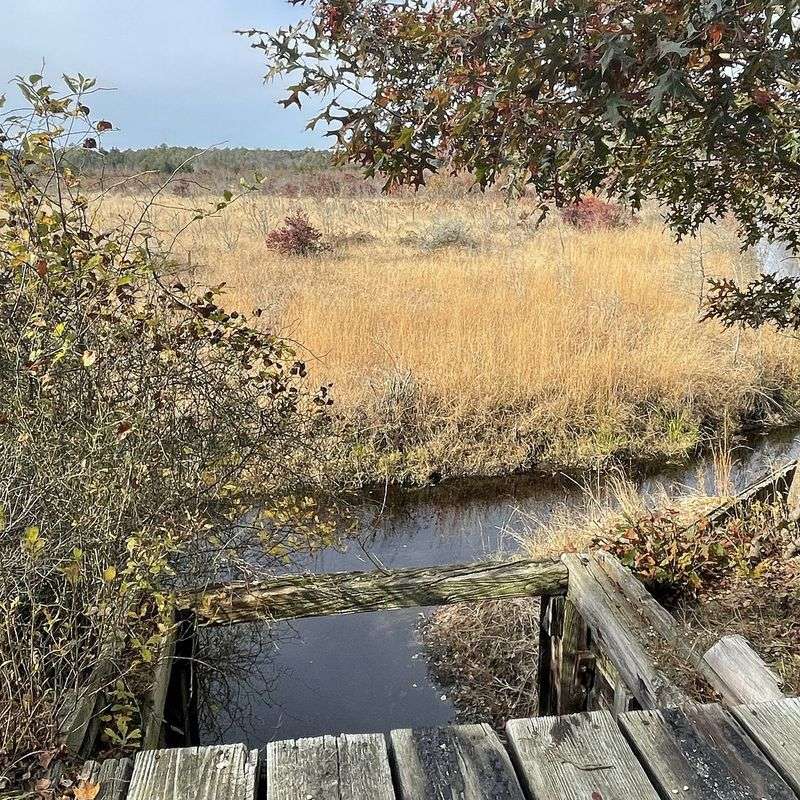
Legend says muskrats kept chewing holes in a dam here, causing floods over and over. One frustrated worker supposedly called it double trouble, and the name stuck for good.
Double Trouble State Park sits in Berkeley Township, close to the Garden State Parkway. It is an easy add-on if you are coming from the Jersey Shore.
Inside, you will find a preserved cranberry village with a sawmill, packing house, and cottages. The packing house once sorted berries by bouncing them down wooden steps.
Good berries bounced over little barriers, while soft ones stayed behind. Farmers still use that same bounce test today with modern machines.
Bogs surround the village, and in October they glow red right beside the trails. A flat loop trail of about 1.5 miles follows Cedar Creek through the woods.
The creek water looks like dark tea because of iron and plant tannins. The color is natural and harmless.
Paddlers love Cedar Creek in fall, and local outfitters rent kayaks and canoes. Floating past red bogs and golden leaves makes for a scenic paddle.
Bring bug spray, even in October, since warm afternoons still wake up the gnats. Trail shoes help too, because some paths turn soft and sandy.
Restrooms and parking are near the village entrance, and admission is free. Pack a picnic and grab a bench under the tall pines for lunch.
Stay until late afternoon, when golden light hits the bogs just right. Those quiet minutes might become the favorite memory of your whole drive.
5. Explore The Historic Batsto Village
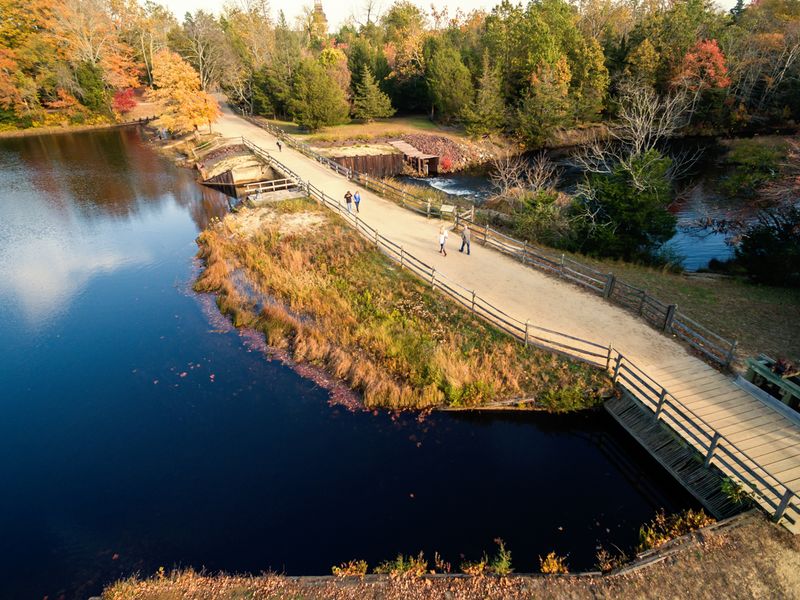
Long before cranberries became a major crop here, Batsto Village was home to busy iron furnaces. Workers here made cannonballs, kettles, and supplies during the American Revolution.
Today, the village rests quietly inside Wharton State Forest, the largest state forest in New Jersey. More than 30 historic buildings line the dirt lanes near Batsto Lake.
Peek inside the old general store, the post office, and the blacksmith shop. The post office still works, so you can mail a postcard with a special Batsto postmark.
The grand Batsto Mansion towers over everything with its tall Italian-style tower. Guided tours run on certain days, so check the schedule before you arrive.
October paints the trees around the lake in shades of gold, orange, and red. Reflections on the dark water make a striking scene.
Cranberry bogs once surrounded Batsto too, after the iron business slowly faded away. Walking here helps you see how Pine Barrens families switched jobs to survive.
Several hiking trails start near the visitor center, including the red, blue, and white loops around Batsto Lake. They range from about a half mile to four miles, so pick one that fits your legs.
The visitor center has clean restrooms, maps, and helpful staff who love sharing stories. Parking can cost a small fee on busy weekends, so keep some cash handy.
Grab a seat by the lake and listen to the wind moving through the pines. It sounds a little like the ocean, which is funny since the beach is miles away.
6. Browse Buzby’s General Store In Chatsworth
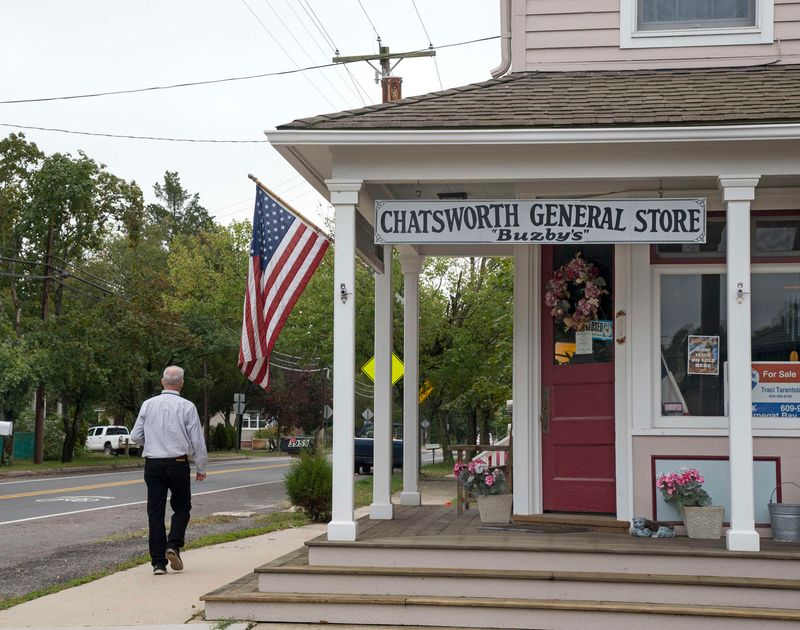
Some stores sell snacks, but Buzby’s General Store in Chatsworth sells stories along with them. The building has stood on Main Street since the 1860s.
Writer John McPhee made the shop famous in his 1968 book called The Pine Barrens. Back then, locals gathered here to swap news, gossip, and hunting tales.
Wooden floors creak under your feet the moment you step through the door. Shelves hold local books, Pine Barrens maps, handmade crafts, and cranberry treats.
Many visitors call Chatsworth the capital of the Pines, and this store feels like its town hall. Friendly folks behind the counter can point you toward nearby bogs.
Ask about the Jersey Devil, and you might hear a local tale or two. Legend places this winged creature in these woods as far back as 1735.
October makes that story extra fitting, especially as Halloween creeps closer. A Jersey Devil souvenir is a popular pick for first-time visitors.
Hours have been limited in recent years, so call ahead before driving out. Weekends during festival season get very crowded, so a weekday visit feels calmer.
Parking is right out front, but spots fill quickly on busy afternoons. Walk around the little town afterward to admire old homes and quiet streets.
If the shop is open, bring a few extra dollars for local books or Pine Barrens treats. Small purchases help keep this historic shop going for future road trippers.
Snap a photo of the classic storefront before you leave. It makes a perfect road trip picture, and it beats another selfie at a gas station.
7. Fuel Up At Lucille’s Country Cooking
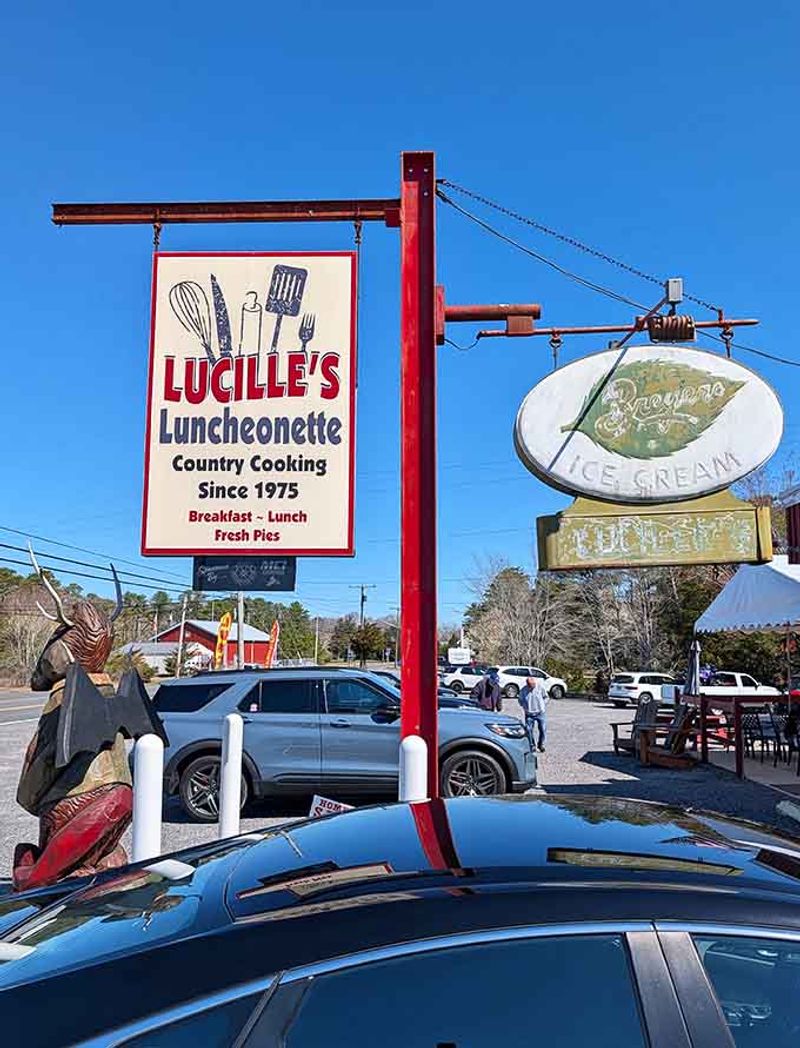
Road trips run on snacks, but a real Pine Barrens breakfast runs on pancakes. Lucille’s Country Cooking in Warren Grove has fed hungry drivers along Route 539 since 1975.
The diner sits at a quiet crossroads surrounded by pines. Inside, the vibe is cozy, simple, and wonderfully old-fashioned.
Locals often recommend the homemade pies, especially the ones made with seasonal fruit. Ask which pies are on the menu during your crisp October visit.
Big breakfasts, juicy burgers, hearty sandwiches, and creamy soups round out the menu. Portions are generous, so splitting a meal is a smart idea for lighter eaters.
Hikers, hunters, motorcyclists, and families often share the counter on weekend mornings. Conversations flow easily, and you might pick up insider tips about the best bogs nearby.
Plan your stop for mid-morning or early afternoon to dodge the biggest rush. Opening hours can change, so a quick phone call saves you a wasted trip.
Gas stations are few and far between out here, so fill your tank nearby too. Cell service gets spotty, which makes a paper map a handy backup.
Buy an extra slice of pie for the road, wrapped up in a box. It will come in handy when hunger strikes halfway to the next bog.
Eating here connects you to Pine Barrens life in a delicious way. Good food, friendly faces, and tall whispering pines make a pretty winning combination.
8. Pack Smart For The Sandy Back Roads
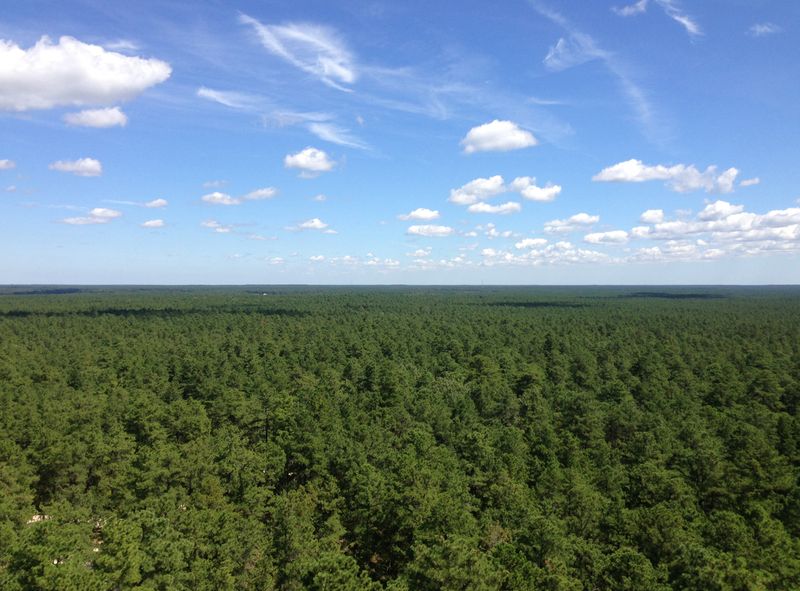
The Pinelands National Reserve covers about 1.1 million acres, much of it sandy forest. Created in 1978, the reserve protects this wild land.
Paved roads like Routes 72, 530, 532, 539, 542, and 563 connect the Cranberry Trail stops. Stick to them unless your vehicle has four-wheel drive and high clearance.
Deep sand on unpaved roads can leave regular cars stuck, and tow trucks can take a while to arrive. Rangers often see stuck cars on busy autumn weekends.
Download offline maps before you leave, since cell signals drop in many spots. A paper map from any visitor center works as a reliable, battery-free backup.
Pack water, snacks, a phone charger, and a small first aid kit. Bug spray and tick checks matter too, because ticks stay active on warm fall days.
October is also hunting season, so wear a bright orange hat or vest on trails. Hunters and hikers share these woods, and visible colors keep everyone safe.
Layers help a lot, since mornings feel chilly and afternoons can turn surprisingly warm. Mid-October sunsets arrive around 6:15, so plan your final stop early.
Respect posted signs, stay off private bogs, and pack out every scrap of trash. Following posted rules helps keep the Pine Barrens beautiful for everyone.
Keep a towel or old blanket in the trunk for sandy shoes and muddy paws. Your car will thank you, even if the floor mats look like a beach.