Those Holiday Looking Red Berries In California Hills May Belong To An Invasive Plant
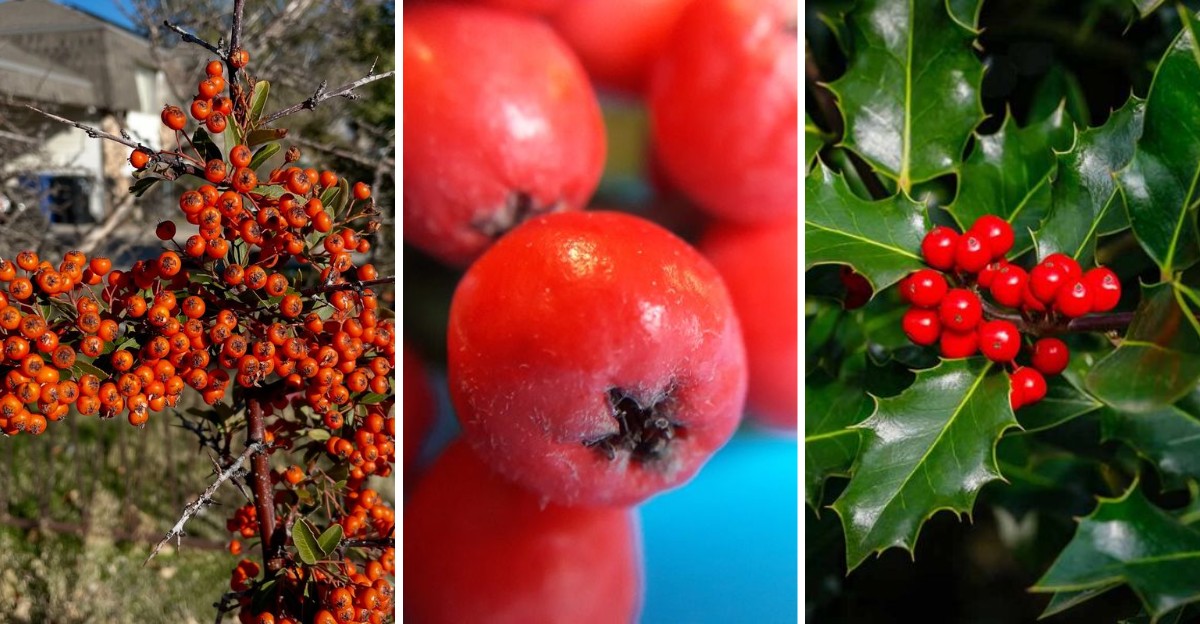
Winter trails near the California coast can look strikingly festive, with glossy red berries glowing against deep green leaves like ornaments hung on every bush.
Those cheerful clusters invite photos, and they also raise a fair question about what kind of shrub produced them.
The answer matters more than it might seem.
One berry-covered shrub belongs in these hills and has fed native birds for ages. Several others look remarkably similar, yet arrived from gardens far away and now crowd into wild places.
A few simple clues, from leaf edges to thorns to the way berries cluster, can separate the native from the imposters.
That knowledge also helps when choosing what to plant at home, keeping holiday color from spreading trouble beyond the fence.
Toyon Is The Native Christmas Berry
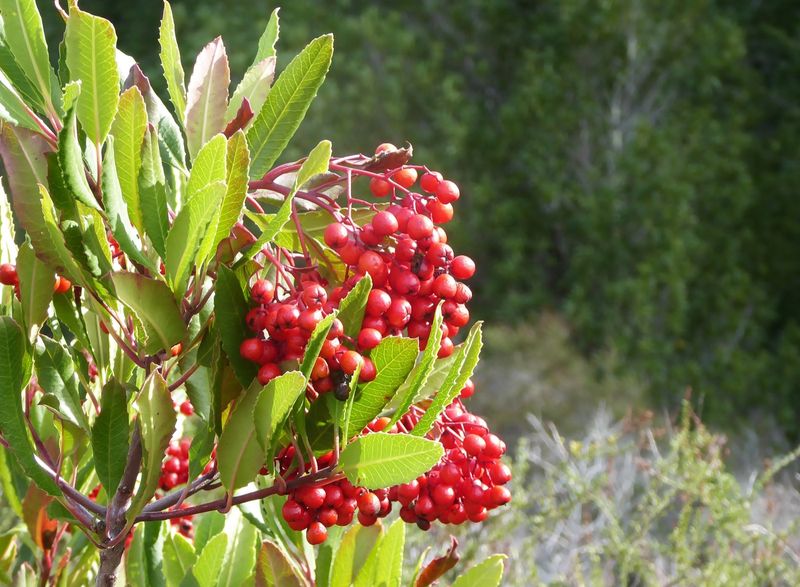
Legend says Hollywood took its name from toyon, a shrub that once covered the hills of Southern California. Early settlers thought its winter berries resembled holly, and the nickname stuck.
Today it often goes by California holly or Christmas berry.
Toyon, known to botanists as Heteromeles arbutifolia, is a true California native. It grows in chaparral, oak woodlands, and coastal scrub from the north coast down into Baja California.
Most plants reach 6 to 15 feet tall, and some grow into small trees.
The leaves offer the key clue. They’re leathery, dark green, and evergreen, usually 2 to 4 inches long, with sharp little teeth along the edges like a saw blade.
Those teeth stay small, though, without the stiff spines of holly.
In early summer, toyon produces flat clusters of small white flowers that bees love. By late fall, those flowers become bunches of bright red berries that often hang on through January.
Robins, cedar waxwings, and mockingbirds feast on the berries in winter when other food runs low, making toyon a key part of the local food web.
It also proves tough, handling drought once established, and fall makes an ideal planting time. In fire-prone areas, new shrubs belong beyond the first five feet of the house.
Once its look becomes familiar, spotting the imposters gets much easier. CNPS and local native nurseries often carry it during fall plant sales.
Cotoneaster Berries Fool Many Hikers
Plenty of hikers have pointed at a berry-loaded bush and declared it toyon, only to discover cotoneaster instead. From a distance, red fruit and green leaves make an easy mix-up.
Several cotoneaster species arrived in California as garden plants from Asia, popular for hedges, slopes, and parking lots.
The California Invasive Plant Council rates the three main escapees, Cotoneaster franchetii, C. lacteus, and C. pannosus, as moderate invaders.
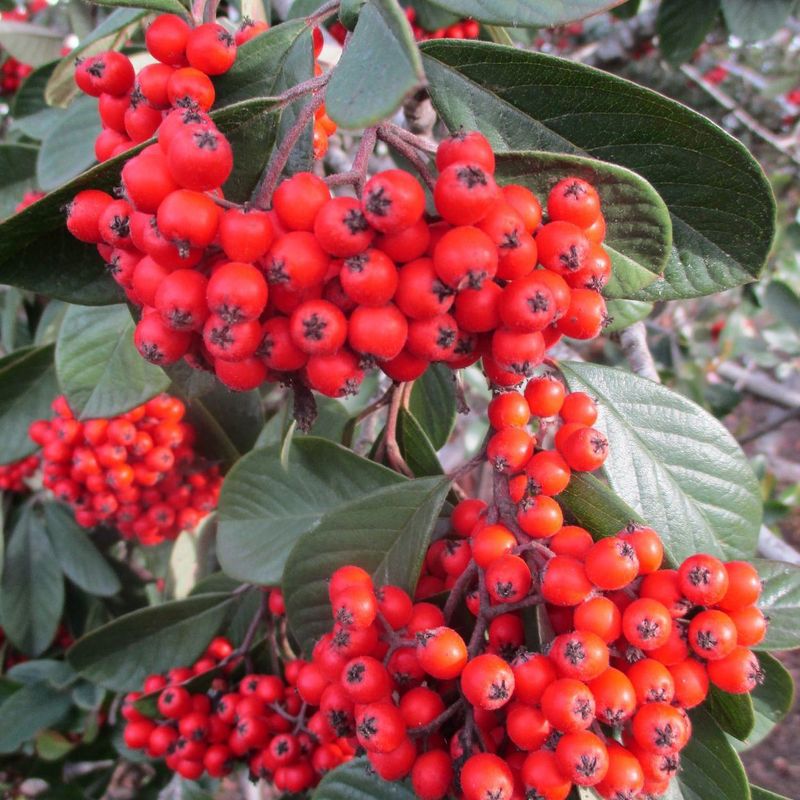
Up close, the differences show. Cotoneaster leaves are smaller than toyon’s, often an inch or two long, with smooth edges and no teeth.
Many carry a fuzzy, grayish or whitish underside, and branches tend to arch outward in a fountain shape.
The berries are small, red to orange-red, and grow in clusters. They ripen in fall and stay on the plant into winter, just like toyon, which explains much of the confusion.
Your California Garden Changes Every Week. Your Plan Should Too.
Gardening in California changes quickly throughout the season. Every Friday you’ll receive a simple weekly plan showing exactly what to plant, prune, fertilize, harvest, and protect so you never miss the right timing.
Cotoneaster causes major problems along the coast, especially in the San Francisco Bay Area and the north coast. It moves into coastal scrub, grasslands, and forest edges.
Once established, it forms thick stands that shade out native plants.
Small seedlings in a yard pull out easily by hand while soil stays moist. Larger shrubs can be cut down, though stumps often resprout.
Pulling new seedlings for a few years afterward, especially where birds perch and drop seeds, keeps the problem from returning. Fall rains soften soil, making this a good season for removal.
Pyracantha Berries Cluster In Orange Red
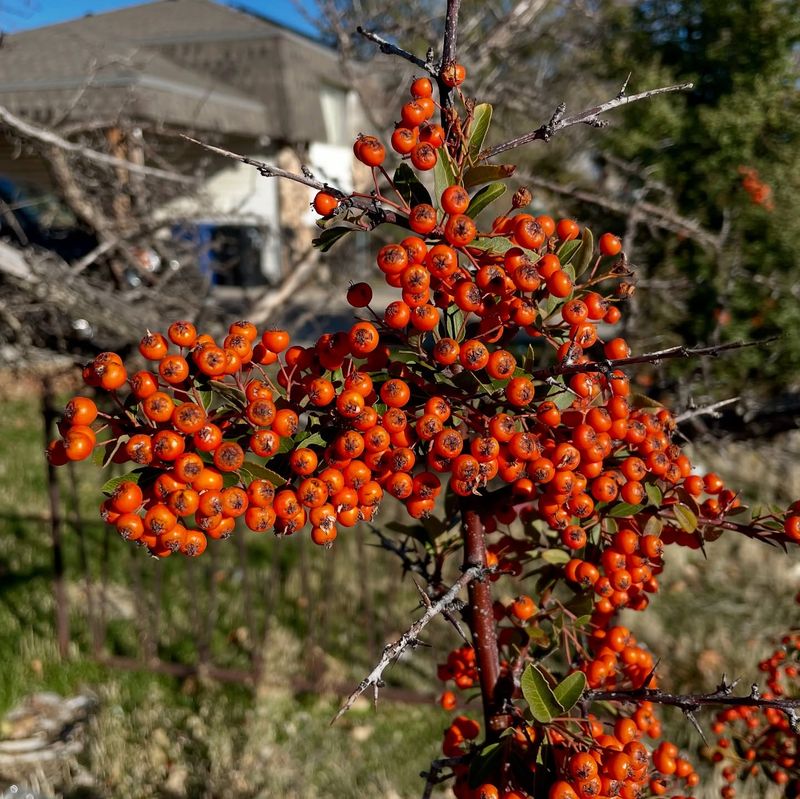
A single brush against a pyracantha bush leaves a lasting impression. The common name, firethorn, is well earned, since sharp spines line the stems and can poke through garden gloves.
Pyracantha came to California from Europe and Asia as a hedge and wall plant, prized for fiery fall color and for blocking trespassers.
The California Invasive Plant Council lists Pyracantha angustifolia as invasive with a limited rating, and other species escape too.
Thorns offer the fastest clue. Toyon has no thorns at all, so a spiny branch rules it out immediately.
Pyracantha leaves are also small, narrow, and glossy, often less than 2 inches long.
The berries grow in heavy, crowded clusters that can bend branches, ranging from bright orange to orange-red to deep red depending on the variety.
In late fall, a loaded bush looks wrapped in tiny ornaments.
The berries can upset stomachs in people and pets when swallowed, and many ornamental berries behave similarly, so wild berries are best left alone.
Removal calls for thick gloves, long sleeves, and eye protection. Stems come out in sections, followed by digging out the root crown.
Seedlings often pop up nearby where birds dropped seeds, so follow-up checks over the next few seasons catch them early.
Pyracantha near the house also adds dense, woody fuel, another reason to replace it in fire-prone yards.
Brazilian Peppertree Berries Escape Into Hills
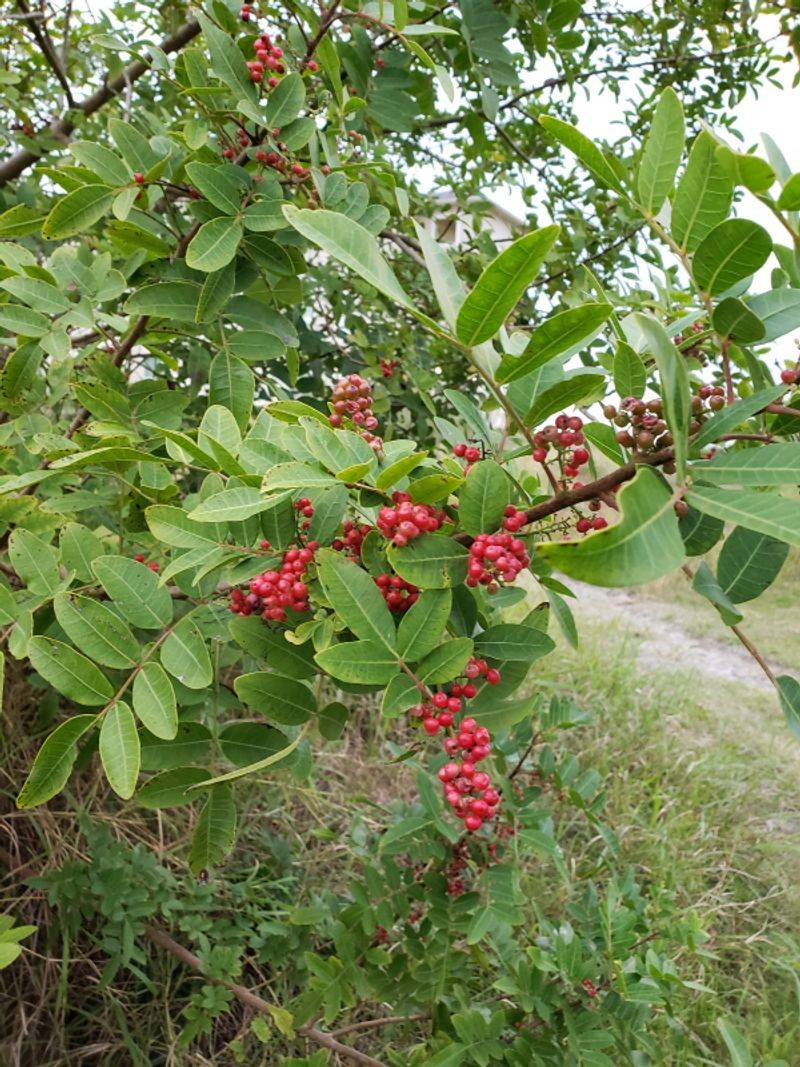
Across Southern California, especially around San Diego and Los Angeles, a small tree with drooping clusters of pinkish-red berries appears near creeks and canyons.
Locals sometimes call it Christmas berry too, though it’s actually Brazilian peppertree, Schinus terebinthifolia.
Native to South America, this tree was planted widely for shade and color. The California Invasive Plant Council now rates it moderate, with an alert for spreading risk.
In Florida and Hawaii, it ranks among the most aggressive invaders, a warning of what it can become.
Leaves give it away quickly. Each leaf is compound, made of several smaller leaflets lined along a central stem, while toyon carries simple, single leaves.
A crushed leaf releases a peppery, turpentine-like scent. The berries are small, round, and pinkish-red, packed in dense clusters.
The tree belongs to the same family as poison oak, and its sap and fruit can irritate skin for some people. Children and pets do best kept away from the berries.
Brazilian peppertree favors streamside areas, where it forms dense thickets and pushes out native willows and shrubs.
Seedlings can be pulled while young. Cal-IPC notes that larger trees need root removal plus hand-pulling of seedlings for at least three years.
Bigger trees often call for a professional or a local weed management group, since resprouts are common after cutting.
Birds, especially robins, spread the seeds widely, so removal benefits the surrounding area too.
English Holly Spreads In Cool Moist Woods
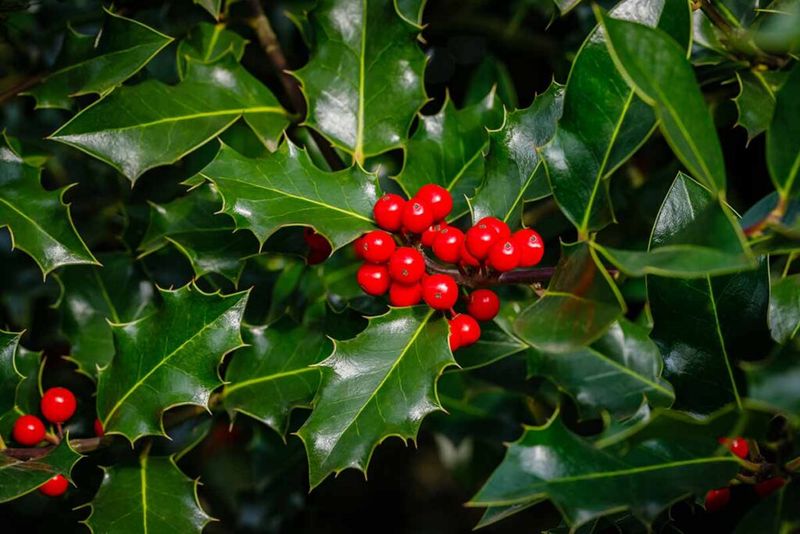
Deep in a shady redwood grove, a glossy shrub with spiky leaves and red berries can look out of a greeting card. Charming as it seems, English holly doesn’t belong there.
Ilex aquifolium comes from Europe, North Africa, and western Asia, planted for holiday decorations and hedges.
The California Invasive Plant Council lists it as invasive with a limited rating, and it causes far bigger problems in Oregon and Washington.
Spines offer the giveaway. Holly leaves are thick, shiny, and dark green, with sharp points along wavy edges, while toyon leaves stay flat and smooth to the touch.
Holly berries are bright red, round, and grow close to the stems in small groups. Only female plants produce berries, so some bushes stay bare.
The fruit is toxic to people and pets. Poison Control (1-800-222-1222) and the ASPCA Animal Poison Control Center (888-426-4435, fee may apply) can help after a suspected ingestion.
Unlike the other invaders here, holly favors cool, damp, shady spots. It escapes into redwood and mixed forests in Northern California, especially near towns and old homesteads.
It can grow beneath a full tree canopy where many plants struggle.
Young holly pulls out readily when the ground is wet. Larger plants resprout eagerly after cutting, so digging out roots or planning repeated cuts works best.
Holiday sprigs brought indoors are best disposed of in the trash afterward, since discarded branches with berries can start new plants.
Check Leaf Edges And Shape To Tell Them Apart
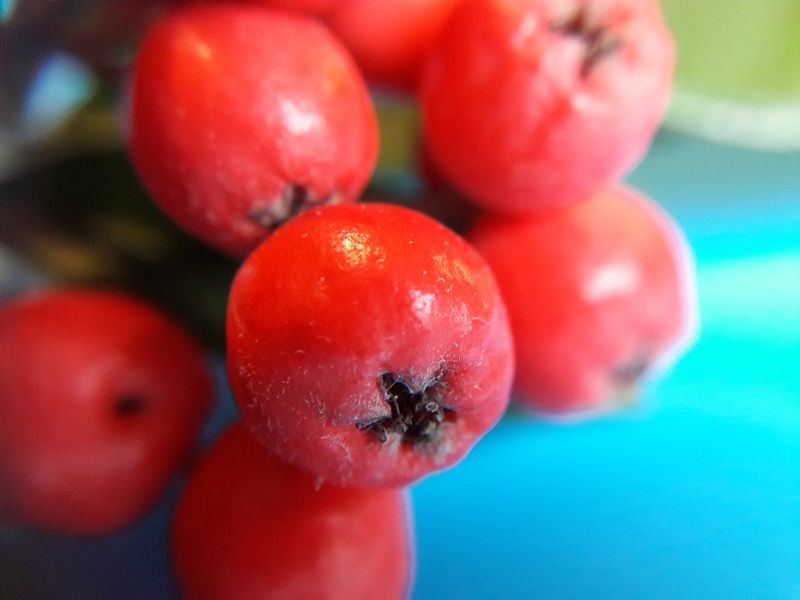
Berries make a poor identification card. All five plants carry red fruit in winter, so color alone rarely settles the question, while leaves usually clear up the mystery.
Toyon comes first. Its leaves are leathery and evergreen, about 2 to 4 inches long, with small saw-like teeth along the edges that point forward and won’t stab.
Cotoneaster leaves are smaller, often under 2 inches, with smooth edges and no teeth. A flipped leaf may reveal a fuzzy, pale underside.
A careful hand along a stem checks for pyracantha, since real thorns mean firethorn. Its leaves are narrow, glossy, and small, with berries piled in heavy orange-red clusters.
Brazilian peppertree reveals itself through compound leaves with several leaflets on one stalk. A peppery smell when crushed confirms the identification.
Holly leaves bite back, with thick, shiny surfaces and sharp spines along wavy edges.
Plants vary, and garden varieties can blur the lines.
Clear photos of leaves, stems, and fruit help with uncertain cases. Apps such as iNaturalist, local CNPS chapters, and native plant nurseries can help confirm a find.
Gloves make sense when examining unfamiliar shrubs, especially thorny pyracantha and spiny holly.
Spotting invasive berry shrubs on public land can also help land managers, since iNaturalist observations and reports to local weed management groups guide removal efforts.
A little practice on winter walks turns berry-spotting into a skill that protects the hills.