Georgia’s Common Buckeye Butterflies Take On A Striking New Look In Fall
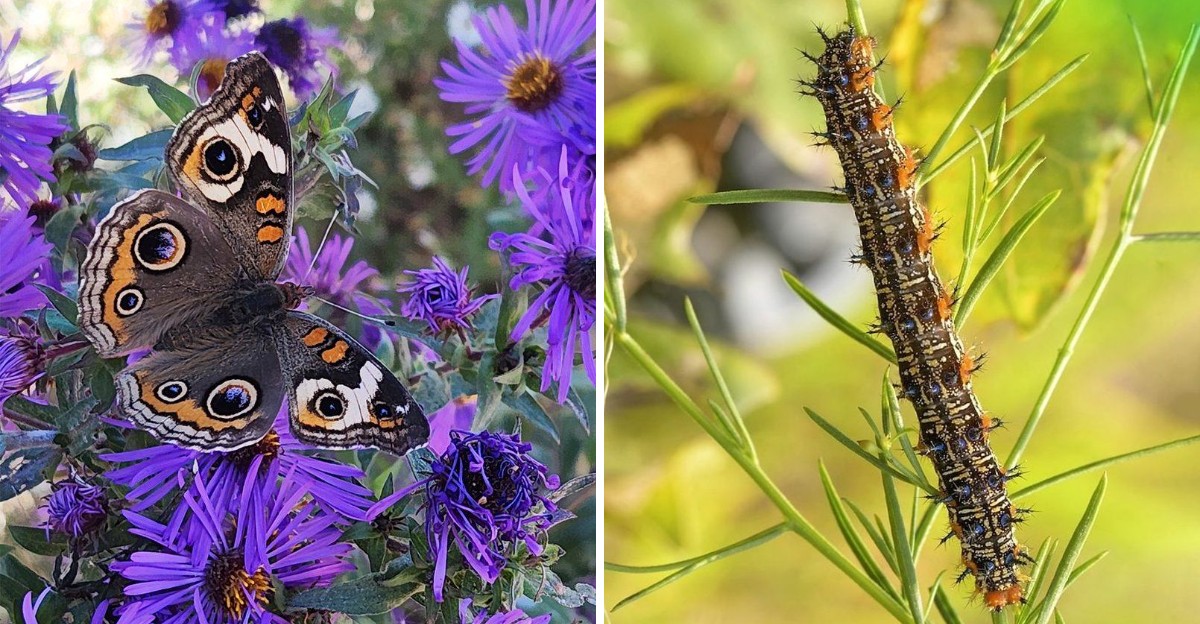
A butterfly you spotted earlier in summer might look surprisingly different when it visits your garden again in October.
Common buckeyes are known for their large eyespots, but their wing colors can shift with the seasons. Fall individuals often develop richer reddish tones beneath their wings, giving them a different appearance.
The change is linked to seasonal conditions during development rather than individual butterflies changing color after emerging.
Georgia gardeners may notice these butterflies visiting late flowers or resting on sunny patches of bare ground.
Take a closer look when one settles with its wings closed, since the underside can reveal colors you might otherwise miss.
Those autumn shades are part of the buckeye’s natural seasonal variation, adding another interesting detail to watch for during fall butterfly activity.
1. Fall Buckeyes Develop Darker Wings With Red Tones Underneath
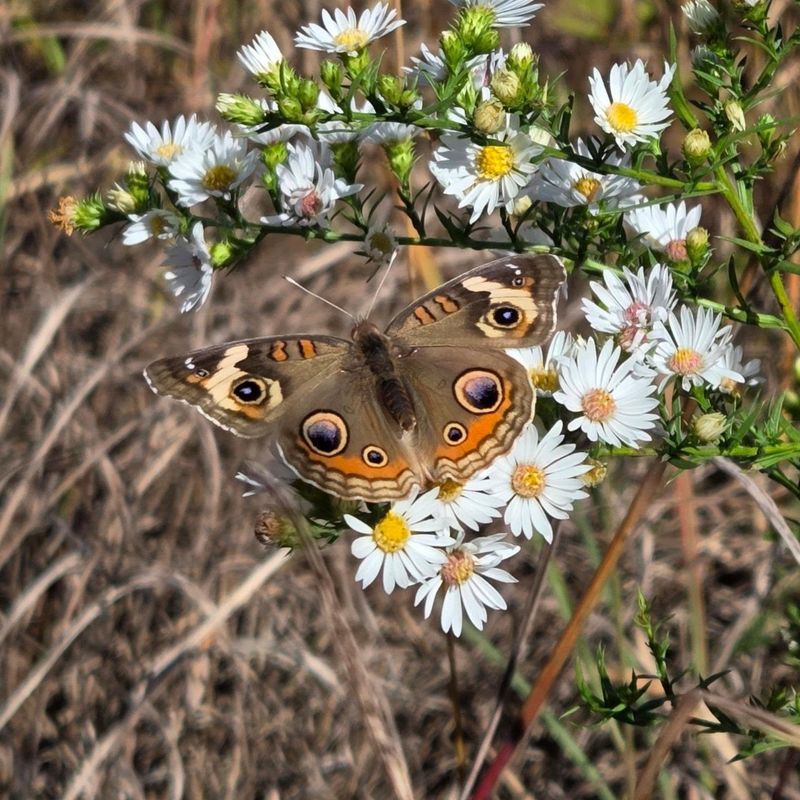
Look twice at a buckeye in October, and you might think it is a different species. Fall adults often show deeper brown colors on top, while the undersides of the hindwings can turn a rusty red or rosy brown.
Summer buckeyes usually look lighter underneath, with a tan or beige tone that blends with dry grass.
Butterfly watchers call this a seasonal form. Some guides refer to the darker fall version as the rosa form, though naming varies a bit between sources.
Not every fall buckeye shows strong red tones, so expect a range of shades.
Some look only slightly darker than summer adults, while others carry a rich reddish wash. Individual differences and local weather can both affect how dramatic the change looks.
Here in Georgia, the best time to compare forms is from late September into November. Buckeyes often stay active on warm afternoons during that stretch, especially in open, sunny areas.
Try a simple side-by-side test if you enjoy photography.
Snap pictures of buckeyes in July and again in October, then compare the undersides when the wings are closed. Closed wings show the color shift much better than open ones.
Patience matters here, since buckeyes open and close their wings often while resting. Sit still nearby, and you will usually get a clear look at both sides within a few minutes.
2. Shorter Days Are Linked To The Fall Color Change
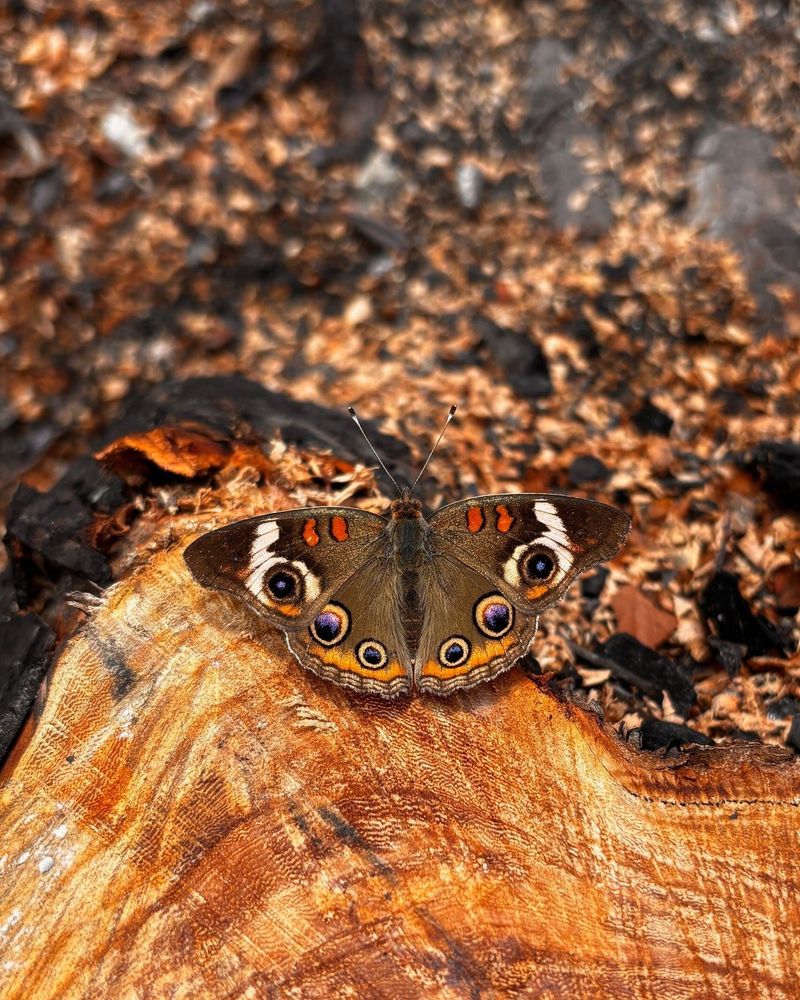
Daylight acts like a hidden calendar for buckeyes. As fall approaches and days shorten, caterpillars and pupas respond by producing adults with darker, redder coloring.
Lab work on this species has pointed to day length as a main trigger for the seasonal form.
Temperature seems to matter too, but in a supporting role. Cooler conditions during development may strengthen the darker look, although the exact mix of factors can vary.
What really counts is the timing of growth, not the date the adult appears.
A caterpillar that grows during long summer days will likely become a lighter adult. One that develops as days shrink in late summer and early fall has a better chance of turning darker.
Gardeners in Georgia can watch this play out without any special gear. Just keep an eye on buckeyes from August through fall, and note when the darker adults start to show up in your yard.
Your Georgia Garden Changes Every Week. Your Plan Should Too.
Gardening in Georgia changes quickly throughout the season. Every Friday you’ll receive a simple weekly plan showing exactly what to plant, prune, fertilize, harvest, and protect so you never miss the right timing.
Results will not match perfectly from one year to the next.
A warm September may delay or soften the change, while an earlier cool spell might bring darker adults a bit sooner. North Georgia mountains and the coastal plain can also differ in timing.
Keeping a simple notebook helps. Write the date, the weather, and whether each buckeye looked light or dark, and patterns may appear over a few seasons.
3. Large Eyespots Can Startle Predators When Wings Open
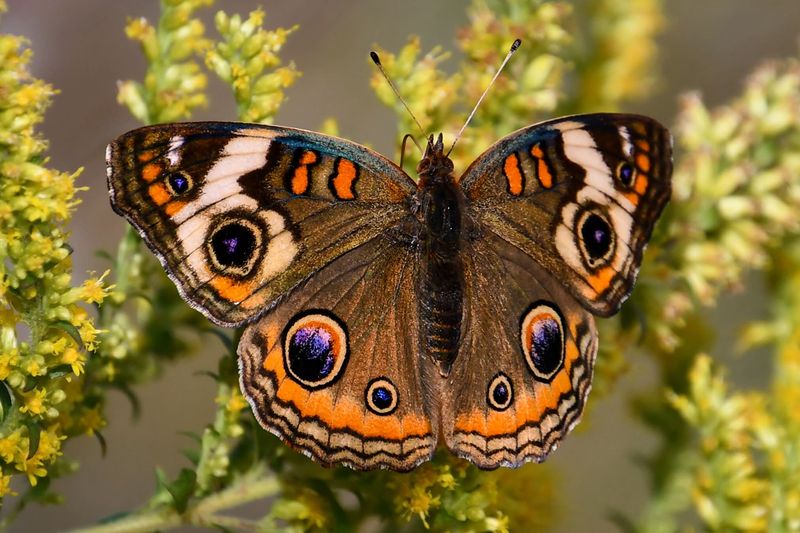
Those big round spots are not just decoration. Each buckeye carries several eyespots on its upper wings, ringed in yellow or orange with dark centers and touches of blue or purple.
Many experts believe the spots help protect the butterfly from birds and lizards.
Suddenly opened wings may flash what looks like a pair of staring eyes. A hungry bird might hesitate for a moment, giving the buckeye time to escape.
Another possible benefit is misdirection.
Predators may peck at the spots instead of the body, so a butterfly might lose a small piece of wing and still fly away. You may notice buckeyes with notched or torn wing edges, which could come from such attacks or simple wear.
Eyespots do not work every time, of course. Birds still catch buckeyes, and the defense likely helps some individuals more than others.
Across Georgia gardens, you can watch this behavior up close if you move slowly. Buckeyes often hold their wings open while basking, which shows off the full pattern.
Avoid sudden movements or casting your shadow across the butterfly.
A gentle approach from the side works best. Kids especially enjoy counting the eyespots and comparing their colors, which makes a great outdoor activity on a mild autumn afternoon.
4. Some Overwinter Here When Conditions Stay Mild
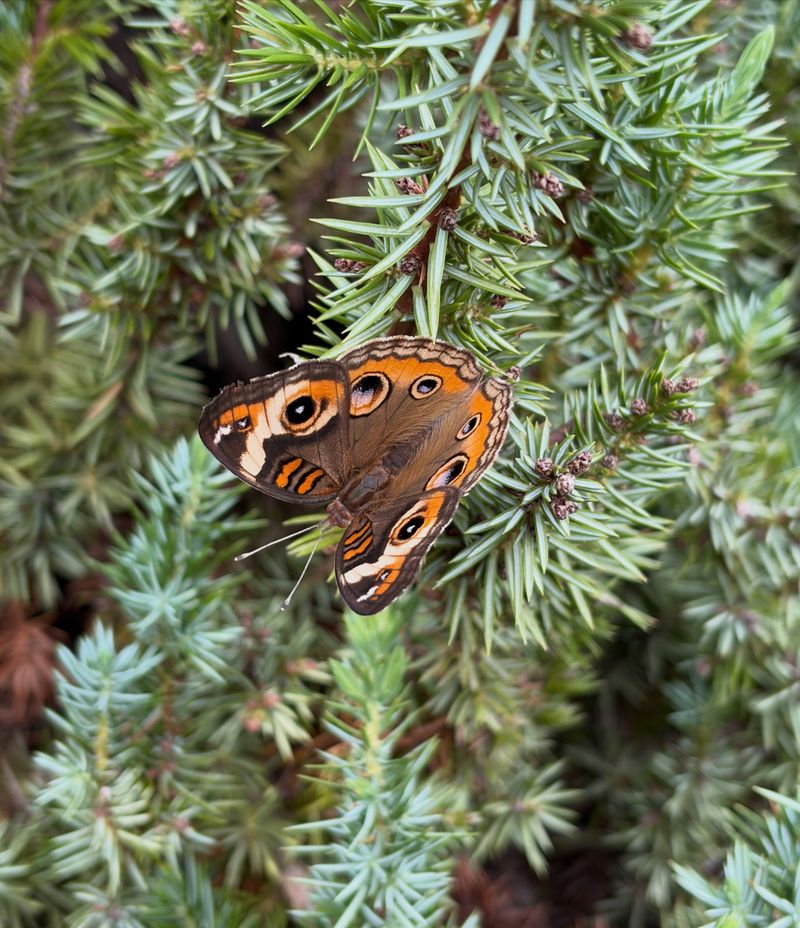
Winter does not erase buckeyes from the southern landscape. In warmer parts of the Southeast, some adults survive the cold months and become active on sunny, mild days.
Cold tolerance has limits, though, and hard freezes can be rough on them.
Southern and coastal Georgia tend to offer better odds than the northern mountains. Milder winters near the coast give adults more chances to bask and feed between cold snaps.
Buckeyes are also known for moving south in fall, especially along the Atlantic coast.
Some that appear in autumn may be passing through rather than staying put. Others may settle in for the winter if the weather cooperates, so local numbers can shift from week to week.
Spotting one in January is possible but not something to count on. It depends heavily on how warm the season runs and where you live.
Gardeners can help a little by keeping things less tidy.
Leave some leaf litter, brush piles, or tall grass in a corner of the yard. These spots may give shelter to insects of many kinds during chilly nights.
Keep watch on warm, still afternoons after a cold spell. Those are the moments when a winter buckeye might drift out to sun itself on a path or patch of bare soil.
5. Sunny Bare Ground Gives Them Places To Bask
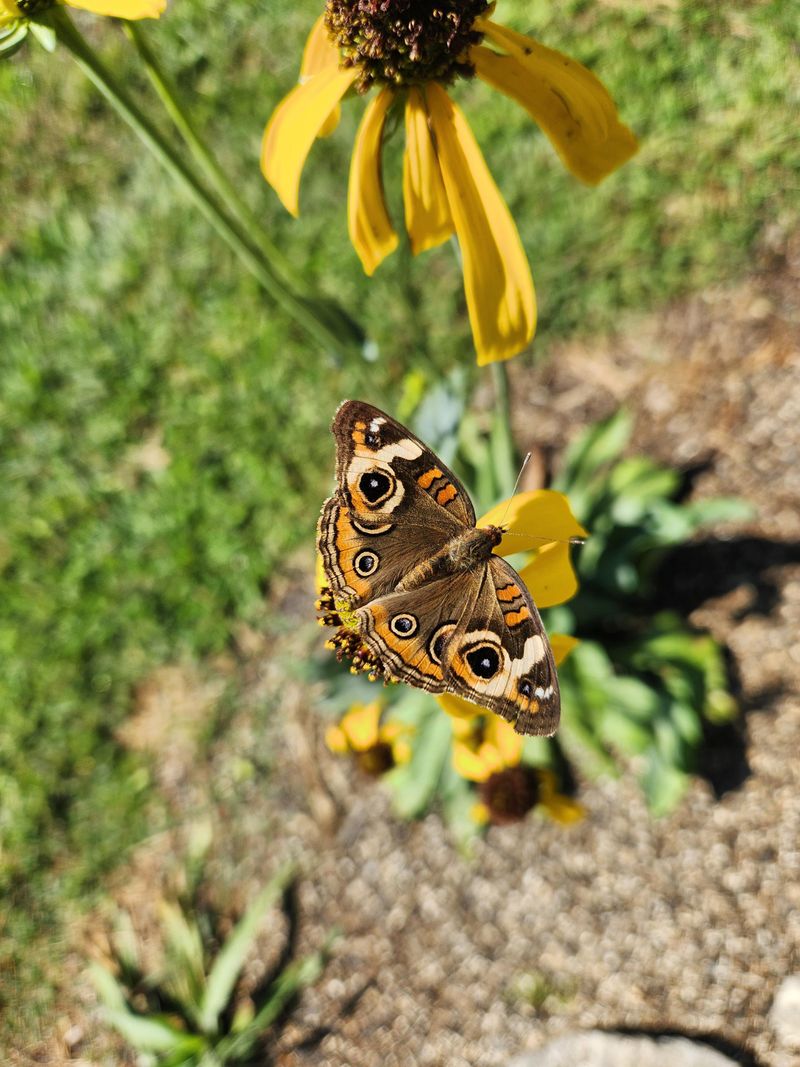
Bare dirt might look messy to you, but a buckeye sees prime real estate. These butterflies love open, sunny spots like trails, sandy patches, and thin areas in lawns.
Like other butterflies, buckeyes rely on outside warmth to get their bodies ready for flight.
Spreading their wings flat on warm ground lets them soak up heat from the sun and the soil. In fall, when mornings start cool, basking becomes even more important.
Males also use open ground as lookout posts.
A male often perches low and darts out at passing insects, then returns to the same area. Watching this back-and-forth can be surprisingly fun on a slow afternoon.
Creating a basking spot is easy. Leave a small patch of soil uncovered, or set a few flat stones in a sunny corner of your garden.
Skip heavy mulch in at least one area if you want to see more buckeyes.
Wood chips and thick groundcovers are great for many plants, but they reduce the open, warm surfaces these butterflies prefer. A mix of mulched beds and open ground works well in most Georgia yards.
Results will vary with your site, of course. Shady lots may see fewer buckeyes, while sunny properties near fields or roadsides often attract more visitors.
6. Plantain Snapdragons And Gerardia Feed The Caterpillars
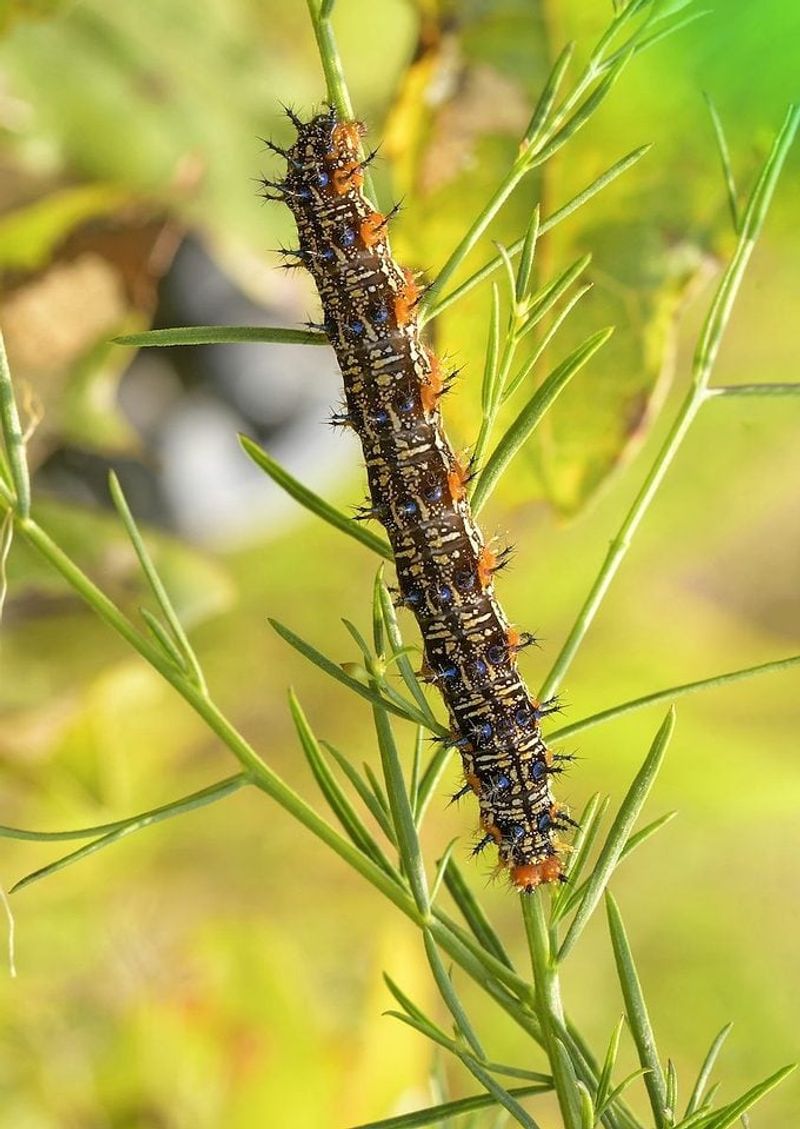
Weeds can be wildlife food, and plantain proves it. That low, broad-leaved plant popping up in lawns is one of the favorite host plants for buckeye caterpillars.
Snapdragons are another common choice, which surprises many flower growers.
Gerardia, now often listed under the name Agalinis, is a native wildflower that also hosts buckeyes. Its pink blooms show up in late summer and fall in open, sunny areas.
Other plants in related families may be used as well, including toadflax and some ruellias.
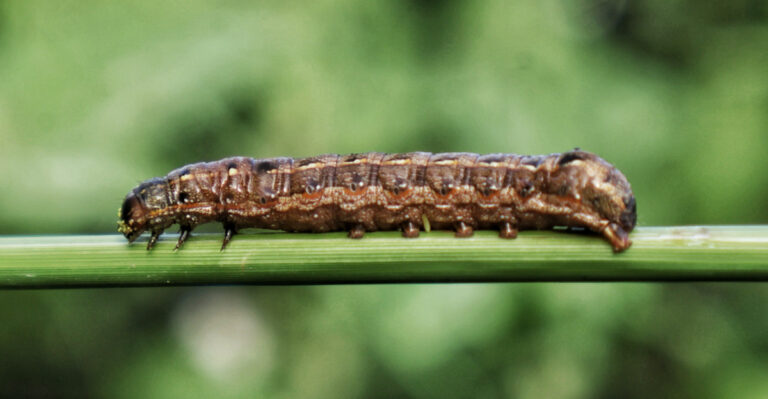
Caterpillars are dark with spiky-looking bristles and light markings. They may look a little scary, but they are harmless to people and simply munch leaves.
Expect some chewed foliage if buckeyes find your snapdragons. Damage is usually light, and the plants often keep growing and blooming.
Hold off on pesticides in areas where you want butterflies to breed.
Even products sold for garden use can harm caterpillars. If you need to treat a problem, spot-treat only the affected plants and read labels carefully.
A Georgia gardener could start with something simple. Let a patch of plantain grow at the edge of the yard, or tuck a few snapdragons into a sunny bed in fall, since they handle cool weather in much of the state.
7. Fall Flowers Provide Nectar For The Adults
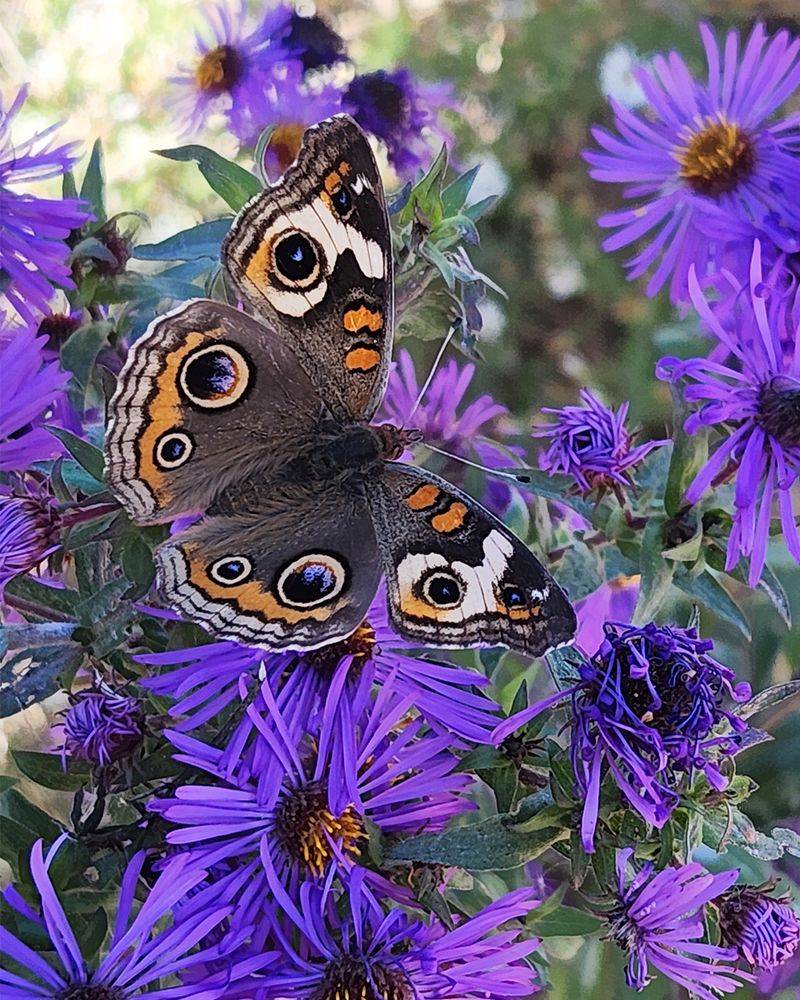
Flowers fuel the whole fall show. Adult buckeyes sip nectar to stay active, and late-season blooms become a key food source as summer plants fade.
Asters top the list for many autumn gardens.
Goldenrod, tickseed, and late-blooming native sunflowers can also draw buckeyes. Low, open flowers seem easier for them to reach than deep, tube-shaped ones.
Buckeyes often feed close to the ground, so short plants matter too.
Small wildflowers along lawn edges, like frogfruit, may attract them in warmer areas. Mixing heights gives butterflies more choices throughout the day.
Planting several types in groups helps. Clumps of the same flower are easier for butterflies to spot than single plants scattered across the yard.
Bloom times shift from year to year, depending on rain, heat, and where you garden in Georgia.
A dry fall may shorten flowering, while a mild one can stretch it into November. Watering newly planted perennials during dry spells helps them get established, though mature natives usually need less help.
Local native plant nurseries and county Extension offices can suggest options suited to your area. Choosing plants that match your soil and sunlight gives both the flowers and the butterflies a better chance.
Leave seed heads standing after bloom too. They add winter interest and support other wildlife.