Spiky Green Balls Falling From Pennsylvania Trees Explained
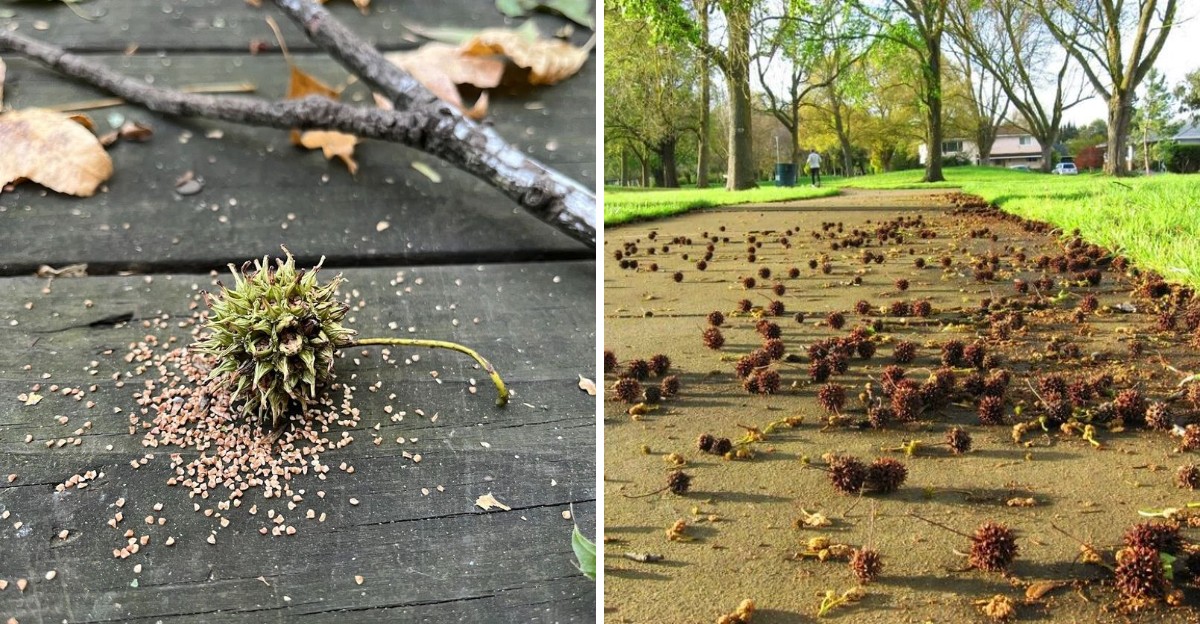
Step barefoot on one, and you’ll never forget it. These spiky balls are hard, prickly, and perfectly shaped to roll underfoot, turning a simple walk across the yard into a balancing act.
If you’ve found them scattered across your Pennsylvania lawn, driveway, or sidewalk, you’re not alone.
They come from a native tree with star-shaped leaves that put on one of the most colorful fall shows around. A single tree can glow red, orange, purple, and gold all at once.
Each spiky ball is actually a seed pod, packed with tiny seeds that goldfinches and other birds love to pick out.
They start out green, turn brown, and drop by the hundreds all through fall and winter. They’re beautiful in their own way, but they can also be a real nuisance.
Knowing what they are and how to handle them can make sharing your yard with this tree much easier.
Meet The Sweetgum Tree
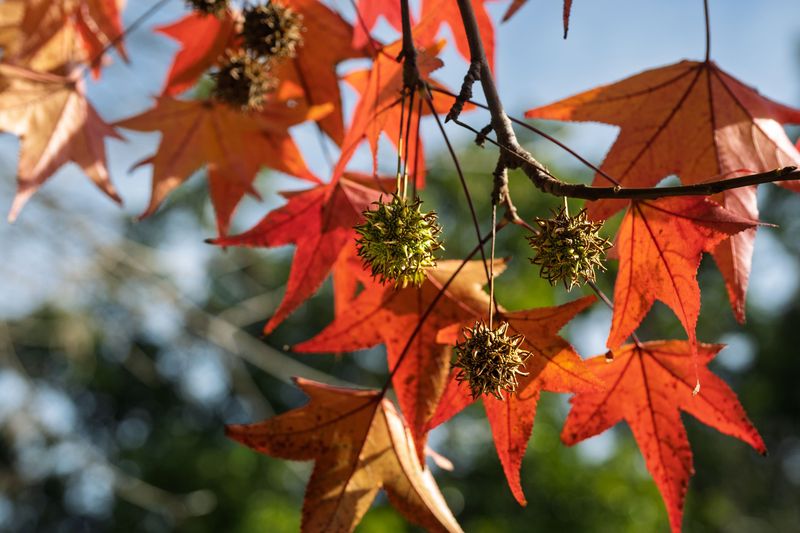
Few trees put on a fall show quite like the sweetgum. Walk down a street in Philadelphia or Lancaster in October, and you might spot one glowing like a box of crayons. Red, purple, orange, and yellow leaves can all appear on the very same branch.
Sweetgum, known to scientists as Liquidambar styraciflua, is native to southeastern Pennsylvania.
It grows wild in the area but also shows up in yards, parks, and along city streets. People plant it because it grows tall, gives great shade, and looks amazing in autumn.
The leaves are easy to recognize. Each one is shaped like a star with five or seven pointed tips. They feel glossy and smooth on top. If you crush a leaf, it gives off a sweet, piney smell.
A grown sweetgum can reach 60 to 75 feet tall. The trunk is straight, and the bark becomes deeply grooved with age. Some younger branches even grow odd, corky ridges that look like little wings.
Here is a fun fact. The name comes from the sticky sap, or gum, that oozes from the bark. Long ago, people chewed this gum like candy. Native Americans and early settlers also used it as a home remedy for cuts and sore throats.
If you have a big tree with star leaves in your yard, you probably have a sweetgum. Look closely at the ground below it in late summer.
Chances are, you will find the famous spiky balls scattered across the grass. Spotting the leaves and the balls together is the easiest way to confirm what kind of tree you have.
What Those Spiky Balls Really Are
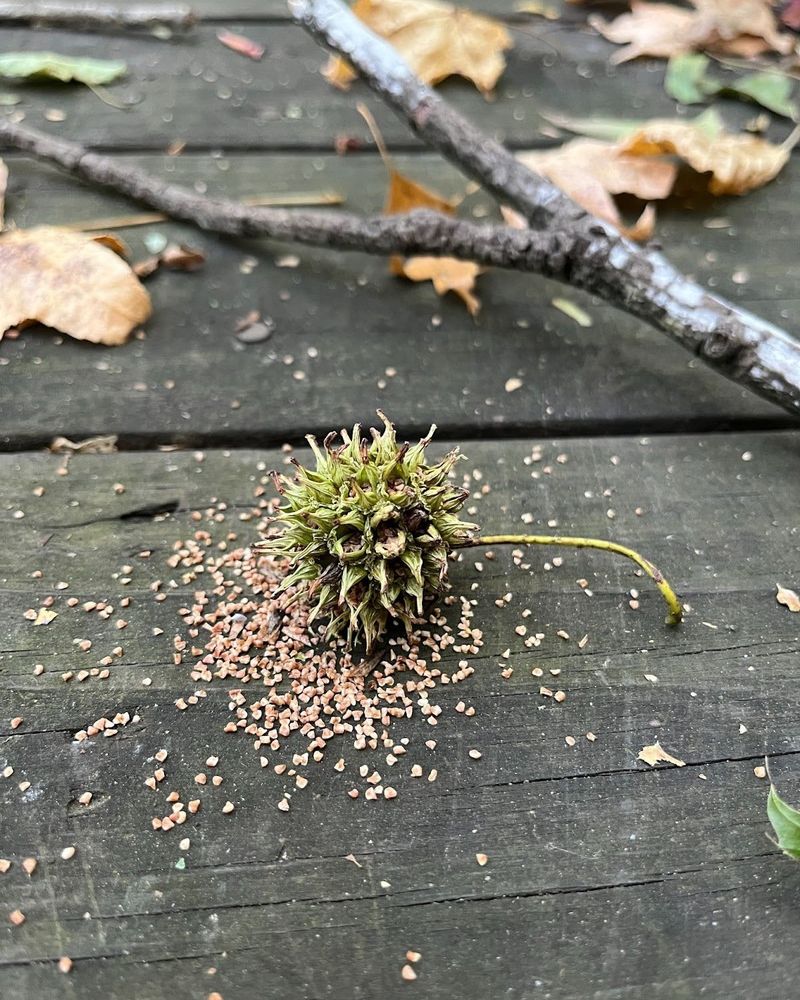
Gumballs. Monkey balls. Sticker balls. Folks call them all sorts of names, but these prickly spheres have a simple job. They are the sweetgum tree’s seed holders.
Each ball is about one to one and a half inches wide. It hangs from a long, thin stem, almost like a Christmas ornament. Look closer, and you will see it is not one solid fruit at all.
Your Pennsylvania Garden Changes Every Week. Your Plan Should Too.
Gardening in Pennsylvania changes quickly throughout the season. Every Friday you’ll receive a simple weekly plan showing exactly what to plant, prune, fertilize, harvest, and protect so you never miss the right timing.
Instead, every gumball is a cluster of many tiny seed pods packed together. Botanists call this a compound fruit. Each little pod ends in a sharp, curved tip, and together those tips create the spiky look.
Early in the season, the balls are bright green and fairly soft. As summer turns to fall, they harden and change to a woody brown color. Once they ripen, small holes open between the spikes. Winged seeds then slip out and drift away on the wind.
Want to try a cool experiment? Pick up a brown gumball and shake it over a white sheet of paper. You may see tiny seeds and dusty bits fall out.
Only a few of those specks are real seeds. The rest are undeveloped ones that never fully formed.
The empty brown balls are the ones that cause most trouble. They stay hard and spiky for a long time, sometimes many months. That is why you might still find old gumballs hiding in your grass in spring.
So the next time one pokes your foot, remember that it is just a tiny seed apartment that has already moved its tenants out.
Why They Keep Falling For Months
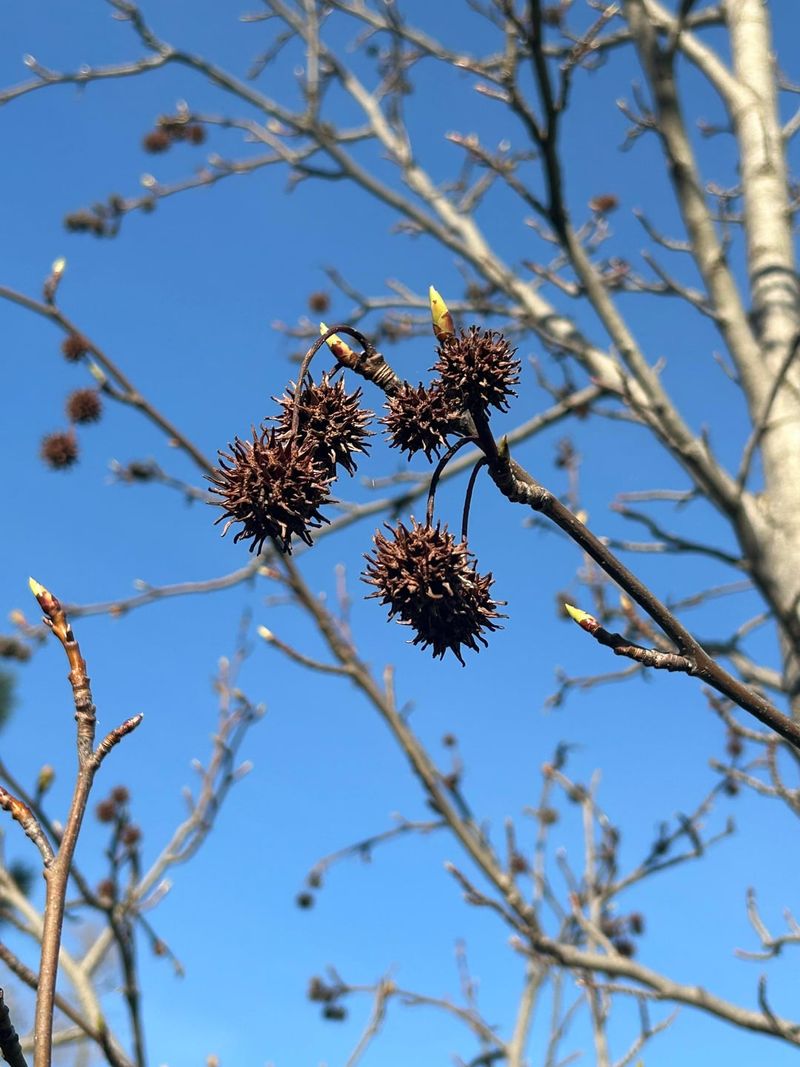
Raking once and calling it done would be nice. Sadly, sweetgum trees have other plans. Many Pennsylvania homeowners find gumballs on the ground from August all the way into early spring.
The reason is timing. Not every ball on the tree ripens at the same moment. Some mature early in late summer, while others hang on tight through fall and winter.
Wind and weather play a big part too. A strong storm can shake loose dozens at once. Freezing and thawing in winter also weakens the stems, so more balls drop after cold snaps.
A mature tree can produce a huge crop. One large sweetgum may drop hundreds, or even thousands, of balls in a single year. Some years bring heavier crops than others, which experts call mast years.
Here is a helpful tip. Keep an eye on the tree after windy days. That is when cleanup pays off the most, because you can grab a big batch at once instead of chasing a few at a time.
Another trick is to look up in winter. Once the leaves are gone, you can easily see how many balls are still hanging. If the branches look loaded, expect more falling in the weeks ahead.
Younger trees usually do not make many gumballs. Most sweetgums start producing heavy crops after they are around 20 to 30 years old. So if you just planted one, you have some peaceful years ahead.
Knowing this long drop season helps you plan. Instead of one giant cleanup, small regular sweeps keep your yard safer and much easier to manage.
Other Trees With Spiky Green Fruits
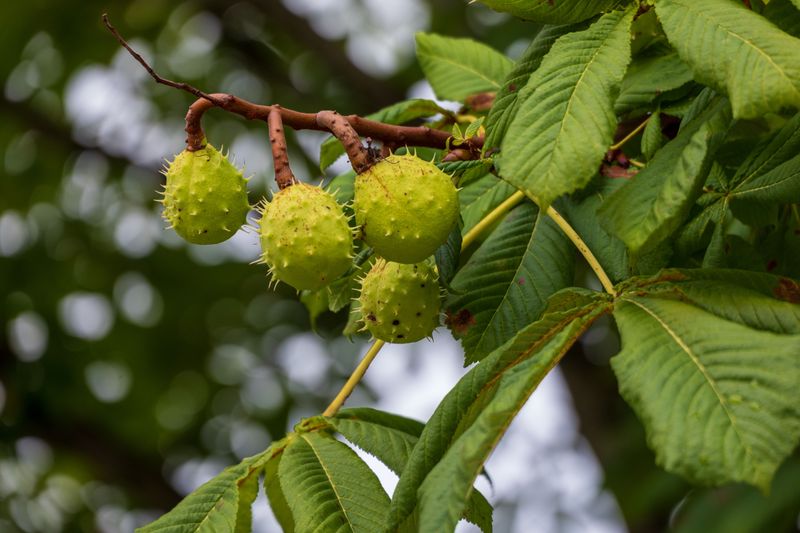
Not every spiky green ball is a gumball. Pennsylvania has a couple of other trees that drop prickly fruits, and mixing them up could matter. One is safe to eat, while the other is not.
First up is the horse chestnut. You will find it in parks and older neighborhoods. In early fall, it drops green husks covered with short, scattered spikes. The husks split open to show one or two shiny brown seeds that look like polished wood.
Those seeds are often called conkers. They look tasty, but they are toxic. Eating them can cause stomach pain, vomiting, and other health problems in people and pets. Keep kids and dogs away from them.
Next is the true chestnut. Pennsylvania once had millions of American chestnut trees before a disease wiped most out.
Today, you may still see survivors or planted Chinese chestnuts. Their burs are much spinier, almost like a hedgehog, with needles packed tightly together.
Inside a chestnut bur, you will usually find two or three flatter nuts. Each has a pointed tip with a little tassel. These are the edible chestnuts people roast during the holidays.
Want an easy way to tell them apart? Use gloves and crack a husk open. Horse chestnuts have round seeds with no pointed tip. Real chestnuts have a point and often come in groups.
Leaves help too. Horse chestnut leaves look like a hand with five to seven leaflets. Chestnut leaves are long and single with sawtooth edges. When in doubt, never eat a nut you cannot identify for sure.
The Good And The Bad
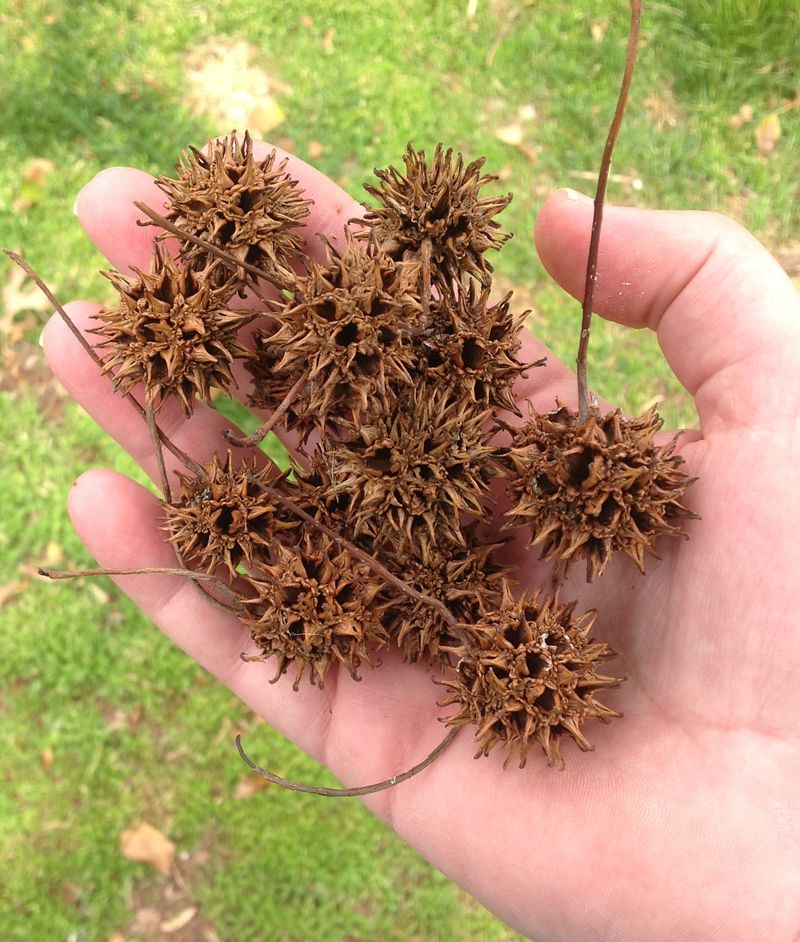
Love them or hate them, gumballs come with a mixed report card. Wildlife fans cheer for them. Barefoot kids, not so much.
On the bright side, sweetgum seeds are a winter snack for many backyard visitors. American goldfinches cling to the hanging balls and pick seeds out with their small beaks.
Chickadees, sparrows, and juncos join in too. Squirrels and chipmunks nibble on them as well.
That food source matters most in cold months when other seeds are scarce. If you enjoy birdwatching, a sweetgum near a window can bring plenty of feathered guests. Some birders even call it a natural bird feeder.
The tree also gives deep shade in summer, which can lower cooling costs. Plus, its leaves feed caterpillars of certain moths, like the luna moth. Those caterpillars become food for baby birds in spring.
Now for the downside. Gumballs are hard and rounded, so they roll under your shoes like marbles. On sidewalks and driveways, they can cause slips and twisted ankles. Older adults and young children face the biggest risk.
They also hurt. Stepping on one in bare feet feels like landing on a tiny pinecone with teeth. Dogs may limp after getting one stuck between their paw pads.
Mowing brings another headache. Mower blades can launch gumballs across the yard at high speed. Always wear shoes and safety glasses, and pick up balls before you mow.
The best approach is balance. Enjoy the birds and shade, but keep walking paths clear. A little care lets you enjoy the good without suffering the bad.
How To Manage Them In Your Yard
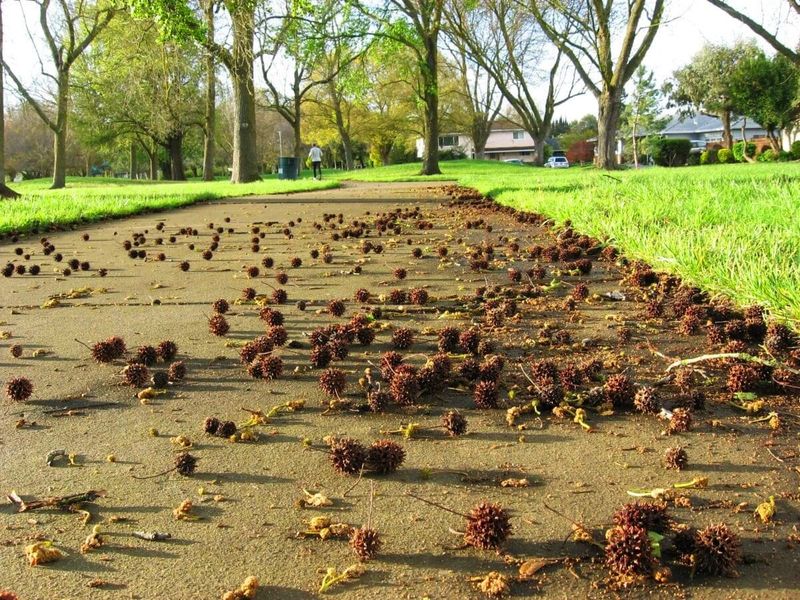
Good news for tired backs everywhere. Dealing with gumballs gets much easier once you have the right plan and a few handy tools.
Start with regular raking. A sturdy leaf rake with stiff tines works better than a flimsy plastic one. Rake once or twice a week during heavy drop season so piles never get out of hand.
For larger yards, try a rolling nut gatherer. It looks like a wire cage on a long handle. You just roll it across the grass, and the balls pop inside. Many people say it cuts cleanup time in half, and it saves bending over.
Leaf blowers can help on hard surfaces. Blow gumballs off driveways and walkways into one spot for quick pickup. A shop vacuum also works on patios.
Here is a clever reuse idea. Spread collected gumballs around flower beds and garden plants as mulch. The spiky texture can discourage cats, rabbits, and squirrels from digging. They break down slowly, so they last a long time.
Crafty families can save some too. Kids love painting gumballs to make ornaments, wreaths, or even little critter figures. It turns a chore into a fun project.
Thinking about planting a new tree? Look for a fruitless sweetgum variety called Rotundiloba.
It has rounded leaf tips and the same gorgeous fall color, but it makes few or no spiky balls. Your local Pennsylvania nursery may carry it or can order one.
Removing a healthy older tree is rarely needed. With smart habits, you can keep your shade, help wildlife, and still walk your yard in comfort.