Bucks Are Rubbing Young Trees Raw In Virginia Yards. Here’s How To Protect Yours
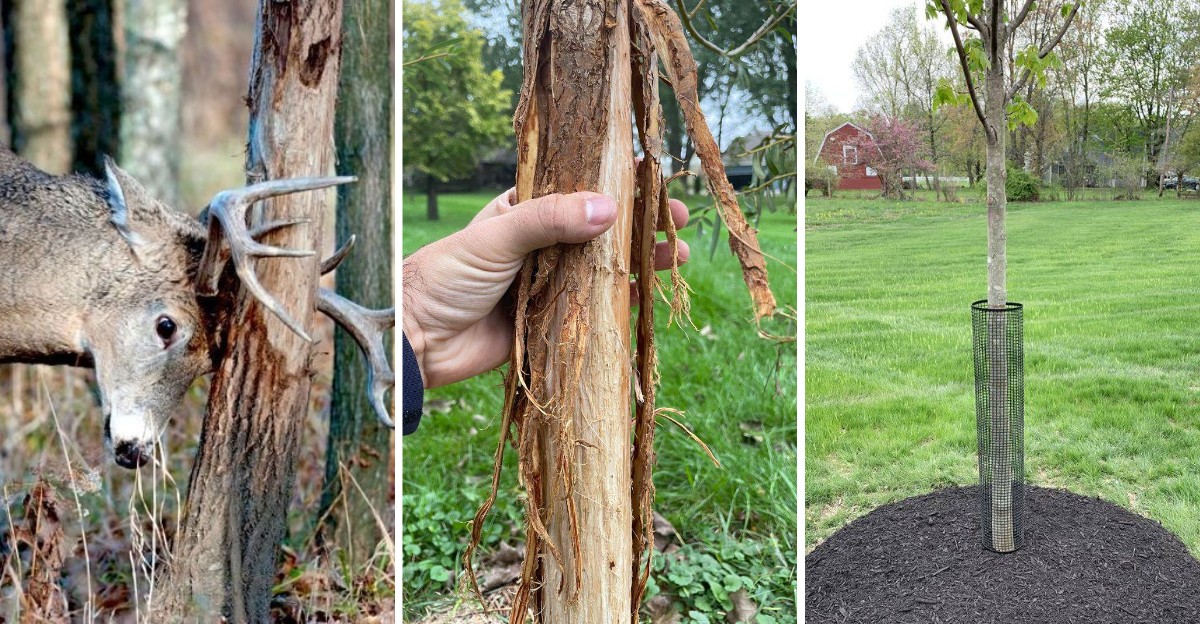
You walk outside with your morning coffee and spot it: a young maple with its bark hanging in curly, pale shreds. No storm did that, and no neighbor kid either.
Bucks are rubbing their antlers on backyard trees across Virginia, and the damage can appear overnight. Fall is the busiest season for this behavior, so knowing what’s happening helps you act fast.
Some trees are far more at risk than others. A few simple tools can make a big difference in keeping them safe.
Most of this damage can be prevented with a little planning. Whether you live in the Shenandoah Valley or a quiet suburb near Richmond, your yard may already be on a buck’s map.
Why bucks do it, which trees they target, and how to protect your saplings all come down to a few easy steps.
Rubbing Peaks During Fall Breeding Season
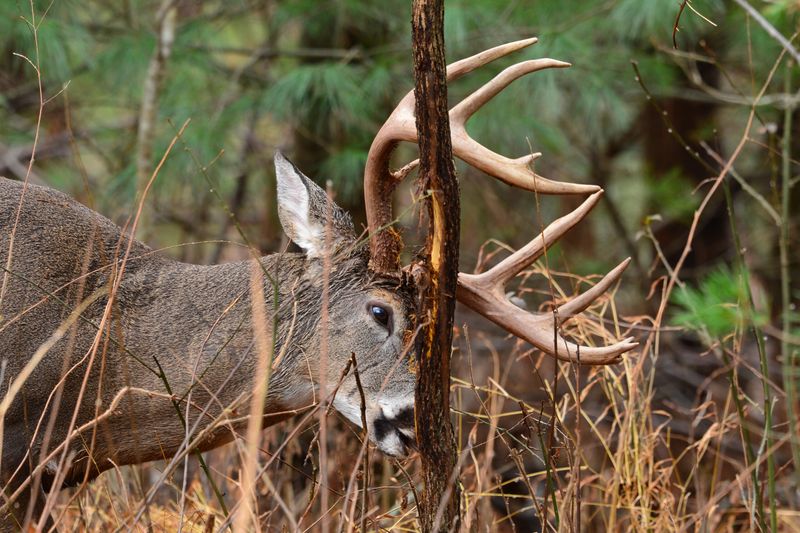
Picture a cool November morning when the leaves crunch and the air smells like woodsmoke. Somewhere nearby, a buck is busy scraping his antlers against a skinny tree trunk.
Rubbing actually starts earlier than many people think. Bucks begin in late August, when they scrape off the fuzzy velvet covering their new antlers.
Once the velvet is gone, the rubbing does not stop. It continues through November as bucks get ready for the breeding season, called the rut.
In Virginia, the peak rut usually lands around November 13 to 16. Biologists see this timing fairly steadily across the whole state each year.
Hormones drive much of the action. Testosterone levels rise through fall and usually hit their highest point in early November.
As those levels climb, bucks rub more often and with more force. A tree that looked fine on Monday might be shredded by Friday.
Here is a handy tip for your calendar. Get your tree protection in place by mid-August, before the first velvet comes off.
Waiting until you see damage often means you are one step behind. A quick walk around your yard each week in fall helps you catch trouble early.
Keep an eye out for fresh rubs on nearby woods or fence lines too. Those marks hint that a buck is working the area and may visit your saplings soon.
Knowing the season gives you a real advantage. You can plan ahead instead of scrambling after the bark is already gone.
Bucks Are Marking Territory, Not Feeding
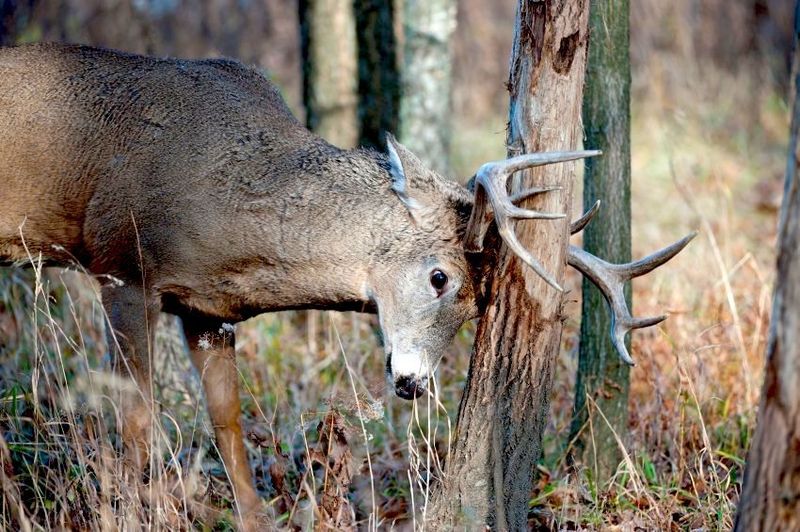
Many homeowners assume a hungry deer chewed their tree. In truth, a rubbed trunk is more like a note on a bulletin board than a snack.
Bucks rub trees mainly to mark their territory. They send messages using both sight and smell.
The bright, peeled wood acts as a visual sign. Other deer passing through can spot it from a distance, even in dim light.
Smell matters just as much. Bucks have scent glands on their foreheads that leave chemical signals on the bark.
Those scent messages carry a surprising amount of information. They tell other deer about the buck’s identity, age, rank, and readiness to breed.
Your Virginia Garden Changes Every Week. Your Plan Should Too.
Gardening in Virginia changes quickly throughout the season. Every Friday you’ll receive a simple weekly plan showing exactly what to plant, prune, fertilize, harvest, and protect so you never miss the right timing.
Think of it as a deer version of a name tag and a warning sign combined. Every rub says, in effect, I was here, and I am tough.
Rubbing also builds strength for sparring matches. Bucks push and twist against trunks to practice before they lock antlers with rivals.
Why should this matter in your yard? Spraying a taste-based repellent may not help much, since the buck is not eating anything.
Physical barriers work better for rubbing problems. Your goal is to block contact with the trunk, not to make bark taste bad.
Fun fact: one buck may make hundreds of rubs in a single season. Some rub lines stretch along trails like a chain of signposts through the woods.
Young, Smooth-Barked Trees Take The Hardest Hits
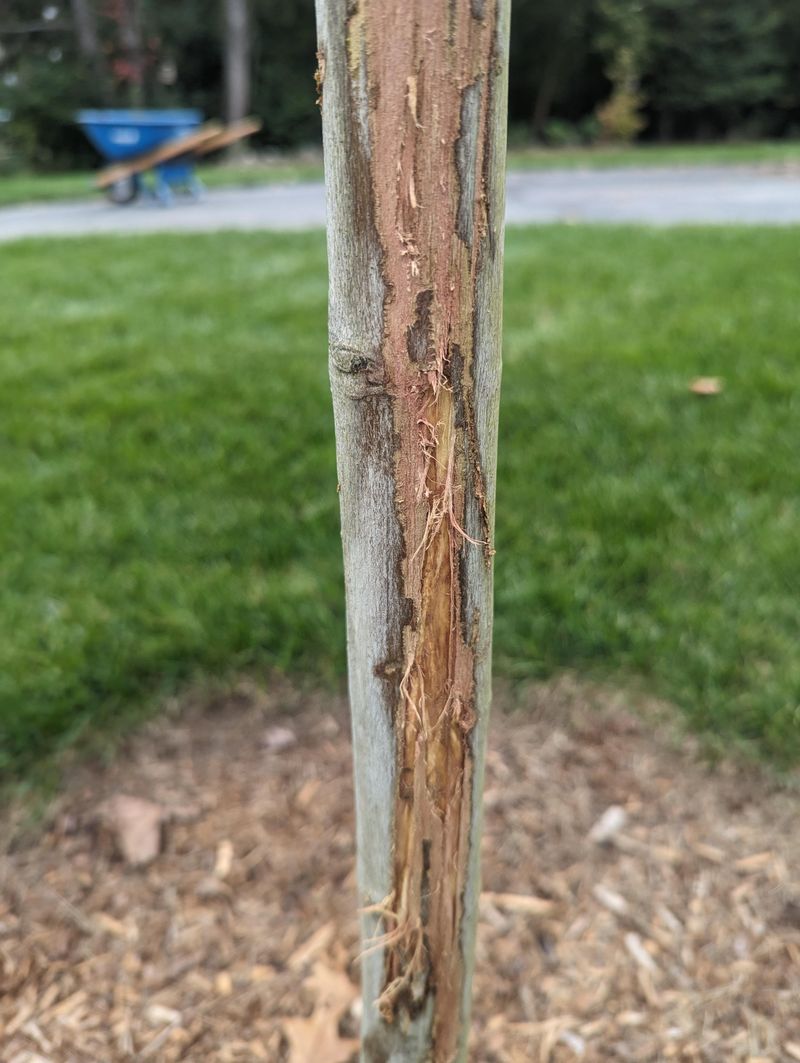
Your brand-new dogwood might be the prettiest tree on the block. Sadly, a buck may think it looks perfect for a different reason.
Young trees face the greatest risk from rubbing. Trunks between one and six inches across are the most common targets.
Thin trunks bend and flex under pressure, which bucks seem to enjoy. Bigger, stiffer trunks offer less of that satisfying push.
Bark texture also plays a big role. Bucks often choose trees with smooth bark that peels away easily.
In Virginia yards, favorite targets include dogwoods, maples, birches, and magnolias. Many of these are popular landscape picks, which explains the frequent damage.
Scent can make a tree even more tempting. Aromatic species like black cherry and sweet gum are often chosen for signposting.
Size of the buck does not always match size of the tree. Even big, mature bucks will sometimes rub surprisingly small saplings.
So what can you do with this knowledge? Make a list of every young, smooth-barked tree on your property.
Put those trees at the top of your protection plan. A rough-barked oak may wait, but a fresh magnolia needs help right away.
Planting new trees this year? Budget for guards or cages at the same time you buy the sapling, so protection goes on the moment it hits the ground.
Stripped Bark Can Girdle A Tree
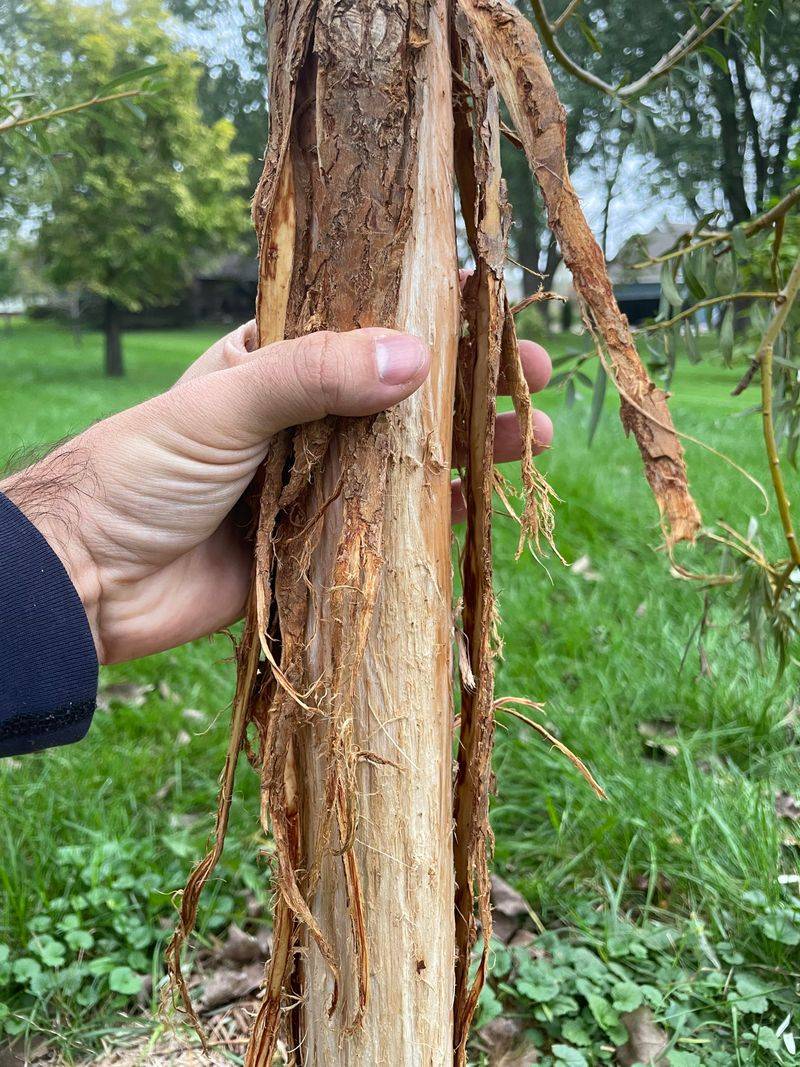
Bark might look like simple wrapping paper, but it guards something vital. Just underneath sits a thin, living layer that keeps the whole tree going.
That layer is called the vascular cambium. Along with tissue near it, it moves water and nutrients through the trunk.
Food and water travel between the roots and the leafy top. When that pathway breaks, the tree struggles to feed itself.
Girdling happens when a full ring of bark gets removed around the trunk. A hard buck rub can do exactly that in one night.
Without a complete pathway, the roots slowly starve. The tree then declines and often fails to survive, sometimes over a season or two.
Damage can be taller than you might expect. Buck rubs can stretch several feet up the trunk, not just a small patch.
Partial damage is a different story. If some bark still connects top and bottom, the tree has a fighting chance.
Here is a simple way to check. Look closely to see if any strip of healthy bark still runs vertically past the wound.
Take photos of the damage right away. Comparing them next spring will show whether new growth and healing tissue are forming.
Understanding girdling explains why quick action matters so much. A few dollars spent on protection can save a tree you hoped to enjoy for decades.
Plastic Trunk Guards Are A Cheap Fix
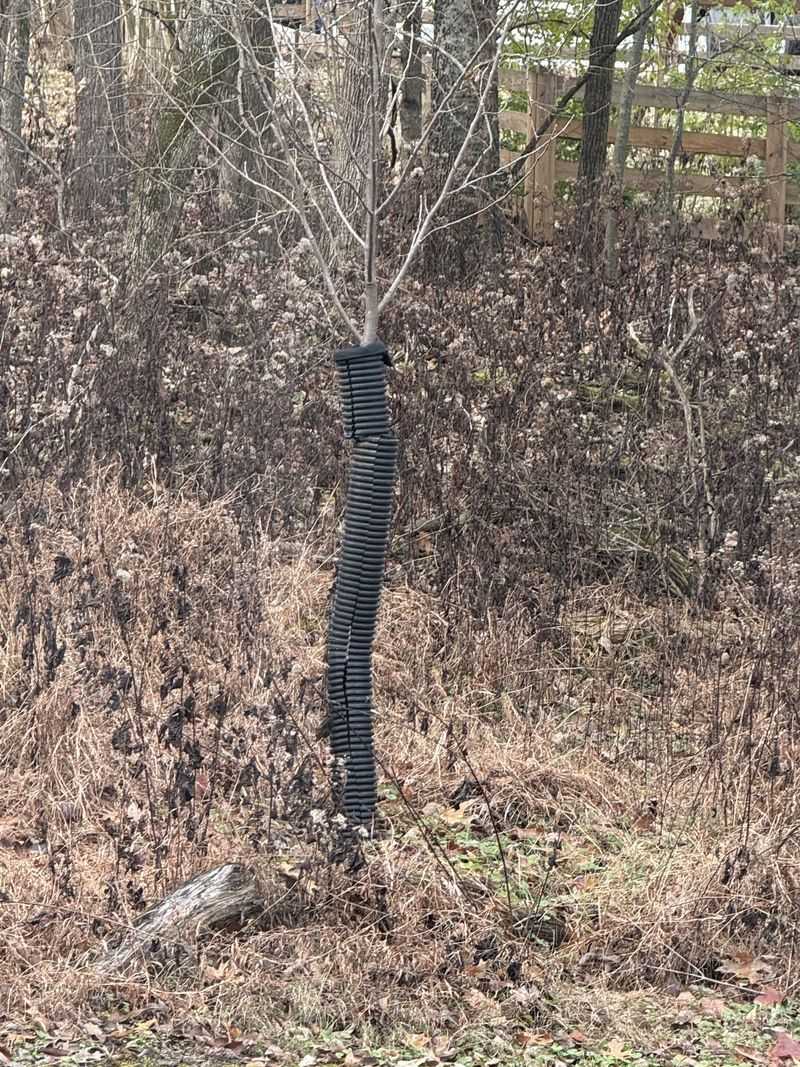
Good news for anyone on a tight budget. One of the simplest defenses against rubbing costs only a few dollars per tree.
Plastic sleeves and trunk guards wrap around the lower trunk. They block antlers from reaching the tender bark underneath.
Most garden centers and hardware stores carry them. You can find spiral wraps, solid tubes, and perforated styles in many sizes.
Feeling handy? Corrugated drainpipe makes a clever DIY guard when you slit it lengthwise.
Just pop it around the trunk and let it close loosely. Tall pieces protect more of the trunk where bucks like to scrape.
Fit matters a lot here. A guard that squeezes too tightly can actually girdle the tree as it grows.
A loose fit also lets air move around the bark. That helps keep moisture from getting trapped and causing rot or pests.
Tree wrap or burlap can work too. Both add a protective layer, though they may wear out faster than sturdy plastic.
Quick tip: check guards every few months. Pull out leaves or debris that pile up inside, since those can hold dampness.
Plastic guards shine for small yards with a handful of saplings. For bigger or rowdier bucks, you might pair them with a stronger barrier like a cage.
Wire Cages Keep Bucks Out Of Reach
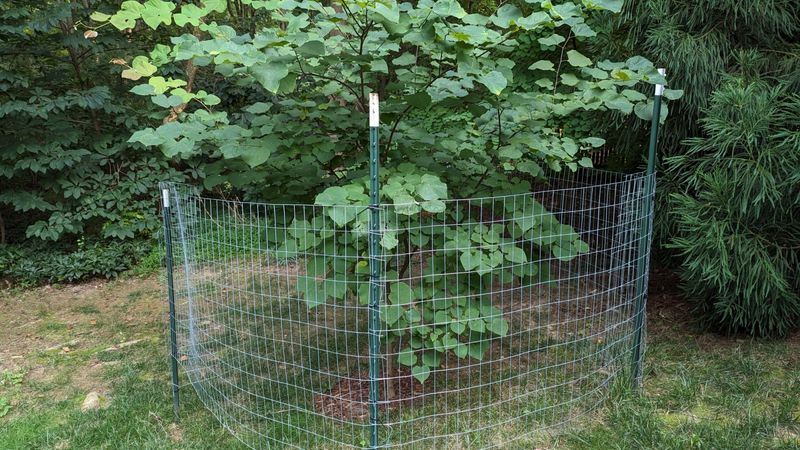
Sometimes a tree needs a full bodyguard. Wire cages give young trees serious protection from even the most stubborn bucks.
Hardware cloth and welded wire fencing both work well. Each holds its shape and stands up to pushing antlers.
Height is important for success. Cages should stand at least four feet tall to stop most rubbing.
Width makes a difference as well. A cage three to four feet across keeps deer from reaching the trunk and inner leaves.
Here is a handy measurement to remember. About 12 feet 6 inches of four-foot welded wire makes a nicely sized cage.
Roll the wire into a circle and connect the ends with zip ties. Then slip a couple of sturdy stakes inside for support.
Tie the wire to the stakes so wind and bumps cannot tip it over. Pin the bottom edge to the ground with garden staples.
Those staples stop deer from nosing under the edge. They also keep the cage from sliding when a buck leans on it.
Many gardeners leave a little space between the cage and branches. That gap means lower limbs stay safe from browsing too.
Cages cost more than plastic guards, but they last for years. You can reuse them on new plantings once older trees grow big enough.
Three Stakes Around A Trunk Can Help
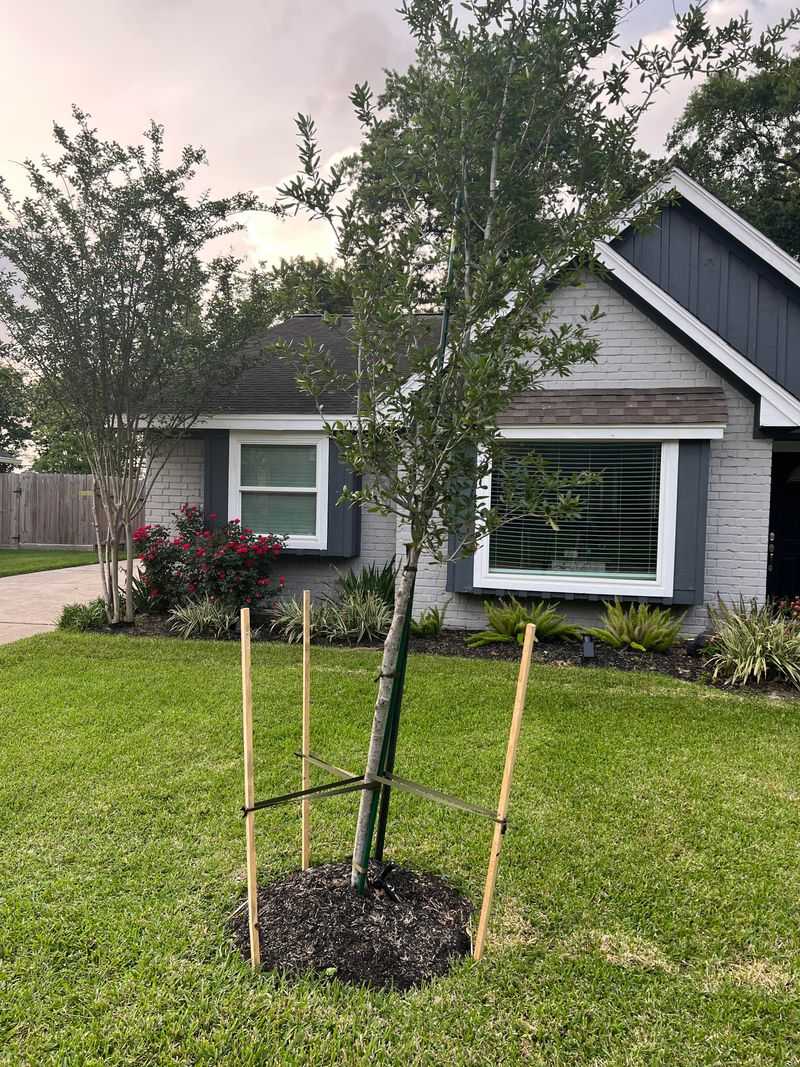
Not every solution needs fancy gear. A few wooden stakes and a hammer can give a sapling a useful layer of defense.
Start with three sturdy wooden stakes. Drive them into the ground in a triangle around the trunk.
Space each post about 18 inches from the tree. That distance makes it hard for a buck to swing his antlers into the bark.
The stakes act like a small fence with open sides. Bucks tend to avoid squeezing into tight spaces where antlers might snag.
Want more strength? Wrap fencing material around the stakes to turn the triangle into a mini enclosure.
Even plain twine or flagging tape strung between posts can add some deterrence. Movement and odd shapes may make a cautious buck think twice.
Choose stakes tall enough to reach above your tree’s lower branches if possible. Taller posts block more of the trunk.
Simple barriers like these work well for single trees in a Virginia yard. They blend in nicely and look tidier than you might expect.
Remember that stakes offer basic defense, not a fortress. In areas with heavy deer traffic, combine them with a guard or cage.
Fun bonus: the same stakes can steady a newly planted tree in windy weather. You get two jobs done with one easy setup.
Keep Protection Up Until Trunks Thicken
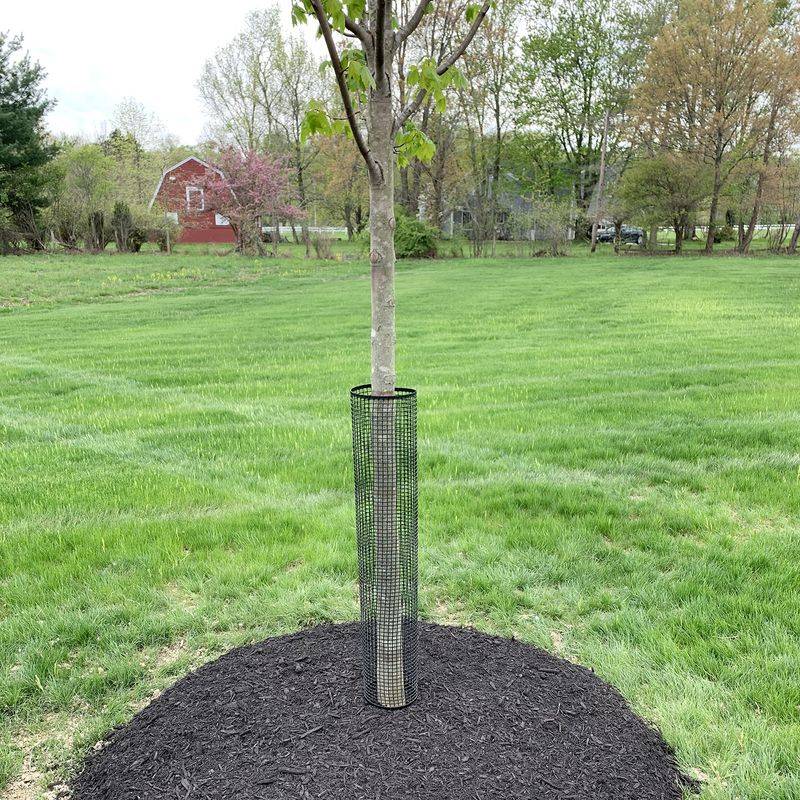
Patience pays off with young trees. Protection is not a one-season job, and taking guards off too early can undo your hard work.
Trees need defense until their trunks grow fairly thick. Most experts point to about three to four inches across.
Getting there can take several years. Fast-growing species may reach that size sooner, while slow growers need more time.
Once trunks thicken, bucks cause less severe damage. Older bark gets tougher, and stiff trunks offer less appeal for rubbing.
Plastic guards do need watching as trees grow. Loosen or remove them as trunks thicken, and never let a guard grow snug against the bark.
Leaving a tight guard in place can squeeze the trunk. That pressure may cause the very girdling you hoped to prevent.
A simple tape measure makes tracking easy. Measure each trunk at the same height every spring and write it down.
Try keeping a small notebook or phone note for your yard. List each tree, its planting date, and its yearly size.
Across Virginia, deer numbers stay high in many neighborhoods. That means a tree left unguarded at three inches may still get tested.
When in doubt, keep protection on one more fall. Loosening or upgrading a guard is far easier than nursing a damaged trunk back to health.
Damaged Trees Can Sometimes Recover
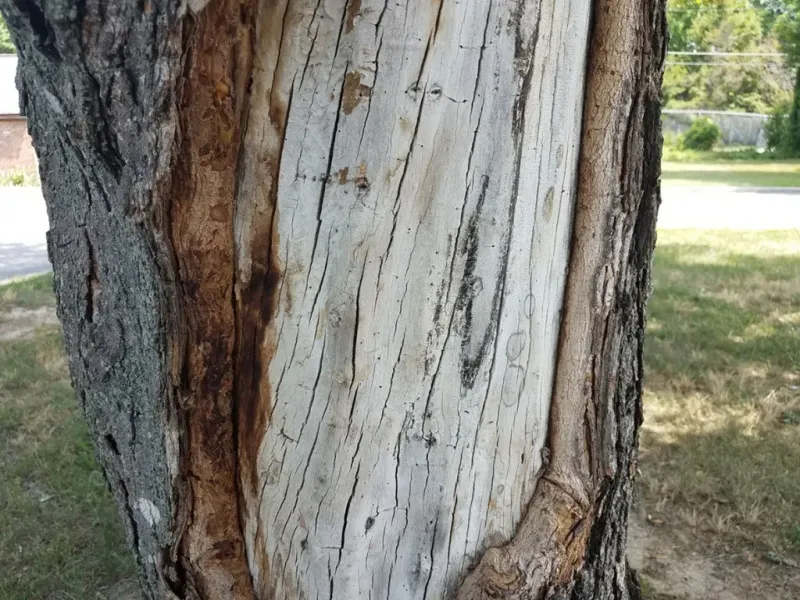
Found a rubbed tree this morning? Take a breath, because the story may not be over yet.
Trees can sometimes bounce back from partial damage. If the wound does not circle the whole trunk, healing is possible.
Start by gently trimming loose or shredded bark. Use a clean, sharp knife so the edges stay neat.
Shaping the wound into an oval, or ellipse, can help. Trees seal that shape more quickly than ragged edges.
Skip the wound dressings and household cleaners, though. Trees seal wounds best on their own, and coatings can trap moisture that invites decay.
Be careful not to cut into healthy bark. Remove only what is already loose, keeping as much living tissue as you can.
Most importantly, protect the tree right away. A buck that rubbed once will likely return to the same spot.
Watch for signs of recovery next spring. Fresh leaves and rolled callus tissue forming along the wound edges are encouraging clues.
Plenty of Virginia homeowners have saved scarred trees this way. With a little care and a sturdy guard, your sapling could grow into a proud yard tree with a story to tell.