The California Native Flower Called Devil’s Trumpet Is Beautiful But Needs Careful Handling
Dusk settles over a quiet patio, and a sprawling gray-green plant begins to stir. Twisted buds loosen one by one, and a sweet fragrance drifts across the cooling air.
Within minutes, the evening garden looks transformed.
Few wildflowers in the West put on a show quite like this one, and wildlife takes notice right away.
That beauty, however, comes paired with a serious side that deserves respect before any planting, pruning, or picking begins.
Some gardeners treasure it for its moonlit display and its role in the local food web. Others decide it belongs elsewhere.
Either choice becomes easier with solid facts in hand. Clear understanding turns a striking native into something families can admire with confidence and care.
Meet Sacred Datura The Native Trumpet Flower
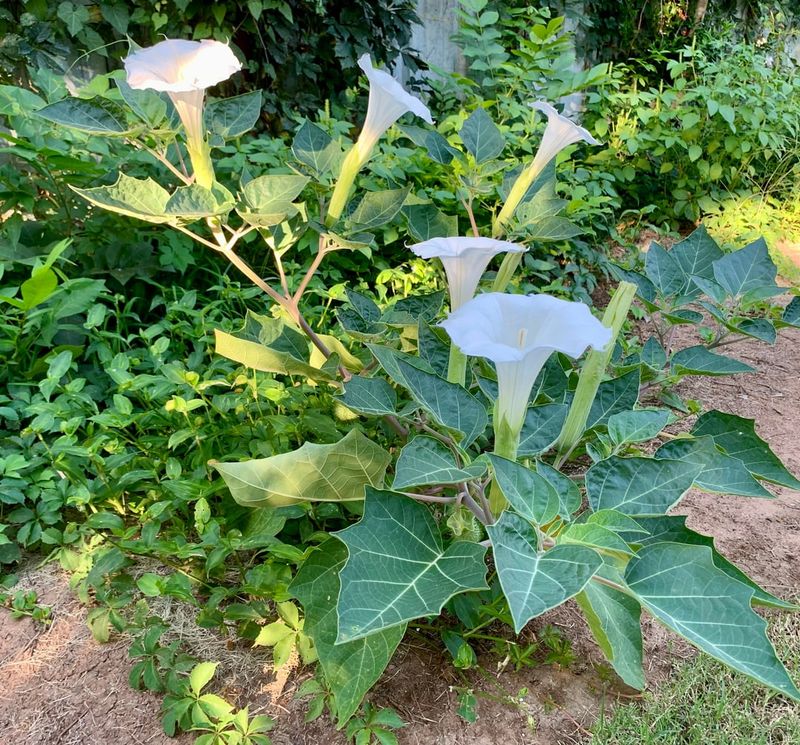
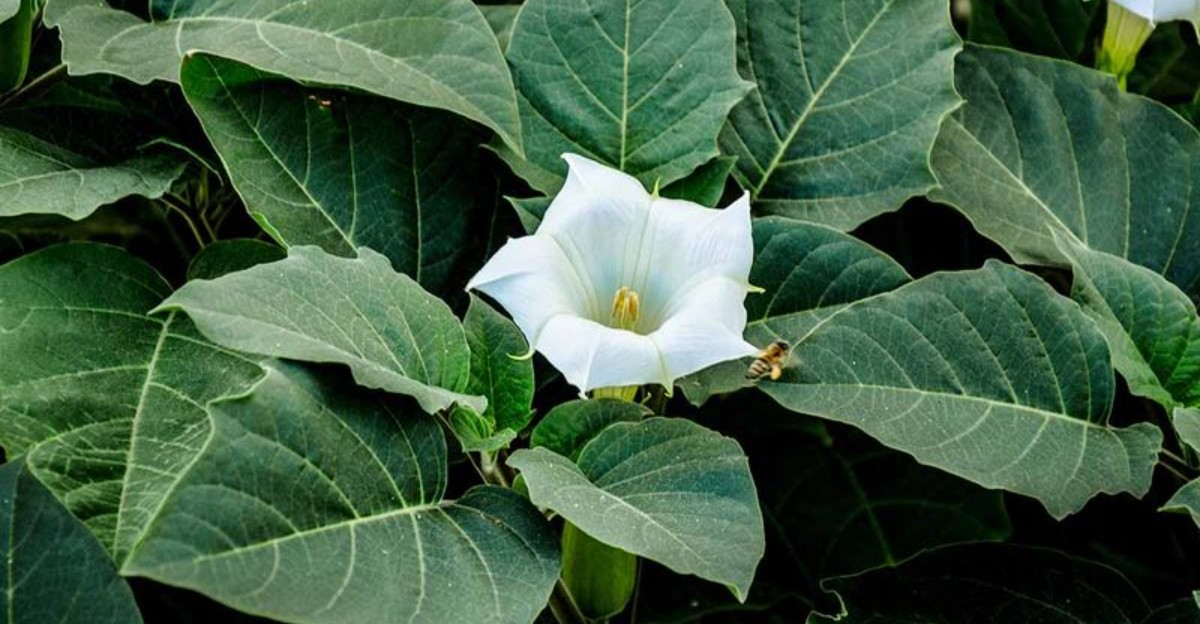
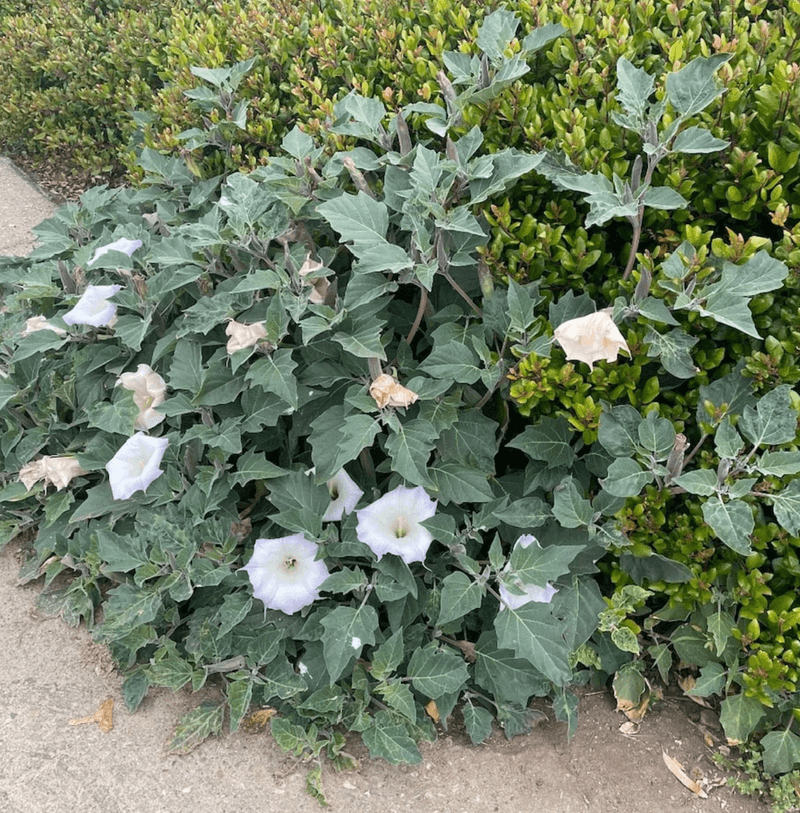
Along sandy roadsides in inland California, a low, mounded plant with leaves soft as felt often catches the eye. At dusk, huge white flowers appear.
That plant is sacred datura, known to scientists as Datura wrightii.
Common names include devil’s trumpet and western jimsonweed. It grows wild across much of California and the Southwest into northern Mexico, usually at lower elevations.
Sandy washes, open fields, and disturbed ground along trails and roads suit it well. It loves sun and handles summer heat and drought with ease.
Sacred datura is a semi-deciduous perennial. In mild areas it may keep some leaves, while in cooler spots it fades back in winter and returns from its thick root.
A single plant can spread several feet wide, so it needs room.
One common mix-up deserves attention. Sacred datura differs from angel’s trumpet, sold in nurseries as Brugmansia, a tall shrub or small tree with downward-hanging flowers.
Datura flowers point upward or outward, and the plant stays low and bushy.
A related nonnative weed, Datura stramonium, also appears in California fields, with smaller flowers and a taller, more upright habit.
All of these plants are toxic, so the name confusion matters most for identification. Knowing which one is present helps when talking with a nursery, poison center, or veterinarian.
Getting the name right is the first step toward handling it right.
Giant White Trumpets Open At Dusk
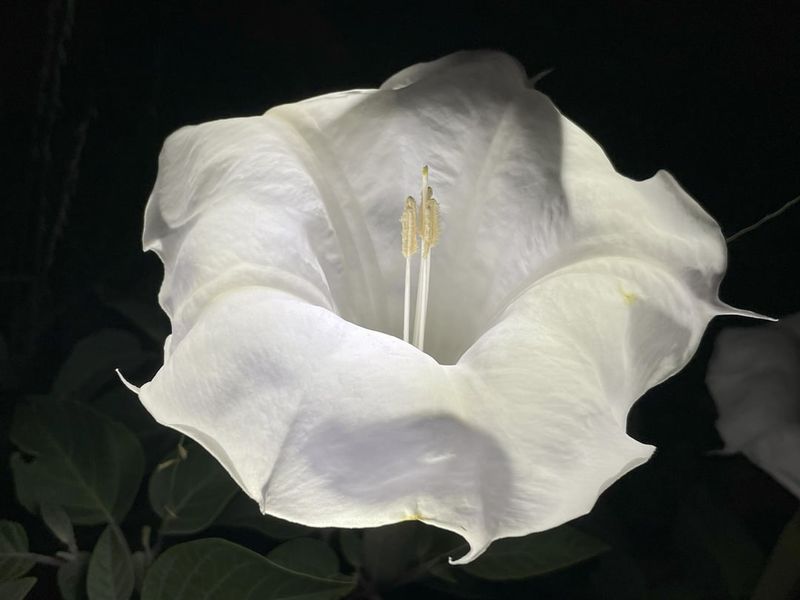
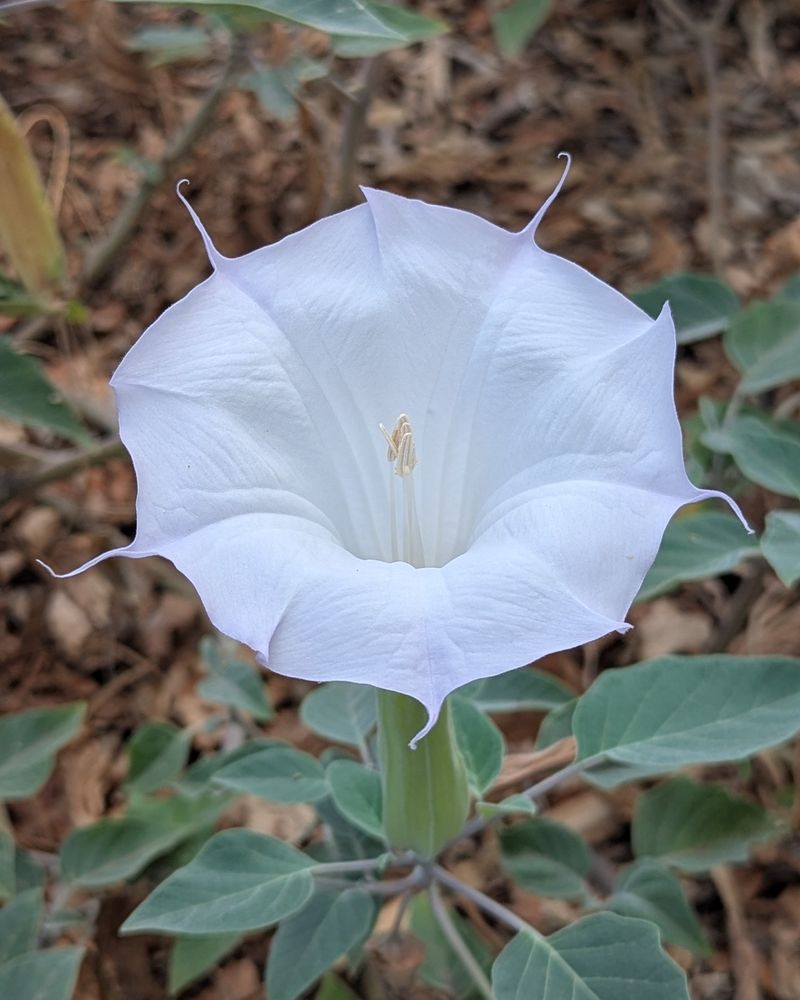
The show passes quickly. Around sunset, tightly twisted buds begin to loosen, spinning open like slow-motion umbrellas, and within minutes a flower the size of a dessert plate faces the sky.
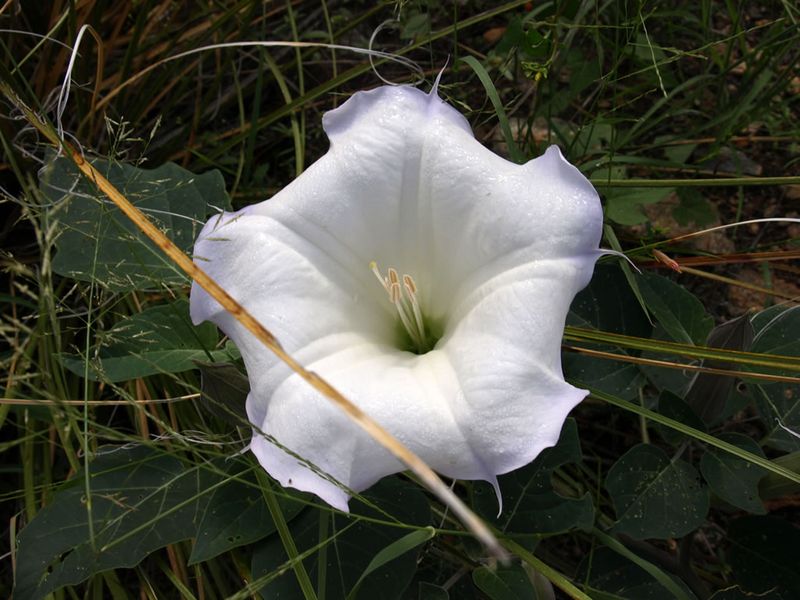
Sacred datura blooms can stretch six to eight inches long. Most are pure white, though some carry a soft lavender or violet tint along the edges.
Their wide, flaring trumpet shape explains the dramatic nickname.
Scent adds to the magic. On warm nights, the flowers release a sweet, heavy fragrance that carries across a yard, often noticed before the blooms are seen.
Moonlight makes the white petals almost glow, so the plant shines in an evening garden.
Each flower lives a short, bright life. It opens at dusk, stays fresh through the night, and wilts by about noon the next day.
New buds keep coming, so a healthy plant offers a fresh display night after night.
Your California Garden Changes Every Week. Your Plan Should Too.
Gardening in California changes quickly throughout the season. Every Friday you’ll receive a simple weekly plan showing exactly what to plant, prune, fertilize, harvest, and protect so you never miss the right timing.
Blooming runs roughly from spring through fall, depending on rain and temperature, and October evenings in warm areas can still bring flowers.
After the flowers fade, round spiny seed pods form. Those prickly pods earned relatives the name thorn apple, and they hold many seeds.
The pods deserve extra caution, since the seeds inside carry the highest concentration of toxins.
The trumpets are best enjoyed with eyes and nose rather than hands, ideally from a comfortable seat at twilight.
Hawk Moths Pollinate The Night Blooms
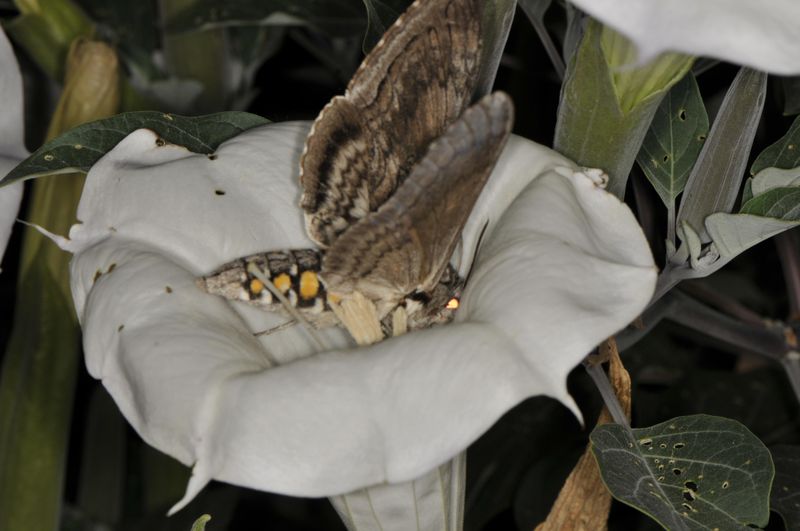
A whirring sound at dusk might suggest a hummingbird staying out late. More likely, it comes from a hawk moth, also called a sphinx moth.
These fast, heavy-bodied insects serve as sacred datura’s main pollinators.
Night blooming is no accident. White petals stand out in dim light, and the strong scent guides moths from a distance.
Hawk moths have extra-long tongues that reach deep into the trumpet for nectar. As they feed, pollen rubs onto their bodies and travels to the next flower.
The partnership goes further. Sacred datura hosts hornworm caterpillars of the Carolina sphinx and the five-spotted hawkmoth, which lay eggs on the leaves.
Plump green caterpillars munch away as they grow, and chewed leaves can alarm gardeners who spot them for the first time.
Leaving them in place usually works best. A healthy datura handles the feeding and typically bounces back, and those caterpillars become the moths that pollinate the blooms.
Letting them grow keeps the cycle of night life running in the yard.
A feeding hawk moth can hover in place, beating its wings so quickly they blur. Sitting outside at twilight with a dim flashlight offers a wonderful view.
Hands stay off the plant during observation, turning the moment into a free nature show with no risk.
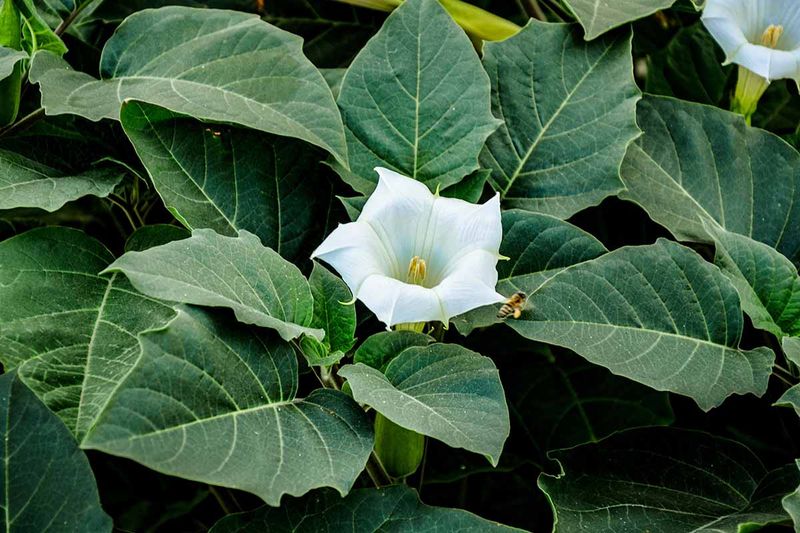
Bees visit the opening flowers in early morning too, adding a daytime chapter to the story.
Every Part Of The Plant Is Toxic
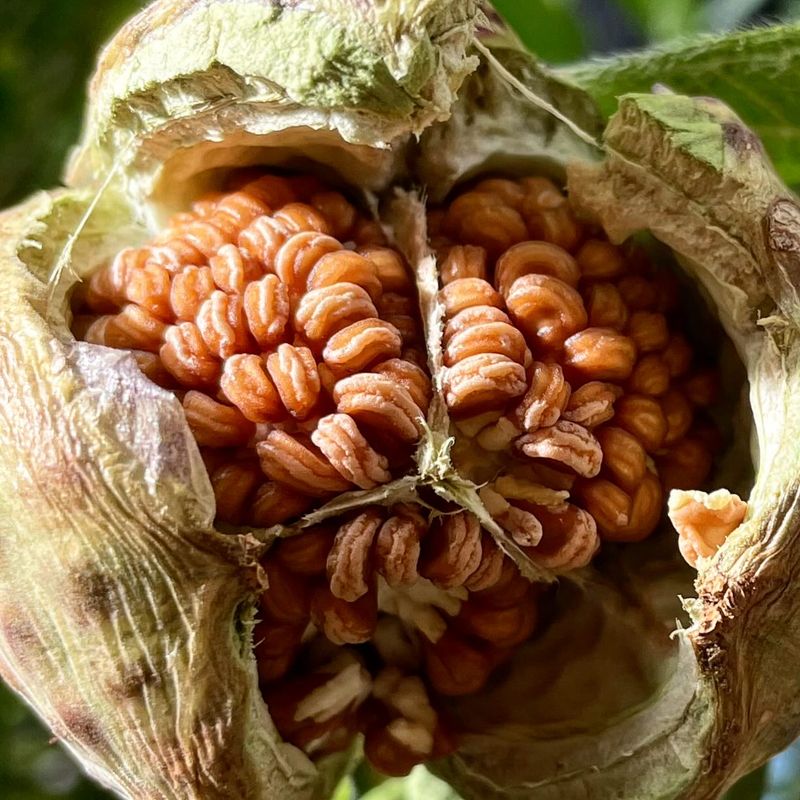
No safe part hides anywhere on this plant. Leaves, stems, flowers, roots, seeds, and even the sap all contain toxic compounds.
A pretty flower doesn’t mean a gentle one.
Seeds carry the highest concentration. They develop inside round, spiny pods that split open as they dry, scattering many small, flat seeds that may sprout new plants.
Children sometimes find the pods curious, since they resemble little spiked balls.
Toxin levels also vary from plant to plant and season to season. Growing conditions, plant age, and plant part all change potency.
Nobody can tell by looking how dangerous a given leaf or seed might be. Swallowing any part can cause serious, even life-threatening poisoning in people, pets, and livestock.
Animals usually avoid the plant because it smells and tastes unpleasant. Hungry livestock on poor pasture may still eat it, and curious dogs sometimes chew pods or roots.
Hay contaminated with datura poses another known risk for horses and cattle, so feed checks matter.
Smart habits help considerably. Snipping spent flowers before pods form reduces seeds, and bagged pods and trimmings belong in the trash rather than compost.
Any use of the plant in food, tea, or children’s crafts is best avoided entirely.
The ASPCA lists datura as toxic to dogs, cats, and horses. Its Animal Poison Control Center (888-426-4435, fee may apply) can help after a suspected exposure.
Tropane Alkaloids Affect The Nervous System
Behind the sweet perfume sits a chemistry lab. Sacred datura makes natural compounds called tropane alkaloids, mainly scopolamine, atropine, and hyoscyamine.
Plants likely produce these chemicals to defend against hungry animals. Unfortunately, they affect people and pets too, blocking important signals in the nervous system.
The body relies on those signals to control heart rate, sweating, digestion, eyesight, and clear thinking, among other functions.
Poison control experts describe a familiar pattern after datura poisoning. A very dry mouth, flushed and hot skin, and widely dilated pupils are common.
Blurry vision, a racing heartbeat, and trouble urinating often follow, along with confusion, agitation, and seeing or hearing things that aren’t there.
Symptoms can appear within an hour and may last a long time, sometimes a day or more.
Severe cases can bring seizures, dangerously high body temperature, or coma, all requiring emergency medical care right away. Home remedies can’t treat this kind of poisoning.
Some people mistakenly believe the plant offers a natural high. Poison centers see many serious cases tied to that idea, often among young people.
The dose is unpredictable, and a small amount can cause a medical emergency, even in someone who feels fine at first.
Sharing that fact with older children ranks among the most helpful safety conversations a household can have.
The trumpets deserve admiration, while the chemistry is best left to medical professionals.
Wear Gloves And Wash Hands After Handling
A quick trim with bare hands might seem harmless, until a rubbed eye brings sudden blurred vision. Sap and residue can travel from fingers to eyes or mouth.
Gloves matter for exactly that reason, every single time.
Sacred datura sap can also irritate skin, causing redness, itching, or a rash after contact with broken stems or leaves.
Waterproof or nitrile-coated gloves that cover the wrists make the best start. Long sleeves and long pants keep sap off arms and legs.
Safety glasses help when cutting stems at face level or pulling large plants.
Careful work habits matter too. Touching the face, eating, drinking, or smoking during the job is best avoided.
Trimmings and spiny pods belong in a bag right away, so they don’t end up on a patio or lawn where pets roam.
Cleanup counts as much as the pruning. Gloves come off turned inside out, followed by a thorough hand wash with soap and warm water, even after gloved work.
Pruners deserve a rinse and a wipe so leftover sap doesn’t reach the next person using them.
Work clothes belong in the wash after a big job, ideally separate from other laundry.
Sap in the eyes calls for rinsing with clean water for about 15 minutes, then a call to Poison Help.
Good habits turn a risky chore into a routine one.
Keep Kids Pets And Livestock Away
Young children explore with their mouths, and dogs dig first and think later. A bed of giant trumpets and spiky pods can look like a treasure chest to both.
Placement offers the best defense.
Households with young children may want to think carefully before planting sacred datura at all. Hooker’s evening primrose, a showy California native, offers evening beauty with far less risk.
Plenty of other wildlife-friendly plants provide similar charm.
For gardens that already include datura, a spot far from play areas, sandboxes, and walkways works best. Fenced back corners or slopes behind barriers keep it out of easy reach.
Vegetable gardens deserve distance too, since leaves or seeds could mix with food.
Pets need extra attention. Dogs may chew stems or roots, and cats sometimes nibble leaves, so fallen pods deserve gloved pickup.
Older children benefit from a simple look-don’t-touch rule, explained in plain terms.
Livestock owners face a different challenge. Sacred datura pops up in disturbed ground, field edges, and overgrazed pastures, so regular walks along fence lines help.
Removing plants before they set seed, and checking hay for weeds, protects animals that might eat dried datura they would normally skip.
Neighbors matter too. Plants spilling over a shared fence deserve a friendly heads-up, keeping everyone informed and safe.
A little awareness keeps the garden welcoming for wildlife and safe for people and animals alike.
Call Poison Control After Any Ingestion
Seconds count, though panic rarely helps. A child holding a chewed datura pod, or a dog pawing at its mouth beside the plant, calls for an immediate phone call.
Poison Help is free and open 24 hours a day. California callers connect to the California Poison Control System, where experts explain exactly what to do.
Calling makes sense even when the person seems fine, since symptoms can take time to appear.
Key details speed the call. The person’s age and weight, which plant part was eaten, how much, and when all help the expert.
Symptoms such as dry mouth, flushed skin, large pupils, or confusion deserve mention, and a plant sample in a sealed bag aids identification.
Home remedies are best skipped, and inducing vomiting is best avoided unless an expert advises it.
Seizures, trouble breathing, or difficulty waking call for 911 right away.
Pets need fast help too. A veterinarian or emergency animal hospital should hear about any exposure immediately.
The ASPCA Animal Poison Control Center also helps, though a fee may apply. Livestock exposures call for a large-animal veterinarian.
Saving the Poison Help number in a phone and posting it on the refrigerator takes about two minutes.
That small task can make a frightening moment far easier to handle, especially for babysitters and visiting relatives who may not know the plant.
Fall cleanup offers a natural reminder to check that the numbers remain posted and current.