10 Fall Porch Decor Ideas That Still Look Great After A Michigan Freeze
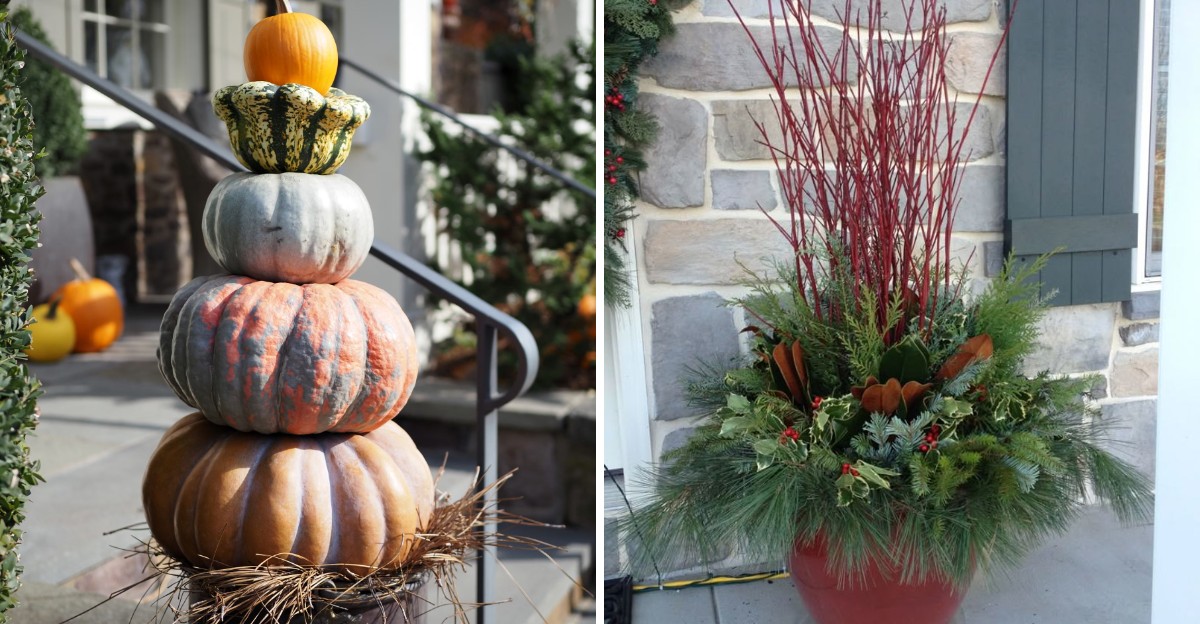
A fresh frost can flatten a porch display overnight. Mums turn limp, and a few pumpkins sag. The trick is choosing decorations that treat cold as no big deal.
Some plants, like ornamental kale and cabbage, look better after a chilly night, and their colors deepen. Hardy pansies and violas keep blooming through light freezes. Cornstalks, hay bales, and dried grasses never mind the weather at all.
Gourds and pumpkins hold up well until repeated freezing turns them soft, so a few spare ones help. Evergreen branches, berried stems, and lanterns add texture once the flowers fade.
Mixing living plants with sturdy props keeps the porch looking full from now until the holidays. Ten smart choices give you a display that lasts.
1. Ornamental Kale And Cabbage
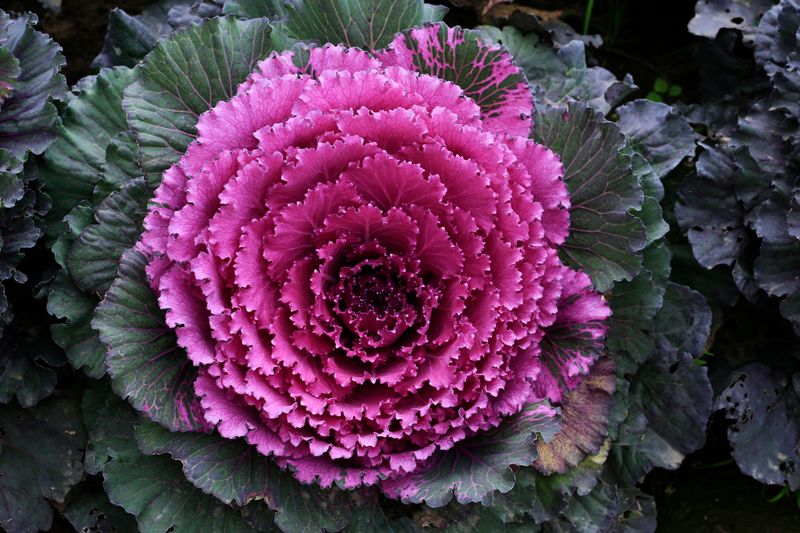
Mums may get all the attention in September, but ornamental kale is the quiet hero of a cold porch. When frost sends summer flowers into a slump, kale and cabbage just keep going.
They handle freezing nights far better than mums and summer annuals ever could. Something magical happens as the air turns chilly.
The pink, purple, and creamy white centers actually get brighter when nights drop into the 40s and below. Cool weather triggers that color change, so the colder it gets, the better these plants look.
Getting started is simple. Plant them in containers and set the pots where they get full sun, since sunlight keeps the leaves strong and colorful.
Water whenever the top of the soil feels dry, but skip watering if the pots still feel damp, because soggy roots are never a good thing.
One pot looks nice, yet a cluster of three or five looks amazing. Group containers of different sizes together on your steps for a full, bold display. Mixing ruffled kale with smooth cabbage heads adds even more interest.
Every so often, check the outer leaves. Older bottom leaves may turn yellow or get chewed by bugs, so just pull them off. That quick bit of tidying keeps the whole plant looking fresh and neat.
Here in Michigan, ornamental kale is a smart pick because our falls are long and cool. Many gardeners see their kale stay colorful on porches into late fall and even early winter.
Plants can often handle temperatures down into the teens once they settle in. For a few dollars per pot, few porch plants give you that much color for that many weeks.
2. Pansies And Violas
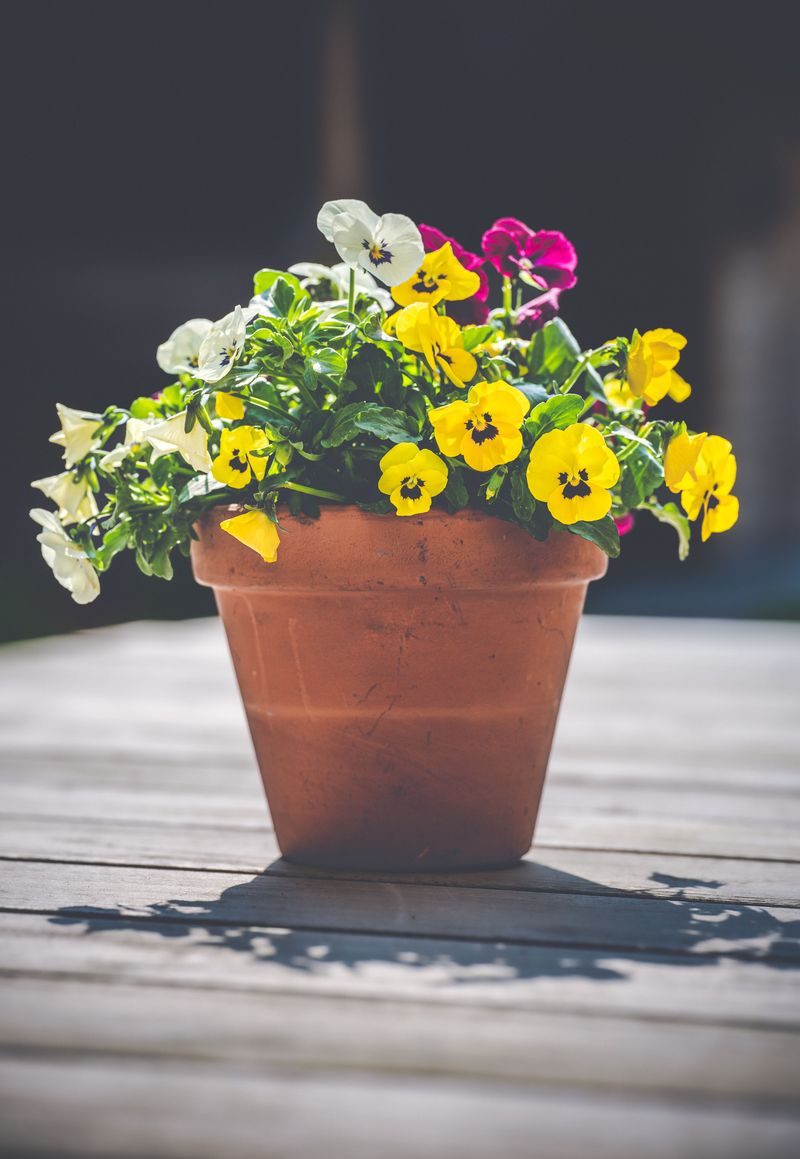
Tiny faces, tough hearts. Pansies and violas look delicate with their sweet little petals, yet they are some of the most cold-hardy flowers you can buy in fall.
Both are cool season plants, which means they actually prefer chilly weather over summer heat. They tolerate frost and many freezes without much trouble. After a really hard cold night, you might walk outside and find them limp and sad.
Don’t panic! Once the sun comes out and temperatures climb, they usually perk right back up within a few hours.
Your Michigan Garden Changes Every Week. Your Plan Should Too.
Gardening in Michigan changes quickly throughout the season. Every Friday you’ll receive a simple weekly plan showing exactly what to plant, prune, fertilize, harvest, and protect so you never miss the right timing.
Caring for them is easy enough for any beginner. Choose a spot with full sun to part shade, since they bloom best with at least a few hours of light. Water when the surface of the soil feels dry to the touch.
Pinch off faded flowers every few days, and the plants will keep producing new blooms instead of making seeds.
A little extra help goes a long way during a severe cold snap. If the forecast calls for temperatures in the low 20s or below, slide your pots right up against the house. Walls give off a bit of stored heat and block harsh wind.
Some people also toss a light sheet over them overnight. Violas have smaller flowers than pansies, but they often produce more of them and handle cold even better. Planting both gives you a fun mix of big and small blooms in purple, yellow, orange, and white.
Across much of Michigan, pansies and violas can keep blooming on porches well into November. Some even survive winter and bloom again in spring, which feels like a bonus gift.
3. Ornamental Grasses In Containers
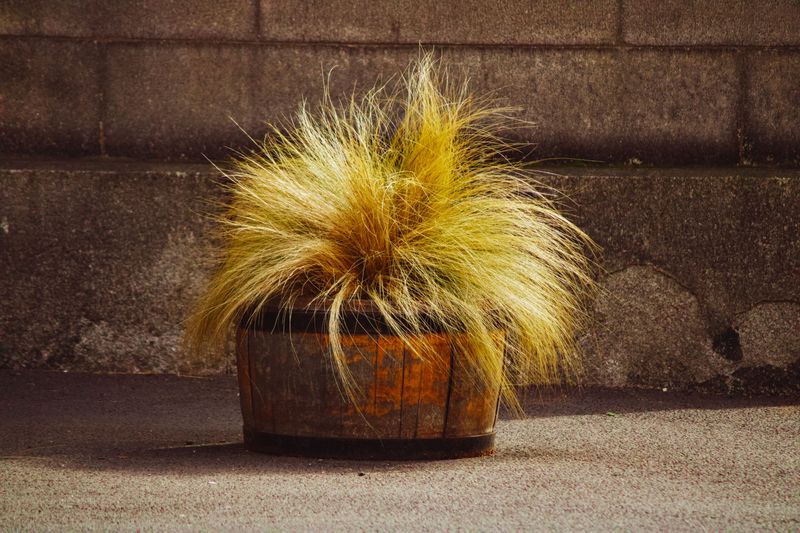
Flowers fade, but grasses dance. Few things add life to a porch like tall plumes swaying in a cool breeze, and ornamental grasses bring that motion all season long.
As fall arrives, grasses like switchgrass and feather reed grass change color. Their blades turn shades of tan, gold, or copper that match the autumn landscape perfectly.
Even better, they hold their shape through freezing weather, so they keep adding texture long after most blooms are gone.
Height is the secret weapon here. Most porch displays sit low to the ground, and a tall grass in the center lifts the eye upward. Use a large container so the grass has room for its roots and won’t tip over in strong wind.
Think of the grass as the star of the show, then build around it. Tuck ornamental kale and pansies around the base for color. The soft golden blades look wonderful next to purple kale leaves and bright pansy faces.
If you want to keep your grass alive through winter and enjoy it again next year, pick a type that is hardy for your area.
Plants in pots face colder roots than plants in the ground, so choosing a tough variety really matters. Otherwise, you can treat them as seasonal decor and plant them in the garden later.
Michigan gardeners have a great advantage with grasses. Native types like switchgrass and little bluestem grow naturally in the Midwest, so they are built to handle our wind, cold, and even light snow.
A fresh dusting of snow on golden grass blades looks beautiful, turning your porch into a cozy, wintry scene.
4. Fresh Evergreen Boughs
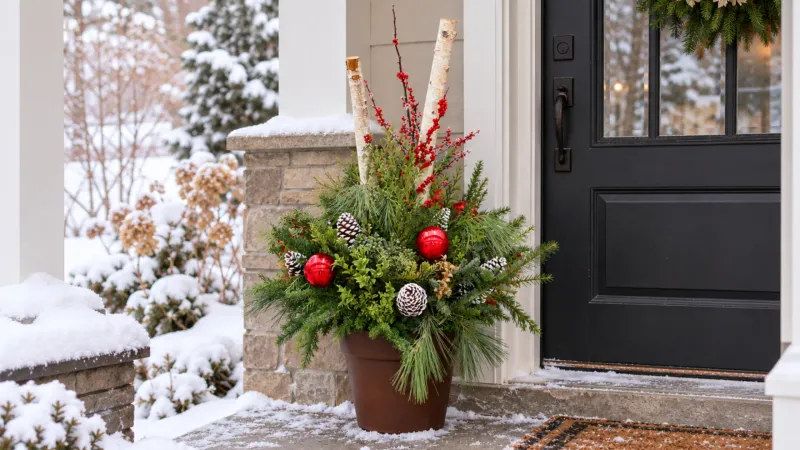
Walk past almost any cozy Michigan home in December, and you might spot urns bursting with green branches. That classic look can start much earlier than you think.
Cut boughs of spruce, pine, fir, and cedar stay green and fresh for weeks once the weather turns cold. Because of that staying power, they can carry your porch from late fall straight through the winter holidays. One simple setup can last for months.
Filling a container is easier than it looks. Start with a pot full of moist potting soil or sand. Push the cut ends of the branches deep into it so they stand upright and can soak up moisture.
When the soil freezes, it locks the branches tightly in place, almost like nature’s glue.
Mixing textures makes the display pop. Soft, droopy white pine looks lovely next to stiff blue spruce and flat, lacy cedar. Try putting taller branches in the middle and letting shorter ones spill over the edges for a full, layered look.
Then add the fun extras. Pinecones, a bow of plaid ribbon, or a few birch logs give your arrangement a seasonal touch. In fall, you might use orange ribbon, then swap it for red when the holidays arrive.
Michigan’s cold weather is actually a huge help here. Low temperatures slow down moisture loss, so cut evergreens stay fresh much longer than they would in warm climates.
Many garden centers and Christmas tree lots sell bundles of boughs, and some will give away trimmings for free. Ask around, and you might fill your urns for next to nothing.
5. Dwarf Evergreens In Pots
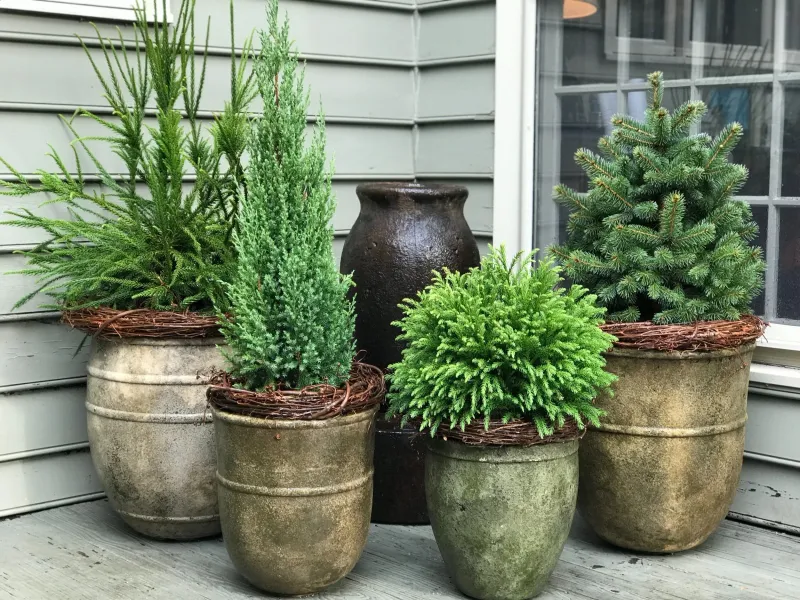
Wouldn’t it be nice to have porch decor that never needs replacing? Small potted evergreens come close. They stay green all winter and give your entrance a polished, welcoming look.
Dwarf conifers, like dwarf Alberta spruce, and boxwoods work beautifully in containers. They provide structure and steady color long after the last fall flower has faded. In spring, you can even plant them in your yard.
Choosing the right plant matters more than you might expect. Roots in a pot are much more exposed to cold than roots in the ground, where the earth acts like a warm blanket.
Because of that, pick shrubs rated at least one to two hardiness zones colder than where you live. If your home is in Zone 6, look for plants rated for Zone 4 or 5.
Bigger pots are better too. A large container holds more soil, which protects roots from quick temperature swings. It also keeps the plant from blowing over on windy days.
Watering is the step many people forget. Evergreens keep losing moisture through their needles and leaves all winter. Give them a deep, thorough drink before the soil freezes solid, so they head into the cold well hydrated.
Placement can make a big difference as well. Group pots close to the house, where walls block wind and share a little warmth. A tucked-in corner of the porch is ideal.
In Michigan, cold-hardy evergreens can carry a porch display right into winter. Add a string of lights or a bow in December, and your plants become instant holiday decor.
6. Red Twig Dogwood Branches
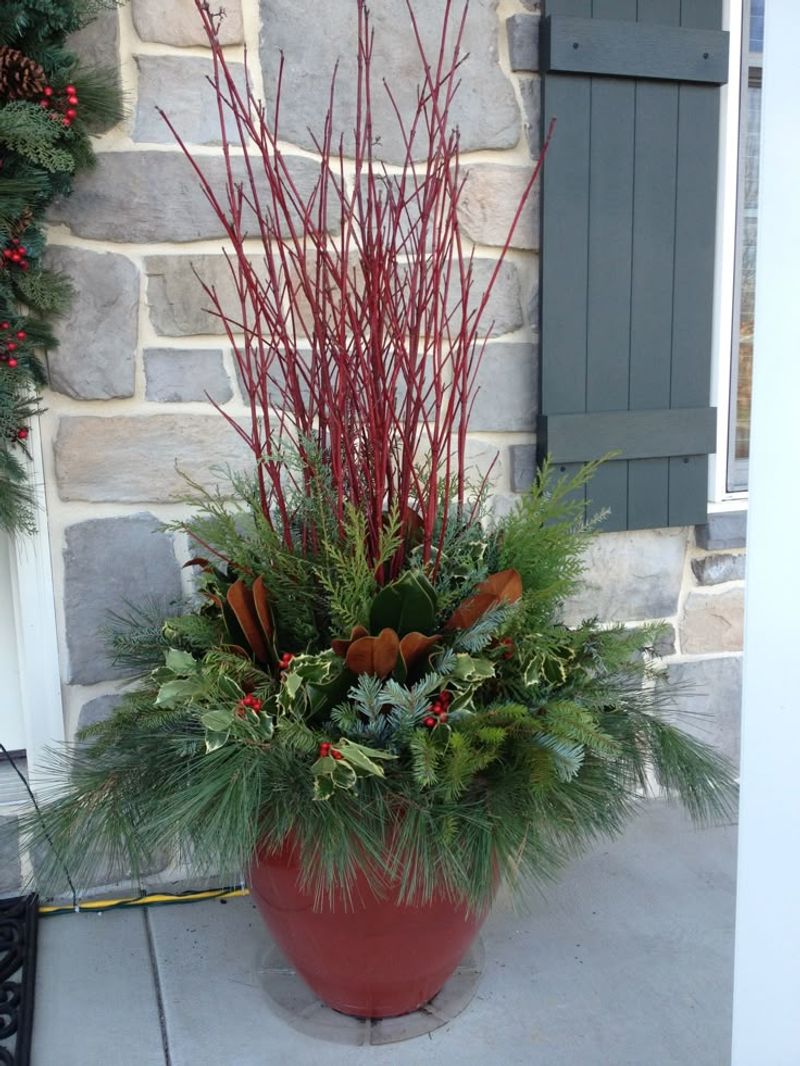
Bare branches don’t sound exciting, right? Red twig dogwood proves that idea wrong in the most colorful way possible.
Known by the scientific name Cornus sericea, red twig dogwood is a shrub native to Michigan. During summer, it looks like an ordinary green bush. Once the leaves drop in fall, though, it reveals stems in a vivid, glowing red.
That bright color is the reason designers love it. Red stems stand out sharply against green evergreens and white snow. Better still, cut branches keep their color for months in cold weather, so one batch can brighten your porch from November through March.
You have two easy ways to get stems. If you grow the shrub, cut some branches yourself, which also helps the plant, since younger stems have the brightest color. If not, garden centers often sell bundles in late fall.
Arranging them takes only a few minutes. Push the stems straight up into containers filled with evergreen boughs and soil. Use a mix of tall and short pieces, because nature never grows things all the same height.
That variety gives your arrangement a relaxed, natural feel. For a bit of extra charm, combine red stems with white birch branches or pinecones. The contrast looks clean and wintry without trying too hard.
Michigan is a perfect home for this plant. Red twig dogwood grows wild along streams and wetlands across the state and thrives in our cold climate.
Planting a few shrubs in your yard gives you a free supply of porch decor every year. Birds and pollinators also enjoy the berries and flowers, so everyone wins.
7. Winterberry Branches
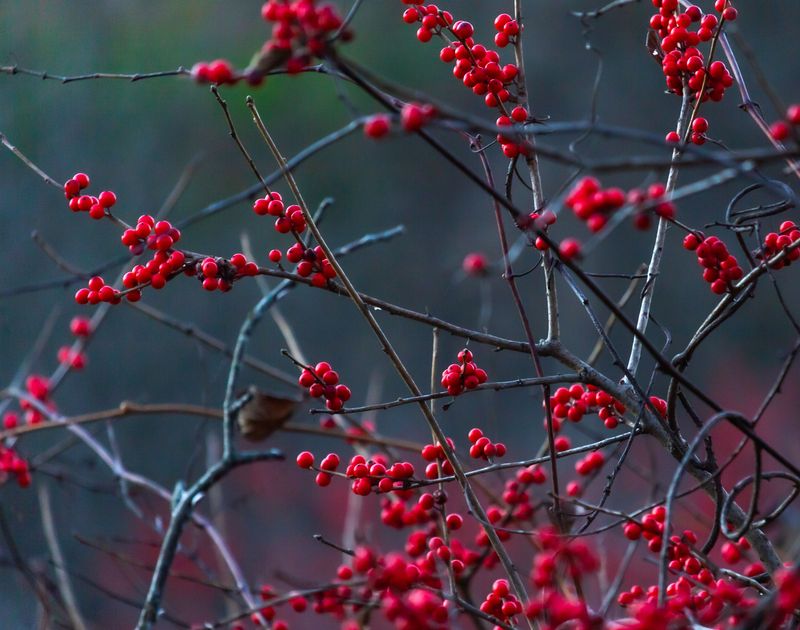
Most holly plants keep their leaves all year, yet winterberry likes to be different. Each fall, this native Michigan holly drops every leaf and leaves behind bare branches covered in bright red berries.
Its scientific name is Ilex verticillata, and it truly shines once the landscape turns gray. Those berries pack bold, cheerful color that holds up nicely in cold weather. Cut branches look festive tucked into porch containers or woven into wreaths.
Gathering branches is simple. If you have winterberry shrubs, snip a few stems with clean pruners. Many garden centers and florists also sell bundles in November and December.
Push the stems into containers among evergreen boughs, and the red berries will practically glow against the green needles.
Safety deserves a quick mention. Winterberry berries are not safe for people or pets to eat. Keep arrangements out of reach of curious dogs, cats, and young children, and sweep up any berries that fall onto the porch.
Here’s something neat for nature lovers. Winterberry plants are either male or female, and only female plants grow berries. If you plant your own, you will need at least one male nearby so the females can produce fruit.
Michigan is a natural fit for this shrub. Winterberry grows wild in wet areas like swamps and the edges of ponds throughout the state. In the wild, it provides winter food for birds such as robins and cedar waxwings.
Planting a few in a damp corner of your yard gives birds a snack and gives you a steady source of porch color year after year.
8. Dried Hydrangea Heads And Seed Heads
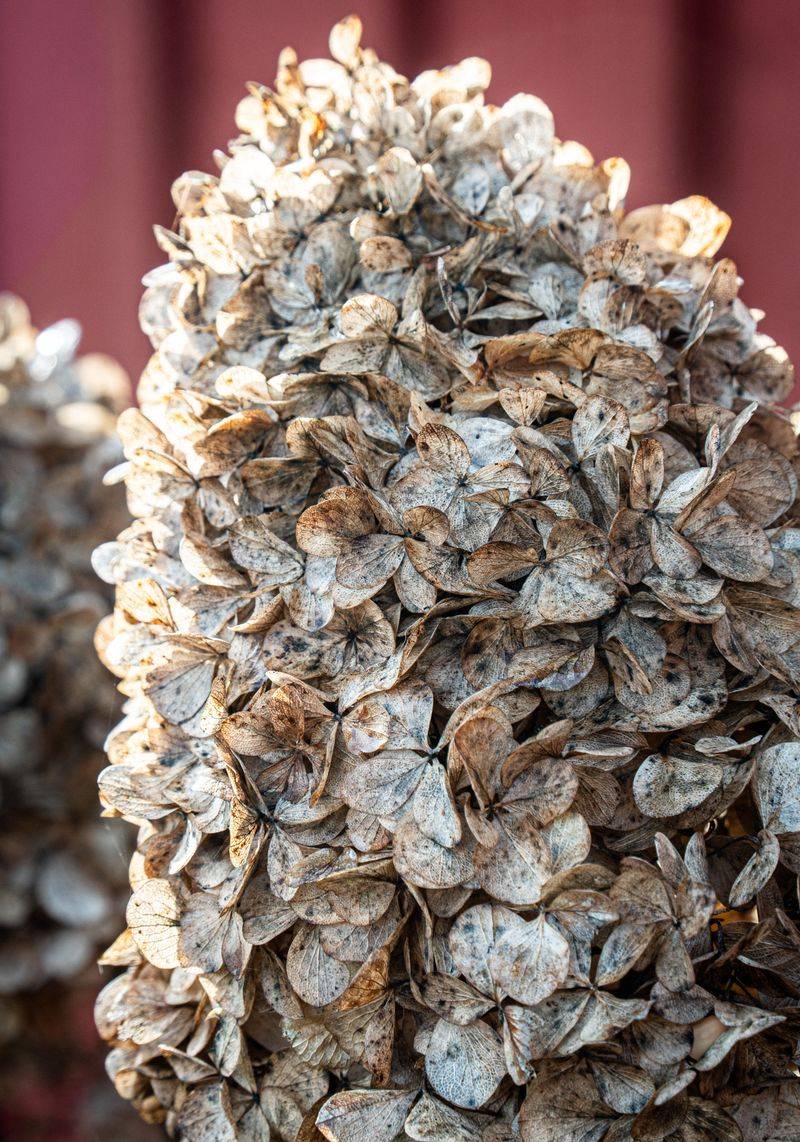
Your garden might already hold some of the prettiest porch decor around, and it won’t cost you a penny. Dried flowers and seed heads bring soft, natural beauty that frost simply can’t ruin.
Panicle hydrangeas are the stars here. Their big cone-shaped blooms start out white or green in summer, then slowly dry right on the plant. By fall, they turn lovely shades of tan, rose, and deep burgundy.
Since they are already dry, cold weather doesn’t hurt them. Seed heads add even more charm. Sedum, coneflowers, and ornamental grasses all form sturdy seed heads that keep their shape through frost and freezes.
Coneflower tops look like tiny dark buttons, while sedum offers flat clusters in rusty brown.
Timing makes a difference when you cut them. Pick a dry day so the stems aren’t soggy or moldy. Snip hydrangea heads with a long stem, then tuck them into containers among evergreen branches.
The papery blooms look wonderful next to fresh green needles. Leave plenty behind, though. Birds like goldfinches and chickadees rely on seeds from coneflowers and grasses for food during the cold months.
Standing stems also give helpful insects a place to spend the winter. A little sharing keeps your yard lively.
Michigan gardeners have a big advantage with this idea. Panicle hydrangeas, such as Limelight and Quick Fire, are extremely cold-hardy and grow well across the state.
Unlike some hydrangeas, they bloom on new growth, so cold winters won’t spoil next year’s flowers. That means a fresh crop of porch decor every single fall.
9. Corn Stalks, Straw Bales, And Grapevine Wreaths
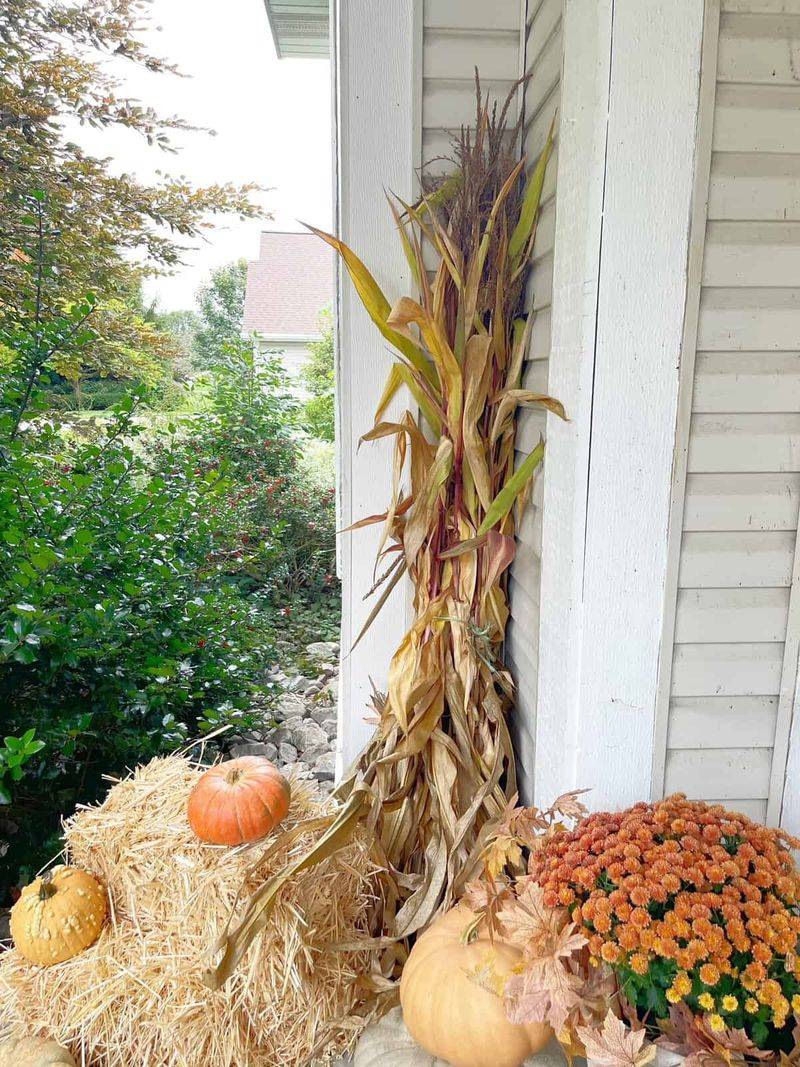
Nothing says harvest season quite like a bundle of corn stalks tied to a porch post. These old-fashioned decorations feel warm and nostalgic, like a trip to a family farm or a hayride on a crisp afternoon.
Their biggest strength is that they are already dry. Dried corn stalks, straw bales, and grapevine wreaths aren’t harmed by frost or freezing temperatures.
While tender plants wilt overnight, these materials keep the same look from early October through late fall.
Corn stalks are easy to set up. Gather a bundle and tie it to a porch post or railing with twine or garden wire. Fluff out the leaves a bit so they look full and natural.
Straw bales work like a stage for the rest of your display. Stack one or two near the steps, then arrange pumpkins, potted kale, or lanterns on top. They add height and that cozy country feel.
Grapevine wreaths are wonderfully flexible. Their twisty, woody frame can be decorated with pinecones, dried hydrangeas, or a few sprigs of evergreen. Simply poke items between the vines or attach them with floral wire.
Change the decorations as the season moves along, and the same wreath works for months.
One safety tip matters a lot. Straw catches fire very easily, so keep bales well away from candles, heat lamps, and other heat sources. Battery-powered lanterns are a safer choice.
In Michigan, home to many farms and cider mills, these classic pieces fit right in. They hold up beautifully until it’s time to switch to winter decor after Thanksgiving.
10. Pumpkins With A Little Protection
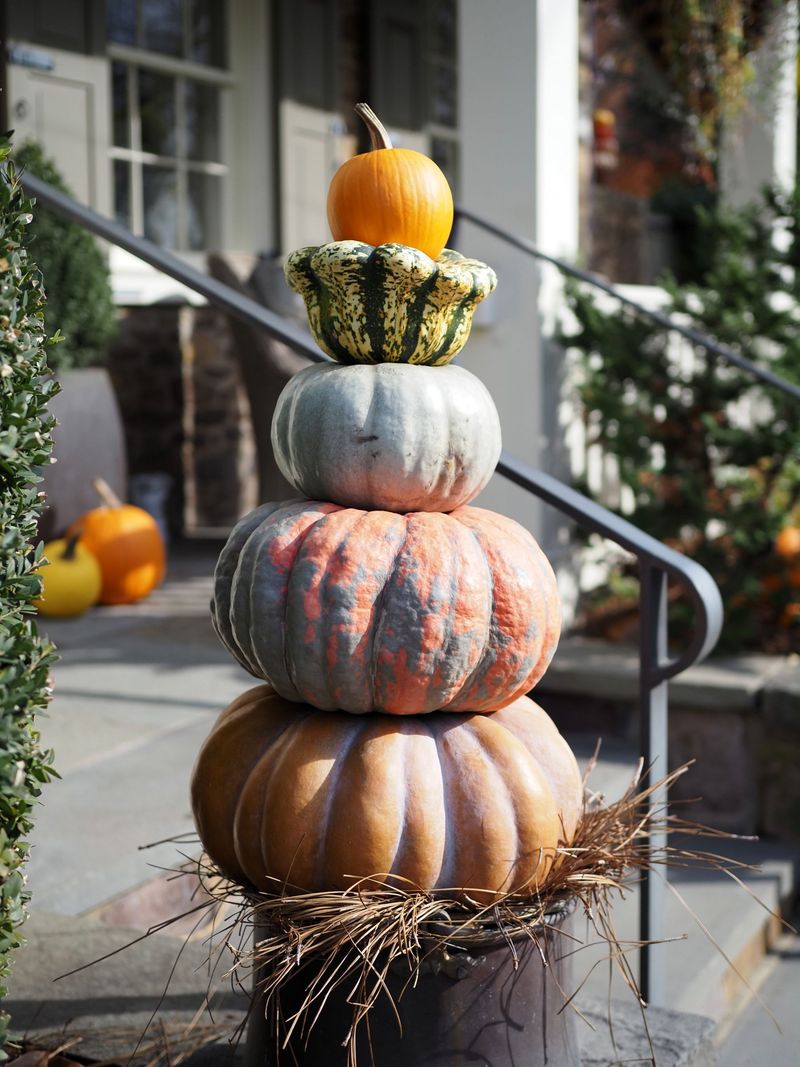
Pumpkins are the heart of fall decor, but they have one big weakness. A hard freeze can turn a firm, glossy pumpkin soft and mushy in just a few days.
Freezing temperatures damage the flesh inside, and once it thaws, rot can set in quickly. Smaller pumpkins and gourds are especially at risk. Giving them a little protection can help them last weeks longer.
Watch the weather forecast closely as October winds down. When a hard freeze is expected, usually around 28 degrees or colder, carry pumpkins and squash into a garage, shed, or covered area for the night.
Bring them back out in the morning once things warm up. Surfaces matter too. Cold, damp concrete draws moisture into the bottom of pumpkins and speeds up rotting. Set them on a piece of wood, a cardboard square, or a small mat instead.
That simple barrier keeps the bottoms dry and firm. Check your pumpkins every few days. Press gently around the stem and base, looking for soft spots or mold. Remove any spoiled ones right away so they don’t spread trouble to their neighbors.
For a display that handles cold with ease, mix in fully dried hard-shell gourds and pinecones. Dried gourds have tough, woody shells that frost can’t harm, and some people keep them for years. Pinecones fill in gaps and add a rustic touch.
Protecting pumpkins really pays off in Michigan, where hard freezes are common by late October and November. A few quick trips to the garage keep your harvest display looking bright and cheerful right up to Thanksgiving.