The Little Gray “Snowbirds” Showing Up In Ohio Yards Mean Winter Is Close
Old farmers swore these birds hauled the snow in on their backs, and the timing makes it hard to argue.
One morning your Ohio yard is empty. The next, a scatter of small gray visitors works the ground under the feeder, flashing white tail feathers every time they hop.
Nobody sent an invitation. They simply arrive, always a step ahead of the first real cold.
Where they spent the summer might surprise you. So would how far they traveled to reach your lawn.
They also run on strict house rules. Spot the habits and you’ll understand why they favor some yards and skip others.
Scatter a handful of seed on the ground tomorrow and watch who shows up. The ground floor is where these birds hold court.
1. Those Little Gray Birds Are Dark-Eyed Juncos
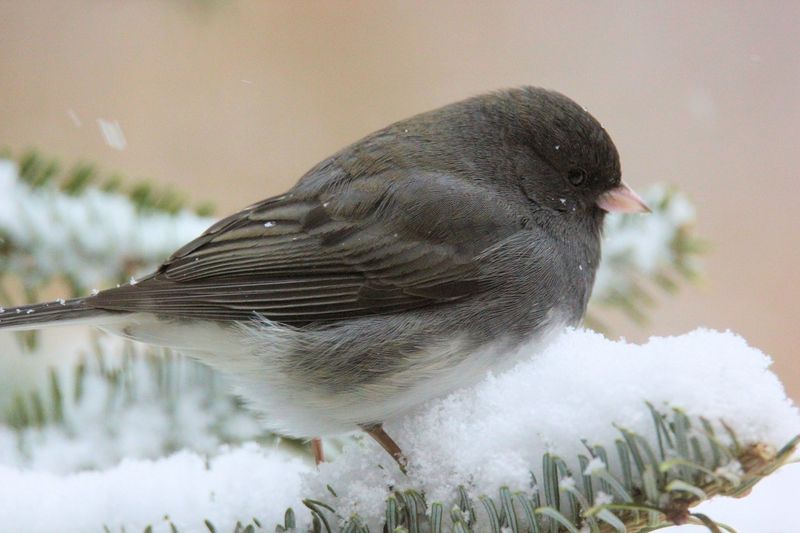
Mystery solved: the tidy gray birds hopping across your lawn are Dark-Eyed Juncos. They belong to the sparrow family, though they look far neater than their streaky cousins.
Many people call them snowbirds for a simple reason. They tend to show up right before or alongside the first snowfall, as if they packed winter in their suitcases.
Their scientific name backs up the nickname too. The word hyemalis comes from Latin and means of the winter, so even scientists agreed these birds and cold weather go together.
Juncos are one of the most common winter birds in Ohio. You can find them in big city parks, quiet farm fields, and plain suburban backyards.
Better yet, they are easy to watch. Juncos are bold little birds that do not mind people standing nearby, especially if snacks are involved.
Small flocks travel together and chatter with soft ticking and trilling sounds. Once you learn that sweet, tinkling call, you will start hearing it everywhere on chilly mornings.
Here is a fun idea for families. Keep a notebook by the window and write down the date you see your first junco each fall.
After a few years, you will have your own homemade winter forecast. Kids especially love comparing the dates and guessing when the birds will return next.
2. Look For A Pink Bill And A White Belly
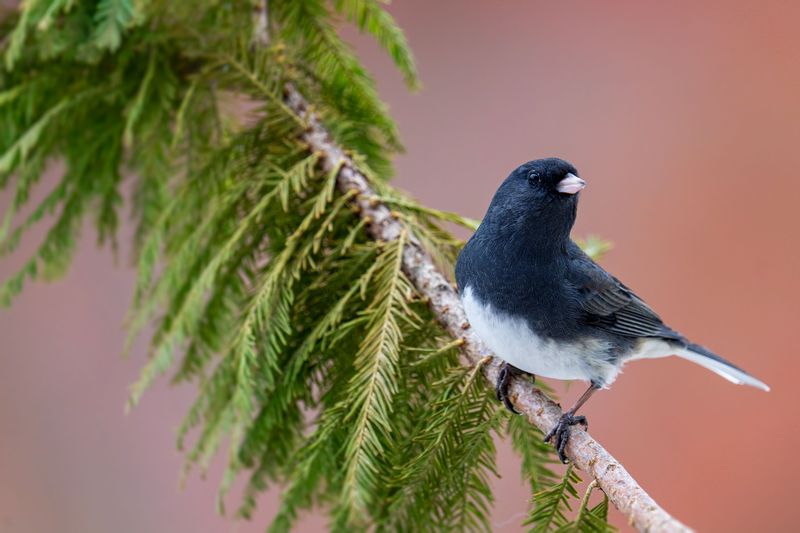
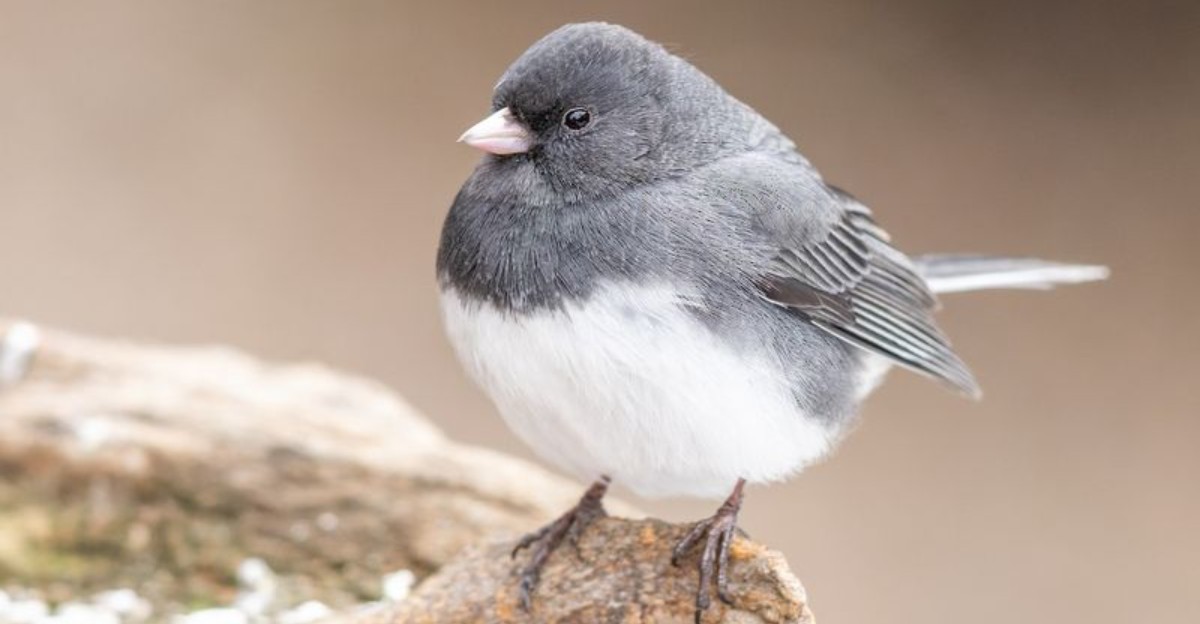
Picture a bird wearing a charcoal hoodie over a crisp white shirt. That is pretty much the junco look, and once you see it, you will not mix it up with anything else.
The top half of the bird is dark slate gray. The belly underneath is bright white, and the line between the two colors is sharp and clean.
Now zoom in on the face. Juncos have a short, cone-shaped bill that is pale pink or a soft yellowish color, which really pops against all that gray.
That little bill works like a nutcracker. Its shape is built for cracking open seeds, which make up most of what juncos eat.
Not every junco looks exactly the same, though. Adult males usually wear the richest, darkest gray coats in the flock.
Females and young birds often look a bit browner or softer in color. Don’t let that throw you off, because the pink bill and white belly still give them away.
Want a handy trick? Look at the bird against the snow or a pale sidewalk.
The gray back seems to melt into the shadows while the white belly blends with the ground. That clever two-tone pattern may help juncos stay hidden from hawks overhead.
3. Watch For White Tail Feathers Flashing In Flight
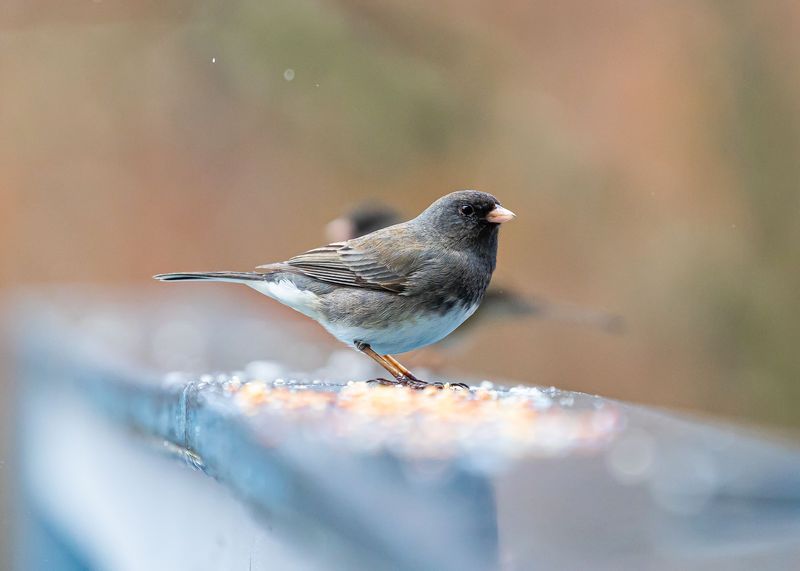
Flick! A gray bird bursts up from the grass, and two bright white stripes flash on either side of its tail.
Congratulations, you just saw the junco signature move.
Juncos have white outer tail feathers. When they sit still, the tail is folded and those white edges mostly hide.
As soon as the bird takes off, the tail spreads open like a tiny fan. Suddenly the white flashes show up clearly, even from across the yard.
Bird experts think this flash may work like a warning signal. When one junco spooks and flies, the others see the white and know to scatter too.
The flash might also confuse a chasing hawk. A burst of white grabs attention, then disappears the moment the bird lands and folds its tail.
For beginners, this is one of the easiest ways to confirm what you are looking at. Plenty of small brown or gray birds hop around in winter, but few flash white like this.
Try a simple game with kids. Have everyone watch the feeder, and whoever calls out the first tail flash gets to pick the next snack.
You will be surprised how fast young eyes catch it. Soon the whole family will be junco spotters.
4. They Arrive On The First Chilly Winds Of Fall
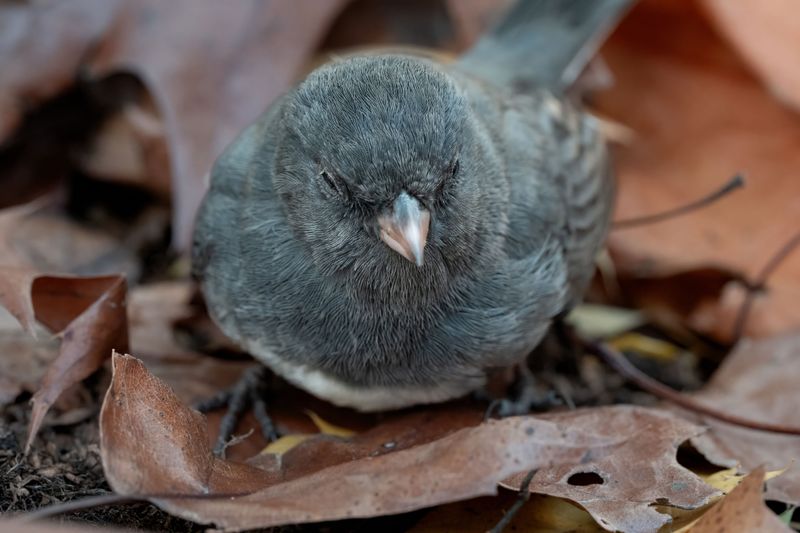
Some years it feels like they ride in on the wind itself. One breezy October morning, the yard is empty, and the next, juncos are scratching through the fallen leaves.
In Ohio, these birds usually arrive in October or November. Their timing often matches the first real cold snaps of the season.
That is why so many people treat them as nature’s weather report. When the snowbirds show up, it is a good time to find your gloves and check the furnace filter.
Juncos are medium-distance migrants. They do not fly all the way to South America like some songbirds, but they still cover a lot of ground.
They mostly travel at night, flying in loose groups. By morning, they drop down to rest and refuel wherever food looks easy to find.
Your yard could be one of those pit stops. Leaf piles, garden beds, and the space under feeders all look like a buffet to a hungry traveler.
Here is a practical tip for early fall. Leave a corner of leaves unraked and let some flower heads stand tall.
Those messy spots hide seeds and tiny bugs. A little less tidying can make your yard the first stop on the junco route.
5. Most Stick Around Until April
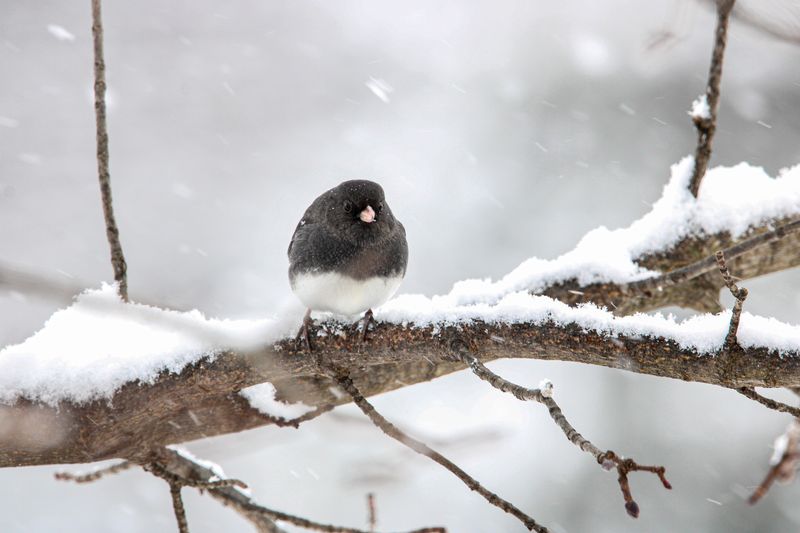
Unlike guests who leave after one dinner, juncos settle in for the whole season. Once they find a good spot, they tend to stay put through the coldest months.
Most juncos remain in Ohio all winter long. They usually head north again around April, when spring starts warming the ground.
That gives you five or six months of free entertainment. Snowy days, icy mornings, and gray afternoons all get a little brighter with these busy birds hopping around.
Winter flocks often have a pecking order. The older, more dominant birds get the best feeding spots, while younger ones wait their turn nearby.
Many juncos even return to the same winter area year after year. The bird under your feeder this January might be the same one you saw last winter.
As spring gets closer, you may notice a change. Males start singing a sweet, musical trill that sounds a bit like a tiny phone ringing.
That song is a hint that they are getting ready to leave. Soon, one mild morning, you will look out and realize the flock has slipped away.
Keep feeding them until they go. Late winter is a hungry time, and a full belly helps them make the long trip north.
6. Most Fly In From Remote Northern Forests
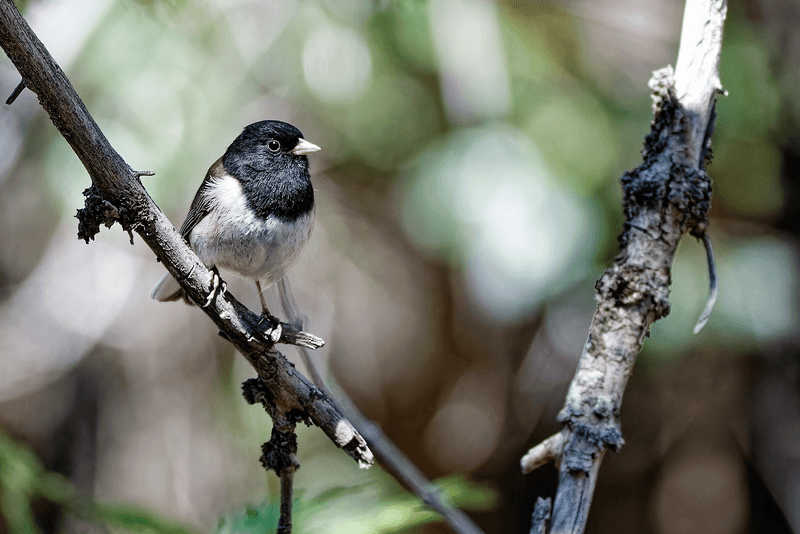
Imagine a forest so big that it stretches across almost the entire top of North America. Thick spruce, fir, and pine trees stand quiet for miles, with lakes and bogs tucked between them.
That place is the boreal forest, and it is where most of state’s winter juncos are born. These forests cover huge parts of Canada and Alaska.
During summer, juncos build nests on or near the ground there. They raise their chicks among mossy roots and fallen logs, far away from busy roads and towns.
When fall arrives, the north gets cold fast. Food grows scarce, and the birds spread south across much of the lower United States.
Some fly more than a thousand miles to reach backyards like yours. That is a long journey for a bird that weighs about as much as five quarters.
Think about that next time one lands on your deck rail. The little traveler may have seen moose, northern lights, and wild lakes before visiting your bird feeder.
Did you know? The boreal forest is sometimes called North America’s bird nursery.
Billions of birds raise their young there each summer.
Protecting those forests helps the juncos that brighten Ohio winters. Even far-off places connect to your backyard.
7. A Few Actually Nest In Northeast Ohio
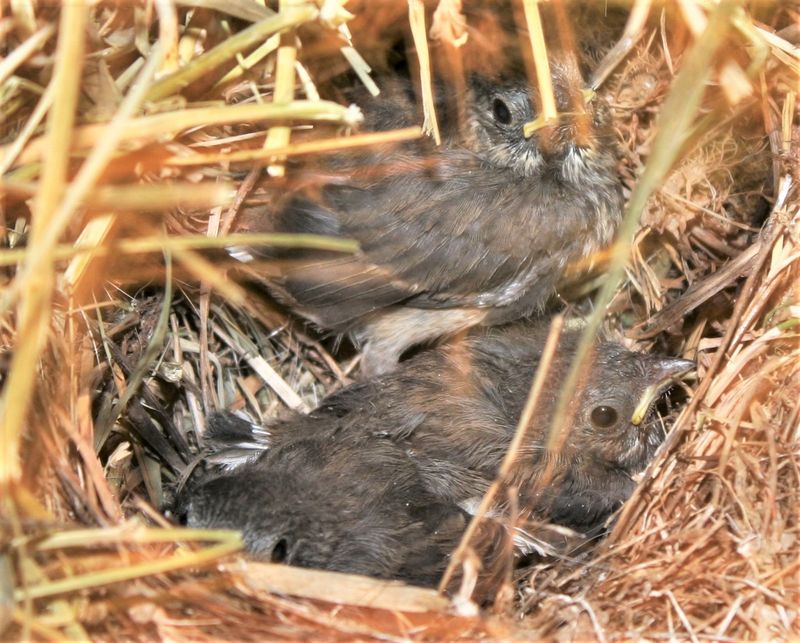
Here is a surprise that even many longtime bird lovers miss. Not every junco leaves Ohio when spring rolls around.
A small group stays and nests right here in Northeast Ohio. These summer juncos live mostly east and south of Cleveland.
They like cool, shady hemlock ravines, especially in Geauga and Lake counties, and a small group nests in Mohican State Forest. These deep, rocky valleys stay chilly even in July, a lot like the northern forests where most juncos raise their young.
The history here is pretty special. Ohio naturalist Jared Kirtland noted juncos nesting in this area back in 1838.
Nearly two centuries later, they still nest in the same general area he described. That gives the state a proud place in the junco story.
If you want to try finding them, visit a hemlock-filled park in summer. Places in the Cleveland area and nearby counties are worth a look.
Listen for that bright, ringing trill echoing off the ravine walls. Then watch the ground and low branches for a flash of white tail feathers.
Please keep your distance if you find a nest. Juncos often build on the ground, tucked under roots or along steep banks.
Staying on trails keeps these rare summer neighbors safe and happy.
8. They Prefer To Feed On The Ground
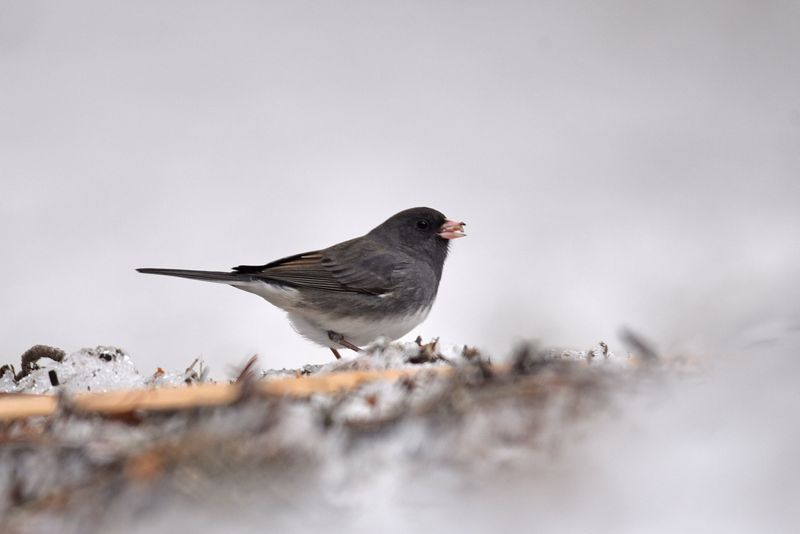
While chickadees and finches cling to hanging feeders, juncos are happy down below. Think of them as the cleanup crew of the bird world.
Juncos are ground feeders. They hop and run along the ground, picking up seeds that other birds drop from feeders above.
Watch closely and you might see a funny little dance. A junco will hop forward, then kick backward with both feet to scratch away leaves or snow.
That double-scratch move uncovers hidden seeds. It looks a bit silly, but it works like a tiny snow shovel.
Seeds make up about 75 percent of a junco’s diet over the whole year. In summer, they also snack on insects and feed bugs to their growing chicks.
Winter is all about seeds, though. Weed seeds, grass seeds, and anything that spills from your feeder are fair game.
So go easy on the cleanup under your feeder. That scattered seed is not a mess to a junco, it is dinner.
A brush pile nearby also helps a lot. Juncos like having cover close by, so they can dash into the branches if a hawk or cat shows up.
A safe spot to hide makes them feel relaxed enough to linger.
9. Scatter Millet And Cracked Corn Low For Them
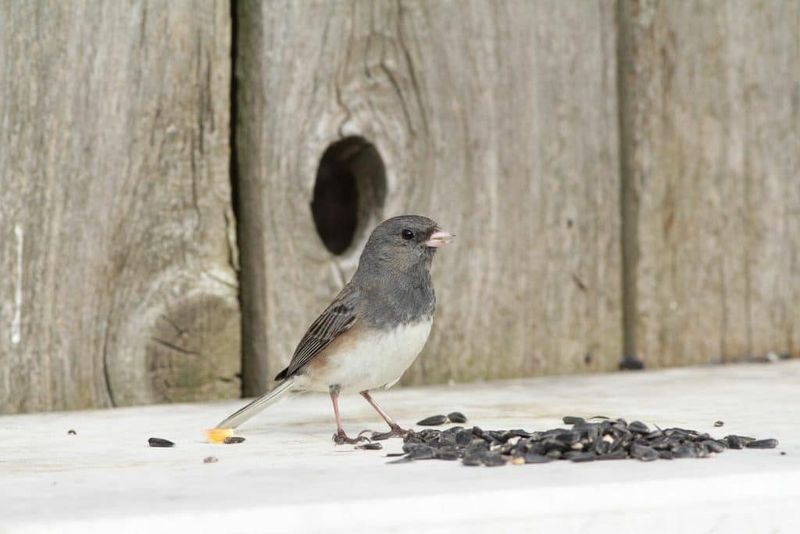
Ready to roll out the welcome mat? Feeding juncos is cheap, simple, and one of the easiest bird projects you can try.
Start with white proso millet. These tiny round seeds are a junco favorite, and you can find them in most birdseed bags.
Cracked corn is another big hit. It is inexpensive and easy for small bills to handle.
Juncos also enjoy black oil sunflower seeds and sunflower hearts. Hearts are already shelled, so there is less mess left behind on your lawn.
Location matters more than fancy feeders. Scatter the seeds right on the ground, or use a low platform feeder just a few inches tall.
Pick a spot near shrubs or a brush pile. Juncos feel safer eating when cover is only a quick hop away.
After a snowfall, sweep a small patch clear before tossing seed. That bare spot becomes a bright invitation that hungry birds spot quickly.
Try to feed at about the same time each day. Juncos learn routines fast and will often be waiting when you step outside.
Keep a bird bath with fresh, unfrozen water if you can. A heated bath is a real treat on freezing days.
With a little effort, your yard can become their favorite winter hangout.