10 Florida Native Plants That Bring Robins To Your Yard All Winter
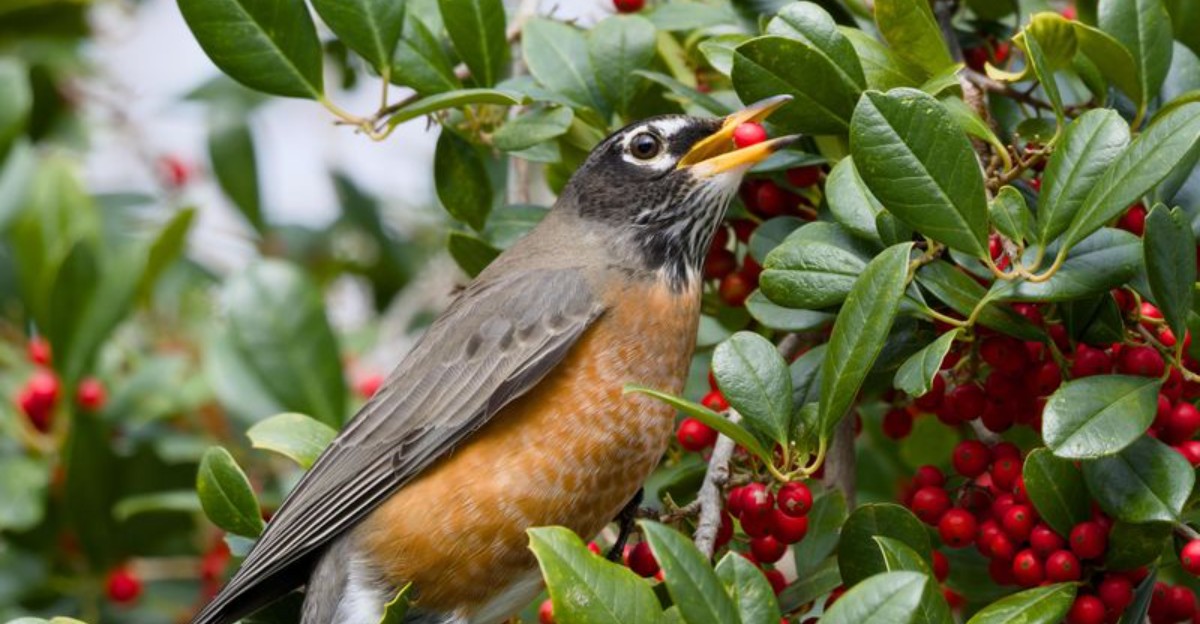
Robins in Florida mean winter has officially arrived, and your yard can be the place they choose to stay.
Come cold weather, huge flocks drift south and swarm any spot with the right kind of food. They skip lawns and feeders full of seed, since worms and seeds aren’t what they’re after this time of year.
Something else on the menu pulls them in by the dozen.
Ten native plants fit the bill. Some are shrubs, some are trees, and a couple look more like weeds until you spot the fruit.
Together they turn a plain yard into a winter hangout that stays busy from sunrise to dusk.
Many of them also feed other birds, bees, and butterflies throughout the year.
Start your list before the nursery shelves get picked over. These plants sell out faster than you’d think.
1. Sabal Palm, Florida’s State Tree And A Robin Favorite
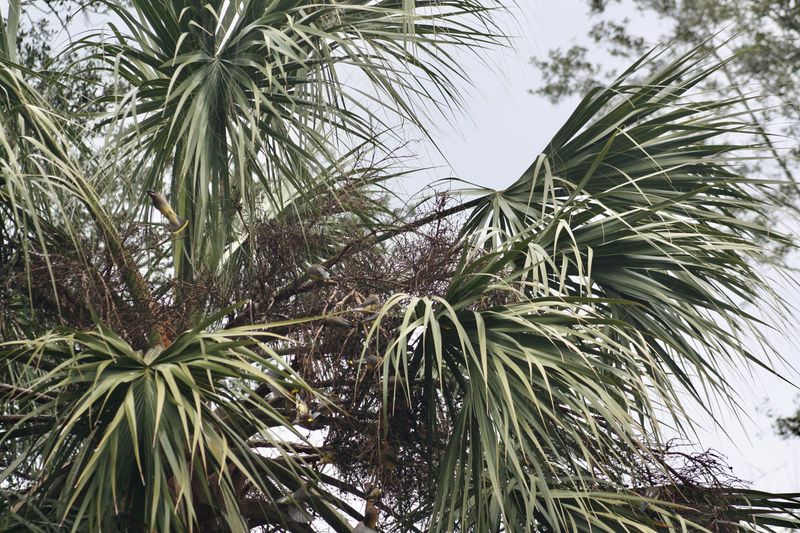
Few trees say Florida quite like the cabbage palm swaying over a backyard. It became the official state tree in 1953, and robins seem to approve of that choice.
In early summer, long stalks of creamy flowers spill out from the crown. Bees buzz around them for weeks, and the blooms slowly turn into round, shiny black fruits.
By late fall and winter, those fruits are ripe and ready. Robins arrive in noisy groups and gobble them up, along with mockingbirds, raccoons, and even bats.
Sabal palms are tough as old boots. They handle salt spray, sandy soil, hurricanes, and dry spells with very little fuss once their roots settle in.
For the best results, plant them in full sun to part shade. Water new palms often for the first few months, then let nature take over.
Try not to trim off the green fronds or the fruit stalks. Many homeowners cut them for a neat look, but that removes the very snack robins want.
Fun fact: the old leaf bases, often called boots, make cozy hiding spots for tree frogs and small lizards. A single palm can become a tiny apartment building for wildlife, all while feeding your winter robins.
2. American Holly And Its Bright Red Berries
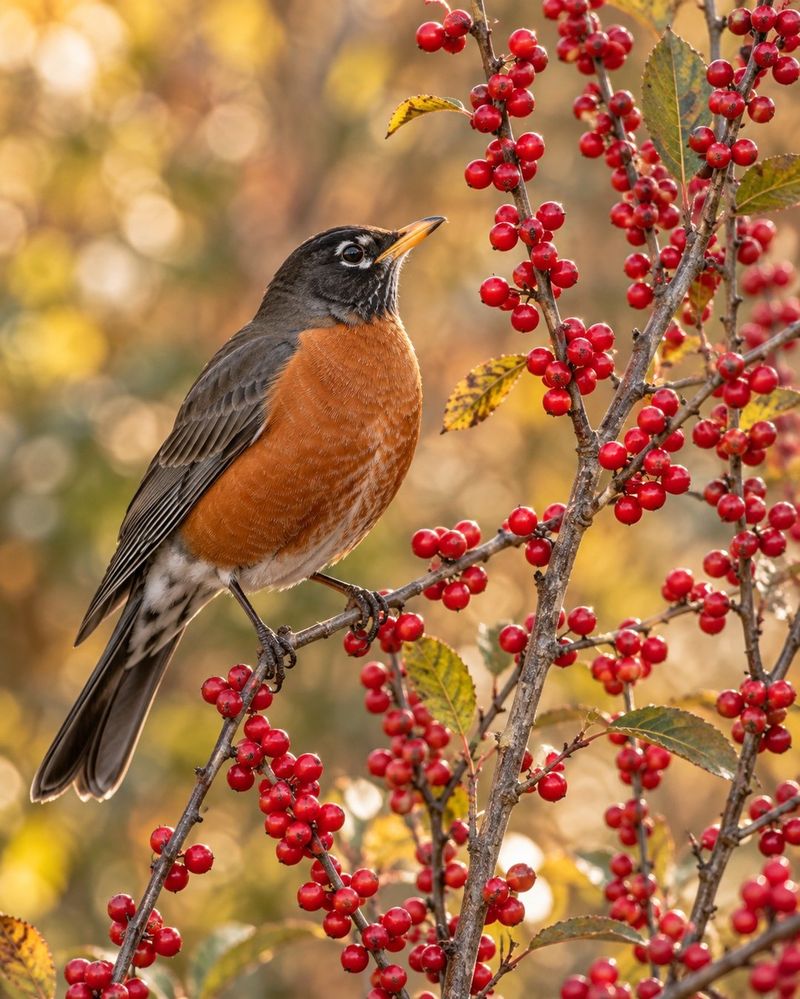
Think of the classic holiday card, with shiny green leaves and red berries. That picture comes to life with American holly, and the robins get the best seats in the house.
This evergreen tree is native to the Southeast, including north and central Florida. Its berries ripen in fall and cling to the branches through winter, right when birds need them most.
Robins, bluebirds, cedar waxwings, and thrushes all feast on the fruit. The thick, spiny leaves also give small birds a safe place to hide from hawks.
Here is a key tip many people miss. Only female hollies make berries, so you need a male tree somewhere nearby for pollination.
Plant American holly in well-drained, slightly acidic soil. It likes full sun to part shade and grows slowly into a neat pyramid shape over time.
Give it room, since older trees can reach 30 to 50 feet tall. If you have a smaller lot, ask your nursery about compact Florida-friendly selections.
Your Florida Garden Changes Every Week. Your Plan Should Too.
Gardening in Florida changes quickly throughout the season. Every Friday you’ll receive a simple weekly plan showing exactly what to plant, prune, fertilize, harvest, and protect so you never miss the right timing.
One more perk: deer tend to leave the prickly leaves alone. You get a handsome tree, a winter bird feeder, and a living privacy screen all in one green package.
3. Yaupon Holly For Smaller Yards
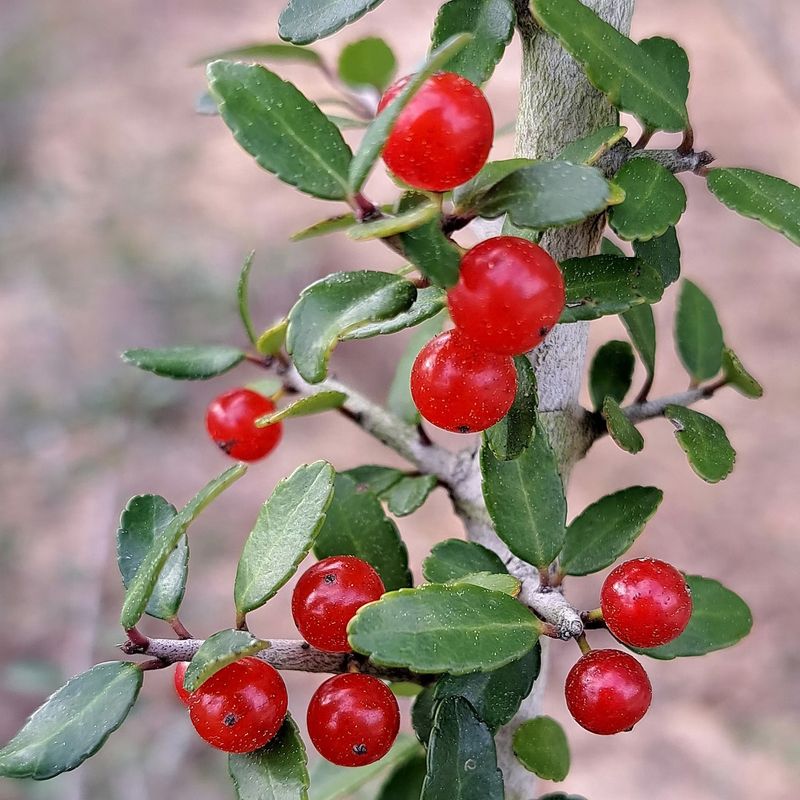
Short on space but big on bird dreams? Yaupon holly might be the shrub that makes everything click.
It grows wild across the South, including most of the state. Female plants burst with tiny red berries, and some types even offer orange or yellow fruit.
Those berries hang on all winter long. Robins and cedar waxwings swoop in and clean them off, often in loud, happy flocks.
Yaupon is wonderfully flexible. You can let it grow into a small tree, shape it into a hedge, or choose a dwarf form for tight corners.
It handles sandy soil, wet soil, salt air, and drought better than many shrubs. That makes it a great pick for beach towns and busy families alike.
The dense, evergreen leaves are a bonus. Birds tuck themselves inside for shelter on chilly nights, and some will even nest there in spring.
Did you know? Native Americans brewed the leaves into a drink, and yaupon is the only native North American plant with caffeine.
Today, small farms sell yaupon tea, so your shrub has quite a history.
For berries, buy a female plant from a trusted nursery. Ask them to confirm it, since dwarf types often do not fruit.
4. Dahoon Holly For Wet Spots
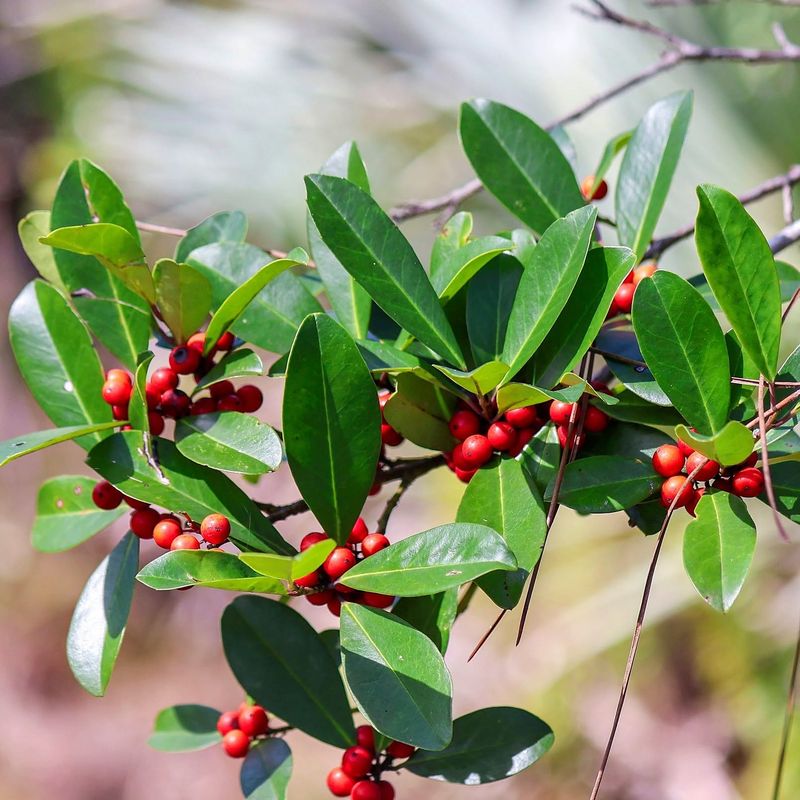
Every yard seems to have that one soggy corner where grass sulks and puddles linger. Instead of fighting it, why not plant something that loves wet feet?
Dahoon holly grows naturally in Florida swamps, bogs, and along pond edges. It shrugs off soil that floods for part of the year, which many trees cannot handle.
From late fall through winter, female trees glow with thick clusters of red berries. Sometimes the show stretches into early spring.
Hungry robins notice quickly. Flocks will strip a loaded tree in a few days, then move on and come back once more berries soften.
Like other hollies, Dahoon needs both a male and a female plant for fruit. Planting one of each, or a few females near a male, works nicely.
It grows about 20 to 30 feet tall with a narrow shape. That makes it handy near drainage ditches, rain gardens, or the edge of a retention pond.
Give it sun or light shade, and it will reward you with glossy leaves all year. Your soggy problem spot turns into a busy, berry-filled bird buffet, and you never have to mow there again.
5. Southern Red Cedar With Blue Winter Berries
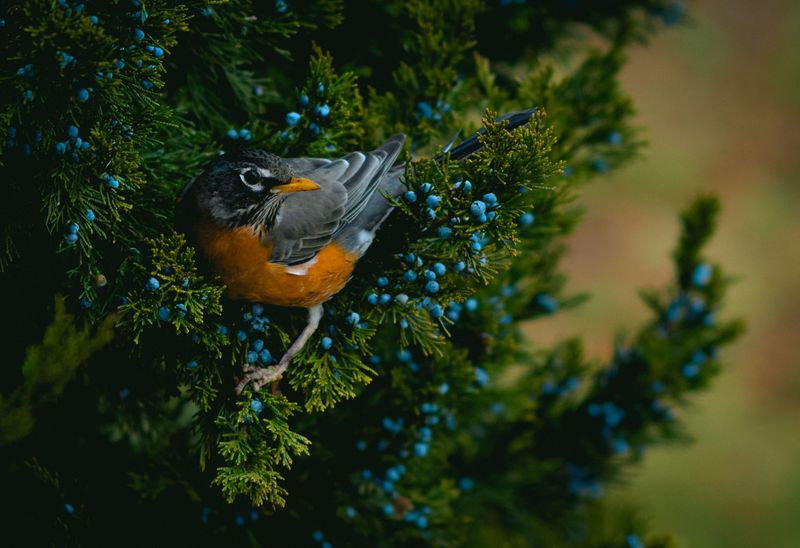
Crush a sprig of red cedar between your fingers and you will smell something like a cozy cabin. Birds care less about the scent and more about the frosty blue berries.
Those berries are really tiny cones, soft and fleshy. They ripen in fall and stay on the tree well into winter.
Robins, cedar waxwings, and finches all line up for them. In fact, cedar waxwings got their name from their love of this very tree.
The dense branches act like a winter coat for wildlife. During cold snaps and windy storms, birds hide deep inside where the air feels calmer.
Southern red cedar grows well in sandy soil and tolerates salt and drought. It works great as a windbreak, a privacy screen, or a stand-alone shade tree.
Only female trees produce the blue berries. Plant a few together to raise your chances of having both males and females nearby.
A friendly tip: keep cedars away from apple or pear trees if you grow fruit. A fungus called cedar-apple rust can bounce between them.
Otherwise, this tough evergreen is a low-care friend that feeds birds for many decades.
6. Wax Myrtle For Year-Round Cover And Fruit
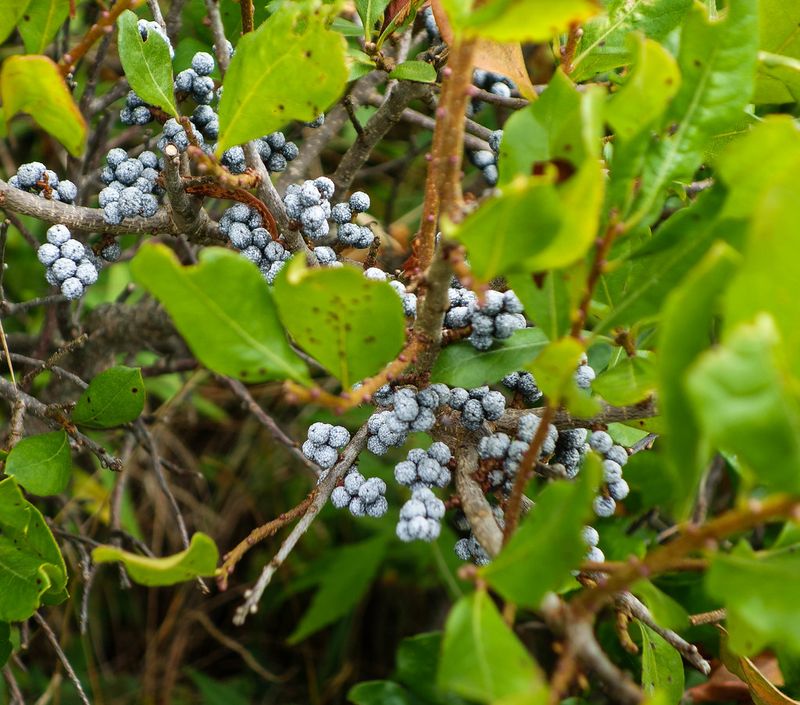
Ever wonder where colonial families got wax for their candles? Many boiled the tiny berries of wax myrtle, a plant still growing across all of the state today.
It grows from the Panhandle right down to the Keys. That makes it one of the easiest native shrubs to find and grow almost anywhere in the state.
Female plants produce clusters of small, blue-gray berries coated in wax. They form in late summer and hang around through winter.
The waxy coating is packed with fat and energy. Robins, warblers, and many migrating birds depend on that fuel during chilly months.
Wax myrtle stays green all year, so it offers steady cover. Birds hide, rest, and roost in its thick branches when the weather turns rough.
It grows fast, sometimes three to five feet a year. You can prune it into a hedge or let it become a small, airy tree.
Remember, a male plant needs to be nearby for berries to form. Buying several plants at once is an easy way to cover that need.
The leaves smell spicy when crushed, and many people say they help keep fleas away. Bird food, shelter, and a natural fragrance, all from one hardworking shrub.
7. American Beautyberry With Purple Fall Clusters
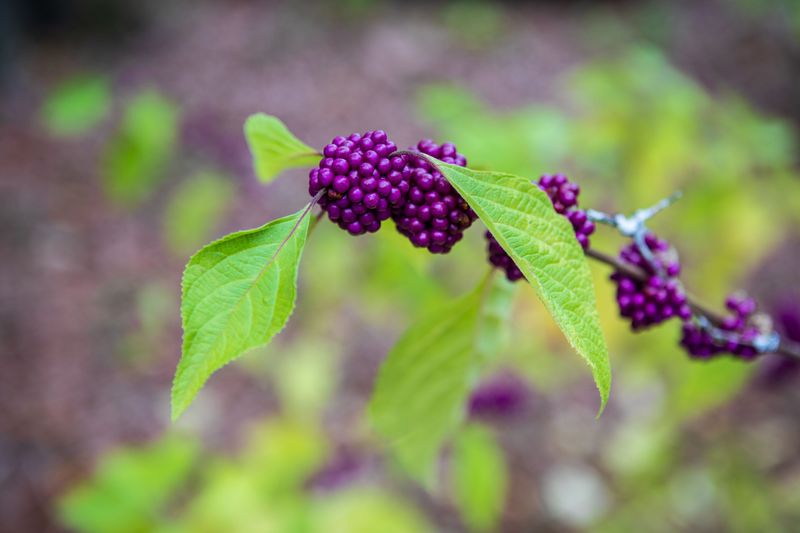
The first time you see beautyberry, you might think someone glued purple candy to the branches. The color is that bright and surprising.
Thick clusters of glossy berries wrap all the way around the stems. They show up in late summer and fall, then often stay put after the leaves drop.
That timing matters a lot to birds. Later in winter, when other food runs low, robins and over 40 kinds of songbirds turn to these purple treats.
Beautyberry grows wild throughout the state. It is happy in sun or shade and does not need rich soil to thrive.
Plant it under tall pine trees, along a fence, or in a messy wildlife corner. It reaches about four to six feet tall and wide.
Here is a handy trick. Cutting it back hard in late winter keeps it neat and leads to more berries the next fall.
Fun fact: old-timers rubbed the crushed leaves on their skin to keep mosquitoes away. Scientists later found compounds in the leaves that do help repel bugs.
Each fall, it puts on a purple show you can see from the street. Your neighbors will ask about it, and the robins will thank you.
8. Flowering Dogwood With Glossy Red Fruit
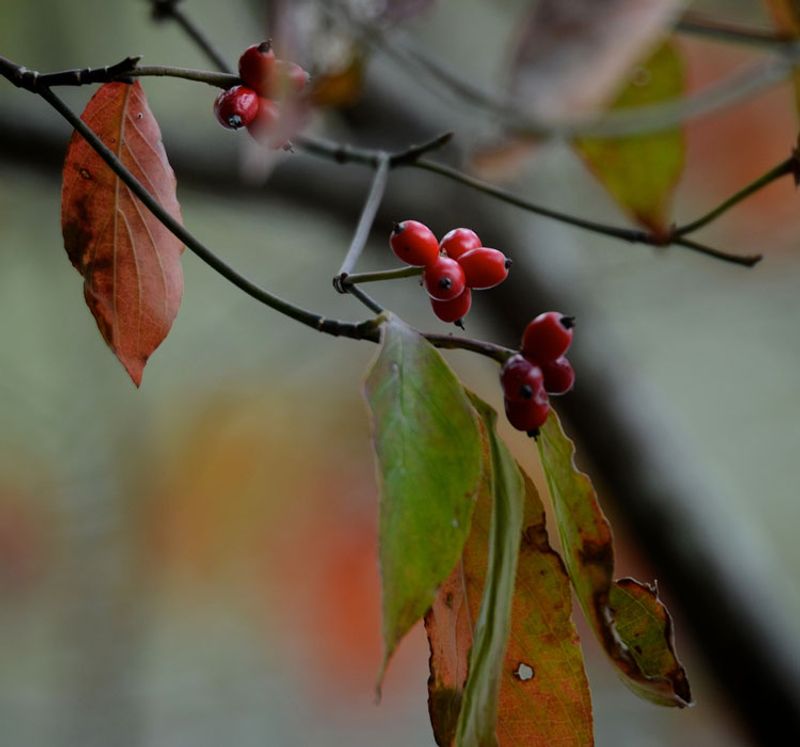
In spring, flowering dogwood steals the show with clouds of white blossoms. By late summer, it quietly switches jobs and becomes a bird restaurant.
Small clusters of shiny red fruit replace the flowers. They ripen in late summer and fall, and some stay on into early winter.
More than 35 bird species eat dogwood fruit. Robins are among the biggest fans, along with bluebirds and cedar waxwings.
Watch closely and you may see something neat. Robins often travel from tree to tree in a pattern, picking fruit as each batch turns ripe.
Dogwoods grow best in north and central Florida. They like rich, moist, well-drained soil and some afternoon shade.
Think of how they grow in the wild, under taller oaks and pines. Copying that setup helps them stay healthy and happy.
Spread mulch around the base, but keep it off the trunk. Water deeply during dry spells, especially in the first two summers.
Bonus: the leaves turn deep red and purple in fall. You get spring flowers, autumn color, and winter birds, all from one graceful tree that rarely tops 30 feet tall.
9. Sparkleberry, A Native Blueberry Relative
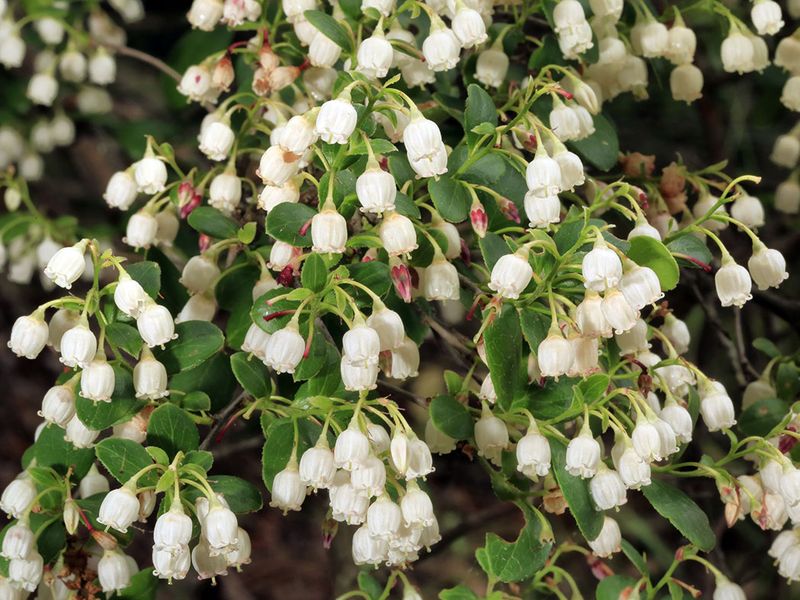
Meet the giant of the blueberry family. Sparkleberry can grow into a real little tree, sometimes 20 feet or taller.
It is a close cousin of blueberries, huckleberries, and cranberries. Yet most Floridians have never heard of it, which makes it a fun conversation starter.
In spring, tiny white bell-shaped flowers dangle from the branches. Bees love them, and they slowly turn into shiny, dark purple berries by fall.
The berries can stay on the tree well into winter. Robins, other songbirds, and small mammals visit for a snack when food gets scarce.
People can eat them too, though they taste dry and a bit gritty. Most folks happily leave them for the birds.
Sparkleberry loves dry, sandy, acidic soil, the kind found in many Florida yards. Once settled, it handles drought like a champ.
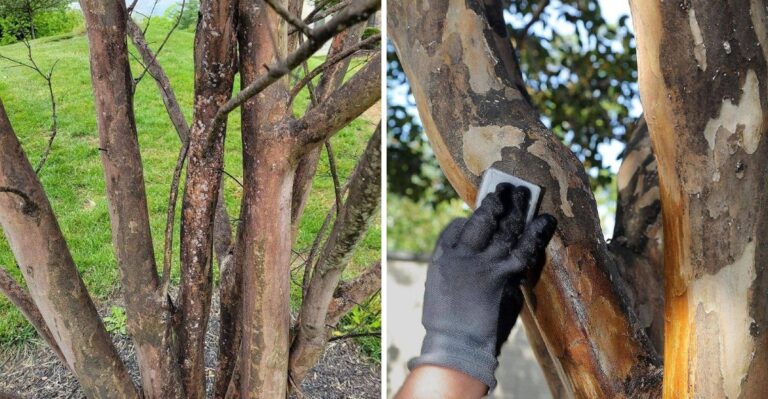
Look at the trunk for another treat. The bark peels in patches of gray, cinnamon, and reddish brown, making it pretty even in winter.
Its twisty branches give it a wild, natural shape. Plant it where you can watch from a window, and enjoy the birds that flutter in for breakfast.
10. Parsley Hawthorn For A Small Native Tree
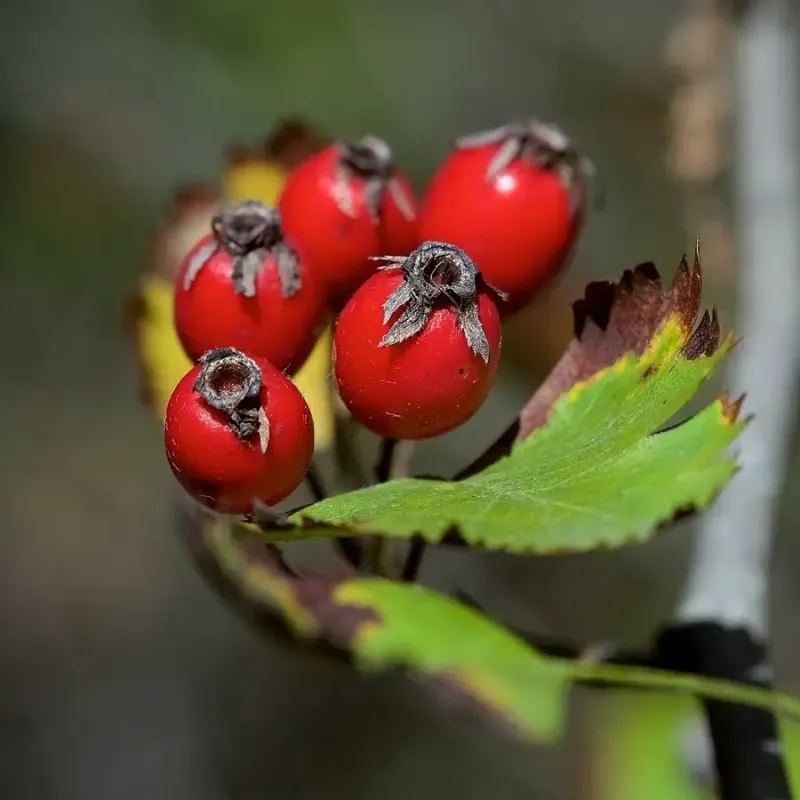
Lacy leaves that look like parsley, dainty white flowers, and bright red fruit. Parsley hawthorn packs a lot of charm into one small tree.
It grows in woodlands and along moist edges throughout much of the state. Most trees stay around 20 to 25 feet tall, perfect for small yards.
White blossoms appear in spring and draw in busy pollinators. By autumn, the flowers give way to small, oval red fruits called haws.
Those haws can hang on into winter. Songbirds, game birds, and even small rodents rely on them during the colder months.
The thorny branches add another layer of help. Birds feel safe nesting and resting there, since predators struggle to climb through.
Plant it where people will not brush against it, such as the back of a bed. Gloves are a smart idea when pruning.
Parsley hawthorn likes sun to part shade and soil that stays a bit moist. Peeling gray and orange bark adds interest in winter too.
Its delicate look fools a lot of people into thinking it is fussy. Truth is, it is a sturdy native that brings beauty and berries with little effort.