Sticky Sap Around Georgia Peach Trees This Fall Could Be A Sign Of Borers
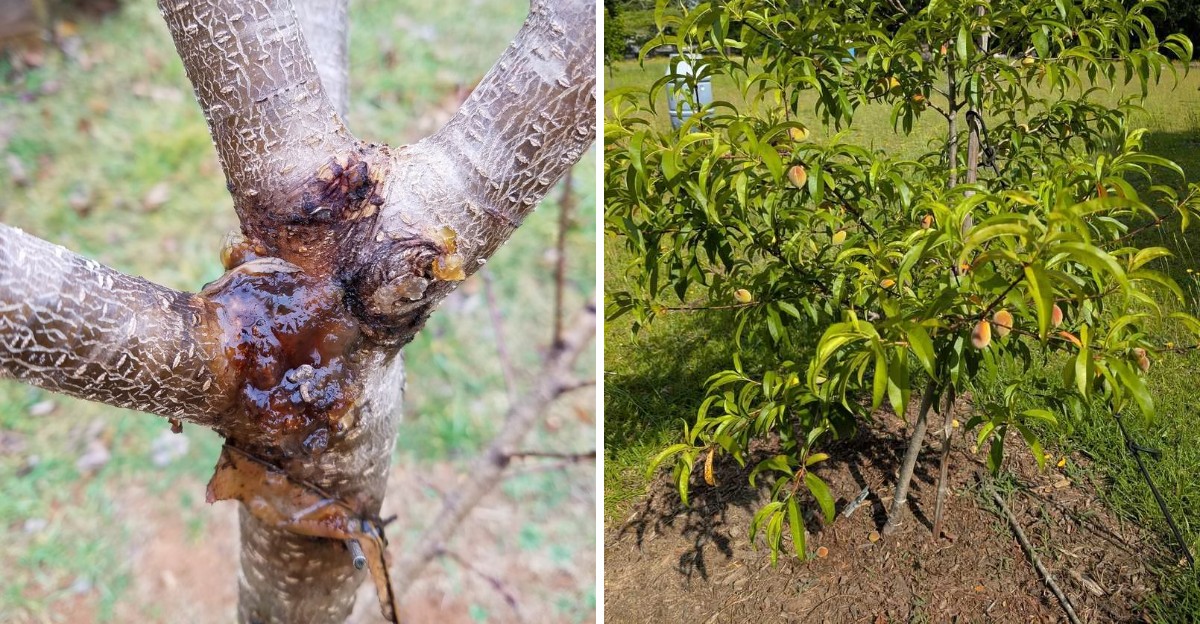
Sticky, amber-colored sap appearing around a peach tree trunk can be unsettling, especially when you haven’t noticed anything unusual about the tree until now.
Peach trees sometimes release gummy material in response to injuries or stress, but certain patterns can point to insects feeding beneath the bark.
Fall is an important time to pay attention to these changes.
In Georgia, peach tree borers can spend the colder months developing beneath the bark near the base of the trunk. Their activity may go unnoticed until gum and other signs begin appearing around the affected area.
Take a closer look at where the sap is collecting before assuming the tree simply has a minor wound.
Not every sticky patch means borers are present, and the location of the damage can offer useful clues. Recognizing the difference matters when deciding what your peach tree needs next.
1. Sticky Amber Gum Near The Trunk Can Be An Early Warning
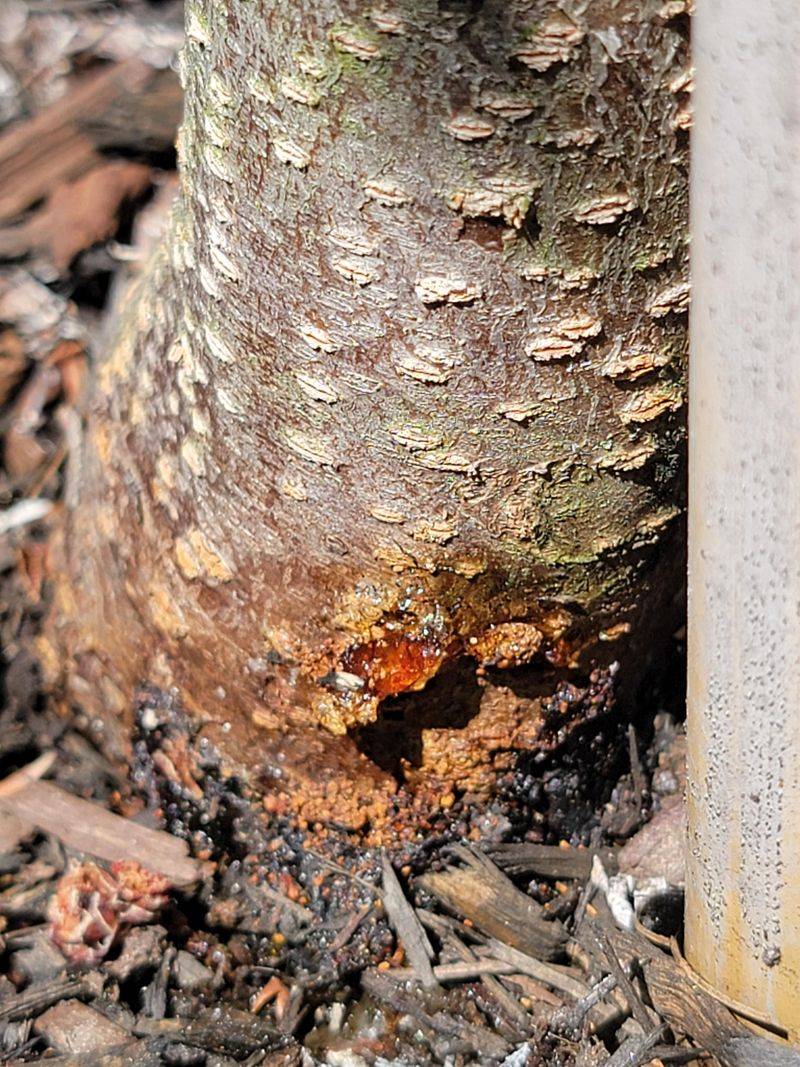
Gum at the bottom of a peach trunk deserves a second look. When it shows up right at or just below the soil line, the likely culprit is the peach tree borer, known to scientists as Synanthedon exitiosa.
Adults are clearwing moths that look a bit like wasps, but the moths are not the problem. Their larvae hatch from eggs laid on or near the trunk, then tunnel beneath the bark near the base of the tree.
As those larvae feed, the tree pushes out sap at the wounds.
That sap hardens into the amber, jelly-like gum you might notice when raking leaves. It can be clear at first, then turn darker and firmer as it sits in the air.
Across Georgia, peach tree borers are one of the most common trunk pests of peaches, and they also attack plums and cherries.
Gum alone is not proof, though. Mechanical injuries from mowers or string trimmers can make a tree ooze too, and some diseases cause gumming as well.
Pay attention to where the gum sits and how much there is.
A small spot above a known scrape may simply be healing tissue. Several gummy patches circling the base, especially on a young tree, are a stronger hint that borers are feeding inside.
Writing down what you see helps you track changes over the next few weeks.
2. Sawdust-Like Frass Mixed With Gum Points Toward Borer Activity
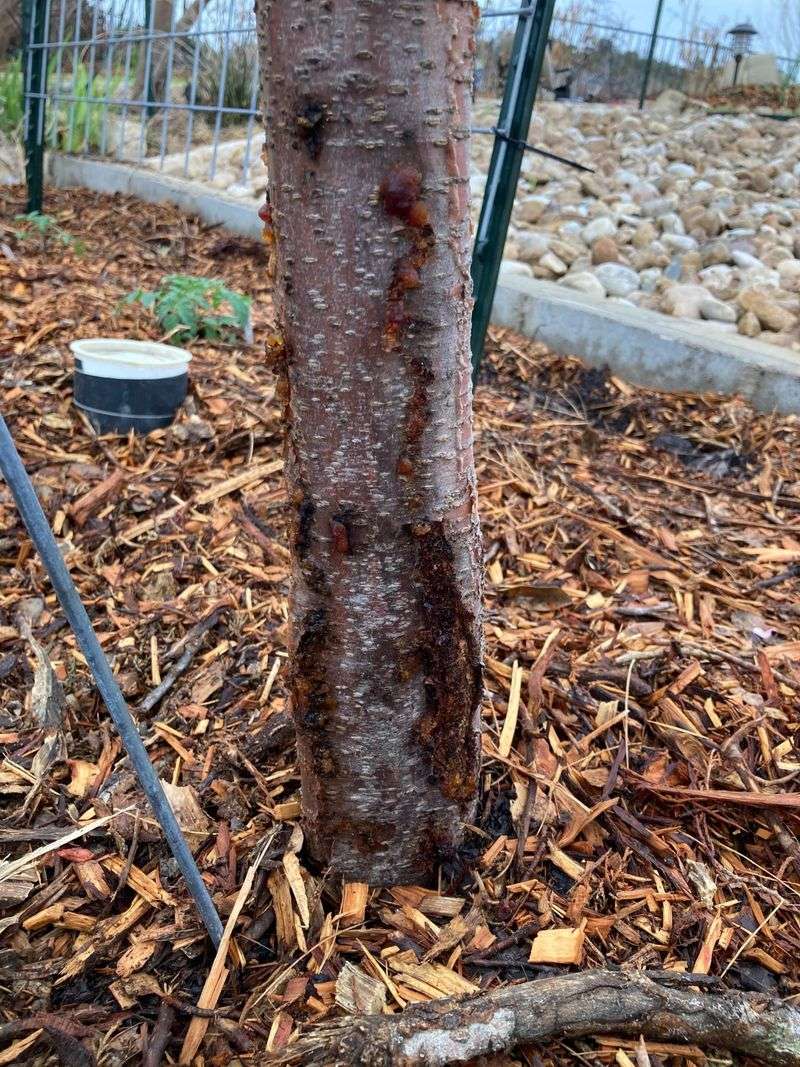
Look closely at that gum, and you might spot tiny bits of brown grit stuck inside it.
Gardeners call this material frass. It is a mix of larval droppings and chewed bark, and it often looks like coarse sawdust or coffee grounds.
When frass is tangled up in the gum, borer feeding becomes a much more likely explanation.
Plain sap from a scrape usually looks clean and glassy by comparison.
Gently pull back a gummy blob with a stick or gloved fingers. If you see crumbly brown material underneath or mixed through it, there may be an active tunnel close by.
Sometimes you can find a small hole in the bark where the frass is coming out.
Your Georgia Garden Changes Every Week. Your Plan Should Too.
Gardening in Georgia changes quickly throughout the season. Every Friday you’ll receive a simple weekly plan showing exactly what to plant, prune, fertilize, harvest, and protect so you never miss the right timing.
Georgia gardeners with clay soil may find the clues partly buried, since mud and frass blend together easily near the soil line.
Brush away a little dirt so you can see clearly. Avoid digging deep around shallow roots, and just expose the top inch or two of the trunk.
Fresh frass tends to look moist and lighter in color.
Older, dry frass may mean feeding happened earlier and the larvae have moved deeper or finished feeding. Comparing spots over a couple of weeks can help you tell whether activity is ongoing.
Snapping a quick phone photo each visit makes those comparisons easier than relying on memory.
3. Check The Trunk Base And Soil Line For Hidden Damage
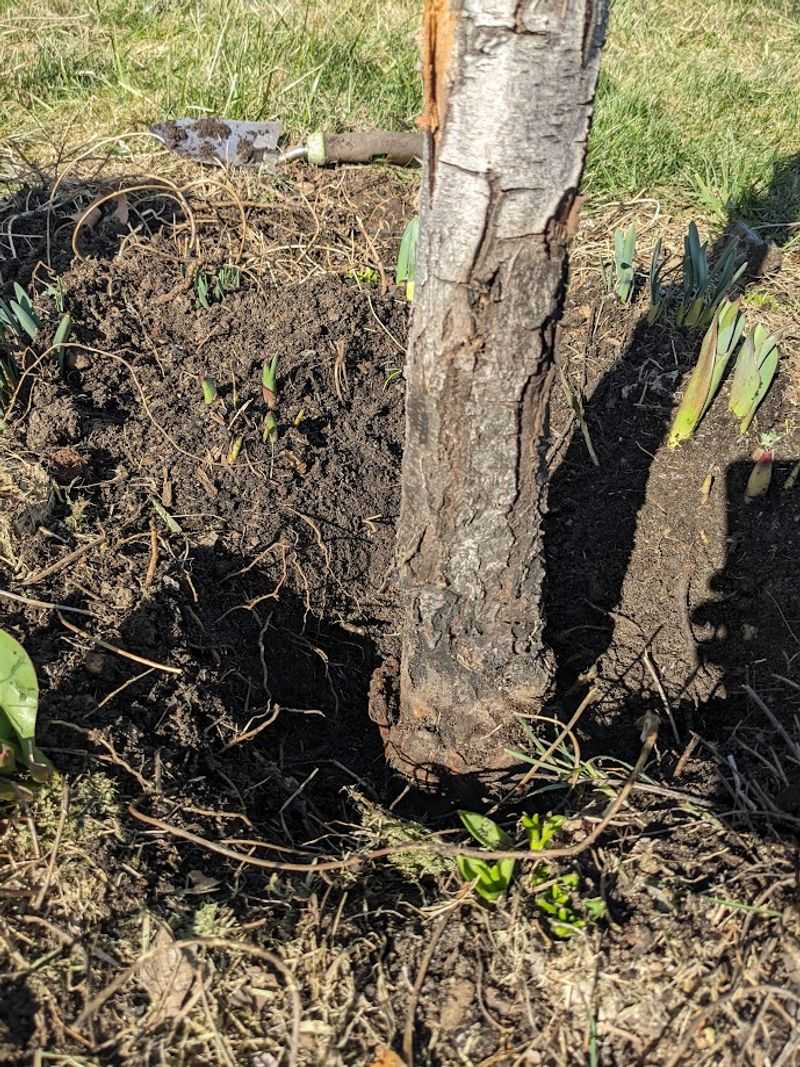
Most borer damage hides where people rarely bother to look.
Peach tree borers usually feed from a few inches below the soil surface to a little above it. Grass, mulch, and weeds piled against the trunk can cover the evidence completely, so clear that area first.
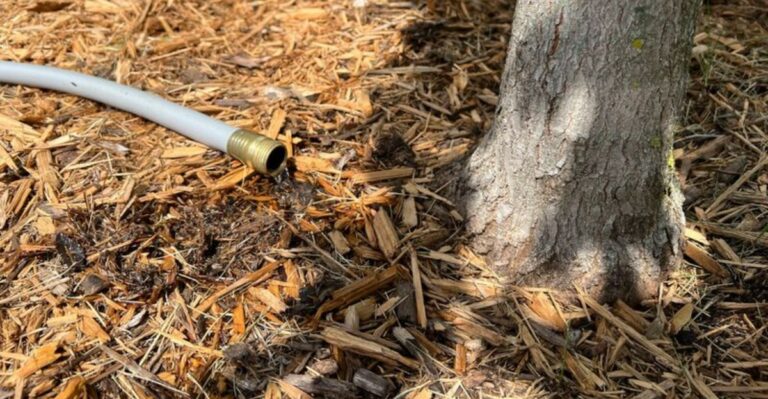
Pull mulch back several inches from the trunk so bare bark is showing.
Next, scrape away the top inch or so of soil with a hand trowel. Work carefully and slowly, since roots near the surface can be tender.
You are looking for gum, frass, soft spots, or bark that seems loose.
Press lightly on the bark with your thumb.
Healthy bark feels firm, while damaged areas may feel spongy or sound hollow. On younger trees, the bark is thin enough that injury is often easier to spot.
Older trees with rough bark can hide tunnels a little better.
Many home orchards in Georgia sit in red clay, which can stick to the trunk and mask damage.
A soft brush and a little water can clean the area enough to see clearly. Once you finish, leave the mulch pulled back a bit, since mulch piled against the trunk can keep bark damp and may make inspections harder.
Checking every tree in your yard, not just the gummy one, gives you a fuller picture.
4. Larvae Tunnel Beneath The Bark And Disrupt Water And Nutrient Flow
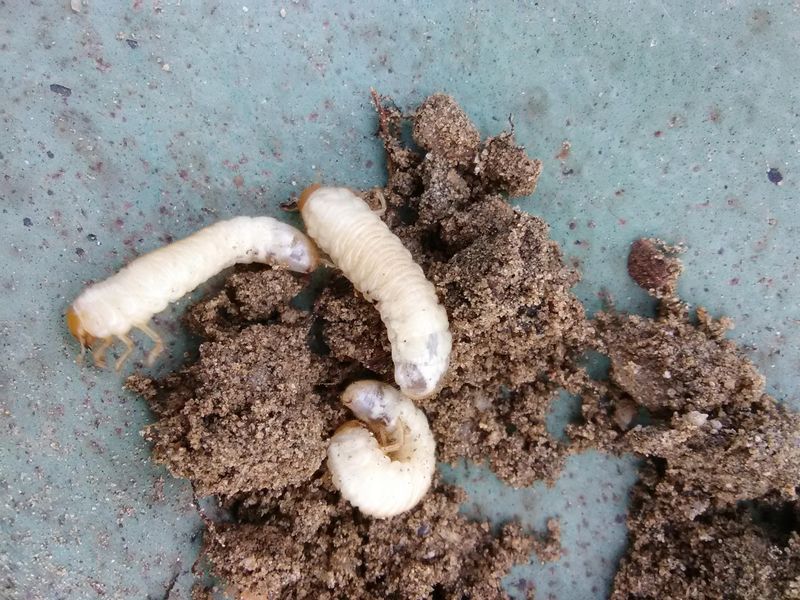
Picture a pipeline with holes chewed through it. That is roughly what happens when borer larvae feed under peach bark.
Just beneath the outer bark sits a thin living layer that moves water, sugars, and nutrients through the tree.
Larvae feed in that inner bark and cambium area, carving out galleries as they grow. The larvae are cream-colored with a brown head and can grow to around an inch long.
When enough tissue gets damaged, the tree struggles to move resources between roots and branches.
Early on, you may not notice much above ground. Over time, heavy feeding can lead to weak growth, pale or thin foliage, and reduced fruit.
Young trees are at higher risk, because their trunks are small and a few larvae can injure a large share of the bark.
In severe cases, larvae can girdle the trunk, which may cause serious decline or loss of the tree.
That outcome is not certain, and it depends on how many larvae are present, the tree’s age, and its overall health. Peach growers in Georgia also deal with drought stress and other pests, which can make borer damage harder on a tree.
Keeping the tree watered during dry spells and avoiding trunk wounds helps it handle some stress, though good care cannot replace managing the borers themselves.
5. Fall Is An Important Time To Look For Signs Of Infestation
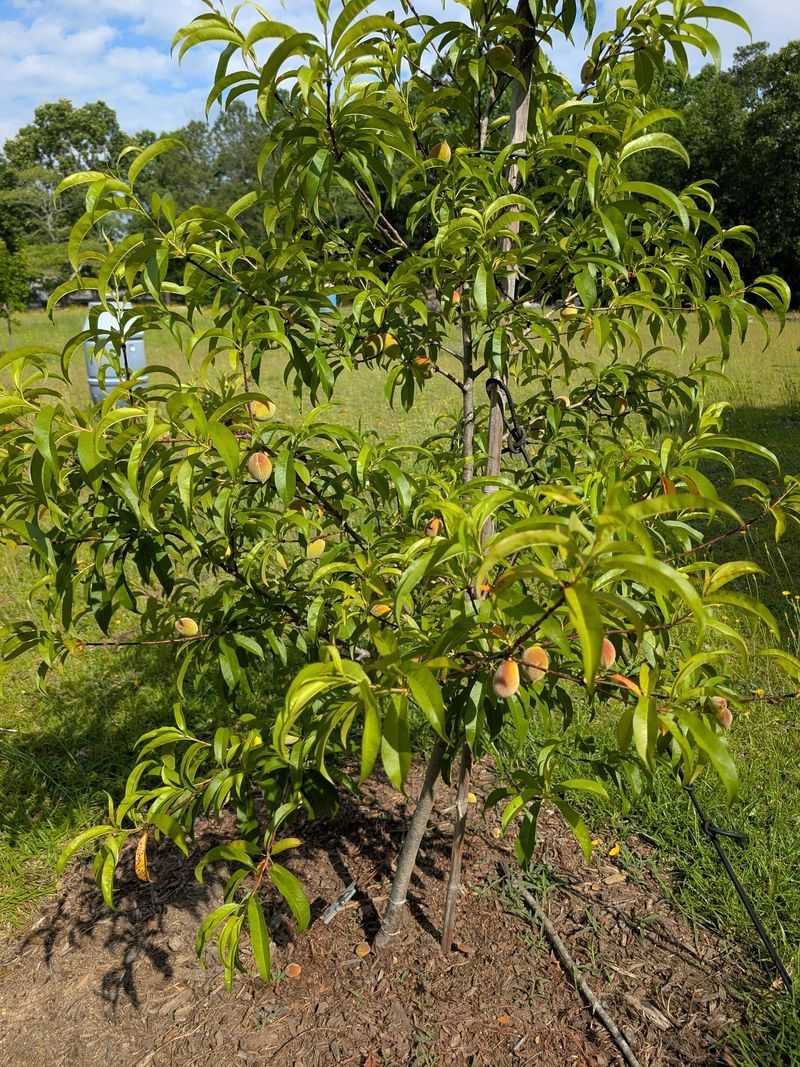
Autumn hands you a clear view that summer hides.
Peach tree borer moths are active and laying eggs from late summer into fall in much of the South. Larvae that hatch then move into the bark and keep feeding until cooler weather slows them, then spend winter inside the tree.
So fresh gum and frass can turn up during fall months.
Leaves dropping and weeds dying back make the trunk base easier to reach and see. Gardeners also tend to have more time after harvest, which makes it a practical season for a careful inspection.
Exact timing in Georgia varies by region and year, so north Georgia and south Georgia may not match.
Weather plays a big role too. A warm fall can stretch moth activity, while an early cold snap may shorten it.
Your county Extension office can tell you what local growers are seeing.
Finding signs now gives you a head start.
You can mark affected trees, note how severe the damage looks, and plan treatment timing for the right window. Some gardeners carefully dig out larvae by hand with a thin wire or knife, though this takes patience and can injure bark if done roughly.
Cutting carefully and only where needed keeps extra wounds to a minimum.
6. Gum Higher On Branches May Have A Different Cause
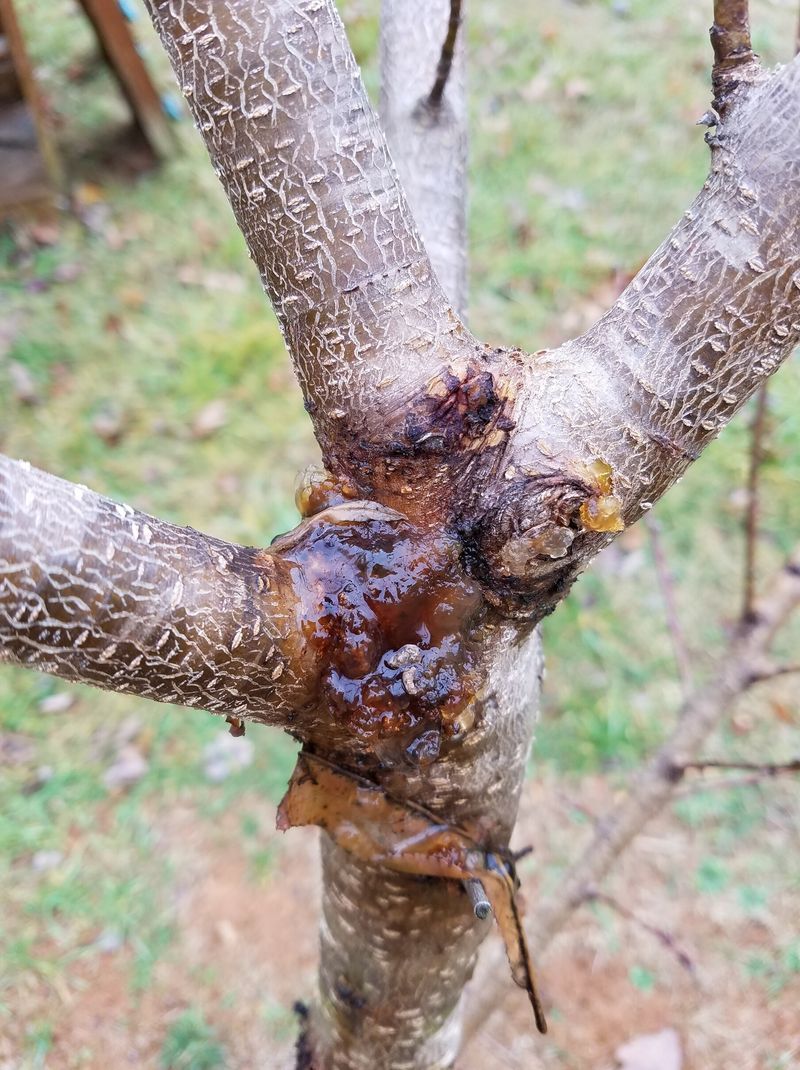
Not every sticky spot is a borer story. Location matters a lot when you are trying to read the clues.
Gum on the upper trunk, limbs, and branch crotches often points to something else.
A close relative called the lesser peachtree borer tends to attack higher up, especially around wounds, cankers, and pruning cuts. Its damage can look similar, with gum and frass, but it shows up well above the soil line.
Diseases can also cause gumming on peaches.
Fungal gummosis and bacterial canker are two examples that can lead to oozing, sunken areas, or blistered bark. Cold injury, sunscald, and mechanical wounds may trigger sap flow as well.
Even heavy pruning cuts sometimes weep for a while.
Clean, frass-free gum on a branch leans toward disease or injury rather than larvae.
Because several problems look alike, getting an accurate answer can save you from using the wrong treatment. Spraying insecticide on a disease issue, for example, wastes time and money.
In Georgia, UGA Extension agents can help identify samples or photos.
When pruning, try to make clean cuts at the right time of year. Fewer ragged wounds give pests and pathogens fewer places to get started.
7. Preventive Treatments Must Be Timed Before Larvae Enter The Bark
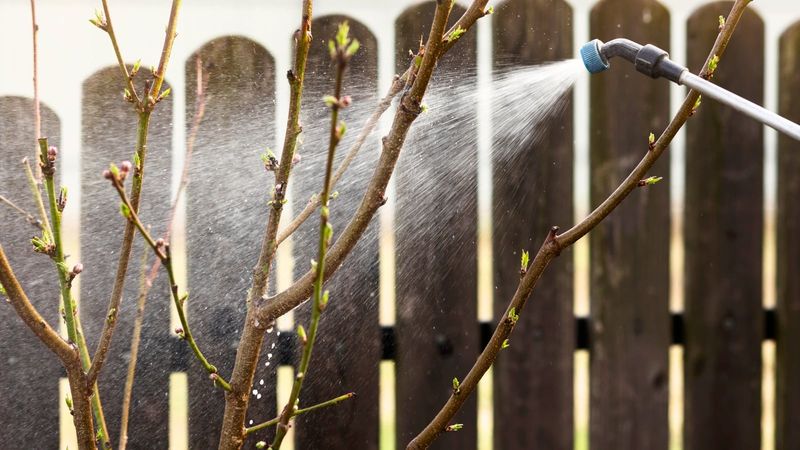
Timing beats strength when it comes to borer control.
Once larvae are safely inside the bark, most sprays struggle to reach them. That is why trunk treatments are aimed at the window when eggs are hatching and young larvae are crawling toward the bark.
Commercial peach growers often apply trunk sprays in late summer or early fall, before most larvae settle in.
Home gardeners can follow a similar idea. Products labeled for peach tree borers are sprayed on the lower trunk, from the soil line up to about a foot or so.
Read the label carefully, because rates, timing, and harvest intervals vary by product.
Some growers also use mating disruption, which involves pheromone ties that confuse male moths.
That approach tends to work better across larger plantings than with a single backyard tree. Results depend on local pest pressure and how consistently the method is used.
Georgia peach timing can shift from north to south, so local guidance matters a great deal.
Your county Extension office or the UGA pest management handbook can point you toward current product options and timing for your area. Wear gloves and eye protection whenever you spray.
Keeping the trunk base clear of weeds and mulch also makes treatments and future checks much easier to do well.