That Foamy Brown Clump Stuck To Your Indiana Shrubs This Fall Is Worth Leaving Alone
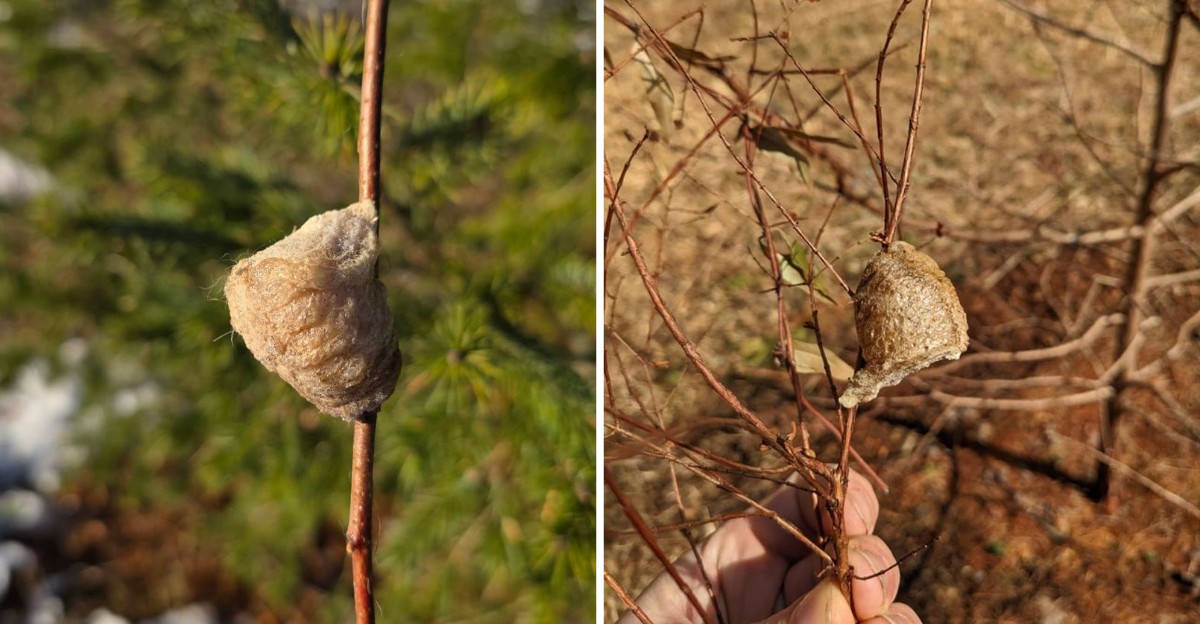
A lump of hardened foam on your shrub branch can hold more than two hundred baby insects waiting for spring. I was amazed to learn that the female builds it in fall, forming the foam around her eggs as she lays them.
The case starts out soft and bubbly, then dries into a tough tan shell within a few hours. That shell protects the eggs from Indiana snow, ice, and hungry birds until warm weather finally returns in May.
You will often find these clumps on shrub twigs, fence boards, tall plant stems, and even porch railings. Many people snip them off during fall pruning without realizing what they just tossed into the yard waste bin.
I believe October is the perfect month to slow down and look closely at every branch before you cut. Who knew a small brown blob could be one of the busiest pest control crews in your garden?
1. An Egg Case Holding Hundreds Of Spring Hatchlings
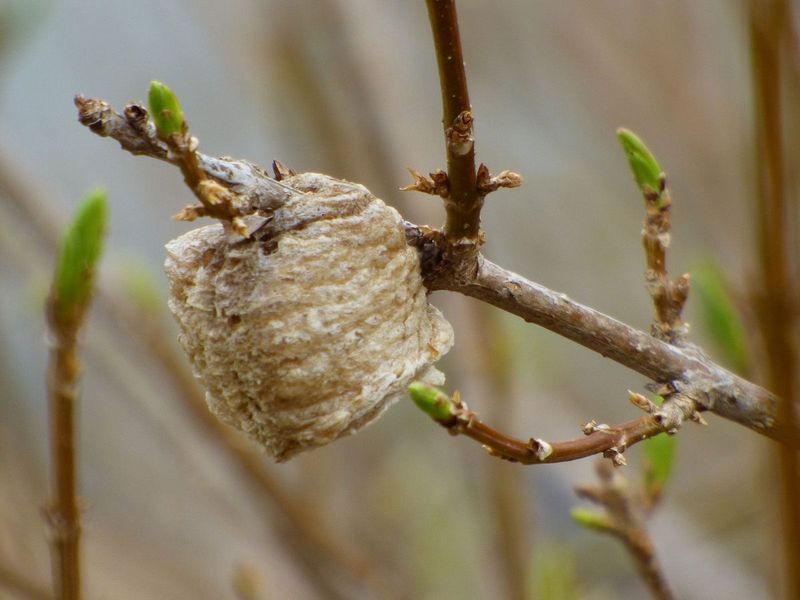
That foamy brown clump is most likely a praying mantis egg case, which scientists call an ootheca. A female mantis makes it in early fall, and it can hold anywhere from one hundred to four hundred eggs.
Leaving it on your shrub gives all those eggs a fair chance to hatch when spring warmth arrives. Purdue University entomologists describe mantids as helpful general predators, so most gardeners have good reason to keep them.
Each egg sits in its own tiny chamber inside the case, stacked in neat rows like seats in a stadium. The female usually builds only one or a few cases before cold weather arrives.
Adult mantids do not make it through an Indiana winter, so the egg case is how the next generation continues. That means one small clump on your forsythia or boxwood could add a new generation of insect hunters to your yard.
You can spot one by its size, which is usually about one to two inches long. The color ranges from light tan to warm brown, and the surface often looks like dried craft foam.
Some people mistake them for fungus, cocoons, or bits of spray insulation stuck on the branch. Once you know the shape, you will start noticing them on walks around the neighborhood each fall.
Scientists who carefully slice a case open find pale eggs packed in layers, but home gardeners should leave them sealed. A sealed case keeps moisture balanced and helps protect the eggs from mold and freezing wind.
2. A Hardened Shell Built To Last Through Winter Cold
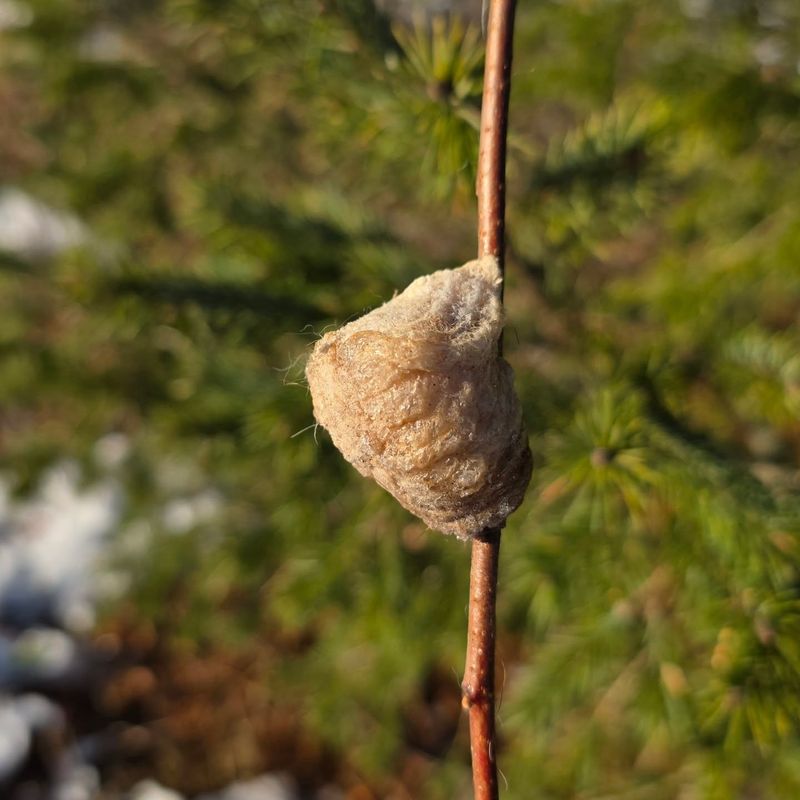
Freshly laid, the case looks like whipped meringue, because the female beats a liquid protein into froth with her abdomen. She lays her eggs inside that froth in rows, then covers them with more foam before it sets.
Within a few hours, the foam hardens into a material that feels a lot like stiff packing foam. Tiny air pockets trapped inside work like insulation, which helps buffer the eggs against sudden temperature swings.
Indiana winters can bring single-digit nights, yet healthy mantis eggs often come through in fine shape. The eggs enter a resting state called diapause, so they stay inactive until longer days and warmth return.
Your Indiana Garden Changes Every Week. Your Plan Should Too.
Gardening in Indiana changes quickly throughout the season. Every Friday you’ll receive a simple weekly plan showing exactly what to plant, prune, fertilize, harvest, and protect so you never miss the right timing.
That resting stage is also the reason you should not bring a case indoors for the winter. Warm house air can trigger an early hatch, and the babies would emerge in January with nothing to eat.
The shell does have limits, though, and woodpeckers or chickadees sometimes peck into cases during lean winter weeks. Tiny parasitic wasps can also slip eggs inside, so not every case you find will produce a hatch.
Still, a firm, unbroken case on a sturdy twig has a solid chance of making it to spring. You can test firmness by pressing lightly with a fingertip, and a healthy case should barely give.
Small round holes in the surface usually mean parasitic wasps have already emerged, and thin slits along the case mean the nymphs have hatched, so that case is already empty. An empty case can stay on the branch for months, so do not judge by color alone.
3. A Non-Native Species Behind Most Indiana Egg Cases
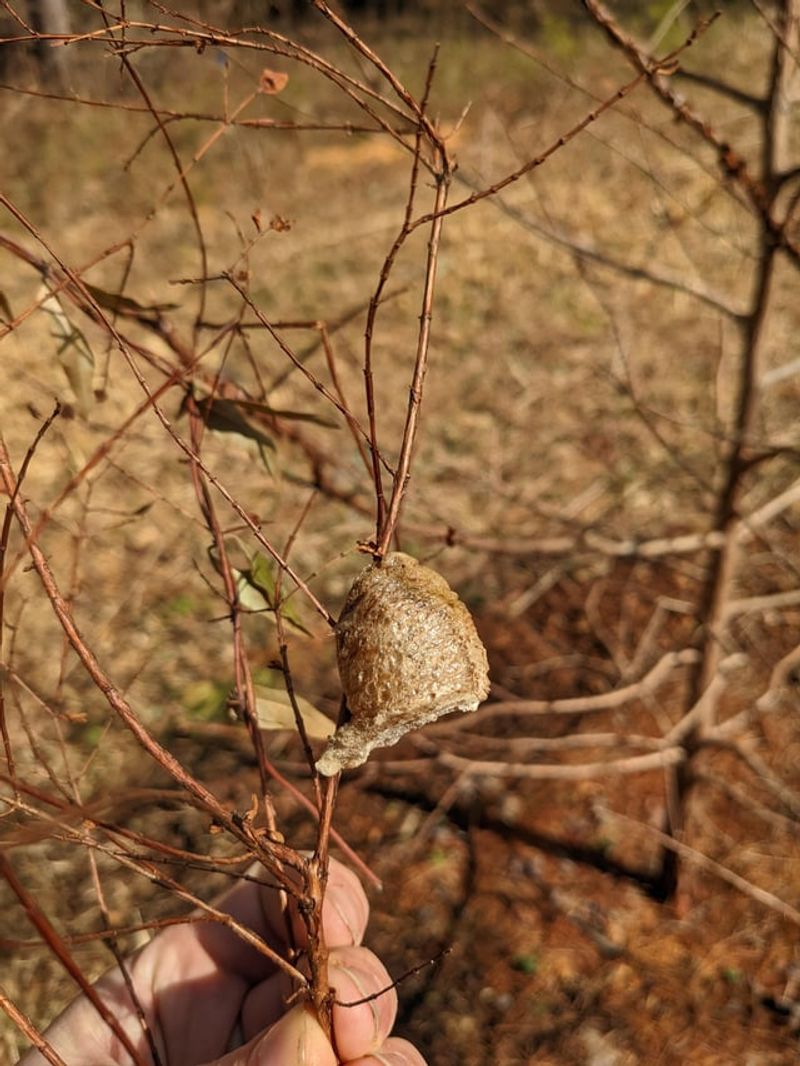
Many egg cases Indiana gardeners find in fall belong to the Chinese mantis, a large species brought from Asia. It arrived near Philadelphia around 1896, likely on nursery plants, and later spread across much of the eastern United States.
Chinese mantis cases are roundish and puffy, about the size of a walnut, and usually wrapped around a twig. The European mantis, another import, leaves a smaller, flatter case often stuck to fences, walls, or stones.
Indiana also has a native species, the Carolina mantis, which is reported mostly in the southern counties. Its egg case is long, slim, and tan, with a faint stripe running down the middle.
Researchers still debate whether the big Chinese mantis crowds out the smaller native species in some areas. Studies have not settled the question, so many extension experts suggest a balanced, hands-off approach for now.
Chinese mantis cases are also sold online and at garden centers, which is one way the species keeps spreading. I think it makes more sense to protect the mantids already living in your yard than to buy more.
Snapping a clear photo of any case you find can help you identify which species is visiting your shrubs. Free apps like iNaturalist let you share sightings, and those records help scientists track where each mantis lives.
Your backyard photo might add a small but useful piece to a bigger statewide puzzle about these insects. Even a quick picture taken with a phone during an October walk can be accepted as a record.
4. Tiny Nymphs Emerging In Late Spring
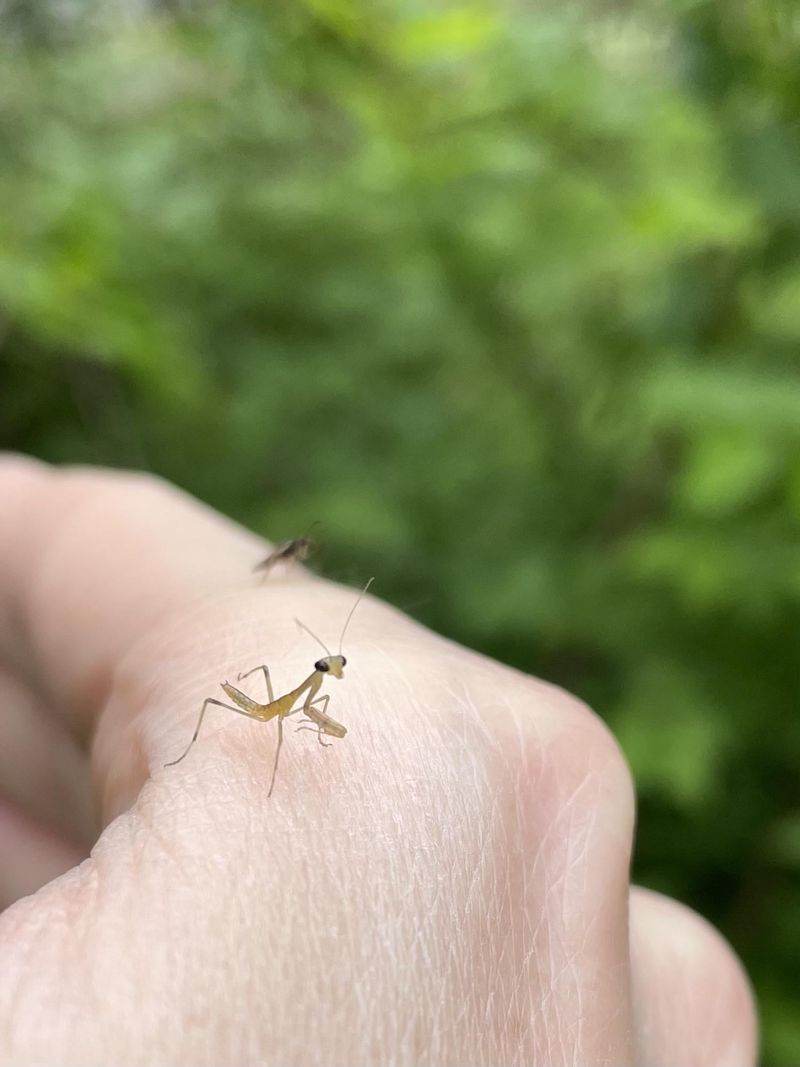
Come late May or early June, a single case can release a wave of tiny mantids within a few hours. The babies, called nymphs, wiggle out of the case on silk-like threads and dangle there while their bodies firm up.
Each nymph looks like a miniature adult, less than half an inch long and without any wings. They scatter fast, because staying close together would leave them within reach of one another.
Only a small share of those hatchlings reach adulthood, which is perfectly normal for most insects in the wild. Birds, spiders, ants, and even other mantids snack on the young ones during their first few weeks outside.
The survivors start out eating aphids, fruit flies, and other soft, tiny insects found on leaves. As they grow, they shed their skin several times and move on to bigger prey through the summer.
By late August, many Chinese mantids reach three or four inches long and finally grow full wings. Adults mate in September, and the females then build fresh cases like the one you may be looking at now.
Knowing this cycle helps you plan, since the case you spot in October will not open for months. Mark the shrub in your mind or with a garden tag so you can watch for the spring hatch.
Kids often love checking on a case each week, and seeing the hatch can be a memorable family moment. Just remind them to watch quietly from a short distance, since the nymphs are fragile during their first hours.
5. Garden Predators With An Appetite For Almost Any Insect
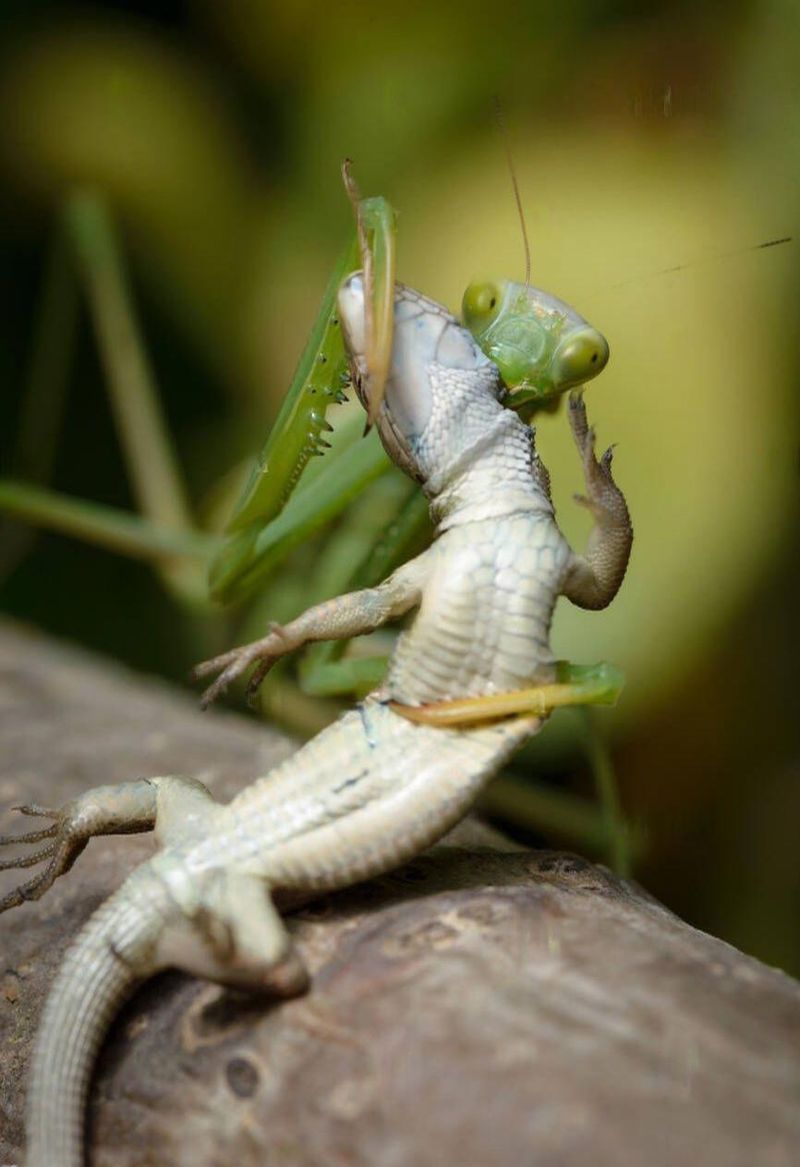
Give a mantis a chance, and it will grab almost anything that wanders within reach of those spiky front legs. Mantids are ambush hunters, so they sit very still on stems and flowers, waiting for prey to come close.
On the menu you might find caterpillars, grasshoppers, beetles, flies, moths, and the occasional crop-chewing stink bug. That sounds great for your garden, but mantids are not picky eaters, so they also catch helpful insects.
Honeybees, butterflies, and even ladybugs can end up as lunch if they land near a waiting mantis. Large Chinese mantids can also catch bigger prey than most people expect, so it helps to keep them away from busy flower and feeder areas.
Extension entomologists describe mantids as generalists that eat what they catch, rather than targeted helpers for one specific pest problem. In other words, they help keep insect numbers balanced, but they will not solve an aphid outbreak alone.
I still enjoy having them around, because a garden with many predators tends to be a healthier, steadier place. Spiders, ground beetles, lacewings, and birds all share the work, and mantids simply add another layer of help.
Fun fact, a mantis can turn its head about 180 degrees, which lets it look over its own shoulder. Few insects can do that, and it helps the mantis track moving prey without shifting its body at all.
Skipping broad insecticide sprays near shrubs with egg cases gives next year’s hatchlings a better start. Those sprays can harm young mantids along with the very insects they would have eaten for you.
6. A Careful Fall Cleanup Around Egg Cases
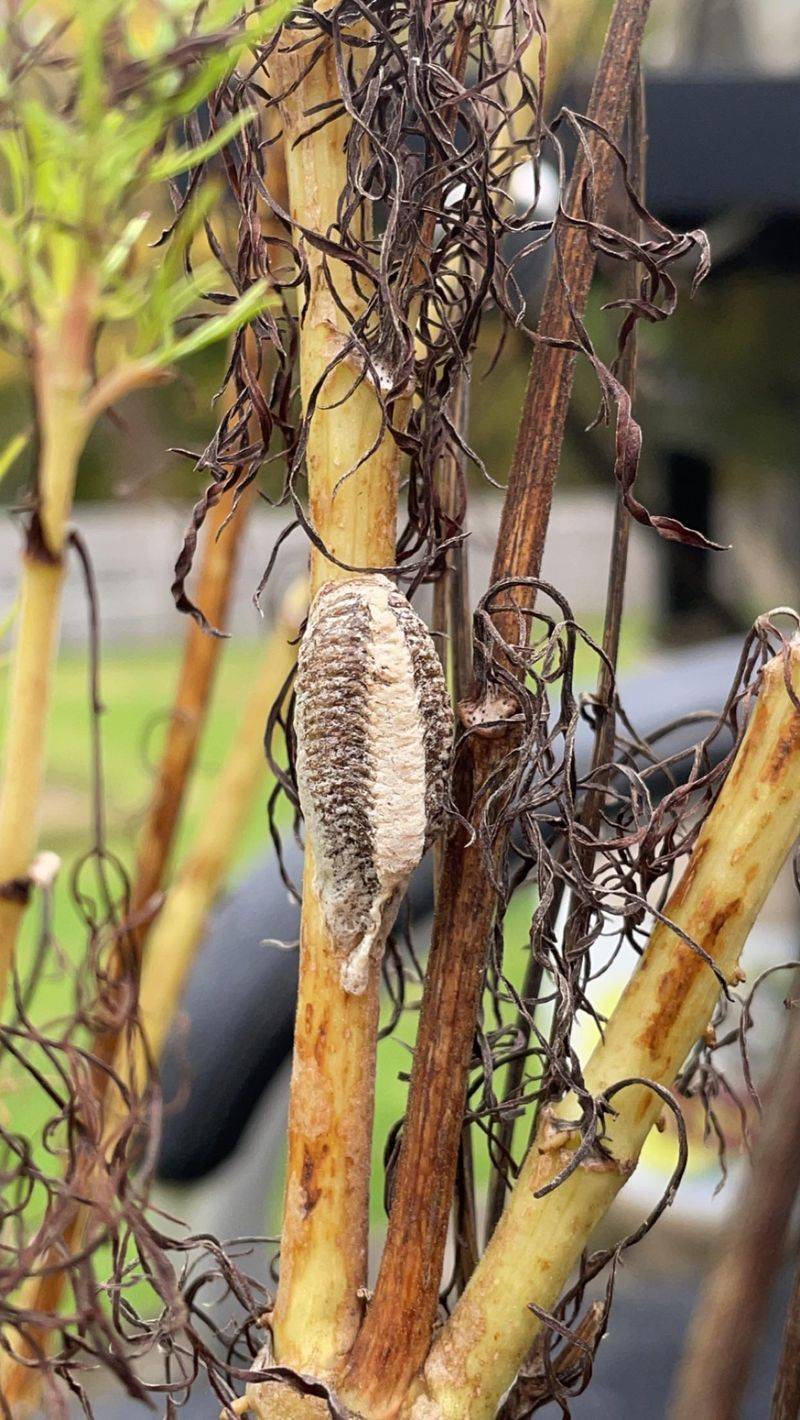
October pruning is where many egg cases get lost, so a slow, careful look at each shrub pays off. Before you trim, scan branches, fence posts, and dried flower stalks for those tan, foamy lumps.
If a case sits on a branch you need to remove, cut the twig a few inches on either side. Then tie or wedge that piece onto another shrub at roughly the same height, with the case facing outward.
Keep the original upright position if you can, since the nymphs crawl out and hang down when they hatch. Avoid tucking cases into a closed jar or bag, because trapped hatchlings may eat each other quickly.
Tall perennial stems can also hold cases, so consider leaving a few standing until your spring cleanup. Many extension services already suggest this habit, since standing stems shelter bees and other helpful insects over winter.
Got a case on your house siding or a spot where it truly cannot stay, like a gate hinge? Gently pry it loose with a putty knife and press it into a fork of a nearby bush.
Some gardeners also bind the case lightly with string, which holds it firm through winter winds. Avoid piling mulch or leaves over a case, since damp cover can invite mold and hungry mice.
A little patience this month means your shrubs could host a fresh crew of insect hunters next June. Leaving those odd brown clumps in place is one of the easiest favors you can do for your garden.