This Wasp-Looking Insect In Georgia Yards Is Actually A Fly That Hunts Other Insects
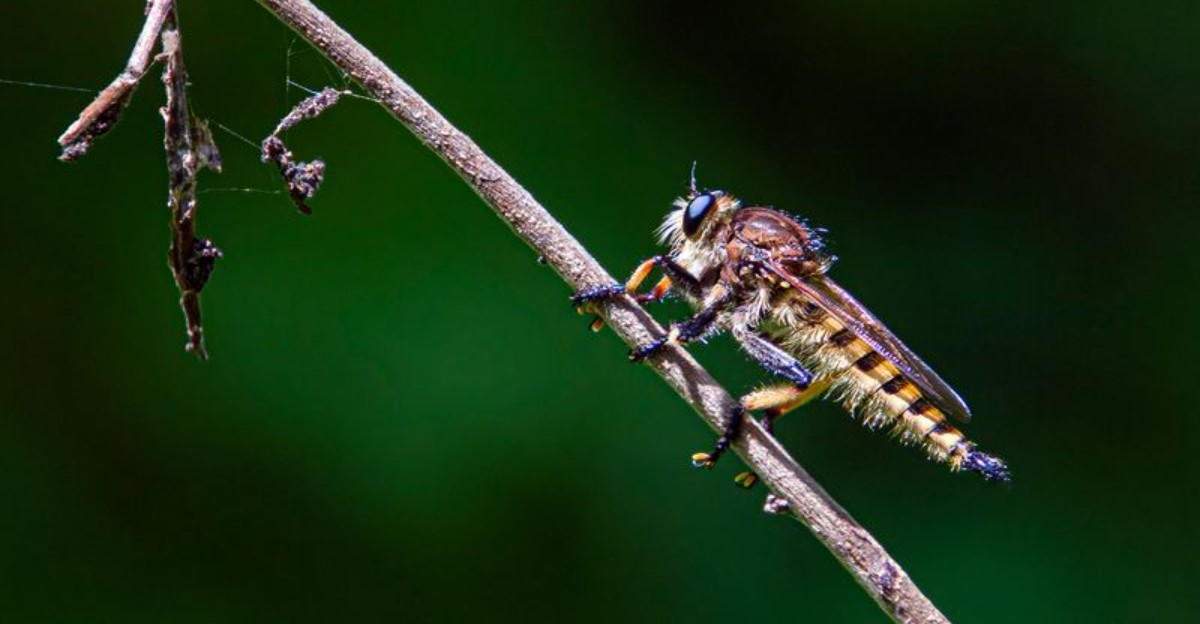
Not every yellow-and-black insect hovering around your flowers is a wasp. Some flies have markings so convincing that it’s easy to mistake them for something capable of stinging.
You might even find yourself backing away before realizing the insect behaves a little differently.
Certain predatory flies resemble wasps while spending much of their time searching for other insects. Their appearance can be intimidating, but their hunting habits make them interesting visitors to observe.
In Georgia, these insects may turn up in gardens, open yards, and other places where suitable prey is available.
Their quick movements and unusual body shapes can make identification tricky, especially when you only catch a brief glimpse.
Before assuming every wasp-like visitor is a nuisance, it’s worth knowing which features set these flies apart and what role they play around your plants.
1. This Wasp-Looking Hunter Is Actually A Robber Fly
Big, loud, and striped, the insect on your porch rail looks ready to sting. It belongs to the robber fly family, a group of flies known for catching other insects in flight.
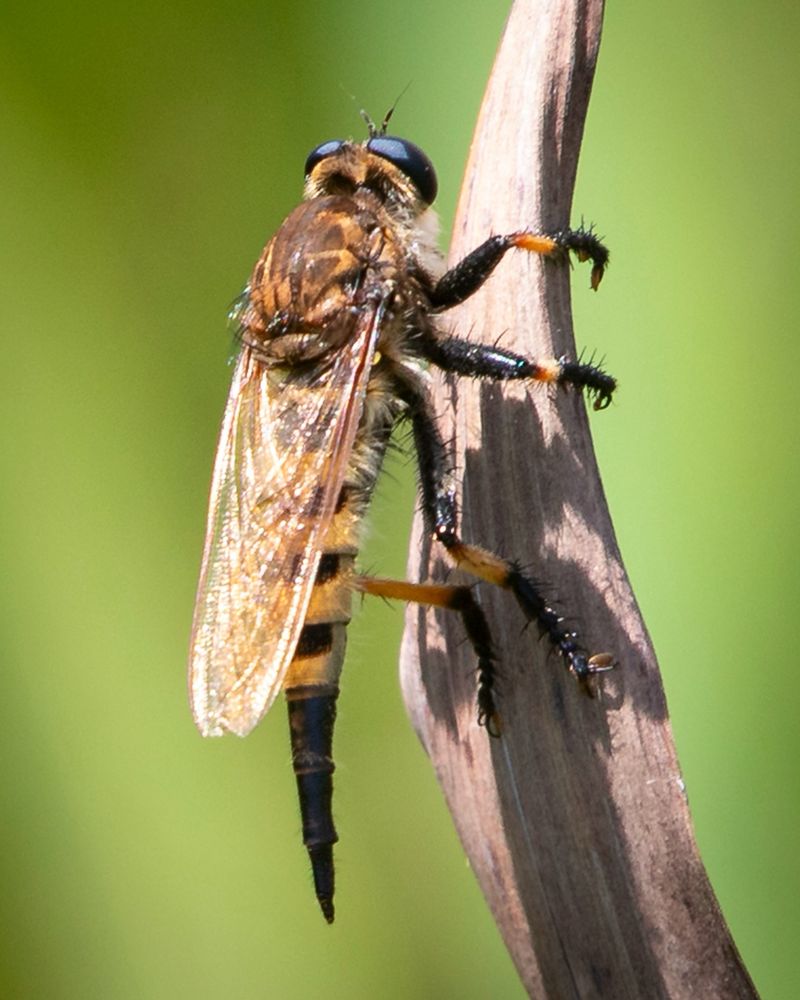
Its proper name is the Red-Footed Cannibalfly, or Promachus rufipes. Some people also call it the Bee Panther because of its taste for bees.
Robber flies are true flies, which means they have only two wings instead of four.
Wasps and bees carry two pairs of wings, so counting them is a handy way to tell the groups apart. You can also check the eyes, since robber flies have large eyes set wide on the head.
A tuft of stiff bristles often sits on the face of a robber fly, giving it a mustached look.
Size is another clue worth noticing. Red-Footed Cannibalflies are fairly large, often around an inch or a bit more in length, with a long, tapered abdomen.
Across Georgia, this species is one of the more noticeable robber flies in yards near woodland edges.
Watching from a few feet away is usually safe. Like many insects, it may bite if grabbed or trapped, so it is best to observe without handling it.
2. Red Foot Pads Give This Predator Its Unusual Name
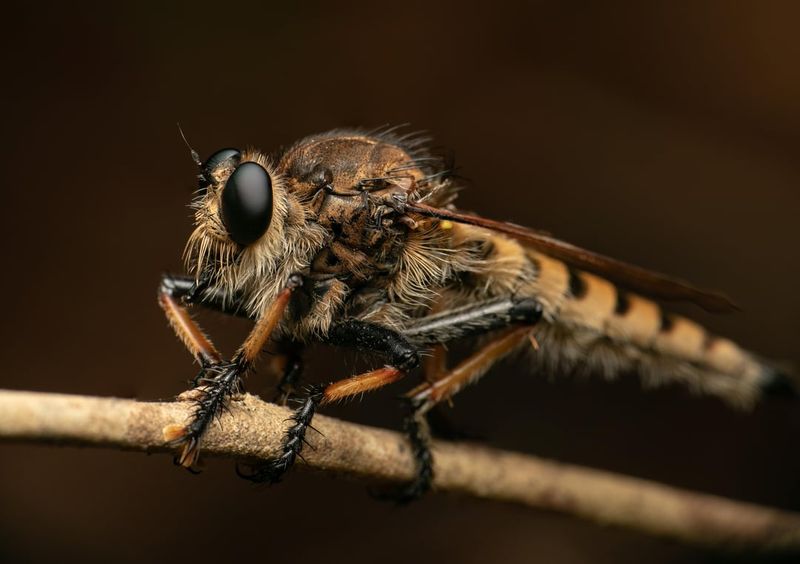
Look at the legs, and the name suddenly makes sense. Red-Footed Cannibalflies have legs with reddish to reddish-brown coloring, which stands out against the darker body.
Color can vary a little from one fly to the next.
Lighting also plays a part, so a fly in bright sun may look redder than one sitting in shade. A clear photo often shows the legs better than a quick look with your eyes.
The cannibal part of the name comes from its diet. Robber flies sometimes catch other robber flies, and this species is known to do the same.
Its body has a hairy thorax and a dark abdomen marked with pale bands that can resemble wasp stripes.
Here in Georgia, a few other large robber flies share similar shapes. Some related Promachus species look much alike, so the leg color is a helpful, though not perfect, clue.
If you want a sure identification, snap a sharp picture from the side.
You can then compare it with photos from your county Extension office or an insect identification website. Getting the legs, wings, and abdomen in one shot gives you the best chance of an accurate match.
3. Bees And Wasps Are Among The Insects It Hunts
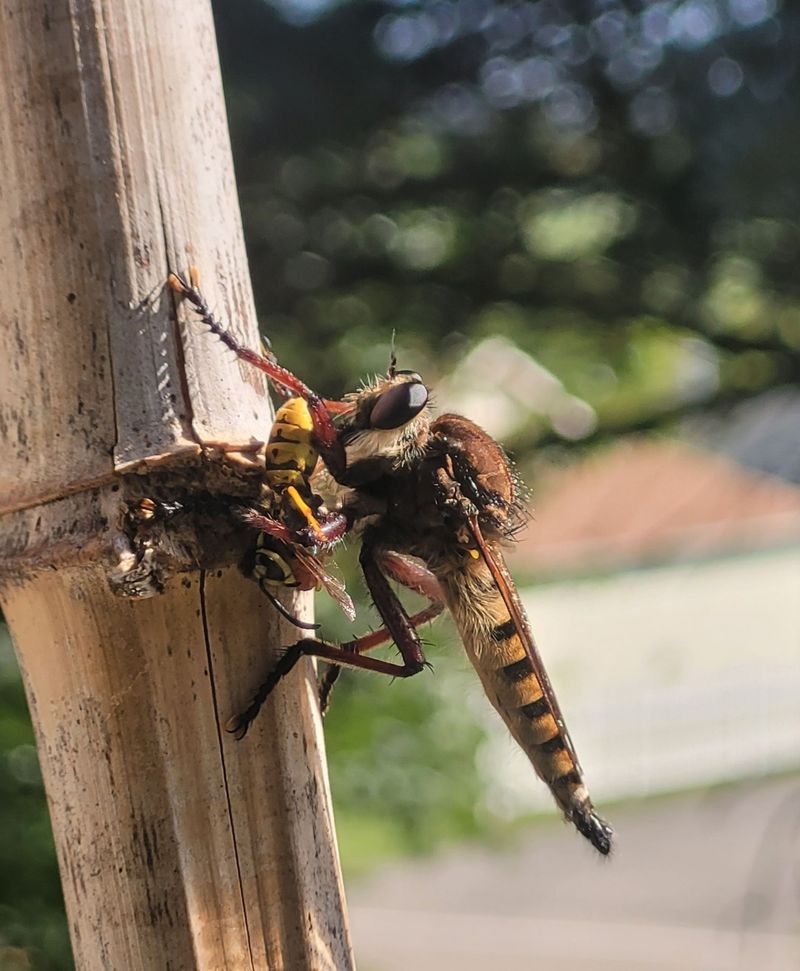
Honey bees make up a well-known part of its menu, which explains the Bee Panther nickname.
Beekeepers sometimes notice these flies waiting near hives. Most hives can handle the loss of a few workers, though heavy activity near one spot may still catch a keeper’s attention.
Wasps, bumble bees, and other flying insects are also on the list.
Large beetles, grasshoppers, and dragonflies may be taken too. Robber flies tend to grab whatever suitable insect flies within reach, rather than picking only one type.
So is it a friend or a foe in your yard?
Honestly, it is a bit of both. It removes some pest insects, but it also takes pollinators that many gardeners in Georgia work hard to attract.
One fly in a flower bed usually has a small overall effect on local insect numbers.
Spraying insecticide to remove robber flies is generally not recommended. Sprays can harm bees and butterflies far more than the flies ever would.
A better approach is to keep plenty of blooms in your garden through the season. Healthy pollinator populations can usually handle a few natural predators around them.
4. It Waits On Vegetation Before Ambushing Passing Insects
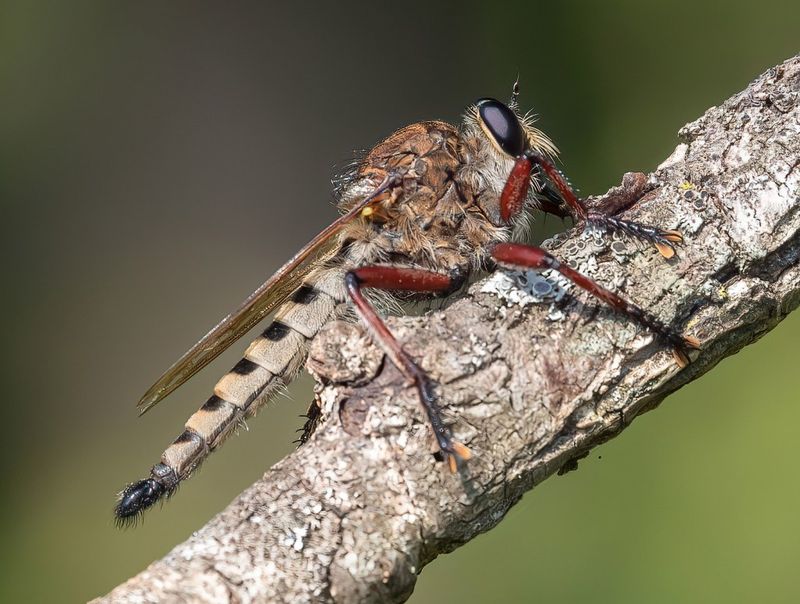
Patience is its secret weapon. Rather than chasing prey all day, it picks a good lookout and sits very still.
Favorite perches include tall weeds, shrub tips, branches, fence posts, and even stones in sunny spots.
When an insect flies past, the fly launches out fast. It often returns to the same perch or a nearby one to eat its catch.
Sunny openings near woods tend to be popular places to find it.
Yard edges, field borders, and power line clearings in Georgia can offer this mix of sun, cover, and passing insects. Gardens next to wooded lots may see more visits than open lawns in the middle of a neighborhood.
Want to watch one in action?
Move slowly and keep your shadow off the fly. Sudden motion often sends it zipping to a new perch, and it may circle back after a minute or two.
Leaving a few tall stems or a native shrub border can give robber flies and many other insects places to rest. Results depend on your yard, since nearby habitat and weather also shape which insects show up.
5. Strong Legs Help Grab Prey During Flight
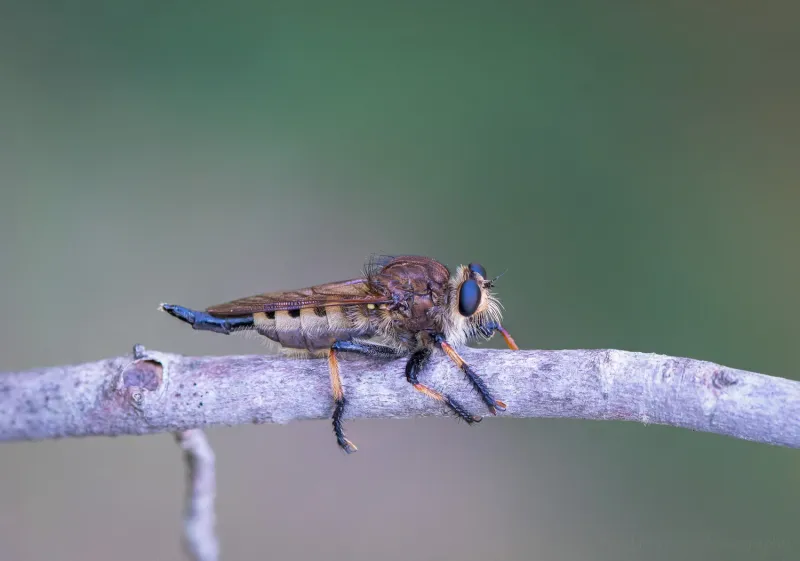
Few flies grab dinner in midair, yet robber flies do it routinely.
Their legs are long, sturdy, and covered with spiny bristles. Those bristles help the fly hold onto prey that kicks, twists, or tries to sting.
Picture a tiny basket formed by six legs closing around a flying bee.
That is roughly how the capture works. The fly reaches forward with its legs, snags the insect, and pins it close to its body before landing.
Sharp vision helps make these quick strikes possible, since those large eyes can track motion well.
Hooked claws and small pads on the feet also help the fly cling to smooth stems and leaves. That grip lets it land and feed even on a swaying plant.
Gardeners in Georgia often notice the flight before the fly itself. A loud buzz and a sudden dart past your face may be a robber fly heading back to its perch.
Catching one with your hands is a poor idea.
Those same strong legs and its sharp mouthparts can make handling uncomfortable. Use a camera or binoculars instead to enjoy the view up close.
6. Paralyzing Saliva And Digestive Enzymes Liquefy Its Meal
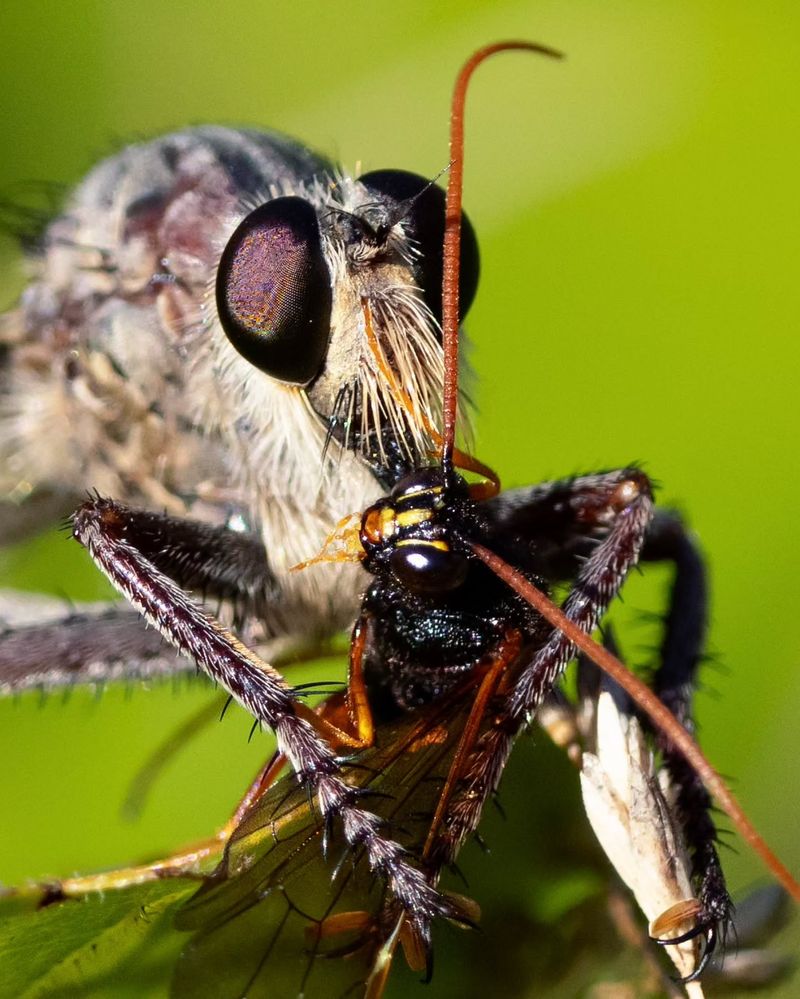
Chewing is not part of the plan. Robber flies feed through a short, stiff mouthpart called a proboscis, which works a bit like a sharp straw.
Once prey is caught, the fly pierces it, often near the head or a soft joint.
Saliva injected through the proboscis contains substances that quickly stop the prey from struggling. Enzymes in that saliva also begin breaking down the insect’s insides.
After that, the fly sips up the liquefied meal.
What remains is often an empty-looking shell of the prey. If you find bee or beetle husks under a regular perch in Georgia, a robber fly could be one possible reason, though spiders and other predators leave remains too.
Feeding can take a while, so a fly holding prey often sits still longer than usual.
That calm moment is a great time for photos. Approach slowly, stay low, and avoid touching the plant it rests on.
People sometimes worry about that saliva. A bite from a handled robber fly can be painful, but these flies are not known to be a serious health threat when left alone.
7. Late Summer And Early Fall Are Prime Times To Spot It
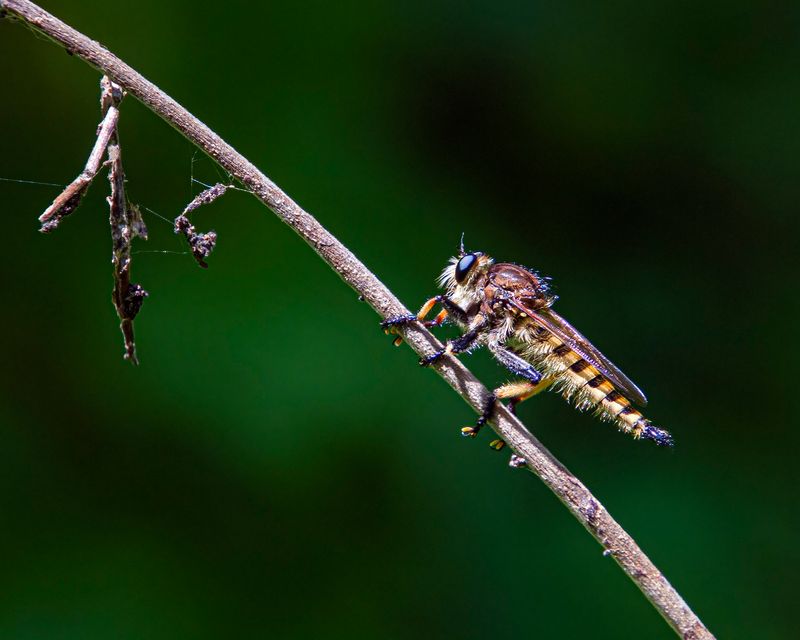
Summer heat brings the best viewing season. Adult Red-Footed Cannibalflies are commonly reported from mid to late summer, and some linger into early fall.
Timing can shift with weather and location.
Warmer areas of south Georgia may see adults earlier or later than cooler spots in the northern mountains. A wet, cool stretch can also reduce how active they appear on a given day.
Bright, warm afternoons tend to be good times to look.
Check sunny edges where flowers bloom and other insects gather. Goldenrod, asters, and other late bloomers attract bees, and hunters often follow the food.
Young robber flies live out of sight in soil or decaying wood, where they feed on other insect larvae. Adults are the stage most people notice, and their season is fairly short.
Leaving some leaf litter and fallen logs in a quiet corner may support the young stages of many beneficial insects. Results vary, since soil, nearby habitat, and weather all play roles.
Next time a wasp-like buzz passes by, pause before swatting.
Count the wings and check the legs. You might be looking at a fascinating fly that has been sharing your yard all along.