Georgia Bald Cypress Trees Are Losing Their Needles This Fall And Here’s Why
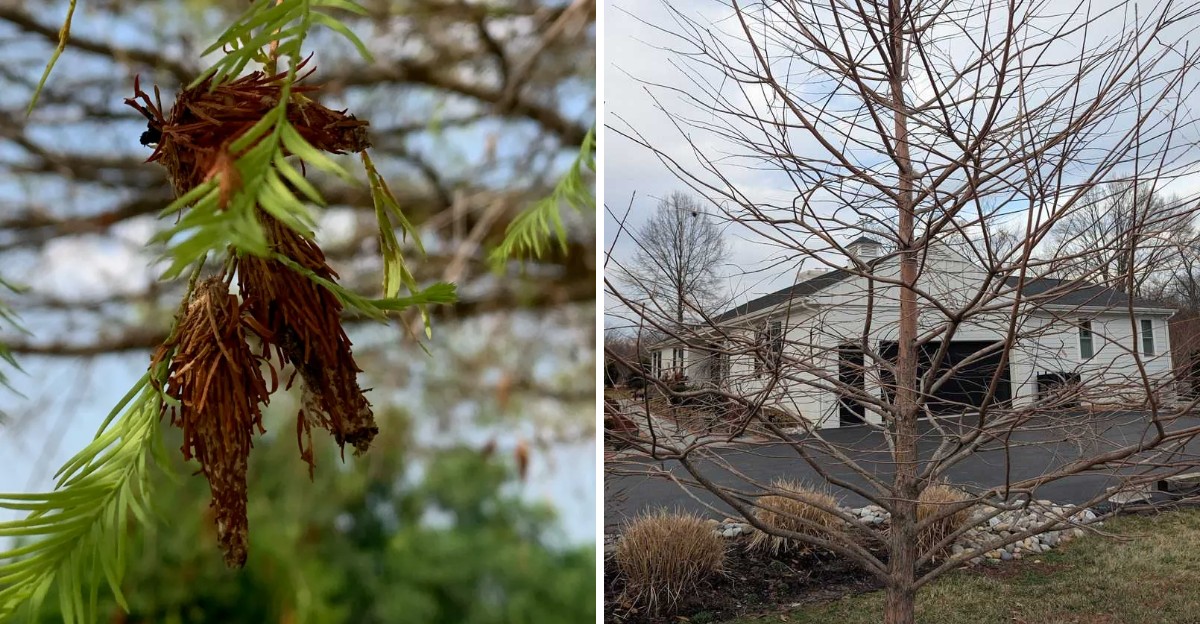
Seeing a bald cypress turn rusty brown can be alarming if you’re used to evergreen trees staying green through winter. One week its feathery foliage looks healthy, and before long, needles begin collecting beneath the branches.
It’s easy to mistake that change for a sign that something has gone wrong.
Unlike most familiar conifers, bald cypress trees follow a different seasonal pattern. Their appearance changes dramatically as temperatures cool, sometimes leaving homeowners wondering whether their tree is struggling.
In Georgia, this transformation becomes especially noticeable during fall, when other trees are also changing color.
But how can you tell a normal seasonal change from a genuine problem?
The timing, appearance, and overall condition of your tree can offer useful clues. Knowing what to expect helps you avoid unnecessary treatments while recognizing when a bald cypress actually needs care.
1. Rusty Brown Needles Are Often Part Of A Normal Fall Change
Rust is a good color on a bald cypress in November. When the needles shift from green to a warm reddish brown, the tree is usually doing exactly what it is built to do.
Shorter days and cooler nights signal the tree to slow down for winter.
As that happens, the green pigment in the needles breaks down and fades away. Other colors that were hiding underneath start to show, which gives the tree its coppery look.
In Georgia, this change commonly shows up from late October into November, though the exact timing can shift with weather and location.
Trees in the north Georgia mountains may color a bit earlier than trees near the coast. A warm fall can also push the change later, while an early cold snap can speed it up.
So how do you tell normal fall color from trouble? Look at the whole tree rather than one branch.
Healthy seasonal browning tends to happen fairly evenly across the canopy over a few weeks.
Patchy browning on just one side, or on a single limb, may point to something else. Broken roots, construction damage, or a localized pest problem are a few possibilities worth checking.
If the color looks even and the season fits, the best plan is usually to enjoy the view. Rake up the needles if you like, or leave them as a light mulch under the tree.
2. Bald Cypress Is A Conifer That Sheds Its Needles Every Year
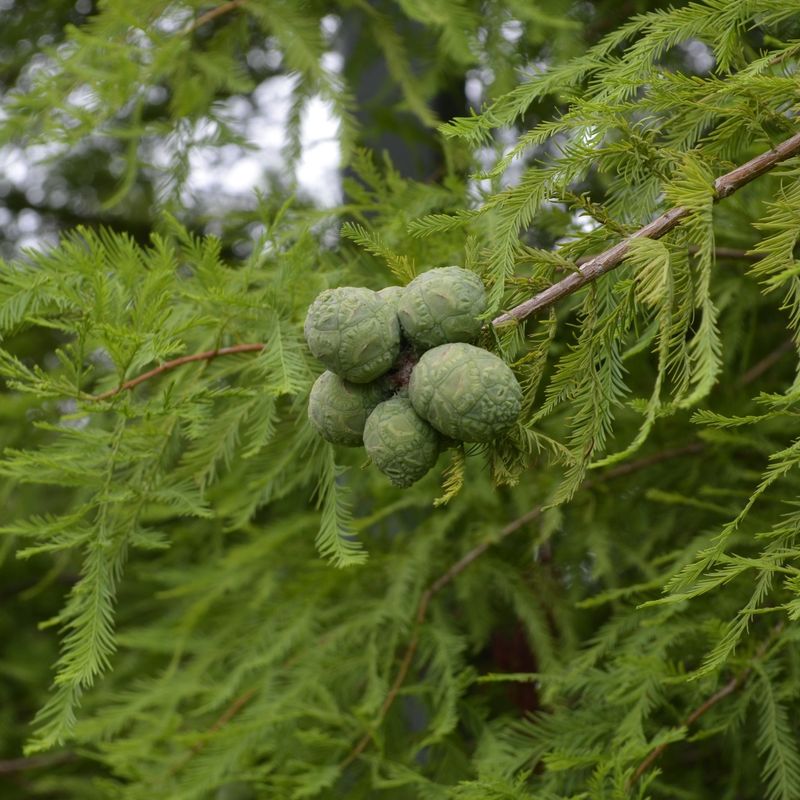
Conifers are supposed to stay green, right? Most do, but bald cypress breaks that rule on purpose.
It belongs to a small group of deciduous conifers, meaning it carries cones yet drops its foliage each fall.
That habit is actually where the name comes from. In winter, the tree stands bare, or bald, while pines and cedars nearby keep their green coats.
Homeowners sometimes plant one expecting year-round color and get a surprise the first autumn.
If that sounds like you, the tree is not broken. You simply have a species that follows a different schedule than a pine.
Bald cypress grows naturally along rivers, swamps, and lowlands in the southern half of Georgia, and it is widely planted farther north too.
Your Georgia Garden Changes Every Week. Your Plan Should Too.
Gardening in Georgia changes quickly throughout the season. Every Friday you’ll receive a simple weekly plan showing exactly what to plant, prune, fertilize, harvest, and protect so you never miss the right timing.
Shedding foliage in winter likely helps the tree save water and energy during the colder months. Instead of maintaining needles through winter, it builds a fresh set each spring.
You can confirm you have a bald cypress by checking a few features.
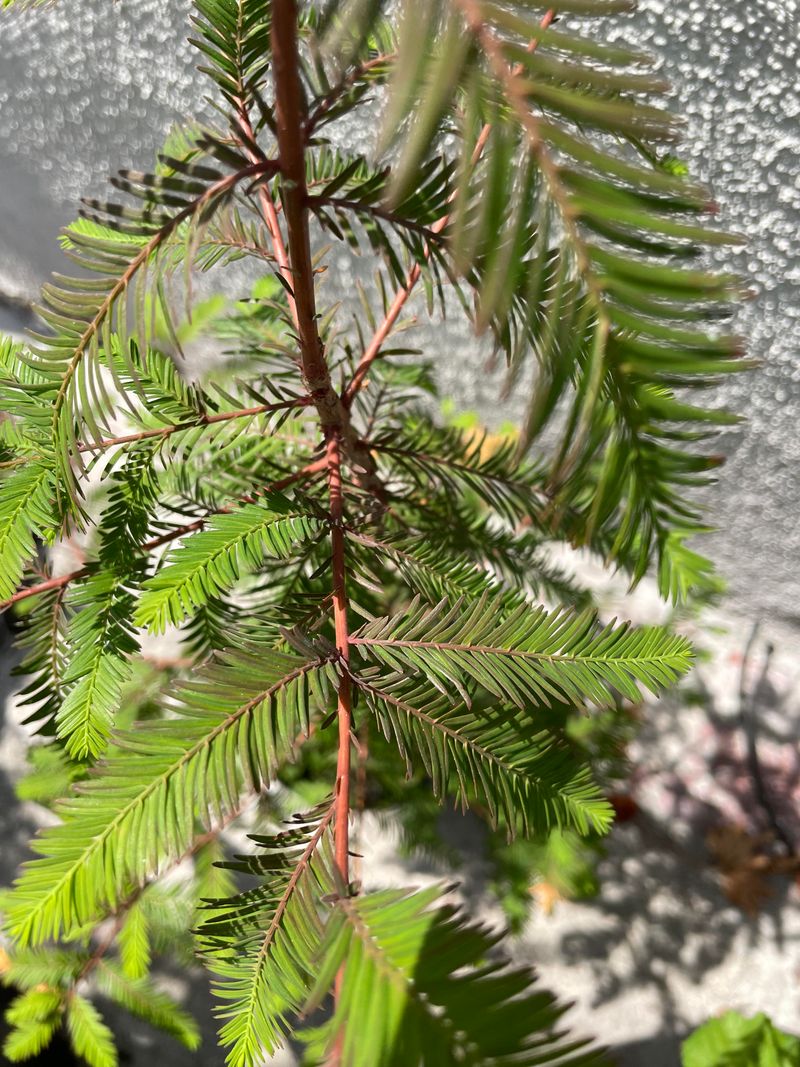
Look for soft, flat needles arranged in two rows along small twigs. Round cones about the size of a large marble and fibrous, reddish brown bark are other helpful clues.
Near water, you might also spot knobby bumps called knees rising from the ground around the trunk.
Once you know the species, the yearly bare look becomes much easier to accept. It is simply part of owning this tree.
3. Feathery Green Foliage Turns Copper And Orange Before Falling
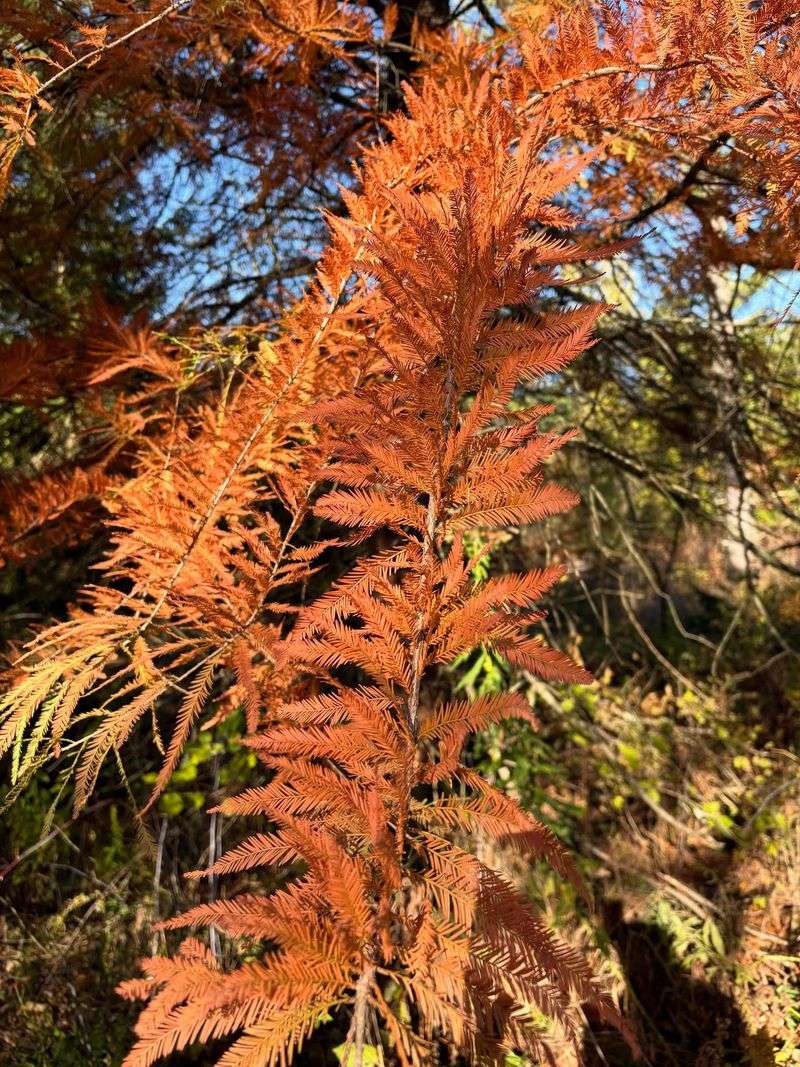
Picture a soft, feathery tree glowing like a new penny against a blue sky. That is a bald cypress near the peak of its fall show.
All summer, the foliage looks light and lacy, almost like a fern held up in the air.
As autumn settles in, those bright green sprays slowly shift toward copper, cinnamon, and burnt orange. Some trees lean more reddish, while others look closer to tan or bronze.
Color strength varies from year to year, and from tree to tree.
Weather plays a part, along with soil moisture and how much sun the tree receives. A tree in full sun often colors more richly than one tucked into shade, though there are exceptions.
Gardeners around Georgia often notice the change peaks for a short window before the needles begin to fall.
Once the color deepens, a windy day or a hard rain can bring down a lot of foliage at once. If you want photos, it helps to grab them soon after the color looks its best.
Planting a bald cypress near a pond or along a fence line can make that copper glow stand out nicely in the landscape.
Darker evergreens like hollies or magnolias in the background create a strong contrast. That way, the cypress gets its moment in fall, and the yard still has green through winter.
4. Small Leafy Twigs Can Drop Along With The Needles
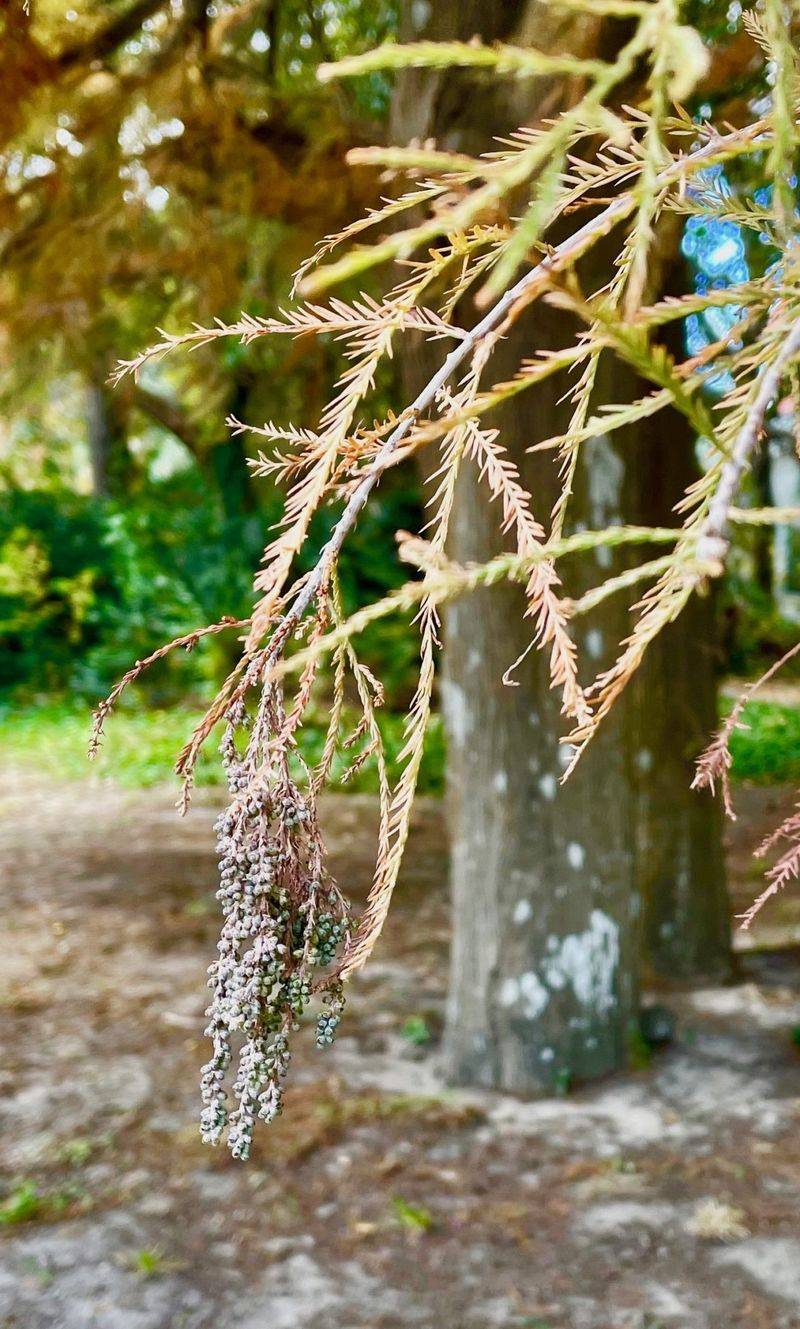
Sweep your patio under a bald cypress in fall, and you may find whole little sprigs, not just loose needles. Seeing tiny branches on the ground can make people think the tree is falling apart.
In most cases, nothing is wrong.
Bald cypress needles grow on small, slender twigs that are designed to drop off as a unit. These shed twigs are sometimes called deciduous branchlets, and losing them each fall is normal for the species.
That is why the litter under the tree often looks like small brown feathers.
Those twigs are usually only a few inches long and break down fairly quickly in a mulch bed or compost pile.
You can rake them into planting beds, use them as a thin mulch, or bag them for yard waste. They are soft and light, so they rarely cause problems on lawns if you clear heavy piles now and then.
Larger woody branches are a different matter.
If you notice thick limbs falling, cracked wood, or branches without any buds, take a closer look. Storms, old injuries, or decay can cause that kind of drop, and a certified arborist can help sort out the cause.
Gutters near the tree may need an extra cleaning in late fall.
The fine twigs and needles can collect there and slow water flow, especially after a windy week.
5. Bare Winter Branches Do Not Mean The Tree Is Unhealthy
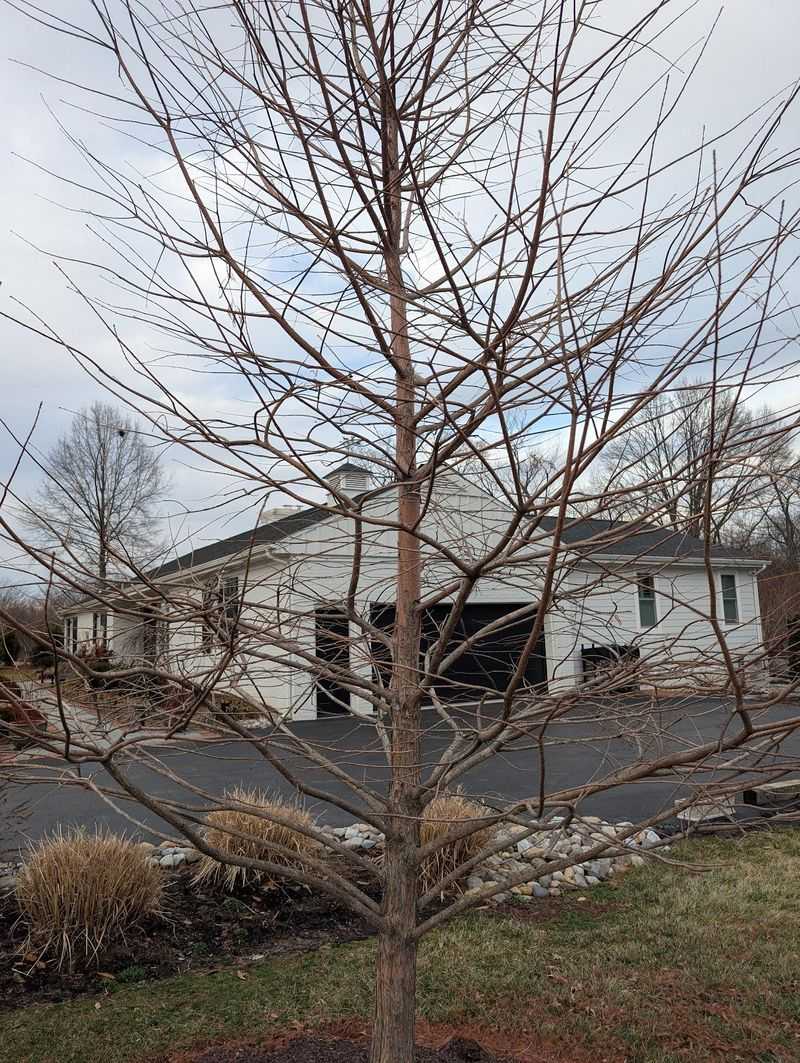
Bare doesn’t mean broken. A leafless bald cypress in January is resting, not failing.
Through the winter months, the tree keeps living buds along its twigs that will open in spring.
You can check for life with a simple test. Gently scratch a small spot on a thin twig with your fingernail, and look for green or moist tissue just under the bark.
Green and flexible usually signals a healthy twig.
Brittle, dry, and brown all the way through may mean that particular twig has a problem. Testing a few spots around the tree gives a better picture than relying on just one.
Winter is also a handy time to look over the tree’s structure without foliage in the way.
Watch for cracks in the trunk, peeling sections of bark, mushrooms at the base, or limbs rubbing together. Any of these could be worth a professional opinion, especially on a large tree near a house.
Gardeners in Georgia sometimes feel tempted to fertilize a bare tree to wake it up, but that is rarely helpful in winter.
Established bald cypress trees often do fine without extra feeding in typical soils. If you suspect a nutrient issue, a soil test through your county Extension office is a smarter first step than guessing.
Mostly, a bare cypress just needs patience until warmer weather returns.
6. Early Browning During Summer May Signal Drought Or Pest Stress
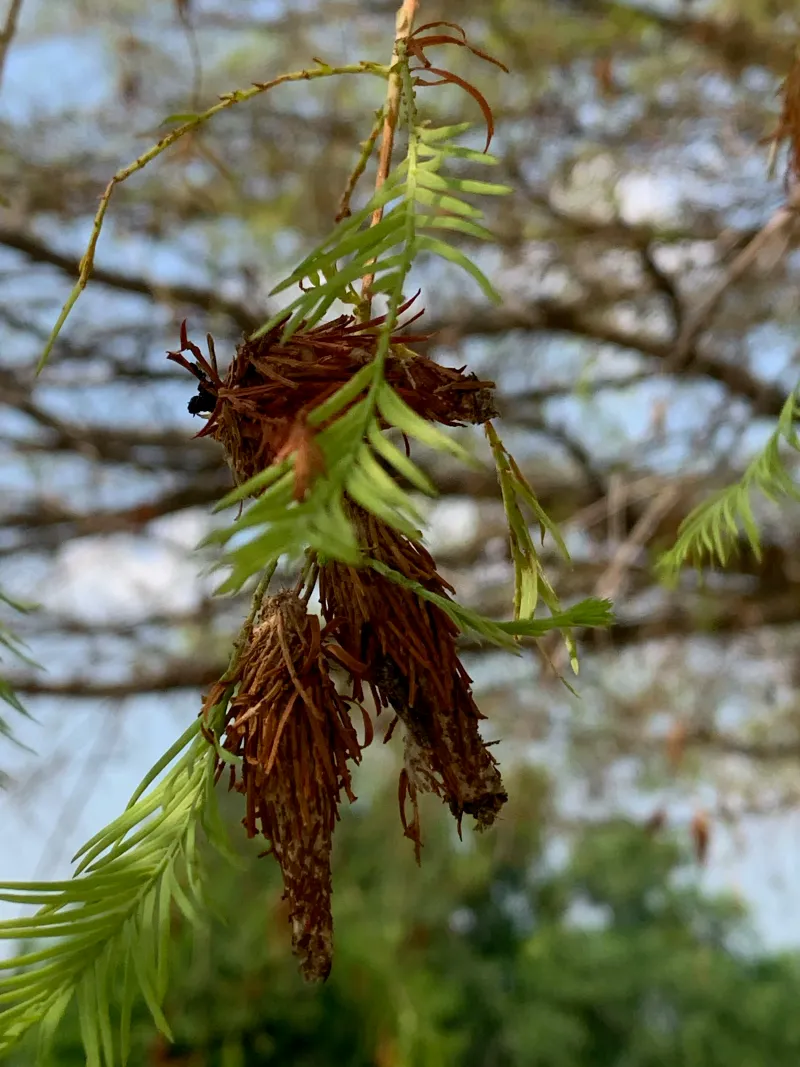
Brown in July is a different story than brown in November. When needles fade during the hot months, the tree may be telling you something.
Drought is one common reason for off-season browning.
Even though bald cypress grows in swamps, it also handles drier yards once established. Still, young trees and trees in compacted or sandy soil can struggle during long dry spells in a Georgia summer.
Deep, occasional watering during drought can help, especially for trees planted in the last few years.
Pests are another possibility worth considering. Spider mites can cause a dull, speckled, bronzed look, and bagworms build small hanging bags made of needles and silk.
Cypress twig gall midges may cause small swellings on twig tips, though they are usually more of a cosmetic issue.
Close inspection matters before you treat anything. Shake a branch over white paper to check for tiny moving mites, and look carefully for bags or swollen tips.
Bagworms on smaller trees can often be picked off by hand.
Other causes, like root damage from digging or new construction, can also lead to summer browning. Since several problems look similar, your local Extension office can help identify what is really going on before you spray or change care.
Matching the fix to the actual cause saves money and protects helpful insects.
7. Fresh Green Growth Returns When Spring Temperatures Rise
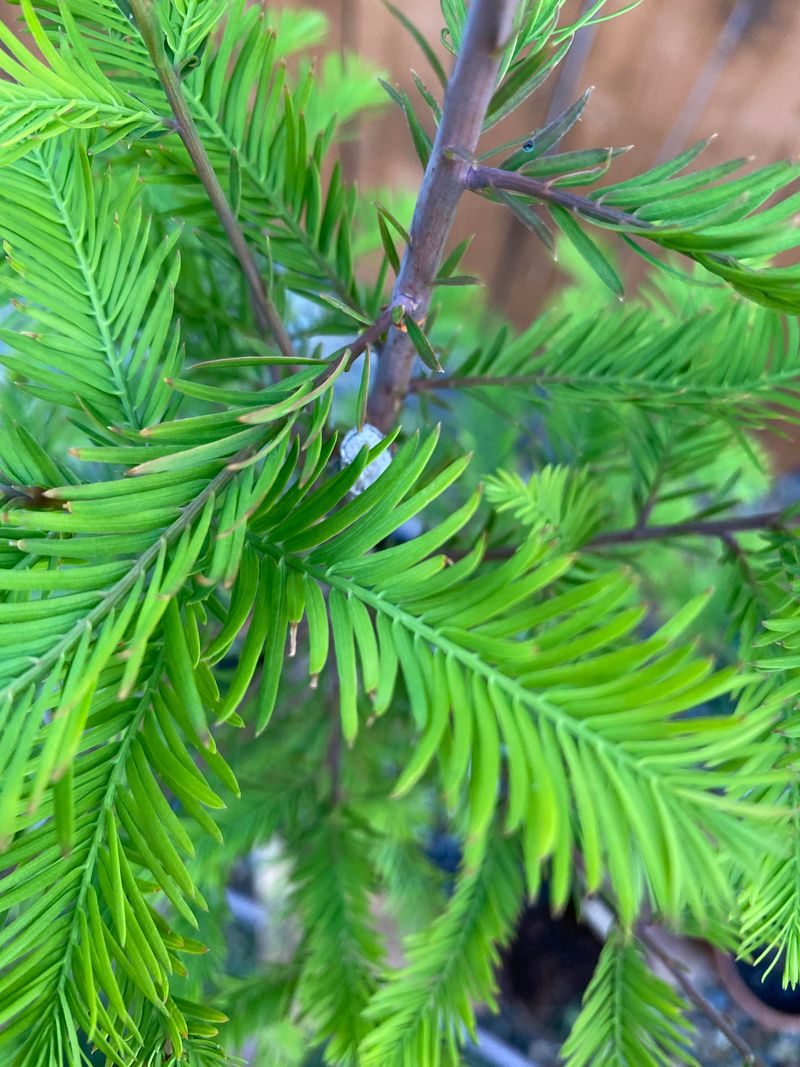
Spring is when the bald cypress gets its reward for a quiet winter. Tiny buds swell, and soon the twigs fill with fresh, bright green needles that look almost neon.
Timing depends on where you live and how quickly the weather warms.
Trees in south Georgia often leaf out earlier than trees in the northern part of the state. A cool, lingering spring can delay things, so a tree that seems slow in March may simply be waiting on steadier warmth.
Bald cypress is often one of the later trees to leaf out, so give it time before worrying.
If neighboring cypress trees are green and yours still looks bare well into spring, check those twigs again with the scratch test. Patchy leafing on a few limbs might call for pruning out any truly lifeless wood after the tree fully leafs out.
Spring is also a good season to refresh mulch around the base.
A layer a few inches deep helps hold moisture and keeps mowers away from the trunk. Pull the mulch back a little so it does not pile against the bark.
New plantings may need regular watering through their first growing season while roots settle in.
Once that soft green foliage returns, the cycle starts all over again. By next fall, you will know just what those rusty needles mean.