How Long To Keep Watering Fall Planted Trees In North Carolina
You plant a tree, water it well, and feel good about the job. Then comes the question nobody answers on the plant tag. How long do you keep going?
Stop too early, and the roots never reach deep enough to handle summer. Go too long, and you drown them. After a long North Carolina drought, the stakes are higher, since even soil that looks damp on the surface may be dry underneath.
Rain from a recent storm can trick you into relaxing. The right schedule depends on the tree’s size, the type of soil, and the weather. It also changes from the first month to the second year.
Learn the pattern, and your new tree has a much better chance of becoming a healthy, established one.
1. Plan To Water Through At Least The First Year Or Two
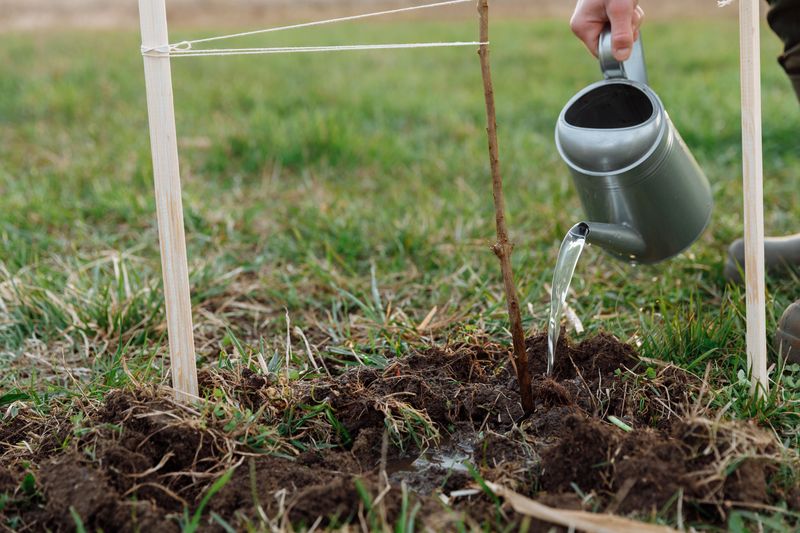
Think of a new tree like a kid on the first day at a big new school. It needs a little time and a lot of support before it can find its own way. Most of that support comes from you and your garden hose.
When a tree comes home from the nursery, nearly all of its roots sit inside the original root ball. That small clump of soil is the only place the tree can pull water from at first. Over time, roots creep outward into the surrounding ground, but the process is slow.
It often takes at least one to two growing seasons before a tree can lean on rainfall alone, and bigger trees need even longer.
A helpful rule many experts share is that trees need about a year to settle in for every inch of trunk thickness. So a tree with a two inch trunk may need around two years of extra care. Smaller trees tend to catch on faster.
Planning ahead makes the job much easier. Expect to water your fall planted tree through its first winter, the following spring and summer, and often into the second year. Dry weather should always bump watering higher on your to do list.
Here in North Carolina, summer is the real test. Long stretches of heat and little rain can stress young trees fast, especially before their roots spread wide. A fall start gives your tree a head start on root growth before that first summer arrives.
Keep up steady care, and you give it the best chance to grow into a healthy, sturdy part of your yard for decades.
2. Water Weekly Through Fall When It’s Dry
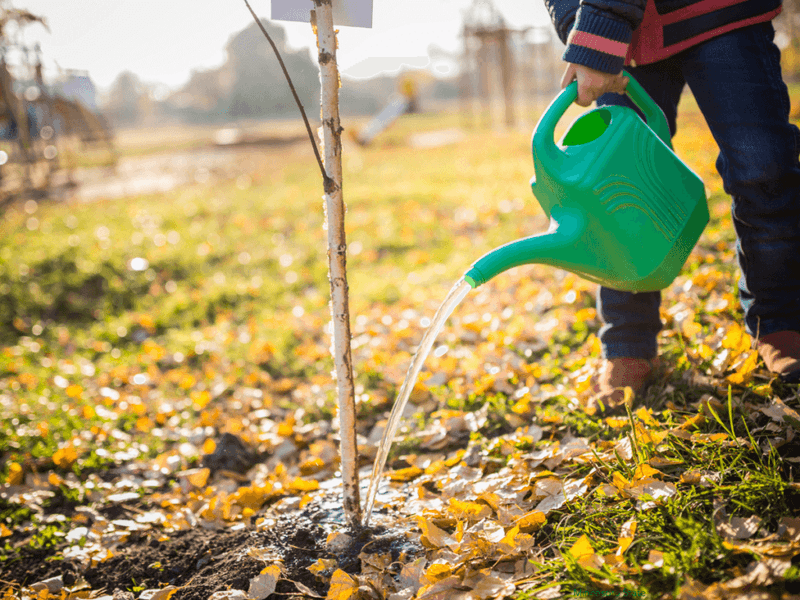
Cool air can fool you. Even when you grab a jacket in the morning, the soil underground is often still warm in fall, and your new tree is busy growing roots. Those roots need steady moisture to keep working.
Fall planting works so well because trees can focus on roots instead of leaves. Warm soil and cooler air make a perfect combo for underground growth. A dry fall, though, can leave the root ball parched and slow that progress way down.
Your North Carolina Garden Changes Every Week. Your Plan Should Too.
Gardening in North Carolina changes quickly throughout the season. Every Friday you’ll receive a simple weekly plan showing exactly what to plant, prune, fertilize, harvest, and protect so you never miss the right timing.
So what should you do? When rain is scarce, water deeply about once a week. Let the water soak slowly into the root ball and the soil just beyond it, so the moisture reaches where roots are spreading.
A quick splash on top will not do much good. Checking moisture is easy and costs nothing. Push a finger or a small trowel a few inches into the root ball itself, not just the soil around it.
Nursery root balls often hold a lighter, fluffier mix that dries out faster than your native ground. The surrounding soil can feel damp while the root ball is bone dry.
If it feels dry a couple of inches down, it is time to water. If it still feels moist, wait a few days and check again. A rain gauge in the yard can also help you track how much rain actually fell.
Much of North Carolina has faced drought conditions this fall, which makes this step extra important. Rain you hope for may not show up. Watching the soil instead of the calendar keeps your tree growing strong right into winter.
3. Keep Watering In Winter During Dry Spells
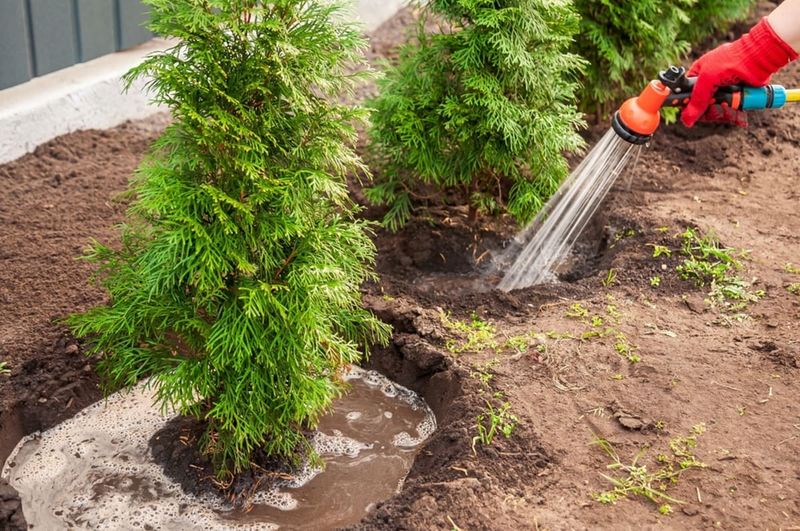
Put away the hose for winter? Not so fast. Many gardeners coil it up in November and forget about it until spring, but new trees still need a drink during the colder months.
Roots keep growing slowly all winter whenever the soil is not frozen. They may not be racing along, but they are still reaching outward bit by bit. Dry soil makes that slow growth even slower.
Evergreen trees face an extra challenge. Pines, hollies, magnolias, and cedars keep their leaves or needles all year, and those leaves keep losing moisture to wind and sun. If the soil is dry, the tree cannot replace that lost water, and you may see browning tips by spring.
The fix is simple. During dry winter stretches, water every couple of weeks as long as the ground is not frozen. Pick mild days when temperatures sit above freezing, and water in the morning or early afternoon.
That timing lets the water soak in before chilly nights arrive. Skip watering if a hard freeze is about to hit that evening. You want water down in the soil, not sitting as ice on the surface. A slow soak on a sunny 50 degree day is ideal.
North Carolina winters work in your favor here. The ground rarely stays frozen for long, even in the mountains, so you will usually find good watering days. Winter dry spells are common across the state, though, and they can sneak up on you.
Keep an eye on rainfall, and a few winter waterings will send your tree into spring ready to grow.
4. Pay Closest Attention In The First Summer
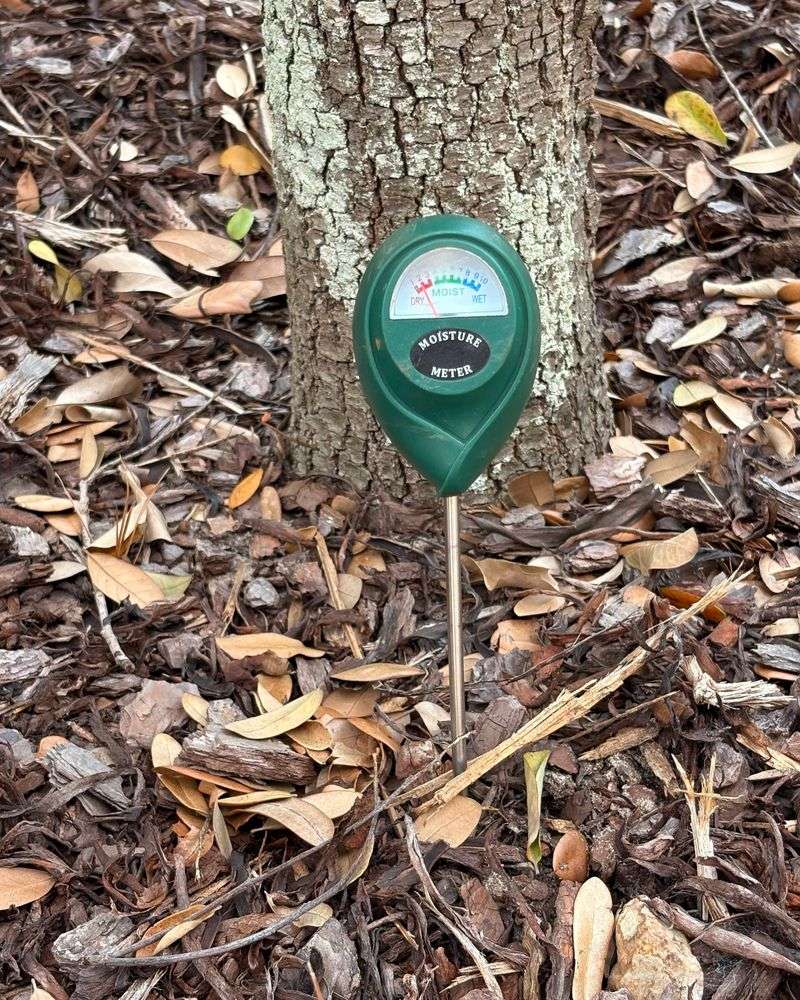
July in North Carolina can feel like stepping into a steamy bathroom. If that heat wears you out, imagine how a young tree feels with only a small ball of roots to drink from. The first summer after planting is the biggest hurdle your tree will face.
Hot temperatures and long dry spells put heavy stress on new trees. Their roots have not spread far enough to tap into deeper moisture, so they rely almost fully on water near the surface.
Many newly planted trees are lost during that first summer, often because watering slowed down too soon.
Good news, though. You can help a lot with a steady routine. Water deeply once or twice a week during hot, dry weather, giving the root ball and nearby soil a long, slow soak.
Heat waves call for extra effort. When temperatures climb into the upper 90s for days, check the soil more often and add another deep watering if it feels dry. Early morning watering works best because less water is lost to the hot afternoon sun.
Keep going all the way through the end of summer. August and September can be some of the driest weeks of the year, and it is tempting to ease off once the calendar says fall is near. Your tree still needs you during that stretch.
Humidity in North Carolina can make the air feel wet, but it does not water the roots. A sticky day can still leave the soil dry. Stay consistent through these hot months, and your tree will come out stronger, with roots reaching farther and deeper every week.
5. Water Slowly And Deeply, Not Often And Lightly
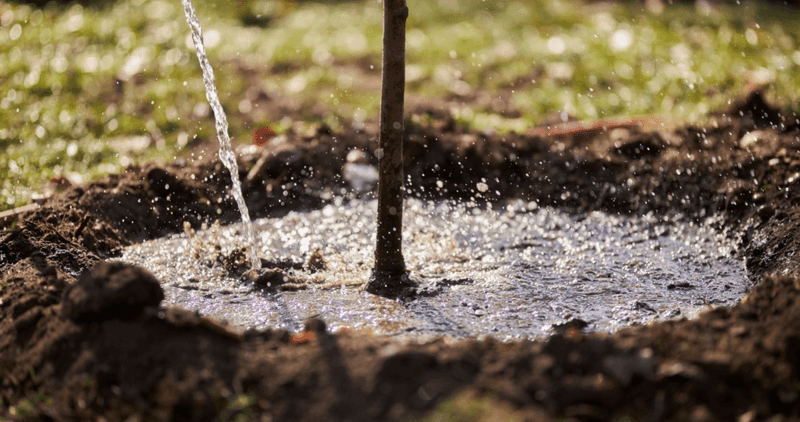
Picture two gardeners. One sprays a tree for thirty seconds every day, and the other lets a hose trickle for half an hour once a week. The second gardener ends up with the happier, tougher tree.
Slow, deep watering soaks the whole root ball and the soil around it. Roots follow moisture, so they grow outward and downward to find it. That builds a strong, wide root system that can handle dry spells later on.
Light, frequent sprinkling does the opposite. Water stays near the surface, and roots stay shallow to chase it. Shallow roots dry out fast and struggle when the weather turns hot.
Getting it right is easy. Set a garden hose at the base of the tree and let it run at a slow trickle, about the speed of a pencil-thin stream. Move it around the root ball once or twice so every side gets a turn.
Soaker hoses and tree watering bags are great time savers too. A watering bag zips around the trunk and releases water slowly over several hours, so you can fill it and walk away.
Keep watering until the root ball and the soil nearby feel thoroughly moist several inches down.
Always follow any local watering restrictions in your town, especially during drought. Many places still allow hand watering or drip watering for new plants.
Slow watering matters even more in North Carolina because of our famous red clay. When clay soil is dry and hard, fast water simply runs off instead of soaking in. A gentle trickle gives the clay time to absorb every drop.
6. Mulch To Make Every Watering Count
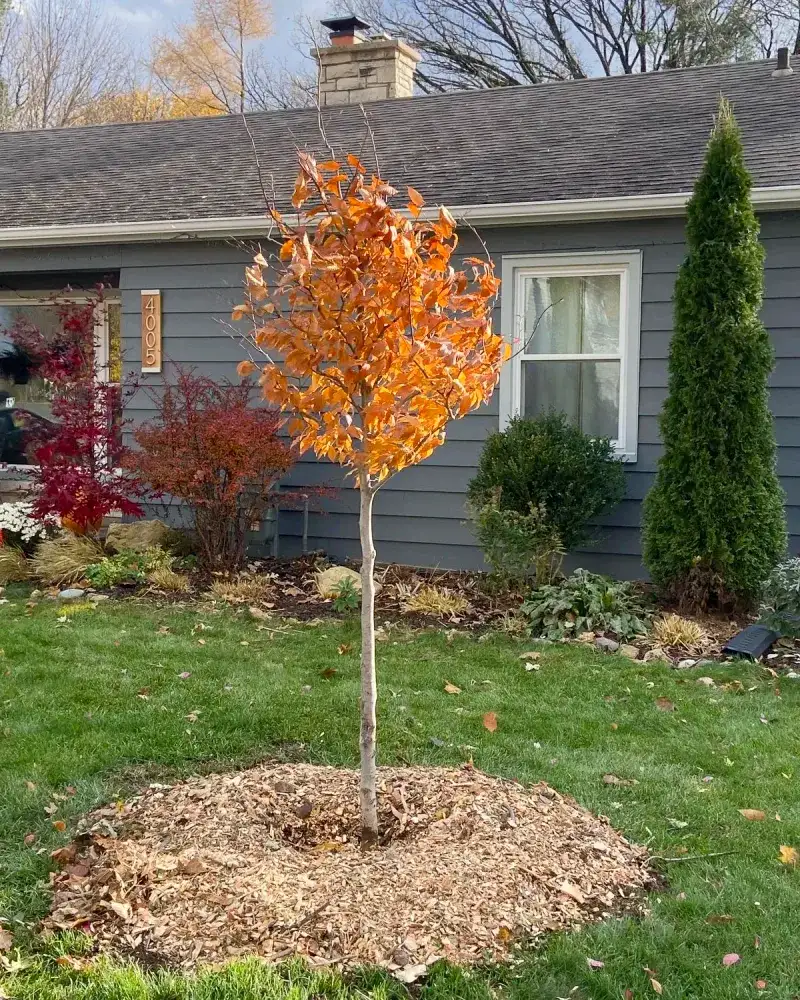
Here is a trick that works like a cozy blanket for your tree’s roots. A simple layer of mulch can stretch every gallon of water you give, and it barely takes an afternoon to spread.
Mulch slows down evaporation, so moisture stays in the soil longer instead of drifting into the air. It also keeps the ground cooler on hot days, which roots love. On top of that, it blocks grass and weeds that would otherwise steal water your tree needs.
Grass is a sneaky competitor. Its roots grow thick near the surface and soak up rain and hose water fast. Clearing grass from the area around a new tree gives the young roots far less competition.
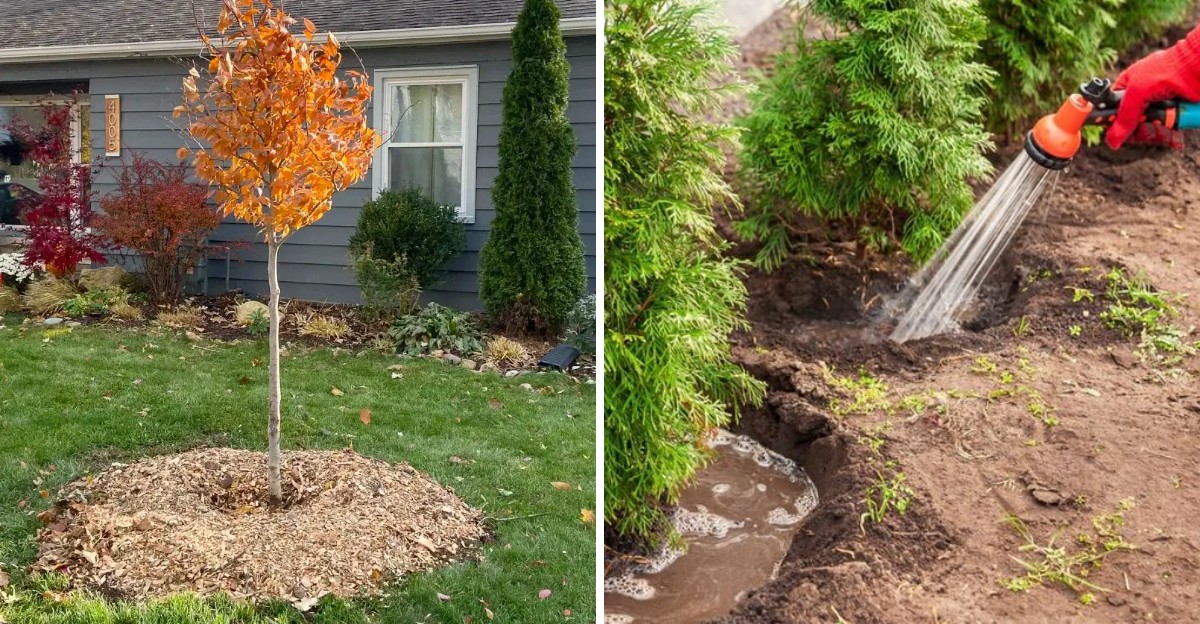
To mulch the right way, spread 2 to 3 inches of shredded bark or wood chips in a wide ring around the tree. Wider is better, and reaching out to the edge of the branches is a nice goal. Pine straw, a North Carolina favorite, works well too.
Keep the mulch a few inches away from the trunk itself. Piling it up against the bark, sometimes called a mulch volcano, traps moisture and invites rot and pests. A flat, donut-shaped ring is what you want.
Refresh the layer once a year as it breaks down. Old mulch also adds a little organic matter to the soil, which helps clay and sandy ground alike.
For busy North Carolina homeowners, mulch is a real gift. It can cut down how often your trees need watering, saving time, money, and effort while helping your tree grow stronger.
7. Watch For Signs Your Tree Needs More Or Less Water
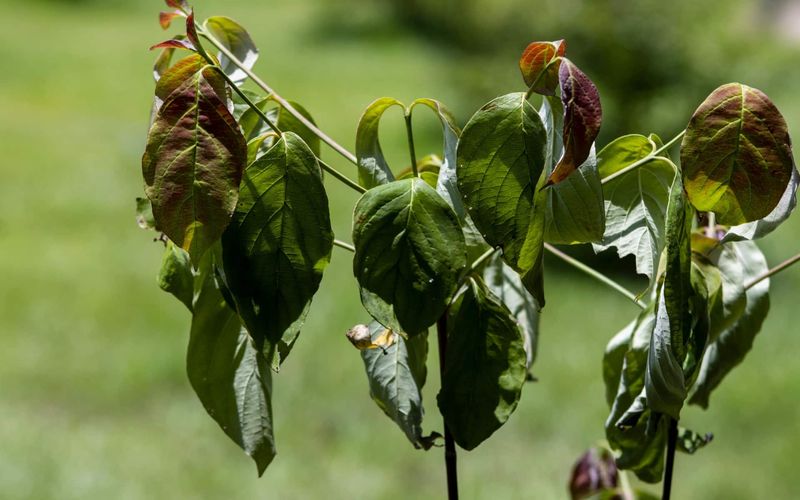
Trees cannot talk, but they sure know how to drop hints. Learning to read those clues is one of the most useful skills a tree owner can have. Once you know what to look for, you can fix problems early.
Here is the tricky part. Too little water and too much water can both harm a young tree, and the warning signs sometimes look alike. Droopy leaves might mean thirst, or they might mean soggy, struggling roots.
Underwatering usually shows up as wilting, curled, or scorched leaves with crispy brown edges. Dig a few inches into the soil, and it will feel dry and crumbly. Leaves may also drop early in summer.
Overwatering tells a different story. Leaves often turn yellow, the soil stays soggy day after day, and you might notice a sour smell near the roots. Roots need air as well as water, and constant wetness cuts off their oxygen.
The best tool is your own hand. Feel the soil a few inches down before you water, and let what you see and touch guide you. Dry soil means water, while wet soil means wait.
A simple notebook or phone note can help too. Jot down when you water and how the tree looks, and patterns will start to show.
North Carolina soils make this extra important. Heavy clay in the Piedmont can hold too much water after a big rain, while sandy soils near the coast dry out quickly.
Knowing your soil type helps you adjust, so your tree gets just the right amount and keeps growing happily.