What It Means When A Garter Snake Shows Up In Your New York Garden
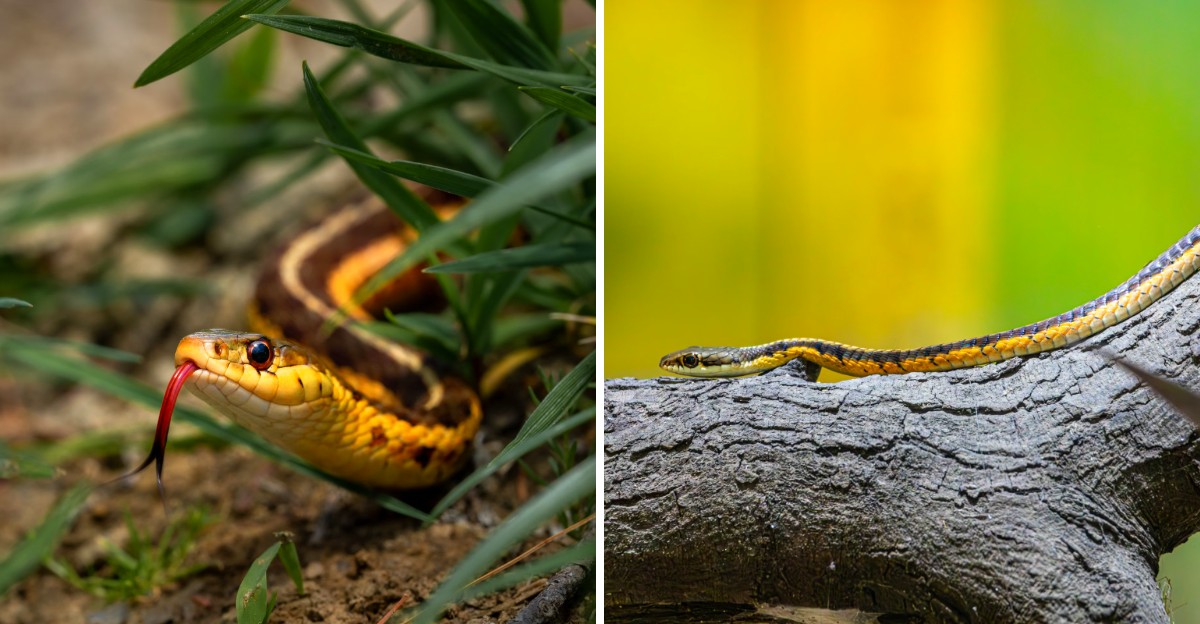
Some snakes spend the winter piled together by the dozens, even hundreds, tucked deep underground where the frost cannot reach.
When spring warms the soil, they wake up hungry and head straight for places full of food. I like to think of that hungry crowd as a free pest crew looking for work.
Personally, I jumped the first time a striped tail slid past my tomato cages. My heart raced, and I nearly dropped the hose.
Then I noticed the slug trail it was following, and my whole opinion shifted.
You might have one of these quiet visitors in your New York beds right now. It could be slipping under the mulch, sunning on a warm rock, or hiding beneath your hostas.
So what is it really telling you about your yard, and should you be glad it picked your garden?
1. That Striped Snake In Your Flowerbed Is Sending A Message
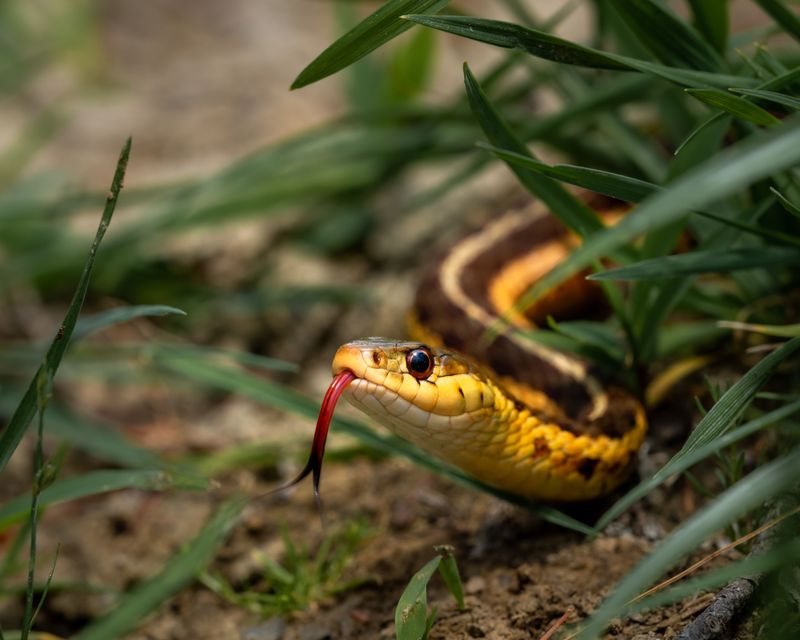
A garter snake does not wander into a garden by accident. It shows up because your yard offers what it needs most, which is food, cover, and warm places to rest.
Think of it as a report card from nature. Snakes like these sit in the middle of the food chain, so they only stick around where there are plenty of slugs, worms, insects, frogs, and toads to eat.
A yard packed with that kind of life is usually a healthy one.
In other words, your garden is busy in the best way. You likely have moist soil, some leafy cover, and few heavy pesticides.
Those conditions support the small creatures that keep the whole system running.
I find this oddly flattering. Gardeners work hard to build good soil and plant a mix of flowers and vegetables, and a snake sliding by is proof the effort is paying off.
There is one other possible reason worth mentioning. Sometimes a snake is simply passing through, moving between hiding spots or heading to a pond nearby.
A single quick sighting does not mean you have a crowd living under your porch.
Either way, the message is mostly positive. Your space is welcoming to wildlife, and that striped visitor is one sign of a balanced backyard.
The real question is how you want to respond.
2. Garter Snakes Are Harmless To You, Your Kids, And Your Pets
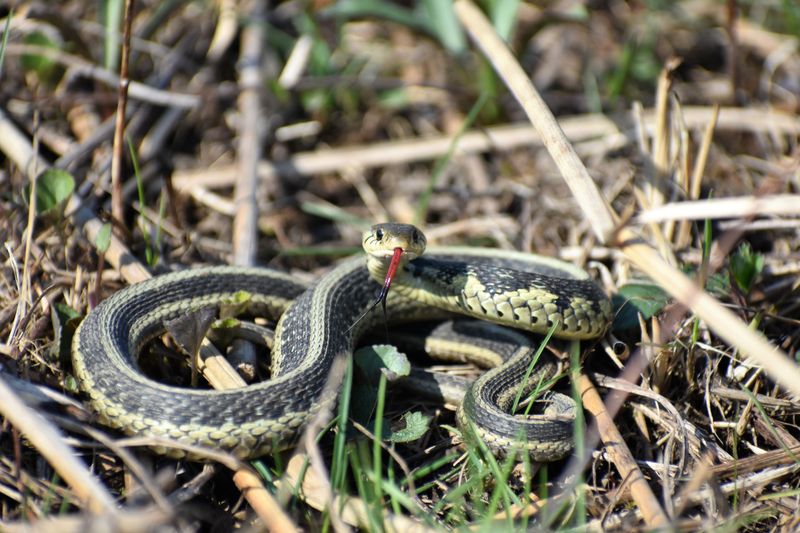
Take a deep breath, because this snake is not out to get you. Garter snakes are shy, nonvenomous in any way that matters to people, and much more interested in hiding than in fighting.
Scientists have found that their saliva contains a very mild substance meant for small prey like frogs. For humans, a bite usually feels like a scratch, with maybe a little redness or swelling.
Wash it with soap and water, and you are good to go.
Bites are rare anyway. Most garter snakes only nip when someone grabs or corners them.
Left alone, they quickly slip into the plants and disappear.
If you do pick one up, expect a smelly surprise. Garter snakes release a stinky musk when they feel threatened, and it can cling to your hands for a while.
Your New York Garden Changes Every Week. Your Plan Should Too.
Gardening in New York changes quickly throughout the season. Every Friday you’ll receive a simple weekly plan showing exactly what to plant, prune, fertilize, harvest, and protect so you never miss the right timing.
It is gross but not harmful.
Dogs and cats sometimes get curious, too. A sniff or a paw swipe might earn a pet a small nip, but it is not dangerous.
Still, call your vet if your pet seems unwell after any wildlife encounter.
My best advice is simple. Teach kids to look and enjoy, not touch or chase.
Give the snake a few feet of space, and it will happily go back to hunting bugs instead of bothering anyone.
3. Slugs Should Worry More Than You When A Garter Snake Moves In
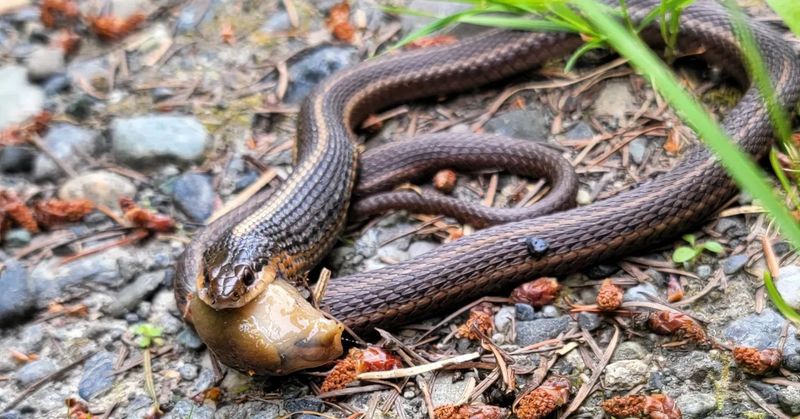
Ask any gardener about slugs, and you will probably hear a groan. Those slimy nibblers can chew holes in hostas, lettuce, and strawberries overnight.
Garter snakes happen to love them. Slugs and earthworms make up a big part of their diet, along with insects such as crickets and grasshoppers.
Larger snakes may also grab frogs, toads, salamanders, and sometimes small mice.
Now, a snake will not clear your garden of every pest. It eats when it is hungry, and one snake can only cover so much ground.
Still, every slug it swallows is one less mouth munching on your leafy greens.
I also like that it works without chemicals. Slug baits and sprays can harm pets, birds, and helpful insects.
A snake does its job quietly and leaves your soil alone.
There is one small trade-off to know about. Garter snakes do eat earthworms and young toads, which are garden helpers themselves.
In a healthy yard, though, there are usually plenty to go around.
To help your new pest patrol, cut back on pesticides. Fewer chemicals mean more bugs and slugs for the snake to find, which keeps it hunting in your beds.
You get fewer chewed leaves, and the snake gets a steady meal. Everybody wins, except the slugs.
4. Three Yellow Stripes Help You Spot A Common Garter Snake
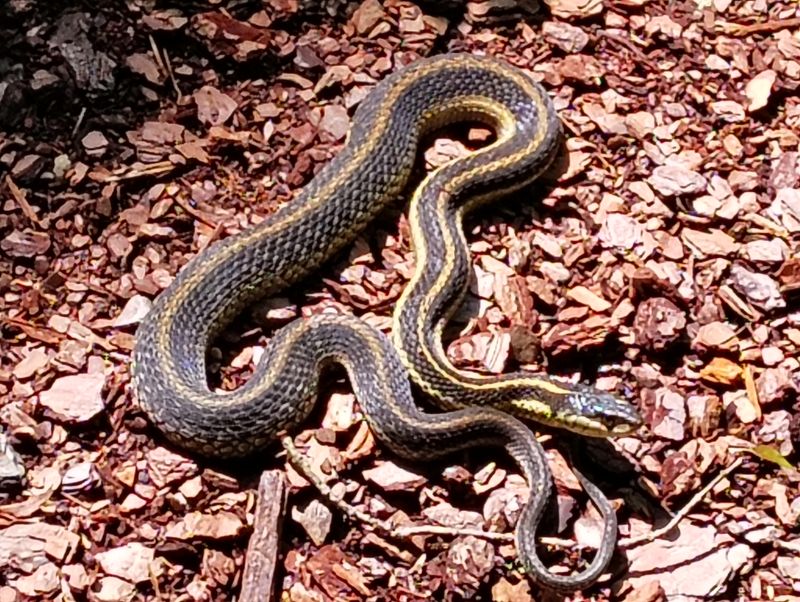
Learning to identify your visitor makes the whole experience less spooky. The common garter snake, Thamnophis sirtalis, is the snake New Yorkers see most often, from Long Island lawns to Adirondack trails.
Look for a dark body, usually black, brown, or greenish. Three light stripes run down its length, one along the back and one on each side.
The stripes are often yellow, but they can look greenish, tan, or almost white.
Many also show a checkered pattern of dark spots between the stripes. Most adults reach around 18 to 26 inches long, and females tend to be bigger and heavier than males.
Here is a fun fact. The name likely comes from old-fashioned striped garters that people once used to hold up socks.
Some folks still call them garden snakes, which fits them pretty well.
Other striped snakes live in the state, too. The eastern ribbon snake looks similar but is slimmer, with a longer tail and a small white mark in front of each eye.
It is also harmless and loves wet areas.
If you are unsure what you are seeing, snap a photo from a safe distance. The New York State Department of Environmental Conservation and local nature centers have helpful guides for checking snake species.
5. Spring Sunbathing Is When Garter Snakes Show Up Most
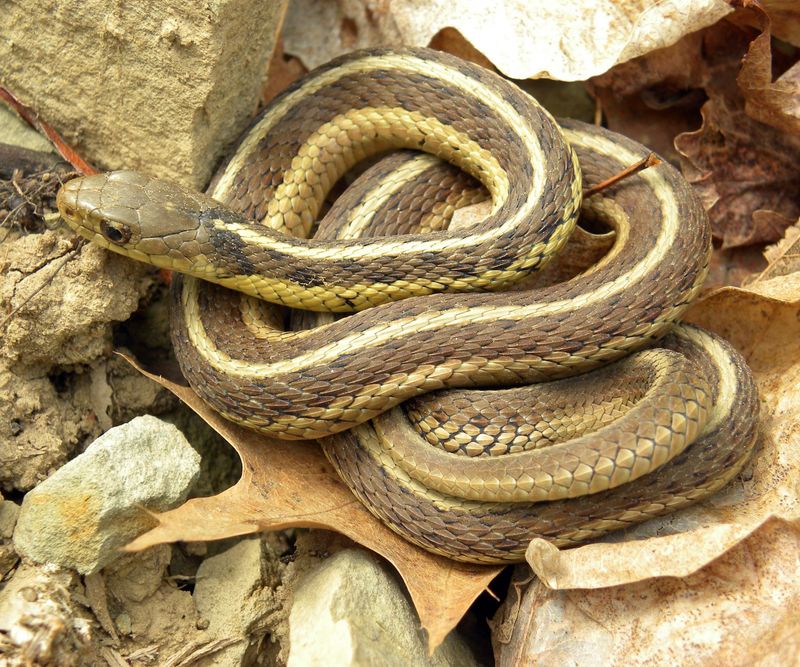
Early spring mornings can turn a rock wall into a snake sunbathing spot. Garter snakes are cold-blooded, so they soak up sunshine to warm their bodies before heading out to hunt.
In New York, they usually wake from winter rest around March or April, depending on where you live. Snakes near the city and on Long Island may appear sooner, while those in the Adirondacks or Tug Hill region often wait for warmer weeks.
Many spend winter in groups inside rock cracks, old animal burrows, or stone foundations. Males often come out first and wait for females, so you might spot several snakes together in spring.
That cluster is mating behavior, not an invasion.
Summer keeps them busy, too. They are active during the day, often hunting in the morning and late afternoon when it is not too hot.
Garter snakes also give birth to live babies instead of laying eggs. A litter often arrives in late summer or early fall, and it can include anywhere from a handful to a few dozen tiny snakes.
Seeing little ones around August is normal.
By mid to late fall, they head back to their winter hideouts. So a sighting in October usually means a snake looking for a cozy place to wait out the cold.
6. Rock Piles And Native Plants Make Your Yard A Snake Hideaway
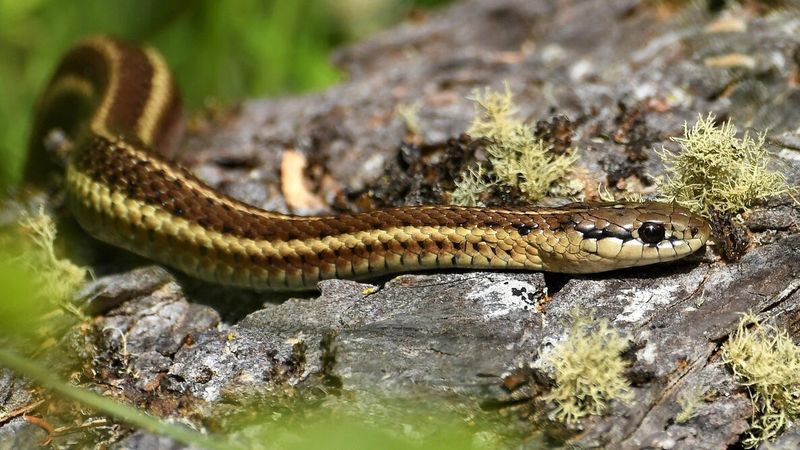
I will admit it. I now leave a small pile of stones in one corner of my garden on purpose, and it has become a favorite hangout spot.
Garter snakes need safe shelter because hawks, raccoons, foxes, and even cats like to hunt them. A rock pile, a stack of old logs, or a loose brush pile gives them cover and warm spots to rest.
Native plants help even more. Thick plantings of goldenrod, asters, ferns, and native grasses create shady hiding places and attract the insects snakes eat.
Leaving a strip of taller growth near the edges of your yard works nicely.
Water matters too. A shallow birdbath set low, a small pond, or a damp corner can bring in frogs and slugs, which pulls snakes in for a meal.
Keep these hideaways away from doors and play areas. Placing them at the back of your property lets snakes enjoy them without surprising anyone by the steps.
Finally, skip the harsh sprays when you can. Pesticides cut down on food for snakes and can harm other wildlife, so try handpicking pests or using row covers instead.
A little messiness goes a long way, and your garden will feel more alive for it.
7. Prefer Fewer Snakes Near The Porch? Try These Gentle Fixes
Not everyone wants a snake by the back steps, and that is perfectly fine. Thankfully, you can encourage them to move along without harming them.
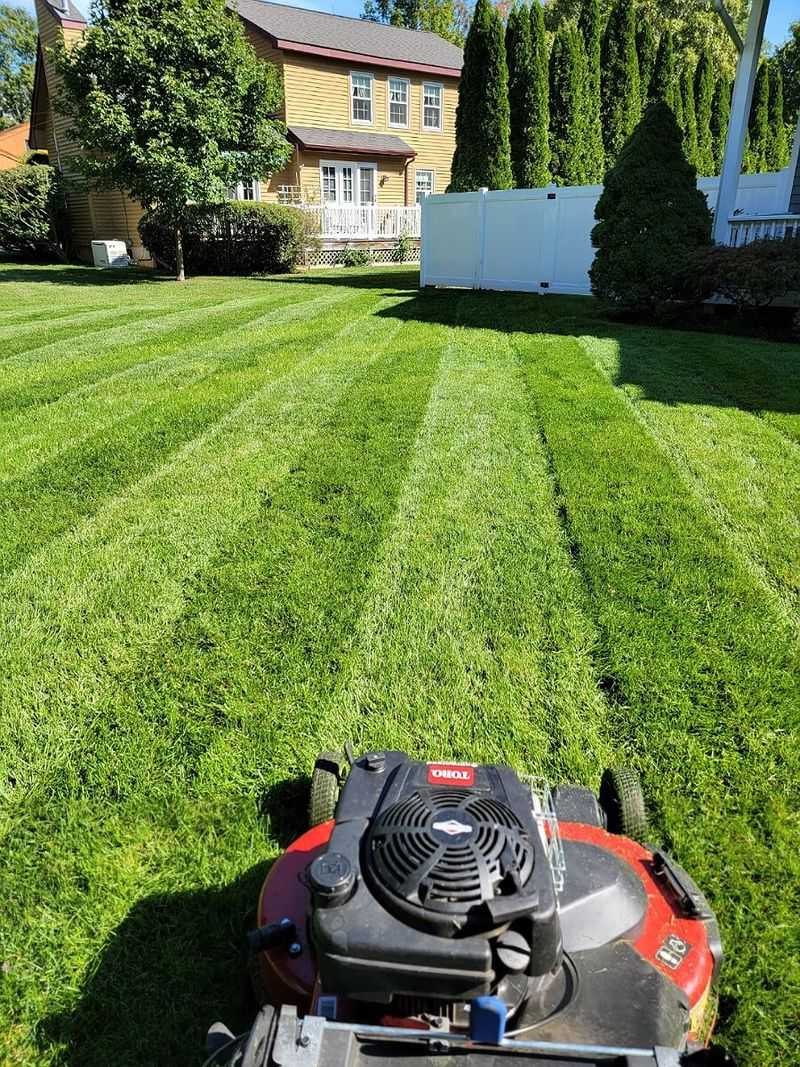
Start by tidying up near your house. Mow grass short close to patios and walkways, and move woodpiles, boards, and clutter farther out.
Snakes avoid open spaces where predators can spot them.
Seal small gaps around foundations, steps, and basement windows. Garter snakes sometimes slip into cracks looking for a winter hideout, and patching those openings in late summer can prevent surprises later.
If one ends up in your garage or shed, stay calm. Open the door, step back, and give it time to leave on its own.
You can also gently guide it out with a broom.
Skip the snake repellents sold in stores. Many products, including mothballs, have little proof of working, and mothballs are not legal for this use since they can harm people, pets, and soil.
Avoid trying to trap and move snakes far away. Relocated snakes often struggle to find food and winter shelter in unfamiliar places.
Changing the habitat near your home works better, and it lets the snake keep helping your garden from a respectful distance.
8. Your Garter Snake Is A Sign To Keep Gardening The Way You Are
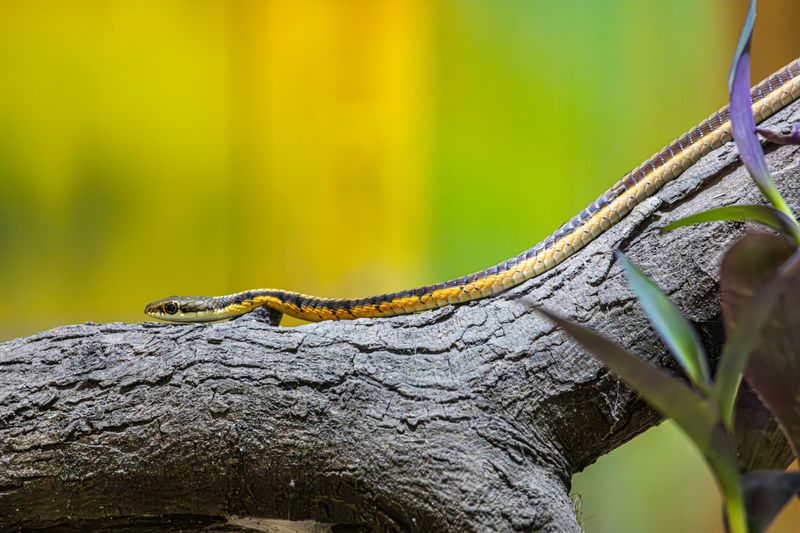
So what should you actually do after spotting that striped visitor? Honestly, the best move is often to do very little.
Let the snake go about its business. Enjoy watching it hunt, bask, or slip under the leaves.
Each sighting is a small reminder that your garden supports a whole web of living things.
Snakes in New York also deserve some respect under the law. Many reptiles are protected, and the state limits collecting or harming wildlife, so leaving them in place is the smart and kind choice.
Remember that a few rare snakes live in parts of the state, including the timber rattlesnake and the eastern massasauga. Both are uncommon, stay in specific wild habitats, and look nothing like a slim, striped garter snake.
If you ever see a heavy-bodied snake with a rattle, keep your distance and call the DEC.
For your striped friend, keep doing what attracted it. Grow native plants, cut back on chemicals, and leave a few wild corners for shelter.
Those habits help pollinators, birds, and toads too.
I like to share sightings with neighbors, especially kids. When people learn these snakes are helpful, fear fades fast.
Your garden becomes a place to learn something new, and that might be the best harvest of all.