Those Bumpy Green Balls Along Missouri Fence Rows Were Planted On Purpose
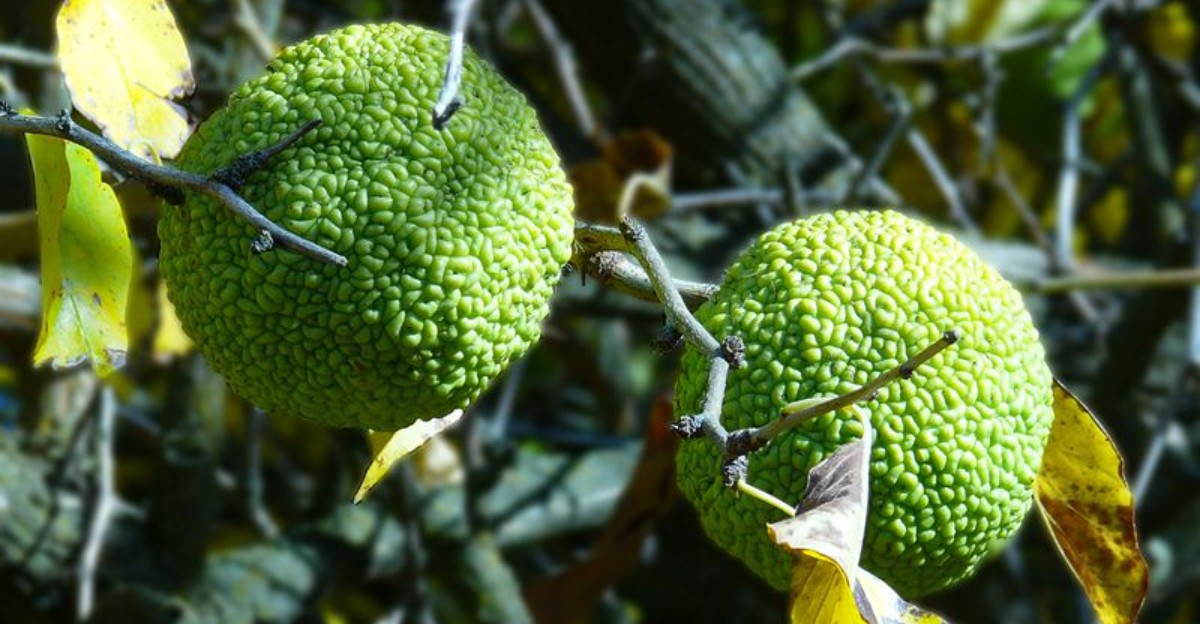
In the 1850s, Osage orange seed sold at high prices, and farmers paid it gladly. That seed came from a lumpy green fruit most people now kick off the road.
Drive any gravel lane in Missouri this fall and you will spot them. They sit in the grass like wrinkled softballs, smelling faintly of citrus and looking like something from another planet.
I used to think they just fell from random wild trees. Then I learned those crooked rows of thorny trunks were laid out by hand, sometimes one foot apart, across mile after mile of prairie.
Personally, I can’t look at an old fence line the same way anymore. You might start counting those trees on your next country drive, and you could be surprised by what they tell you about the people who planted them.
Those Thorny Fence Row Trees Had A Job Long Before Barbed Wire
Prairie farmers in the 1800s had a real headache. Wide open grassland held almost no trees, so wooden rails and stone walls were scarce and costly.
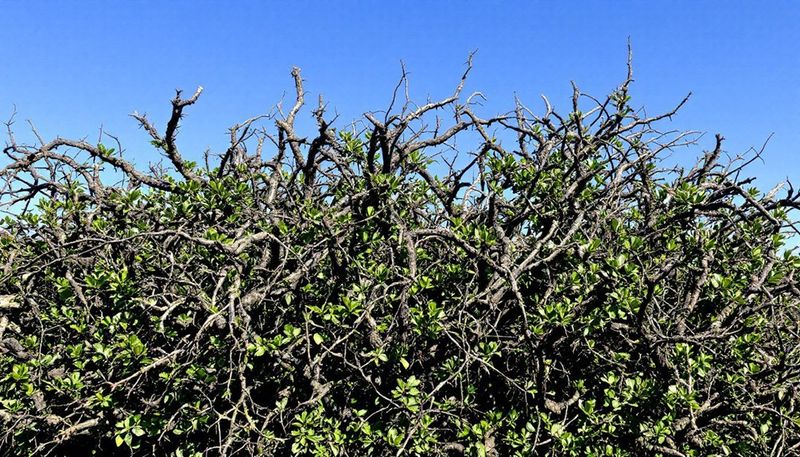
The fix came from a tree native to a small region of Texas, Oklahoma, and Arkansas called Osage orange, or Maclura pomifera. Its tough branches are covered in sharp thorns, and when planted close together and pruned hard, the trees knit into a thick wall. Farmers described a good hedge as horse high, bull strong, and pig tight.
Those bumpy green balls are the fruit of female trees. People call them hedge apples, and every one you see along a Missouri fence row is a clue that someone planted that line on purpose.
Nurseries sold seed and young plants by the millions. Farmers set seedlings in long rows, often about a foot apart, then trimmed and wove the branches for several years until cattle could not push through.
I love that a whole farm boundary could be grown instead of built. When you notice a straight row of gnarled trunks running between two fields, you are probably looking at a living fence that is well over a century old.
Barbed Wire Arrived And The Osage Orange Hedges Were Left Standing
Joseph Glidden patented his barbed wire design in 1874, and the fencing world changed fast. Wire was cheaper, quicker to install, and did not need years of pruning.
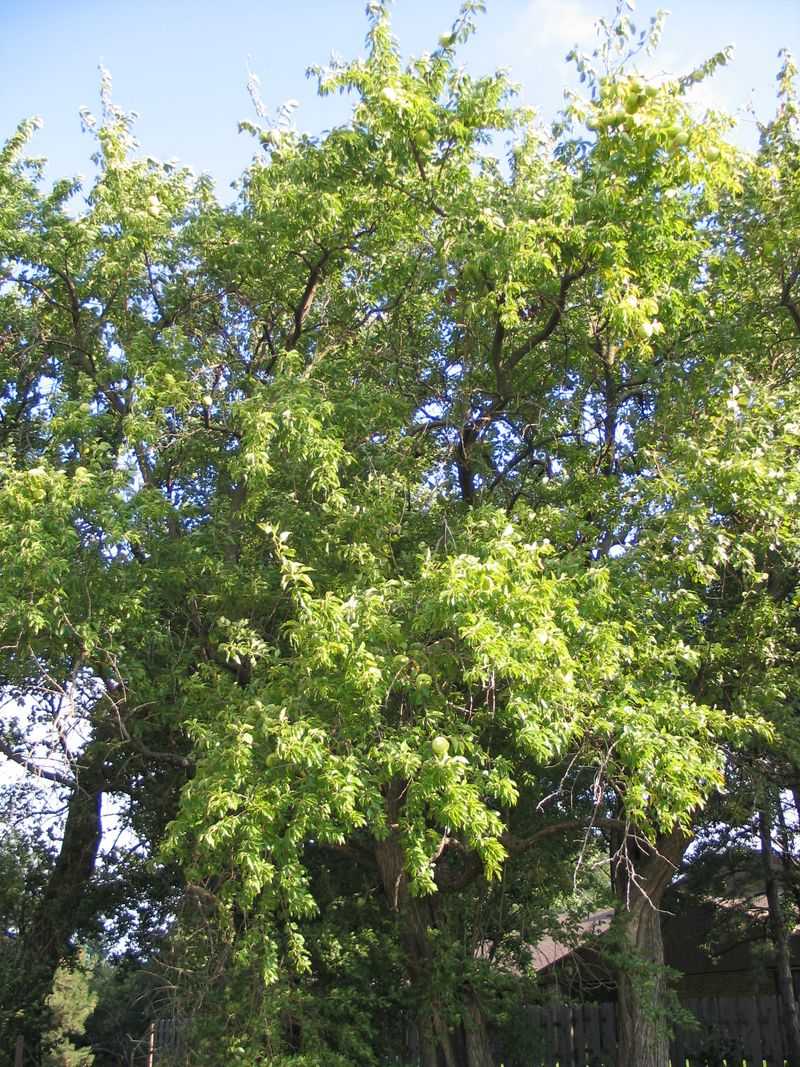
Farmers mostly stopped planting new hedges after that. Many old rows were simply left alone, and without regular trimming they grew into the tall, shaggy tree lines you see today.
A funny twist followed. The same hedges that wire replaced became the source of the posts that held wire up, because Osage orange wood resists rot better than almost any other North American tree.
During the Dust Bowl years of the 1930s, the tree got another big role. The federal Prairie States Forestry Project planted millions of trees in shelterbelts across the Great Plains, and Osage orange was one of the go-to species because it handled heat, wind, and drought.
So the fence rows around you may tell two stories at once. Some date to the hedge-planting boom of the mid-1800s, while others came later as windbreaks or volunteers sprouting from fallen fruit.
Your Missouri Garden Changes Every Week. Your Plan Should Too.
Gardening in Missouri changes quickly throughout the season. Every Friday you’ll receive a simple weekly plan showing exactly what to plant, prune, fertilize, harvest, and protect so you never miss the right timing.
You can often guess which is which. Neat, evenly spaced trunks hint at a planted hedge, while scattered trees point to nature filling in.
Bois d’Arc Bow Wood Gave This Tree Its Most Famous Name
Long before any settler pruned a hedge, Native peoples knew this tree well. The Osage Nation and other tribes valued its springy, dense wood for making hunting bows.
French explorers noticed and called it bois d’arc, meaning wood of the bow. Many people in Texas and the South still say it as bodark, and some old maps carry the name too.
The wood was so prized that it was traded across long distances, well outside the tree’s small native range. Bowyers today still treat a clean Osage stave like treasure.
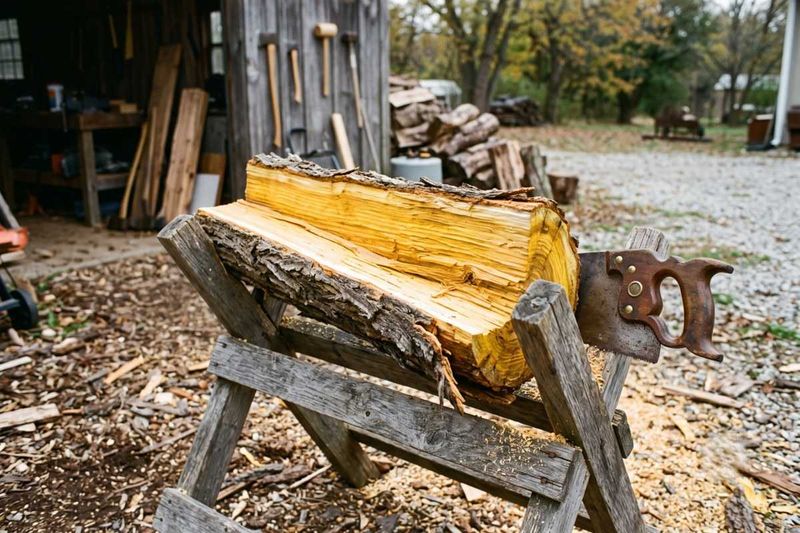
Fresh-cut wood shows a striking golden yellow color that slowly darkens to a warm brown. Early settlers boiled the roots and bark to make a yellow dye for cloth.
Settlers also used the heavy timber for wagon wheels, tool handles, and other jobs that needed strength. Its toughness made it a favorite wherever a part had to take a beating.
Personally, I think this history makes those roadside fruits feel a lot less ordinary. The next time you pick one up, take a look at the tree it came from and remember that its wood once powered hunting bows across the continent.
Hedge Apples Drop In Fall And Nobody Wants To Eat Them
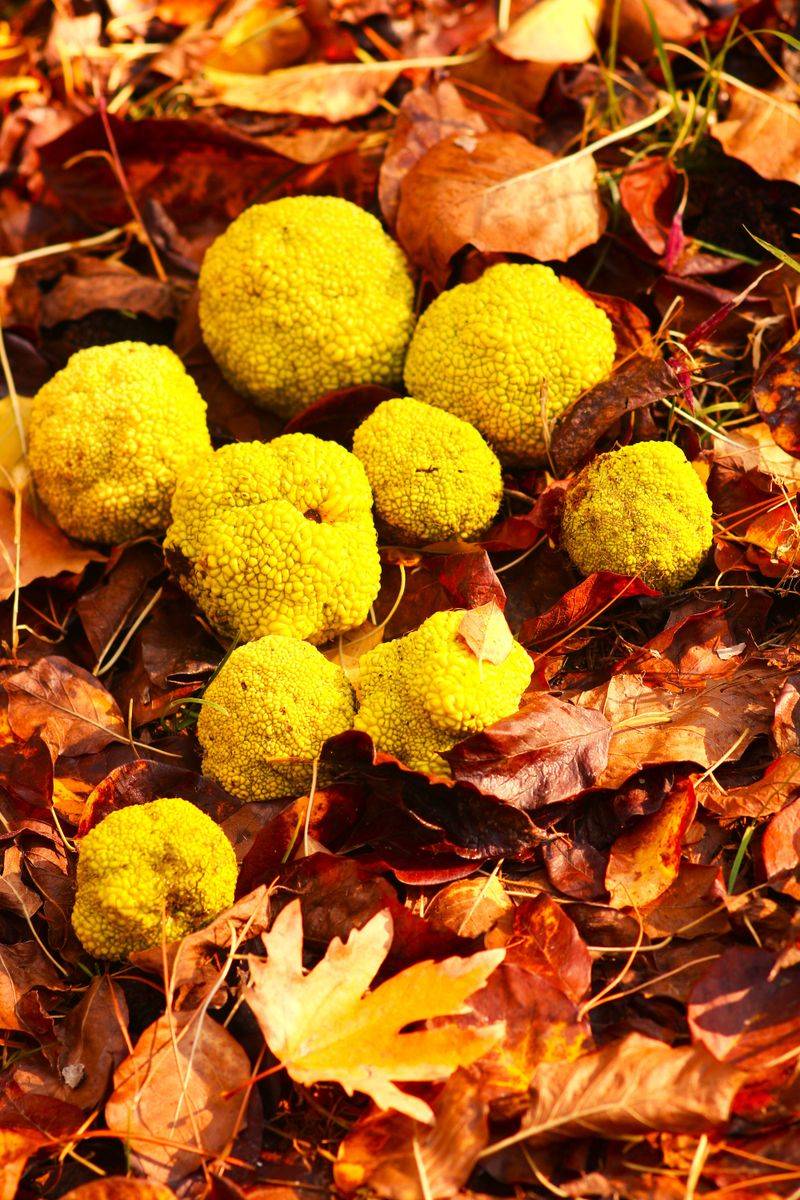
Grab one of these green globes and you will feel how heavy it is. Most are about four to six inches across, and they ripen in September and October before thudding to the ground.
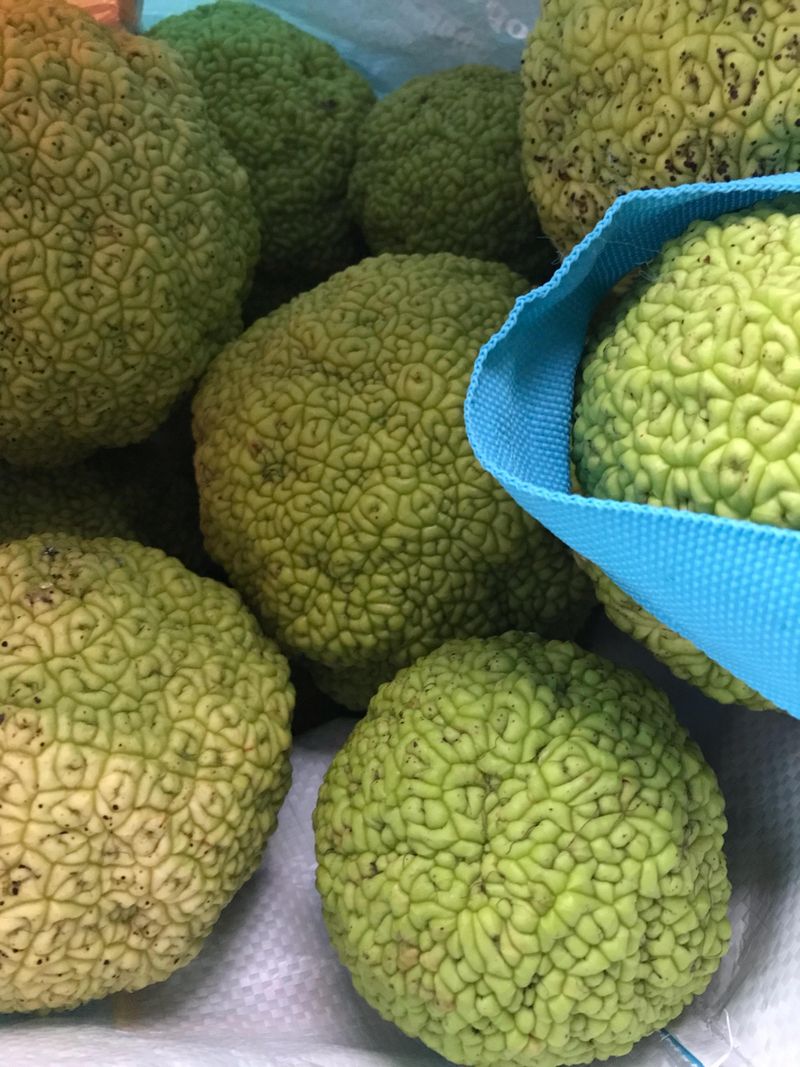
The surface looks like a wrinkled brain, and the scent reminds some people of oranges or cucumber. Despite the name, Osage orange is in the mulberry family, not related to citrus.
Cut one open and you will find a sticky white sap that can irritate skin, so wear gloves. The fruit is not considered food for people, and its pulpy texture would not tempt you anyway.
Wildlife is a different story, though only a little. Squirrels tear the fruit apart to dig out the small seeds, and you may find piles of shredded green pieces under the trees.
Scientists have wondered why so few modern animals eat the whole fruit. One popular idea suggests large Ice Age mammals once spread the seeds, but that remains a theory, not a settled fact.
Livestock owners should know that cattle occasionally choke on a fruit. Clearing them from pastures, or keeping animals away during heavy drop, is a smart habit.
Spiders In The Basement Probably Won’t Mind A Hedge Apple
Grandma swore by it. Set a few hedge apples in the basement, she said, and the spiders and crickets would pack up and leave.
Plenty of folks still try this every fall, and I get the appeal. The fruit is free, it smells kind of nice, and it feels like old farm wisdom.
Researchers have actually tested the idea. Studies, including work at Iowa State University, found that certain chemicals pulled from the fruit can repel some insects in the lab.
The catch is concentration. Those compounds are present only in small amounts in a whole fruit, and they do not spread far enough in a room to make much difference.
Extension experts generally call whole hedge apples a folk remedy rather than real pest control. As the fruit sits, it also softens, rots, and can attract mold or fruit flies.
For actual spider and cricket problems, try sealing cracks, adding door sweeps, cutting clutter, and reducing basement moisture with a dehumidifier. Those steps tackle the reasons bugs move in.
If you still enjoy setting out a hedge apple, go for it. Just check it weekly and toss it once it turns brown.
Osage Orange Fence Posts And Firewood Last For Decades
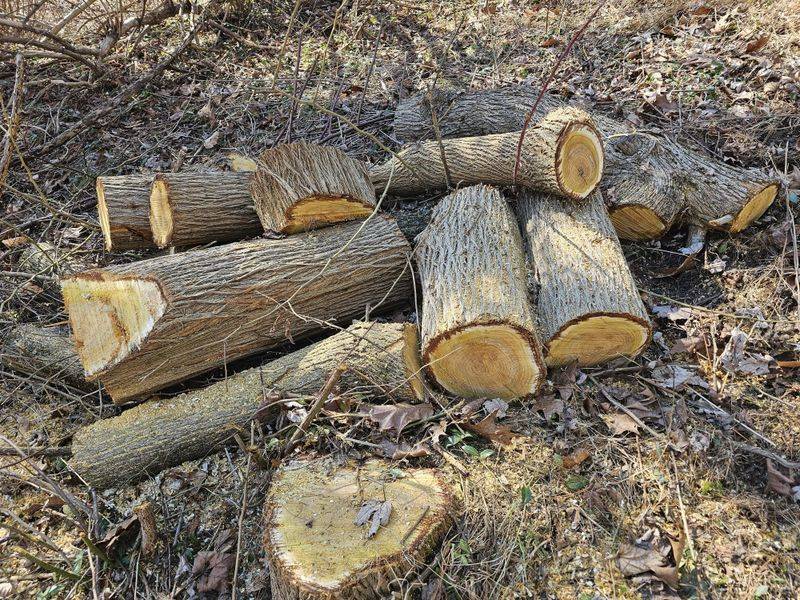
Ask an old farmer about hedge posts and watch them grin. Many swear a well-set Osage orange post outlasts the person who drove it.
That claim has truth behind it. The heartwood is among the most decay-resistant woods in North America, and untreated posts commonly last several decades in the ground.
The wood is also extremely hard and heavy. That makes cutting it a workout and dulls chainsaw chains quickly, so keep a file handy.
As firewood, hedge burns very hot thanks to its high density. Its heat value ranks near the top of common American woods, which is why many Missouri families stack it close to the stove.
There is one quirk to know. Osage orange tends to throw sparks and pop, so it works better in a closed woodstove than an open fireplace.
Woodworkers love it too, using it for turned bowls, tool handles, and outdoor furniture. Its golden color mellows with sunlight into a rich amber brown.
If an old hedge on your land needs thinning, do not haul that wood to the brush pile. Split, dried hedge is worth its weight in winter warmth.
Sharp Hedge Thorns And Falling Fruit Need A Little Planning
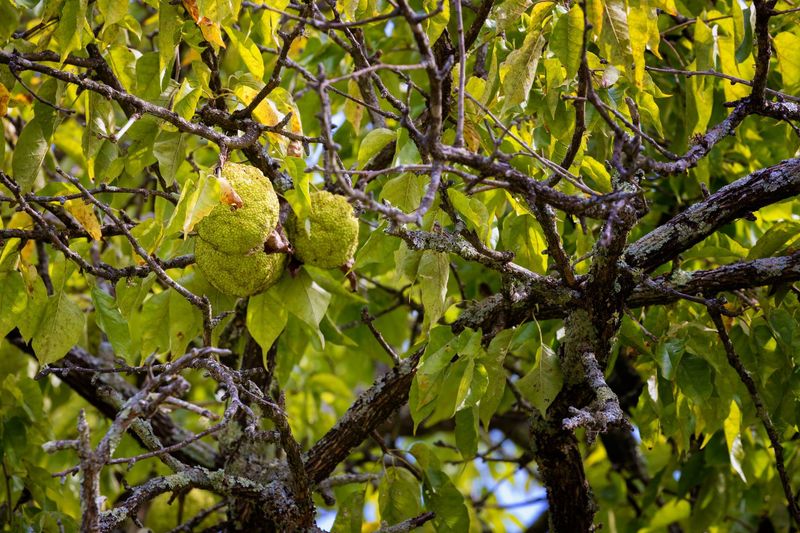
Thinking about adding one to your property? Before you do, take a close look at a branch.
Those stiff thorns can reach about an inch long, and they puncture tires, gloves, and skin with ease. Mowing under old hedges calls for extra care, because fallen twigs hide in the grass.
Fruit drop is the other concern. A mature female tree can shed a big pile of heavy hedge apples each fall, which is messy near driveways, sidewalks, or play areas.
Only female trees bear fruit, since Osage orange has separate male and female plants. Nurseries offer male, thornless selections such as White Shield and Wichita for people who want the toughness without the hassle.
The tree is native to a small part of the south-central U.S. but has spread widely, and in some areas it moves into pastures and open prairie. Conservation agencies suggest watching for unwanted seedlings and removing them while small.
For old fence rows, wear thick leather gloves and eye protection while pruning. Hire an arborist for big limbs, since the wood is heavy and tough to cut safely.
A little planning makes this rugged tree much easier to live with.
Your Next Country Drive Past A Hedge Row Will Feel Different
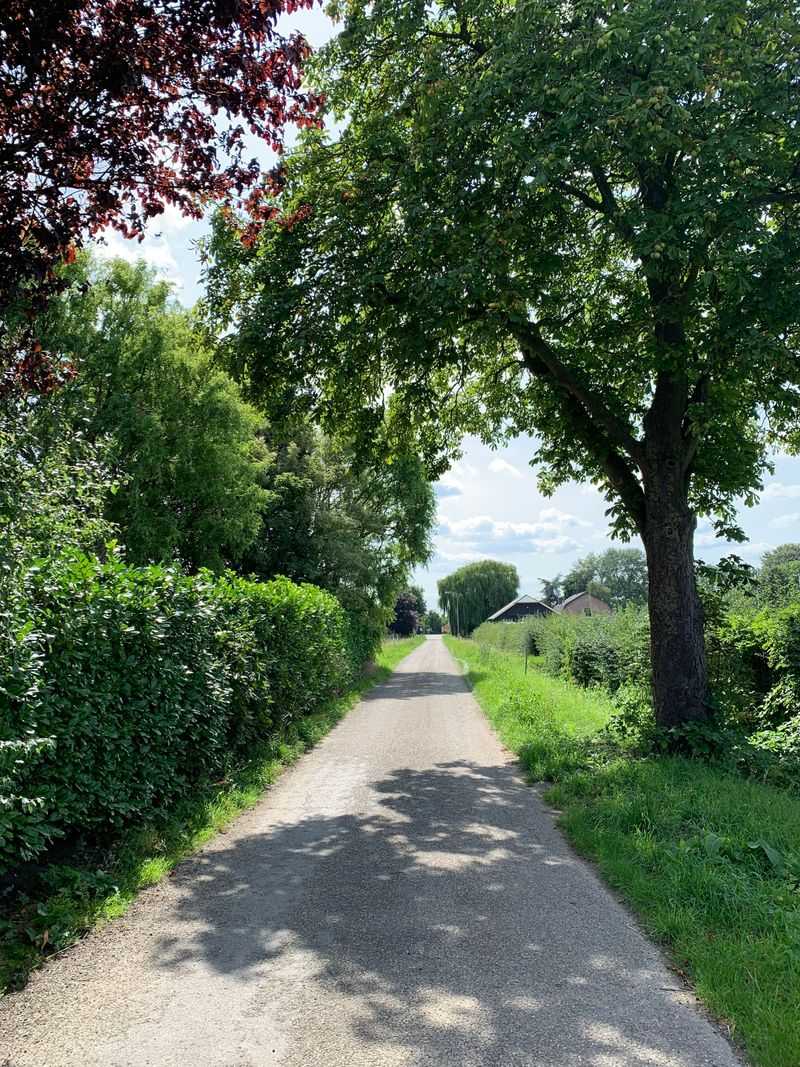
Half the fun now is spotting them. Once you know what to look for, old hedge rows jump out across rural Missouri like lines drawn on a map.
Look for twisted, furrowed orange-brown bark, glossy leaves, and those green fruits in fall. In winter, the bare thorny branches and fallen hedge apples make the trees easy to pick out.
Some of these rows quietly mark property lines from the 1800s. Others offer food and shelter for birds, rabbits, and quail, which appreciate the thorny cover.
If you collect hedge apples for a fall centerpiece, gather them from the ground with permission from the landowner. Rinse off the sap and set them on a tray, because they will soften in a few weeks.
Landowners with old hedges can treat them as living history. Keeping a healthy row as a windbreak or wildlife strip often makes more sense than clearing it.
Personally, I think these trees deserve a nod every time we pass. They stand as reminders that farmers once grew their fences by hand, one seedling at a time. Take a slow drive this October and see how many you can count.