8 Desert Grasses And Berry Shrubs That Give Your Arizona Yard Real Fall Texture
Fall in the Arizona desert does not come with red maples, but it does bring something just as good. As the heat finally breaks, native grasses throw up feathery plumes and tough little shrubs load up with berries for hungry birds.
Picking the right plants means your yard gets movement, color, and wildlife without a big water bill. Here are eight desert-ready choices that make October and November look and feel alive.
1. Deer Grass
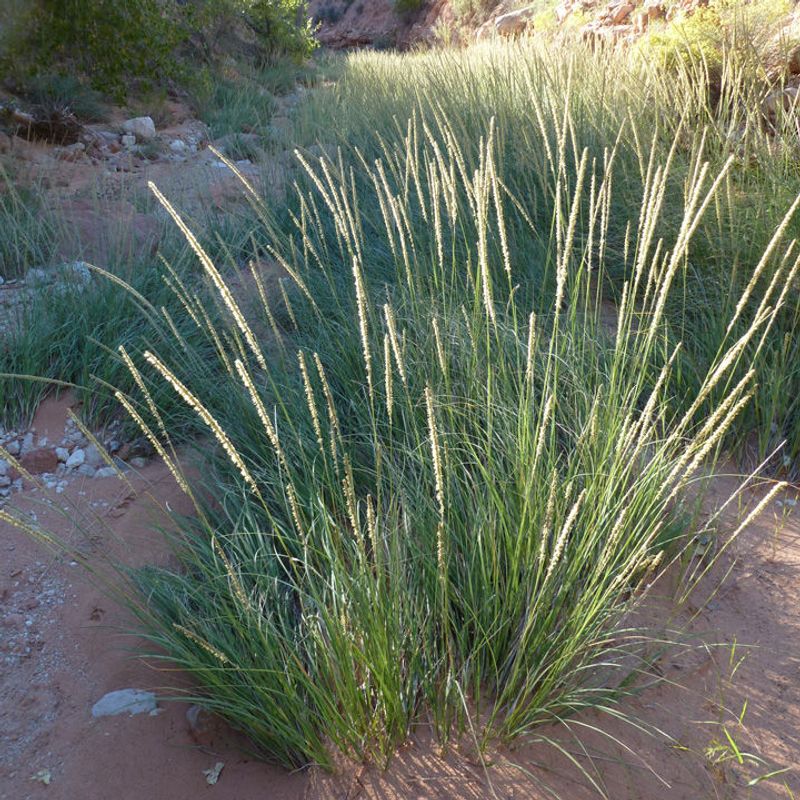
Picture a fountain of green that suddenly sprouts dozens of pencil-thin wands as summer fades. Deer grass (Muhlenbergia rigens) pulls off that trick every year, and it does it with almost no help from you.
The mound can reach four feet tall and just as wide, so it fills a bare corner fast.
Once roots settle in, a deep soak every one to two weeks in summer is usually plenty. In fall and winter you can stretch that even further.
Plant it in October or November, when cooler soil gives roots time to spread before the next round of 110-degree days.
Birds love this grass for more than its looks. The dense base offers shelter, and the dry blades make handy nesting material in spring.
Quail and sparrows often tuck underneath it when a hawk passes overhead.
Fun fact: native basket weavers in the Southwest have long used the flower stalks as the foundation of coiled baskets. Skip the shearing until late winter so wildlife can use the seed heads.
Then cut it back to about six inches, and fresh blades will pop up as spring warms. It handles alkaline soil, reflected heat, and monsoon downpours with ease.
2. Pink Muhly
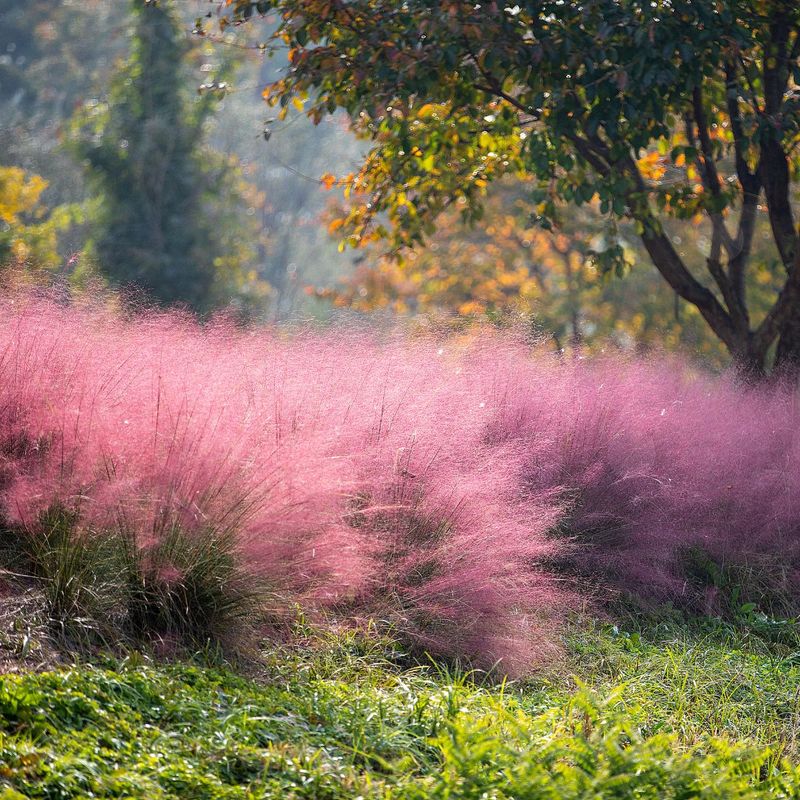
Ask any Phoenix neighbor what stops traffic in November, and odds are good they will point to a cloud of pink. Pink muhly (Muhlenbergia capillaris) spends most of the year as a tidy green clump, then explodes into hazy rose plumes in October and November.
Backlighting is the secret. Plant it where the low fall sun shines through from behind, like along a west-facing path or near a patio you use at sunset.
The plumes almost glow, and they sway with the slightest breeze.
Here is the honest part. Pink muhly is Southwest-adapted rather than a true Sonoran native, so it wants a little more water than deer grass.
A drip emitter running every week or so in summer keeps it happy. Good drainage matters too, since soggy caliche can rot the crown.
Pollinators and small insects drift through the plumes, which in turn can draw insect-eating birds into your yard. Group three or five together for the biggest impact, spacing them about three feet apart.
Trim old growth in late January before new shoots appear. With full sun and a fall planting date, one small nursery pot can turn into a showpiece within two seasons.
3. Blue Grama
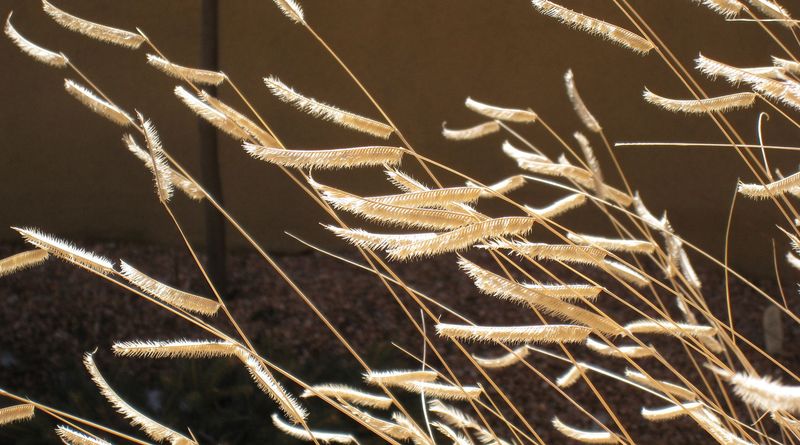
Those little curved seed heads look like tiny eyebrows lifted in surprise, and once you notice them, you cannot stop smiling. Blue grama (Bouteloua gracilis) is a short native grass, usually staying under a foot tall, that brings fine, delicate texture to the ground layer of your yard.
Your Arizona Garden Changes Every Week. Your Plan Should Too.
Gardening in Arizona changes quickly throughout the season. Every Friday you’ll receive a simple weekly plan showing exactly what to plant, prune, fertilize, harvest, and protect so you never miss the right timing.
So where does it fit? Think of it as a stand-in for thirsty lawn grass.
It works nicely along walkways, between boulders, or as a soft carpet under taller shrubs. Dry, rocky, or sandy soil is no problem at all.
Erosion control is a quiet bonus. The fibrous roots grab onto soil, which helps when monsoon storms send water racing across a slope.
Seed-eating birds like finches and sparrows also pick at the heads through fall and winter.
You can grow it from seed scattered just before the summer rains or plant plugs in fall. Water regularly until it fills in, then back way off.
In the hottest stretch it may go dormant and turn tan, which is normal and not a sign of trouble.
Mow or trim it once a year if you want a neater look. Otherwise, let those quirky eyebrows wave all season long.
4. Sideoats Grama
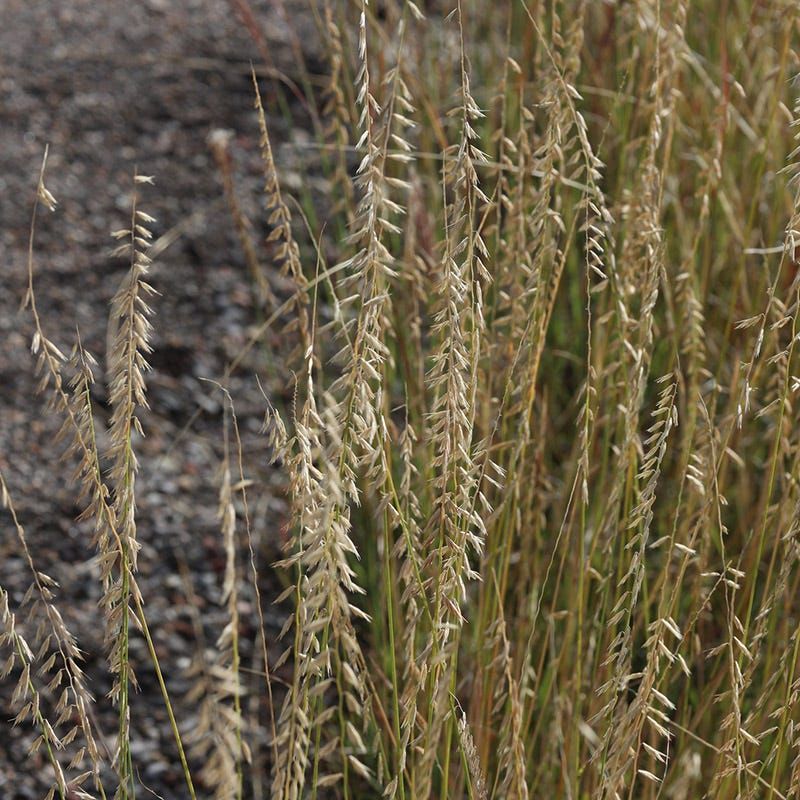
Imagine a grass that decided to hang all its decorations on just one side. Sideoats grama (Bouteloua curtipendula) dangles small oat-like spikelets along a single edge of each stem, giving it a lopsided charm that no other plant on this list can copy.
The clumps are loose and airy, reaching one to two feet tall. In fall, the stems often take on purple, bronze, and straw tones.
Mix it with blue grama and you get two heights of fine texture that play off each other beautifully.
Toughness is where it really earns its spot. Once rooted, it shrugs off Arizona summer heat and needs only occasional deep watering.
It handles alkaline soil and does well under the light shade of a mesquite.
Wildlife watchers will appreciate the seed buffet. Doves, quail, and sparrows forage on the fallen grain, and small butterflies use native grasses like this as host plants for their caterpillars.
A patch of it can make your yard feel more like a real piece of desert grassland.
Plant in fall or start seed before monsoon season. Cut it back in late winter, and leave the seed heads standing until then so the birds can finish their snacks.
5. Tanglehead
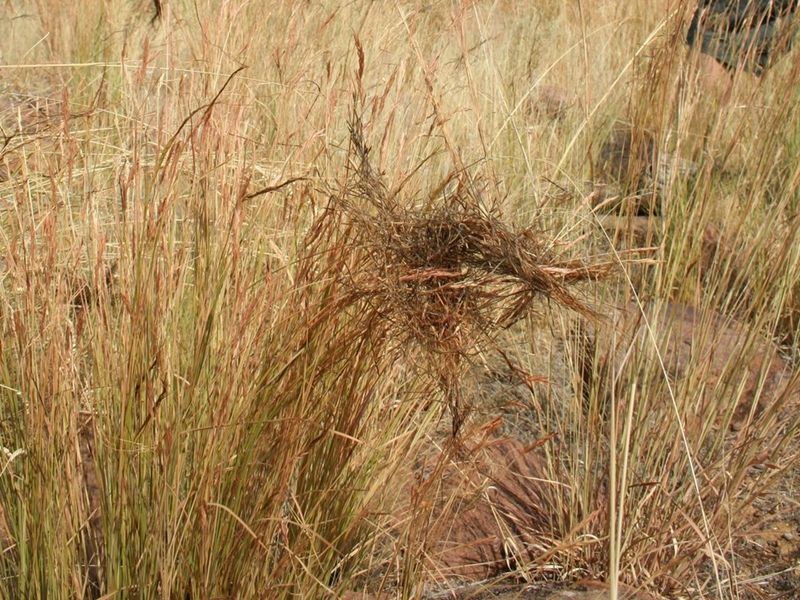
Few plants change outfits as dramatically as this one. Tanglehead (Heteropogon contortus) starts the season with dark green blades, then shifts to a rich copper in fall, topped with reddish seed heads that twist together like a messy braid.
That tangled look is not just for show. Each seed carries a long bristle that coils and uncoils as humidity changes, which helps it drill into the soil.
Kids tend to find this fascinating, so it makes a fun conversation plant.
For low-desert gardeners, the best news is the water story. In places like Tucson, tanglehead can often get by with no irrigation once it is established, surviving on monsoon rain alone.
Give it full sun and well-drained ground, and it pretty much takes care of itself.
A few tips keep it friendly. Place it away from walkways, since the sharp seeds can stick to socks and pet fur.
A back border, slope, or natural area works well.
Birds and small critters use the clumps for cover, adding life to the edges of your property. Plant it in fall and water it through its first year.
After that, enjoy the copper glow every autumn with almost zero effort.
6. Littleleaf Sumac
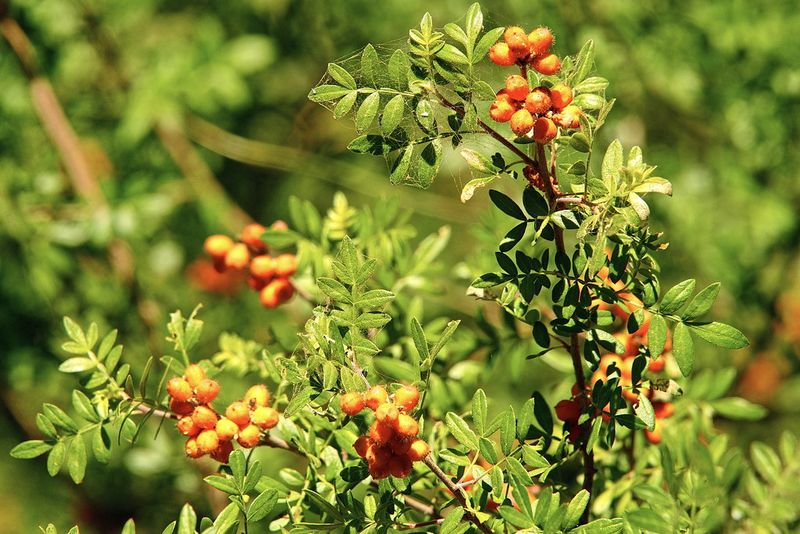
Out on rocky slopes in southern Arizona, littleleaf sumac (Rhus microphylla) has been feeding birds long before anyone planted a garden. Bringing it home lets you borrow a bit of that wild pantry for your own yard.
In fall, the tiny leaves take on muted shades of rose and purple. Then come the berries, clusters of small red fruits covered in fine hairs.
They often hang on into winter, right when other food grows scarce.
That timing is what makes it so valuable. Mockingbirds, thrashers, quail, and other wildlife may visit to snack on the fruit.
Its twiggy branches also give small birds a safe place to perch between trips to the feeder.
Care is refreshingly simple. Full sun, well-drained soil, and even rocky ground suit it fine.
Once established, it needs only occasional deep watering, making it a smart swap for thirstier hedges.
Here is a fun bit of history. People have long soaked the tart berries in water to make a lemony drink.
Plant it in October or November, give it room to reach six to eight feet, and let it grow into a natural shape. Light pruning in late winter is all it asks.
7. Western Sand Cherry
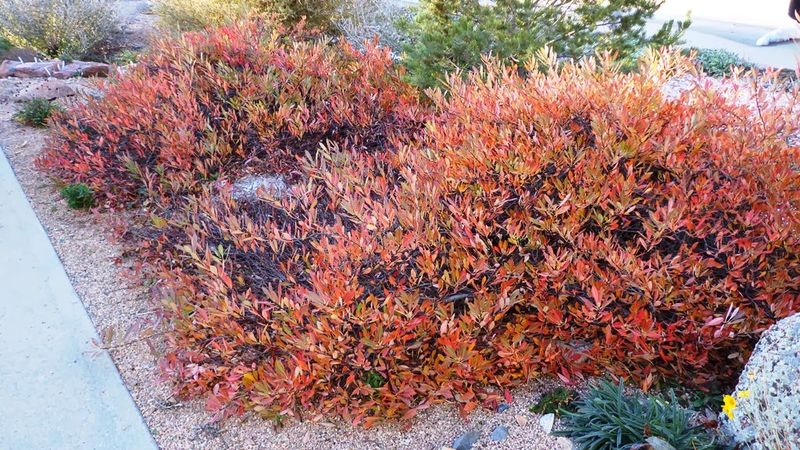
Want real fall color without moving to Colorado? Western sand cherry (Prunus besseyi ‘Pawnee Buttes’) delivers a punch of red that feels almost out of place in the desert, in the best way.
This low, spreading shrub stays around one to two feet tall and can creep several feet wide. Through summer, its silvery-green leaves look cool and calm.
Come fall, they flip to a bold red that brightens any bed.
Gardeners in the Phoenix metro, including Glendale, have had good luck with it. A spot with morning sun and some afternoon relief helps in the hottest neighborhoods.
It is drought tolerant once established, though a drip line during summer keeps it looking its best.
Small black cherries follow the spring flowers, and birds are quick to find them. Bees also visit those early white blooms, so the shrub works for wildlife across several seasons.
Use it as a groundcover on a gentle slope, along a border, or in front of taller natives like desert willow. Plant it in fall so roots grow during the mild months.
Mulch with decomposed granite and avoid heavy fertilizer. It pairs especially well with the fine textures of grama grasses nearby.
8. Desert Hackberry
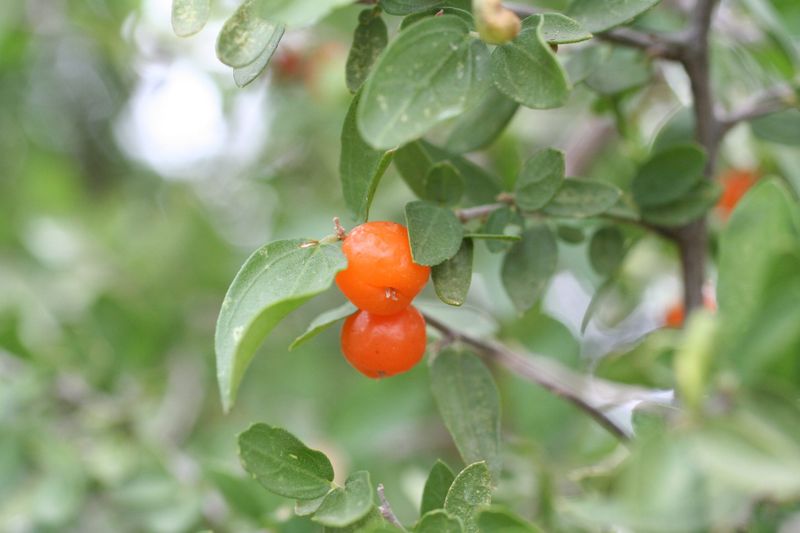
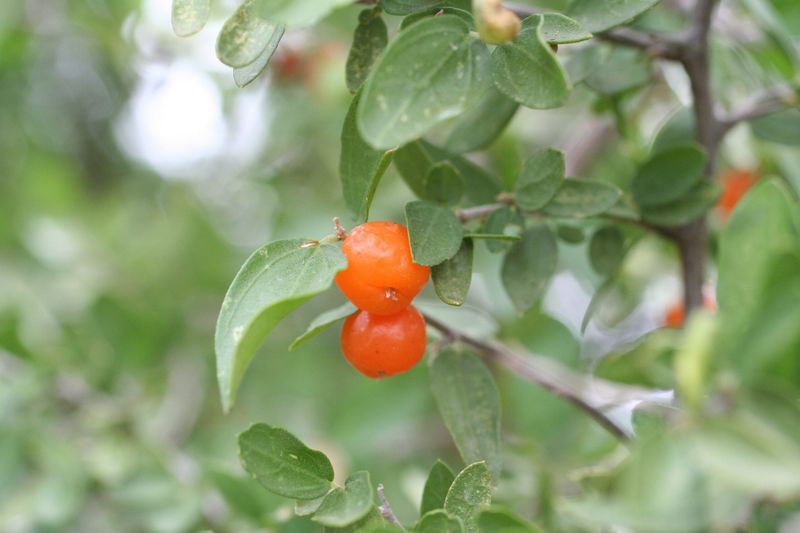
If birds could vote on the best shrub in the Sonoran Desert, desert hackberry (Celtis pallida) might win by a landslide. Its small orange-red berries are a favorite for curve-billed thrashers, Gambel’s quail, cardinals, and plenty of other feathered visitors.
The dense, zigzag branches are packed with thorns. That might sound like a downside, but for wildlife it is a fortress.
Birds nest safely inside, and lizards and small animals duck under it for cover.
More birds and lizards in the yard can mean more natural predators of insects. A busy habitat like this may help keep some pest populations in check, though results always vary from yard to yard.
Toughness is off the charts. Desert hackberry thrives in full sun, tolerates reflected heat from walls and driveways, and gets by on very little water once established.
It handles alkaline soil without complaint.
Use it as a living screen along a property line or as a security hedge under windows. It typically grows six to ten feet tall.
Plant it in fall, water it through the first summer, and then mostly leave it alone. Few native shrubs give back this much while asking for so little.