This Arizona Tree Blooms Through The Hottest Part Of Summer
Finding bright flowers in the middle of summer feels like a pleasant surprise. By then, many plants have already finished their biggest display, and the landscape can begin looking a little tired after weeks of relentless sunshine.
That is exactly why one flowering tree stands out the moment you see it. It refuses to let the hottest part of the season steal the color from your yard.
While many trees slow down, this one does the opposite. It saves its most impressive display for a time of year when blooms are becoming harder to find.
That unusual timing is one of the reasons it catches so much attention.
Arizona gardeners have long appreciated this tree for bringing fresh color when it is needed most. One look at it in full bloom is usually enough to understand why it has become such a favorite.
1. Desert Willow Keeps Blooming Through Summer Heat
Blooming at 110 degrees takes a special kind of toughness. Desert Willow, known botanically as Chilopsis linearis, does exactly that without skipping a beat.
Most flowering trees wrap up their show by late spring. Desert Willow is just getting started.
Its blooms appear in late spring and keep going strong through July and August, the hottest stretch of the desert year.
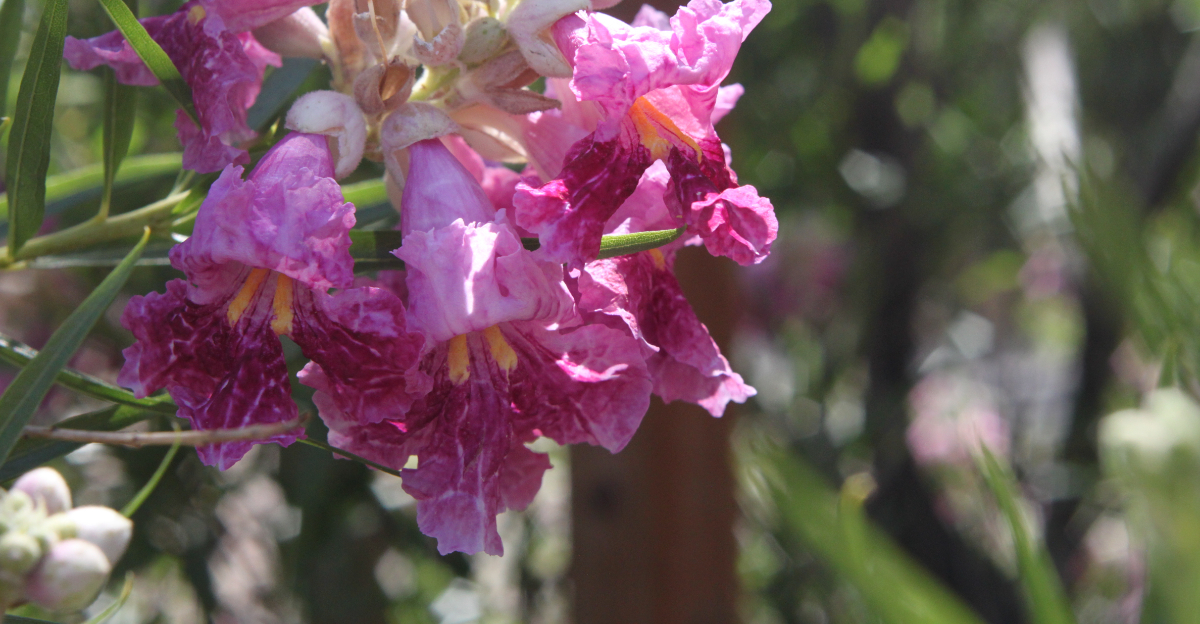
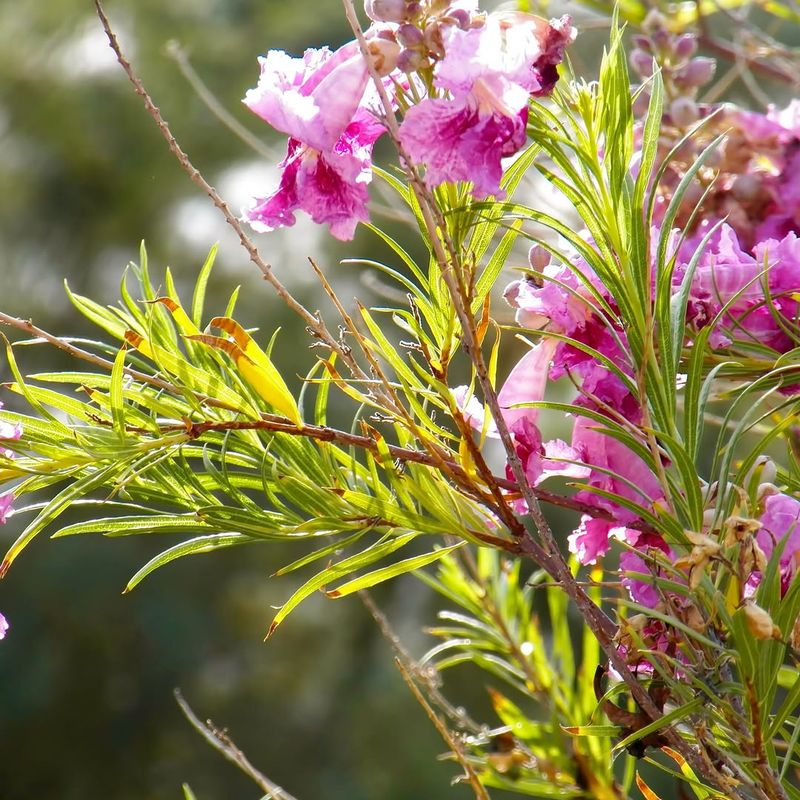
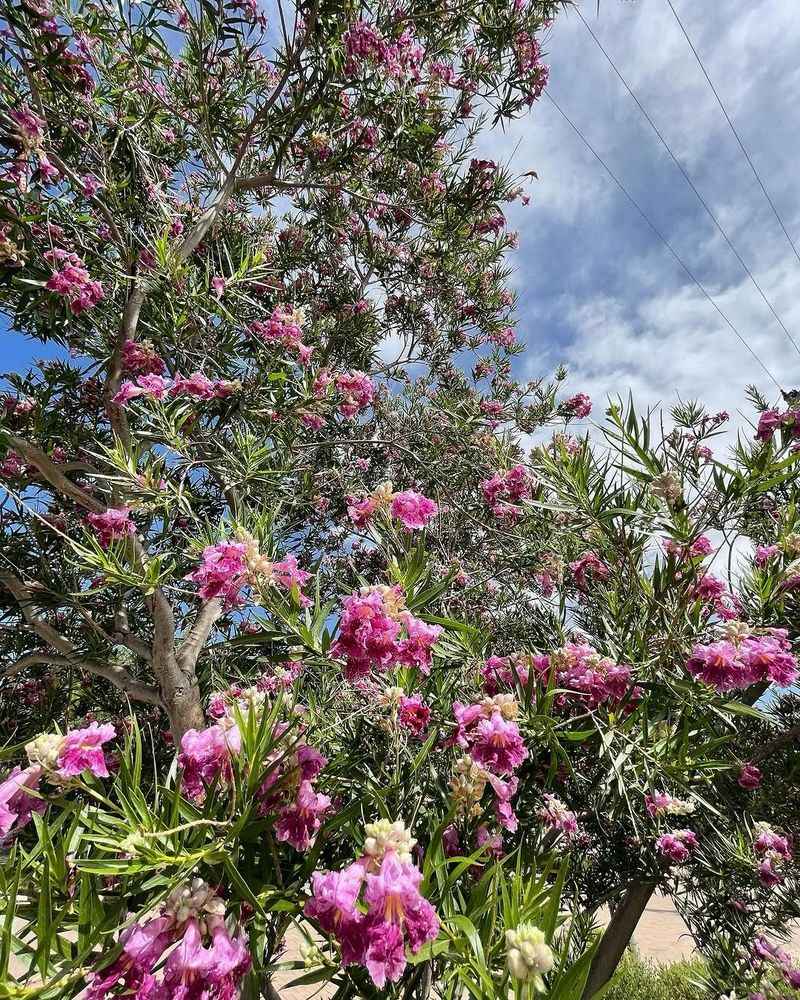
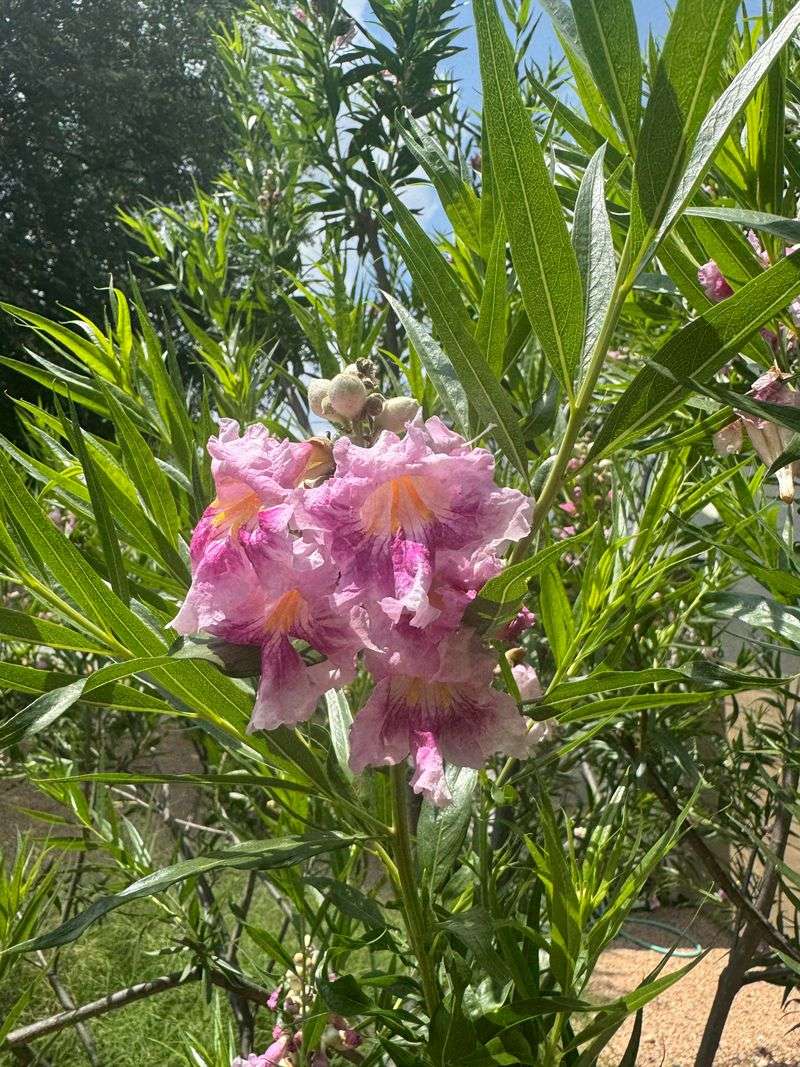
Flowers come in shades of pink, lavender, white, and deep magenta. Some varieties show two-toned petals with ruffled edges.
Hummingbirds show up fast once the blooms open.
Native to the Chihuahuan and Sonoran desert regions, this tree evolved alongside extreme heat. It does not fight summer.
It uses it.
Gardeners in the low desert often describe it as one of the only trees that looks better in August than it did in May. That reputation is well earned.
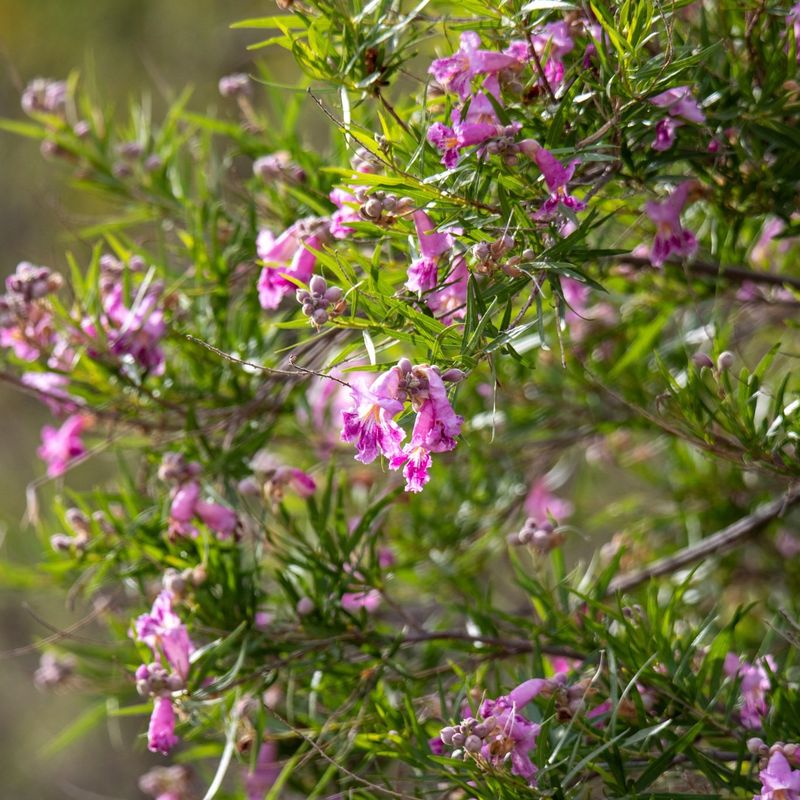
Growth stays moderate, typically reaching 15 to 25 feet tall depending on water and soil conditions. The narrow, willow-like leaves give it a graceful look without creating heavy shade.
Despite the name, Desert Willow is not a true willow. It belongs to the Bignonia family, making it a closer relative of Catalpa trees.
For anyone wanting reliable summer color without constant care, this tree delivers season after season with very little fuss involved.
2. Full Sun Helps It Bloom More Reliably
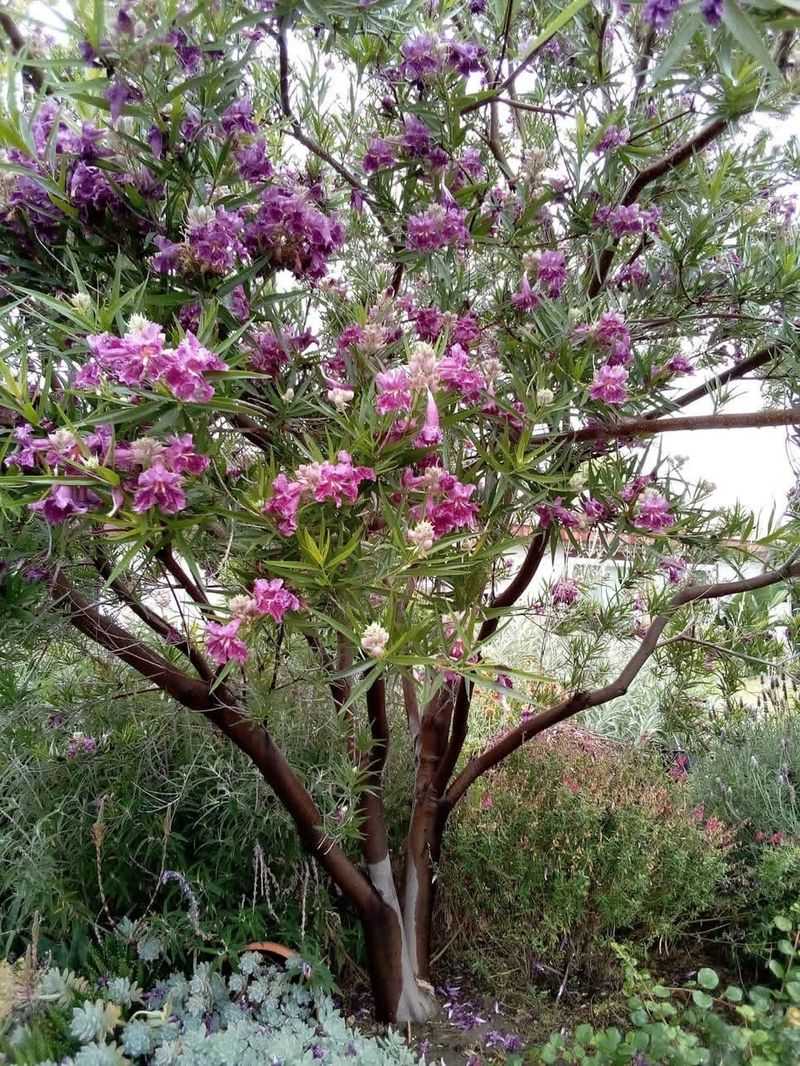
Shade is not this tree’s friend. Desert Willow wants full sun, all day, no exceptions.
Plant it where buildings, fences, or larger trees block afternoon rays and flower production drops noticeably. Stems may stretch toward light and the canopy thins out.
Blooms become sparse and scattered instead of dense and showy.
Full sun exposure triggers the hormonal responses that push this tree into heavy flowering. More light means more blooms, and in desert climates, strong sun is rarely in short supply.
South-facing and west-facing planting spots tend to work best. Those locations receive the longest and most intense sun exposure during summer months.
Reflected heat from walls, driveways, or rock mulch can actually benefit Desert Willow. Unlike many ornamentals, it handles radiant heat without stress or leaf scorch.
Young trees establish faster in full sun than in partial shade. Root systems develop more aggressively when the canopy receives maximum light, which helps the tree handle dry spells better as it matures.
Your Arizona Garden Changes Every Week. Your Plan Should Too.
Gardening in Arizona changes quickly throughout the season. Every Friday you’ll receive a simple weekly plan showing exactly what to plant, prune, fertilize, harvest, and protect so you never miss the right timing.
In regions like the Tucson and Phoenix metro areas, finding a full-sun spot is rarely difficult. Most residential yards offer at least one open area with unobstructed southern or western exposure.
Avoid planting under established shade trees. Competition for light and water slows establishment and reduces long-term flowering performance significantly over time.
3. Well-Drained Soil Helps Roots Stay Healthy
Soggy roots wreck this tree fast. Desert Willow evolved in sandy washes and rocky slopes where water drains away quickly after rain.
Heavy clay soils hold moisture too long around the root zone. Sitting in wet conditions stresses the root system and can lead to crown problems and poor growth over time.
Before planting, check your drainage. Dig a hole about 12 inches deep and fill it with water.
If it drains within an hour, your soil is likely fine. If water sits longer than that, amend with coarse sand or decomposed granite before planting.
Native desert soils, including caliche-heavy ground common across much of the Southwest, can be tricky. Break through hardpan layers when planting to allow deep drainage and prevent water from pooling at root level.
Rocky or gravelly soil actually suits Desert Willow well. Roots push through loose, open material easily and anchor the tree firmly without becoming waterlogged.
Raised planting beds work well in yards with poor drainage.
Elevating the root zone by even six to eight inches can make a significant difference in how the tree establishes.
Avoid planting in low spots where runoff collects after monsoon rains.
Even short periods of standing water around the base can set the tree back considerably during its first two growing seasons.
4. Deep Watering Encourages Deeper Root Growth
Shallow watering trains roots to stay near the surface. That makes any tree more vulnerable when heat peaks and topsoil dries out within hours.
Desert Willow benefits from slow, deep watering that pushes moisture down 18 to 24 inches below the surface. Roots follow water downward, and deeper roots access cooler, more stable soil during brutal summer stretches.
Drip irrigation works well when emitters are placed 18 to 24 inches away from the trunk. Positioning them too close to the base keeps moisture near the surface instead of pulling roots outward and downward.
During the first summer after planting, water every five to seven days depending on temperatures and soil type. Established trees need far less frequent irrigation, but that deep soaking method still applies.
Monsoon rains in the desert Southwest often provide enough supplemental moisture from July through September. Adjust irrigation schedules when seasonal rainfall is consistent and heavy.
A simple soil probe or long screwdriver can tell you how deep moisture is actually penetrating. Push it into the ground after watering.
Resistance drops noticeably in moist soil and increases again when you hit dry ground.
Overwatering a Desert Willow causes more problems than underwatering once the tree is established. Err toward letting the soil dry out slightly between waterings rather than keeping it consistently moist.
5. Too Much Fertilizer Reduces Flower Production
More fertilizer does not mean more flowers. With Desert Willow, heavy feeding often produces the opposite effect.
Nitrogen-rich fertilizers push fast, leafy growth. Stems and leaves bulk up quickly, but the tree puts its energy into foliage instead of flowers.
Bloom count drops and the canopy looks dense but dull during what should be peak flowering season.
Desert Willow is naturally adapted to low-nutrient soils. Pushing it with regular fertilization works against its natural growth pattern and can throw off its seasonal blooming cycle.
Skip the standard lawn fertilizers entirely. Products designed for grass are too nitrogen-heavy for this tree and will consistently favor green growth over flower production.
If your soil is genuinely poor, a light application of a low-nitrogen, phosphorus-forward fertilizer in early spring can support root development without sacrificing blooms. Use sparingly and only once per year at most.
Compost added to the planting hole at installation is generally enough to give young trees a healthy start. After that, most established Desert Willows do fine without any supplemental feeding at all.
Watch for signs of over-fertilization. Unusually soft, fast-growing stems that flop or bend under their own weight are a clear signal that nitrogen levels are too high for this species.
Restraint is the smarter approach. Less input, more bloom.
That principle holds up consistently with this tree across a wide range of growing conditions.
6. Light Pruning Keeps Growth Balanced
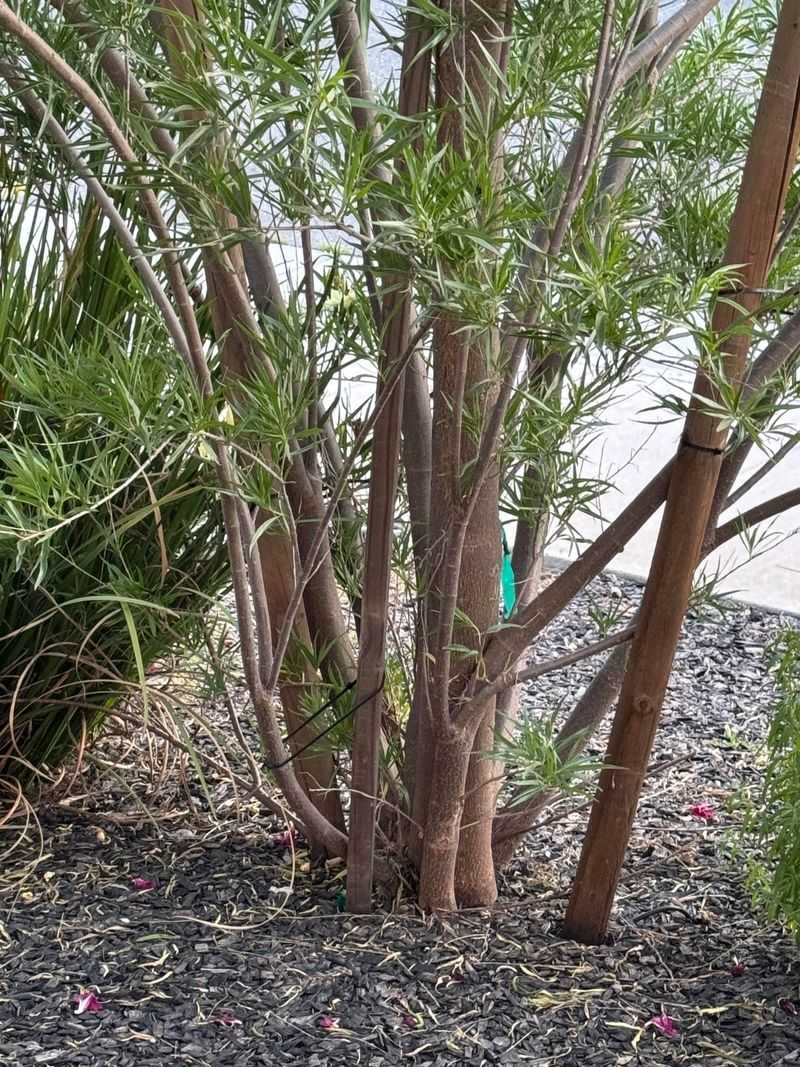
Heavy pruning is one of the fastest ways to reduce flowering on a Desert Willow. Cut too much and the tree spends the next season recovering instead of blooming.
Light, selective pruning done in late winter or very early spring gives the best results. Remove crossing branches, weak or rubbing stems, and any growth that disrupts the natural open canopy structure the tree naturally develops.
Desert Willow tends to grow with multiple trunks if left alone. That multi-stem habit is not a problem.
In fact, many gardeners prefer it because it creates a more natural, graceful silhouette in the landscape.
If a single-trunk tree is preferred, select the strongest central leader early and remove competing stems gradually over two or three seasons. Removing too many at once stresses the tree unnecessarily.
Avoid pruning in summer while the tree is actively blooming. Cutting back flowering stems removes the current season’s flower buds and cuts the display short before it finishes naturally.
Deadheading spent blooms is not necessary for Desert Willow. Seed pods that form after flowering are slender and interesting looking.
Many gardeners leave them on through fall and winter for added visual texture.
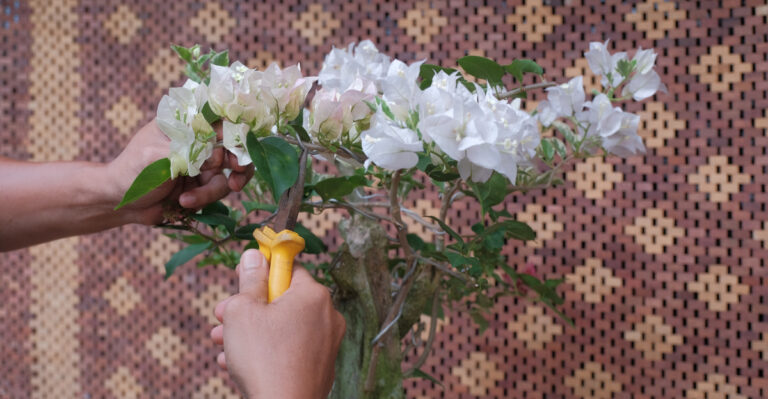
Tools should be clean and sharp before any pruning session. Ragged cuts heal more slowly and leave larger entry points for pathogens that can affect stem health over time.
7. Less Water Is Needed After Establishment
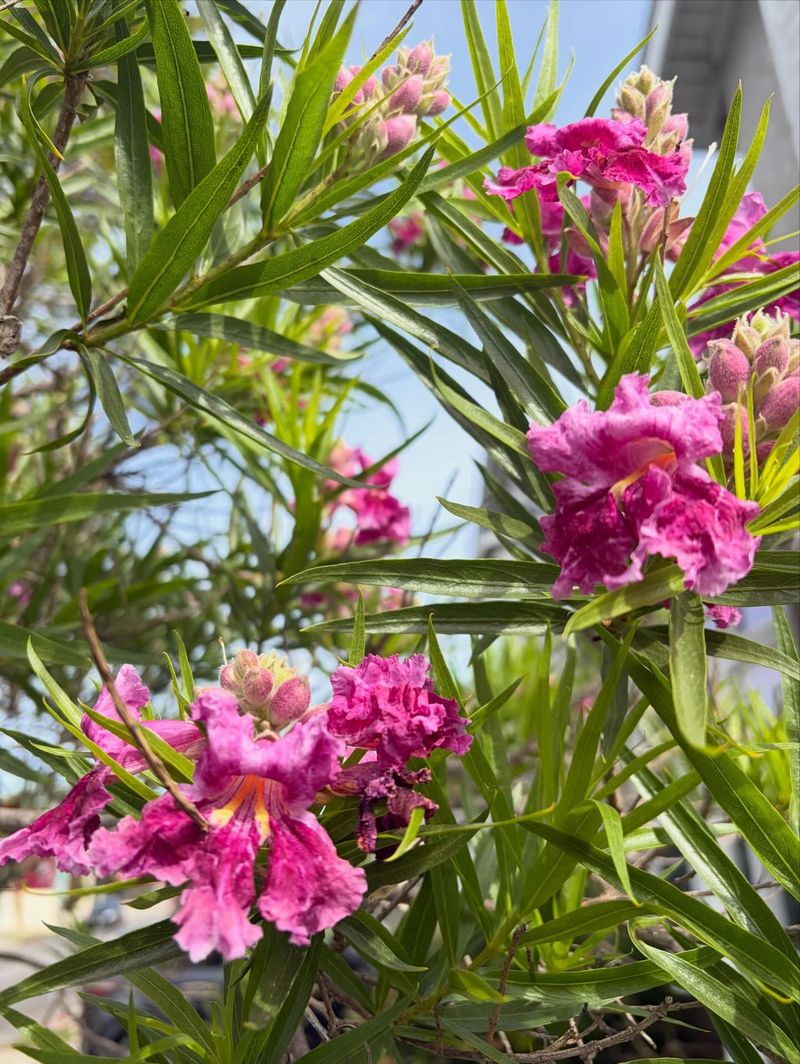
Getting through the first two years is the hardest part. After that, Desert Willow becomes one of the most water-efficient flowering trees available for hot, dry climates.
Established trees in low desert regions can survive on natural rainfall alone in most years.
Monsoon moisture from July through September often meets their seasonal needs without any supplemental irrigation from homeowners.
During extended dry spells outside the monsoon window, one deep watering every two to three weeks is usually enough to keep a mature tree looking strong and blooming well through summer.
Root systems on established Desert Willows extend surprisingly wide and deep.
That spread allows the tree to access moisture from a much larger soil volume than shallow-rooted ornamentals can reach.
Mulching around the base helps retain whatever soil moisture is present. A layer of decomposed granite or wood chip mulch two to three inches thick slows surface evaporation noticeably during hot, dry stretches.
Keep mulch pulled back a few inches from the trunk to prevent moisture from sitting directly against the bark.
Contact between mulch and bark over time can create conditions that weaken stem tissue at the base.
Cutting back irrigation too quickly in year one is a common mistake.
Let the tree establish its root system fully through at least two summers before reducing watering frequency to a true low-water schedule.