8 Venomous Creatures Georgia Homeowners Should Watch Out For As Temperatures Drop
A tiny critter in north Georgia glows bright blue-green under a blacklight, and it often hides in basements. I learned that fact years ago, and I still check my garage corners with a flashlight every fall.
Cooler nights send plenty of small neighbors hunting for shelter, and our homes look like cozy hotels to them. Woodpiles and leaf heaps suddenly become prime real estate for creatures that pack a surprisingly painful punch.
I have to admit, a few of these visitors look harmless enough to pet, which makes them extra sneaky. You need to know which fuzzy or striped critters deserve a polite distance before you reach into that shrub.
Most of them want nothing to do with people, and bites or stings in Georgia remain fairly uncommon overall.
Which eight creatures should you watch out for before tackling your next fall garden chore?
1. Shiny Black Widow Spiders Hide In Woodpiles
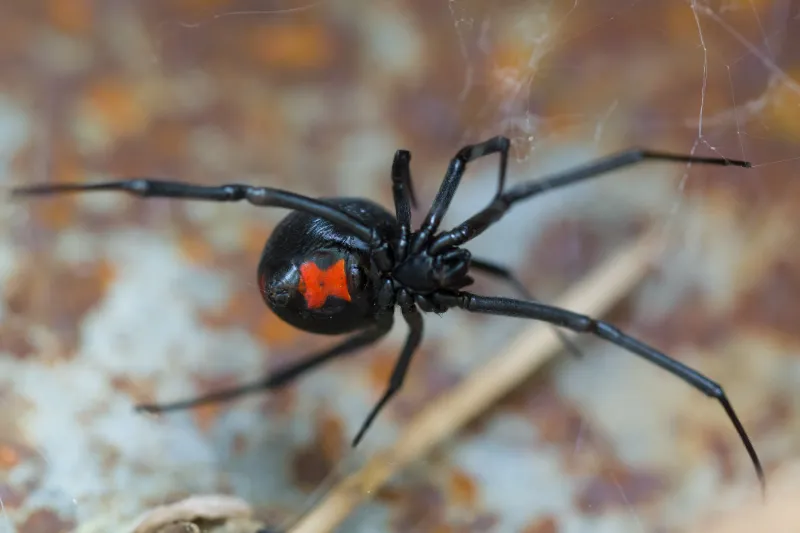
Flip a clay pot in October, and you might spot a glossy black spider with a red hourglass underneath.
Southern black widows love quiet clutter, and I swear they pick my favorite pots on purpose.
Only the adult females carry that bold red marking, and their round bodies reach about half an inch long. Males and young spiders look smaller and paler, so they rarely get noticed or bother anyone at all.
Their webs look messy and tangled, usually stretched low near the ground in sheds or under stacked lumber.
Unlike tidy orb weavers, widows spin tough silk that feels oddly sticky and crackles slightly when you brush it.
Widow venom affects the nerves and can trigger strong muscle cramps, so calling a doctor after any suspected bite is wise. Serious outcomes are rare, and these spiders mostly bite only when they get pressed against bare skin.
Personally, I wear thick leather gloves whenever I move firewood or clear out old flower pots this time of year. Shake out boots and garden gloves before wearing them, especially if they spent summer sitting in the garage.
Those round, papery egg sacs can hold hundreds of eggs, so removing them now spares you a crowd next spring. A sturdy vacuum handles webs and sacs nicely, and I seal the bag in plastic before tossing it out.
2. Brown Recluse Spiders Seek Out Quiet Closets
Few spiders spark more rumors than the brown recluse, and honestly, most of those scary stories involve a different spider entirely. Experts note that many reported bites turn out to be skin infections or other harmless brown spiders instead.
In our state, established populations show up mainly in the northwest corner, while sightings elsewhere stay fairly scattered and uncommon.
That said, these shy spiders hitch rides in moving boxes, so a stray one can turn up almost anywhere.
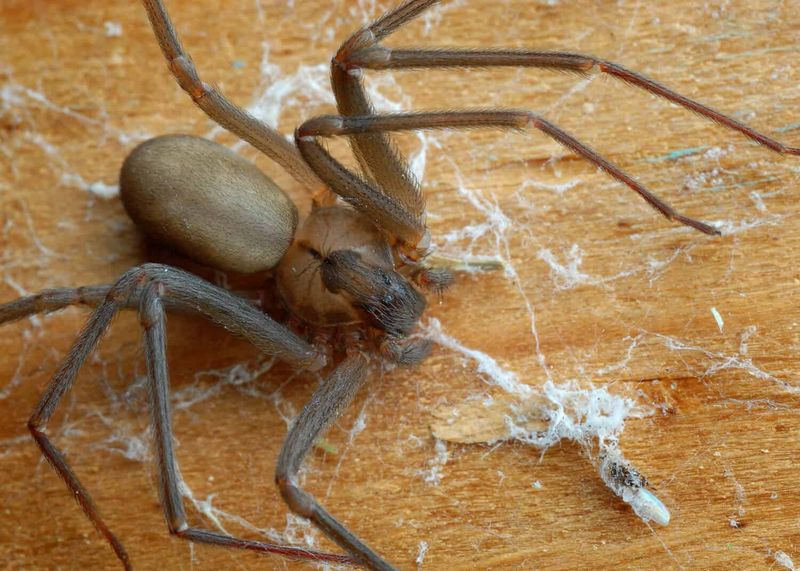
Look for a tan body with a darker violin shape behind the eyes, though that marking alone can fool people. Experts check the eyes instead, since recluses have six eyes arranged in three pairs rather than the usual eight.
Your Georgia Garden Changes Every Week. Your Plan Should Too.
Gardening in Georgia changes quickly throughout the season. Every Friday you’ll receive a simple weekly plan showing exactly what to plant, prune, fertilize, harvest, and protect so you never miss the right timing.
Their venom can damage skin tissue and cause slow-healing sores, so any bite that worsens deserves a prompt medical visit.
Luckily, most bites heal without major trouble, and the spiders bite mostly when trapped inside clothing or bedding.
I like to store holiday decorations in sealed plastic bins instead of cardboard, which recluses seem to adore. Sticky traps along baseboards also help you learn what is actually crawling around before you start to worry.
Shake out old clothes that have hung untouched in closets since spring before you pull them on for chilly mornings. Keeping beds a few inches away from walls reduces the odds of a curious spider wandering under your covers.
3. Southern Devil Scorpions Creep Into North Georgia Basements
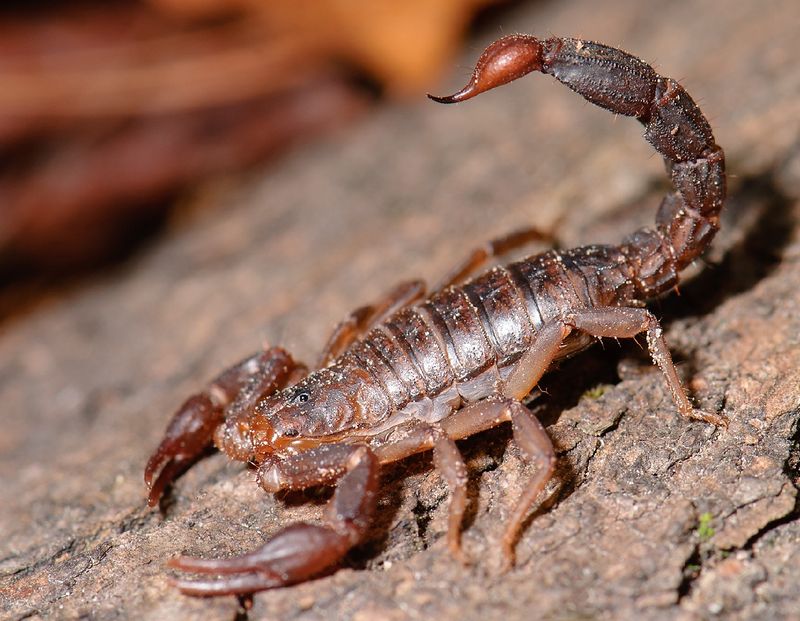
Yes, scorpions really do live here, and the southern devil scorpion glows a ghostly blue-green under ultraviolet light.
Most folks are shocked to learn this tiny arachnid roams the mountains and foothills of north Georgia.
Vaejovis carolinianus usually measures less than two inches long, with a brownish body and slightly darker, slender pincers up front. It hunts small insects at night and spends daylight hours tucked under rocks, loose bark, or fallen logs.
Its sting feels sharp and burning, and people often compare the sensation to a bee or wasp sting. Healthy adults usually recover with an ice pack, though anyone showing signs of allergic reaction should seek emergency care quickly.
As fall nights cool off, these scorpions sometimes wander into basements, crawl spaces, and garages through small foundation gaps.
I keep a cheap blacklight flashlight handy, and an evening sweep turns scorpion hunting into an oddly fun family activity.
Sealing cracks around doors and pipes makes a big difference, since these flat little critters slip through surprisingly narrow openings. Moving rock piles and firewood away from the house removes the cool hiding spots they prefer during the day.
Shake out shoes left near basement doors, and check towels on the floor before you pick them up barefoot. Avoid handling scorpions directly.
If one appears indoors, keep children and pets away and contact a pest control professional if safe removal is needed.
4. Copperheads Bask On Sunny Leaf Piles
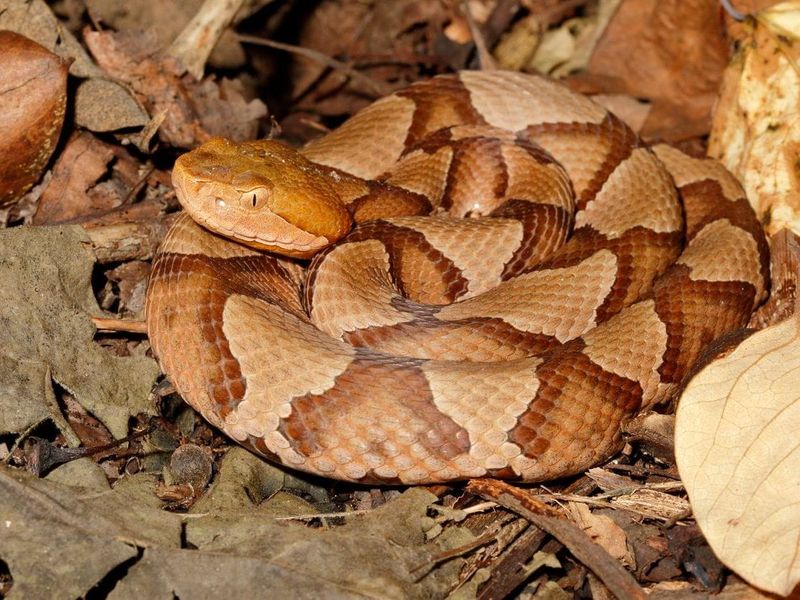
Raking leaves in October can feel like playing hide and seek with a copperhead, because their pattern matches fallen foliage beautifully.
I once froze mid-rake when a pile of brown leaves suddenly lifted its copper head and stared back at me.
Copperheads usually grow two to three feet long, wearing tan bodies crossed by darker bands shaped like hourglasses.
Those bands look narrow along the spine and wide on the sides, which helps you identify them from a safe distance.
Fall brings a burst of activity, since many females give birth to live young from late summer into early fall. Baby copperheads have bright yellow tail tips that they wiggle like little worms to lure frogs and lizards closer.
Copperheads cause many of the venomous snakebites reported in the Southeast, often because people step near them without noticing. Their bites rarely threaten life, but they hurt badly and can cause serious swelling, so head to an emergency room promptly.
As days grow cooler, these snakes shift toward daytime basking on sunny patios, stone walls, and warm driveways. Wear sturdy boots while gardening, and use a long rake instead of bare hands when you clear thick ground cover.
Keeping grass trimmed and leaf piles away from doorways gives copperheads fewer cozy cover spots near your house. If you spot one, simply back away slowly, since most snakes leave on their own when given some space.
5. Cottonmouths Lounge Along Ponds And Creek Banks
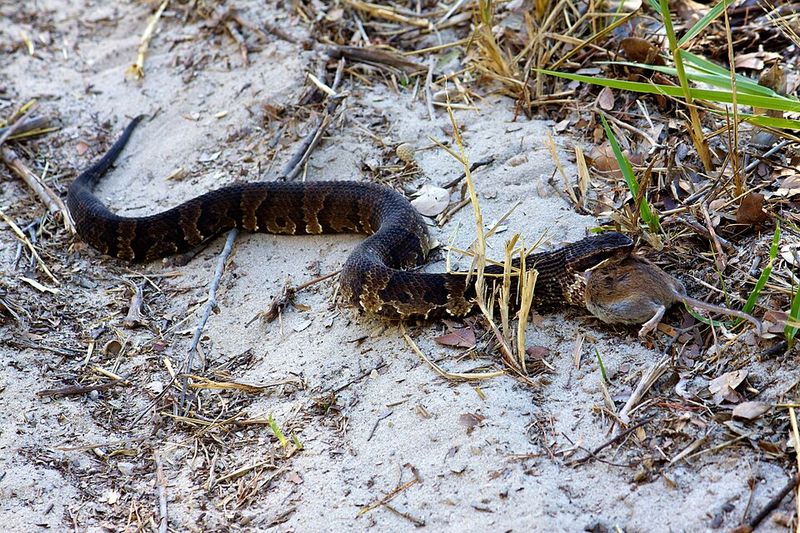
Few warnings feel as dramatic as a cottonmouth throwing its jaws wide open to flash that bright, cotton-white mouth lining.
Personally, I find that display oddly polite, since the snake is basically saying please back off before trouble starts.
Cottonmouths live mostly in the southern half of the state, especially around swamps, ponds, and slow, muddy creeks. Adults look thick and heavy, with dark olive or nearly black bodies and a broad, blocky head behind the neck.
Many harmless water snakes get blamed for being cottonmouths, which leads to plenty of unnecessary panic along the shoreline. One helpful clue is a dark stripe running from the eye toward the jaw, though young ones show brighter banded patterns.
Their venom can cause painful swelling and tissue damage, so any bite needs emergency treatment without waiting around.
Skip tourniquets or cutting the wound, and simply keep calm while someone drives you to the nearest hospital quickly.
On mild October afternoons, cottonmouths often sun themselves on logs, rocks, or grassy banks near the water. Watch where you step around backyard ponds, and keep a flashlight handy if you walk near water after sunset.
Trimming thick vegetation around ponds and drainage ditches helps you spot snakes before you get uncomfortably close. Leave identification and removal to wildlife professionals, since many bites happen when people try to handle or harass snakes.
6. Eastern Coral Snakes Slip Through Sandy Pine Woods
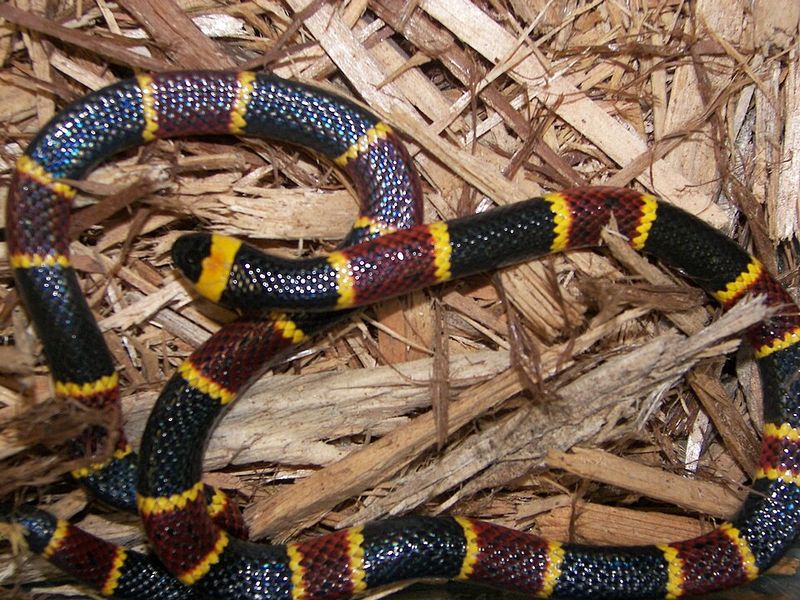
Bright bands of red, yellow, and black make the eastern coral snake look more like a piece of jewelry than wildlife. Seeing one feels rare and thrilling, mostly because these secretive snakes spend much of their lives burrowing underground.
Micrurus fulvius lives mainly in the sandy Coastal Plain of south Georgia, favoring pine flatwoods and scrubby oak woodlands.
They stay fairly slender, usually around two feet long, with a blunt black snout followed by a yellow band.
The red bands touch the yellow ones on coral snakes, while harmless look-alike kingsnakes have red bands touching black.
That color pattern can help distinguish eastern coral snakes from some harmless look-alikes, but it is not reliable for identifying every snake in the United States.
Coral snake venom attacks the nervous system, and symptoms may appear hours after a bite with very little early pain. Anyone bitten needs emergency care right away, even if they feel perfectly fine during those first quiet moments afterward.
Thankfully, bites are uncommon because coral snakes avoid people and have small mouths that make biting less likely. Most bites happen when someone picks one up, so admiring those pretty colors with hands in pockets is smart.
Sightings often pick up during spring and fall, when these snakes travel more across pine straw and garden mulch. Wear gloves while spreading mulch or digging in sandy beds, and teach kids to leave bright snakes alone.
7. Fuzzy Puss Caterpillars Hide Painful Spines
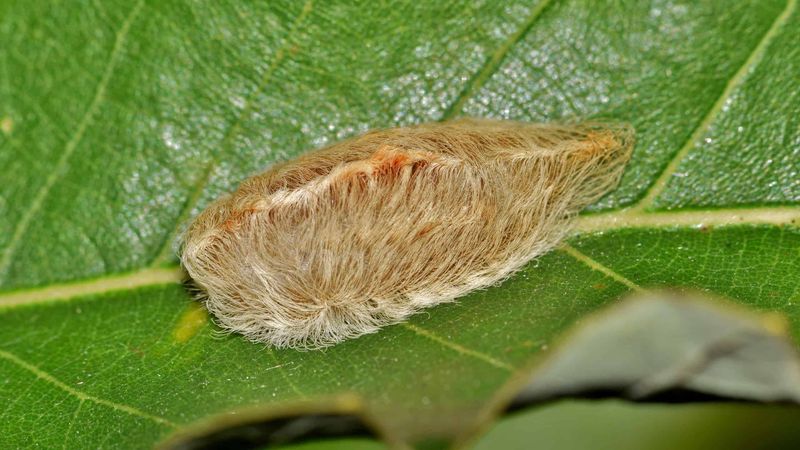
With its silky tan hair, the puss caterpillar looks like a tiny toupee that wandered onto your oak leaves.
I have to admit, I almost stroked one once before my gardening buddy grabbed my wrist just in time.
Under that soft fluff hide short, hollow spines packed with venom that break off easily into your skin. Experts often call it one of the most venomous caterpillars in the United States, which surprised me the first time.
A sting causes intense burning pain that can spread up an arm, sometimes with swelling, red blotches, or nausea. Gently pressing clear tape over the area and peeling it away helps lift out spines, then an ice pack eases the sting.
These caterpillars munch on oaks, elms, citrus, and many other trees and shrubs, often showing up around late summer and fall.
Later, they spin hard cocoons on bark and emerge as fuzzy southern flannel moths with wonderfully fluffy wings.
Kids are the most likely victims, since a furry caterpillar looks irresistible to curious little fingers on playground trees. Teach children to look but not touch, and check swing sets or benches that sit beneath leafy branches.
Gloves and long sleeves help a lot when pruning shrubs or picking up fallen fruit this time of year. Most gardeners simply tolerate them, because puss caterpillars rarely cause enough leaf damage to require any pesticide treatment.
8. Saddleback Caterpillars Wear A Bright Green Blanket
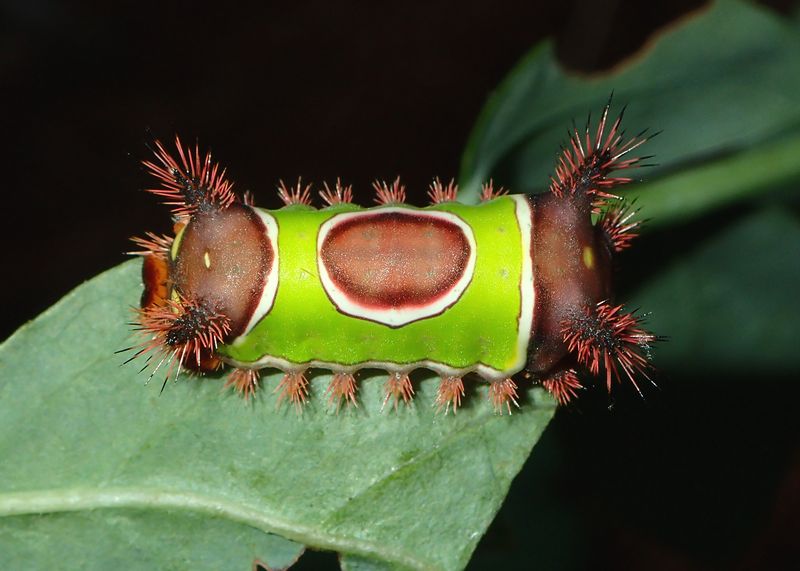
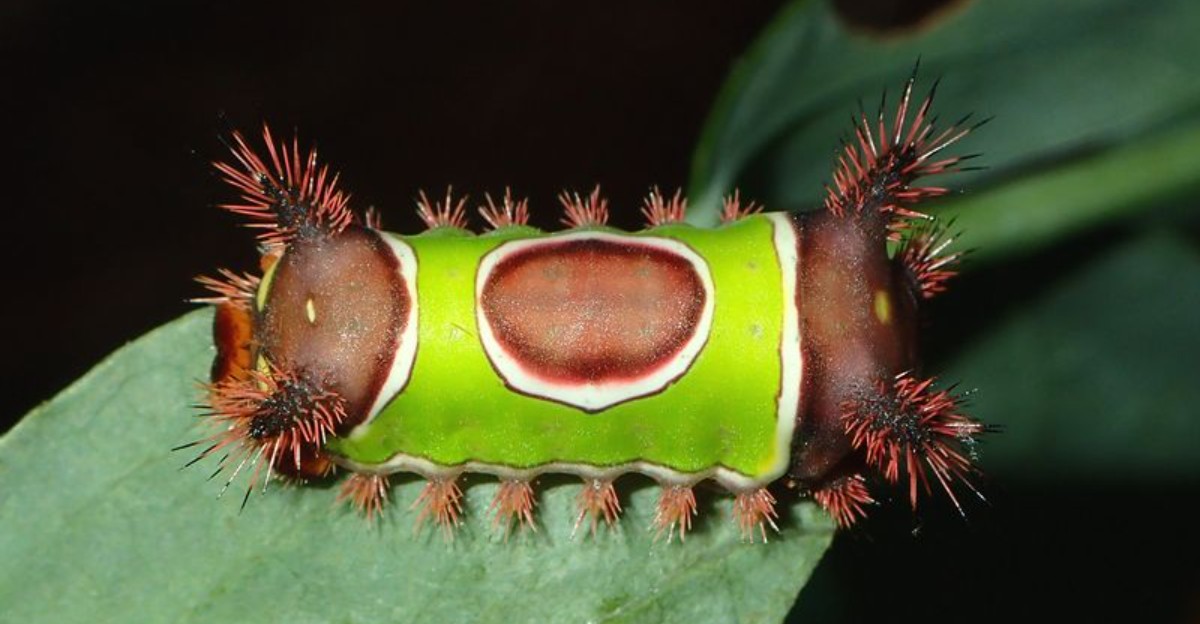
Somebody clearly dressed the saddleback caterpillar for a rodeo, complete with a lime green blanket and a chocolate brown saddle. I love how it looks almost cartoonish, though that flashy outfit is really a loud warning to hungry birds.
Acharia stimulea grows only about an inch long, with spiny horns sticking out from both the front and back ends.
More stinging spines line its sides, and each one delivers venom when it presses or breaks against bare skin.
Brushing against one feels like a hot nettle burn, and the area may swell into an itchy red welt. Washing gently with soap, using tape to pull spines, then applying ice usually calms things down within a few hours.
You might notice saddlebacks on the undersides of leaves on dogwoods, maples, roses, and even sweet corn in late summer and fall.
Fully grown caterpillars spin small cocoons that pass the winter, so October sightings often mean they are nearly finished feeding.
Personally, I flip leaves carefully with a stick before reaching into shrubs that look chewed along the edges. Thin cotton gloves sometimes let spines poke through, so choose thicker gardening gloves for serious pruning sessions.
Saddlebacks rarely appear in big enough numbers to harm plants, so removing them with a gloved hand works well. Snip off an infested leaf and drop it somewhere away from walkways, and you can keep gardening with confidence.