Something Strange Is Growing Under The Louisiana Pecan Tree
A blob that looks like dog vomit can crawl across Louisiana mulch overnight. It has no brain, yet it can find food and move toward it. Scientists have even watched relatives of it solve mazes.
I spotted a bright yellow patch under a big pecan after a soggy week in Louisiana. My first move was to grab the hose and a bottle of fungicide. A little evidence gave me pause before I sprayed anything.
Turns out the ground under a pecan is a busy place. Fallen leaves, old roots, shade, and humid air make a perfect stage for odd guests. Some are harmless cleanup crews, and a few deserve a closer look.
I never get tired of these surprises in my own yard. You probably have walked past one without a second thought. So what exactly is hiding in that mulch beneath your tree?
That Bright Yellow Blob Under Your Pecan Has a Surprising Identity
Bright yellow foam on the mulch is one of the most common surprises gardeners find under shade trees in humid weather. The LSU AgCenter regularly hears from worried homeowners about this exact sight.
In most cases, the culprit is a slime mold. A popular one is Fuligo septica, nicknamed dog vomit slime mold because of its lumpy, scrambled-egg look. It can be yellow, cream, orange, or even pinkish when fresh.
Slime molds love warm, wet, cloudy stretches. Late spring and summer rains in the Deep South give them ideal conditions, especially in thick mulch that stays damp.
Pecan trees drop plenty of leaves, twigs, and shuck pieces, so the ground beneath them stays rich and moist.
Spotting one can feel alarming, and the shape changes fast. A patch may look wet and spongy one morning and turn crusty brown a day or two later. That quick change is part of its normal life cycle.
Before you reach for any spray, take a photo and note the color and texture. Comparing pictures over a few days helps you confirm what you are seeing. Most of the time, you will watch it fade on its own once the sun returns.
Slime Molds Leave Your Pecan Tree Alone
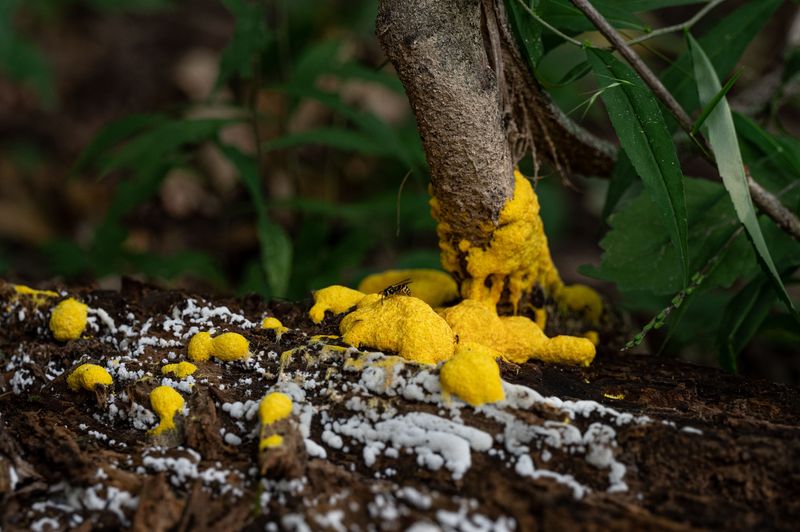
Relief comes quickly once you learn what slime molds actually eat. They feed on bacteria, yeasts, fungal spores, and bits of decaying matter, not on living plants.
That means your pecan tree is not in danger. The LSU AgCenter describes slime molds as non-parasitic, so they do not invade roots, bark, or leaves. They simply use surfaces as a place to sit, feed, and make spores.
Odd as it sounds, slime molds are not true fungi either. Scientists place them among amoeba-like organisms called protists, specifically the myxomycetes.
During their active stage, the mass is one giant cell with many nuclei, slowly creeping along in search of food.
Sometimes a slime mold climbs onto grass blades or low plants and coats them. That covering can shade a small patch for a few days, but the plant underneath usually recovers once the crust dries and flakes away.
Your Louisiana Garden Changes Every Week. Your Plan Should Too.
Gardening in Louisiana changes quickly throughout the season. Every Friday you’ll receive a simple weekly plan showing exactly what to plant, prune, fertilize, harvest, and protect so you never miss the right timing.
So the best treatment is often patience. Fungicides are not needed and are not recommended for slime molds.
If the look bothers you, rake the mulch to break it up and let it dry. You get a cleaner view without spending money or adding chemicals to your yard.
Watch How That Slimy Patch Turns Into Dusty Spores
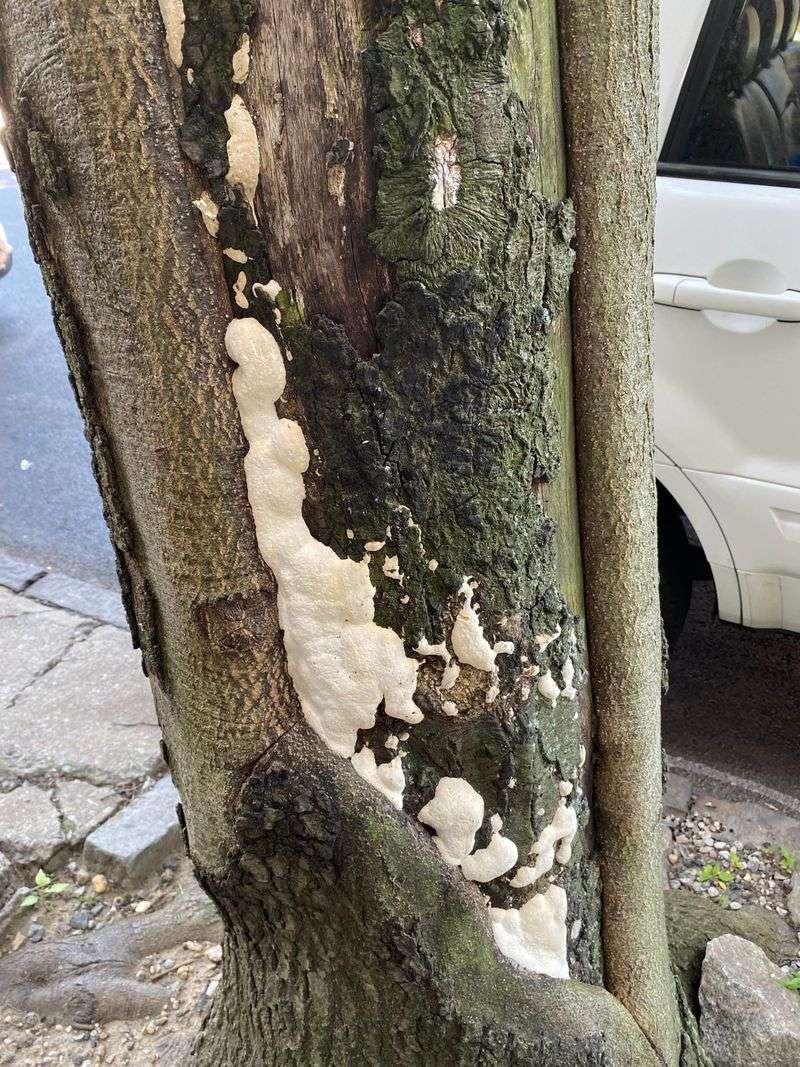
Watching a slime mold change over a week is like having a science show in your Louisiana flower bed. I checked one twice a day, and the shifts were wild.
The slimy stage is called a plasmodium. It feeds and slowly spreads across mulch, leaves, or the lower trunk, sometimes moving a few inches in a day. When food runs low or the air dries out, it stops and switches gears.
Next, the mass hardens into a crust or forms tiny stalked structures full of spores. In dog vomit slime mold, the patch turns tan or brown and becomes powdery inside. Poke it gently and dark dust puffs out.
Those spores ride the wind and wait in the soil. When warm, wet weather returns, they wake up as tiny cells, feed, and start the cycle again. That explains why the same spot under your pecan often has repeat visitors.
Here is a handy tip. If you want to limit the dust, scoop the crusty patch into a bag before it breaks apart.
Hosing it off works only for a while, since spores linger and the blob may return after the next rainy spell in Louisiana.
Pecan Leaf Litter Feeds a Crop of Busy Mushrooms
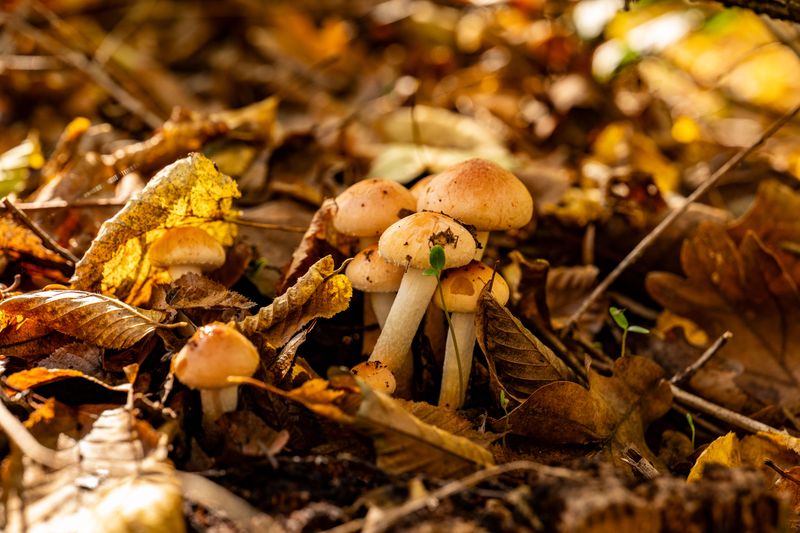
Mushrooms popping up through fallen pecan leaves are another classic surprise. After a good soaking rain, they can seem to appear out of nowhere by breakfast.
Most of these are saprotrophs, which means they break down old leaves, twigs, buried wood, and nut shucks. The mushroom you see is only the fruiting part. A web of thin threads called mycelium spreads through the soil, quietly recycling nutrients.
That recycling is a gift to your tree. As leaves and shucks decay, they return organic matter to the soil. Better soil holds moisture well and supports the fine feeder roots pecans rely on.
Some fungi near pecans even form helpful partnerships with roots. Truffle-like species, including the pecan truffle found in parts of the South, live underground with pecan roots and trade nutrients for sugars.
Here is my advice for families with kids or pets. Treat every wild mushroom as off-limits for eating unless an expert identifies it in person.
Several look-alikes can cause serious illness. Mowing or raking them up is fine if you prefer a tidy lawn, and they will not harm your tree either way.
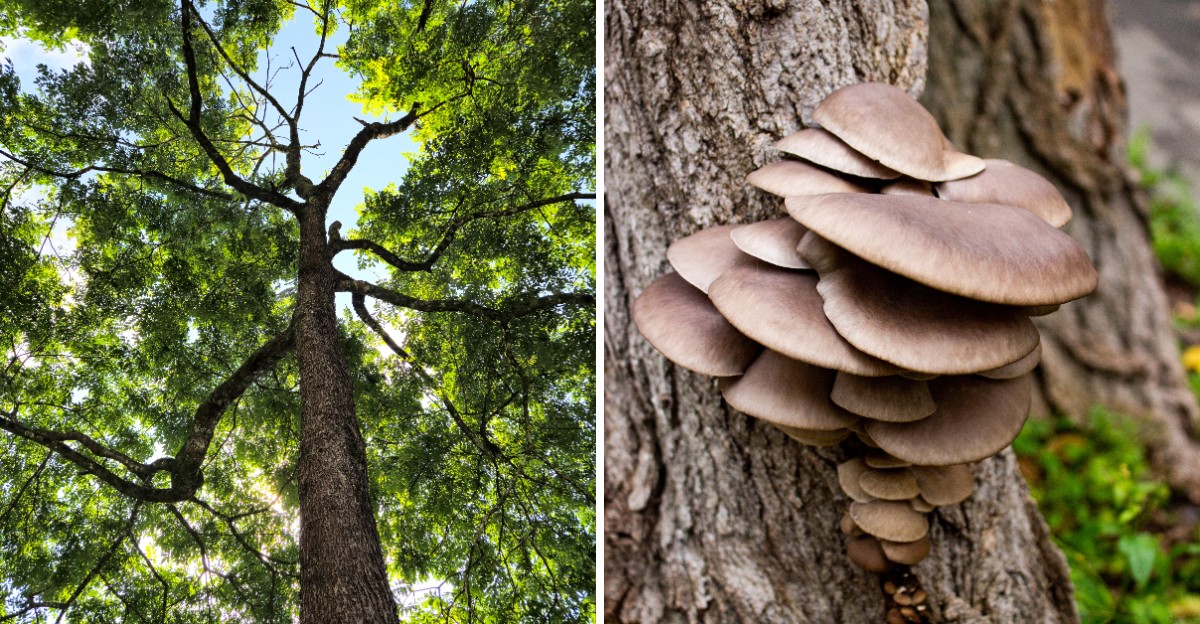
Oyster Mushrooms on a Pecan Trunk Point to Old Wood
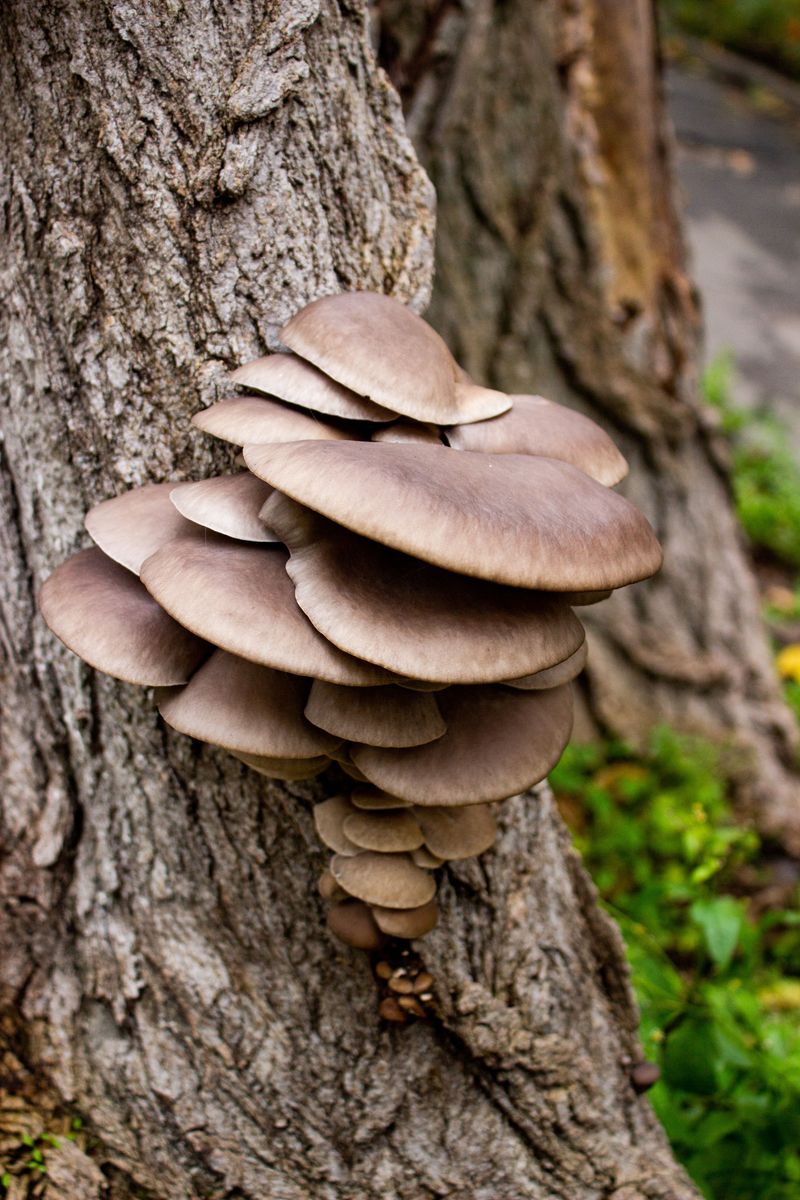
Shelf-like clusters of pale gray or cream mushrooms on a trunk or stump look lovely. Often they are oyster mushrooms, known to scientists as Pleurotus ostreatus.
Oysters grow on hardwoods, and pecan is a favorite host in Louisiana and across the South. They usually show up in cool weather, from fall through early spring, especially after long wet spells or a sudden temperature drop.
Their presence tells you something useful. These fungi feed on wood that is already weakened, wounded, or in decline.
On a stump, that is helpful cleanup. On a standing tree, it suggests there may be decay inside the trunk or a large limb.
Decay is not something you can see from the outside very well. A pecan with hidden rot can still leaf out and make nuts while its wood slowly loses strength. Big limbs over a driveway or house deserve extra attention.
If oysters appear on your living tree, call an ISA certified arborist for an inspection. They can check how much sound wood remains.
Foragers in Louisiana prize oysters, but only harvest when you are certain of the ID, since look-alikes exist.
Honey Mushroom Clusters at the Base Deserve a Closer Look
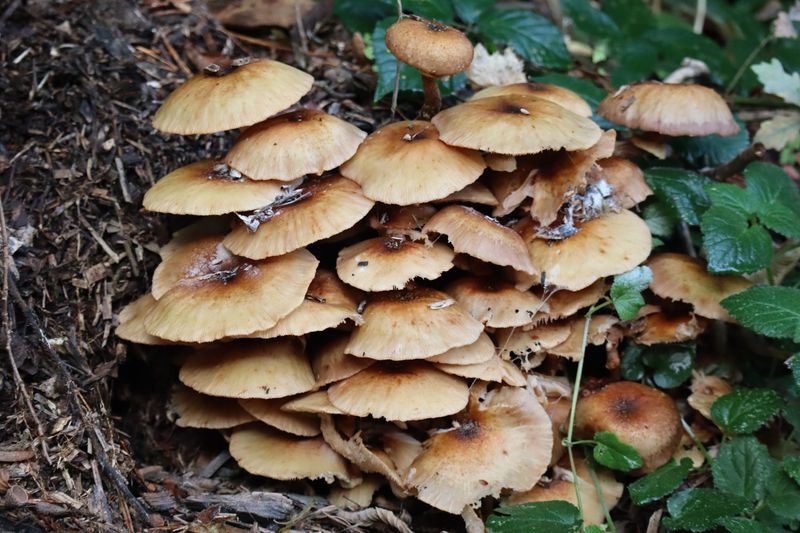
Not every mushroom under a pecan is a friendly decomposer. Tight clumps of honey-brown caps at the base of a tree in fall are a real warning sign.
These are often Armillaria or Desarmillaria, commonly called honey mushrooms or mushroom root rot. Desarmillaria tabescens, the ringless honey mushroom, is common across the South.
It infects roots and the lower trunk, especially on stressed trees. Look for a few clues. Peel back loose bark near the soil line and check for a white, fan-shaped mat of fungus.
Dark, shoestring-like strands in the soil are another sign. Thinning canopy, small leaves, and early leaf drop can show up above.
Sometimes the fungus is living on buried roots from a tree removed years ago. That is why these mushrooms can pop up in lawns with no nearby trunk. Still, your pecan roots may be at risk.
There is no reliable spray cure for this root rot. Reduce stress with deep watering during drought, avoid piling soil or mulch against the trunk, and protect roots from damage. Have an arborist check the tree, since root decay can affect stability.
Thick Damp Mulch Around the Trunk Invites More Strange Growth
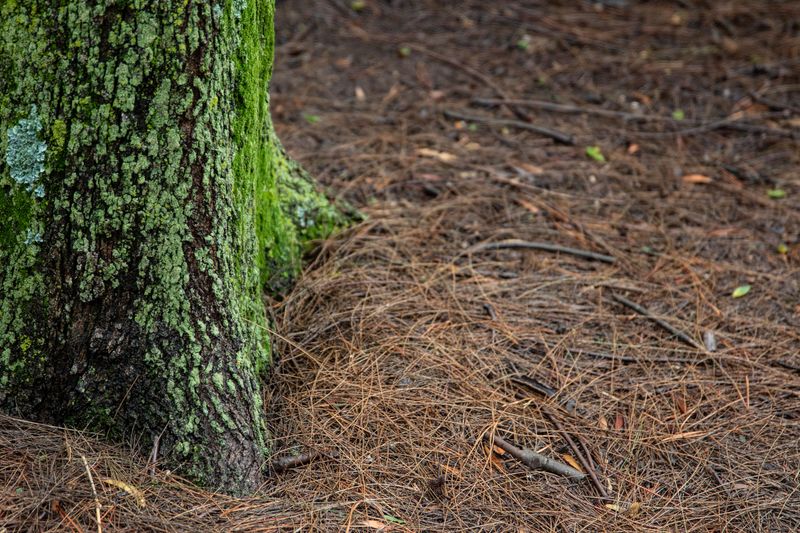
Mulch volcanoes look tidy, but they cause headaches. Piling mulch high against a pecan trunk keeps bark wet and gives slime molds and fungi a cozy home.
Arborists recommend a flat ring of mulch two to three inches deep. Keep it a few inches away from the trunk so the root flare stays visible and dry. Picture a donut, not a volcano.
Moisture management matters in Louisiana’s humid climate. Spread old mulch with a rake every few weeks during rainy stretches so it dries out faster. Fresh, coarse wood chips usually stay airier than fine, shredded mulch that packs down.
Watering habits play a role too. Sprinklers that hit the trunk every evening keep the base soggy overnight.
Water early in the morning and aim at the root zone farther out, where most feeder roots grow.
Good drainage helps your pecan and discourages root rot. Pecans like deep, well-drained soil and dislike standing water.
If puddles linger under your tree after a Louisiana storm, note where they collect. Gentle grading or redirecting gutter runoff can make a big difference over time.
A Strong Pecan Tree Shrugs Off Most Backyard Oddities
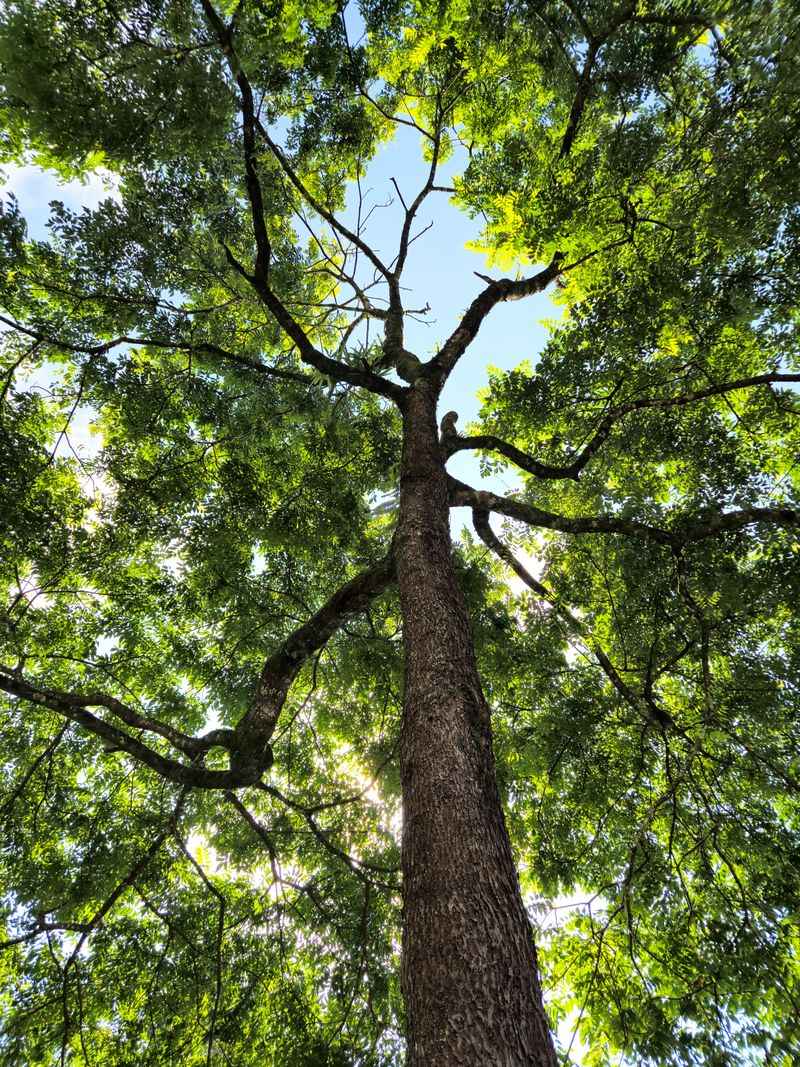
My favorite lesson from all this surprised me. A healthy, well-fed pecan handles most strange visitors without trouble.
Start with a soil test through the LSU AgCenter. It tells you exactly what your tree needs instead of guessing.
Many Louisiana pecans benefit from zinc, which helps prevent small, bunched leaves called rosette. Fertilizer generally goes on in late winter or early spring.
Sunlight and airflow come next. Pecans want full sun, and good spacing helps leaves dry faster. That reduces pressure from pecan scab, a fungal disease that spots leaves and shucks in wet years.
Watering during dry spells protects roots, especially in late summer when nuts are filling. A slow, deep soak every week or two beats frequent light sprinkles.
Finally, keep a simple garden journal. Jot down what appears under your tree, the date, and the weather.
Over a season or two, you will spot patterns, like slime molds after rainy weeks or mushrooms after cool fronts.
Most growths are harmless or helpful. Honey mushroom clumps and trunk decay deserve expert eyes. Everything else is simply nature at work under your tree.